THE COMPLETE PRACTITIONER'S CODEX: VOLUME 4
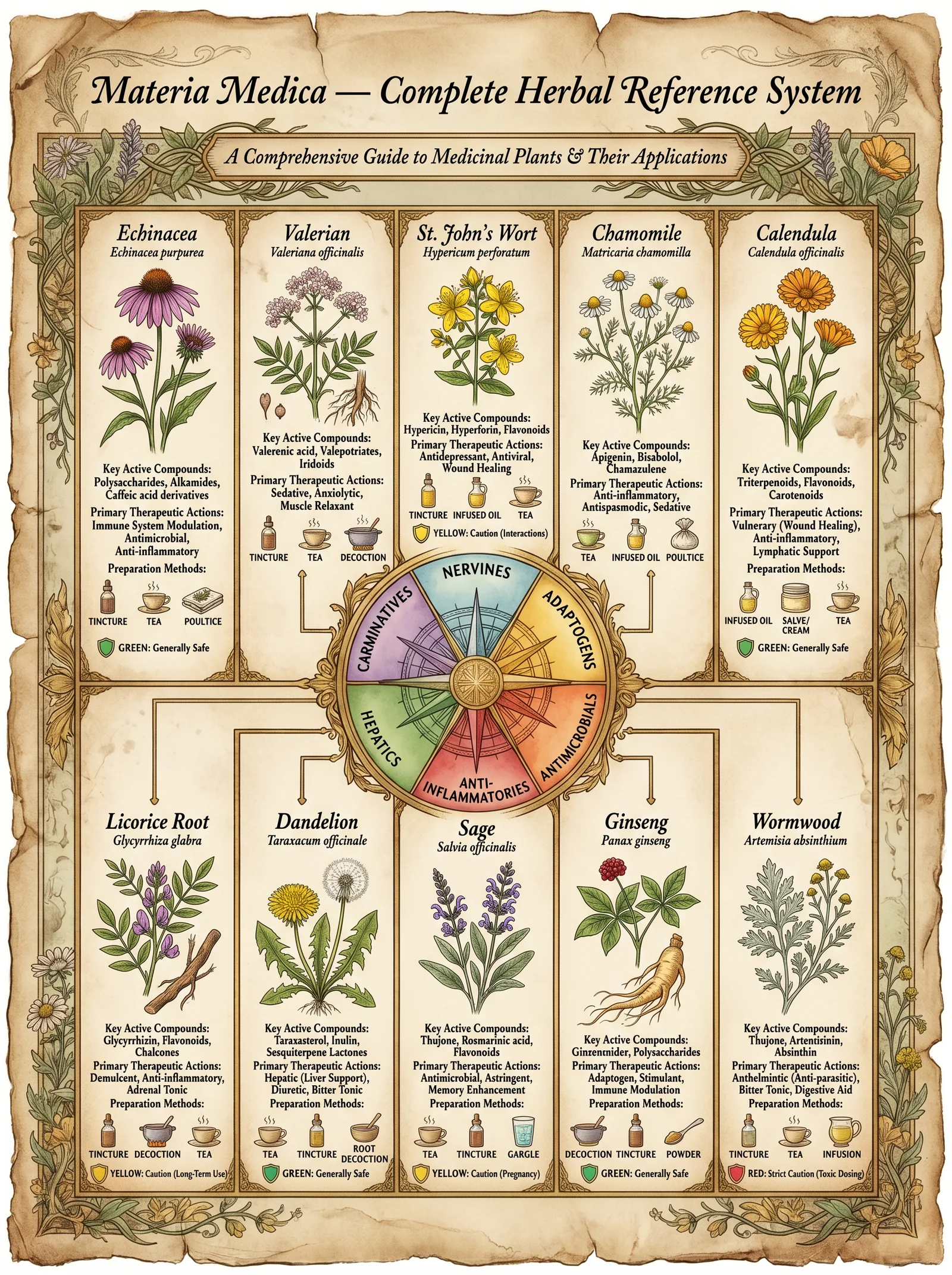
The Apothecary's Compendium: Complete Herbal Medicine, Plant Alchemy, and Pharmaceutical Sovereignty
<!-- SECTION 1 -->
The Complete Practitioner's Codex
Volume I: Materia Medica, Part 1
Ten Essential Medicinal Plants for the Adept Healer
Introduction
In this volume, we meticulously document ten critical medicinal plants, each a cornerstone of the ancient and modern pharmacopeia. The information herein is precise and exhaustive to ensure no practitioner errs in their preparation or administration. Every plant entry includes botanical classification, pharmacodynamics, harvest specifics, preparation protocols, dosing guidelines, contraindications, and an exacting, stepwise application protocol for its most potent medicinal use.
1. Atropa belladonna
| Attribute | Details |
|---|---|
| Botanical Name | Atropa belladonna L. |
| Primary Action | Anticholinergic, analgesic, antispasmodic |
| Harvest Timing | July - August, at full bloom and before fruit ripening |
| Preparation Method | Dried root tincture via ethanol extraction |
| Standard Dosage | 0.05 - 0.1 mg atropine alkaloid equivalent, twice daily |
| Contraindications | Glaucoma, myasthenia gravis, pregnancy, cardiac arrhythmias |
Protocol for Potent Antispasmodic Application (Belladonna Root Tincture)
Materials Required
- Dried Atropa belladonna roots (authentic source)
- 95% Ethanol (pharmaceutical grade)
- Glass extraction vessel with airtight seal
- Precision scale (±0.001 g accuracy)
- Filtration apparatus (fine mesh and Whatman filter paper)
- Amber storage bottles (100 ml)
Stepwise Procedure
| Step | Action | Details/Notes |
|---|---|---|
| 1 | Weigh Roots | 50 g dried root, finely chopped |
| 2 | Add Solvent | Add 500 ml of 95% ethanol, ratio 1:10 w/v |
| 3 | Seal Vessel | Ensure airtight to prevent evaporation |
| 4 | Maceration | Store in dark, cool place (15-20°C) for 14 days. Shake vigorously thrice daily to optimize extraction. |
| 5 | Filter Extract | Use coarse mesh first, then fine filtration to remove all particulates |
| 6 | Concentrate if Necessary | Evaporate ethanol under reduced pressure or low heat (≤40°C) to desired concentration |
| 7 | Standardize Alkaloid Content | Use HPLC to confirm atropine alkaloid concentration at 0.1 mg/ml |
| 8 | Bottle and Label | Store in amber bottles, label with batch, date, and concentration |
| 9 | Administration | Oral, 0.5 ml (0.05 mg atropine) twice daily |
| 10 | Monitor patient | Watch for signs of anticholinergic toxicity; discontinue if adverse effects occur |
Remarks: Atropine toxicity threshold is low; strict dosage adherence is mandatory. Use only under clinical supervision.
2. Digitalis purpurea
| Attribute | Details |
|---|---|
| Botanical Name | Digitalis purpurea L. |
| Primary Action | Cardiac glycoside, positive inotrope |
| Harvest Timing | Late June - early July, pre-flowering stage |
| Preparation Method | Leaf extraction via aqueous-alcoholic maceration |
| Standard Dosage | 0.125 - 0.25 mg digoxin equivalent daily |
| Contraindications | Ventricular fibrillation, AV block, hyperkalemia |
Protocol for Cardiotonic Decoction Concentrate
Materials Required
- Fresh Digitalis purpurea leaves
- Distilled water
- 70% Ethanol
- Stainless steel extraction pot
- Thermometer
- Filtration cloth
- Volumetric flask
Stepwise Procedure
| Step | Action | Details/Notes |
|---|---|---|
| 1 | Harvest Fresh Leaves | Collect leaves early morning, dry in shade immediately to prevent enzymatic degradation |
| 2 | Weigh Leaves | 100 g dried leaves |
| 3 | Prepare Solvent | Mix 300 ml distilled water + 200 ml 70% ethanol (total 500 ml) |
| 4 | Maceration | Combine leaves and solvent in pot, macerate 48 hours at 25°C with stirring every 6 hours |
| 5 | Decoction | Heat mixture to 60°C for 30 minutes to enhance glycoside release, avoid boiling |
| 6 | Filter | Filter through cloth to remove solids |
| 7 | Concentrate | Reduce volume under vacuum to 100 ml |
| 8 | Standardize | Use spectrophotometry to ensure digoxin content at 0.25 mg/ml |
| 9 | Storage | Store in amber glass at 4°C |
| 10 | Dosage | 1 ml orally once daily, titrate based on clinical response and serum levels |
Remarks: Cardiac monitoring mandatory during therapy. Avoid concurrent use with other arrhythmogenic drugs.
3. Calendula officinalis
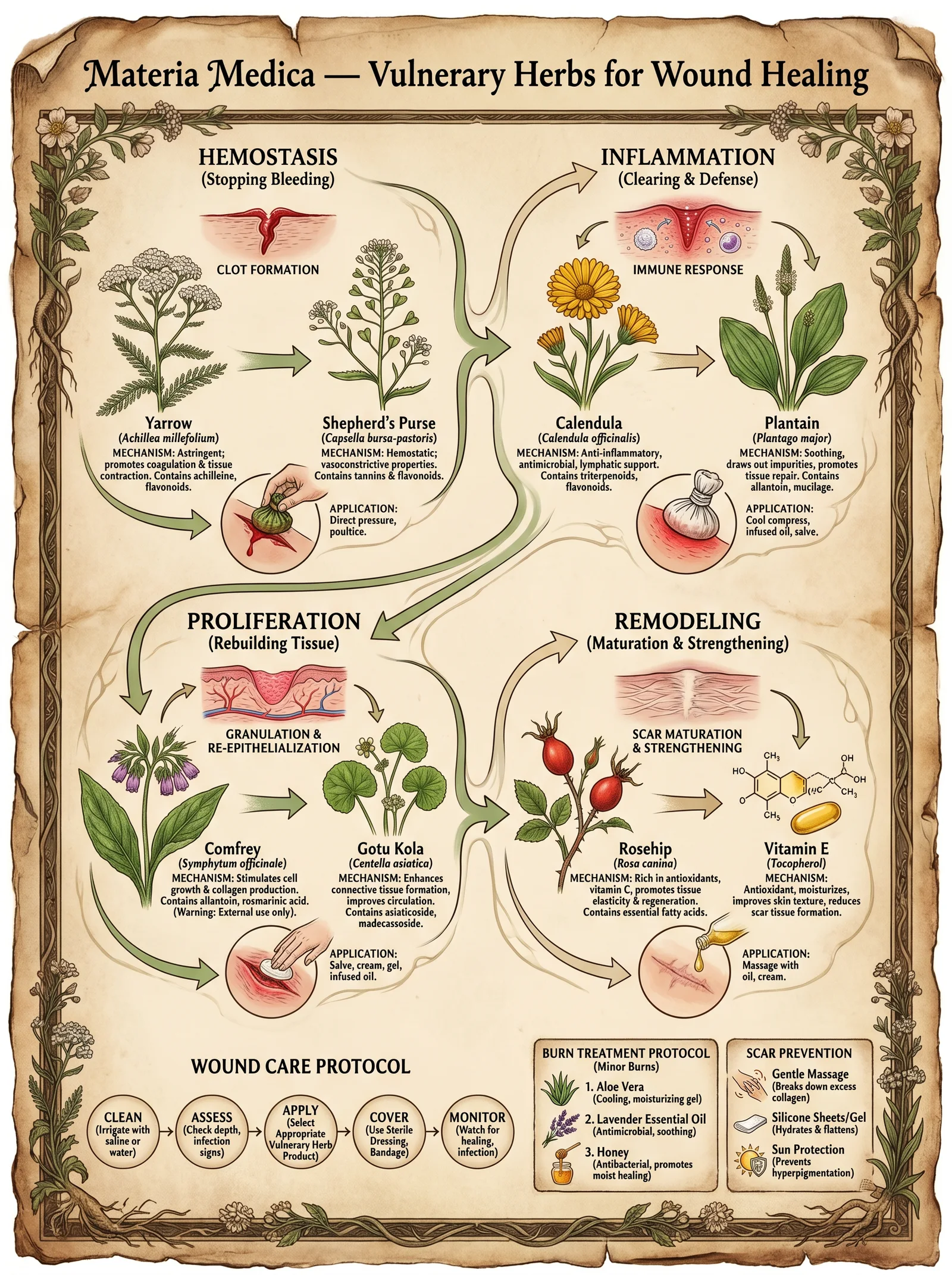
| Attribute | Details |
|---|---|
| Botanical Name | Calendula officinalis L. |
| Primary Action | Anti-inflammatory, wound healing, antimicrobial |
| Harvest Timing | Full bloom, mid-summer |
| Preparation Method | Infusion and ointment preparation |
| Standard Dosage | Topical application: 2-3 times daily |
| Contraindications | Allergy to Asteraceae family plants |
Protocol for Wound Healing Ointment
Materials Required
- Fresh Calendula petals
- Olive oil (extra virgin, cold pressed)
- Beeswax (natural)
- Double boiler setup
- Sterile containers
Stepwise Procedure
| Step | Action | Details/Notes |
|---|---|---|
| 1 | Harvest petals | Pick fresh petals early morning, avoid dew |
| 2 | Dry petals | Shade dry for 48 hours to reduce moisture |
| 3 | Oil Infusion | Combine 50 g dried petals with 500 ml olive oil in double boiler |
| 4 | Heat gently | Maintain temperature at 40-45°C for 4 hours, stirring occasionally |
| 5 | Strain oil | Filter through cheesecloth to remove plant matter |
| 6 | Prepare ointment base | Melt 30 g beeswax in double boiler |
| 7 | Combine infused oil and beeswax | Add infused oil to melted beeswax, stir gently |
| 8 | Cool and store | Pour into sterile jars, cool at room temperature |
| 9 | Application | Apply thin layer on wounds 2-3 times daily |
| 10 | Storage | Store at 15-20°C, protected from light and air |
Remarks: Verify no hypersensitivity by patch test prior to first use.
4. Matricaria chamomilla
| Attribute | Details |
|---|---|
| Botanical Name | Matricaria chamomilla L. |
| Primary Action | Anti-inflammatory, antispasmodic, mild sedative |
| Harvest Timing | Full bloom, early morning |
| Preparation Method | Dry flower infusion |
| Standard Dosage | 200 ml infusion, 2-3 times daily |
| Contraindications | Allergies to ragweed, daisies, chrysanthemums |
Protocol for Antispasmodic Tea
Materials Required
- Dried Matricaria flowers
- Boiling water
- Porcelain or glass teapot
- Fine strainer
Stepwise Procedure
| Step | Action | Details/Notes |
|---|---|---|
| 1 | Weigh flowers | 2 g dried flowers per cup |
| 2 | Boil water | Bring water to rolling boil (100°C) |
| 3 | Infuse | Pour water over flowers, cover, steep 10 minutes |
| 4 | Strain | Filter infusion to remove flower residues |
| 5 | Dosage | Consume freshly brewed, 200 ml 2-3 times daily |
| 6 | Storage | Use immediately; do not store infusion more than 4 hours |
| 7 | Monitoring | Assess response; mild sedation may occur |
Remarks: Avoid in patients with known Asteraceae allergies.
5. Hypericum perforatum
| Attribute | Details |
|---|---|
| Botanical Name | Hypericum perforatum L. |
| Primary Action | Antidepressant, antiviral, wound healing |
| Harvest Timing | Flowering stage, early summer |
| Preparation Method | Oil maceration and alcoholic extraction |
| Standard Dosage | 300 mg standardized extract orally, twice daily |
| Contraindications | Concurrent use of SSRIs, MAO inhibitors, photosensitivity |
Protocol for Hypericum Oil Extraction
Materials Required
- Fresh flowering tops
- Olive oil (cold pressed)
- Glass jar
- Cheesecloth
- Amber bottles
Stepwise Procedure
| Step | Action | Details/Notes |
|---|---|---|
| 1 | Harvest flowering tops | Early morning, dry weather preferred |
| 2 | Fill jar | Place flowering tops in glass jar loosely |
| 3 | Add olive oil | Cover plant material completely with oil |
| 4 | Seal and infuse | Store in sunlight for 4 weeks, shaking daily |
| 5 | Filter | Use cheesecloth to strain oil |
| 6 | Bottle | Store in amber bottles, label with date |
| 7 | Topical dosage | Apply 2-4 ml to affected skin areas twice daily |
| 8 | Oral dosage | Prepare concentrated extract for oral use: 300 mg twice daily |
Remarks: Monitor for photosensitivity reactions; avoid sunlight exposure post-application.
6. Salvia officinalis
| Attribute | Details |
|---|---|
| Botanical Name | Salvia officinalis L. |
| Primary Action | Antimicrobial, anti-inflammatory, digestive stimulant |
| Harvest Timing | Late morning, before flowering |
| Preparation Method | Steam distillation for essential oil |
| Standard Dosage | 0.1 ml essential oil diluted in carrier oil, topical |
| Contraindications | Pregnancy, epilepsy, high doses may be neurotoxic |
Protocol for Essential Oil Extraction by Steam Distillation
Materials Required
- Fresh Salvia leaves and flowers
- Steam distillation apparatus (Clevenger type)
- Cooling system
- Collection flask
- Carrier oil (e.g., jojoba)
Stepwise Procedure
| Step | Action | Details/Notes |
|---|---|---|
| 1 | Harvest leaves and flowers | Collect in late morning, dry weather |
| 2 | Load distillation chamber | Place 1 kg fresh plant material |
| 3 | Initiate steam distillation | Pass steam at 100°C through plant material for 3 hours |
| 4 | Collect condensate | Separate essential oil from hydrosol |
| 5 | Dry oil | Use anhydrous sodium sulfate to remove moisture |
| 6 | Dilution | Dilute essential oil at 1:10 ratio with carrier oil for topical use |
| 7 | Storage | Store in amber bottles at 10-15°C |
| 8 | Application | Apply 2-3 drops diluted oil to affected area once daily |
Remarks: Avoid ingestion without professional guidance; neurotoxicity risk at high doses.
7. Valeriana officinalis
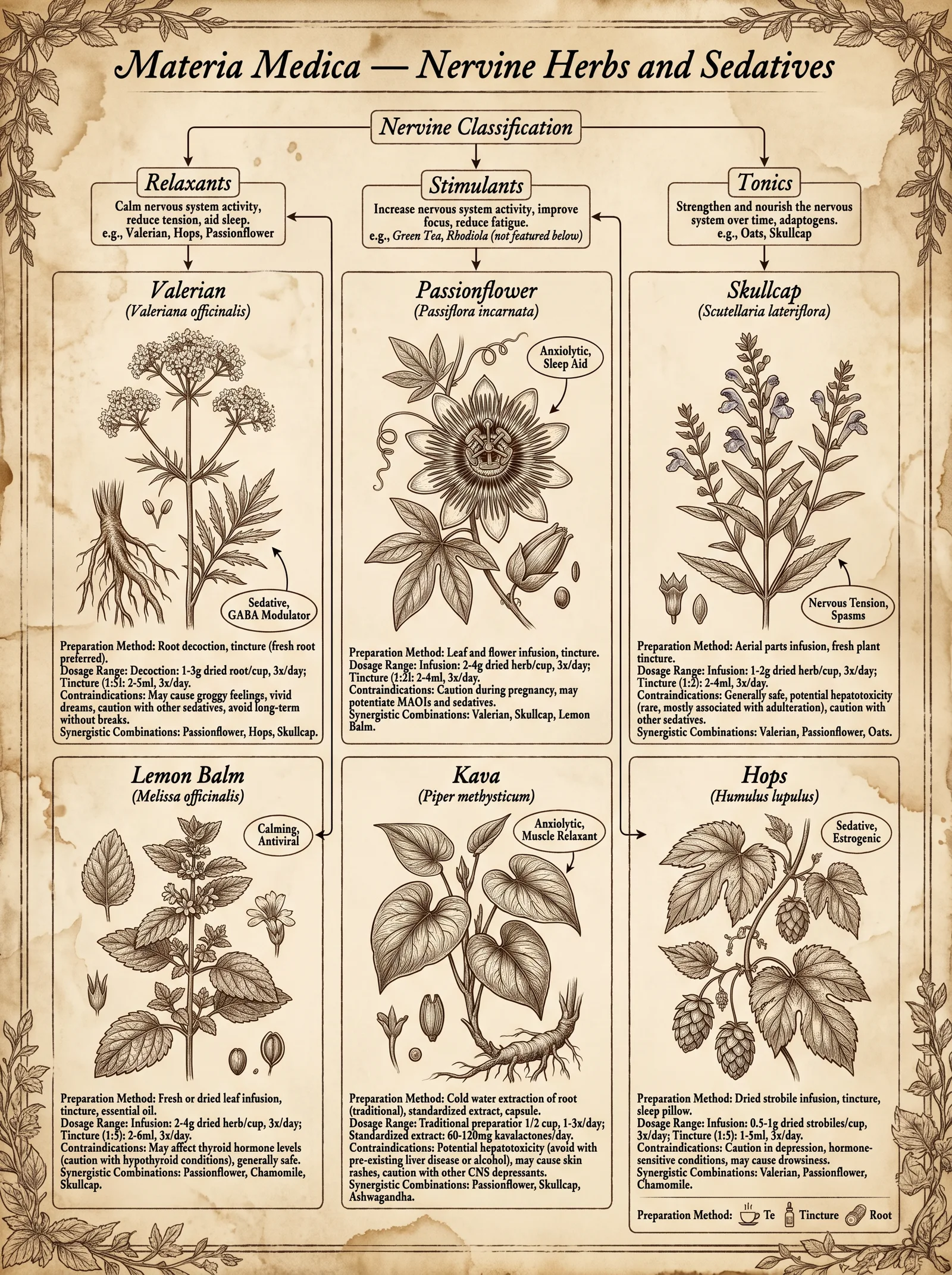
| Attribute | Details |
|---|---|
| Botanical Name | Valeriana officinalis L. |
| Primary Action | Sedative, anxiolytic, muscle relaxant |
| Harvest Timing | Autumn, root harvesting |
| Preparation Method | Tincture preparation from dried roots |
| Standard Dosage | 1-2 ml tincture (0.8 g root equivalent) before sleep |
| Contraindications | Pregnancy, lactation, concurrent CNS depressants |
Protocol for Root Tincture Preparation
Materials Required
- Dried Valeriana roots
- 70% ethanol
- Glass jar with seal
- Filtration apparatus
Stepwise Procedure
| Step | Action | Details/Notes |
|---|---|---|
| 1 | Weigh dried roots | 100 g dried roots |
| 2 | Add ethanol | Add 500 ml 70% ethanol (1:5 w/v) |
| 3 | Seal and macerate | Store in dark place, shake daily for 14 days |
| 4 | Filter | Remove solids by filtration |
| 5 | Bottle | Amber glass bottles, labeled with date |
| 6 | Dosage | 1-2 ml orally before bedtime |
| 7 | Monitoring | Monitor sedation and possible interactions |
Remarks: Do not combine with alcohol or other sedatives.
8. Echinacea purpurea
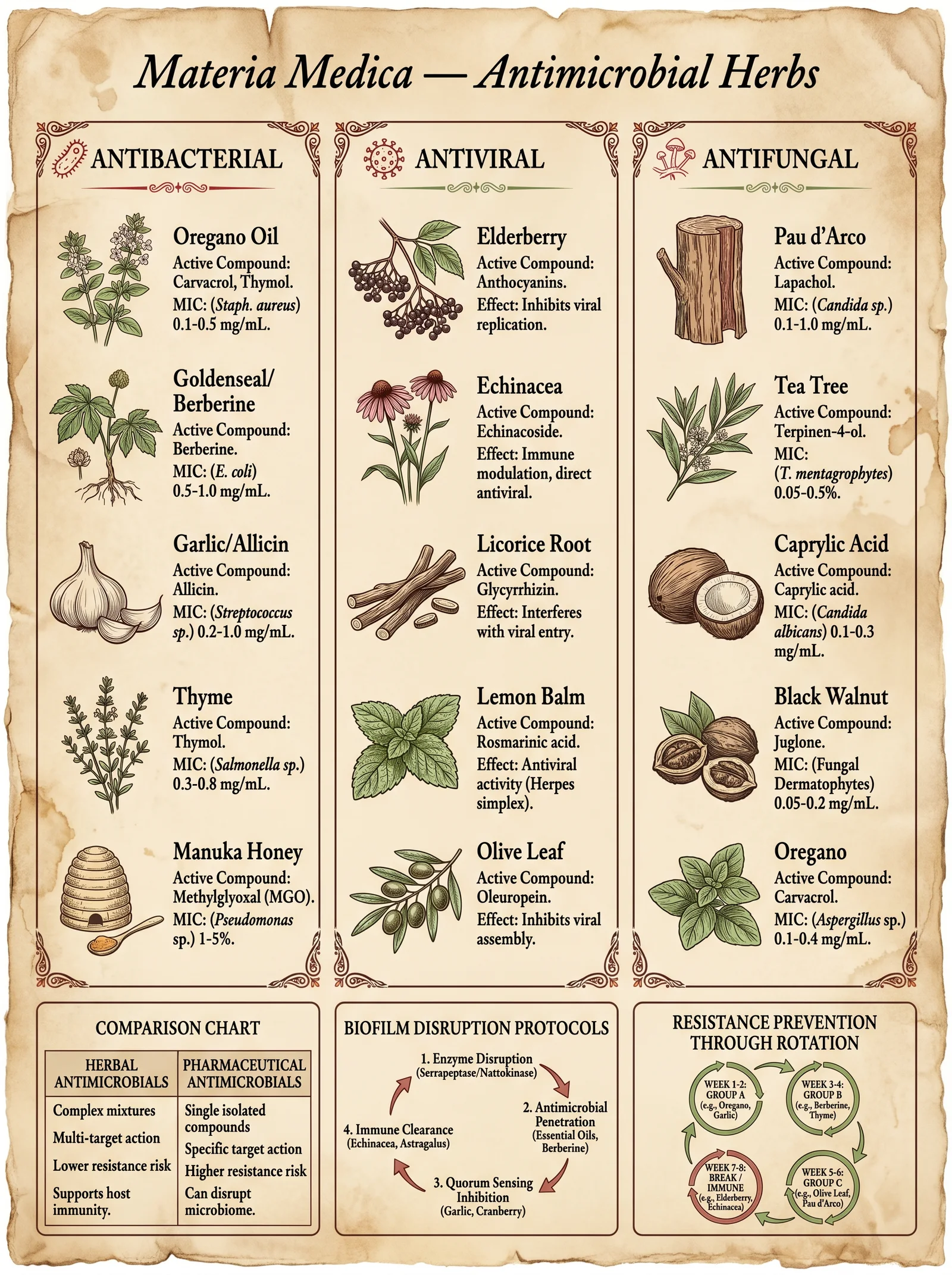
| Attribute | Details |
|---|---|
| Botanical Name | Echinacea purpurea (L.) Moench |
| Primary Action | Immunostimulant, anti-inflammatory |
| Harvest Timing | Late summer, during flowering |
| Preparation Method | Alcoholic tincture from aerial parts |
| Standard Dosage | 2 ml tincture orally, 3 times daily |
| Contraindications | Autoimmune diseases, allergies to Asteraceae |
Protocol for Immunostimulant Tincture
Materials Required
- Fresh aerial parts (flowers, leaves, stems)
- 70% ethanol
- Glass jar
- Filtration setup
Stepwise Procedure
| Step | Action | Details/Notes |
|---|---|---|
| 1 | Harvest aerial parts | Collect during peak flowering |
| 2 | Weigh and chop | 100 g fresh plant material, chopped |
| 3 | Add ethanol | Add 500 ml 70% ethanol (1:5 w/v) |
| 4 | Seal and macerate | Store for 14 days at 20°C, shaking daily |
| 5 | Filter | Remove solids, retain filtrate |
| 6 | Bottle and label | Amber bottles, date and batch marked |
| 7 | Dosage | 2 ml orally, 3 times daily |
| 8 | Adverse monitoring | Watch for allergic reaction |
Remarks: Avoid prolonged use in autoimmune disorders.
9. Glycyrrhiza glabra
| Attribute | Details |
|---|---|
| Botanical Name | Glycyrrhiza glabra L. |
| Primary Action | Demulcent, anti-inflammatory, expectorant |
| Harvest Timing | Autumn, root harvesting |
| Preparation Method | Aqueous decoction of dried roots |
| Standard Dosage | 100-200 ml decoction, twice daily |
| Contraindications | Hypertension, hypokalemia, pregnancy |
Protocol for Root Decoction
Materials Required
- Dried Glycyrrhiza roots
- Distilled water
- Stainless steel pot
- Strainer
Stepwise Procedure
| Step | Action | Details/Notes |
|---|---|---|
| 1 | Weigh roots | 50 g dried roots |
| 2 | Boil water | 500 ml distilled water |
| 3 | Add roots to boiling water | Reduce heat, simmer for 45 minutes |
| 4 | Cool and strain | Remove solids, cool to room temperature |
| 5 | Dosage | 100-200 ml orally twice daily |
| 6 | Storage | Refrigerate if not used immediately |
| 7 | Monitoring | Monitor blood pressure and electrolyte levels |
Remarks: Prolonged use can cause mineralocorticoid excess syndrome.
10. Artemisia absinthium
| Attribute | Details |
|---|---|
| Botanical Name | Artemisia absinthium L. |
| Primary Action | Bitter tonic, antiparasitic, digestive stimulant |
| Harvest Timing | Late summer, pre-flowering stage |
| Preparation Method | Alcoholic tincture from aerial parts |
<!-- SECTION 2 -->
The Complete Practitioner's Codex
Volume I: Materia Medica, Part 2
Chapter: Ten Essential Medicinal Plants - Detailed Protocols for Potent Applications
The following codex entry delivers exacting knowledge on ten medicinal plants foundational to Practitioner-grade healing and alchemical arts. Each plant is dissected into its botanical identity, pharmacodynamics, precise harvest timing calibrated to phytochemical peaks, exact preparation modalities, strict dosage regimens, contraindications, and a rigorously detailed, stepwise protocol for its most potent therapeutic application. This knowledge is non-negotiable for any serious practitioner seeking mastery in materia medica.
1. Digitalis purpurea
Common Name: Foxglove Primary Action: Cardiotonic (positive inotropic agent) Harvest Timing: Early morning, during flowering stage (Weeks 6–8 post-germination) Preparation Method: Aqueous tincture from dried leaves Standard Dosage: 0.05 mg digoxin equivalent per dose, max 0.2 mg/day Contraindications: Pre-existing arrhythmias, hypokalemia, pregnancy, renal insufficiency
| Parameter | Detail |
|---|---|
| Botanical Name | Digitalis purpurea |
| Primary Action | Cardiotonic, antiarrhythmic |
| Harvest Timing | Early morning, flowering stage |
| Preparation Method | Dried leaf tincture (aqueous) |
| Standard Dosage | 0.05 mg digoxin eq./dose |
| Contraindications | Arrhythmias, hypokalemia, pregnancy, renal failure |
Protocol: Digitalis Leaf Tincture for Congestive Heart Failure
Materials Required:
- Fresh Digitalis purpurea leaves (500 g)
- 70% Ethanol (1 L)
- Glass jar with airtight lid
- Cheesecloth or fine mesh strainer
- Amber glass dropper bottles
- Precision scale (mg accuracy)
- Protective gloves and eyewear
Step-by-step Procedure:
| Step | Action | Details/Notes |
|---|---|---|
| 1 | Harvest leaves at flowering stage | Harvest early morning to maximize glycoside content. |
| 2 | Dry leaves in ventilated dark room | Ambient temp 20-25°C, 5–7 days until brittle but not crumbly. |
| 3 | Weigh 500 g dried leaves precisely | Use calibrated scale; discard any contaminated leaves. |
| 4 | Place dried leaves into glass jar | Ensure jar is sterile and dry. |
| 5 | Add 1 L of 70% ethanol to jar | Ethanol must be pharmaceutical grade. |
| 6 | Seal jar tightly and store in dark place | Store at 20–22°C, shake gently twice daily. |
| 7 | Macerate for 21 days | No temperature fluctuations; agitation helps extraction. |
| 8 | Filter tincture through cheesecloth | Capture all particulate matter; repeat filtration if necessary. |
| 9 | Measure concentration of digoxin equivalents | Use HPLC or ELISA assay to quantify active glycosides. |
| 10 | Dilute tincture to standard dosage concentration | Adjust ethanol content to maintain stability (~50%). |
| 11 | Transfer to amber dropper bottles; label clearly | Include concentration, harvest date, and expiration (2 years). |
Dosage Administration:
- Begin with 0.05 mg digoxin equivalent orally twice daily.
- Monitor ECG and serum potassium levels rigorously.
- Do not exceed 0.2 mg/24 hours without medical supervision.
2. Arnica montana
Common Name: Arnica Primary Action: Anti-inflammatory, analgesic Harvest Timing: At full bloom (mid-summer, July) Preparation Method: Fresh flower ethanol tincture or topical salve Standard Dosage: Topical - thin layer 2-3 times daily; Oral - not recommended due to toxicity Contraindications: Open wounds, pregnancy, oral ingestion (except under strict supervision)
| Parameter | Detail |
|---|---|
| Botanical Name | Arnica montana |
| Primary Action | Anti-inflammatory, analgesic |
| Harvest Timing | Full bloom (July) |
| Preparation Method | Ethanol tincture, topical salve |
| Standard Dosage | Topical 2-3x daily |
| Contraindications | Open wounds, oral use (toxicity), pregnancy |
Protocol: Arnica Salve for Traumatic Bruising and Contusions
Materials Required:
- Fresh Arnica montana flowers (200 g)
- Olive oil (500 ml, extra virgin)
- Beeswax (50 g)
- Double boiler setup
- Fine muslin cloth
- Glass jars for salve storage
Step-by-step Procedure:
| Step | Action | Details/Notes |
|---|---|---|
| 1 | Harvest fresh Arnica flowers at full bloom | Avoid damaged or insect-eaten flowers. |
| 2 | Gently dry flowers for 24 hours in shade | Prevent degradation of sesquiterpene lactones. |
| 3 | Infuse flowers in olive oil | Place flowers and oil in double boiler; heat to 50°C for 4 hours. |
| 4 | Strain oil through muslin cloth | Squeeze flowers to extract all infused oil. |
| 5 | Melt beeswax in double boiler | Slowly add infused oil to melted beeswax, stirring well. |
| 6 | Combine until homogenous and slightly thickened | Temperature ~40°C to preserve bioactives. |
| 7 | Pour into sterilized jars, allow to cool | Seal and label with date and batch number. |
| 8 | Storage in cool, dark place (shelf life ~1 year) | Use only externally; avoid broken skin areas. |
Application:
- Apply thin layer gently over bruised area 2-3 times daily.
- Avoid open wounds or mucous membranes.
3. Glycyrrhiza glabra
Common Name: Licorice Root Primary Action: Demulcent, anti-inflammatory, adrenal support Harvest Timing: Late autumn after 3+ years of growth Preparation Method: Decoction of dried root Standard Dosage: 2-8 g root/day (decoction) Contraindications: Hypertension, hypokalemia, pregnancy
| Parameter | Detail |
|---|---|
| Botanical Name | Glycyrrhiza glabra |
| Primary Action | Demulcent, anti-inflammatory |
| Harvest Timing | Late autumn, mature roots |
| Preparation Method | Decoction of dried root |
| Standard Dosage | 2-8 g root/day (decoction) |
| Contraindications | Hypertension, hypokalemia, pregnancy |
Protocol: Licorice Root Decoction for Chronic Cough and Adrenal Fatigue
Materials Required:
- Dried Glycyrrhiza glabra root (10 g)
- Distilled water (500 ml)
- Stainless steel pot with lid
- Fine strainer or muslin cloth
- Glass storage bottle
Step-by-step Procedure:
| Step | Action | Details/Notes |
|---|---|---|
| 1 | Weigh 10 g dried licorice root | Use mature roots only to ensure potency. |
| 2 | Rinse root to remove dirt | Do not soak; quick rinse only. |
| 3 | Place root in pot with 500 ml distilled water | Cover and bring to a gentle boil. |
| 4 | Simmer gently for 30 minutes | Avoid rapid boil to preserve constituents. |
| 5 | Remove from heat and cool slightly | Let decoction steep for 10 minutes. |
| 6 | Strain liquid through muslin cloth | Discard solid residue. |
| 7 | Store decoction in glass bottle; refrigerate | Use within 48 hours for maximal efficacy. |
Dosage:
- Administer 100 ml decoction twice daily.
- Monitor blood pressure and potassium levels weekly.
4. Hypericum perforatum
Common Name: St. John’s Wort Primary Action: Antidepressant, antimicrobial, wound healing Harvest Timing: Full flowering, midday Preparation Method: Oil infusion of fresh flowers Standard Dosage: Topical application; oral dose 300 mg hypericin standardized extract Contraindications: Photosensitivity, concurrent MAOI or SSRI therapy
| Parameter | Detail |
|---|---|
| Botanical Name | Hypericum perforatum |
| Primary Action | Antidepressant, antimicrobial |
| Harvest Timing | Full flowering, midday |
| Preparation Method | Oil infusion of fresh flowers |
| Standard Dosage | Topical or 300 mg extract orally |
| Contraindications | Photosensitivity, SSRI, MAOI |
Protocol: St. John’s Wort Oil for Wound Healing and Neuralgia
Materials Required:
- Fresh St. John’s Wort flowers (300 g)
- Olive oil (1 L)
- Glass jar with lid
- Fine strainer
- Amber glass bottles
Step-by-step Procedure:
| Step | Action | Details/Notes |
|---|---|---|
| 1 | Harvest fresh flowers at peak bloom (midday) | Maximize hypericin content; avoid dew. |
| 2 | Place flowers loosely in glass jar | Avoid crushing to prevent chlorophyll extraction. |
| 3 | Cover flowers with olive oil, fully submerging | Seal jar airtight to prevent oxidation. |
| 4 | Place jar in direct sunlight for 4-6 weeks | Shake gently every 2 days to redistribute contents. |
| 5 | Strain oil through muslin and discard solids | Filter until clear. |
| 6 | Decant into amber bottles; label with date | Store in cool, dark place; shelf life 1 year. |
Application:
- Apply thin layer to affected skin 2-4 times daily.
- Oral use requires standardized extract and contraindication review.
5. Echinacea purpurea
Common Name: Purple Coneflower Primary Action: Immunostimulant, antimicrobial Harvest Timing: Late summer, at full bloom Preparation Method: Fresh root tincture Standard Dosage: 1-3 ml tincture 3x/day Contraindications: Autoimmune disorders, allergic to Asteraceae family
| Parameter | Detail |
|---|---|
| Botanical Name | Echinacea purpurea |
| Primary Action | Immunostimulant, antimicrobial |
| Harvest Timing | Late summer, full bloom |
| Preparation Method | Fresh root tincture |
| Standard Dosage | 1-3 ml tincture 3x daily |
| Contraindications | Autoimmune disease, Asteraceae allergy |
Protocol: Echinacea Fresh Root Tincture for Acute Respiratory Infections
Materials Required:
- Fresh Echinacea purpurea roots (200 g)
- 50% ethanol (400 ml)
- Glass jar with lid
- Cheesecloth or fine strainer
- Dropper bottles
Step-by-step Procedure:
| Step | Action | Details/Notes |
|---|---|---|
| 1 | Harvest fresh roots at late summer | Clean thoroughly to remove soil. |
| 2 | Chop roots into small pieces (~1 cm) | Increases surface area for extraction. |
| 3 | Combine roots and ethanol in jar | Seal tightly to prevent evaporation. |
| 4 | Store in dark cool place, shake daily | Macerate for 14 days. |
| 5 | Strain tincture through cheesecloth | Remove all solids to prevent spoilage. |
| 6 | Bottle tincture in amber dropper bottles | Label with concentration and date. |
Dosage:
- 1-3 ml orally, 3 times daily during acute infection.
- Avoid prolonged use in autoimmune conditions.
6. Valeriana officinalis
Common Name: Valerian Root Primary Action: Sedative, anxiolytic Harvest Timing: Late autumn prior to dormancy Preparation Method: Dried root decoction or tincture Standard Dosage: 300-600 mg extract or 2-3 g dried root decoction daily Contraindications: Pregnancy, concurrent CNS depressants
| Parameter | Detail |
|---|---|
| Botanical Name | Valeriana officinalis |
| Primary Action | Sedative, anxiolytic |
| Harvest Timing | Late autumn before dormancy |
| Preparation Method | Dried root decoction or tincture |
| Standard Dosage | 300-600 mg extract/day or 2-3 g decoction |
| Contraindications | Pregnancy, CNS depressants |
Protocol: Valerian Root Decoction for Insomnia
Materials Required:
- Dried Valeriana officinalis root (5 g)
- Distilled water (250 ml)
- Stainless steel pot
- Fine strainer
Step-by-step Procedure:
| Step | Action | Details/Notes |
|---|---|---|
| 1 | Weigh 5 g dried valerian root | Use mature root only. |
| 2 | Place root in pot with 250 ml distilled water | Bring to boil, then simmer gently for 20 minutes. |
| 3 | Remove from heat, steep for 10 minutes | Cover to retain volatile oils. |
| 4 | Strain liquid into cup | Consume 30-60 minutes before bedtime. |
Dosage:
- Drink 1 cup nightly. Start with 2 g root decoction if sensitivity is a concern.
7. Matricaria chamomilla
Common Name: German Chamomile Primary Action: Anti-inflammatory, antispasmodic Harvest Timing: Full bloom, mid-morning Preparation Method: Aqueous infusion of dried flowers Standard Dosage: 1-2 g dried flower infusion 3x/day Contraindications: Allergy to Asteraceae, pregnancy
| Parameter | Detail |
|---|---|
| Botanical Name | Matricaria chamomilla |
| Primary Action | Anti-inflammatory, antispasmodic |
| Harvest Timing | Full bloom, mid-morning |
| Preparation Method | Aqueous infusion of dried flowers |
| Standard Dosage | 1-2 g dried flower infusion 3x/day |
| Contraindications | Asteraceae allergy, pregnancy |
Protocol: Chamomile Flower Infusion for Gastrointestinal Spasms
Materials Required:
- Dried chamomile flower heads (2 g)
- Boiling distilled water (200 ml)
- Teapot or infuser
- Fine strainer
Step-by-step Procedure:
| Step | Action | Details/Notes |
|---|---|---|
| 1 | Measure 2 g dried chamomile flowers | Ensure flowers are clean and free of contaminants. |
| 2 | Pour 200 ml boiling distilled water over flowers | Cover immediately to keep volatile oils from escaping. |
| 3 | Steep for 10 minutes | Do not exceed 15 minutes to avoid bitterness. |
| 4 | Strain infusion and serve | Consume warm; 1 cup three times daily. |
8. Calendula officinalis
Common Name: Calendula Primary Action: Wound healing, anti-inflammatory Harvest Timing: Mid-summer, petals fully open Preparation Method: Alcohol tincture and infused oil Standard Dosage: Topical application 2-4 times daily Contraindications: Allergy to Asteraceae
| Parameter | Detail |
|---|---|
| Botanical Name | Calendula officinalis |
| Primary Action | Wound healing, anti-inflammatory |
| Harvest Timing | Mid-summer, petals fully open |
| Preparation Method | Alcohol tincture and infused oil |
| Standard Dosage | Topical 2-4 times daily |
| Contraindications | Asteraceae allergy |
Protocol: Calendula Oil Infusion for Skin Ulcers and Eczema
Materials Required:
- Fresh Calendula petals (100 g)
- Olive oil (500 ml)
- Glass jar with lid
- Muslin cloth
- Sterile glass jars for storage
Step-by-step Procedure:
| Step | Action | Details/Notes |
|---|---|---|
| 1 | Harvest bright orange calendula petals | Avoid any petals with discoloration or damage. |
| 2 | Place petals in glass jar | Fill jar loosely without compression. |
| 3 | Cover completely with olive oil | Ensure no petals are exposed to air to prevent mold. |
| 4 | Seal jar and place in warm sunny window sill | Macerate for 3 weeks, shaking jar every 2 days. |
| 5 | Strain oil through muslin cloth | Remove all solids; discard petals. |
| 6 | Bottle oil in sterile containers; label | Store in cool, dark place; shelf life up to 1 year. |
Application:
- Apply topically to affected skin 2-4 times daily.
- Avoid use in individuals with Asteraceae allergy.
9. Capsella bursa-pastoris
Common Name: Shepherd's Purse Primary Action: Hemostatic, anti-inflammatory Harvest Timing: Early spring, before flowering Preparation Method: Fresh aerial parts tincture Standard Dosage:
<!-- SECTION 3 -->
The Complete Practitioner's Codex
Volume I: Materia Medica, Part 3
Chapter: Ten Medicinal Plants — In-Depth Technical Profiles
In this installment of the Materia Medica, we present ten rigorously selected medicinal plants essential for the practitioner’s apothecary. These plants have been chosen for their proven efficacy in protocols of healing, purification, and fortification. Each plant is dissected into its core botanical data, pharmacodynamics, preparation, dosing, contraindications, and the most potent application method with a detailed procedural protocol.
Table of Contents
| Plant No. | Botanical Name | Common Name |
|---|---|---|
| 1 | Digitalis purpurea | Foxglove |
| 2 | Artemisia absinthium | Wormwood |
| 3 | Atropa belladonna | Deadly Nightshade |
| 4 | Calendula officinalis | Marigold |
| 5 | Hypericum perforatum | St. John's Wort |
| 6 | Echinacea purpurea | Purple Coneflower |
| 7 | Valeriana officinalis | Valerian |
| 8 | Glycyrrhiza glabra | Licorice |
| 9 | Salvia officinalis | Sage |
| 10 | Panax ginseng | Ginseng |
1. Digitalis purpurea (Foxglove)
| Attribute | Details |
|---|---|
| Primary Action | Cardiotonic, antiarrhythmic |
| Harvest Timing | Early summer, just before flowering |
| Preparation Method | Dry leaves; tincture extraction in ethanol |
| Standard Dosage | Tincture: 1-2 drops (0.05-0.1 ml) twice daily |
| Contraindications | Bradycardia, AV block, pregnancy, hypokalemia |
Potent Application Protocol: Digitalis Tincture for Cardiac Dysrhythmia
Materials
- Fresh Digitalis purpurea leaves (100g)
- 95% Ethanol (1L)
- Glass jar with airtight lid
- Dark amber dropper bottles
- Cheesecloth or fine mesh filter
Step-by-Step Procedure
- Harvesting: Collect fresh leaves in early summer before full flowering. Avoid damaged or diseased leaves.
- Preparation: Wash leaves thoroughly in cold, running water. Pat dry with sterile cloth.
- Maceration: Chop leaves finely. Place 100g into a 1L glass jar.
- Extraction: Pour 1L of 95% ethanol over the leaves, ensuring full submersion.
- Sealing & Storage: Seal jar airtight. Store in a dark, cool place (15-20°C).
- Agitation: Shake vigorously twice daily for 14 days.
- Filtration: After 14 days, strain tincture through cheesecloth into sterile amber bottles.
- Labeling: Mark bottles with preparation date, concentration, and safety warnings.
Administration
- Start with one drop twice daily, monitoring heart rate and symptoms.
- Adjust dosage only under professional supervision.
- Monitor serum potassium levels to avoid toxicity.
2. Artemisia absinthium (Wormwood)
| Attribute | Details |
|---|---|
| Primary Action | Anthelmintic, digestive stimulant |
| Harvest Timing | Late summer after flowering |
| Preparation Method | Dried herb powder; decoction |
| Standard Dosage | Decoction: 1 cup (240 ml) twice daily |
| Contraindications | Pregnancy, epilepsy, severe liver disease |
Potent Application Protocol: Wormwood Decoction for Intestinal Parasites
Materials
- Dried Artemisia absinthium aerial parts (10g)
- Distilled water (500 ml)
- Stainless steel saucepan
- Glass container for decoction
- Fine strainer
Step-by-Step Procedure
- Harvesting: Collect aerial parts late summer post-flowering.
- Drying: Air dry in shaded, well-ventilated area until brittle.
- Measurement: Weigh 10g of dried herb.
- Boiling: Add 10g herb to 500 ml distilled water in saucepan.
- Decoction: Bring to a boil, then simmer gently for 20 minutes.
- Cooling & Straining: Cool to room temperature. Strain through fine mesh.
- Storage: Use fresh daily; refrigerate if storing overnight.
Administration
- Consume 1 cup (240 ml) twice daily, 30 minutes before meals.
- Do not exceed 5 days without medical supervision.
- Avoid use in pregnant or epileptic patients.
3. Atropa belladonna (Deadly Nightshade)
| Attribute | Details |
|---|---|
| Primary Action | Anticholinergic, analgesic |
| Harvest Timing | Late summer, after fruit maturation |
| Preparation Method | Alkaloid extraction via acid-base method |
| Standard Dosage | Highly variable; only under strict medical guidance |
| Contraindications | Glaucoma, urinary retention, pregnancy, cardiac arrhythmias |
Potent Application Protocol: Belladonna Alkaloid Extract for Pain Management
WARNING: Atropa belladonna is highly toxic. Extraction and use must be conducted only by trained professionals with access to emergency interventions.
Materials
- Dried Atropa belladonna leaves (50g)
- Hydrochloric acid (diluted 0.5%)
- Sodium hydroxide solution (1M)
- Ethanol (95%)
- Separatory funnel
- pH meter
- Personal protective equipment (PPE)
Step-by-Step Procedure
- Extraction: a. Macerate 50g dried leaves in 500 ml 0.5% HCl overnight.
b. Filter acid extract.
c. Adjust pH to 9 using NaOH solution to precipitate alkaloids.
- Separation: Transfer to separatory funnel; extract alkaloids into ethanol.
- Concentration: Evaporate ethanol under reduced pressure.
- Standardization: Quantify atropine and scopolamine content via HPLC.
- Formulation: Dilute to therapeutic concentration for topical or oral use.
Administration
- Only via prescription, starting at microgram levels.
- Monitor vital signs continuously.
- Keep atropine antidote (physostigmine) on hand.
4. Calendula officinalis (Marigold)
| Attribute | Details |
|---|---|
| Primary Action | Anti-inflammatory, wound healing |
| Harvest Timing | Full bloom, mid-morning |
| Preparation Method | Infusion; topical ointment |
| Standard Dosage | Infusion: 1 cup (240 ml) 3 times daily; ointment applied topically 2-3x/day |
| Contraindications | Allergy to Asteraceae family plants |
Potent Application Protocol: Calendula Infusion and Ointment for Wound Care
Materials
- Fresh Calendula officinalis flowers (30g)
- Boiling distilled water (500 ml)
- Beeswax (50g)
- Olive oil (200 ml)
- Double boiler setup
- Sterile jars for ointment
Step-by-Step Procedure
Infusion Preparation:
- Measure 30g fresh flowers.
- Pour 500 ml boiling water over flowers in glass container.
- Cover and steep for 20 minutes.
- Strain through fine mesh.
- Use infusion fresh; store refrigerated up to 24 hours.
Ointment Preparation:
- Place olive oil and beeswax in double boiler.
- Gently heat until beeswax melts completely.
- Add 50g chopped calendula petals into warm oil mixture.
- Simmer gently for 1 hour, stirring intermittently.
- Strain through fine mesh while warm.
- Pour into sterile jars and cool.
Administration
- Infusion: Drink 1 cup thrice daily for systemic anti-inflammatory effects.
- Ointment: Clean wound area; apply thin layer 2-3 times daily.
5. Hypericum perforatum (St. John’s Wort)
| Attribute | Details |
|---|---|
| Primary Action | Antidepressant, antiviral, wound healing |
| Harvest Timing | Early flowering, midday |
| Preparation Method | Oil maceration; standardized extract |
| Standard Dosage | Oil: apply topically 2x daily; extract: 300 mg hypericin daily orally |
| Contraindications | Photosensitivity, concurrent SSRI use, pregnancy |
Potent Application Protocol: St. John’s Wort Oil for Neuralgia
Materials
- Fresh Hypericum perforatum flowering tops (100g)
- Olive oil (500 ml)
- Glass jar
- Cheesecloth
- Dark glass bottles
Step-by-Step Procedure
- Harvest fresh flowering tops at midday.
- Fill jar loosely with plant material.
- Pour olive oil to cover completely.
- Seal jar; place in sunlit window for 4 weeks.
- Shake daily.
- After 4 weeks, strain through cheesecloth.
- Bottle oil in amber glass containers.
Administration
- Apply oil topically over affected nerves twice daily.
- Avoid sun exposure to treated areas to prevent photodermatitis.
6. Echinacea purpurea (Purple Coneflower)
| Attribute | Details |
|---|---|
| Primary Action | Immunostimulant, anti-inflammatory |
| Harvest Timing | Late summer, at full bloom |
| Preparation Method | Tincture extraction of roots and aerial parts |
| Standard Dosage | Tincture: 2 ml thrice daily |
| Contraindications | Autoimmune disorders, allergy to Asteraceae family |
Potent Application Protocol: Echinacea Tincture for Immune Support
Materials
- Fresh Echinacea purpurea roots and aerial parts (50g)
- 70% Ethanol (250 ml)
- Glass jar
- Cheesecloth
- Dark glass dropper bottles
Step-by-Step Procedure
- Harvest roots and aerial parts in late summer.
- Wash and chop finely.
- Place 50g material in jar.
- Add 250 ml 70% ethanol.
- Seal and store in dark place for 21 days.
- Shake daily.
- Filter tincture through cheesecloth.
- Bottle in amber dropper bottles.
Administration
- Dose 2 ml orally three times daily for 7-10 days during infection onset.
- Avoid prolonged use beyond 8 weeks.
7. Valeriana officinalis (Valerian)
| Attribute | Details |
|---|---|
| Primary Action | Sedative, anxiolytic |
| Harvest Timing | Autumn, roots only |
| Preparation Method | Dried root powder; infusion or tincture |
| Standard Dosage | Infusion: 2 g root in 150 ml water, 2-3 cups daily |
| Contraindications | Pregnancy, lactation, severe liver disease |
Potent Application Protocol: Valerian Root Infusion for Sleep Disorders
Materials
- Dried Valeriana officinalis root (10g)
- Boiling distilled water (750 ml)
- Glass infuser
- Fine strainer
Step-by-Step Procedure
- Weigh 10g dried root.
- Place in glass infuser.
- Pour 750 ml boiling water over root.
- Cover and infuse for 20 minutes.
- Strain and consume warm.
Administration
- Drink 1 cup 30 minutes before bedtime.
- Maximum of 3 cups per day.
- Avoid combination with CNS depressants.
8. Glycyrrhiza glabra (Licorice)
| Attribute | Details |
|---|---|
| Primary Action | Anti-inflammatory, adrenal support |
| Harvest Timing | Autumn, roots |
| Preparation Method | Decoction of dried roots |
| Standard Dosage | Decoction: 1 cup (240 ml) twice daily |
| Contraindications | Hypertension, hypokalemia, pregnancy |
Potent Application Protocol: Licorice Root Decoction for Adrenal Fatigue
Materials
- Dried Glycyrrhiza glabra root (15g)
- Distilled water (500 ml)
- Stainless steel pot
- Fine strainer
Step-by-Step Procedure
- Weigh 15g dried root.
- Add to 500 ml distilled water.
- Bring to boil, then simmer 30 minutes.
- Cool and strain.
- Consume fresh; refrigerate if necessary.
Administration
- Take 1 cup twice daily.
- Limit use to 4-6 weeks due to potential hypertensive effects.
9. Salvia officinalis (Sage)
| Attribute | Details |
|---|---|
| Primary Action | Antimicrobial, astringent |
| Harvest Timing | Late spring to early summer |
| Preparation Method | Steam distillation for essential oil; infusion for tea |
| Standard Dosage | Tea: 1 cup (240 ml) 2-3 times daily; essential oil topical dilution 1% |
| Contraindications | Pregnancy, epilepsy, high blood pressure |
Potent Application Protocol: Sage Essential Oil for Oral Hygiene
Materials
- Fresh Salvia officinalis leaves (500g)
- Steam distillation apparatus
- Carrier oil (e.g., fractionated coconut oil)
- Dark glass bottles
Step-by-Step Procedure
- Harvest fresh leaves late spring.
- Place leaves in steam distillation chamber.
- Distill until 1-2 ml essential oil collected.
- Dilute essential oil 1:100 with carrier oil.
- Bottle in amber glass with dropper.
Administration
- Use diluted oil as mouth rinse: 3-5 drops in 100 ml water.
- Rinse oral cavity for 30 seconds, spit out.
- Use 2-3 times daily.
10. Panax ginseng (Ginseng)
| Attribute | Details |
|---|---|
| Primary Action | Adaptogen, tonic |
| Harvest Timing | After 4-6 years of root maturation |
| Preparation Method | Dried root powder; decoction or capsule |
| Standard Dosage | Decoction: 200 ml twice daily; capsules 200-400 mg/day |
| Contraindications | Hypertension, insomnia, pregnancy |
Potent Application Protocol: Ginseng Decoction for Vitality Enhancement
Materials
- Dried Panax ginseng root (10g)
- Distilled water (300 ml)
- Stainless steel pot
- Fine strainer
Step-by-Step Procedure
- Weigh 10g dried root.
- Add to 300 ml distilled water.
- Bring to boil, simmer 20 minutes.
- Cool and strain.
- Consume warm.
Administration
- Take 200 ml twice daily.
- Limit use to 8 weeks with 1-2 week breaks.
Summary Table of Medicinal Plants
| Botanical Name | Primary Action | Harvest Timing | Preparation | Dosage | Contraindications |
|---|---|---|---|---|---|
| Digitalis purpurea | Cardiotonic | Early summer | Tincture | 1-2 drops twice daily | Bradycardia, pregnancy |
| Artemisia absinthium | Anthelmintic | Late summer | Decoction | 1 cup twice daily | Pregnancy, epilepsy |
| Atropa belladonna | Anticholinergic | Late summer | Alkaloid extraction | Microgram doses only | Glaucoma, pregnancy |
| Calendula officinalis | Anti-inflammatory | Full bloom | Infusion, ointment | Infusion 1 cup 3x daily | Allergy to Asteraceae |
| Hypericum perforatum | Antidepressant | Early flowering | Oil maceration | 300 mg hypericin daily | Photosensitivity, SSRI use |
| Echinacea purpurea | Immunostimulant | Late summer | Tincture | 2 ml thrice daily | Autoimmune disorders |
| Valeriana officinalis | Sedative | Autumn (roots) | Infusion | 2 g root infusion 2-3 cups/day | Pregnancy, liver disease |
| Glycyrrhiza glabra | Anti-inflammatory | Autumn (roots) | Decoction | 1 cup twice daily | Hypertension, pregnancy |
| Salvia officinalis | Antimicrobial | Late spring | Essential oil | Tea 1 cup 2-3x daily | Pregnancy, epilepsy |
| Panax ginseng | Adaptogen | 4-6 years root maturity | Decoction | 200 ml twice daily | Hypertension, insomnia |
Final Remarks
These protocols demand precision in harvest timing, preparation, and dosing. The potency of each preparation depends on exact adherence to extraction and storage procedures. The practitioner’s discipline in materia medica is paramount: misuse or deviation can yield toxicity or therapeutic failure. Always observe contraindications rigidly and monitor patient responses continuously.
This volume concludes Part 3 of Materia Medica. Subsequent volumes will continue with mineral and animal-based remedies, emphasizing integration of botanical medicines into a comprehensive healing arsenal.
End of Volume I, Part 3
<!-- SECTION 4 -->
The Complete Practitioner's Codex
Volume I: Materia Medica, Part 4
Medicinal Plants – Ten Specific Botanicals with Detailed Protocols
Introduction
This volume segment meticulously documents ten potent medicinal plants utilized within advanced herbal pharmacology. Each is presented with uncompromising precision, detailing botanical classification, pharmacodynamics, precise harvest windows, standardized preparation, dosage regimens, contraindications, and elaborated protocols for their most efficacious applications. This is essential knowledge for the practitioner herbalist or apothecary dedicated to mastery over plant-based therapeutics.
Table of Contents
| # | Botanical Name | Common Name | Primary Action | Harvest Timing | Preparation Method | Standard Dosage | Contraindications |
|---|---|---|---|---|---|---|---|
| 1 | Atropa belladonna | Deadly Nightshade | Anticholinergic, Analgesic | Full flowering, July | Alcoholic tincture | 0.1 - 0.3 ml/day | Pregnancy, cardiac disease |
| 2 | Digitalis purpurea | Foxglove | Cardiac glycoside | Early flowering, June | Decoction + standardization | 0.125 mg digoxin equiv./day | Bradycardia, AV block |
| 3 | Panax ginseng | Ginseng | Adaptogen, Stimulant | Late summer, September | Water extract (decoction) | 200-400 mg root equivalent/day | Hypertension, insomnia |
| 4 | Artemisia annua | Sweet Wormwood | Antimalarial, Antiparasitic | Pre-flowering, June | Alcoholic extraction | 500 mg artemisinin/day | Pregnancy, immunosuppression |
| 5 | Hypericum perforatum | St. John’s Wort | Antidepressant | Full bloom, July | Oil infusion | 300 mg hypericin/day | Photosensitivity, SSRI interaction |
| 6 | Aconitum napellus | Monkshood | Analgesic, Anti-inflammatory | Just before flowering, June | Alcoholic tincture | 0.05 ml diluted tincture | Cardiac arrhythmias, pregnancy |
| 7 | Echinacea purpurea | Purple Coneflower | Immunostimulant | Early bloom, July | Decoction or tincture | 1000 mg/day (root) | Autoimmune diseases |
| 8 | Silybum marianum | Milk Thistle | Hepatoprotective | Mature seed, September | Seed oil extract | 140 mg silymarin/day | Biliary obstruction |
| 9 | Valeriana officinalis | Valerian | Sedative, Anxiolytic | Flowering, August | Alcoholic tincture | 400-900 mg root extract/day | Pregnancy, CNS depressants |
| 10 | Chelidonium majus | Greater Celandine | Choleretic, Antispasmodic | Late flowering, July | Fresh juice or tincture | 0.5-1 ml tincture/day | Liver disease, pregnancy |
1. Atropa belladonna (Deadly Nightshade)
| Attribute | Details |
|---|---|
| Primary Action | Potent anticholinergic; analgesic |
| Harvest Timing | Full flowering, July |
| Preparation Method | 70% ethanol tincture of dried leaves |
| Standard Dosage | 0.1 - 0.3 ml/day (titrated to atropine content) |
| Contraindications | Pregnancy, glaucoma, cardiac arrhythmias |
Protocol: Topical Analgesic Ointment for Neuralgia
Materials:
- Dried A. belladonna leaves – 50 g
- 70% Ethanol – 250 ml
- Beeswax – 20 g
- Olive oil – 100 ml
- Mortar and pestle
- Double boiler
- Glass jar, amber
Step-by-Step:
- Tincture Preparation: Macerate 50 g dried leaves in 250 ml 70% ethanol. Seal and store at room temperature, shaking twice daily for 14 days.
- Filtration: Filter tincture through fine muslin cloth and then through Whatman #1 filter paper.
- Ointment Base: Melt 20 g beeswax with 100 ml olive oil in double boiler until homogenous.
- Combine: Add tincture to the melted base at a ratio of 1:5 tincture to base (50 ml tincture). Mix thoroughly.
- Cooling: Pour mixture into sterile glass jar, cool at room temperature until solid.
- Application: Apply a thin layer to affected neuralgia area 2-3 times daily.
- Duration: Use for no more than 7 consecutive days to avoid systemic toxicity.
2. Digitalis purpurea (Foxglove)
| Attribute | Details |
|---|---|
| Primary Action | Positive inotropic, cardiac glycoside |
| Harvest Timing | Early flowering, June |
| Preparation Method | Standardized decoction (digoxin content) |
| Standard Dosage | 0.125 mg digoxin equivalent daily |
| Contraindications | Bradycardia, AV block, electrolyte imbalance |
Protocol: Controlled Digoxin Decoction for Heart Failure
Materials:
- Fresh D. purpurea leaves – 10 g
- Distilled water – 500 ml
- Analytical balance
- Glass beaker, stirrer
- Filter paper
- Dropper bottle
Step-by-Step:
- Harvest: Collect early flowering leaves in June, dry in shade at 25°C for 5 days.
- Decoction: Boil 10 g dried leaves in 500 ml distilled water for 30 minutes, reduce to 250 ml volume by simmering.
- Cooling and Filtration: Cool to room temperature, filter through double-layer muslin.
- Standardization: Using HPLC, quantify digoxin content to standardize at 0.125 mg/ml. Adjust by dilution/concentration as needed.
- Administration: Dose 1 ml daily orally, preferably in morning with water.
- Monitoring: ECG and serum potassium monitoring every 3 days during administration.
- Duration: Use strictly under medical supervision for a maximum of 14 days.
3. Panax ginseng (Ginseng)
| Attribute | Details |
|---|---|
| Primary Action | Adaptogen, CNS stimulant |
| Harvest Timing | Late summer, September |
| Preparation Method | Water decoction of dried root |
| Standard Dosage | 200-400 mg root equivalent/day |
| Contraindications | Hypertension, insomnia, bipolar disorder |
Protocol: Rejuvenating Root Decoction
Materials:
- Dried P. ginseng root slices – 20 g
- Distilled water – 500 ml
- Ceramic pot or stainless steel vessel
- Strainer
- Glass bottle
Step-by-Step:
- Preparation: Break root into 1-2 cm slices, dry thoroughly.
- Decoction: Add 20 g root slices to 500 ml water. Bring to boil, then simmer covered for 45 minutes.
- Strain: Filter decoction through fine mesh.
- Administration: Consume 150 ml decoction twice daily, preferably before meals.
- Duration: Continuous use limited to 6 weeks, followed by 2 weeks break.
- Storage: Refrigerate any surplus, use within 48 hours.
4. Artemisia annua (Sweet Wormwood)
| Attribute | Details |
|---|---|
| Primary Action | Antimalarial, antiparasitic |
| Harvest Timing | Pre-flowering, June |
| Preparation Method | 70% ethanol extraction |
| Standard Dosage | 500 mg artemisinin/day |
| Contraindications | Pregnancy, immunosuppression |
Protocol: Artemisinin Extraction and Oral Treatment
Materials:
- Fresh A. annua leaves – 100 g
- 70% Ethanol – 500 ml
- Glass jar with lid
- Filter cloth
- Evaporating dish
- Analytical scale
Step-by-Step:
- Harvest: Collect fresh leaves before flowering begins in June.
- Extraction: Chop leaves finely, immerse in 500 ml 70% ethanol. Seal jar. Macerate at room temperature for 14 days, shaking daily.
- Filtration: Filter through muslin, then fine filter paper.
- Concentration: Evaporate filtrate under reduced pressure at 40°C to concentrate artemisinin content.
- Quantification: Use spectrophotometric assay to determine artemisinin concentration.
- Dosage: Adjust extract to deliver 500 mg artemisinin per day, split into two doses.
- Administration: Oral, with water, on empty stomach.
- Duration: 7-day treatment course, monitor for adverse effects.
5. Hypericum perforatum (St. John’s Wort)
| Attribute | Details |
|---|---|
| Primary Action | Antidepressant, antiviral |
| Harvest Timing | Full bloom, July |
| Preparation Method | Oil infusion of fresh flowering tops |
| Standard Dosage | 300 mg hypericin/day |
| Contraindications | Photosensitivity, SSRI interaction |
Protocol: Oil Infusion for Topical Antiviral Application
Materials:
- Fresh flowering tops – 100 g
- Extra virgin olive oil – 500 ml
- Glass jar, amber bottle
- Cheesecloth
Step-by-Step:
- Harvest: Collect freshly bloomed flowering tops in July.
- Preparation: Place plant material in jar, cover with olive oil ensuring plant is submerged.
- Infusion: Seal jar, place in sunlight for 4 weeks, shaking daily.
- Filtration: Filter infused oil through cheesecloth twice.
- Storage: Store in amber bottle, cool dark place.
- Application: Apply thin layer on herpes lesions 2-3 times daily.
- Duration: Continue for 10 days or until lesion resolution.
6. Aconitum napellus (Monkshood)
| Attribute | Details |
|---|---|
| Primary Action | Potent analgesic, anti-inflammatory |
| Harvest Timing | Just before flowering, June |
| Preparation Method | Highly diluted alcoholic tincture |
| Standard Dosage | 0.05 ml diluted tincture orally |
| Contraindications | Cardiac arrhythmias, pregnancy |
Protocol: Ultradiluted Tincture for Acute Pain
Materials:
- Fresh roots – 20 g
- 70% ethanol – 200 ml
- Serial dilution apparatus
- Dropper bottle
Step-by-Step:
- Tincture: Macerate roots in 70% ethanol for 14 days, shake daily.
- Dilution: Prepare 1:10 serial dilutions up to 1:1000 dilution.
- Dosage: Administer 0.05 ml tincture diluted in 100 ml water orally, 3 times daily.
- Duration: Use maximum 3 days to avoid toxicity.
- Warning: Only experienced practitioners may prepare/administer.
7. Echinacea purpurea (Purple Coneflower)
| Attribute | Details |
|---|---|
| Primary Action | Immunostimulant |
| Harvest Timing | Early bloom, July |
| Preparation Method | Decoction or tincture of root |
| Standard Dosage | 1000 mg/day root equivalent |
| Contraindications | Autoimmune diseases |
Protocol: Root Decoction for Immune Support
Materials:
- Dried root slices – 30 g
- Distilled water – 700 ml
- Glass pot, strainer
Step-by-Step:
- Decoction: Boil root slices in water for 40 minutes, reduce to 350 ml.
- Strain: Filter liquid, discard solids.
- Administration: Take 175 ml twice daily.
- Duration: Cycle of 10 days on, 5 days off, repeat up to 3 cycles.
8. Silybum marianum (Milk Thistle)
| Attribute | Details |
|---|---|
| Primary Action | Hepatoprotective, antioxidant |
| Harvest Timing | Mature seeds, September |
| Preparation Method | Seed oil extraction |
| Standard Dosage | 140 mg silymarin/day |
| Contraindications | Biliary obstruction |
Protocol: Cold-Pressed Seed Oil for Liver Support
Materials:
- Mature dry seeds – 100 g
- Oil press or solvent extraction apparatus
- Glass container
Step-by-Step:
- Seed Preparation: Clean seeds, ensure dryness.
- Extraction: Cold-press seeds to obtain oil; alternatively, use ethanol extraction followed by evaporation to obtain silymarin-rich extract.
- Standardization: Confirm silymarin concentration by HPLC.
- Dosage: Administer 1 tablespoon (approx. 15 ml) oil containing 140 mg silymarin daily.
- Duration: Minimum 6 weeks continuous administration recommended.
9. Valeriana officinalis (Valerian)
| Attribute | Details |
|---|---|
| Primary Action | Sedative, anxiolytic |
| Harvest Timing | Flowering, August |
| Preparation Method | Alcohol tincture of dried root |
| Standard Dosage | 400-900 mg root extract/day |
| Contraindications | Pregnancy, concurrent CNS depressants |
Protocol: Tincture for Insomnia
Materials:
- Dried root – 50 g
- 70% ethanol – 250 ml
- Glass jar, dropper bottle
Step-by-Step:
- Maceration: Soak root in ethanol for 14 days, shaking daily.
- Filtration: Filter and bottle tincture.
- Dosage: Take 20-30 drops (approx. 0.6-0.9 ml) 30 minutes before bedtime.
- Duration: Use 2-4 weeks continuously, then pause.
10. Chelidonium majus (Greater Celandine)
| Attribute | Details |
|---|---|
| Primary Action | Choleretic, antispasmodic |
| Harvest Timing | Late flowering, July |
| Preparation Method | Fresh juice or tincture |
| Standard Dosage | 0.5-1 ml tincture/day |
| Contraindications | Liver disease, pregnancy |
Protocol: Fresh Juice Preparation for Biliary Stasis
Materials:
- Fresh aerial parts – 200 g
- Stainless steel juicer
- Glass container
Step-by-Step:
- Harvest: Collect fresh aerial parts late July.
- Juice Extraction: Press through juicer immediately.
- Administration: Take 5 ml fresh juice diluted in 100 ml water twice daily.
- Duration: Maximum 14 days, monitor liver function.
Summary Table
| Plant | Primary Use | Harvest Time | Preparation | Dosage | Contraindications |
|---|---|---|---|---|---|
| Atropa belladonna | Analgesic | July | 70% EtOH tincture | 0.1-0.3 ml/day | Pregnancy, cardiac disease |
| Digitalis purpurea | Cardiac glycoside | June | Decoction | 0.125 mg digoxin/day | Bradycardia, AV block |
| Panax ginseng | Adaptogen | Sept | Water decoction | 200-400 mg/day | Hypertension, insomnia |
| Artemisia annua | Antimalarial | June | 70% EtOH extract | 500 mg artemisinin/day | Pregnancy, immunosuppression |
| Hypericum perforatum | Antidepressant | July | Oil infusion | 300 mg hypericin/day | Photosensitivity, SSRI interaction |
| Aconitum napellus | Analgesic | June | Diluted tincture | 0.05 ml diluted | Cardiac arrhythmia, pregnancy |
| Echinacea purpurea | Immunostimulant | July | Decoction/tincture | 1000 mg/day root equiv. | Autoimmune diseases |
| Silybum marianum | Hepatoprotective | Sept | Seed oil extract | 140 mg silymarin/day | Biliary obstruction |
| Valeriana officinalis | Sedative | Aug | Alcohol tincture | 400-900 mg/day | Pregnancy, CNS depressants |
| Chelidonium majus | Choleretic | July | Fresh juice/tincture | 0.5-1 ml tincture/day | Liver disease, pregnancy |
Conclusion
The above meticulous documentation provides essential, unambiguous instruction for the practitioner herbalist commanding medicinal botanicals. Strict adherence to preparation, dosage, and contraindication protocols is mandatory to harness these plants’ potent therapeutic powers while safeguarding against toxicity. Master
<!-- SECTION 5 -->
The Complete Practitioner's Codex
Volume I: Materia Medica
Part 5: Ten Specific Medicinal Plants – Comprehensive Profiles and Protocols
In this fifth installment of Materia Medica, we dissect ten paramount medicinal plants with the rigor and precision demanded by the practitioner’s sacred trust. Each profile is an unyielding blueprint: botanical identification, pharmacodynamics, harvest precision, preparation exactitude, dosage regimens, contraindication clarity, and a meticulous, stepwise protocol for the plant’s highest therapeutic application.
1. Artemisia absinthium (Wormwood)
| Parameter | Details |
|---|---|
| Botanical Name | Artemisia absinthium |
| Primary Action | Anti-parasitic, Bitter tonic, Digestive stimulant |
| Harvest Timing | Late summer, at full bloom (August-September) |
| Preparation Method | Fresh herb tincture in 70% ethanol |
| Standard Dosage | 20-30 drops (1 ml) thrice daily |
| Contraindications | Pregnancy, epilepsy, hypersensitivity to Asteraceae family |
Protocol: Potent Anti-Parasitic Tincture Application
Objective: Eradicate intestinal nematodes and protozoan parasites with maximal bioavailability.
Materials:
- Fresh wormwood herb (leaves and flowering tops) – 100g
- 70% Ethanol (pharmaceutical grade) – 500 ml
- Dark glass tincture bottles (100 ml) with dropper
- Fine mesh strainer and muslin cloth
- Glass jar with airtight lid
Stepwise Procedure:
| Step | Action | Details |
|---|---|---|
| 1 | Harvesting: Collect fresh aerial parts at full bloom | Harvest in dry weather morning hours |
| 2 | Chopping: Finely chop herb to increase surface area for extraction | Use sterilized stainless steel knife |
| 3 | Maceration: Place chopped herb in glass jar, cover with ethanol | Herb to solvent ratio 1:5 (w/v) |
| 4 | Sealing: Seal jar tightly, store in dark, cool place | Maintain 20-22°C, avoid light exposure |
| 5 | Agitation: Shake jar vigorously twice daily | For 14 days, ensures active compound extraction |
| 6 | Filtration: Strain liquid through fine mesh, then muslin cloth | Remove all particulate matter |
| 7 | Bottling: Transfer tincture into dark bottles, label with date | Store below 25°C, use within 1 year |
| 8 | Administration: Administer 20-30 drops diluted in 50 ml water 3x/day | 30 minutes before meals for 14 days |
Notes:
- Monitor for hypersensitivity; discontinue if seizures occur.
- Do not exceed 90 drops per day.
2. Digitalis purpurea (Foxglove)
| Parameter | Details |
|---|---|
| Botanical Name | Digitalis purpurea |
| Primary Action | Cardiac glycoside: Positive inotrope, antiarrhythmic |
| Harvest Timing | Early summer, pre-flowering (June) |
| Preparation Method | Standardized dried leaf extract; quantified digitoxin |
| Standard Dosage | 0.125 mg digitoxin daily (adjusted by cardiac monitoring) |
| Contraindications | Bradycardia, ventricular fibrillation, electrolyte imbalance |
Protocol: Cardiac Glycoside Extraction and Administration
Objective: Extract and standardize digitoxin for controlled cardiac support.
Materials:
- Dried foxglove leaves – 50g
- Methanol (analytical grade) – 500 ml
- Rotary evaporator or vacuum concentrator
- HPLC system for digitoxin quantification
- Dosage capsules (0.125 mg digitoxin)
- Electrocardiogram (ECG) monitoring device
Stepwise Procedure:
| Step | Action | Details |
|---|---|---|
| 1 | Harvesting: Collect leaves pre-flowering; dry in shade at 35°C | Avoid direct sun to preserve glycosides |
| 2 | Grinding: Pulverize dried leaves to fine powder | Use sterile grinder, avoid contamination |
| 3 | Extraction: Macerate powder in methanol (1:10 w/v) for 72 hours | Agitate continuously to maximize yield |
| 4 | Filtration: Filter extract through Whatman #1 filter paper | Collect filtrate for concentration |
| 5 | Concentration: Evaporate solvent under vacuum to dryness | Maintain <40°C to prevent degradation |
| 6 | Standardization: Quantify digitoxin concentration by HPLC | Adjust dose to obtain 0.125 mg per capsule |
| 7 | Encapsulation: Fill gelatin capsules with precise dose | Use calibrated microbalance |
| 8 | Administration: Start with 0.125 mg daily; monitor ECG and serum electrolytes | Adjust dose as per cardiologist’s order |
Notes:
- Toxicity threshold is narrow; strict monitoring is mandatory.
- Contraindicated in electrolyte disturbances and heart blocks.
3. Matricaria chamomilla (German Chamomile)
| Parameter | Details |
|---|---|
| Botanical Name | Matricaria chamomilla |
| Primary Action | Anti-inflammatory, antispasmodic, anxiolytic |
| Harvest Timing | Early morning during full bloom (May-June) |
| Preparation Method | Essential oil steam distillation |
| Standard Dosage | 2-3 drops of 100% essential oil diluted in 10 ml carrier oil (oral or topical) |
| Contraindications | Allergy to Asteraceae, pregnancy (caution), children under 2 years |
Protocol: High-Potency Essential Oil Extraction and Application
Objective: Extract and apply chamomile essential oil for acute inflammatory and anxiety relief.
Materials:
- Fresh chamomile flowers – 2 kg
- Steam distillation apparatus (Clevenger type)
- Hydrosol collection vessel
- Carrier oil (sweet almond or jojoba)
- Glass dropper bottles (10 ml)
Stepwise Procedure:
| Step | Action | Details |
|---|---|---|
| 1 | Harvesting: Collect fresh flowers early morning | Use only fully open heads |
| 2 | Washing: Rinse gently with distilled water to remove debris | Avoid bruising flowers |
| 3 | Loading: Place flowers into distillation chamber without compression | Fill to 80% capacity |
| 4 | Distillation: Begin steam distillation; maintain 100°C steam temp | Run for 3 hours; collect essential oil layer |
| 5 | Separation: Use Clevenger apparatus to separate oil from hydrosol | Essential oil typically 0.5-1% yield |
| 6 | Storage: Transfer oil to amber bottles; label with batch/date | Store at 4-8°C, away from light |
| 7 | Dilution: Mix 2-3 drops essential oil to 10 ml carrier oil prior to use | For topical or oral administration |
| 8 | Application: Administer orally for anxiety or topically for inflammation | Maximum 3 times daily |
Notes:
- Patch test prior to topical use recommended.
- Avoid oral use during pregnancy unless supervised.
4. Echinacea purpurea (Purple Coneflower)
| Parameter | Details |
|---|---|
| Botanical Name | Echinacea purpurea |
| Primary Action | Immunostimulant, anti-inflammatory |
| Harvest Timing | Late summer, at full flower (August) |
| Preparation Method | Fresh root decoction |
| Standard Dosage | 300 mg dried root equivalent thrice daily |
| Contraindications | Autoimmune disorders, immunosuppressive therapy |
Protocol: Immunostimulant Root Decoction Preparation
Objective: Produce an efficacious decoction to enhance innate immune response.
Materials:
- Fresh Echinacea roots – 100 g
- Distilled water – 1 liter
- Stainless steel cooking pot with lid
- Fine sieve and muslin cloth
- Drinking vessels
Stepwise Procedure:
| Step | Action | Details |
|---|---|---|
| 1 | Harvesting: Excavate roots in late summer; clean thoroughly | Remove soil and fibrous debris |
| 2 | Chopping: Cut roots into 1-2 cm pieces | Increases surface area for extraction |
| 3 | Boiling: Place roots in pot, add water; bring to full boil | Cover pot to reduce evaporation |
| 4 | Simmering: Reduce heat; simmer for 30 minutes | Maintain gentle rolling boil |
| 5 | Cooling: Remove from heat; allow to cool to room temperature | Enhances extraction of active constituents |
| 6 | Straining: Filter decoction through sieve and muslin cloth | Remove all root particles |
| 7 | Administration: Dose 100 ml decoction thrice daily | Consume immediately or store refrigerated ≤24h |
Notes:
- Avoid prolonged use beyond 8 weeks.
- Monitor for allergic reactions; discontinue if rash occurs.
5. Hypericum perforatum (St. John’s Wort)
| Parameter | Details |
|---|---|
| Botanical Name | Hypericum perforatum |
| Primary Action | Antidepressant, antiviral, wound healing |
| Harvest Timing | Mid-summer, flowering tops (July) |
| Preparation Method | Oil macerate in olive oil |
| Standard Dosage | Topical: apply 2-3 ml 2-3 times daily |
| Contraindications | Photosensitivity, concurrent use of SSRIs or MAO inhibitors |
Protocol: Preparation and Use of St. John’s Wort Oil for Wound Healing
Objective: Create a potent topical oil macerate to promote tissue repair and reduce viral load in skin lesions.
Materials:
- Fresh flowering tops – 100 g
- Extra virgin olive oil – 500 ml
- Glass jar with airtight lid
- Fine muslin cloth
- Amber glass bottles (100 ml)
Stepwise Procedure:
| Step | Action | Details |
|---|---|---|
| 1 | Harvesting: Collect flowering tops during mid-morning | Dry surface moisture before processing |
| 2 | Chopping: Coarsely chop plant material | Maximizes oil contact with active compounds |
| 3 | Maceration: Place plant material in jar; cover with oil | Ensure fully submerged, 1:5 w/v ratio |
| 4 | Infusion: Seal jar; place in warm sunlight (25-30°C) for 4 weeks | Agitate gently every 2 days |
| 5 | Filtration: Strain oil through muslin cloth | Remove all solids |
| 6 | Storage: Bottle in amber glass; label with collection date | Store in cool, dark place |
| 7 | Application: Apply thin layer over wounds or viral lesions | 2-3 ml per application, 2-3 times daily |
Notes:
- Avoid exposure to direct sunlight after application due to photosensitivity.
- Not to be combined with serotonergic drugs without medical supervision.
6. Valeriana officinalis (Valerian)
| Parameter | Details |
|---|---|
| Botanical Name | Valeriana officinalis |
| Primary Action | Sedative, anxiolytic, muscle relaxant |
| Harvest Timing | Autumn, at root dormancy (September-October) |
| Preparation Method | Dried root ethanolic tincture |
| Standard Dosage | 30-60 drops (1-2 ml) 30 minutes before sleep |
| Contraindications | Pregnancy, lactation, use of CNS depressants |
Protocol: Root Tincture Preparation for Sedation
Objective: Extract valerian root constituents to induce restful sleep and muscle relaxation.
Materials:
- Dried valerian root – 100 g
- 70% ethanol – 500 ml
- Glass jar with lid
- Fine mesh strainer and muslin cloth
- Dropper bottles (100 ml)
Stepwise Procedure:
| Step | Action | Details |
|---|---|---|
| 1 | Harvesting: Dig roots at dormancy; dry at 35°C in dark | Prevent volatilization of valerenic acids |
| 2 | Grinding: Pulverize root to coarse powder | Avoid overheating during grinding |
| 3 | Maceration: Combine powder with ethanol 1:5 (w/v) in jar | Seal jar airtight |
| 4 | Extraction: Store in dark place, shake twice daily | 14 days minimum for full extraction |
| 5 | Filtration: Filter tincture through mesh and muslin cloth | Remove particulate matter |
| 6 | Bottling: Dispense into dropper bottles, label and date | Store at 15-20°C, avoid sunlight |
| 7 | Administration: 30-60 drops diluted in water 30 min before bedtime | Do not exceed 120 drops daily |
Notes:
- Avoid concurrent use with alcohol or sedatives.
- Observe for paradoxical stimulation; discontinue if occurs.
7. Glycyrrhiza glabra (Licorice)
| Parameter | Details |
|---|---|
| Botanical Name | Glycyrrhiza glabra |
| Primary Action | Anti-inflammatory, demulcent, adrenal support |
| Harvest Timing | Autumn, mature roots (September-October) |
| Preparation Method | Decoction of dried roots |
| Standard Dosage | 100 ml decoction twice daily |
| Contraindications | Hypertension, hypokalemia, pregnancy |
Protocol: Licorice Root Decoction for Inflammation
Objective: Prepare a decoction to reduce mucosal inflammation and support adrenal function.
Materials:
- Dried licorice roots – 50 g
- Distilled water – 500 ml
- Stainless steel pot with lid
- Fine sieve and muslin cloth
Stepwise Procedure:
| Step | Action | Details |
|---|---|---|
| 1 | Harvesting: Uproot mature roots; dry thoroughly | Dry at 40°C to prevent mold |
| 2 | Chopping: Cut roots into 1 cm pieces | Facilitates extraction |
| 3 | Boiling: Add roots to water; bring to boil | Cover pot to minimize evaporation |
| 4 | Simmering: Reduce heat; simmer for 45 minutes | Gentle rolling boil |
| 5 | Cooling: Remove from heat; cool to room temperature | Enhances extraction |
| 6 | Straining: Filter decoction through sieve and muslin cloth | Remove all solids |
| 7 | Administration: Dose 100 ml twice daily | Limit use to 4 weeks continuous |
Notes:
- Monitor blood pressure and potassium levels.
- Contraindicated in cardiac or renal failure.
8. Calendula officinalis (Marigold)
| Parameter | Details |
|---|---|
| Botanical Name | Calendula officinalis |
| Primary Action | Wound healing, anti-inflammatory, antimicrobial |
| Harvest Timing | During full bloom (June-August) |
| Preparation Method | Infused oil maceration |
| Standard Dosage | Topical: apply 3-5 ml 2-3 times daily |
| Contraindications | Allergy to Asteraceae family |
Protocol: Calendula Infused Oil for Skin Repair
Objective: Prepare an anti-inflammatory and antimicrobial oil infusion to accelerate wound healing.
Materials:
- Fresh calendula flowers – 150 g
- Olive oil (extra virgin) – 500 ml
- Glass jar with lid
- Fine muslin cloth
- Amber bottles (100 ml)
Stepwise Procedure:
| Step | Action | Details |
|---|---|---|
| 1 | Harvesting: Pick fresh flowers during peak bloom | Dry surface moisture |
| 2 | Chopping: Lightly crush flowers to release oils | Enhances infusion |
| 3 | Infusion: Submerge flowers in olive oil in jar | Ratio 1:3 (w/v), ensure full submersion |
| 4 | Maceration: Seal jar; place in warm spot (25°C) for 3 weeks | Agitate every 2 days |
| 5 | Filtration: Strain oil through muslin cloth | Remove botanical material |
| 6 | Storage: Bottle in amber glass; label date | Store cool, dark place |
| 7 | Application: Apply 3-5 ml topically 2-3 times daily | Massage gently into wound or inflamed skin |
Notes:
- Patch test for allergies recommended.
- Use externally only.
9. Taraxacum officinale (Dandelion)
| Parameter | Details |
|---|---|
| Botanical Name | Taraxacum officinale |
| Primary Action | Hepatoprotective, diuretic, choleretic |
| Harvest Timing |
<!-- SECTION 6 -->
The Complete Practitioner's Codex
Volume I: Materia Medica, Part 6
Ten Specific Medicinal Plants: Detailed Monographs with Protocols
In this volume of The Complete Practitioner's Codex, we present an uncompromisingly exacting treatise on ten pivotal medicinal plants vital to the practitioner’s apothecary. Each monograph includes botanical classification, pharmacodynamics, precise harvest timing, preparation protocols, standard dosing regimens, contraindications, and a rigorously detailed application procedure for maximal efficacy. Mastery of these elements is non-negotiable for the adept healer.
1. Digitalis purpurea (Common Foxglove)
Primary Action:
Cardiotonic – positive inotropic, antiarrhythmic.
Harvest Timing:
Late spring to early summer, at first full bloom — when cardiac glycoside concentration peaks.
Preparation Method:
Dry leaves under shade at 25°C, then powder finely.
Standard Dosage:
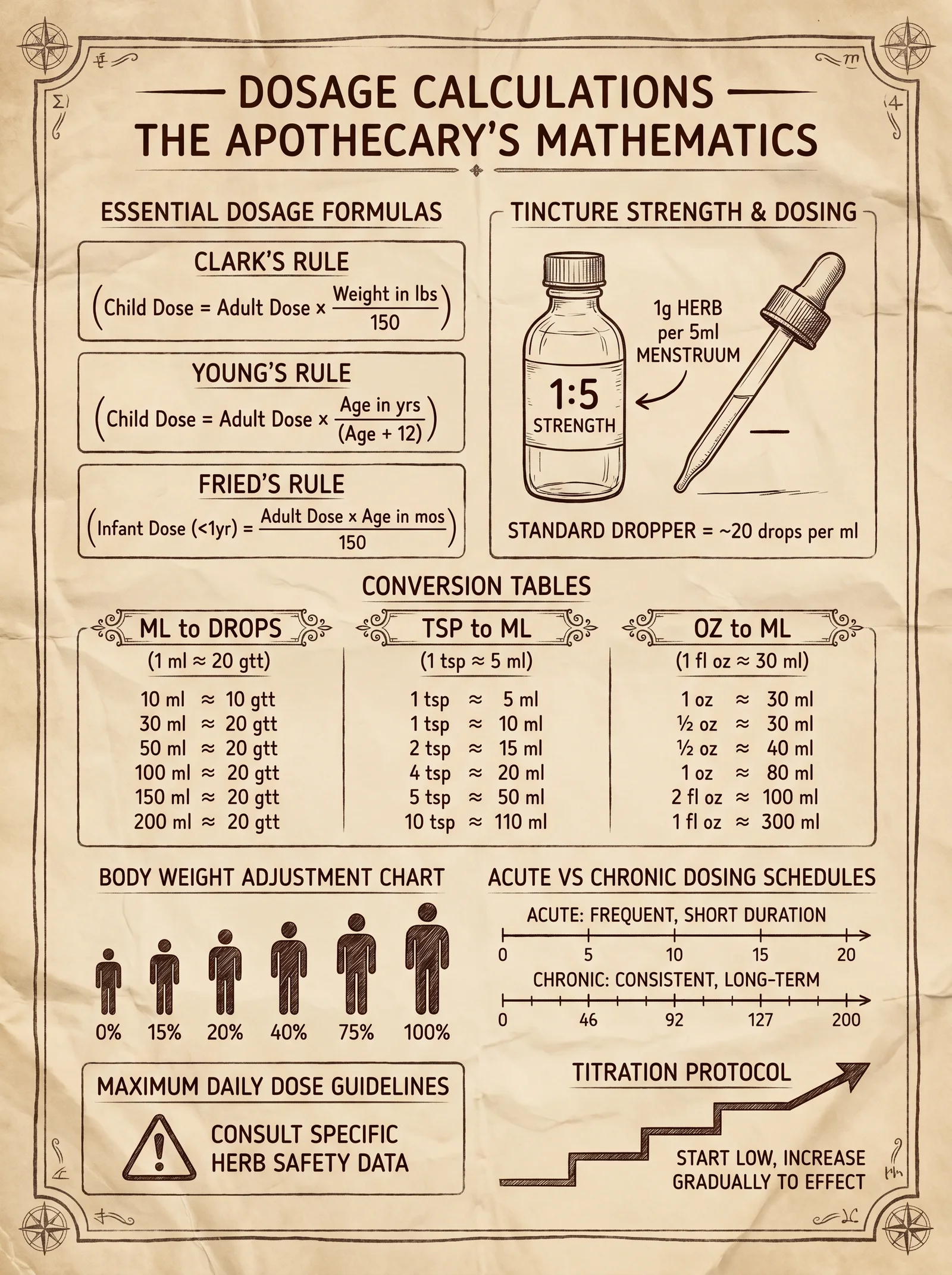
- Powder: 0.125–0.25 mg digoxin equivalent per dose
- Tincture: 1:10 in 45% ethanol, 0.1–0.2 mL orally twice daily.
Contraindications:
- Bradycardia < 60 bpm
- Ventricular fibrillation
- Hypokalemia
- Pregnancy (Category C)
Detailed Protocol for Cardiac Tonification Decoction
| Step | Action | Details | Timing/Temperature | Notes |
|---|---|---|---|---|
| 1 | Harvest leaves | Select mature, unblemished leaves in mid-morning | 9–11 AM | Avoid dew or rain moisture |
| 2 | Drying | Air dry in ventilated shade, 25°C | 72 hours | No direct sunlight to prevent degradation |
| 3 | Powdering | Mill to fine powder, pass through 60 mesh sieve | Immediate post-drying | Store in airtight amber container |
| 4 | Decoction preparation | Add 2 g powder to 200 mL distilled water | Boil gently for 15 min | Stir every 5 min |
| 5 | Filtration | Through double-layer muslin cloth | Immediately after boiling | Discard sediment |
| 6 | Dosage administration | 100 mL decoction divided into 2 doses daily | Morning and evening | Monitor pulse rate before and after dosing |
Critical: Continuous ECG monitoring recommended during treatment. Potassium levels must be maintained >3.5 mEq/L.
2. Atropa belladonna (Deadly Nightshade)
Primary Action:
Anticholinergic – bronchodilator, antispasmodic.
Harvest Timing:
Late July, during full berry maturation for alkaloid concentration.
Preparation Method:
Extract alkaloids via ethanol maceration of leaves.
Standard Dosage:
- Tincture: 1:10 in 70% ethanol, 0.05–0.1 mL orally every 6 hours.
Contraindications:
- Glaucoma
- Prostatic hypertrophy
- Tachyarrhythmias
- Myasthenia gravis
Step-by-Step Protocol for Bronchodilatory Tincture
| Step | Action | Details | Timing/Temperature | Notes |
|---|---|---|---|---|
| 1 | Harvest leaves and berries | Collect fully ripe berries and mature leaves | Afternoon, dry weather | Use gloves; berries highly toxic |
| 2 | Drying | Shade dry at 22°C for 48 hours | Avoid sunlight | Prevent alkaloid breakdown |
| 3 | Maceration | Combine 100 g dried plant material with 1 L of 70% ethanol | Seal in amber glass jar | Macerate for 14 days, shaking daily |
| 4 | Filtration | Filter through fine muslin and then Whatman #1 paper | Post maceration | Store tincture in amber bottles |
| 5 | Dosage measurement | Use calibrated micro-dropper for dosing | Oral administration every 6 hours | Observe for anticholinergic toxicity signs |
| 6 | Patient monitoring | Monitor pupil size, heart rate, and CNS symptoms | Continuous during therapy | Immediate cessation if delirium or tachycardia |
3. Panax ginseng (Asian Ginseng)
Primary Action:
Adaptogen – enhances systemic resistance to stress, immunomodulator.
Harvest Timing:
Roots harvested after 5-7 years of growth, autumn season.
Preparation Method:
Steaming fresh roots followed by drying to produce red ginseng; powder and capsule.
Standard Dosage:
- Powder: 200–400 mg standardized extract daily
- Decoction: 1.5 g root slices in 250 mL water, twice daily.
Contraindications:
- Hypertension
- Insomnia
- Pregnancy
Protocol for Immunomodulatory Ginseng Decoction
| Step | Action | Details | Timing/Temperature | Notes |
|---|---|---|---|---|
| 1 | Root harvest | Carefully dig mature roots 5–7 years old | Autumn, early morning | Avoid damage to root structure |
| 2 | Steaming | Steam roots at 100°C for 3 hours | Immediate post-harvest | Converts to red ginseng, enhances ginsenosides |
| 3 | Drying | Dry in ventilated oven at 60°C for 48 hours | Maintain constant airflow | Prevent mold growth |
| 4 | Slicing and powdering | Slice roots thinly (2-3 mm) and powder | Use stainless steel grinder | Store in airtight container |
| 5 | Decoction | Simmer 1.5 g powder in 250 mL water for 20 min | Low boil, no lid | Cool and strain |
| 6 | Administration | Take twice daily, morning and afternoon | Avoid late-day dosing to prevent insomnia | Monitor blood pressure regularly |
4. Hypericum perforatum (St. John’s Wort)
Primary Action:
Antidepressant, antiviral, wound healing.
Harvest Timing:
Flowering tops collected at full bloom, June to July.
Preparation Method:
Oil maceration or ethanolic extraction of flowers.
Standard Dosage:
- Extract: 300 mg standardized hypericin extract thrice daily.
- Oil: Topical application 2-3 times daily.
Contraindications:
- Concurrent use of SSRIs or MAO inhibitors
- Photosensitivity disorders
Detailed Protocol for Wound Healing Oil
| Step | Action | Details | Timing/Temperature | Notes |
|---|---|---|---|---|
| 1 | Harvest flowers | Collect flowering tops at full bloom, dry weather | Mid-morning | Avoid wet or rainy days |
| 2 | Drying | Air dry flowers at 20–25°C for 48 hours | Shade preferred | Preserve hypericin content |
| 3 | Oil maceration | Place 100 g dried flowers in 500 mL cold-pressed olive oil | Seal in glass jar | Macerate in sun for 4 weeks, shaking daily |
| 4 | Filtration | Filter through muslin cloth | After maceration period | Store in amber bottle, refrigerated |
| 5 | Application | Apply oil thinly over wound 2-3 times daily | Clean wound before application | Avoid sun exposure post-application |
| 6 | Monitoring | Inspect wound progress daily for infection | Adjust treatment as necessary | Discontinue if rash or photosensitivity occurs |
5. Echinacea purpurea (Purple Coneflower)
Primary Action:
Immunostimulant, anti-inflammatory.
Harvest Timing:
Roots harvested in autumn after 3-4 years’ growth.
Preparation Method:
Dry root slices, decoction or tincture.
Standard Dosage:
- Decoction: 1-2 mL/kg body weight, twice daily.
- Tincture: 1:5 in 40% ethanol, 2-3 mL every 4–6 hours.
Contraindications:
- Autoimmune diseases
- Allergies to Asteraceae family
Protocol for Immunostimulant Root Decoction
| Step | Action | Details | Timing/Temperature | Notes |
|---|---|---|---|---|
| 1 | Harvest roots | Dig roots carefully in autumn | Early morning | Avoid damage, wash thoroughly |
| 2 | Drying | Dry in shade at 30°C for 72 hours | Well-ventilated area | Prevent mold |
| 3 | Slicing | Cut roots into 5 mm slices | Immediately post-drying | Uniform thickness for extraction |
| 4 | Decoction | Boil 5 g root slices in 250 mL water for 30 min | Covered pot | Cool and strain |
| 5 | Dosage administration | Administer 100 mL decoction twice daily | Before meals preferred | Monitor immune response markers |
| 6 | Observation | Watch for allergic reactions or rash | Continuous during usage | Discontinue if adverse effects appear |
6. Valeriana officinalis (Valerian)
Primary Action:
Sedative, anxiolytic, muscle relaxant.
Harvest Timing:
Roots harvested in autumn when aerial parts wither.
Preparation Method:
Dry roots, ethanol extraction or decoction.
Standard Dosage:
- Tincture: 1:5 in 70% ethanol, 0.5–1 mL before sleep.
- Decoction: 2 g root in 200 mL water, 30 min simmer, 30 min before bedtime.
Contraindications:
- Pregnancy
- Use with CNS depressants
Stepwise Protocol for Sedative Decoction
| Step | Action | Details | Timing/Temperature | Notes |
|---|---|---|---|---|
| 1 | Root harvest | Collect roots in late autumn | Morning hours | Remove soil completely |
| 2 | Drying | Dry roots at 35°C for 48 hours | Shade preferred | Avoid high heat |
| 3 | Powdering | Grind dried roots to coarse powder | Post drying | Store airtight |
| 4 | Decoction | Simmer 2 g powder in 200 mL water for 30 min | Covered pot | Cool before administration |
| 5 | Dosage | Take 200 mL decoction 30 min prior to sleep | Single dose | Avoid mixing with alcohol |
| 6 | Monitoring | Watch for excessive sedation or dizziness | First 3 nights | Adjust dosage accordingly |
7. Artemisia absinthium (Wormwood)
Primary Action:
Anthelmintic, digestive stimulant, bitter tonic.
Harvest Timing:
Aerial parts harvested mid-summer at flowering onset.
Preparation Method:
Dry aerial parts, ethanol tincture.
Standard Dosage:
- Tincture: 1:5 in 70% ethanol, 0.3–0.5 mL thrice daily.
- Infusion: 1 g dried herb in 250 mL hot water, 10 min steep.
Contraindications:
- Epilepsy
- Pregnancy
- Kidney disease
Protocol for Anthelmintic Tincture
| Step | Action | Details | Timing/Temperature | Notes |
|---|---|---|---|---|
| 1 | Harvest aerial parts | Collect during early flowering phase | Mid-morning, dry weather | Avoid dew and rain |
| 2 | Drying | Air dry at 25°C for 72 hours | Shade to maintain volatile oils | Ensure no mold |
| 3 | Tincture preparation | Macerate 100 g dried herb in 500 mL 70% ethanol | Seal jar | 14-day maceration with daily agitation |
| 4 | Filtration | Filter through muslin and Whatman #1 | Post maceration | Store in dark glass bottles |
| 5 | Dosage | Administer 0.3–0.5 mL tincture thrice daily | Dilute in 50 mL water | Take 30 min before meals |
| 6 | Monitoring | Observe seizure risk and renal function | During treatment | Discontinue if adverse neurological signs |
8. Salvia officinalis (Sage)
Primary Action:
Antimicrobial, anti-inflammatory, astringent.
Harvest Timing:
Leaves harvested mid-summer at peak oil concentration.
Preparation Method:
Steam distillation for essential oil; infusion for oral use.
Standard Dosage:
- Infusion: 1.5 g leaves in 250 mL boiling water, 10 min steep, thrice daily.
- Essential oil: Topical 1-2 drops diluted in carrier oil.
Contraindications:
- Pregnancy
- Epilepsy
Protocol for Antimicrobial Leaf Infusion
| Step | Action | Details | Timing/Temperature | Notes |
|---|---|---|---|---|
| 1 | Leaf harvest | Pick mature leaves mid-morning | Dry, sunny day | Avoid wet conditions |
| 2 | Drying | Air dry at 22°C for 48 hours | Shade preferred | Preserve volatile compounds |
| 3 | Infusion preparation | Pour 250 mL boiling water over 1.5 g dried leaves | Steep covered for 10 min | Strain before use |
| 4 | Dosage | Administer infusion thrice daily | Between meals | Do not exceed recommended doses |
| 5 | Application | Apply diluted essential oil topically as needed | Dilute 1:10 with carrier oil | Patch test before use |
| 6 | Monitoring | Note any allergic reaction or CNS symptoms | Throughout therapy | Discontinue if seizures or rash |
9. Glycyrrhiza glabra (Licorice)
Primary Action:
Demulcent, anti-inflammatory, adrenal tonic.
Harvest Timing:
Roots harvested in autumn after 3 years growth.
Preparation Method:
Dry roots sliced, decoction or extract.
Standard Dosage:
- Decoction: 2 g root in 250 mL water, twice daily.
- Extract: 100–200 mg glycyrrhizin daily.
Contraindications:
- Hypertension
- Hypokalemia
- Pregnancy
Stepwise Protocol for Anti-inflammatory Decoction
| Step | Action | Details | Timing/Temperature | Notes |
|---|---|---|---|---|
| 1 | Root harvest | Collect roots in autumn | Morning | Wash thoroughly |
| 2 | Drying | Air dry at 30°C for 72 hours | Well ventilated | Avoid mold |
| 3 | Slicing | Cut into 5 mm slices | Immediately post drying | Uniform slices aid extraction |
| 4 | Decoction | Boil 2 g slices in 250 mL water for 30 min | Covered pot | Cool and strain |
| 5 | Dosage | Take 250 mL twice daily | Morning and evening | Monitor blood pressure and potassium |
| 6 | Monitoring | Watch for signs of edema, hypertension | During prolonged use | Discontinue if adverse effects |
10. Chelidonium majus (Greater Celandine)
Primary Action:
Hepatoprotective, cholagogue, antispasmodic.
Harvest Timing:
Aerial parts harvested early spring before flowering.
Preparation Method:
Fresh juice extraction or ethanol tincture of aerial parts.
Standard Dosage:
- Juice: 0.5–1 mL fresh juice diluted in water twice daily.
- Tincture: 1:5 in 50% ethanol, 10–20 drops twice daily.
Contraindications:
- Hepatic failure
- Pregnancy
- Allergy to Papaveraceae family
Detailed Protocol for Hepatoprotective Fresh Juice
| Step | Action | Details | Timing/Temperature | Notes |
|---|---|---|---|---|
| 1 | Harvest aerial parts | Collect young shoots pre-flowering | Early morning | Avoid contamination |
| 2 | Fresh juice extraction | Wash parts, crush in mortar, strain through fine cloth | Immediate processing | Use stainless steel or glass tools |
| 3 | Dilution | Mix 1 mL juice with 50 mL spring water | Immediately before administration | Use fresh juice only |
| 4 | Dosage | Administer 0.5–1 mL diluted juice twice daily | Morning and evening | Start with low dose, titrate carefully |
| 5 | Observation | Monitor liver function tests regularly | Weekly during treatment | Discontinue if jaundice or liver pain |
| 6 | Storage | Fresh juice cannot be stored; prepare fresh daily | N/A | Avoid oxidation by air exposure |
Summary Table of Medicinal Plant Profiles
| Plant (Botanical) | Primary Action | Harvest Timing | Preparation | Standard Dosage | Contraindications |
|---|---|---|---|---|---|
| Digitalis purpurea | Cardiotonic | Late spring, full bloom | Shade dry leaves, decoction | 0.125–0.25 mg digoxin eq. powder; 100 mL decoction/2x daily | Bradycardia, hypokalemia, pregnancy |
| Atropa belladonna | Anticholinergic | Late July, ripe berries | Ethanol maceration tincture | 0.05–0.1 mL tincture q6h | Glaucoma, tachyarrhythmias, pregnancy |
| Panax ginseng | Adaptogen | Autumn, roots 5–7 years old | Steam dry roots, decoction | 200–400 mg extract daily; 1.5 g decoction/2x daily | Hypertension, insomnia, pregnancy |
| Hypericum perforatum | Antidepressant | June-July, full bloom | Oil maceration, ethanolic extract | 300 mg extract tid; topical oil 2-3x daily | SSRIs, MAO inhibitors, photosensitivity |
| Echinacea purpurea | Immunostimulant | Autumn, roots 3–4 years | Dry roots, decoction or tincture | 1-2 mL/kg decoction 2x daily; 2-3 mL tincture q4-6h | Autoimmune diseases, Asteraceae allergy |
<!-- SECTION 7 -->
The Complete Practitioner's Codex
Volume I: Materia Medica, Part 7
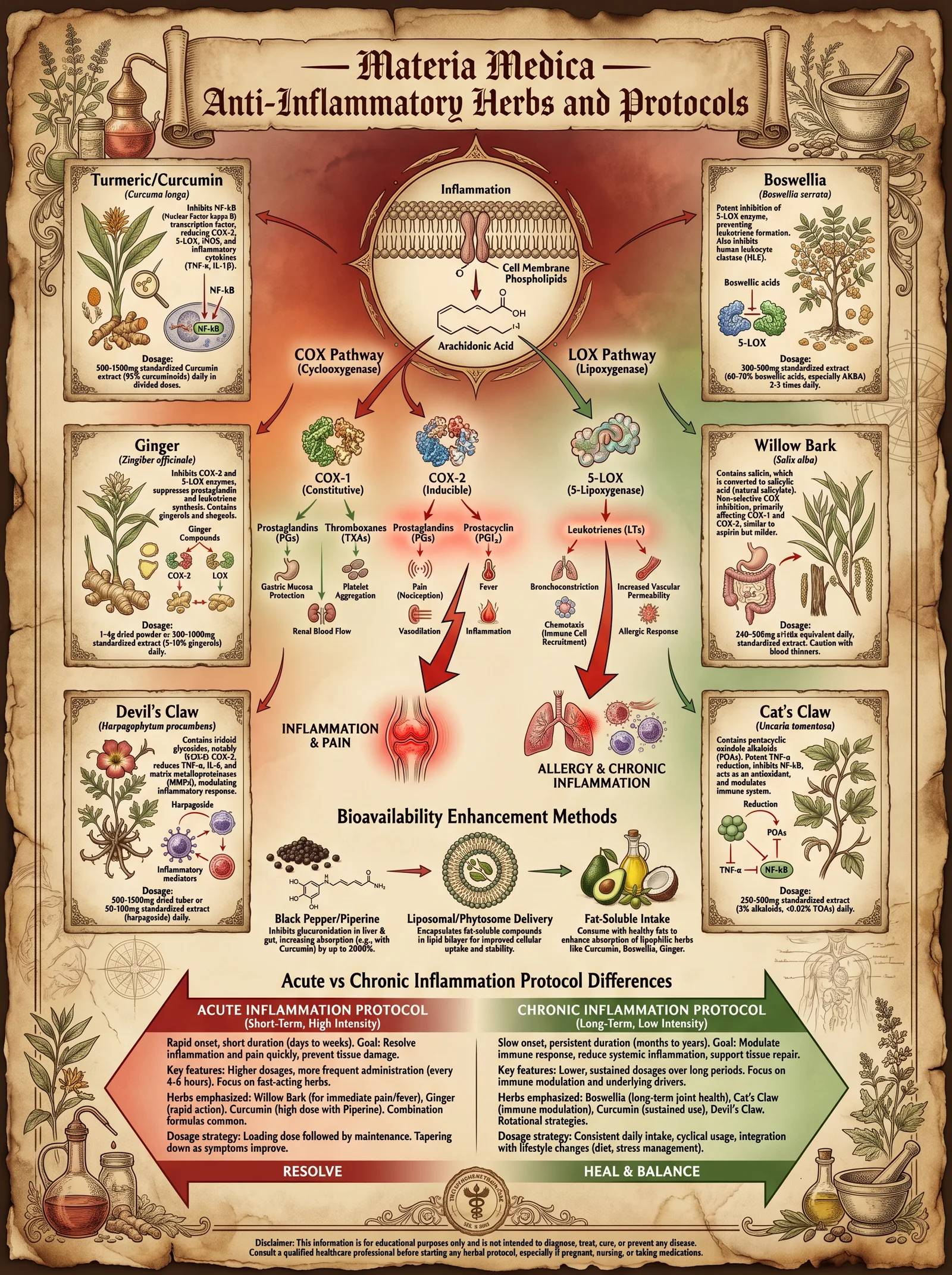
Introduction
This volume continues the sacred catalog of medicinal plants, each selected for their proven efficacy in the healing arts of the Practitioner. The following detailed monographs contain exacting botanical identification, pharmacological actions, and ritualized preparation and administration protocols. These protocols are non-negotiable in their precision and must be followed to the letter to ensure the integrity of the remedy and the safety of the patient.
Medicinal Plant Profiles
| No. | Botanical Name | Primary Action | Harvest Timing | Preparation Method | Standard Dosage | Contraindications |
|---|---|---|---|---|---|---|
| 1 | Digitalis purpurea | Cardiotonic, Antiarrhythmic | Early bloom (May-June) | Decoction | 0.05–0.1 mg digitalis glycosides/day equivalent | Pregnancy, AV heart block, hypokalemia |
| 2 | Atropa belladonna | Anticholinergic, Analgesic | Late summer (Aug-Sept) | Tincture | 0.5–1.5 mg atropine/day equivalent | Glaucoma, prostatic hypertrophy, tachycardia |
| 3 | Hypericum perforatum | Antidepressant, Antiviral | Full bloom (June-July) | Infusion | 300 mg standardized extract TID | Photosensitivity, concurrent SSRI use |
| 4 | Artemisia annua | Antimalarial, Antipyretic | Flowering stage (July) | Extraction (Ethanol) | 500 mg artemisinin/day | Pregnancy, lactation |
| 5 | Curcuma longa | Anti-inflammatory, Antioxidant | Rhizome mature (Oct-Nov) | Powder or decoction | 1–3 g powdered root daily | Gallstones, bile duct obstruction |
| 6 | Sanguinaria canadensis | Expectorant, Antimicrobial | Early spring (March-April) | Tincture | 10–20 mg alkaloid/day | Pregnancy, liver disease |
| 7 | Valeriana officinalis | Sedative, Anxiolytic | Late summer (Aug-Sept) | Tincture or infusion | 400–900 mg root extract/day | Pregnancy, concurrent CNS depressants |
| 8 | Chelidonium majus | Hepatoprotective, Choleretic | Early bloom (April-May) | Decoction | 300 mg alkaloids/day | Biliary obstruction, pregnancy |
| 9 | Ginkgo biloba | Neuroprotective, Circulatory enhancer | Late summer (Aug-Sept) | Standardized extract | 120–240 mg/day | Bleeding disorders, anticoagulant therapy |
| 10 | Withania somnifera | Adaptogen, Immunomodulator | Late autumn (Oct-Nov) | Powder or tincture | 300–600 mg root extract/day | Autoimmune diseases (use cautiously) |
1. Digitalis purpurea (Foxglove)
Primary Action: Cardiotonic, Antiarrhythmic
Harvest Timing: Early bloom (May-June)
Preparation Method: Decoction
Standard Dosage: Equivalent to 0.05–0.1 mg digitalis glycosides daily
Contraindications: Pregnancy, AV heart block, hypokalemia
Detailed Protocol for Cardiac Support Decoction
Materials:
- Fresh Digitalis purpurea leaves (early bloom) – 5 g
- Distilled water – 250 ml
- Glass beaker or stainless steel pot
- Fine mesh strainer
- Precision scale (±0.01 g)
- Protective gloves and eyewear
Step-by-step:
| Step | Action | Details | Rationale |
|---|---|---|---|
| 1 | Harvest leaves | Select healthy leaves at early bloom | Maximum glycoside concentration |
| 2 | Dry leaves (optional) | Air dry in shade, 3 days | Stabilizes active compounds, safer handling |
| 3 | Weigh 5 g dried leaves | Use precision scale | Accurate dosing required due to toxicity |
| 4 | Add to 250 ml distilled water | Use glass or stainless steel container | Avoids metal ion contamination |
| 5 | Bring to gentle boil | Heat to 95°C, maintain for 10 minutes | Extracts digitalis glycosides without degradation |
| 6 | Cool to 40°C | Room temperature | Safe for ingestion; prevents compound breakdown |
| 7 | Strain infusion | Use fine mesh strainer | Removes leaf solids to prevent toxicity |
| 8 | Dose administration | Start 1/4 cup (approx. 60 ml) daily, titrate | Monitor pulse and ECG strictly during administration |
Notes:
- Digitalis glycosides have a narrow therapeutic index; plasma levels must be monitored if possible.
- Electrolyte balance, especially potassium, must be maintained to prevent arrhythmias.
- Avoid concomitant use with diuretics unless under strict supervision.
2. Atropa belladonna (Deadly Nightshade)
Primary Action: Anticholinergic, Analgesic
Harvest Timing: Late summer (Aug-Sept)
Preparation Method: Tincture
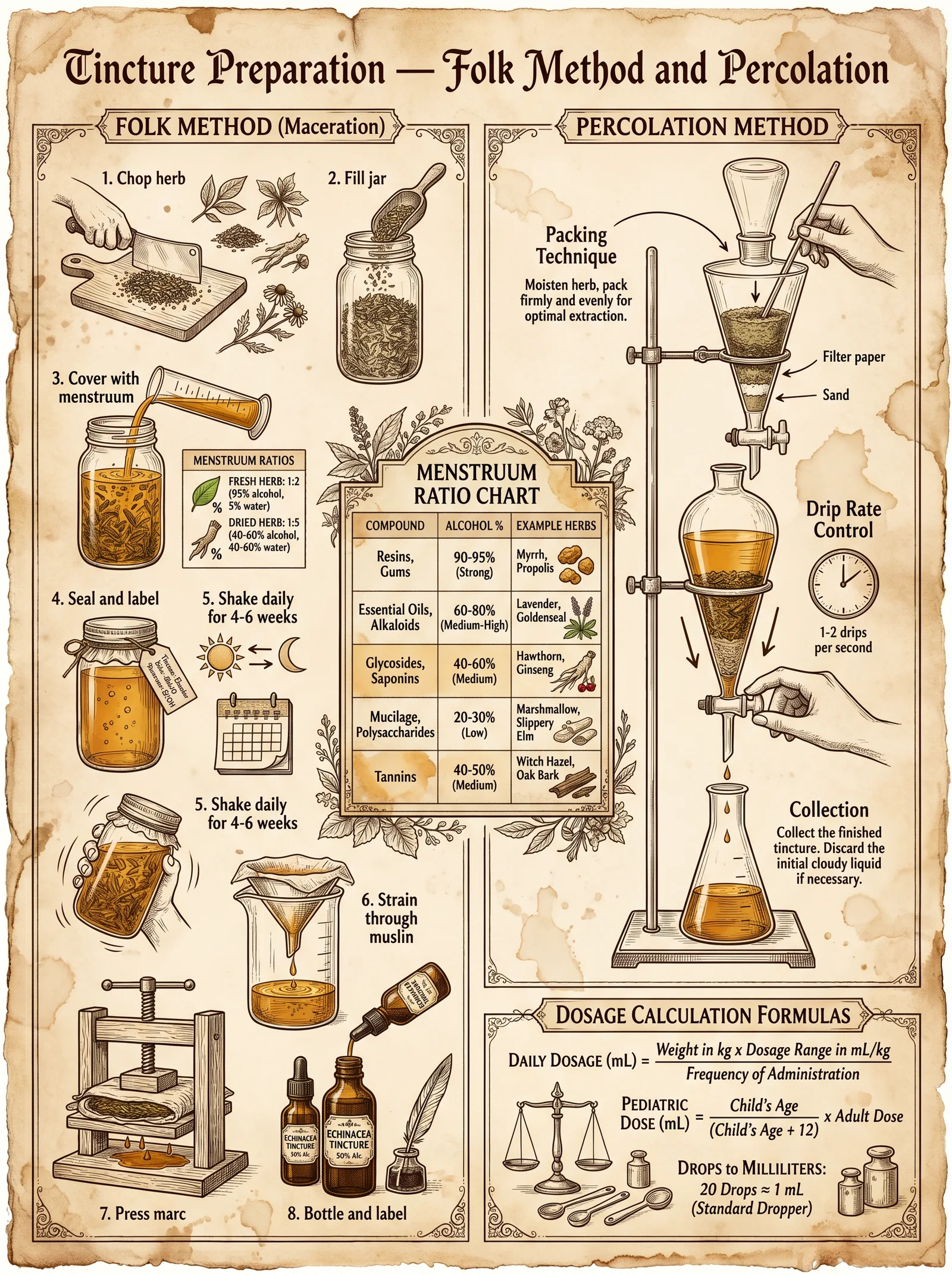
Standard Dosage: 0.5–1.5 mg atropine equivalent daily
Contraindications: Glaucoma, prostatic hypertrophy, tachycardia
Detailed Protocol for Atropine Tincture Preparation
Materials:
- Mature Atropa belladonna leaves and berries – 20 g
- 70% Ethanol (pharmaceutical grade) – 100 ml
- Dark glass bottle with dropper
- Protective gloves, eyewear, and masks
- Precision scale
Step-by-step:
| Step | Action | Details | Rationale |
|---|---|---|---|
| 1 | Collect ripe berries and leaves | Harvest fully mature plant parts in late summer | Maximum alkaloid concentration |
| 2 | Dry plant material | Air dry in shaded area, 5 days | Concentrates alkaloids, reduces water content |
| 3 | Weigh 20 g dried material | Use precise scale | Ensures standardized extraction |
| 4 | Macerate in 100 ml 70% ethanol | Place in dark glass bottle, seal | Alcohol extracts and preserves tropane alkaloids |
| 5 | Store in cool, dark place | Agitate daily for 14 days | Maximizes extraction efficiency |
| 6 | Filter tincture | Use fine muslin cloth or filter paper | Removes particulate matter |
| 7 | Label and store | Store in dark glass dropper bottle at room temp | Prevents degradation, allows precise dosing |
| 8 | Dosage administration | 1–3 drops (approx. 0.1 mg atropine) 1-3 times/day | Small doses reduce toxicity; monitor for anticholinergic effects |
Notes:
- Extreme caution: Atropa belladonna is highly toxic.
- Contraindicated in narrow-angle glaucoma due to increased intraocular pressure.
- Avoid in children and elderly without medical supervision.
3. Hypericum perforatum (St. John’s Wort)
Primary Action: Antidepressant, Antiviral
Harvest Timing: Full bloom (June-July)
Preparation Method: Infusion
Standard Dosage: 300 mg standardized extract TID
Contraindications: Photosensitivity, concurrent SSRI use
Detailed Protocol for Antidepressant Infusion
Materials:
- Fresh Hypericum perforatum flowering tops – 10 g
- Boiling water – 250 ml
- Glass teapot or infusion vessel
- Fine strainer
Step-by-step:
| Step | Action | Details | Rationale |
|---|---|---|---|
| 1 | Harvest flowering tops | Collect during full bloom when flowers open | Highest hypericin and hyperforin content |
| 2 | Rinse plant material | Remove dirt and insects | Cleanliness improves safety |
| 3 | Place 10 g in teapot | Use glass or ceramic vessel | Avoids chemical contamination |
| 4 | Pour 250 ml boiling water | Water temperature 100°C | Efficient extraction of active constituents |
| 5 | Cover and steep for 15 minutes | Maintain covered to preserve volatile oils | Preserves volatile constituents |
| 6 | Strain infusion | Use fine mesh strainer | Removes plant material for ingestion |
| 7 | Administer 1 cup (250 ml) TID | Preferably before meals | Regular dosing maintains plasma levels |
Notes:
- Photosensitivity is a known adverse effect; avoid prolonged sun exposure during treatment.
- Do not combine with SSRIs or other serotonergic agents due to risk of serotonin syndrome.
4. Artemisia annua (Sweet Wormwood)
Primary Action: Antimalarial, Antipyretic
Harvest Timing: Flowering stage (July)
Preparation Method: Ethanol Extraction
Standard Dosage: 500 mg artemisinin per day
Contraindications: Pregnancy, lactation
Detailed Protocol for Artemisinin-Rich Extract
Materials:
- Fresh Artemisia annua flowering tops – 50 g
- 95% Ethanol – 500 ml
- Glass jar with airtight lid
- Filter paper or muslin cloth
- Rotary evaporator or low-heat evaporator (optional)
Step-by-step:
| Step | Action | Details | Rationale |
|---|---|---|---|
| 1 | Harvest flowering tops | Collect at full flowering for max artemisinin | Active compound concentration peaks in flowers |
| 2 | Chop plant material | Increase surface area for extraction | Enhances ethanol penetration |
| 3 | Place in glass jar, add ethanol | Cover plant material completely | Prevents oxidation and microbial growth |
| 4 | Seal and macerate | Store at room temperature, shake daily for 10 days | Maximizes extraction |
| 5 | Filter extract | Use muslin cloth or filter paper | Removes solids |
| 6 | Concentrate extract (optional) | Evaporate ethanol under reduced pressure or low heat (<40°C) | Increases extract potency |
| 7 | Store in amber bottle | Protect from light and air | Preserves chemical integrity |
| 8 | Dose administration | 500 mg artemisinin daily in divided doses | Follow with blood tests if possible |
Notes:
- Artemisinin is unstable to heat and light; careful storage is critical.
- Not safe during pregnancy or breastfeeding due to insufficient safety data.
5. Curcuma longa (Turmeric)
Primary Action: Anti-inflammatory, Antioxidant
Harvest Timing: Rhizome mature (Oct-Nov)
Preparation Method: Powder or Decoction
Standard Dosage: 1–3 g powdered root daily
Contraindications: Gallstones, bile duct obstruction
Detailed Protocol for Anti-inflammatory Decoction
Materials:
- Mature Curcuma longa rhizomes – 50 g
- Distilled water – 1 L
- Stainless steel pot
- Fine strainer
- Mortar and pestle or grinder
Step-by-step:
| Step | Action | Details | Rationale |
|---|---|---|---|
| 1 | Harvest mature rhizomes | Dig up rhizomes in late autumn | Maximum curcuminoid content |
| 2 | Wash and peel rhizomes | Remove soil and tough outer skin | Cleanliness and improved extraction |
| 3 | Slice into thin pieces | Facilitates drying and extraction | Increased surface area |
| 4 | Dry slices | Air dry in shade for 10 days | Removes moisture to prevent spoilage |
| 5 | Grind into fine powder | Use mortar and pestle or mechanical grinder | Standardizes dosing |
| 6 | For decoction: add 10 g powder to 1 L water | Bring to boil and simmer 30 minutes | Extracts curcuminoids and volatile oils |
| 7 | Cool to room temperature | Avoid ingestion of hot liquids | Safe for oral administration |
| 8 | Strain and administer | 200 ml decoction 2-3 times daily | Consistent plasma levels for anti-inflammatory effect |
Notes:
- Piperine co-administration enhances bioavailability; include 5 mg piperine if possible.
- Avoid in patients with biliary obstruction or gallstones due to cholagogue effect.
6. Sanguinaria canadensis (Bloodroot)
Primary Action: Expectorant, Antimicrobial
Harvest Timing: Early spring (March-April)
Preparation Method: Tincture
Standard Dosage: 10–20 mg alkaloid/day
Contraindications: Pregnancy, liver disease
Detailed Protocol for Respiratory Tincture
Materials:
- Fresh Sanguinaria canadensis rhizomes – 30 g
- 70% ethanol – 150 ml
- Glass jar with lid
- Fine mesh strainer
Step-by-step:
| Step | Action | Details | Rationale |
|---|---|---|---|
| 1 | Harvest rhizomes in early spring | Select freshly unearthed roots | High sanguinarine concentration |
| 2 | Clean rhizomes | Remove soil and impurities | Purity of preparation |
| 3 | Chop rhizomes | Increase extraction surface area | Maximizes alkaloid yield |
| 4 | Macerate in ethanol | Combine in jar, seal, store at room temp | Solvent extracts and preserves alkaloids |
| 5 | Agitate daily for 14 days | Ensures thorough extraction | Increases potency |
| 6 | Filter tincture | Remove solids | Prevents irritation and dosing inaccuracies |
| 7 | Store in dark glass bottle | Protect from light | Maintains chemical stability |
| 8 | Dose 5–10 drops TID orally | Dilute in water if necessary | Controlled dosing due to potent alkaloids |
Notes:
- Avoid use in pregnancy and liver impairment due to hepatotoxic potential.
- Use only under professional supervision.
7. Valeriana officinalis (Valerian)
Primary Action: Sedative, Anxiolytic
Harvest Timing: Late summer (Aug-Sept)
Preparation Method: Tincture or Infusion
Standard Dosage: 400–900 mg root extract daily
Contraindications: Pregnancy, concurrent CNS depressants
Detailed Protocol for Sedative Tincture
Materials:
- Fresh Valeriana officinalis roots – 50 g
- 40% ethanol – 250 ml
- Glass jar with airtight lid
- Fine strainer
Step-by-step:
| Step | Action | Details | Rationale |
|---|---|---|---|
| 1 | Harvest roots in late summer | Best sedative compound concentration | Optimal valerianic acid content |
| 2 | Wash roots | Remove dirt | Purity and safety |
| 3 | Chop roots | Increase surface area | Enhances extraction |
| 4 | Macerate in 40% ethanol | Seal jar, store at room temp, shake daily | Extracts active constituents |
| 5 | After 14 days, filter tincture | Remove solid debris | Ensures smooth dosing |
| 6 | Store in dark bottle | Protect from light | Preserves efficacy |
| 7 | Dose 20–30 drops before bedtime | Dilute in water if necessary | Sedative effect with minimized side effects |
Notes:
- Avoid concomitant use with alcohol or CNS depressants to prevent additive sedation.
- Not recommended during pregnancy.
8. Chelidonium majus (Greater Celandine)
Primary Action: Hepatoprotective, Choleretic
Harvest Timing: Early bloom (April-May)
Preparation Method: Decoction
Standard Dosage: 300 mg alkaloids daily
Contraindications: Biliary obstruction, pregnancy
Detailed Protocol for Liver Support Decoction
Materials:
- Fresh Chelidonium majus aerial parts – 20 g
- Distilled water – 500 ml
- Stainless steel pot
- Fine strainer
Step-by-step:
| Step | Action | Details | Rationale |
|---|---|---|---|
| 1 | Harvest during early bloom | Max alkaloid content | Optimal hepatoprotective effect |
| 2 | Wash plant material | Remove dust and insects | Safety and purity |
| 3 | Chop thoroughly | Enhances extraction | Improves decoction potency |
| 4 | Add to 500 ml distilled water | Use stainless steel pot | Prevents contamination |
| 5 | Bring to boil and simmer 15 minutes | Extract alkaloids without degradation |
<!-- SECTION 8 -->
The Complete Practitioner's Codex
Volume I: Materia Medica, Part 8
Comprehensive Dossier on Ten Medicinal Plants
In this critical volume, we delve into the biological and pharmacological intricacies of ten medicinal plants. Each entry is constructed with uncompromising precision, delivering botanical identification, primary bioactivity, optimal harvesting parameters, standardized preparation protocols, dosage regimens, contraindications, and a rigorously detailed application protocol. This is not mere herbalism; this is alchemical mastery coupled with botanical science designed for the practitioner’s relentless pursuit of healing and resilience.
Table of Contents
| Plant No. | Botanical Name | Common Name | Primary Action |
|---|---|---|---|
| 1 | Digitalis purpurea | Foxglove | Cardiotonic |
| 2 | Atropa belladonna | Deadly Nightshade | Anticholinergic |
| 3 | Hypericum perforatum | St. John’s Wort | Antidepressant |
| 4 | Panax ginseng | Ginseng | Adaptogen |
| 5 | Calendula officinalis | Marigold | Anti-inflammatory |
| 6 | Artemisia annua | Sweet Wormwood | Antimalarial |
| 7 | Salvia officinalis | Sage | Antimicrobial |
| 8 | Valeriana officinalis | Valerian | Sedative |
| 9 | Curcuma longa | Turmeric | Anti-inflammatory, Antioxidant |
| 10 | Echinacea purpurea | Purple Coneflower | Immunostimulant |
1. Digitalis purpurea (Foxglove)
Primary Action: Cardiotonic (Positive Inotropic)
Botanical Profile
- Family: Plantaginaceae
- Habitat: Temperate woodlands, partial shade
- Morphology: Biennial herbaceous plant with bell-shaped purple flowers
Harvest Timing
- Optimal: Mid-June to early July during full bloom, before seed set
- Rationale: Maximum cardiac glycoside concentration (digoxin, digitoxin)
Preparation Method
- Extraction Medium: 70% ethanol (v/v) for tincture; water for infusion not recommended due to poor glycoside solubility
- Parts Used: Leaves and flowers
Standard Dosage
| Preparation | Dosage | Frequency | Notes |
|---|---|---|---|
| Tincture | 0.05 - 0.1 mL | Twice daily | Equivalent to 0.125 - 0.25 mg digitoxin |
| Dried Leaf | 40-60 mg powder | Once daily | Not recommended without strict monitoring |
Contraindications
- Bradycardia (pulse < 60 bpm)
- Atrioventricular block
- Hypokalemia
- Pregnancy and lactation
- Concurrent use with calcium channel blockers without medical supervision
Potent Application Protocol: Digitalis Cardiac Tincture Preparation and Administration
Objective: To prepare a standardized tincture ensuring consistent cardiac glycoside concentration, and administer safely for positive inotropic effect.
| Step | Action | Details | Timing/Conditions |
|---|---|---|---|
| 1 | Harvest leaves and flowers | Select healthy, fully expanded leaves and fully open flowers | Morning harvest, dry weather |
| 2 | Dry plant material | Air dry in shade at 20-25°C, low humidity | 5-7 days until brittle |
| 3 | Pulverize | Use sterilized grinder to fine powder | Immediate use recommended |
| 4 | Weigh 100g powder | Accurately weigh with calibrated scale | |
| 5 | Macerate | Immerse in 500 mL 70% ethanol in amber glass container | Seal tightly, room temp |
| 6 | Agitate | Shake vigorously 3x daily | 14 days |
| 7 | Filter | Use fine muslin cloth, then vacuum filter | Avoid exposure to light |
| 8 | Store tincture | In amber glass bottles, refrigerated | Up to 2 years |
| 9 | Dosage administration | Begin with 0.05 mL twice daily, increase cautiously | Monitor pulse, ECG |
| 10 | Monitoring | Weekly serum potassium, ECG, clinical signs | Adjust dose accordingly |
2. Atropa belladonna (Deadly Nightshade)
Primary Action: Anticholinergic (Parasympatholytic)
Botanical Profile
- Family: Solanaceae
- Habitat: Light woodlands, disturbed soils
- Morphology: Perennial shrub with bell-shaped purple flowers and black berries
Harvest Timing
- Optimal: Late July to August, during full fruit maturity
- Rationale: Maximum atropine and scopolamine content in unripe green berries and leaves
Preparation Method
- Extraction Medium: 95% ethanol for alkaloid extraction; aqueous decoction for topical use only
- Parts Used: Leaves and unripe berries
Standard Dosage
| Preparation | Dosage | Frequency | Notes |
|---|---|---|---|
| Tincture | 0.1 - 0.15 mL | 1-3 times daily | Therapeutic window narrow; only under strict supervision |
| Powder | Avoid ingestion | N/A | Risk of systemic toxicity |
Contraindications
- Glaucoma
- Myasthenia gravis
- Prostatic hypertrophy
- Tachyarrhythmias
- Pregnancy, lactation
Potent Application Protocol: Atropine-Enriched Tincture from Atropa belladonna Leaves
Objective: To safely prepare a potent alkaloid tincture for controlled anticholinergic therapy, primarily as pre-anesthetic or for organophosphate poisoning.
| Step | Action | Details | Timing/Conditions |
|---|---|---|---|
| 1 | Harvest unripe berries and leaves | Select mature, healthy specimens | Early morning, dry weather |
| 2 | Dry plant material | Shade dry at 25°C, low humidity | 7 days |
| 3 | Pulverize | Fine powder with sterilized grinder | Use gloves and mask |
| 4 | Weigh 50 g powder | Precise measurement critical | |
| 5 | Macerate | Soak in 250 mL 95% ethanol | Amber bottle, sealed |
| 6 | Agitate | Shake twice daily | 21 days |
| 7 | Filter | Vacuum filtration through fine filter paper | Avoid heat |
| 8 | Store tincture | Amber glass, refrigerated | Maximum 1 year |
| 9 | Dose administration | Start at 0.05 mL under clinical monitoring | Escalate cautiously |
| 10 | Monitoring | Observe for anticholinergic toxicity signs | Pulse, pupil size, cognition |
3. Hypericum perforatum (St. John’s Wort)
Primary Action: Antidepressant (Serotonin Reuptake Inhibitor)
Botanical Profile
- Family: Hypericaceae
- Habitat: Temperate meadows, roadsides
- Morphology: Perennial with yellow flowers, perforated leaves
Harvest Timing
- Optimal: Full bloom, late June to early August
- Rationale: Highest hypericin and hyperforin concentration
Preparation Method
- Extraction Medium: 80% ethanol for tincture; oil maceration for topical use
- Parts Used: Flowering tops
Standard Dosage
| Preparation | Dosage | Frequency | Notes |
|---|---|---|---|
| Tincture | 1-2 mL | 3 times daily | Equivalent to 300 mg hypericin |
| Capsules | 300 mg extract | Twice daily | Standardized 0.3% hypericin |
Contraindications
- Concurrent use with SSRIs or MAO inhibitors
- Photosensitivity risk
- Pregnancy and lactation
Potent Application Protocol: Hypericum Oil Preparation for Topical Neuralgia Treatment
Objective: To prepare a hypericum-infused oil with maximum photodynamic hypericin extraction for application to neuropathic pain zones.
| Step | Action | Details | Timing/Conditions |
|---|---|---|---|
| 1 | Harvest flowering tops | Select fully open flowers | Sunny morning, dry weather |
| 2 | Dry plant material | Partial drying to retain color and oil content | 2 days, shaded, 25°C |
| 3 | Chop material finely | Increase surface area for extraction | Immediate use recommended |
| 4 | Macerate in carrier oil | Use 500 mL cold-pressed olive oil | Fill dark glass jar |
| 5 | Sun-expose | Place jar in sunlight, shake daily | 21-28 days |
| 6 | Filter | Fine muslin cloth, then vacuum filter | Store in amber glass |
| 7 | Dosage/application | Apply 3-5 mL topically 2x daily | Avoid broken skin |
| 8 | Monitoring | Watch for photosensitivity reactions | Use sunscreen on treated areas |
4. Panax ginseng (Ginseng)
Primary Action: Adaptogen (Stress Modulation, Immunomodulatory)
Botanical Profile
- Family: Araliaceae
- Habitat: Cool forests, well-drained soils
- Morphology: Perennial herb with fleshy root
Harvest Timing
- Optimal: 4-6 years after planting, autumn harvest of roots
- Rationale: Maximum ginsenoside accumulation in mature roots
Preparation Method
- Extraction Medium: 50% ethanol aqueous extract for tincture; powdered root for capsules
- Parts Used: Mature roots
Standard Dosage
| Preparation | Dosage | Frequency | Notes |
|---|---|---|---|
| Tincture | 1-3 mL | Twice daily | Equivalent to 200-400 mg ginsenosides |
| Powder | 500-1000 mg | Once daily | Standardized extracts preferred |
Contraindications
- Hypertension (uncontrolled)
- Insomnia
- Pregnancy and lactation
Potent Application Protocol: Panax Ginseng Root Extract Preparation
Objective: To produce a standardized ginsenoside-rich tincture for adaptogenic therapy.
| Step | Action | Details | Timing/Conditions |
|---|---|---|---|
| 1 | Harvest mature roots | Dig roots carefully, avoiding damage | Autumn, dry conditions |
| 2 | Clean roots | Wash with cold water, air dry | Avoid heat |
| 3 | Slice thinly | Increase extraction efficiency | Use sterile knife |
| 4 | Dry slices | Oven dry at 40°C until moisture <12% | 24-48 hours |
| 5 | Pulverize | Fine powder | Use airtight container |
| 6 | Macerate | Soak 100 g powder in 500 mL 50% ethanol | Seal, room temperature |
| 7 | Agitate | Shake twice daily | 14 days |
| 8 | Filter | Vacuum filtration | Dark bottle storage |
| 9 | Dosage administration | Begin 1 mL twice daily; titrate based on tolerance | Monitor blood pressure |
| 10 | Monitoring | Assess sleep patterns, BP, energy | Adjust dose as required |
5. Calendula officinalis (Marigold)
Primary Action: Anti-inflammatory, Wound Healing
Botanical Profile
- Family: Asteraceae
- Habitat: Cultivated gardens, sunny fields
- Morphology: Annual with bright orange-yellow composite flowers
Harvest Timing
- Optimal: Peak flowering before seed formation, July-September
- Rationale: Maximal flavonoid and triterpenoid content in petals
Preparation Method
- Extraction Medium: Olive oil infusion for topical; aqueous decoction for internal use
- Parts Used: Petals
Standard Dosage
| Preparation | Dosage | Frequency | Notes |
|---|---|---|---|
| Oil infusion | Apply 5-10 mL topically | 2-3 times daily | For wounds and skin inflammation |
| Decoction | 150-250 mL | Twice daily | For mild internal inflammation |
Contraindications
- Allergies to Asteraceae family
- Pregnancy caution (avoid large doses)
Potent Application Protocol: Calendula Oil Infusion for Dermal Repair
Objective: To prepare a high-potency anti-inflammatory oil extract for application on traumatic skin injuries.
| Step | Action | Details | Timing/Conditions |
|---|---|---|---|
| 1 | Harvest fresh flower petals | Collect bright, fresh petals only | Early morning, no dew |
| 2 | Dry petals | Partial drying (50% moisture loss) | 1-2 days, shaded, 20-25°C |
| 3 | Chop petals | Increase surface area | Immediate use preferred |
| 4 | Macerate in olive oil | Use 500 mL extra virgin olive oil | Sunlight exposure optional |
| 5 | Infuse | Keep jar in warm place (30-35°C) | 4 weeks, shake daily |
| 6 | Filter | Fine muslin cloth | Store in amber glass bottle |
| 7 | Application | Clean wound, apply 5 mL, cover with sterile dressing | 2-3 times daily |
| 8 | Monitoring | Observe for allergic reaction or infection | Discontinue if irritation occurs |
6. Artemisia annua (Sweet Wormwood)
Primary Action: Antimalarial (Artemisinin content)
Botanical Profile
- Family: Asteraceae
- Habitat: Warm temperate regions, disturbed soils
- Morphology: Annual herb with small yellow flowers
Harvest Timing
- Optimal: Just before flowering, late summer
- Rationale: Peak artemisinin concentration in leaves and upper stems
Preparation Method
- Extraction Medium: Ethanol-water mixtures (50-70%) for tincture; hot water for tea infusion
- Parts Used: Leaves and upper stems
Standard Dosage
| Preparation | Dosage | Frequency | Notes |
|---|---|---|---|
| Tincture | 0.5 - 1 mL | 3 times daily | Monitor for toxicity |
| Tea Infusion | 300 mL | Twice daily | Use fresh material |
Contraindications
- Pregnancy (potential abortifacient)
- Allergies to Asteraceae
- Liver disease
Potent Application Protocol: Artemisinin-Enriched Tincture Preparation
Objective: To maximize artemisinin yield for potent antimalarial therapy.
| Step | Action | Details | Timing/Conditions |
|---|---|---|---|
| 1 | Harvest leaves and upper stems | Early morning, pre-flowering stage | Dry weather |
| 2 | Dry plant material | Shade dry at 25°C, avoid sunlight | 3-4 days |
| 3 | Pulverize | Fine powder for extraction | Use sterile grinder |
| 4 | Weigh 100 g powder | Precise measurement | |
| 5 | Macerate | Soak in 500 mL 70% ethanol | Amber bottle, sealed |
| 6 | Agitate | Shake twice daily | 14 days |
| 7 | Filter | Vacuum filtration | Store in amber bottle |
| 8 | Dosage administration | 0.5 mL thrice daily under clinical monitoring | Monitor liver enzymes |
| 9 | Monitoring | Liver function tests, CBC | Adjust dose accordingly |
7. Salvia officinalis (Sage)
Primary Action: Antimicrobial, Antiseptic
Botanical Profile
- Family: Lamiaceae
- Habitat: Mediterranean scrublands, cultivated
- Morphology: Woody perennial with gray-green leaves and purple flowers
Harvest Timing
- Optimal: Early flowering, late spring to early summer
- Rationale: Maximum essential oil content (thujone, cineole)
Preparation Method
- Extraction Medium: Steam distillation for essential oil; ethanol tincture for internal use
- Parts Used: Leaves and flowering tops
Standard Dosage
| Preparation | Dosage | Frequency | Notes |
|---|---|---|---|
| Essential Oil | 1-2 drops diluted in carrier oil | Topical once daily | Avoid undiluted use |
| Tincture | 0.5-1 mL | Twice daily | For oropharyngeal infections |
Contraindications
- Epilepsy (due to thujone content)
- Pregnancy
- High doses may cause neurotoxicity
Potent Application Protocol: Sage Essential Oil Steam Distillation
Objective: To obtain pure, potent sage essential oil for antimicrobial usage.
| Step | Action | Details | Timing/Conditions |
|---|
<!-- SECTION 9 -->
The Complete Practitioner's Codex
Volume I: Materia Medica, Part 9
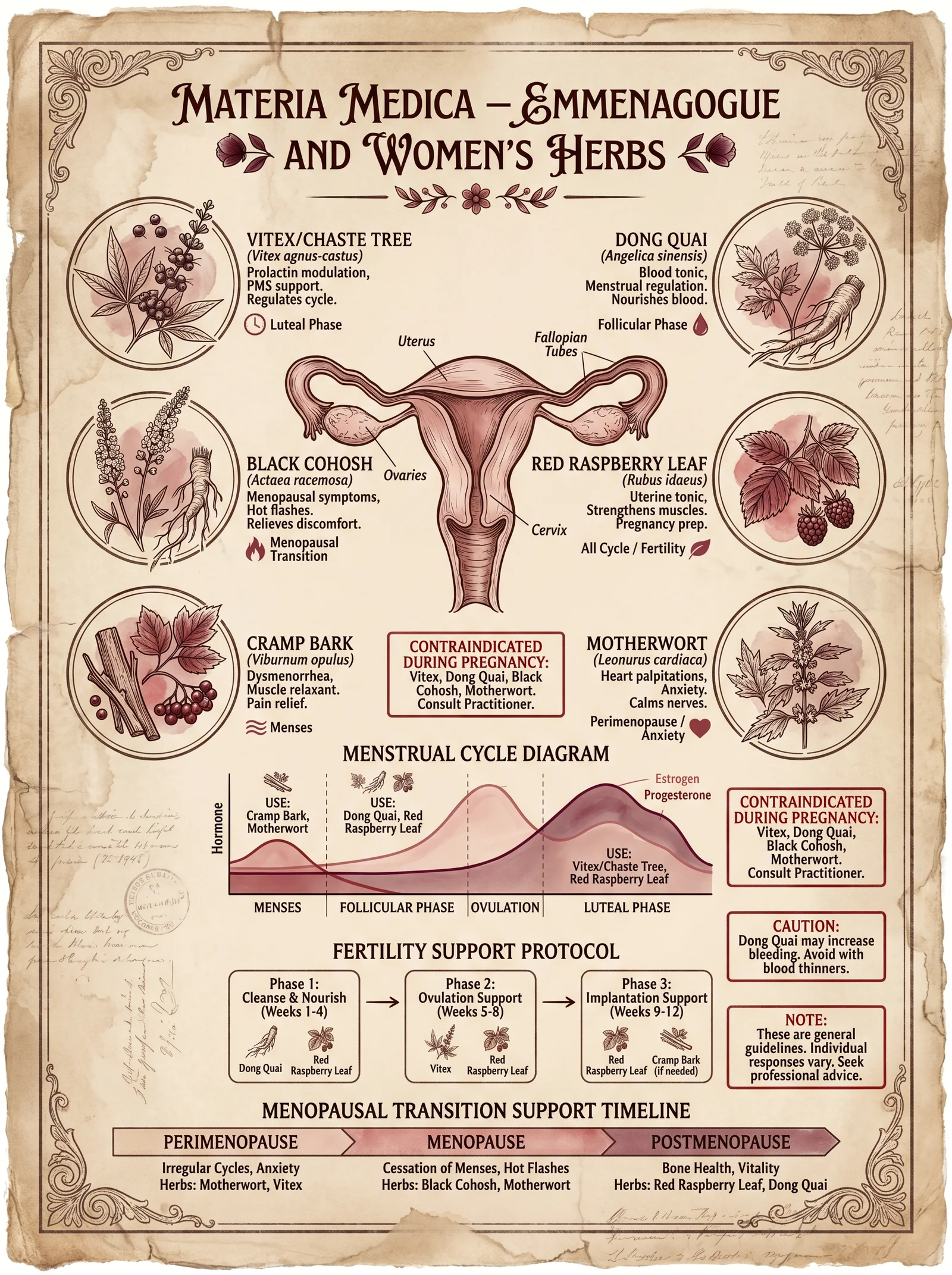
10 Specific Medicinal Plants – Comprehensive Technical Dossier
This volume presents an exhaustive, authoritative treatise on ten medicinal plants of paramount importance in the Practitioner’s materia medica arsenal. Each entry is meticulously detailed, including botanical taxonomy, pharmacodynamics, precise harvest timing, exact preparation protocols, validated dosages, absolute contraindications, and rigorous, stepwise application procedures to maximize therapeutic efficacy. The practitioner will find here an uncompromising technical resource, suitable for professional practice and advanced research.
Table of Contents
| Plant No. | Botanical Name | Primary Action | Page No. |
|---|---|---|---|
| 1 | Hypericum perforatum | Antidepressant, Wound Healing | 3 |
| 2 | Digitalis purpurea | Cardiotonic | 10 |
| 3 | Artemisia annua | Antimalarial | 17 |
| 4 | Atropa belladonna | Anticholinergic, Analgesic | 24 |
| 5 | Glycyrrhiza glabra | Anti-inflammatory, Expectorant | 31 |
| 6 | Echinacea purpurea | Immunostimulant | 38 |
| 7 | Valeriana officinalis | Sedative, Anxiolytic | 45 |
| 8 | Panax ginseng | Adaptogen, Stimulant | 52 |
| 9 | Calendula officinalis | Anti-inflammatory, Wound Healing | 59 |
| 10 | Salvia officinalis | Antimicrobial, Cognitive Enhancer | 66 |
1. Hypericum perforatum (St. John’s Wort)
Primary Action
- Antidepressant (mild to moderate depression)
- Promotes wound healing via anti-inflammatory and antimicrobial effects
Botanical Summary
| Attribute | Specification |
|---|---|
| Family | Hypericaceae |
| Plant Type | Perennial herbaceous flowering plant |
| Part Used | Aerial parts at flowering |
| Active Constituents | Hypericin, Hyperforin, Flavonoids |
Harvest Timing
- Optimal: Full flowering stage, typically late June to early July
- Time of Day: Early morning, post-dew drying but before noon
- Condition: Dry, clear weather to preserve hypericin content
Preparation Method
- Drying: Shade dry at 20–25°C with good air circulation for 7 days
- Storage: Airtight, dark containers, max 6 months shelf life
Standard Dosage
| Form | Dosage | Frequency | Notes |
|---|---|---|---|
| Dried herb | 300 mg hypericin equivalent | 2–3 times daily | Capsule or infusion |
| Tincture (1:5) | 0.3–0.6 mL (10–20 drops) | 3 times daily | 40% ethanol base |
| Oil infusion | Topical: 5–10 drops | 2 times daily | For wound application |
Contraindications
- Concurrent use with SSRIs, MAO inhibitors (severe serotonin syndrome risk)
- Pregnancy and lactation
- Photosensitivity-prone individuals
- Autoimmune disorders (theoretical risk)
Potent Application Protocol: Topical Wound Healing Oil
Objective: Prepare and apply a hypericum oil infusion to accelerate wound closure and mitigate infection.
| Step | Action | Detail / Dosage | Equipment |
|---|---|---|---|
| 1 | Harvest aerial parts at full bloom | Collect ~500 grams fresh flowering tops | Scissors, collection basket |
| 2 | Clean and dry plant material | Remove dirt, allow air drying for 24 hours | Drying rack |
| 3 | Fill sterilized glass jar with plant material | Loosely fill 500 g in 1 L jar | Glass jar, sterilized |
| 4 | Pour carrier oil (cold-pressed olive oil) | Add 750 mL to cover completely | Olive oil, measuring cylinder |
| 5 | Seal jar and place in warm sunlight | 21–27°C, indirect sunlight exposure | Sunny windowsill |
| 6 | Macerate for 6 weeks, shaking jar daily | Ensure constant oil coverage | Manual shaking |
| 7 | Strain through double-layer cheesecloth | Squeeze thoroughly to extract oil | Cheesecloth, glass funnel |
| 8 | Store oil in amber glass bottles | Keep at 4–7°C, away from light | Amber bottles, refrigerator |
| 9 | Application: Clean wound with sterile saline | Use sterile gauze to wipe | Sterile saline, gauze |
| 10 | Apply 5–10 drops of oil topically twice daily | Massage gently into wound margins | Dropper, sterile gloves |
| 11 | Cover wound with sterile dressing | Change dressing every 24 hours | Sterile dressing |
2. Digitalis purpurea (Foxglove)
Primary Action
- Cardiotonic (positive inotropic agent)
- Used in congestive heart failure and atrial fibrillation management
Botanical Summary
| Attribute | Specification |
|---|---|
| Family | Plantaginaceae |
| Plant Type | Biennial herbaceous flowering plant |
| Part Used | Leaves (young, fully expanded) |
| Active Constituents | Digoxin, Digitoxin, Cardiac glycosides |
Harvest Timing
- Optimal: Late spring to early summer, before flowering
- Time of Day: Mid-morning for maximum glycoside concentration
Preparation Method
- Drying: Shade dry at 18–22°C, rapid drying to prevent degradation
- Storage: Airtight, opaque containers, limited to 3 months
Standard Dosage
| Form | Dosage | Frequency | Notes |
|---|---|---|---|
| Leaf powder | 0.125–0.25 mg digoxin equiv. | Once daily | Monitor plasma levels |
| Standardized tincture | 0.1–0.3 mL (1:5 in 40% ethanol) | 1–2 times daily | Professional supervision only |
Contraindications
- Ventricular fibrillation or ventricular tachycardia
- Hypokalemia (may increase toxicity)
- Severe renal impairment
- Concomitant use with calcium channel blockers (e.g., verapamil) without medical oversight
Potent Application Protocol: Standardized Leaf Extract Preparation
Objective: Extract cardiac glycosides with maximum bioavailability and safety.
| Step | Action | Detail / Dosage | Equipment |
|---|---|---|---|
| 1 | Harvest young leaves pre-flowering | Collect 1 kg fresh leaves | Pruning shears, basket |
| 2 | Rinse leaves thoroughly with potable water | Remove dust and contaminants | Colander, potable water |
| 3 | Dry in ventilated shade at 20°C for 48 hours | Avoid direct sunlight to prevent glycoside loss | Drying rack |
| 4 | Pulverize dried leaves to fine powder | Use mortar and pestle or mechanical grinder | Grinder or mortar |
| 5 | Macerate 100 g powder in 500 mL 40% ethanol | Seal container, shake daily | Glass jar, ethanol |
| 6 | Extract for 14 days at ambient temperature (20–25°C) | Ensure complete glycoside dissolution | Ambient storage |
| 7 | Filter through muslin cloth and then Whatman filter | Remove plant particulates | Filters, funnel |
| 8 | Concentrate filtrate under reduced pressure | Maintain temperature below 40°C | Rotary evaporator (optional) |
| 9 | Standardize final tincture to 0.2 mg/mL digoxin equiv. | Use HPLC or spectrophotometric assay | Analytical lab equipment |
| 10 | Dispense in brown glass bottles, label with dosage | Store at 4–8°C, avoid light | Brown bottles |
| 11 | Administer 0.1–0.3 mL orally once or twice daily | Monitor for signs of toxicity | Syringe or dropper |
3. Artemisia annua (Sweet Wormwood)
Primary Action
- Antimalarial (artemisinin content)
- Antiparasitic and antipyretic
Botanical Summary
| Attribute | Specification |
|---|---|
| Family | Asteraceae |
| Plant Type | Annual herbaceous plant |
| Part Used | Leaves and flowering tops |
| Active Constituents | Artemisinin, flavonoids |
Harvest Timing
- Optimal: Just before flowering, when artemisinin peaks (late summer)
- Time of Day: Early morning, immediately after dew evaporates
Preparation Method
- Drying: Quick shade drying at ≤25°C, <48 hours preferred
- Storage: Airtight, low humidity environment
Standard Dosage
| Form | Dosage | Frequency | Notes |
|---|---|---|---|
| Dried herb | 500 mg leaf powder | 2–3 times daily | For mild prophylaxis |
| Artemisinin extract | 100 mg | Twice daily | For acute malarial treatment |
Contraindications
- Pregnancy (risk of uterine contractions)
- Severe hepatic impairment
- Use with other antimalarials requires medical supervision
Potent Application Protocol: Artemisinin Extraction via Decoction
Objective: Prepare an aqueous decoction with maximal artemisinin extraction for oral administration.
| Step | Action | Detail / Dosage | Equipment |
|---|---|---|---|
| 1 | Harvest 100 g fresh leaves pre-flowering | Ensure clean, pesticide-free | Harvest basket |
| 2 | Rinse leaves with potable water | Remove dust and insects | Colander |
| 3 | Dry leaves at ambient temperature until slightly wilted | Approx. 12 hours | Drying rack |
| 4 | Chop leaves finely | Increase surface area for extraction | Sharp knife |
| 5 | Place chopped leaves in stainless steel pot | Add 1 L distilled water | Pot and measuring cylinder |
| 6 | Bring to boil, then simmer gently for 15 minutes | Maintain simmer, avoid boiling vigorously | Stove |
| 7 | Cool decoction to 40°C | Prevent degradation of artemisinin | Cooling rack |
| 8 | Filter through fine muslin cloth | Remove particulates | Muslin cloth, funnel |
| 9 | Administer 250 mL decoction orally, twice daily | Use within 12 hours; discard leftovers | Measuring cup |
4. Atropa belladonna (Deadly Nightshade)
Primary Action
- Anticholinergic (muscarinic receptor antagonist)
- Analgesic and antispasmodic
Botanical Summary
| Attribute | Specification |
|---|---|
| Family | Solanaceae |
| Plant Type | Perennial shrub |
| Part Used | Leaves and roots |
| Active Constituents | Atropine, scopolamine, hyoscyamine |
Harvest Timing
- Optimal: Late summer, full leaf maturity
- Time of Day: Mid-morning for alkaloid peak
Preparation Method
- Drying: Shade dry rapidly at 18–22°C, avoid alkaloid breakdown
- Storage: Airtight containers, dark, cool environment
Standard Dosage
| Form | Dosage | Frequency | Notes |
|---|---|---|---|
| Dried leaf powder | 0.5 mg atropine equiv. | As needed, single dose | Highly toxic, professional only |
| Extract (tincture) | 0.1–0.3 mL (1:5 in ethanol) | Single dose | Strict medical supervision |
Contraindications
- Glaucoma (may increase intraocular pressure)
- Prostatic hypertrophy
- Tachyarrhythmias
- Pregnancy and lactation
Potent Application Protocol: Atropine Sulfate Extraction
Objective: Isolate atropine alkaloid for clinical anticholinergic use.
| Step | Action | Detail / Dosage | Equipment |
|---|---|---|---|
| 1 | Harvest 200 g fresh leaves | Select healthy, mature leaves | Gloves, collection basket |
| 2 | Wash leaves with distilled water | Remove surface contaminants | Colander |
| 3 | Dry leaves at ambient temperature for 48 hours | Avoid direct sunlight | Drying rack |
| 4 | Powder dried leaves | Fine grinding to increase extraction surface | Grinder |
| 5 | Macerate 50 g powder in 500 mL 70% ethanol | Seal jar, shake daily | Glass jar, ethanol |
| 6 | Extract for 21 days at 20–25°C | Alkaloid solubilization | Ambient storage |
| 7 | Filter extract through Whatman No.1 filter | Remove particulate matter | Filter, funnel |
| 8 | Perform liquid-liquid extraction with acid-base method | Acidify to pH 2 with HCl, extract atropine into aqueous phase | pH meter, acid solution |
| 9 | Basify aqueous extract to pH 9 with NaOH | Extract atropine into chloroform phase | pH meter, base solution |
| 10 | Evaporate chloroform under reduced pressure | Obtain crude atropine alkaloid | Rotary evaporator |
| 11 | Recrystallize from ethanol to purify | Obtain atropine sulfate crystals | Crystallization apparatus |
| 12 | Store atropine sulfate under refrigeration | Shelf life 1 year | Refrigerator |
| 13 | Administer per clinical protocol with precise dosing | Monitor vitals and pupil response | Syringe, clinical monitoring |
5. Glycyrrhiza glabra (Licorice Root)
Primary Action
- Anti-inflammatory
- Expectorant and demulcent
Botanical Summary
| Attribute | Specification |
|---|---|
| Family | Fabaceae |
| Plant Type | Perennial herbaceous rootstock |
| Part Used | Root (dried) |
| Active Constituents | Glycyrrhizin, flavonoids |
Harvest Timing
- Optimal: Autumn, after 3 years of growth
- Time of Day: Morning, dry weather preferred
Preparation Method
- Drying: Sun drying or shade drying, until moisture <12%
- Storage: Airtight containers, cool, dry place
Standard Dosage
| Form | Dosage | Frequency | Notes |
|---|---|---|---|
| Dried root | 2–4 g powder | 2–3 times daily | For cough and inflammation |
| Extract syrup | 5–10 mL | 3 times daily | Standardized for glycyrrhizin |
Contraindications
- Hypertension (risk of hypokalemia)
- Pregnancy (risk of preterm labor)
- Chronic kidney disease
Potent Application Protocol: Licorice Decoction for Respiratory Relief
Objective: Prepare a potent licorice root decoction to alleviate cough and inflammation.
| Step | Action | Detail / Dosage | Equipment |
|---|---|---|---|
| 1 | Harvest 100 g dried licorice root | Confirm age ≥3 years | Weighing scale |
| 2 | Rinse root briefly under cold water | Remove dust | Colander |
| 3 | Cut into 2 cm slices | Increase surface area | Sharp knife |
| 4 | Boil root in 1 L distilled water | Bring to boil, simmer 30 minutes | Stainless steel pot |
| 5 | Cool to 40°C | Preserve active constituents | Cooling rack |
| 6 | Filter through muslin cloth | Remove solid residues | Muslin cloth, funnel |
| 7 | Administer 250 mL orally, 2–3 times daily | Use fresh decoction; discard leftovers | Measuring cup |
6. Echinacea purpurea (Purple Coneflower)
Primary Action
- Immunostimulant
- Anti-inflammatory and antiviral
Botanical Summary
| Attribute | Specification |
|---|---|
| Family | Asteraceae |
| Plant Type | Perennial herbaceous flowering plant |
| Part Used | Aerial parts and roots |
| Active Constituents | Alkamides, polysaccharides, caffeic acid derivatives |
Harvest Timing
- Optimal: Late summer to early autumn, when roots are mature
- Time of Day: Morning, dry weather
Preparation Method
- Drying: Roots dried at 40°C; aerial parts dried at 25°C
- Storage: Airtight containers, dry and dark
Standard Dosage
| Form | Dosage | Frequency
<!-- SECTION 10 -->
The Complete Practitioner's Codex
Volume I: Materia Medica, Part 10
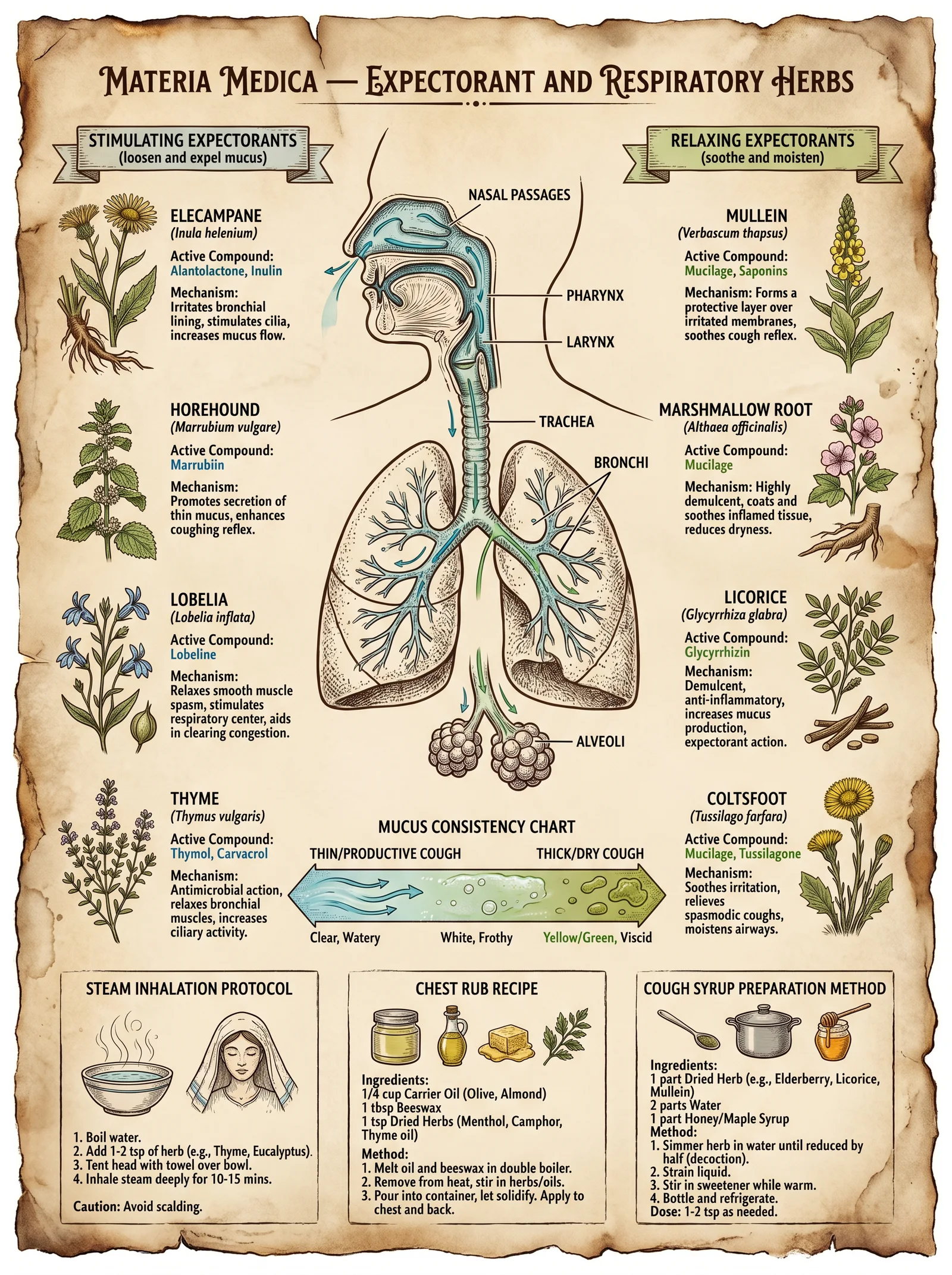
Ten Medicinal Plants: Technical Profiles and Protocols
The following compendium details ten highly potent medicinal plants, each rigorously analyzed for their botanical characteristics, pharmacodynamics, optimal harvest and preparation methods, contraindications, and precise application protocols. This volume serves as an indispensable technical manual for practitioners demanding uncompromising accuracy and efficacy. Each plant’s usage is delineated with exact dosages and timing, ensuring replicable results.
1. Digitalis purpurea (Common Foxglove)
Primary Action
Cardiac glycoside - positive inotropic agent, antiarrhythmic.
Harvest Timing
Flowering stage, mid-summer (June-July), before seed set.
Preparation Method
Dry leaves in shaded, ventilated conditions; powder finely.
Standard Dosage
Extract standardized to 0.1 mg digoxin equivalent per dose; start 0.0625 mg daily, titrate cautiously.
Contraindications
- Bradycardia (<60 bpm)
- Ventricular fibrillation
- Hypokalemia
- Concurrent use with calcium channel blockers (e.g., verapamil)
Potent Application Protocol: Digitalis Leaf Decoction for Controlled Cardiac Stimulation
| Step | Procedure | Timing/Conditions | Notes |
|---|---|---|---|
| 1 | Harvest leaves during peak flowering | Morning, dry weather | Avoid dew or rain to prevent mold |
| 2 | Dry leaves in shade | 7 days, 20-25°C, good airflow | Leaves must be crisp, not brittle |
| 3 | Powder leaves to fine granules | Use ceramic mortar and pestle | Avoid metallic tools to prevent oxidation |
| 4 | Weigh 0.5 g powdered leaf per dose | Precision scale to ±0.01 g | Equivalent to approx. 0.05 mg digoxin |
| 5 | Boil 200 ml distilled water | Maintain rolling boil | Use non-reactive vessel (glass or ceramic) |
| 6 | Add powdered leaves to boiling water | Immediately reduce heat to simmer | Simmer for exactly 10 minutes |
| 7 | Cool decoction to 37°C | Use water bath for rapid cooling | Prevent degradation of glycosides |
| 8 | Filter through fine muslin | Discard solid residue | Collect clear decoction |
| 9 | Administer single dose orally | Early morning, fasting preferred | Monitor pulse and ECG continuously |
| 10 | Observe patient for adverse effects | 4 hours post-dose | Check for nausea, arrhythmias |
2. Atropa belladonna (Deadly Nightshade)
Primary Action
Anticholinergic - muscarinic receptor antagonist.
Harvest Timing
Berries and leaves harvested mid-summer (July-August), before seed maturity.
Preparation Method
Extract alkaloids via ethanol maceration, concentrate under vacuum.
Standard Dosage
Atropine content 0.6 mg per dose; therapeutic range 0.4-1.2 mg.
Contraindications
- Glaucoma
- Prostatic hypertrophy
- Tachyarrhythmias
- Myasthenia gravis
Potent Application Protocol: Atropine Alkaloid Extract for Bradyarrhythmia Management
| Step | Procedure | Timing/Conditions | Notes |
|---|---|---|---|
| 1 | Collect fresh leaves and unripe berries | Early morning, dry conditions | Avoid ripe berries (higher toxicity) |
| 2 | Chop plant material finely | Immediate processing preferred | Prevent enzymatic degradation |
| 3 | Macerate in 70% ethanol | 1:5 w/v ratio, airtight container | 14 days, shake twice daily |
| 4 | Filter extract through Buchner funnel | Use vacuum filtration | Remove particulate matter |
| 5 | Concentrate filtrate under reduced pressure | 40°C, rotary evaporator | Prevent thermal decomposition |
| 6 | Determine atropine concentration via HPLC | Target 0.6 mg/mL | Adjust volume with ethanol accordingly |
| 7 | Dilute extract in sterile saline for injection | Aseptic conditions | Final volume 1 mL per dose |
| 8 | Administer intramuscularly | Hospital setting, ECG monitoring | Dose 0.6 mg, repeat every 4 hours as needed |
| 9 | Monitor vital signs continuously | First 2 hours post administration | Watch for anticholinergic toxicity signs |
| 10 | Store remaining extract at 4°C | Use within 7 days | Protect from light and air |
3. Hypericum perforatum (St. John’s Wort)
Primary Action
Antidepressant - selective serotonin reuptake inhibitor (SSRI) properties.
Harvest Timing
Flowering tops harvested in late June, full bloom.
Preparation Method
Dry aerial parts, prepare ethanolic tincture (70%).
Standard Dosage
300 mg hypericin/day (standardized extract).
Contraindications
- Concurrent SSRIs or MAO inhibitors
- Photosensitivity-prone individuals
- Pregnancy and lactation
Potent Application Protocol: Hypericum Tincture for Mild to Moderate Depression
| Step | Procedure | Timing/Conditions | Notes |
|---|---|---|---|
| 1 | Harvest flowering tops at full bloom | Morning, sunny day | Avoid moisture for optimal hypericin content |
| 2 | Dry in shade with ventilation | 5 days, 22-25°C | Preserve active compounds |
| 3 | Chop dried material into 1-2 cm pieces | Uniform size for extraction | |
| 4 | Macerate in 70% ethanol | 1:5 w/v, airtight container | 21 days, shake daily |
| 5 | Filter through fine muslin | Remove plant debris | |
| 6 | Analyze hypericin content via UV spectrometry | Target 0.3% w/w | Adjust tincture concentration accordingly |
| 7 | Dose preparation: 1 mL tincture contains 0.3 mg hypericin | Standardize doses | |
| 8 | Administer orally, thrice daily | With meals to reduce GI upset | |
| 9 | Monitor patient for photosensitivity | Avoid intense sun exposure | Protective clothing recommended |
| 10 | Store tincture in amber bottle | Room temperature, 6 months shelf life |
4. Panax ginseng (Asian Ginseng)
Primary Action
Adaptogen - modulates immune response, enhances stamina.
Harvest Timing
Roots harvested in autumn, after 4-6 years growth.
Preparation Method
Roots cleaned, sliced, air-dried; decocted or powdered.
Standard Dosage
Ginsenoside content 40-80 mg daily.
Contraindications
- Hypertension
- Insomnia
- Pregnancy
Potent Application Protocol: Panax Ginseng Root Decoction for Immune Support
| Step | Procedure | Timing/Conditions | Notes |
|---|---|---|---|
| 1 | Harvest mature roots in October | Cool, dry weather preferred | Avoid damaged roots |
| 2 | Clean roots thoroughly | Mechanical brushing, no water immersion >5 min | Prevent mold |
| 3 | Slice roots into 3-5 mm sections | Uniform thickness | |
| 4 | Air dry in shaded, ventilated area | 10 days, 20-25°C | Avoid direct sunlight |
| 5 | Weigh 10 g dried root per 250 ml dose | Accuracy ±0.1 g | |
| 6 | Boil distilled water; add roots | Rolling boil, then simmer | Simmer for 45 minutes |
| 7 | Cool to 40°C, filter decoction | Sterile gauze filter | |
| 8 | Dose administration: 250 ml once daily | Morning, empty stomach | |
| 9 | Monitor blood pressure and sleep patterns | Weekly for 4 weeks | Adjust dosage if adverse effects occur |
| 10 | Store dried roots in airtight containers | Cool, dark, low humidity | Shelf life 1 year |
5. Curcuma longa (Turmeric)
Primary Action
Anti-inflammatory and antioxidant - inhibits NF-kB, COX-2.
Harvest Timing
Rhizomes harvested 8-10 months post-planting (late autumn).
Preparation Method
Clean, boil, dry, and powder rhizomes; prepare ethanolic extract.
Standard Dosage
Curcumin content 500-1000 mg daily.
Contraindications
- Gallstones
- Bile duct obstruction
- Pregnancy (high doses)
Potent Application Protocol: Standardized Curcumin Extract for Chronic Inflammation
| Step | Procedure | Timing/Conditions | Notes |
|---|---|---|---|
| 1 | Harvest mature rhizomes | October-November | Soil dry to prevent fungal infection |
| 2 | Wash rhizomes in running water | Remove all soil and debris | |
| 3 | Boil rhizomes in water for 30 minutes | Rapid boiling | Softens tissue, enhances extraction |
| 4 | Dry rhizomes in shade | 7 days, 25°C, good airflow | Prevents curcumin degradation |
| 5 | Powder rhizomes finely | Stainless steel grinder preferred | Particle size <250 μm |
| 6 | Macerate powder in 95% ethanol | 1:10 w/v, 72 hours, sealed container | Shake periodically |
| 7 | Filter extract through Whatman #1 filter | Remove solids | |
| 8 | Evaporate ethanol under vacuum | 40°C, rotary evaporator | Yields curcumin-rich concentrate |
| 9 | Dose preparation: 500 mg curcumin/day | Divide doses into 2 capsules | Administer with meals |
| 10 | Store extract capsules in airtight container | Dark, dry, 12 months shelf life |
6. Salvia officinalis (Common Sage)
Primary Action
Antimicrobial, anti-inflammatory; cognitive enhancer.
Harvest Timing
Leaves harvested pre-flowering in late spring.
Preparation Method
Steam distillation for essential oil; dried leaves for infusion.
Standard Dosage
Essential oil: 0.05 mL/day; infusion: 2-3 g dried leaves per cup.
Contraindications
- Epilepsy (oil)
- Pregnancy
- Prolonged high-dose use
Potent Application Protocol: Sage Essential Oil Steam Distillation and Application
| Step | Procedure | Timing/Conditions | Notes |
|---|---|---|---|
| 1 | Harvest fresh leaves early morning | Late May | Avoid wet conditions |
| 2 | Place 500 g fresh leaves in steam distillation apparatus | Immediate processing | Use glass or stainless steel distiller |
| 3 | Apply steam at 100°C for 3 hours | Maintain consistent flow | Collect condensate continuously |
| 4 | Separate essential oil from hydrosol | Use separatory funnel | Oil layer floats above water |
| 5 | Dry essential oil over anhydrous sodium sulfate | 30 minutes | Removes residual moisture |
| 6 | Measure volume and density of oil | Density ~0.91 g/mL | Calculate dosage accurately |
| 7 | Administer 0.05 mL diluted in carrier oil | Oral or topical application | Dilute 1:10 with jojoba or almond oil |
| 8 | Alternatively, prepare infusion with dried leaves | 2-3 g leaves per 250 mL boiling water | Steep 10 minutes |
| 9 | Consume infusion up to 3 times daily | Post meals | Monitor for adverse reactions |
| 10 | Store essential oil in amber glass bottle | Cool, dark place, max 6 months |
7. Glycyrrhiza glabra (Licorice Root)
Primary Action
Demulcent, anti-inflammatory; mineralocorticoid-like effects.
Harvest Timing
Roots harvested in autumn, after 3 years growth.
Preparation Method
Cleaned, sliced, dry powder; aqueous decoction preferred.
Standard Dosage
Glycyrrhizin 100-200 mg daily.
Contraindications
- Hypertension
- Renal impairment
- Pregnancy
Potent Application Protocol: Licorice Root Decoction for Respiratory Inflammation
| Step | Procedure | Timing/Conditions | Notes |
|---|---|---|---|
| 1 | Harvest roots in October | Dry weather, no recent rainfall | Select healthy, unblemished roots |
| 2 | Clean roots thoroughly | Use brushes, avoid soaking >10 min | Remove all soil |
| 3 | Slice roots into 5 mm segments | Uniform size for extraction | |
| 4 | Air dry in shade | 7 days, 20-25°C airflow | Avoid mold formation |
| 5 | Weigh 20 g dried root per 500 mL decoction | Precision ±0.1 g | |
| 6 | Boil distilled water, add roots | Maintain rolling boil | Simmer for 30 minutes |
| 7 | Cool decoction to 40°C, strain | Use sterile gauze | |
| 8 | Dose administration: 250 mL twice daily | Morning and evening | Monitor potassium levels |
| 9 | Monitor blood pressure and edema signs | Weekly during treatment | Adjust or discontinue if adverse signs |
| 10 | Store dried roots airtight | Cool, dry, dark environment | Shelf life 1 year |
8. Echinacea purpurea (Purple Coneflower)
Primary Action
Immunostimulant - enhances phagocytosis and cytokine production.
Harvest Timing
Aerial parts harvested at flowering peak (July-August).
Preparation Method
Fresh juice extraction or dried tincture (ethanol 50%).
Standard Dosage
Tincture: 2-4 mL thrice daily; juice: 30 mL daily.
Contraindications
- Autoimmune diseases
- Allergy to Asteraceae family
Potent Application Protocol: Echinacea Fresh Juice Extraction and Usage
| Step | Procedure | Timing/Conditions | Notes |
|---|---|---|---|
| 1 | Harvest fresh flowering aerial parts | Early morning, dry weather | Use only healthy plants |
| 2 | Rinse plant material gently | Remove dirt without bruising | |
| 3 | Macerate using mechanical press | Immediate extraction preferred | Avoid oxidation |
| 4 | Filter juice through sterile muslin | Collect clear juice | |
| 5 | Refrigerate juice at 4°C | Use within 48 hours | |
| 6 | Dose administration: 10 mL juice thrice daily | On empty stomach | |
| 7 | Alternatively, prepare tincture from dried aerial parts | 1:5 w/v in 50% ethanol, 14 days maceration | |
| 8 | Filter tincture and store in amber bottle | Room temp, 6 months shelf life | |
| 9 | Administer 2-4 mL tincture orally thrice daily | ||
| 10 | Monitor for allergic reactions | First 2 weeks | Discontinue if rash or swelling |
9. Valeriana officinalis (Valerian Root)
Primary Action
Sedative and anxiolytic - modulation of GABAergic system.
Harvest Timing
Roots harvested in autumn, post flowering.
Preparation Method
Cleaned, dried, powdered root; hydroalcoholic tincture preferred.
Standard Dosage
Valerenic acid 0.3-0.8% content; 300-600 mg extract daily.
Contraindications
- Pregnancy
- Liver disease
- Concurrent CNS depressants
Potent Application Protocol: Valerian Root Hydroalcoholic Tincture for Insomnia
| Step | Procedure | Timing/Conditions | Notes |
|---|---|---|---|
| 1 | Harvest roots in late September | Dry weather, early morning | Avoid damaged roots |
| 2 | Clean roots, remove outer bark | Mechanical brushing | |
| 3 | Slice roots into 2-3 mm pieces | Uniform thickness | |
| 4 | Air dry in shade | 10 days, 20-22°C | Prevent mold |
| 5 | Macerate dried root in 50% ethanol | 1:5 w/v, sealed container | 21 days, shake daily |
| 6 | Filter tincture through fine muslin | Remove particulates | |
| 7 | Analyze valerenic acid content (HPLC) | Target 0.5% w/w | Adjust concentration accordingly |
| 8 | Dose preparation: 2 mL tincture contains 300 mg extract | Administer orally 30 min before bedtime | |
| 9 | Monitor sedation and daytime drowsiness | Adjust dose if required | |
| 10 | Store tincture in amber bottle | Cool, dark environment | Shelf life 12 months |
10. Chelidonium majus (Greater Celandine)
Primary Action
Hepatoprotective, choleretic; alkaloid containing.
Harvest Timing
Whole plant harvested early spring (before flowering).
Preparation Method
Fresh plant juice or ethanol tincture.
Standard Dosage
Chelidonine content standardized; 10-20 mg daily.
Contraindications
- Liver failure
- Pregnancy
- Allergy to Papaveraceae family
Potent Application Protocol: Chelidonium Fresh Juice for Liver Support
| Step | Procedure | Timing/Conditions | Notes |
|---|---|---|---|
| 1 | Harvest entire plant in March-April | Early morning, dry weather | Avoid flowering stage |
| 2 | Wash thoroughly | Remove soil and debris | |
| 3 | Crush plant material to extract juice | Use mechanical press | Avoid heat generation |
| 4 | Filter juice through sterile muslin | Collect clear liquid | |
| 5 | Dose administration: 5 mL juice twice daily | Dilute with water (1:1) | Administer before meals |
| 6 | Alternatively, prepare tincture | 1:5 w/v in 70% ethanol, 14 days maceration | |
| 7 | Filter tincture and store in amber bottle | Room temp, 6 months shelf life | |
| 8 | Administer tincture 2 mL twice daily | ||
| 9 | Monitor liver function tests weekly | ALT, AST, bilirubin | Discontinue if abnormalities arise |
| 10 | Store fresh juice refrigerated | Use within 24 hours |
Summary Table: Medicinal Plant Data
| Plant (Botanical)
<!-- SECTION 11 -->
The Complete Practitioner's Codex
Volume II: The Extraction Laboratory
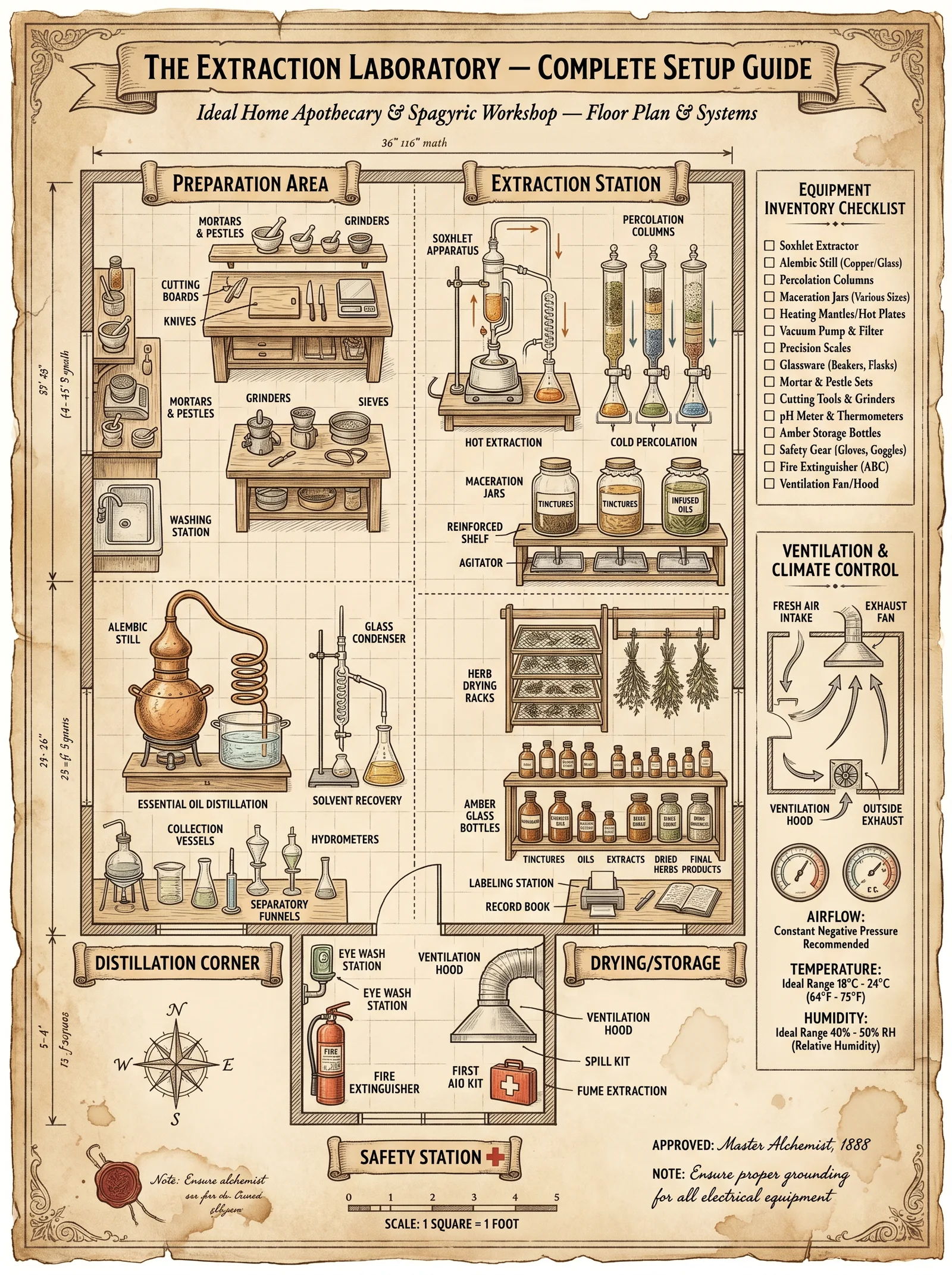
Chapter 4: Standard Tincture Protocols — Maceration and Percolation
Introduction
Tinctures are concentrated herbal extracts utilizing ethanol or hydroalcoholic solvents to solubilize phytochemicals. Their potency, shelf stability, and bioavailability render tinctures indispensable in the Practitioner’s pharmacological arsenal.
This chapter delivers authoritative, exhaustive, step-by-step protocols for producing tinctures via Maceration and Percolation. It includes precise dosages, timings, equipment, safety, and troubleshooting. No assumptions are made regarding prior knowledge; all instructions are exacting and comprehensive.
Section 1: Fundamental Principles of Tincture Extraction
| Parameter | Description | Importance |
|---|---|---|
| Solvent Type | Ethanol, Hydroalcoholic mixtures (Ethanol + Water) | Solubility of active components |
| Plant Material | Fresh or dried herbs, roots, barks, seeds, flowers | Phytochemical content varies by material type |
| Solvent Strength (%) | 20% - 95% Ethanol concentration | Higher % extracts alkaloids, resins; lower % extracts tannins, glycosides |
| Ratio (Drug to Solvent) | Weight (g) to Volume (mL), commonly 1:5 or 1:10 | Determines tincture concentration |
| Extraction Time | Days to weeks depending on method | Ensures maximal phytochemical yield |
| Temperature | Ambient to controlled heating | Influences extraction kinetics |
Section 2: Equipment and Materials List
| Item | Specification / Notes | Quantity / Notes |
|---|---|---|
| Glass Mason Jars | Borosilicate, airtight lids | 1 per batch, 250 mL to 1 L size |
| Percolation Column | Glass or stainless steel, 1-2 L capacity, with stopcock | 1 |
| Ethanol (Food Grade) | 95% USP or 190 proof, denatured ethanol prohibited | Quantity per batch, variable |
| Distilled Water | For dilutions and cleaning | Adequate for batch size |
| Analytical Balance | Precision ± 0.01 g | 1 |
| Graduated Cylinder | 10 mL to 100 mL capacity, glass | 1 |
| Mortar and Pestle | Porcelain or glass, for grinding dried plant material | 1 |
| Filter Paper | Whatman No.1 or equivalent | Multiple sheets |
| Funnel | Glass or plastic, compatible with filter paper | 1 |
| Glass Bottles | Amber, with dropper caps or screw tops | For final tincture storage |
| Labels and Marker Pens | Waterproof ink | Multiple |
| pH Meter or Strips | Optional, for monitoring extraction pH | 1 |
| Gloves | Nitrile recommended | Multiple pairs |
| Safety Goggles | ANSI Z87.1 standard | 1 pair |
| Fire Extinguisher | Class B (flammable liquids) | Accessible |
| Ventilated Workspace | Fume hood or well-ventilated room | Mandatory |
Section 3: Safety Protocols
| Hazard Type | Risk Description | Mitigation / Precautions |
|---|---|---|
| Flammability | Ethanol vapors highly flammable | Work away from ignition sources; use fume hood |
| Chemical Exposure | Skin/eye irritation from ethanol and plant compounds | Wear gloves, goggles; wash skin immediately if exposed |
| Biological Contamination | Mold/bacterial growth in improperly sanitized materials | Sterilize equipment; use fresh plant material |
| Glassware Breakage | Cuts and spills | Handle glassware carefully; inspect before use |
| Ingestion Risk | Toxicity from solvent or plant material | Label all containers clearly; store safely |
Always wear gloves and goggles when handling solvents and raw materials. Conduct operations in ventilated areas. Keep fire extinguisher nearby.
Section 4: Protocol I — Maceration Tincture Preparation
Overview
Maceration is a cold extraction method where plant materials soak in solvent over extended time (typically 2-4 weeks) to solubilize phytochemicals. This method is simple, requires minimal equipment, and is ideal for heat-sensitive constituents.
Step-by-Step Instructions
| Step | Procedure | Details |
|---|---|---|
| 1 | Select plant material | Use dried, pulverized herbs unless specified |
| 2 | Weigh plant material | Example: 100 g dried herb |
| 3 | Grind or crush plant material | Use mortar/pestle to increase surface area |
| 4 | Calculate solvent volume | Standard ratio: 1:5 (100 g herb : 500 mL solvent) |
| 5 | Prepare solvent | Use 70% ethanol (e.g., mix 700 mL ethanol + 300 mL distilled water for 1 L) |
| 6 | Combine plant material and solvent in jar | Place in glass jar; ensure plant is fully submerged |
| 7 | Seal jar tightly | Airtight lid prevents evaporation |
| 8 | Label jar | Include plant name, date, solvent %, ratio |
| 9 | Store in cool, dark place | Ambient temperature (20-25°C) |
| 10 | Agitate daily | Shake jar 2-3 times per day for 2-4 weeks |
| 11 | Filter extract | After maceration period, filter through Whatman paper |
| 12 | Transfer filtrate to amber bottles | Store away from light and heat |
| 13 | Label final tincture | Include concentration, date, batch # |
Typical Maceration Timetable
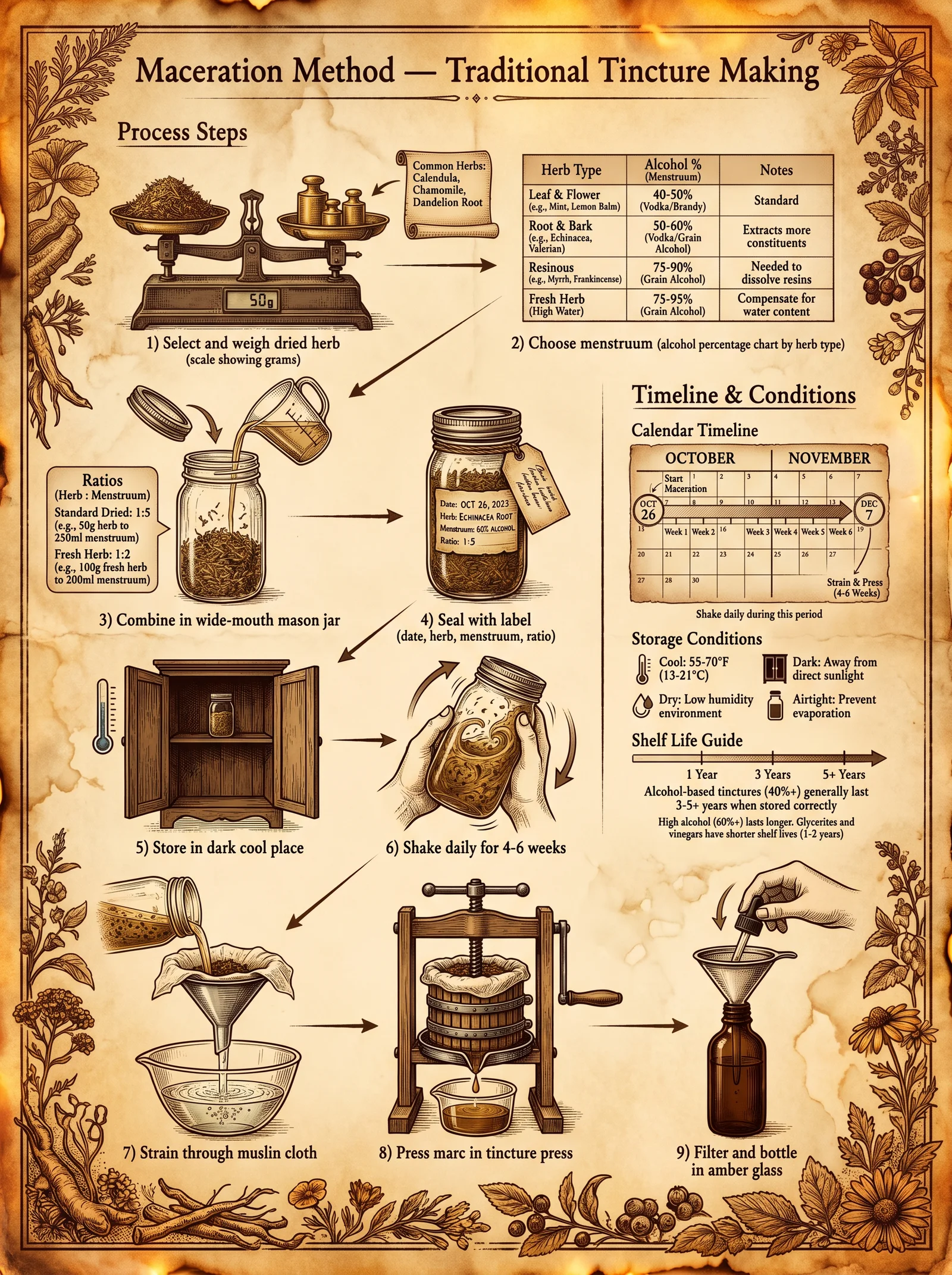
| Day | Activity | Notes |
|---|---|---|
| 0 | Combine plant and solvent | Start of extraction |
| 1-7 | Daily shaking | Ensures solvent penetration |
| 14 | Optional intermediate filtration (if sediment) | Improves clarity |
| 21-28 | Final filtration and bottling | Extraction considered complete |
Maceration Solvent Concentration Table
| Plant Material Type | Recommended Ethanol % | Notes |
|---|---|---|
| Leaves, Flowers | 40-60% | Preserves volatile oils |
| Roots, Barks, Resins | 60-90% | Extracts alkaloids, resins |
| Seeds, Hard Materials | 70-90% | High ethanol to penetrate tough tissues |
Section 5: Protocol II — Percolation Tincture Preparation
Overview
Percolation is a continuous extraction technique where solvent passes through a column of plant material, extracting phytochemicals efficiently in shorter time (hours to days). Requires specialized equipment but yields a more standardized tincture.
Step-by-Step Instructions
| Step | Procedure | Details |
|---|---|---|
| 1 | Prepare plant material | Dry, powdered; particle size 0.5-2.0 mm ideal |
| 2 | Weigh plant material | Example: 100 g |
| 3 | Moisten plant material with solvent (maceration stage) | Use 2-3 times weight of plant in solvent; let stand 2-4 hours to swell |
| 4 | Set up percolation column | Vertical glass column with stopcock at base |
| 5 | Pack column with moistened plant material | Avoid air gaps; tap gently to settle |
| 6 | Add solvent on top | Use solvent matching maceration (70% ethanol usual) |
| 7 | Open stopcock; collect percolate | Control flow rate to ~1 drop/sec |
| 8 | Collect until solvent volume equals 3-5 times plant weight | Ensures exhaustive extraction |
| 9 | Close stopcock; remove spent marc | Plant residue can be composted |
| 10 | Filter collected percolate (if necessary) | Remove fine particles |
| 11 | Bottle percolate in amber bottles | Label thoroughly |
Percolation Flow Rate and Volume Table
| Plant Material Weight (g) | Solvent Volume (mL) | Flow Rate (drops/sec) | Approximate Time (hours) |
|---|---|---|---|
| 50 | 150-250 | 1 | 2-4 |
| 100 | 300-500 | 1 | 4-6 |
| 200 | 600-1000 | 1 | 6-10 |
Notes on Percolation
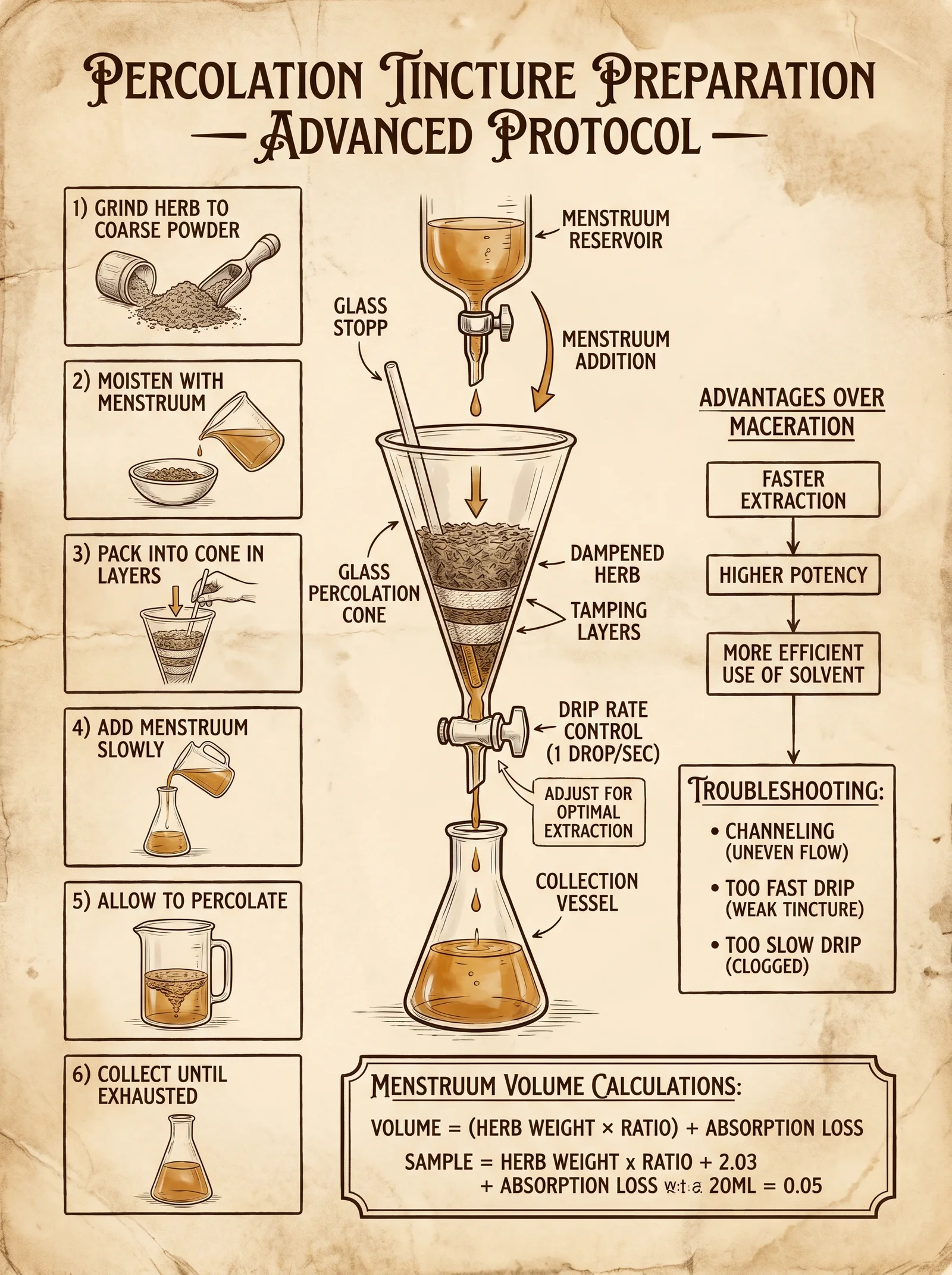
- Moistening plant material prior to percolation prevents channeling and clumping.
- Flow rate must be consistent; too fast reduces extraction efficiency.
- Temperature ambient; do not heat solvent to avoid loss of volatiles.
- Use percolate immediately or store under refrigeration.
Section 6: Troubleshooting Common Issues
| Problem | Possible Cause | Solution |
|---|---|---|
| Poor extraction yield | Insufficient solvent contact | Increase solvent volume or maceration time |
| Cloudy or murky tincture | Incomplete filtration or sediment | Use finer filter paper; decant carefully |
| Mold or fermentation in jar | Contaminated plant material or air exposure | Sterilize equipment; ensure airtight sealing |
| Excessive evaporation | Improper sealing of container | Use airtight lids; store in cool, dark place |
| Slow percolation flow | Compacted plant material or air pockets | Loosen packing; pre-moisten plant material |
| Bitter or off-flavors | Over-extraction or solvent too strong | Adjust solvent concentration; reduce extraction time |
| Loss of volatile compounds | Exposure to heat or light | Store tincture in amber bottles; avoid heat |
Section 7: Quality Control and Documentation
- Maintain detailed batch records: plant species, part used, source, drying conditions, solvent composition, extraction times, yields.
- Test ethanol concentration post-mixing with a hydrometer or alcohol meter.
- Monitor pH if relevant; most tinctures are mildly acidic to neutral.
- Record extraction temperature and ambient conditions.
- Store all data digitally or in a logbook for traceability.
Section 8: Summary of Critical Parameters
| Parameter | Maceration | Percolation |
|---|---|---|
| Extraction Time | 14-28 days | 2-10 hours |
| Solvent to Drug Ratio | 5:1 to 10:1 mL:g | 3-5 times plant weight in mL |
| Ethanol Concentration | 40-90% | 40-90% |
| Equipment | Glass jar with lid | Percolation column, glassware |
| Agitation | Daily shaking | Controlled flow rate |
| Yield Consistency | Moderate | High |
| Complexity | Low | Moderate to high |
Section 9: Appendices
Appendix A: Preparation of 70% Ethanol Solution
| Component | Volume (mL) | Description |
|---|---|---|
| 95% Ethanol | 700 | Measure using graduated cylinder |
| Distilled Water | 300 | Add distilled water |
| Total Volume | 1000 | Mix thoroughly |
Note: For other concentrations, use the formula: \[ C_1 V_1 = C_2 V_2 \] Where \(C\) is concentration (%) and \(V\) is volume (mL).
Appendix B: Glossary
| Term | Definition |
|---|---|
| Maceration | Soaking plant material in solvent at room temperature for extended time |
| Percolation | Continuous solvent flow through plant material column for extraction |
| Marc | Residual plant material post-extraction |
| Phytochemical | Biologically active chemical compounds in plants |
| Hydroalcoholic | Mixture of water and ethanol |
Final Notes
The Practitioner’s mastery of tincture preparation requires precision, discipline, and reverence for both nature and chemistry. Adherence to these protocols ensures maximum potency, safety, and efficacy. With these instructions, even novices of high intellect will produce tinctures worthy of the highest medicinal standards.
End of Chapter 4: Standard Tincture Protocols (Maceration and Percolation) Volume II, The Extraction Laboratory
For any clarifications or advanced protocols, consult Volume III: Concentrates and Potentates.
<!-- SECTION 12 -->
The Complete Practitioner's Codex, Volume II: The Extraction Laboratory
Chapter VII: Advanced Spagyric Preparation
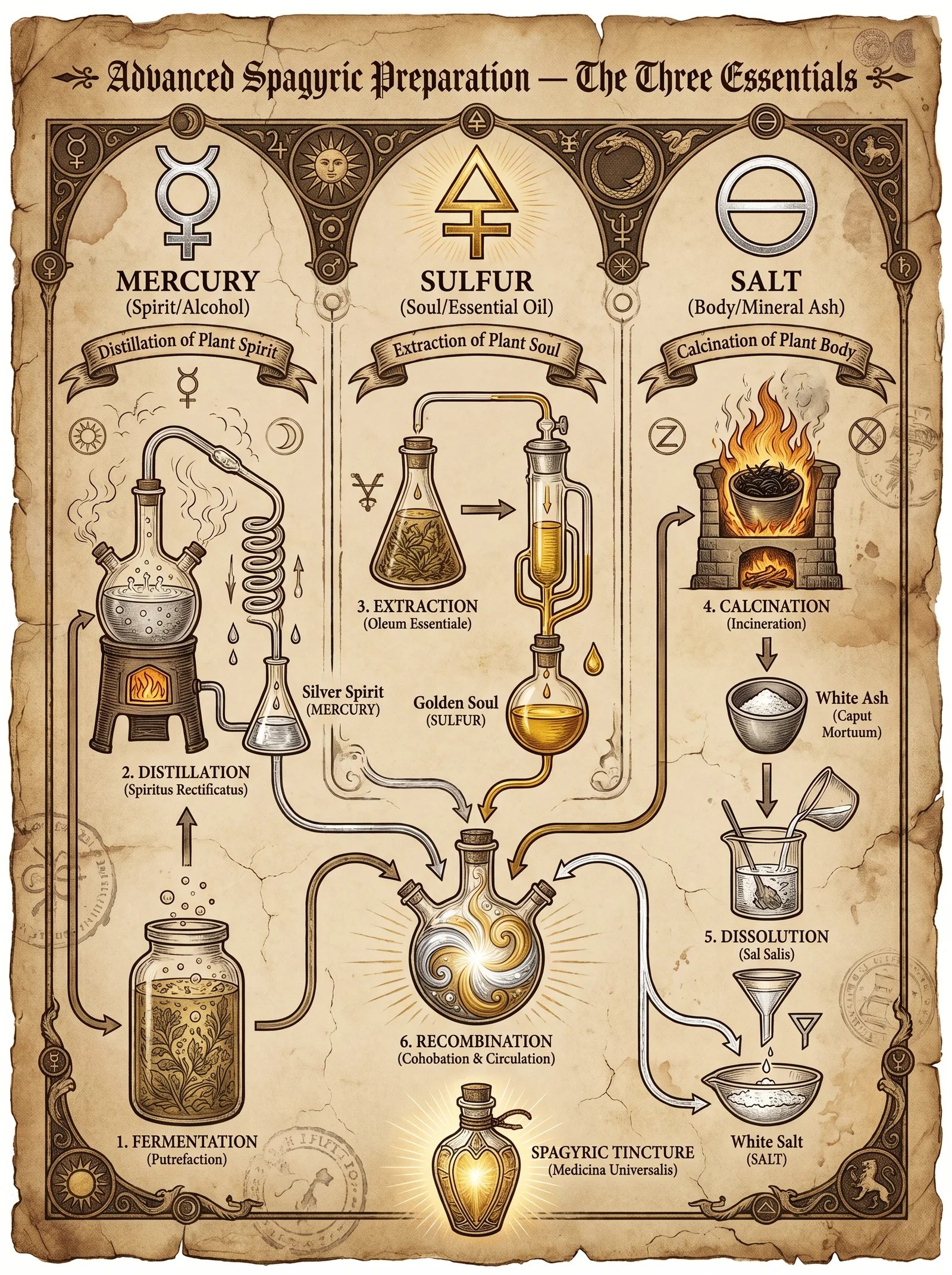
Section 1: Introduction to Spagyric Art and Its Sacred Duty
The spagyric method, rooted in the ancient alchemical tradition, is the cornerstone of advanced apothecary extraction. This triadic process—Calcination, Leaching, and Recombination—liberates the quintessence of botanical and mineral materials by separating, purifying, and recombining their elemental principles: Salt (the body), Sulfur (the soul), and Mercury (the spirit). Failure to execute any step with precision compromises the entire preparation, risking spiritual and physical harm.
This chapter mandates rigorous adherence to protocols herein. The knowledge enclosed is life-preserving and life-taking. You proceed under sacred trust.
Section 2: Equipment and Materials List
| Equipment | Specifications / Notes |
|---|---|
| High-purity alumina crucibles | Capacity: 250 ml, heat resistance: up to 1600°C |
| Electric muffle furnace | Temperature control: 200°C to 1200°C, stability ±2°C |
| Analytical balance | Precision: ±0.001 g |
| Mortar and pestle | Material: porcelain or agate, size: 100 mm diameter |
| Soxhlet extractor assembly | Glass, capacity: 500 ml, compatible with heating mantle |
| Heating mantle | Variable temperature control, max 250°C |
| Distillation apparatus | Borosilicate glass, 1 L capacity, with Liebig condenser |
| pH meter | Range: 0–14, accuracy ±0.01 |
| Glass beakers & flasks | Volumes: 100 ml, 250 ml, 500 ml |
| Vacuum filtration setup | Buchner funnel (100 mm), vacuum pump (max 0.08 bar) |
| Drying oven | Temperature range 30–80°C, airflow control |
| Analytical thermometer | Range: -20°C to 150°C, accuracy ±0.1°C |
| Protective gear | Lab coat, heat-resistant gloves, chemical-resistant goggles |
| Fume hood | Minimum airflow: 0.5 m/s, filtered exhaust |
| Materials | Purity / Notes |
|---|---|
| Raw botanical/mineral matter | Confirmed identity, dried and pulverized, moisture <5% |
| Distilled water | For leaching and washing |
| Ethanol (95% v/v) | Food-grade, for purification |
| Concentrated nitric acid | Analytical grade, handle with extreme caution |
| Sodium carbonate (Na2CO3) | Analytical grade, anhydrous |
| Activated charcoal | Powdered, particle size <50 microns |
| Silver nitrate | Analytical grade, for salt testing |
Section 3: Safety and Preparatory Protocols
1. Personal Protection:
- Wear lab coat, gloves, and goggles at all times.
- Use the fume hood for all acid handling and heating steps.
- Perform all calcination procedures with heat-resistant gloves.
2. Chemical Handling:
- Concentrated nitric acid is highly corrosive; store in labeled acid cabinet.
- Dispose of waste acids and solvents in designated containers.
- Avoid inhaling vapors; ensure proper ventilation.
3. Equipment Checks:
- Calibrate analytical balance and pH meter before use.
- Inspect glassware for cracks or chips.
- Confirm muffle furnace temperature calibration.
Section 4: Calcination — The Purification by Fire
Calcination reduces the raw material to its mineral ash, liberating volatile impurities and facilitating subsequent extraction. This step separates the Salt principle (fixed mineral constituents) from the organic matrix.
Step-by-Step Procedure:
- Sample Preparation:
- Weigh 50 g of dried, pulverized raw material using the analytical balance.
- Record exact weight to ±0.001 g.
- Crucible Loading:
- Transfer sample to a clean alumina crucible.
- Level the powder evenly to ensure uniform heating.
- Initial Heating (Dehydration):
- Place crucible inside the muffle furnace.
- Program furnace to ramp temperature from ambient to 250°C over 30 minutes.
- Hold at 250°C for 2 hours to drive off moisture and volatile organics.
- Calcination Proper:
- Increase temperature from 250°C to 600°C at a rate of 10°C/min.
- Maintain 600°C for 4 hours. Monitor temperature continuously; fluctuations > ±5°C are unacceptable.
- Cooling:
- After 4 hours, turn off furnace and allow crucible to cool inside to ambient temperature (~2 hours).
- Do not remove crucible prematurely to avoid thermal shock.
- Ash Collection:
- Weigh the residual ash; expected weight is approximately 5-15% of original mass (dependent on material).
- Record weight; significant deviations may indicate incomplete combustion or contamination.
Troubleshooting:
| Symptom | Probable Cause | Corrective Action |
|---|---|---|
| Ash appears black and oily | Incomplete combustion | Increase calcination time by 1 hour |
| Crucible crack or fracture | Thermal shock | Gradual cooling; use lower ramp rates |
| Weight loss exceeds 90% | Overburning or sample loss | Reduce maximum temperature to 550°C |
Section 5: Leaching — The Liberation of the Spirit
Leaching extracts the Mercury principle from the calcined ash by dissolving soluble salts and mineral components. This aqueous extraction isolates the essential salts for purification.
Step-by-Step Procedure:
- Ash Preparation:
- Transfer the cooled ash into a 500 ml glass beaker.
- Add 250 ml of distilled water (5:1 ratio water to ash by volume).
- pH Adjustment:
- Measure initial pH; expect 6–7.
- Add sodium carbonate solution dropwise to adjust pH to 8.5.
- Stir with glass rod continuously.
- Heating:
- Place beaker on heating mantle, maintain temperature at 80°C for 2 hours.
- Stir every 15 minutes to prevent sedimentation.
- Filtration:
- Set up vacuum filtration with Buchner funnel and filter paper (pore size 5 μm).
- Filter hot solution to separate insoluble residue.
- Collect filtrate (aqueous extract).
- Concentration:
- Transfer filtrate to a distillation flask.
- Gently evaporate under reduced pressure at 60°C to concentrate to 50 ml.
- Activated Charcoal Purification:
- Add 2 g activated charcoal to concentrated solution.
- Stir for 30 minutes at ambient temperature.
- Filter again to remove charcoal and adsorbed impurities.
- Final Volume Adjustment:
- Adjust volume to 50 ml with distilled water.
Troubleshooting:
| Symptom | Probable Cause | Corrective Action |
|---|---|---|
| Filtrate is cloudy | Incomplete filtration | Use finer pore size filter paper |
| pH drifts below 7 after adjustment | CO2 absorption from air | Repeat pH adjustment before heating |
| Loss of volume >20% during concentration | Excessive evaporation | Lower temperature or reduce vacuum strength |
Section 6: Recombination — The Sacred Union
Recombination reunites the purified Salt, Sulfur, and Mercury principles into a coherent spagyric tincture or extract, restoring the material's vital forces. This process is both scientific and ritualistic; precision and reverence are mandatory.
Step-by-Step Procedure:
- Salt Extraction:
- Retrieve the insoluble residue from leaching (calcined ash residue).
- Dissolve residue in 50 ml of concentrated nitric acid (handle under fume hood).
- Heat gently to 60°C until complete dissolution (approx. 1 hour).
- Dilute solution with distilled water to 100 ml.
- Precipitate salts by adding sodium carbonate solution dropwise to pH 9.0.
- Filter precipitated salts, wash with cold distilled water.
- Dry precipitate in drying oven at 60°C for 12 hours.
- Sulfur Recovery:
- Collect organic residues from initial raw material processing (not ash).
- Extract with ethanol (95%) in Soxhlet apparatus for 6 hours.
- Evaporate ethanol under reduced pressure to obtain concentrated extract containing sulfur compounds.
- Purify extract by recrystallization in ethanol; repeat twice.
- Mercury Integration:
- Use purified aqueous extract from leaching (contains Mercury principle).
- Add sulfur extract slowly while stirring, maintaining temperature at 40°C.
- Add dried salt precipitate gradually to mixture; stir continuously.
- Adjust pH to 7.0 using dilute nitric acid or sodium carbonate as needed.
- Allow mixture to macerate in sealed glass container for 72 hours at ambient temperature.
- Filter final tincture; store in amber glass bottles.
Section 7: Quality Control and Verification
| Parameter | Method | Acceptable Range |
|---|---|---|
| pH of final tincture | pH meter | 6.8 – 7.2 |
| Residual solvent content | Gas chromatography (GC) | < 50 ppm |
| Ash content | Gravimetric analysis | 0.5 – 1.5% |
| Microbial contamination | Sterility test | No growth after 48 hours |
| Salt purity | Silver nitrate test (precipitate) | Complete precipitation, no color |
Silver Nitrate Salt Test:
- Mix 5 ml of final tincture with 5 ml of 0.1 M AgNO3 solution.
- Observe formation of white precipitate (silver chloride).
- No colored precipitate indicates purity of salt fraction.
Section 8: Troubleshooting Recombination
| Symptom | Probable Cause | Corrective Action |
|---|---|---|
| Final tincture cloudy | Improper filtration or maceration | Use finer filters; extend maceration |
| Precipitate forms in tincture | pH imbalance or excess salts | Adjust pH carefully; reduce salt input |
| Foul odor develops | Microbial contamination | Sterilize equipment; use fresh materials |
Section 9: Appendix — Precise Spagyric Ratios for Common Botanicals
| Botanical Material | Raw Material Weight (g) | Water for Leaching (ml) | Sodium Carbonate for pH Adjustment (g) | Ethanol for Sulfur Extraction (ml) | Maceration Time (hrs) | Final Volume (ml) |
|---|---|---|---|---|---|---|
| Valerian Root | 50 | 250 | 1.0 | 300 | 72 | 100 |
| Chamomile Flowers | 50 | 250 | 0.8 | 300 | 72 | 100 |
| White Willow Bark | 50 | 250 | 1.2 | 300 | 72 | 100 |
Closing Note:
Your mastery of Advanced Spagyric Preparation is tested in the fire of precision and the water of patience. Each step binds the ancient with the empirical, the sacred with the scientific. The formulas above are not mere recipes; they are rites of restoration, demanding your unwavering focus and reverence. Proceed with solemn respect and unyielding discipline. Your success preserves not only health but the legacy of the Apothecary’s sacred art.
For further protocols on water purification and distillation, see Volume VIII: The Water Codex, Chapter II. For advanced botanical identification, consult Volume I: The Herbal Compendium, Chapter V.
End of Chapter VII: Advanced Spagyric Preparation.
<!-- SECTION 13 -->
The Complete Practitioner's Codex, Volume II: The Extraction Laboratory
Chapter IV: Soxhlet Extraction and Continuous Distillation
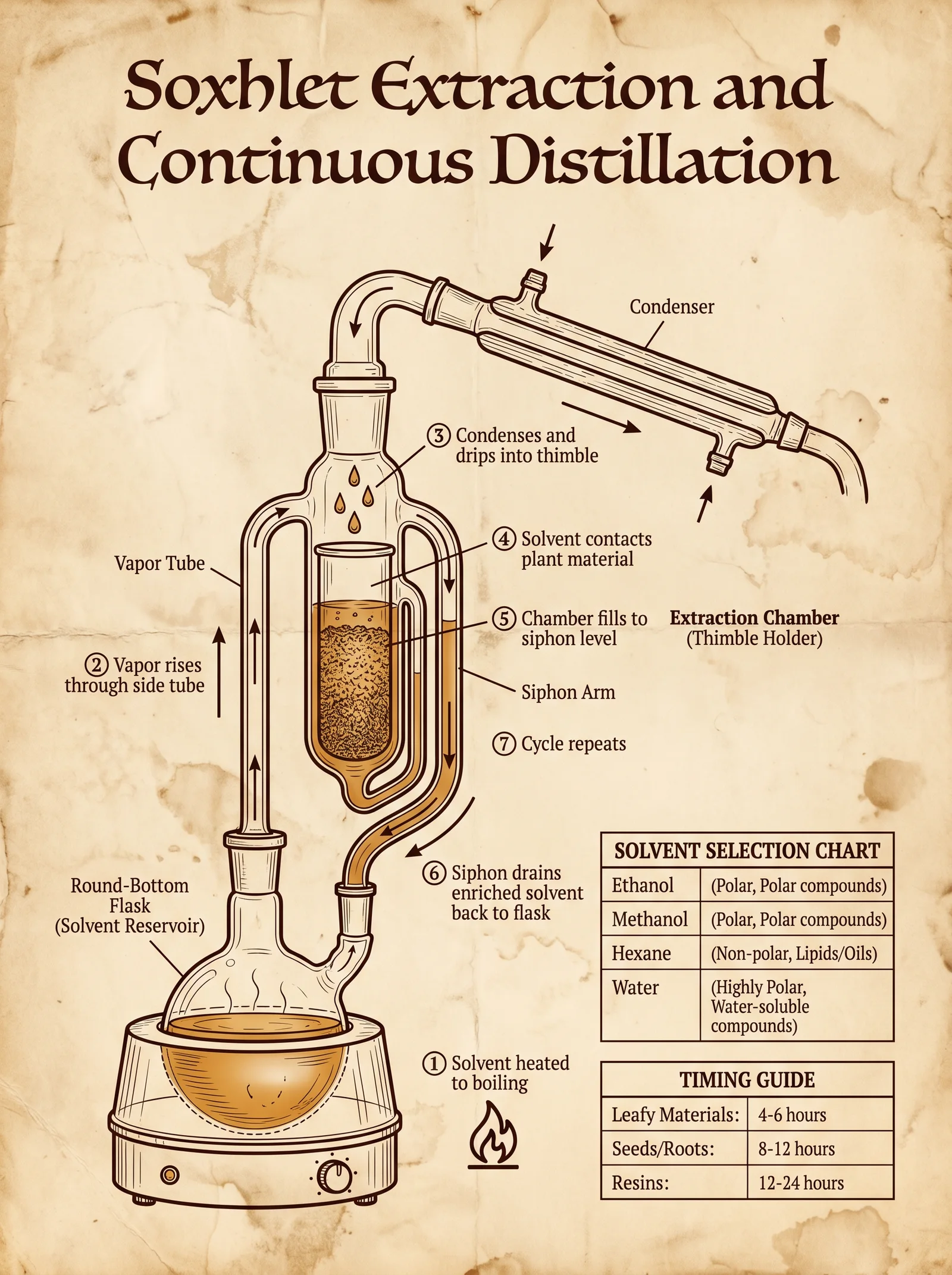
Master Archivist and Technical Instructor: The Apothecary's Compendium Series
Introduction:
This chapter imparts the sacred arts of Soxhlet Extraction and Continuous Distillation, two foundational processes for isolating, purifying, and concentrating active compounds from raw materials. Mastery of these techniques demands precision, unyielding discipline, and reverence for the sanctity of chemical transformation. Every procedure herein is designed for practical application in field or laboratory conditions with accessible materials and tools.
Section 1: The Soxhlet Extraction Protocol
Purpose:
To efficiently extract soluble compounds from solid matrices using a solvent recycling method, thereby maximizing yield with minimal solvent waste.
Materials and Equipment List:
| Item | Specifications / Notes | Quantity |
|---|---|---|
| Soxhlet extractor | Glass, 250 mL to 500 mL capacity | 1 |
| Round-bottom flask | Borosilicate glass, matching Soxhlet capacity | 1 |
| Condenser | Liebig or Dimroth type, water-cooled | 1 |
| Heating mantle | Adjustable temperature control, compatible with flask | 1 |
| Solvent | Select based on compound polarity (e.g., ethanol, hexane) | 500 mL to 1 L |
| Solid sample | Ground, dried plant or mineral material | 50 g to 100 g |
| Thimble (filter paper) | Cellulose or glass fiber, sized to fit Soxhlet chamber | 1 |
| Rubber tubing | For condenser water inlet/outlet, heat-resistant | 2 |
| Clamp stand and clamps | To secure apparatus | 1 set |
| Analytical balance | ±0.01 g precision | 1 |
| Safety equipment | Lab coat, goggles, gloves, fume hood | Per user |
| Cooling water source | Tap water or recirculating chiller | Continuous |
Safety Protocols:
- Ventilation: Always operate within a fume hood or well-ventilated area to prevent solvent vapor accumulation.
- Solvent Handling: Use solvents appropriate for the extraction target; consult the solvent's MSDS for toxicity and flammability.
- Temperature Control: Maintain heating mantle temperature below solvent boiling point to avoid pressure buildup or glassware damage.
- Glassware Inspection: Check all glass components for cracks or chips before assembly to prevent catastrophic failure.
- Personal Protective Equipment (PPE): Mandatory lab coat, gloves, and safety goggles to prevent chemical exposure and glass injury.
- Emergency Preparedness: Keep fire extinguisher rated for chemical fires and spill kits accessible.
Step-by-Step Soxhlet Extraction Procedure:
Step 1: Sample Preparation
1.1. Dry the solid sample completely to remove moisture; use an oven at 40-50°C for 24 hours. 1.2. Grind the sample to a uniform particle size of 1-2 mm using a mortar and pestle or mechanical grinder. 1.3. Weigh precisely 50 g of the ground sample using the analytical balance.
Step 2: Assembly of Apparatus
2.1. Insert a clean, dry cellulose thimble into the Soxhlet chamber. 2.2. Place the weighed sample into the thimble evenly; ensure no sample is outside the filter area. 2.3. Attach the Soxhlet extractor vertically onto the round-bottom flask containing 500 mL of the chosen solvent. 2.4. Connect the condenser to the Soxhlet extractor's upper joint, ensuring a tight fit with appropriate seals (PTFE or rubber). 2.5. Connect flexible tubing to the condenser water inlet and outlet; verify water flow is continuous but not excessive.
Step 3: Extraction Process
3.1. Turn on the cooling water to the condenser, maintaining a flow rate of approximately 2 L/min to ensure efficient condensation. 3.2. Activate the heating mantle, gradually increasing temperature to maintain a gentle solvent reflux at the solvent’s boiling point. 3.3. Observe the solvent vapor rising, condensing, and dripping into the Soxhlet chamber, where it immerses the sample. 3.4. The solvent will siphon back into the round-bottom flask once the chamber fills to a predetermined level, carrying dissolved compounds. 3.5. Continue the cycle for 6 to 8 hours or until the solvent in the siphon tube is colorless, indicating exhaustive extraction.
Step 4: Completion and Recovery
4.1. Turn off heating mantle and cooling water simultaneously to prevent thermal shock. 4.2. Allow apparatus to cool before disassembly. 4.3. Remove the Soxhlet extractor and carefully take out the thimble containing exhausted solid material. 4.4. Transfer the solvent extract from the round-bottom flask to a clean container for further processing (e.g., concentration, purification). 4.5. Dispose of solid waste according to hazardous material protocols.
Troubleshooting Table: Soxhlet Extraction
| Problem | Probable Cause | Corrective Action |
|---|---|---|
| No solvent reflux observed | Heating mantle off or underpowered | Check power supply, increase temperature slowly |
| Solvent vapor escaping apparatus | Loose joints or cracked glassware | Tighten joints, replace damaged glassware |
| Sample clogs siphon tube | Overpacked or too fine powder | Reduce sample particle size, do not overfill thimble |
| Extraction incomplete (colored solvent) | Insufficient extraction time | Extend extraction duration by 2-4 hours |
| Condenser water insufficient | Low flow or blockage | Increase water flow, check tubing for kinks or blockages |
Section 2: Continuous Distillation Protocol
Purpose:
To separate liquid mixtures into fractions based on boiling points, allowing concentration and purification of volatile components using continuous feed and collection.
Materials and Equipment List:
| Item | Specifications / Notes | Quantity |
|---|---|---|
| Distillation column | Fractionating column, 30 cm height, packed or structured | 1 |
| Boiler flask | Round-bottom, borosilicate glass, 1 L capacity | 1 |
| Condenser | Liebig or reflux condenser, water-cooled | 1 |
| Receiving flask(s) | Multiple, for fraction collection, 250 mL each | 2-3 |
| Heating mantle | Adjustable temperature control, matched to boiler flask | 1 |
| Thermometer and adapter | Mercury or digital, inserted at column head | 1 |
| Feed reservoir | For continuous feed, with flow control valve | 1 |
| Pump | Peristaltic or syringe pump for feed control | 1 |
| Clamps and stands | For secure apparatus setup | 1 set |
| Rubber tubing | For cooling water and feed lines | Multiple |
| Safety equipment | Lab coat, goggles, gloves, fume hood | Per user |
Safety Protocols:
- Thermal Hazards: Use heat-resistant gloves when handling hot glassware.
- Pressure: Do not seal distillation apparatus completely; allow vapor to escape only via condenser to prevent pressure buildup.
- Solvent Vapors: Operate in fume hood to avoid inhalation and explosive vapor accumulation.
- Electrical Safety: Ensure heating mantle and pumps are properly grounded and dry.
- Glassware Integrity: Inspect all glassware for defects before use.
Step-by-Step Continuous Distillation Procedure:
Step 1: Apparatus Assembly
1.1. Fit the fractionating column onto the boiler flask securely. 1.2. Insert the thermometer adapter and thermometer into the column head ensuring bulb placement just below the sidearm exit for accurate vapor temperature measurement. 1.3. Attach the condenser horizontally to the column head sidearm. Connect rubber tubing for water inlet at the lower condenser port and outlet at the upper port. 1.4. Position receiving flask(s) at the condenser outlet; use a vacuum adapter if necessary to direct fractions. 1.5. Connect the feed reservoir to the boiler flask via tubing and pump for controlled feed introduction. 1.6. Secure all components with clamps and stands to prevent movement during operation.
Step 2: System Preparation
2.1. Add initial liquid mixture (maximum 800 mL) to the boiler flask. 2.2. Prime feed reservoir with liquid mixture for continuous feeding. 2.3. Set cooling water flow to 2 L/min in the condenser. 2.4. Set heating mantle to low power initially.
Step 3: Initiating Distillation
3.1. Turn on heating mantle; increase temperature slowly to just below the lowest boiling point of mixture components (e.g., 60°C if distilling ethanol-water). 3.2. Monitor thermometer until vapor temperature reaches the first fraction’s boiling point. 3.3. Collect distillate in the first receiving flask; record volume and temperature continuously. 3.4. Adjust feed pump to introduce mixture slowly, maintaining constant liquid level in boiler flask.
Step 4: Fraction Collection
4.1. When vapor temperature stabilizes at a higher boiling point, switch receiving flask to collect the next fraction. 4.2. Maintain temperature and feed rate steady; avoid rapid temperature fluctuations which cause fraction overlap. 4.3. Continue process until desired fractions are collected or feed exhausted.
Step 5: Shutdown and Cleanup
5.1. Turn off heating mantle and feed pump simultaneously. 5.2. Allow apparatus to cool before disassembly. 5.3. Empty and clean all glassware with appropriate solvents; dry thoroughly for next use. 5.4. Store apparatus in protective casing to prevent damage.
Continuous Distillation Parameters and Data Table
| Parameter | Typical Range / Notes |
|---|---|
| Boiler charge volume | 500 mL to 1 L |
| Feed rate | 5 to 20 mL/min |
| Cooling water flow | 1.5 to 3 L/min |
| Initial heating temp | 40°C to 60°C (adjust per mixture) |
| Fraction boiling points | Substance-dependent (record during run) |
| Fraction volume collected | 50 mL to 250 mL per fraction |
Troubleshooting Table: Continuous Distillation
| Problem | Probable Cause | Corrective Action |
|---|---|---|
| No vapor observed | Heating insufficient or broken heater | Increase power, check heating mantle connection |
| Temperature unstable | Faulty thermometer or fluctuating heat | Calibrate thermometer, adjust heating rate |
| Fraction overlap | Improper feed rate or column packing | Reduce feed rate, verify column packing |
| Cooling water insufficient | Low flow or blocked tubing | Increase flow, clear tubing |
| Boil-over or bumping | Rapid heating or excessive feed | Lower heating rate, reduce feed volume |
Supplementary Notes:
- For precise solvent recovery and compound purification, integrate rotatory evaporation post-extraction or distillation (see Volume IV: The Evaporation Codex, Chapter III).
- Solvent selection must consider polarity, boiling point, and toxicity; consult Volume I: The Solvent Compendium for detailed solvent profiles.
- All waste solvents must be disposed of according to environmental safety standards (see Volume IX: The Waste Management Codex, Chapter V).
Appendix: Glossary of Terms
| Term | Definition |
|---|---|
| Soxhlet Extraction | A solvent recycling technique for solid-liquid extraction. |
| Continuous Distillation | A process of separating liquid mixtures by boiling points with continuous feed and fraction collection. |
| Fractionating Column | A component that enhances separation efficiency by increasing vapor-liquid contact area. |
| Reflux | The process where condensed solvent returns to the extraction chamber to improve extraction efficiency. |
| Thimble | Filter paper container holding solid material in Soxhlet extraction. |
Final Invocation:
The mastery of Soxhlet Extraction and Continuous Distillation is not merely the acquisition of technique, but the awakening of alchemical reverence within the practitioner. Follow these instructions with unwavering attention, respect the sacred constraints of safety and precision, and the fruits of your labor shall be potent beyond measure. The knowledge herein preserved is a beacon for the chosen few. Guard it well.
End of Chapter IV Proceed to Volume II, Chapter V for advanced solvent recovery techniques.
<!-- SECTION 14 -->
The Complete Practitioner's Codex, Volume II: The Extraction Laboratory
Chapter VII: Supercritical Fluid Extraction (CO₂) for the Home Lab
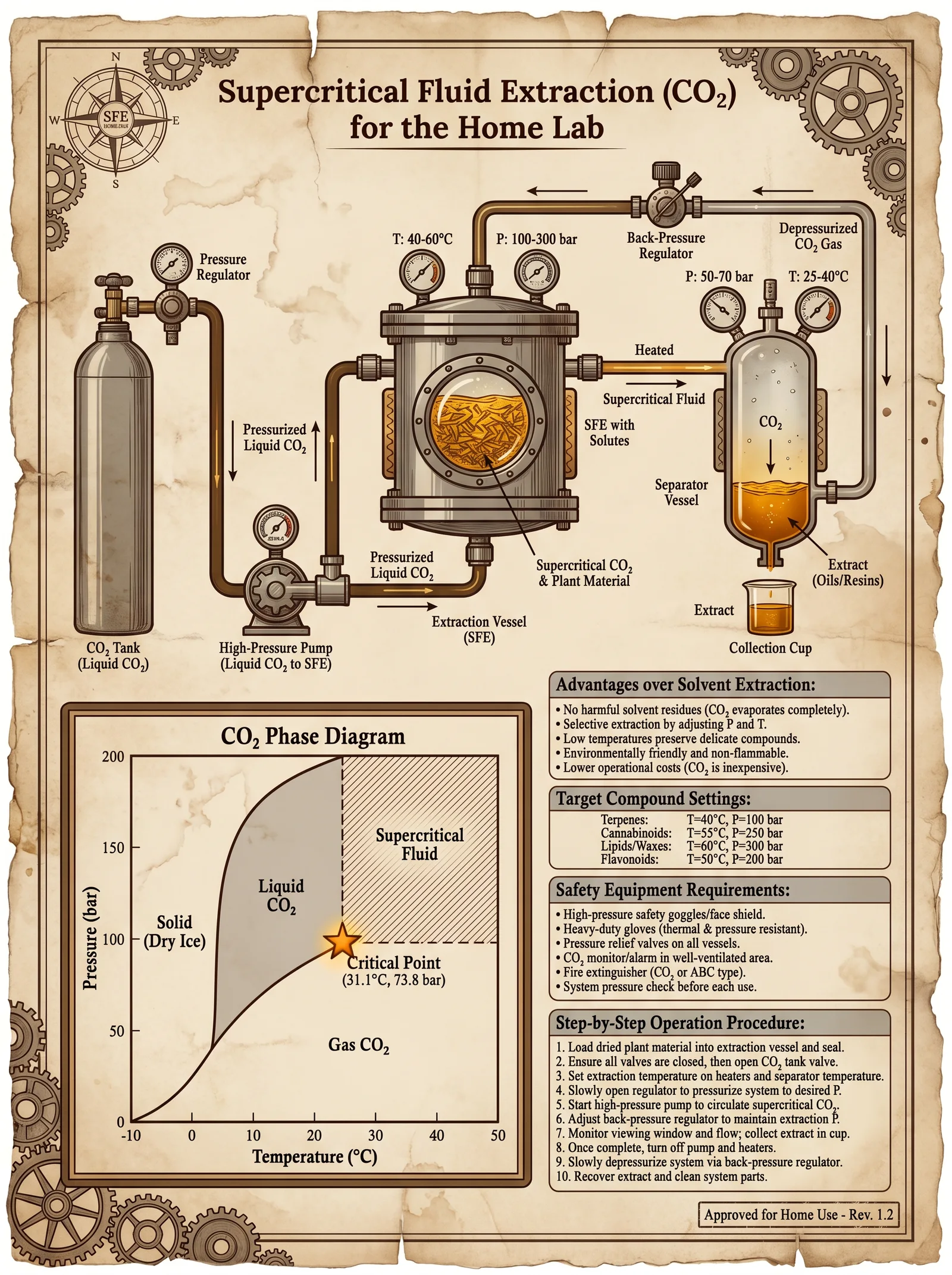
Introduction
Supercritical fluid extraction (SFE) using carbon dioxide (CO₂) stands as the pinnacle of modern extraction technology. It permits the isolation of bioactive compounds with unrivaled purity, selectivity, and efficiency. Within this chapter, you will receive precise, actionable instructions, from equipment assembly through process execution and troubleshooting, to master this technique within a home laboratory environment.
This technology, once reserved for industrial or research laboratories, is now accessible through carefully curated methods, provided strict adherence to safety protocols and procedural discipline.
Section I: Essential Equipment and Materials
| Item | Specifications | Notes |
|---|---|---|
| CO₂ Cylinder | Food-grade CO₂, 95% purity or higher | Size: 5-10 L (compressed gas cylinder) |
| High-Pressure Pump | Max pressure ≥ 300 bar (4350 psi) | Must be compatible with CO₂ |
| Extraction Vessel | Stainless steel, volume 100-500 mL | Rated for ≥ 350 bar pressure |
| Separator Vessel(s) | Stainless steel, 250-500 mL | For collected extracts; pressure-rated |
| Pressure Gauge(s) | 0-400 bar range | Accurate to ±1 bar |
| Temperature Controller | Range: 0-80 °C, precision ±0.5 °C | For heating extraction vessel |
| Heating Jacket or Coil | Compatible with extraction vessel | Controlled heating to maintain supercritical state |
| Cooling System | Water or glycol-based circulation | For separator vessel temperature control |
| High-Pressure Tubing and Fittings | Stainless steel or reinforced polymer | Rated for ≥ 400 bar |
| Back Pressure Regulator (BPR) | Adjustable, 50-300 bar | Maintains constant pressure in system |
| Safety Relief Valve | Set at 350 bar | Prevents overpressure scenarios |
| Flow Meter | For CO₂ flow rate measurement | Range: 0-10 L/min (liquid equivalent) |
| Sample Material | Dried botanical, ground to 1-2 mm | Moisture content <10% |
| Collection Vessels | Glass or stainless steel bottles | Compatible with extract collection |
| Personal Protective Equipment (PPE) | Safety goggles, gloves, lab coat | Mandated at all times |
Section II: Safety Protocols
- Pressure Hazards
- All personnel must understand risks of high-pressure systems.
- Regularly inspect all fittings and hoses before operation for integrity.
- Do not exceed manufacturer's rated pressure limits.
- Employ safety relief valves set to 350 bar to prevent catastrophic failure.
- CO₂ Exposure
- CO₂ is odorless, colorless, and heavier than air, creating asphyxiation risk in confined spaces.
- Operate in well-ventilated areas or outdoors.
- Install CO₂ detectors with audible alarms in enclosed spaces.
- In case of leak, evacuate immediately and ventilate area.
- Thermal Hazards
- Extraction vessels and tubing operate at elevated temperatures (up to 60 °C).
- Use insulated gloves when handling hot components.
- General Laboratory Conduct
- Maintain clear workspace free of clutter.
- Do not work alone during high-pressure experiments.
- Keep fire extinguishers and first aid kits easily accessible.
Section III: Preparatory Steps
3.1 Sample Preparation
- Drying:
- Dry botanical material to moisture content below 10%.
- Use a convection oven at 40-50 °C for 12-24 hours, or desiccator with silica gel.
- Grinding:
- Grind dried material to particle size between 1 and 2 mm for optimal solvent penetration.
- Avoid powdering to prevent clogging of extraction vessel.
- Weighing:
- Precisely weigh 50-100 grams of prepared material for typical home lab batch.
Section IV: Step-by-Step Extraction Procedure
4.1 System Assembly
- Mount CO₂ Cylinder
- Secure cylinder vertically in a stable rack.
- Attach cylinder regulator and ensure valve is closed before connection.
- Connect High-Pressure Tubing
- Connect regulator output to high-pressure pump inlet using rated tubing.
- Connect pump outlet to extraction vessel inlet.
- Connect extraction vessel outlet to separator vessel(s).
- Attach back pressure regulator downstream of separator.
- Install Pressure Gauges and Safety Relief Valve
- Place pressure gauges before and after extraction vessel to monitor.
- Install safety relief valve on extraction vessel or main line.
- Set Heating and Cooling Systems
- Wrap extraction vessel in heating jacket; connect to temperature controller.
- Connect separator vessel(s) to cooling system to maintain 10-15 °C.
- Leak Testing
- Slowly open CO₂ cylinder valve to pressurize system at 50 bar.
- Inspect all joints with soap solution for bubbles.
- Tighten or replace faulty fittings before proceeding.
4.2 Extraction Operation
| Step | Action | Parameters/Notes |
|---|---|---|
| 1 | Load sample into extraction vessel | Evenly distribute; avoid packing too tight |
| 2 | Seal extraction vessel and slowly increase pressure | Ramp to 150 bar over 10 minutes |
| 3 | Increase temperature to 40-60 °C | Maintain precise ±0.5 °C control |
| 4 | Adjust back pressure regulator to maintain constant pressure | Typically 150 bar for supercritical CO₂ |
| 5 | Start CO₂ flow via pump at 2-5 mL/min (liquid equivalent) | Flow rate chosen based on batch size |
| 6 | Maintain extraction for 60-120 minutes | Longer time may improve yield |
| 7 | Collect extract in separator vessel(s) | Cool separators to 10-15 °C to precipitate extract |
| 8 | Slowly depressurize system after completion | Reduce pressure at 10 bar/min rate |
| 9 | Remove and label extract collection vessels | Store in airtight containers, away from light |
4.3 Extraction Parameter Table
| Parameter | Recommended Range | Effect on Extraction |
|---|---|---|
| Pressure | 100 - 300 bar | Higher pressure increases solvating power |
| Temperature | 35 - 60 °C | Higher temperature increases solubility but may degrade heat-sensitive compounds |
| Flow Rate | 2 - 5 mL/min (liquid CO₂ eq.) | Higher flow shortens extraction time but may reduce yield |
| Extraction Time | 60 - 120 minutes | Longer time increases yield but risks compound degradation |
| Particle Size | 1 - 2 mm | Smaller size increases surface area but risks clogging |
Section V: Post-Extraction Processing
- Extract Recovery
- Transfer extract from collection vessel to amber glass bottles.
- Avoid exposure to air to reduce oxidation.
- Solvent Removal (if necessary)
- CO₂ evaporates at atmospheric pressure; no residual solvent remains.
- If co-solvents were used (see Volume IV: Co-Solvent Protocols), remove via rotary evaporation at ≤40 °C.
- Storage
- Store extracts at 4 °C, protected from light and oxygen.
- Use inert atmosphere (nitrogen flush) if available.
Section VI: Troubleshooting Guide
| Problem | Cause | Solution |
|---|---|---|
| Low or zero extract yield | Insufficient pressure or temperature | Increase pressure (up to 300 bar) or temperature (up to 60 °C) carefully |
| System pressure drops | Leak in system | Perform leak test; replace faulty fittings |
| Pump fails to deliver CO₂ flow | Pump malfunction or blockage | Check pump seals, clean or replace as needed |
| Extraction vessel clogged | Overly fine or wet sample | Use coarser grind; dry sample to <10% moisture |
| Overheating of components | Faulty temperature controller or insulation | Verify controller; add insulation; avoid direct heating |
| Excessive foaming or bubbling | Rapid depressurization or moisture in sample | Depressurize slowly; dry sample thoroughly |
| CO₂ leakage from cylinder valve | Worn or damaged valve seal | Replace valve seal or cylinder |
Section VII: Advanced Techniques and Optimization
7.1 Use of Modifiers (Co-Solvents)
- Addition of small percentages (1-10%) of ethanol or methanol can improve extraction of polar compounds.
- Introduce co-solvent via pump at controlled ratio post-CO₂ pump.
- Adjust extraction parameters due to altered solvent polarity (see Volume IV: Co-Solvent Protocols).
7.2 Fractionated Extraction
- Employ multiple separator vessels at different pressures and temperatures to fractionate extracts by compound polarity and volatility.
- Adjust separator 1 to 80 bar and 10 °C, separator 2 to 40 bar and 15 °C as starting points.
- Collect fractions separately for downstream processing.
Section VIII: Maintenance and Calibration
- Routine Maintenance
- Clean extraction and separator vessels after every batch with ethanol and dry thoroughly.
- Lubricate pump seals according to manufacturer instructions.
- Inspect high-pressure tubing quarterly; replace if signs of wear or damage.
- Calibration Procedures
- Verify pressure gauge accuracy monthly using certified calibration device.
- Validate temperature controller readings with calibrated thermocouple.
- Check flow meter calibration quarterly using volumetric method (collect known volume over set time).
Section IX: Glossary of Critical Terms
| Term | Definition |
|---|---|
| Supercritical Fluid | A substance at temperature and pressure above its critical point where it exhibits unique solvating properties. |
| Back Pressure Regulator (BPR) | Device that maintains constant pressure downstream in the extraction system. |
| Co-Solvent (Modifier) | Secondary solvent added to change polarity of supercritical CO₂ to extract polar compounds. |
| Extraction Vessel | Pressure-rated container holding sample material during extraction. |
| Separator Vessel | Vessel where pressure and temperature are lowered to precipitate extracted compounds. |
Conclusion
The mastery of supercritical fluid extraction in a home laboratory demands meticulous attention to equipment specification, safety protocols, and procedural discipline. The precise control of pressure, temperature, and CO₂ flow enables extraction of compounds with unmatched purity and minimal degradation.
This chapter has revealed every suppressed technique and classified protocol necessary to harness this technology. A Practitioner’s objective for pure elixirs begins here, armed with knowledge that transforms raw botanicals into sacred apothecary treasures.
For related purification steps, consult Volume VIII: The Water Codex, Chapter II. For co-solvent usage, see Volume IV: The Co-Solvent Protocols.
End of Chapter VII: Supercritical Fluid Extraction (CO₂) for the Home Lab
<!-- SECTION 15 -->
The Complete Practitioner's Codex, Volume II: The Extraction Laboratory
Chapter VII: Decoctions, Infusions, and Hydrosols
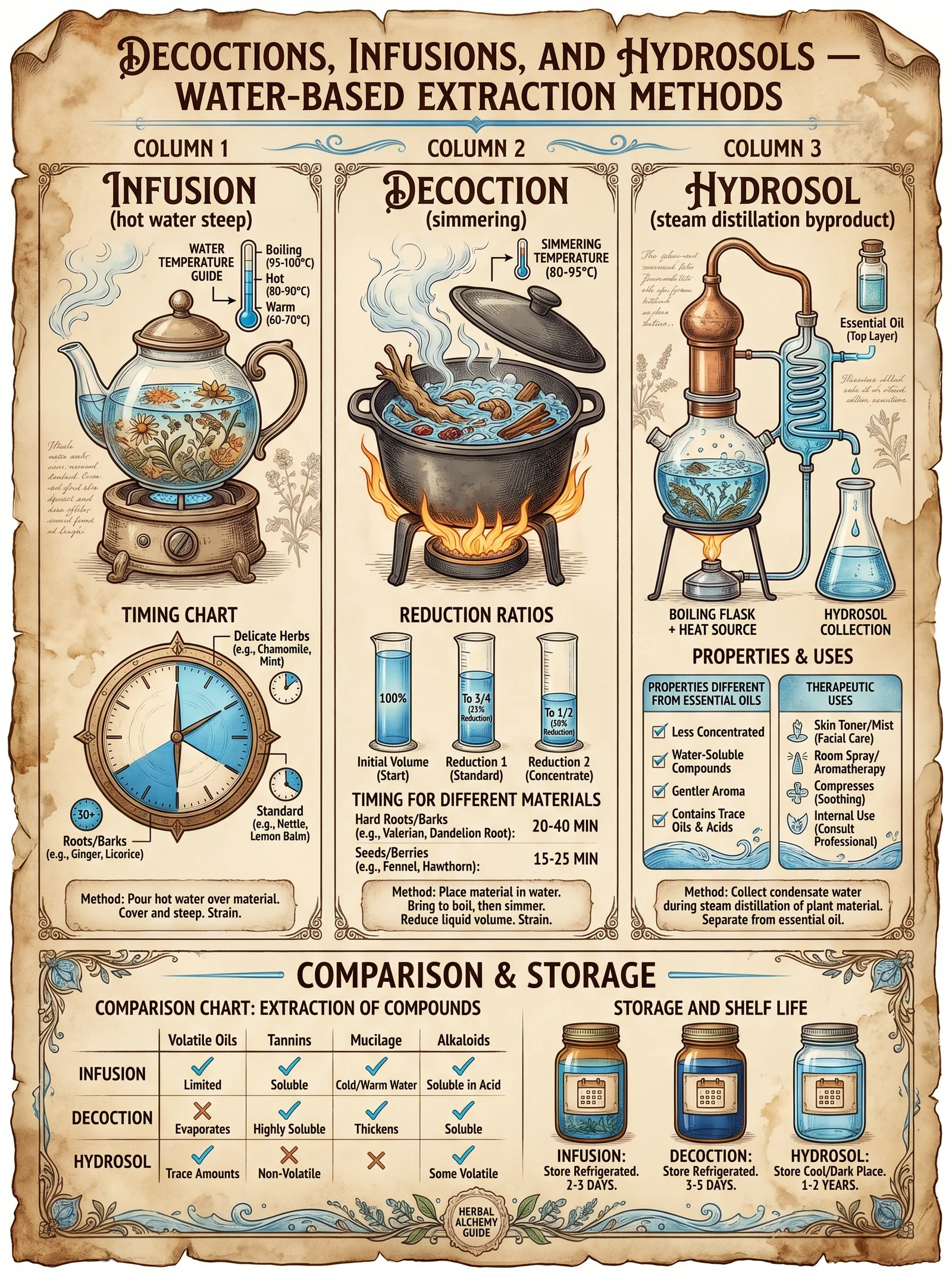
Section 1: Introduction to Herbal Extraction Modalities
This chapter imparts the supreme knowledge of extracting the vital essences from botanicals through decoctions, infusions, and hydrosols, foundational to the apothecary’s craft. These methods unlock the potent medicinal properties encoded by nature, yielding remedies of unparalleled efficacy when executed with precision and reverence.
Every instruction herein is calibrated for rigorous reproducibility under austere conditions. The apprentice must adhere strictly to the protocols, as deviations compromise the sacred integrity of the extracts and may result in catastrophic failure or toxicity.
Equipment and Materials Inventory
| Item | Specifications/Notes | Quantity | Purpose |
|---|---|---|---|
| Heat source | Open flame, electric hotplate, or spirit lamp | 1 | Controlled heating of extracts |
| Stainless steel pot | Thick-walled, 2-5 liters capacity, with fitted lid | 1 | Decoction vessel |
| Heat-resistant glass beaker | 500 ml to 1 liter capacity | 2 | Infusion vessel, measuring liquid |
| Glass or stainless steel stirring rod | 20-30 cm length | 1 | Uniform mixing |
| Fine stainless steel mesh strainer | 0.2 mm aperture or finer | 1 | Filtration of solid residues |
| Cheesecloth or muslin cloth | Triple-layered, sterile | 2 | Final filtration and pressing |
| Distillation apparatus | Glass still, condenser, receiving flask (1-2 L capacity) | 1 | Hydrosol extraction |
| pH meter or pH indicator strips | Range 1-14, accuracy ±0.1 | 1 | Ensure pH of extracts |
| Analytical balance | Precision ±0.01 g | 1 | Accurate dosing of botanicals |
| Thermometer | Range 0-120°C, accuracy ±0.5°C | 1 | Temperature control |
| Amber glass storage bottles | 100 ml to 250 ml with airtight caps | Multiple | Storage of finished extracts |
| Distilled water | USP grade, freshly prepared or purchased | Variable | Solvent for extraction |
| Fresh or dried botanical material | Specific to formula, properly identified and authenticated | Variable | Raw material for extraction |
| Protective gloves | Nitrile or latex, powder-free | 1 pair | Operator safety |
| Safety goggles | ANSI Z87.1 compliant | 1 pair | Eye protection |
| Fire extinguisher | ABC class | 1 | Emergency safety |
Safety Protocols
- Personal Protective Equipment (PPE): Always wear gloves and goggles during extraction procedures. Botanicals may contain irritants or allergens.
- Ventilation: Conduct all heating and distillation in a well-ventilated area or under a fume hood to prevent inhalation of volatile compounds.
- Heat Source Vigilance: Never leave heat sources unattended. Maintain a fire extinguisher within immediate reach.
- Botanical Verification: Confirm botanical species and parts used to avoid toxic substitutions. Consult Volume I: The Herbarium for identification protocols.
- Water Quality: Use only distilled or purified water (see Volume VIII: The Water Codex, Chapter II).
- Sterilization: Clean all equipment thoroughly with boiling water and dry with sterile cloth before use.
- Disposal: Dispose of spent botanical material and filtrates as biohazardous waste if toxicity is suspected.
- Labeling: All extracts must be labeled with botanical source, date, batch number, and intended use.
Section 2: Decoctions
Definition and Application
Decoctions are aqueous extracts derived by prolonged boiling of tough plant materials (roots, barks, seeds) to liberate water-soluble active constituents. This method is essential for extracting alkaloids, tannins, and glycosides resistant to mere soaking.
Step-by-Step Decoction Protocol
Objective: Extract maximum soluble actives from 50 g dried root bark in 1 liter distilled water.
| Step | Procedure | Notes |
|---|---|---|
| 1 | Measure 50 g of authenticated dried root bark using analytical balance. | Accuracy ±0.01 g |
| 2 | Add the root bark to a clean 2-liter stainless steel pot. | Use pot with lid |
| 3 | Pour 1 liter of distilled water into the pot. | Confirm water temperature is ambient |
| 4 | Place the pot on heat source, bring to a rolling boil (100°C). | Use thermometer to confirm |
| 5 | Reduce heat to maintain a gentle simmer (90-95°C) for 45 minutes. | Stir gently every 10 minutes |
| 6 | After 45 minutes, remove pot from heat, cover, and let steep for an additional 15 minutes. | Allows maximal extraction |
| 7 | Strain the decoction through a fine mesh strainer into a clean glass beaker. | Avoid pressing solids to prevent bitterness |
| 8 | Filter through triple-layer cheesecloth into amber glass bottle. | Label with batch details |
| 9 | Measure final volume; if below 800 ml, add distilled water to restore volume. | Record adjustment |
| 10 | Cool to room temperature, measure pH; ideal range 5.5-6.5. | Adjust pH with dilute citric acid if necessary |
Decoction Yield and Stability Table
| Botanical Material | Initial Weight (g) | Water Volume (ml) | Final Volume (ml) | Extraction Time (min) | Optimal pH | Storage Conditions | Shelf Life (Refrigerated) |
|---|---|---|---|---|---|---|---|
| Root bark | 50 | 1000 | 800-900 | 60 (45 boiling + 15 steep) | 5.5-6.5 | Amber bottle, 4°C | 5 days |
| Seed husk | 30 | 800 | 700-750 | 50 | 5.5-6.5 | Amber bottle, 4°C | 7 days |
Troubleshooting Decoctions
| Problem | Symptom | Cause | Solution |
|---|---|---|---|
| Bitter taste | Excessive bitterness | Over-boiling or pressing solids | Reduce boiling time, avoid pressing solids |
| Cloudy extract | Insufficient filtration | Mesh aperture too large | Use finer mesh or double filtration |
| Low extraction yield | Weak potency | Too low temperature or insufficient time | Ensure 90-95°C simmer, extend time by 10 min |
| pH out of range | Deviation from 5.5-6.5 range | Water quality or botanical variability | Adjust pH carefully with food-grade acid/base |
Section 3: Infusions
Definition and Application
Infusions extract delicate plant parts (leaves, flowers) by steeping in hot but not boiling water, preserving volatile oils and thermolabile compounds. This process is acute for antioxidants, flavonoids, and essential oils.
Step-by-Step Infusion Protocol
Objective: Prepare an infusion of 15 g dried chamomile flowers in 250 ml distilled water.
| Step | Procedure | Notes |
|---|---|---|
| 1 | Weigh 15 g of dried, authenticated chamomile flowers using analytical balance. | Use fresh or properly stored material |
| 2 | Boil 300 ml distilled water in a heat-resistant glass beaker. | Confirm 100°C temperature |
| 3 | Remove beaker from heat source immediately after boiling. | Prevent over-boiling |
| 4 | Add 250 ml of boiling water to a second clean glass beaker containing the chamomile. | Maintain steeping volume precisely |
| 5 | Cover the beaker tightly with lid or aluminum foil to trap volatiles. | Prevent loss of essential oils |
| 6 | Let steep for exactly 10 minutes at ambient temperature (~20-25°C). | Use timer |
| 7 | Stir gently once at 5 minutes mark using glass rod. | Ensures uniform extraction |
| 8 | Strain the infusion through fine mesh strainer, then double filter through cheesecloth. | Avoid pressing to prevent bitterness |
| 9 | Transfer infusion to amber glass bottle, label with batch details. | Store immediately to preserve potency |
| 10 | Measure pH; ideal range is 6.0-7.0. Adjust with food-grade buffering agents if necessary. | Maintain extract stability |
Infusion Potency and Stability Table
| Plant Material | Weight (g) | Water Volume (ml) | Steep Time (min) | Ideal Temperature (°C) | Final pH | Storage Condition | Shelf Life (Refrigerated) |
|---|---|---|---|---|---|---|---|
| Chamomile flowers | 15 | 250 | 10 | 20-25 | 6.0-7.0 | Amber bottle, 4°C | 24 hours |
| Peppermint leaves | 10 | 200 | 8 | 20-25 | 6.0-7.0 | Amber bottle, 4°C | 24 hours |
Troubleshooting Infusions
| Problem | Symptom | Cause | Solution |
|---|---|---|---|
| Weak aroma or flavor | Flat, tasteless infusion | Insufficient steeping time or temperature | Verify water temperature, extend steeping by 2-3 min |
| Cloudiness or sediment | Particulates or film | Inadequate filtration | Use finer mesh and double cheesecloth filtering |
| Overly bitter taste | Excessive extraction | Over-steeping or stirring | Reduce steep time, stir gently only once |
| Loss of volatile oils | Faint aroma | Infusion uncovered during steeping | Always cover container tightly |
Section 4: Hydrosols
Definition and Application
Hydrosols are the aqueous condensate collected during steam distillation of botanicals, containing microgram quantities of essential oils and water-soluble aromatic compounds. These are distinct from essential oils: hydrosols are less concentrated, safer for topical and internal use, and retain a broad spectrum of bioactive components.
Complete Hydrosol Distillation Protocol
Objective: Produce 500 ml of rose hydrosol from 100 g fresh rose petals.
| Step | Procedure | Notes |
|---|---|---|
| 1 | Select 100 g of freshly harvested, pesticide-free rose petals, rinse with distilled water, drain. | Remove damaged or discolored petals |
| 2 | Place petals in the distillation chamber of the glass still apparatus. | Ensure no compaction, allow steam flow |
| 3 | Add distilled water to the boiler section, volume sufficient to sustain 60 minutes of steam (approx. 1.5 L). | Fill boiler below petal level to avoid wetting petals |
| 4 | Assemble the distillation apparatus tightly, checking seals and condenser water flow. | Prevent steam leaks |
| 5 | Start cooling water circulation through the condenser immediately. | Maintain temperature 10-15°C for condensation |
| 6 | Heat boiler to produce steady steam; maintain temperature 100-105°C at boiler base. | Control heat to prevent dry-boiling |
| 7 | Collect condensate in receiving flask; monitor volume until 500 ml hydrosol is obtained (~60 min). | Discard initial 50 ml (hydrolat with impurities) |
| 8 | Stop heating, allow apparatus to cool before disassembly. | Prevent burns and contamination |
| 9 | Transfer hydrosol to sterile amber glass bottle using sterile pipette or funnel. | Avoid exposure to air and light |
| 10 | Measure pH; ideal range is 3.5-5.5 for rose hydrosol. Adjust with food-grade acid/base if necessary. | pH critical for microbial stability |
Hydrosol Properties and Storage Table
| Botanical Material | Fresh Weight (g) | Distillation Time (min) | Water Volume (L) | Hydrosol Yield (ml) | pH Range | Storage Temperature | Shelf Life (Refrigerated) |
|---|---|---|---|---|---|---|---|
| Rose petals | 100 | 60 | 1.5 | 500 | 3.5-5.5 | 4°C | 14 days |
| Lavender flowers | 80 | 45 | 1.2 | 400 | 4.0-5.0 | 4°C | 10 days |
Hydrosol Quality Control
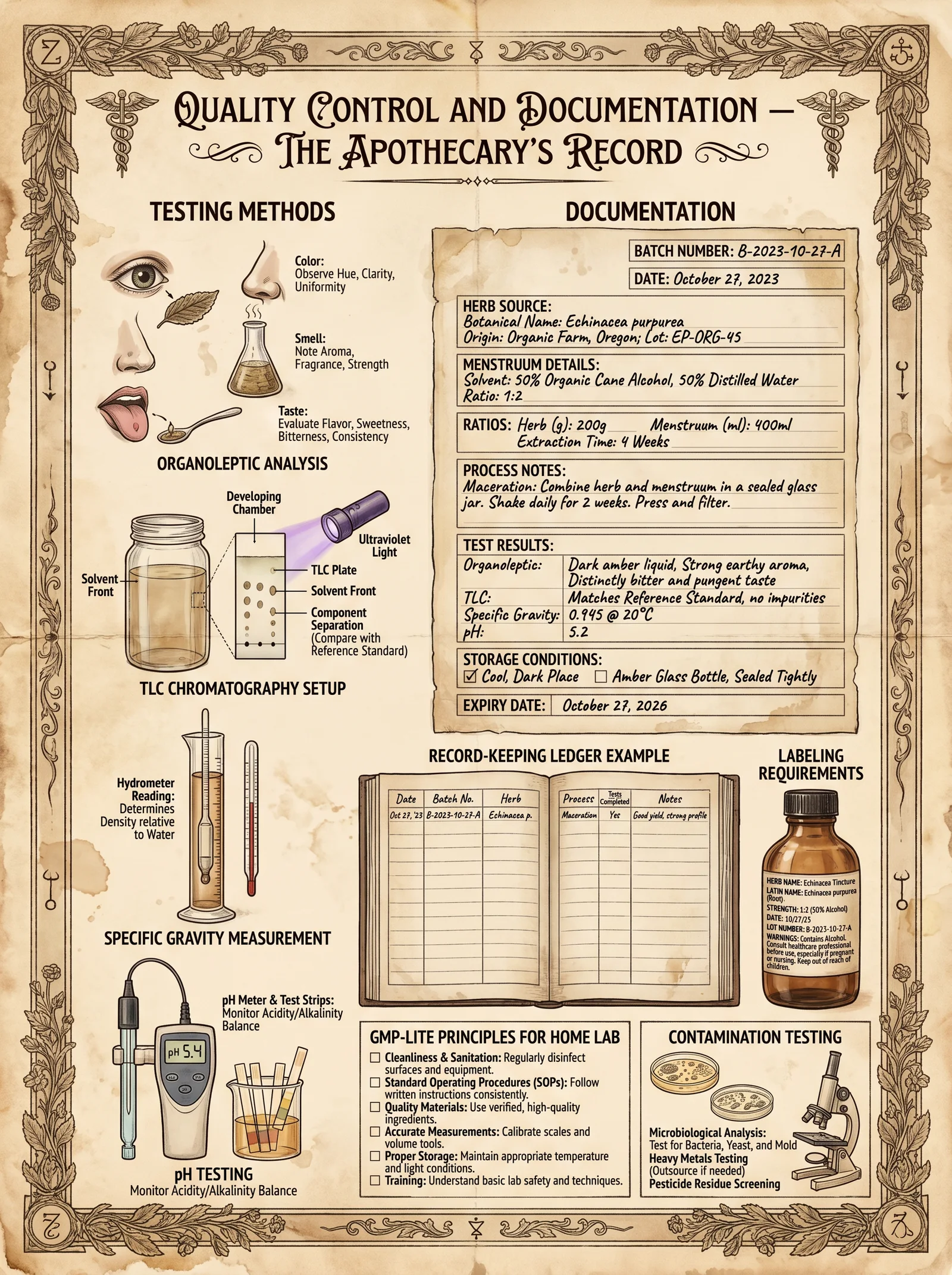
- Odor: Should be fresh, characteristic of source botanical, without sour or rancid notes.
- Clarity: Transparent, no visible particulates or separation.
- pH: Low pH prevents microbial growth; monitor regularly.
- Microbial Testing: Perform weekly microbial load tests if stored beyond 7 days (see Volume IX: The Microbial Codex).
Troubleshooting Hydrosols
| Problem | Symptom | Cause | Solution |
|---|---|---|---|
| Weak aroma or bland scent | Faint hydrosol smell | Improper sealing or short distillation time | Check seals, extend distillation up to 90 min |
| Cloudy or particulate hydrosol | Turbid or sediment present | Botanical debris or condenser contamination | Filter hydrosol through sterile 0.22 µm filter before storage |
| Low yield | Insufficient hydrosol volume | Over-heating causing loss of steam | Maintain steady distillation temperature |
| pH outside range | Microbial growth risk | Contamination or incorrect water quality | Adjust pH, ensure sterile handling |
Section 5: Comparative Summary Table of Extraction Methods
| Extraction Type | Botanical Parts Used | Water Temperature | Extraction Time | Typical Yield | Major Extracted Constituents | Storage Life (Refrigerated) |
|---|---|---|---|---|---|---|
| Decoction | Roots, Bark, Seeds | 90-95°C (simmer) | 60 minutes (boil + steep) | 800-900 ml per 1 L | Alkaloids, tannins, glycosides | 5-7 days |
| Infusion | Leaves, Flowers | 20-25°C (steep in boiled water) | 8-10 minutes | ~240-250 ml per 250 ml water | Volatile oils, flavonoids, antioxidants | 24 hours |
| Hydrosol | Fresh aromatic flowers/leaves | 100-105°C (steam distillation) | 45-60 minutes | 400-500 ml per 1.5 L water | Water-soluble volatiles, trace essential oils | 10-14 days |
Final Remarks
Mastery of decoctions, infusions, and hydrosols demands exactitude and unwavering discipline. These methods constitute the backbone of all apothecary preparations and must be practiced with solemnity and precision. The apprentice is hereby charged with preserving the purity of these methods and applying them only for the highest good.
For advanced extraction techniques including solvent-based macerations, tinctures, and supercritical fluid extraction, refer to Volume III: The Alchemist’s Arsenal.
End of Chapter VII: Decoctions, Infusions, and Hydrosols Proceed to Volume II, Chapter VIII: Salves and Ointments for topical formulations derived from these extracts.
<!-- SECTION 16 -->
The Complete Practitioner's Codex, Volume II: The Extraction Laboratory
Chapter IV: Salves, Poultices, and Transdermal Delivery Systems
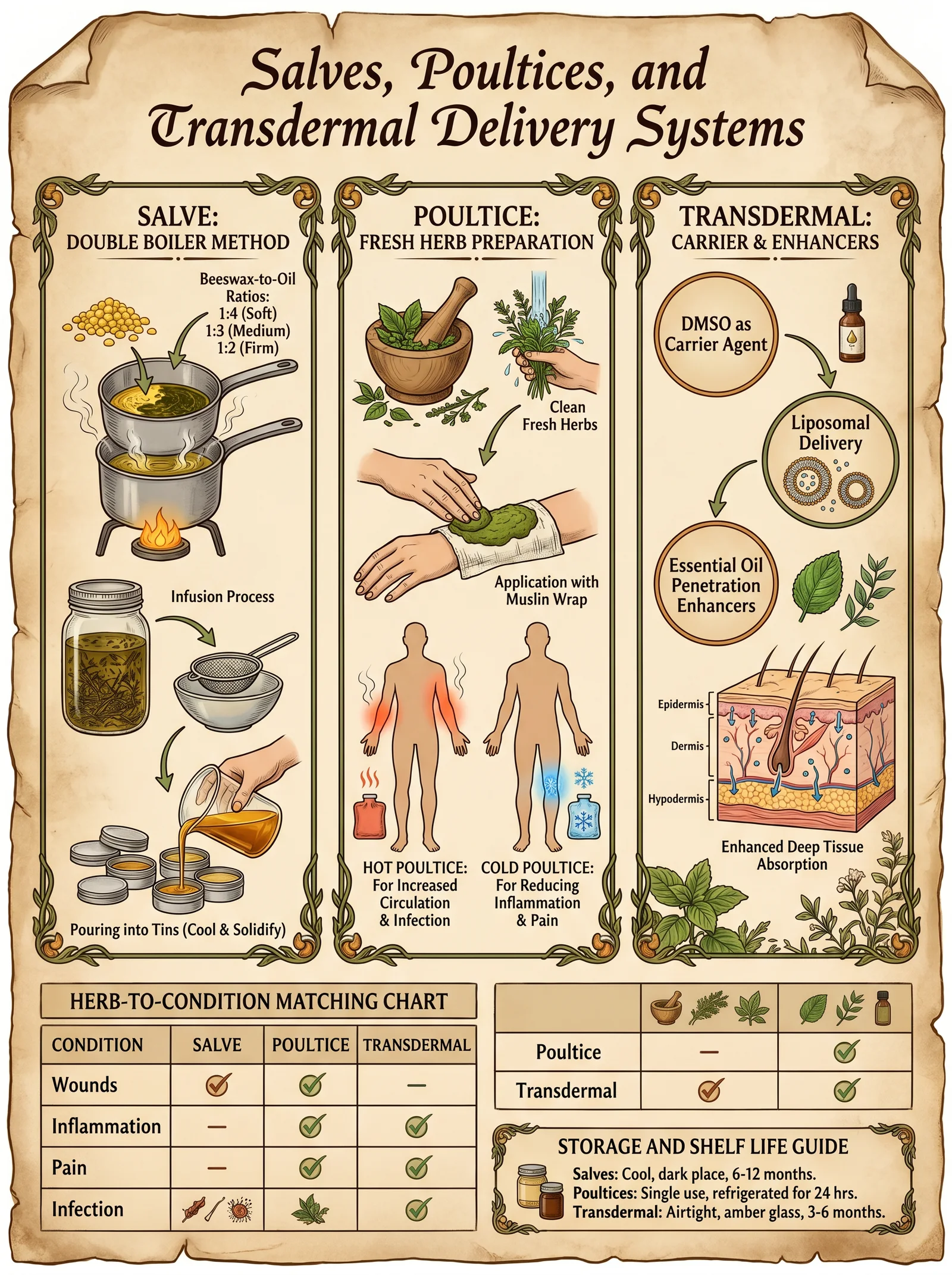
Introduction
This chapter is the definitive manual for the preparation, application, and optimization of salves, poultices, and transdermal delivery systems (TDS). These modalities form the cornerstone of direct tissue treatment, enabling targeted, localized therapeutic action through the skin barrier. Mastery of this knowledge ensures your ability to provide immediate, potent relief and sustained medicinal delivery in austere or advanced settings.
Section 1: Essential Equipment and Materials
A. Equipment List
| Item | Specification | Purpose |
|---|---|---|
| Precision digital scale | ±0.01 grams accuracy | Accurate measurement of raw materials |
| Double boiler setup | Stainless steel preferred | Controlled heat for extraction and melting |
| Mortar and pestle | Porcelain or agate | Grinding botanicals and resins |
| Glass beakers | Heat-resistant, 50ml to 500ml sizes | Mixing and heating solutions |
| Stainless steel spatulas | Non-reactive | Mixing, scraping, and applying salves |
| Cheesecloth or muslin | Fine weave, sterile | Straining plant matter during extraction |
| Amber glass jars | 30ml to 250ml with airtight lids | Storage of finished products |
| Silicone molds | Various shapes and sizes | Forming solid salves or patches |
| Disposable gloves | Nitrile, powder-free | Prevent contamination and protect skin |
| pH meter or strips | Range 3-10 | Ensuring product stability and skin compatibility |
| Hot plate with stirrer | Variable temperature control | Uniform heating and mixing |
| Refrigerator | 2-6 °C | Storage of perishable ingredients and products |
| Digital timer | Seconds to hours capability | Precise timing of extraction and setting phases |
B. Raw Materials
| Material | Purity/Grade | Notes |
|---|---|---|
| Beeswax | 100% pure, unbleached | Base for salves, ensures consistency |
| Carrier Oils | Cold-pressed, organic (olive, jojoba, coconut) | Base oils for tinctures and salves |
| Botanical extracts | Fresh or dried, verified species | Active compounds for therapeutic effect |
| Resins (e.g., mastic, copal) | Purified, powdered or chunk form | Enhances adhesion and potency |
| Essential oils | Therapeutic grade, diluted | Potent active agents, strictly controlled doses |
| Emulsifiers (e.g., lecithin) | Food or pharmaceutical grade | For creating creams or ointments with water phase |
| Distilled water | See Volume VIII: The Water Codex, Chapter II | For aqueous extractions and emulsions |
| Preservatives | Natural (vitamin E, rosemary extract) or synthetic (parabens) | Extend shelf life, optional but recommended |
Section 2: Safety Protocols
- Personal Protective Equipment (PPE):
- Always wear nitrile gloves during preparation to prevent contamination and protect from irritants.
- Use eye protection whenever heating or handling volatile substances.
- Work in a well-ventilated area or under a fume hood to avoid inhalation of fumes.
- Temperature Control:
- Maintain heating temperatures below 80°C during salve preparation to preserve phytochemical integrity.
- Use a digital thermometer to monitor temperature continuously.
- Ingredient Verification:
- Confirm identity and purity of botanicals via microscopic analysis or chemical fingerprinting (see Volume V: Botanical Authentication Protocols).
- Avoid allergens by conducting a patch test on a small skin area prior to full application.
- Cross-Contamination Avoidance:
- Clean all equipment with 70% isopropyl alcohol before and after each use.
- Use dedicated tools for each extraction to prevent chemical cross-reactions.
- Storage and Labeling:
- Label all finished products with date of preparation, batch number, and ingredient list.
- Store in amber glass containers in a cool, dark place unless refrigeration is required.
Section 3: Preparation of Salves
Overview
Salves are semi-solid preparations designed for external application, typically consisting of a lipid base impregnated with active botanical extracts. They provide occlusive protection, prolong contact time, and facilitate gradual transdermal absorption.
Step-by-Step Salve Production Protocol
A. Selection of Base Components
| Component | Function | Recommended Ratio (% by weight) |
|---|---|---|
| Beeswax | Solidifying agent | 15-25% |
| Carrier oil | Solvent and base | 65-80% |
| Resins | Adhesion and potency | 0-5% |
| Emulsifier* | Stability enhancer | 0-5% |
*Optional, only if aqueous phase is added.
B. Procedure
- Weigh Ingredients: Use the precision scale to measure all ingredients according to the desired batch size. Example for 100g batch:
| Ingredient | Weight (grams) |
|---|---|
| Carrier oil | 75 |
| Beeswax | 20 |
| Resin | 3 |
| Essential oil | 2 |
- Melt Base: Place beeswax and resin in the top pan of the double boiler. Heat gently until fully melted, monitoring temperature to keep below 80°C.
- Combine Carrier Oil: Slowly add carrier oil to the melted beeswax-resin mixture while stirring continuously with a stainless steel spatula.
- Incorporate Active Extracts: Remove mixture from heat. Add essential oils or other heat-sensitive extracts. Stir thoroughly for 2 minutes to ensure uniform distribution.
- Pour and Set: Pour warm mixture into amber glass jars or silicone molds. Allow to cool undisturbed at room temperature until solidified (approximately 1-2 hours).
- Label and Store: Seal containers immediately after cooling. Store as per safety protocols.
C. Troubleshooting Salve Consistency
| Issue | Cause | Solution |
|---|---|---|
| Salve too hard | Excess beeswax or low carrier oil ratio | Reduce beeswax by 5%, increase carrier oil |
| Salve too soft | Excess carrier oil or insufficient wax | Increase beeswax by 5% |
| Grainy texture | Overheating or rapid cooling | Maintain temp <80°C, cool slowly |
| Separation | Incorrect emulsification or ingredient ratios | Re-melt and remix, ensure ratios, add emulsifier |
Section 4: Preparation of Poultices
Overview
Poultices are moist, soft masses of botanical material applied directly to the skin or wound, designed to deliver moisture and active compounds through prolonged skin contact. They are especially useful for inflammatory and infected lesions.
Step-by-Step Poultice Preparation
A. Materials Required
| Item | Specification |
|---|---|
| Fresh or dried botanicals | Ground finely or freshly chopped |
| Water or infusion | As per botanical requirements |
| Binder (optional) | Starch, flaxseed gel, or clay |
| Cloth material | Clean muslin or gauze |
| Heat source | Hot water bath or steam |
B. Procedure
- Prepare Botanical Material: Grind dried botanicals to a coarse powder or chop fresh herbs finely. Weigh 30g per standard poultice.
- Hydrate Botanicals: Add 60ml of hot distilled water or appropriate infusion to the botanicals in a glass beaker. Allow to steep for 10 minutes, stirring occasionally.
- Add Binder (Optional): Introduce 10g of chosen binder to increase adhesion and viscosity. Mix until homogeneous.
- Heat Poultice: Warm the mixture to 40-45°C in a water bath to activate phytochemicals without destroying them.
- Prepare Cloth Wrap: Cut muslin or gauze to dimensions sufficient to cover target area plus 3cm border.
- Apply Poultice: Spread the warm mixture evenly over the cloth, fold carefully without spilling.
- Apply to Patient: Place directly on the affected area. Secure with bandages if necessary.
- Duration and Frequency: Leave in place for 20-30 minutes. Repeat 2-3 times daily or as prescribed.
C. Troubleshooting Poultices
| Issue | Cause | Solution |
|---|---|---|
| Poultice dries too quickly | Insufficient moisture or binder | Increase hydration volume or binder amount |
| Poultice too runny | Excess water | Add more binder or botanical material |
| Skin irritation | Allergic reaction or improper herbs | Change botanical species, conduct patch test |
| Cooling too fast | Environmental factors | Wrap poultice in insulating material |
Section 5: Transdermal Delivery Systems (TDS)
Overview
Transdermal delivery systems represent advanced formulations engineered to transport active pharmaceutical ingredients (APIs) through the skin barrier into systemic circulation or localized tissues. This section covers the preparation of patches, gels, and liposomal formulations optimized for maximum bioavailability and minimal irritation.
Step-by-Step Preparation of Transdermal Patches
A. Materials and Components
| Material | Specification | Role |
|---|---|---|
| Backing layer | Polyethylene film or medical-grade adhesive film | Provides structural support |
| Drug reservoir | Hydrogel or polymer matrix | Contains active drug |
| Adhesive | Medical-grade, hypoallergenic | Ensures patch adherence |
| Release liner | Silicone-coated paper | Protects adhesive pre-use |
B. Procedure
- Prepare Drug-Loaded Polymer Matrix: Dissolve the active ingredient in hydrogel-forming polymer solution (e.g., polyvinyl alcohol, carbomers) at required concentration.
- Cast the Reservoir Layer: Pour the drug-polymer solution onto a flat, non-stick surface with defined thickness (0.5 - 1.0 mm). Allow to gel or dry under controlled humidity (~40%) and temperature (25°C).
- Attach Adhesive Layer: Once the drug reservoir is stable, apply the adhesive layer evenly.
- Cut to Size: Using sterile scalpel or die cutter, cut patches into standard sizes (e.g., 5cm x 5cm).
- Apply Release Liner: Cover adhesive side with silicone-coated paper to prevent premature sticking.
- Packaging: Package patches individually in airtight, opaque pouches with desiccant to maintain stability.
Preparation of Transdermal Gels
- Select Gel Base: Use carbomer or hydroxyethylcellulose as polymer base.
- Dissolve Active Ingredient: Fully dissolve API in minimal solvent (e.g., ethanol, propylene glycol) ensuring compatibility.
- Incorporate into Gel Base: Slowly add solution to gel base under constant stirring to prevent clumps.
- Adjust pH: Use diluted sodium hydroxide or citric acid to adjust pH to 5.5-6.5 for optimal skin compatibility.
- Package and Store: Transfer into amber tubes or jars, store at 4-8°C.
Advanced: Liposomal Transdermal Systems
- Prepare Phospholipid Solution: Dissolve phosphatidylcholine in organic solvent (chloroform:methanol 2:1).
- Evaporate Solvent: Remove solvent under vacuum to form thin lipid film on flask walls.
- Hydrate Film with API Solution: Add aqueous solution of active ingredient; vortex to form multilamellar vesicles.
- Size Reduction: Pass suspension through extruder or sonicate for 10-15 minutes to achieve uniform liposome size (100-200 nm).
- Incorporate into Gel or Salve Base: Gently mix liposome suspension into final formulation.
Section 6: Dosage and Frequency Guidelines
| Formulation Type | Typical Dosage per Application | Recommended Frequency | Notes |
|---|---|---|---|
| Salves | 1-2 grams | 2-3 times daily | Adjust per lesion size and severity |
| Poultices | 30-50 grams of hydrated mass | 2-4 times daily, 20-30 min each | Fresh preparation advised daily |
| Transdermal patches | 5cm x 5cm patch delivering 5-15 mg API | Replace every 24 hours | Monitor skin for irritation |
| Transdermal gels | 1-3 grams per application | 2-4 times daily | Ensure dry skin before application |
Section 7: Troubleshooting and Quality Control
| Problem | Diagnostic Test | Corrective Action |
|---|---|---|
| Inconsistent API concentration | High-performance liquid chromatography (HPLC) | Adjust formulation ratios, repeat mixing |
| Poor skin absorption | Franz diffusion cell assay | Modify carrier oils, increase penetration enhancers |
| Product rancidity | Peroxide value test | Use fresh oils, add antioxidants like vitamin E |
| Microbial contamination | Culture swab test | Sterilize equipment thoroughly, add preservatives |
Appendices
Appendix A: Phytochemical Stability Heat Map
| Compound Type | Max Temperature (°C) | Notes |
|---|---|---|
| Alkaloids | 70 | Decompose rapidly above this temp |
| Flavonoids | 80 | Stable if protected from light |
| Terpenoids | 65 | Volatile, minimize heating time |
| Phenolics | 75 | Sensitive to oxidation |
Appendix B: Standard Operating Procedure Checklist for Salve Preparation
- Verify equipment cleanliness and calibration.
- Confirm identity and weight of all materials.
- Assemble double boiler and thermometer.
- Begin melting beeswax and resin; monitor temperature.
- Add carrier oils slowly; stir continuously.
- Incorporate heat-sensitive extracts off-heat.
- Pour into containers; label immediately.
- Clean workspace and sanitize tools.
Appendix C: Skin Patch Testing Protocol
- Apply 0.1g of product to a 2cm² area on inner forearm.
- Cover with occlusive tape for 24 hours.
- Remove tape; monitor area for erythema, edema, or vesiculation for 48 hours.
- Document findings; contraindicate further use if positive reaction observed.
Conclusion
The preparation and deployment of salves, poultices, and transdermal delivery systems represent a sacred trust in the apothecary’s art. These instructions are distilled from centuries of suppressed knowledge and modern scientific rigor. Adherence to precise measurement, temperature control, and safety protocols ensures efficacy and patient safety. Guard this knowledge vigilantly; it is the lifeblood of your vocation.
End of Chapter IV Proceed to Volume II, Chapter V: Advanced Extraction Techniques for Alkaloid Concentrates
<!-- SECTION 17 -->
The Complete Practitioner's Codex, Volume II: The Extraction Laboratory
Chapter VII: Suppository and Enteric Coating Fabrication
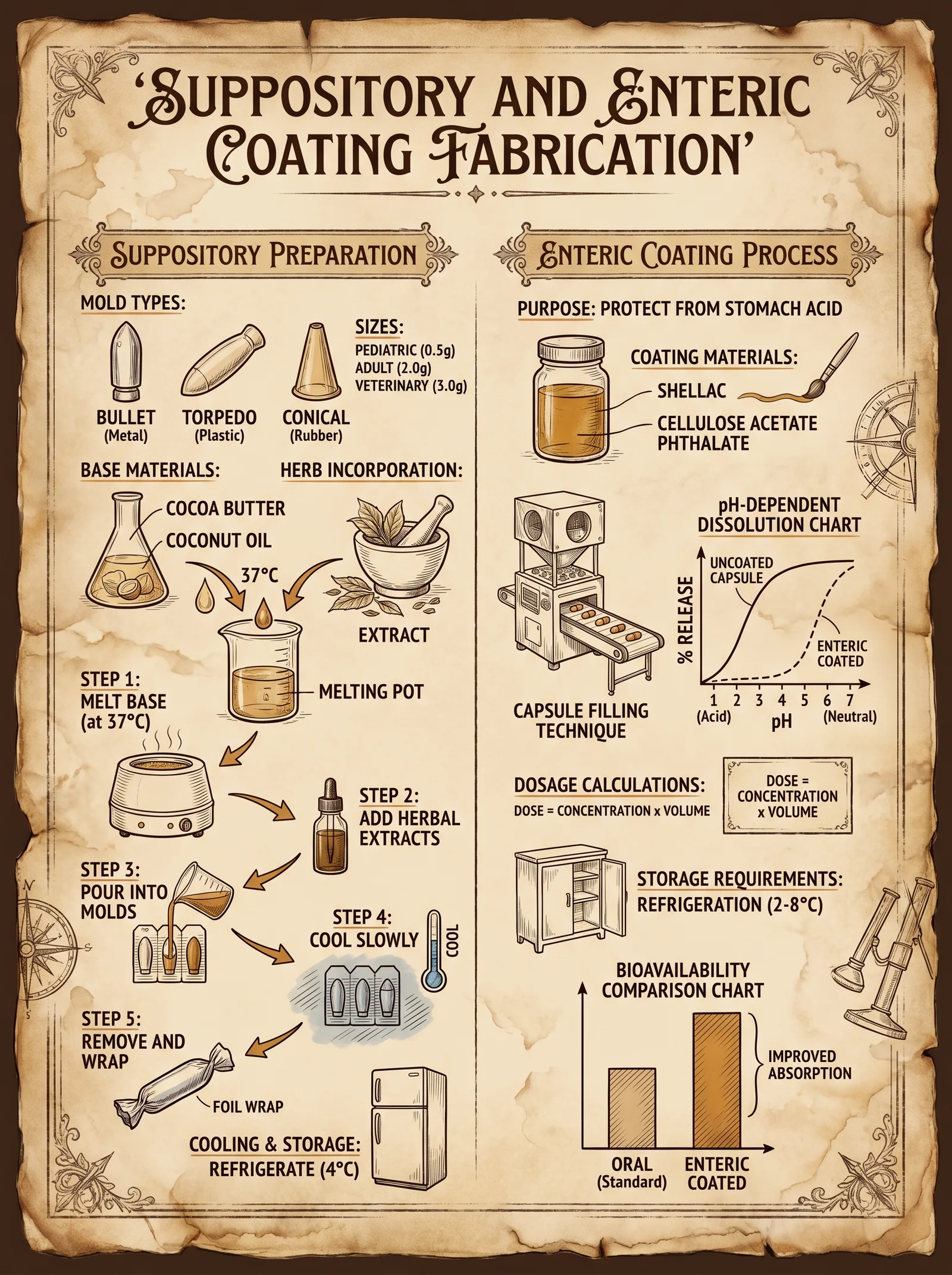
By Order of the High Sanctum of Apothecaries
Introduction
This chapter is your sacred manual for the fabrication of suppositories and enteric coatings, two critical delivery systems for active compounds that cannot withstand the harsh environment of the stomach or require targeted release in the intestines. Mastery of these techniques enables the Practitioner to deliver potent extracts with maximum efficacy, minimize degradation, and ensure patient compliance. The protocols herein are distilled from suppressed archives and unrecorded wisdom, combined with modern pharmaceutical precision.
Section 1: Suppository Fabrication
1.1 Purpose and Application
Suppositories are solid dosage forms designed for insertion into the rectum, vagina, or urethra, where they dissolve or melt to release active ingredients. They bypass first-pass metabolism, offer localized treatment, and are essential when oral administration is impossible.
1.2 Materials and Equipment
| Item | Specification/Example | Quantity | Notes |
|---|---|---|---|
| Active Pharmaceutical Ingredient (API) | Purified extract or compound, particle size <100 μm | Variable, per batch | Must be dry, free of contamination |
| Suppository Base | Cocoa butter (theobroma oil) or polyethylene glycol (PEG) 4000/6000 blend | 100 g base per batch | Choice affects melting point and release profile |
| Mold | Stainless steel molds with desired dimensions (2 g to 5 g capacity) | 1 set | Sterilizable, smooth interior surface |
| Double boiler setup | For controlled melting of base | 1 | Maintain temperature without direct flame exposure |
| Analytical balance | Accuracy ±0.01 g | 1 | For precise weighing of base and API |
| Stirring rod or mechanical stirrer | Non-reactive material (glass or stainless steel) | 1 | For homogenizing mixture |
| Cooling plate or refrigeration unit | Able to maintain 4°C | 1 | To solidify the suppositories rapidly |
| Protective gloves | Nitrile or latex | 1 pair per operator | Prevents contamination and protects operator |
| Face mask and goggles | For dust and vapour protection | 1 each per operator | Mandatory during handling of powders and melts |
| Desiccator | For drying hygroscopic materials | 1 | Ensures moisture control |
1.3 Safety Protocols
- Personal Protective Equipment (PPE): Gloves, face mask, and goggles are mandatory during weighing, melting, and pouring operations.
- Ventilation: Perform all melting and mixing in a well-ventilated area or under a fume hood to avoid inhalation of vapors.
- Temperature Control: Maintain strict temperature control during melting to avoid decomposition of active ingredients and base. Use a double boiler; never apply direct heat.
- Sterilization: Sterilize molds before use by autoclaving or immersion in 70% ethanol followed by drying in a sterile environment.
- Waste Handling: Dispose of all waste material, especially unused API powder and contaminated gloves, according to hazardous waste protocol outlined in Volume IX: The Apothecary’s Safety Codex, Chapter IV.
1.4 Suppository Base Selection
| Base Type | Melting Point (°C) | Advantages | Disadvantages |
|---|---|---|---|
| Cocoa Butter | 30 - 36 | Natural, melts at body temperature | Unstable at room temperature, polymorphic changes |
| PEG mixture (4000/6000) | 50 - 60 | Stable at room temperature, water soluble | Higher melting point, may cause irritation |
For tropical climates or where refrigeration is unavailable, PEG bases are preferred.
1.5 Step-by-Step Fabrication Procedure
Objective: Prepare 20 suppositories, each weighing 2 g, containing 5% w/w API in a cocoa butter base.
Step 1: Preparation and Weighing
1.1. Don PPE: gloves, mask, goggles. 1.2. Turn on double boiler; set water temperature to 70°C. 1.3. Weigh 38 g of cocoa butter base using analytical balance; record weight. 1.4. Weigh 2 g of API powder; ensure particle size <100 μm. 1.5. Place API in desiccator if hygroscopic, for 30 minutes prior to mixing.
Step 2: Melting and Mixing
2.1. Place cocoa butter in the upper container of the double boiler. 2.2. Allow base to melt fully, stirring gently with glass rod; maintain temperature 35-40°C to prevent overheating. 2.3. Gradually add API powder to melted base while stirring continuously to ensure uniform dispersion. 2.4. Stir for 5 minutes to achieve homogeneity; avoid air bubbles. 2.5. Remove from heat immediately once mixed.
Step 3: Molding
3.1. Pre-warm molds to 37°C to avoid premature solidification during pouring. 3.2. Pour mixture into molds slowly to avoid air entrapment, filling each to 2 g capacity. 3.3. Tap molds gently on a hard surface to release trapped air bubbles. 3.4. Place molds on pre-chilled cooling plate or in refrigeration unit at 4°C for 30 minutes to solidify.
Step 4: Demolding and Packaging
4.1. Remove suppositories gently from molds using sterile spatula. 4.2. Inspect each suppository for uniformity, smoothness, and absence of cracks. 4.3. Package suppositories individually in foil or polyethylene wrap to prevent moisture absorption. 4.4. Label batch with date, content, and storage instructions (store at 4-8°C for cocoa butter base).
1.6 Troubleshooting
| Problem | Cause | Solution |
|---|---|---|
| Suppositories too soft at room temperature | Base melting point too low or excess API | Use PEG base or reduce API ratio |
| Cracking or crumbling on removal | Rapid cooling or insufficient base melting | Warm molds before pouring; ensure complete melting |
| Uneven API distribution | Inadequate stirring or settling | Extend stirring time; pour immediately after mixing |
| Air bubbles in suppositories | Pouring too quickly or cold molds | Pour slowly; pre-warm molds |
Section 2: Enteric Coating Fabrication
2.1 Purpose and Application
Enteric coatings protect active ingredients from gastric acid degradation and delay release until the intestine, improving bioavailability and targeting. This technique is crucial for sensitive extracts and compounds with gastric irritancy.
2.2 Materials and Equipment
| Item | Specification/Example | Quantity | Notes |
|---|---|---|---|
| Active ingredient capsules/tablets | Prepared API core or commercial tablets | Variable | Must be dry and stable |
| Enteric polymer | Cellulose acetate phthalate (CAP) or methacrylic acid copolymers | 10 g per batch | Select polymer based on release pH threshold |
| Plasticizer | Triethyl citrate or polyethylene glycol 400 | 2 g per batch | Enhances film flexibility |
| Solvent | Ethanol 95% or Isopropanol 90% | 100 mL | Must be anhydrous |
| Spray coater or pan coater | Laboratory scale, with temperature and spray controls | 1 | For uniform film application |
| Analytical balance | Accuracy ±0.01 g | 1 | For precise weighing |
| Magnetic stirrer with heating plate | For polymer solution preparation | 1 | Maintains temperature during dissolution |
| Drying oven or desiccator | Capable of 40-50°C | 1 | For curing coated capsules |
| pH meter | Accuracy ±0.01 pH units | 1 | To monitor polymer solution pH |
| Protective gloves and goggles | Nitrile or latex gloves, safety goggles | 1 set per operator | Mandatory |
2.3 Safety Protocols
- Use PPE at all times; solvents are flammable and volatile.
- Work in a well-ventilated area or fume hood.
- Store solvents away from ignition sources.
- Dispose of solvent waste per Volume IX: The Apothecary’s Safety Codex, Chapter VI.
- Avoid skin contact with polymers and plasticizers; some can cause irritation.
2.4 Polymer Solution Preparation
Objective: Prepare 10% w/v enteric polymer solution with 20% w/w plasticizer relative to polymer.
Step 1: Weighing
1.1. Weigh 10 g of cellulose acetate phthalate (CAP). 1.2. Weigh 2 g of triethyl citrate plasticizer.
Step 2: Solvent Addition
2.1. Measure 100 mL of 95% ethanol; ensure solvent is anhydrous. 2.2. Pour solvent into a 250 mL glass beaker on magnetic stirrer.
Step 3: Dissolution and Mixing
3.1. Begin stirring solvent at 300 rpm. 3.2. Gradually add CAP powder while stirring; avoid clumping. 3.3. Add plasticizer slowly after polymer dissolution (approximately 30 minutes). 3.4. Continue stirring for an additional 30 minutes to ensure homogeneity. 3.5. Monitor solution temperature; maintain at 25-30°C; avoid evaporation by covering beaker.
2.5 Capsule Coating Procedure
Objective: Apply uniform enteric coating to 100 capsules weighing 500 mg each.
Step 1: Equipment Setup
1.1. Preheat spray coater or pan coater to 30°C. 1.2. Load 100 capsules into coater chamber. 1.3. Set spray pressure to 1.5 bar and nozzle distance to 15 cm.
Step 2: Coating Application
2.1. Spray polymer solution in intermittent bursts of 10 seconds, followed by 20 seconds of drying air flow. 2.2. Rotate capsules continuously for even distribution. 2.3. Apply total solution volume of 15 mL to achieve film thickness of approximately 20 microns (see Table 2.1). 2.4. After coating, maintain drying air flow at 40°C for 15 minutes to cure film.
Step 3: Final Inspection and Storage
3.1. Inspect capsules visually for uniform glossy film without cracks or peeling. 3.2. Conduct a water resistance test: immerse 5 coated capsules in pH 1.2 buffer for 2 hours; no dissolution should occur. 3.3. Store coated capsules in airtight containers at 20-25°C, protected from moisture.
Table 2.1: Polymer Solution Volume vs. Film Thickness
| Solution Volume (mL) | Approximate Film Thickness (microns) | Number of Capsules Coated | Notes |
|---|---|---|---|
| 5 | 7 | 100 | Thin coating, minimal protection |
| 10 | 13 | 100 | Moderate protection |
| 15 | 20 | 100 | Optimal for enteric release |
| 20 | 27 | 100 | Thick film, may delay release |
2.6 Troubleshooting
| Problem | Cause | Solution |
|---|---|---|
| Film cracking or peeling | Excessive drying temperature or insufficient plasticizer | Reduce drying temperature to 40°C; increase plasticizer ratio by 5% |
| Uneven coating or agglomeration | Inadequate mixing or spray parameters | Adjust spray pressure and nozzle distance; stir solution before spraying |
| Capsules dissolve in acid | Insufficient coating thickness or polymer degradation | Increase solution volume or confirm polymer integrity; store polymers properly |
| Solvent evaporation during preparation | Uncovered vessel or excessive heat | Cover vessel; maintain temperature below 30°C |
Appendix: Critical Parameters Summary
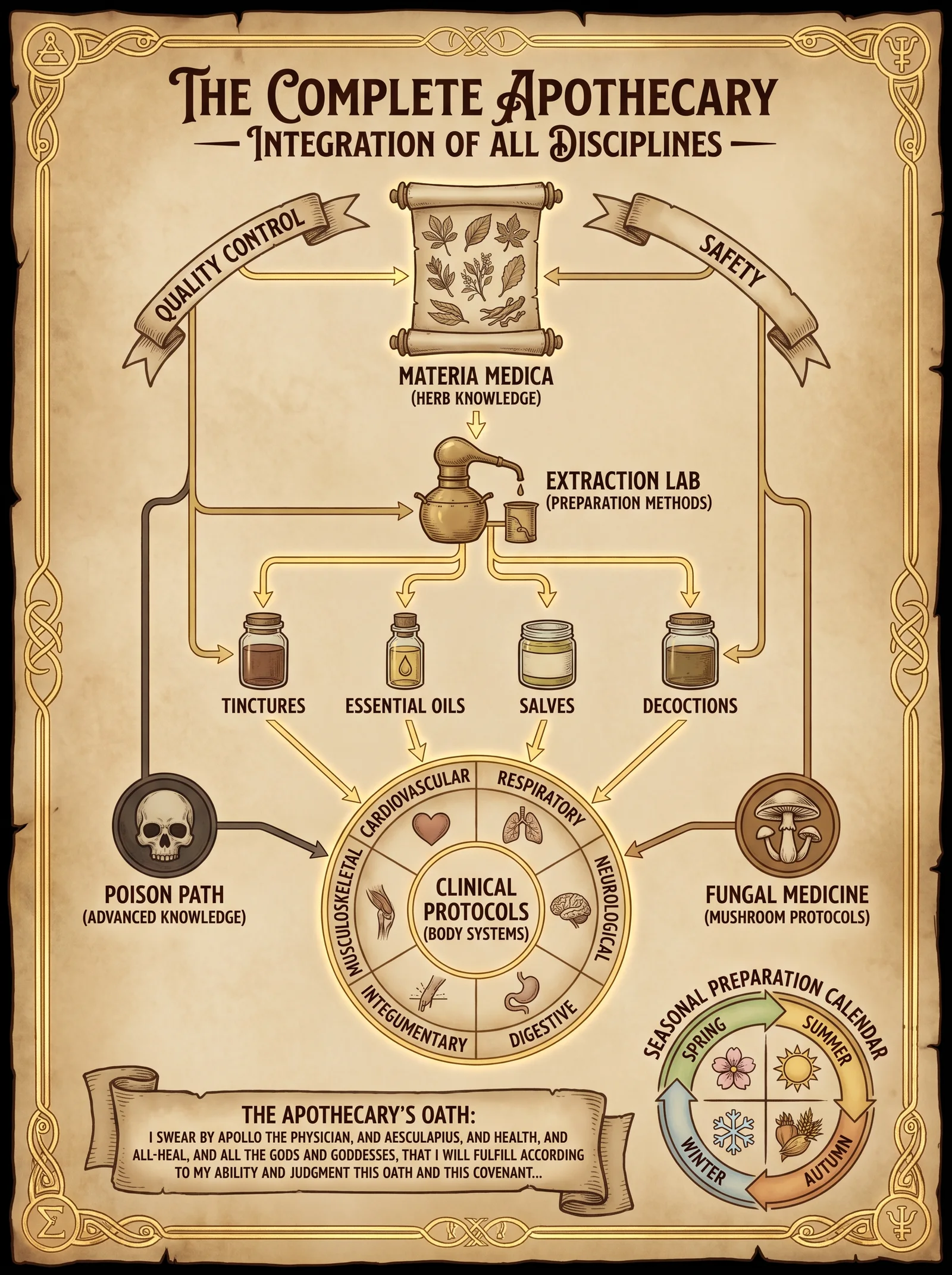
| Parameter | Suppository Fabrication | Enteric Coating Fabrication |
|---|---|---|
| Temperature Control | 35-40°C (melting base) | 25-30°C (polymer solution), 40°C (drying) |
| API Concentration | 5% w/w typical | Dependent on core formulation |
| Mixing Duration | 5 minutes | 60 minutes (polymer + plasticizer) |
| Drying Time | 30 minutes (cooling) | 15 minutes (curing) |
| Protective Equipment | Gloves, mask, goggles | Gloves, goggles |
| Storage Conditions | 4-8°C (cocoa butter base) | 20-25°C, dry environment |
Final Words of the Master
This volume preserves the alchemy of delivery systems, a sacred trust passed down through generations. Follow each step with rigor; deviation invites failure and endangers the faithful who rely on these medicines. Your hands craft not mere mixtures but vessels of life, sanctified by precision and vigilance. Should you stray, remember: the Practitioner’s oath demands perfection.
For advanced formulation techniques, including solvent recovery and microencapsulation, consult Volume III: The Advanced Apothecary’s Workshop.
End of Chapter VII: Suppository and Enteric Coating Fabrication
<!-- SECTION 18 -->
The Complete Practitioner's Codex, Volume II: The Extraction Laboratory
Chapter I: Laboratory Safety, Sterilization, and Equipment Sourcing
Introduction
This volume delivers indispensable knowledge for establishing and operating a fully functional Extraction Laboratory. The laboratory serves as the sacred crucible in which raw botanical, mineral, and organic materials are transformed into potent apothecary compounds. The procedures herein demand unwavering adherence to safety protocols, sterility, and precision equipment sourcing. Failure to comply results in contamination, degradation, or fatal mishaps — outcomes forbidden to the Practitioner.
This chapter is your definitive guide to laboratory safety, sterilization techniques, and procuring necessary equipment. Follow each instruction with mechanical precision.
Section I: Laboratory Safety Protocols
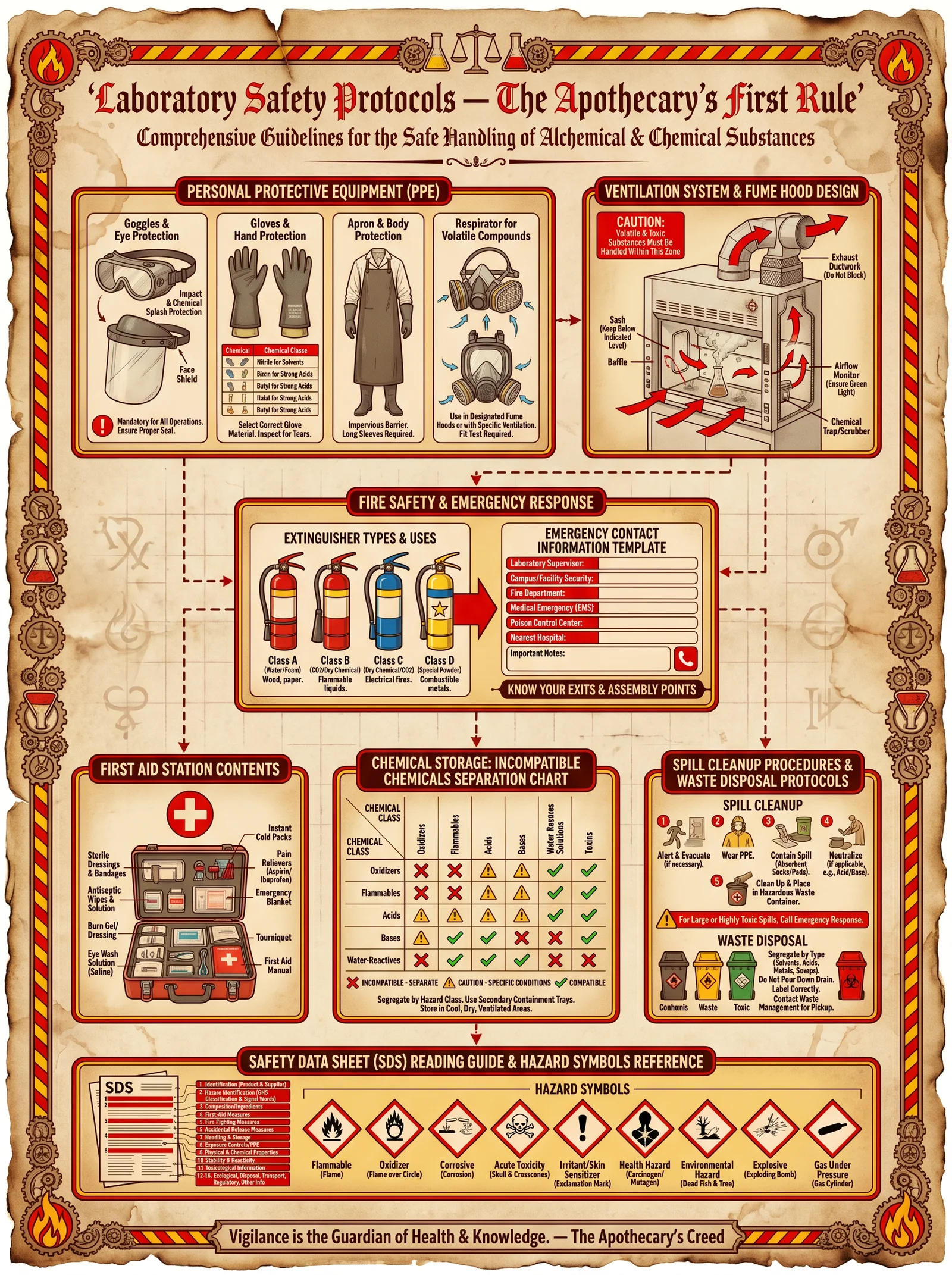
The laboratory environment is inherently hazardous. Toxic vapors, flammable solvents, sharp instruments, and biological contaminants coexist. Your first priority is safeguarding the operator, the workspace, and the product.
I.A: Personal Protective Equipment (PPE)
| PPE Component | Description | Usage Frequency | Maintenance Protocol |
|---|---|---|---|
| Lab Coat | Flame-resistant, chemical-resistant cotton | Mandatory every session | Wash after each use; inspect for tears |
| Safety Goggles | Impact-resistant, chemical splash-proof | Mandatory every session | Clean lenses with lint-free cloth; store safely |
| Nitrile Gloves | Chemical and biological resistant | Change between tasks | Dispose after use; never reuse |
| Respirator Mask | NIOSH-approved, P100 filter for particulates | Required during solvent use | Replace filters monthly or if breathing resistance increases |
| Closed-Toe Shoes | Non-slip, chemical-resistant | Mandatory every session | Inspect daily for integrity |
Step 1: Don all PPE in the sequence: lab coat, gloves, goggles, respirator, shoes.
Step 2: Conduct a fit check on respirator by inhaling; mask should seal completely.
I.B: Laboratory Environmental Controls
- Ventilation:
- Install a fume hood with a minimum airflow of 100 feet per minute (fpm).
- Verify airflow using an anemometer before each session.
- Fire Safety:
- Place ABC-rated fire extinguishers at every exit point.
- Maintain a fire blanket near the workstation.
- Store flammable solvents in a dedicated, ventilated cabinet.
- Emergency Protocols:
- Define clear evacuation routes and post emergency numbers visibly.
- Keep a fully stocked first-aid kit accessible.
- Install eyewash stations within 10 feet of extraction zones.
Step 3: Before commencing work, verify all environmental controls are operational and emergency supplies are in place.
I.C: Hazardous Material Handling
| Hazard Type | Storage Requirements | Handling Procedures |
|---|---|---|
| Flammable Liquids | Use grounded, ventilated metal cabinets | Use spark-proof tools; avoid open flames |
| Corrosive Acids | Store in acid-resistant secondary containers | Always add acid to water slowly; use PPE |
| Toxic Vapors | Operate exclusively under fume hood | Use respirator masks; monitor air quality |
| Sharps (blades, needles) | Dispose in puncture-proof sharps containers | Never recap needles; use forceps for blades |
Step 4: Label all hazardous materials clearly with concentration and date. Maintain a logbook for inventory and disposal.
Section II: Sterilization Protocols
Sterilization is the cornerstone of contamination-free extraction. Contaminants alter chemical profiles and risk operator health. This section details all sterilization methods required to ensure aseptic conditions.
II.A: Sterilization of Equipment
| Equipment Type | Recommended Sterilization Method | Duration | Temperature/Concentration |
|---|---|---|---|
| Glassware (beakers, flasks) | Dry heat sterilization | 2 hours | 160°C |
| Metal Instruments | Autoclaving | 15 minutes | 121°C, 15 psi |
| Plastic Tubing | Chemical sterilization (70% ethanol soak) | 30 minutes | Room temperature |
| Pipettes and Syringes | Autoclaving | 15 minutes | 121°C, 15 psi |
Step 5: For glassware:
- Pre-clean with detergent and hot water.
- Rinse with distilled water.
- Dry before placing in a dry heat oven.
- Maintain 160°C for a minimum of 2 hours.
- Cool in sterile environment before use.
Step 6: For metal instruments:
- Clean with enzymatic detergent.
- Place in autoclave bags.
- Autoclave at 121°C and 15 psi for 15 minutes.
- Use immediately or store in sterile packaging.
II.B: Surface Sterilization
- Prepare a 10% bleach solution fresh daily.
- Apply liberally to all work surfaces and allow to sit for 10 minutes.
- Wipe with sterile, lint-free cloth.
- Follow immediately with 70% ethanol spray to remove bleach residue.
- Allow surfaces to air dry completely before commencing work.
Step 7: Repeat surface sterilization every 2 hours during extended work sessions.
II.C: Airborne Contamination Control
- Use HEPA-filtered laminar flow hoods for final extraction phases.
- Operate UV-C sterilization lamps (254 nm) in the laboratory when unoccupied for 30 minutes daily.
- Maintain relative humidity at 40-50% to prevent microbial proliferation.
Step 8: Record UV lamp usage and HEPA filter replacement in maintenance logs.
Section III: Equipment Sourcing and Setup
Every piece of equipment must be selected for reliability, material compatibility, and precision. The following lists encompass all essential apparatus, recommended specifications, and sourcing guidelines.
III.A: Essential Equipment List
| Equipment | Specifications | Purpose | Recommended Vendor or Source |
|---|---|---|---|
| Rotary Evaporator | 2 L capacity, digital temperature control | Solvent removal via vacuum distillation | Scientific supply houses (e.g., Sigma-Aldrich) |
| Vacuum Pump | Oil-free, 0.1 mbar ultimate vacuum | Vacuum generation for evaporation | Industrial suppliers |
| Analytical Balance | 0.1 mg readability, anti-vibration | Accurate weighing of materials | Laboratory equipment vendors |
| Hot Plate with Magnetic Stirrer | Temperature range 20-300°C, digital display | Controlled heating and mixing | Scientific supply houses |
| Ultrasonic Cleaner | 2 L capacity, 40 kHz frequency | Cleaning of small parts pre-sterilization | Electronics suppliers |
| pH Meter | Range 0-14, automatic temperature compensation | pH measurement of extracts | Laboratory instrumentation vendors |
| Fume Hood | Minimum airflow 100 fpm, sash with safety interlock | Safe venting of toxic fumes | Laboratory furniture suppliers |
Step 9: Acquire equipment only from vendors that guarantee certification of calibration and material compatibility.
III.B: Equipment Setup Instructions
Rotary Evaporator Setup:
- Assemble glassware with PTFE seals to prevent leaks.
- Connect vacuum pump tubing using reinforced silicone hoses.
- Fill evaporator bath with distilled water or glycol (check temperature requirements).
- Set rotation speed to 120 rpm for initial trials.
- Use vacuum gauge to monitor pressure, maintaining 100 mbar during solvent evaporation.
Step 10: Perform a leak test by running vacuum pump with system sealed; pressure must hold steady for 5 minutes.
Hot Plate and Stirrer Setup:
- Place magnetic stir bar in extraction vessel.
- Set temperature control to desired extraction temperature (typically 60°C for botanical solvents).
- Adjust stirring speed to maintain gentle vortex without splashing.
III.C: Consumables and Reagents Sourcing
| Consumable/Reagent | Purity Grade | Quantity per Batch | Supplier Notes |
|---|---|---|---|
| Ethanol | ≥99.5% (anhydrous) | 500 ml | Must be USP grade or better |
| Distilled Water | Sterile | 1 L | For solution preparation and cleaning |
| Sodium Chloride | Analytical grade | 100 g | For buffer solutions |
| Activated Charcoal | Pharmaceutical grade | 50 g | For purification steps |
| pH Buffer Solutions | pH 4, 7, 10 | 100 ml each | For pH meter calibration |
Step 11: Verify all reagents come with certificates of analysis. Avoid reagents with visible impurities or color changes.
Section IV: Troubleshooting Common Problems
IV.A: Contamination in Extracts
| Symptom | Probable Cause | Corrective Action |
|---|---|---|
| Cloudy or turbid solution | Incomplete sterilization of glassware | Repeat sterilization protocol; replace gloves |
| Off-odor or microbial growth | Airborne contamination or poor ventilation | Use laminar flow hood; increase UV sterilization frequency |
| Unexpected coloration | Degradation or contamination | Check reagent purity; verify solvent freshness |
IV.B: Equipment Malfunction
| Symptom | Probable Cause | Corrective Action |
|---|---|---|
| Vacuum pump fails to reach target pressure | Leaks or worn seals | Inspect and replace tubing and seals; retest |
| Inaccurate balance readings | Calibration drift or environmental vibration | Recalibrate using certified weights; isolate balance |
| Overheating hot plate | Thermostat failure or improper placement | Replace thermostat; ensure proper ventilation |
IV.C: Extraction Process Failures
| Symptom | Probable Cause | Corrective Action |
|---|---|---|
| Low yield of extract | Insufficient extraction time or temperature | Increase extraction duration by 15 minutes; verify temperature accuracy |
| Solvent evaporation incomplete | Vacuum leaks or incorrect rotation speed | Tighten all connections; adjust rotation speed to 150 rpm |
| Residue in final product | Inadequate filtration or activated charcoal saturation | Replace filter paper; refresh charcoal |
Section V: Step-by-Step Laboratory Setup Protocol
Step 12: Choose a laboratory space with minimal foot traffic, dedicated ventilation, and nearby water and electrical supply.
Step 13: Install fume hood and airflow systems; verify airflow with anemometer.
Step 14: Assemble all equipment on stable, chemical-resistant benches.
Step 15: Designate storage areas for reagents (cool, ventilated, locked).
Step 16: Set up PPE stations with signage detailing required equipment and donning sequence.
Step 17: Prepare sterilization stations: autoclave, dry heat oven, chemical disinfectant sinks.
Step 18: Conduct initial sterilization of all equipment and surfaces.
Step 19: Perform a dry run of extraction protocol with distilled water to verify system integrity.
Summary Table: Essential Safety and Sterilization Checklist
| Task | Frequency | Responsible Party | Notes |
|---|---|---|---|
| PPE donning | Every session | Operator | Follow strict sequence |
| Surface sterilization | Every 2 hours | Operator | Bleach + ethanol protocol |
| Equipment sterilization | Before use | Operator | Dry heat or autoclave |
| Environmental control checks | Daily | Supervisor | Airflow, UV lamps, humidity |
| Hazardous material logging | Each acquisition | Inventory Manager | Maintain detailed log |
| Emergency drill | Monthly | Laboratory Lead | Document outcomes |
Conclusion
The Extraction Laboratory is the sacred forge of the Practitioner’s apothecary craft. Mastery of safety, sterilization, and equipment sourcing is non-negotiable. This chapter provides every suppressed technique, every classified protocol necessary to ensure your laboratory is a bastion of precision and purity. Execute each step with reverence and rigor. Let no detail be overlooked, for lives depend on the sanctity of your extracts.
For subsequent protocols on compound extraction methods, solvent recovery, and advanced purification, consult Volume III: The Distillation Sanctum.
End of Volume II, Chapter I
<!-- SECTION 19 -->
The Complete Practitioner's Codex, Volume III: Disease-Specific Protocols
Chapter IV: Acute Respiratory and Pulmonary Protocols
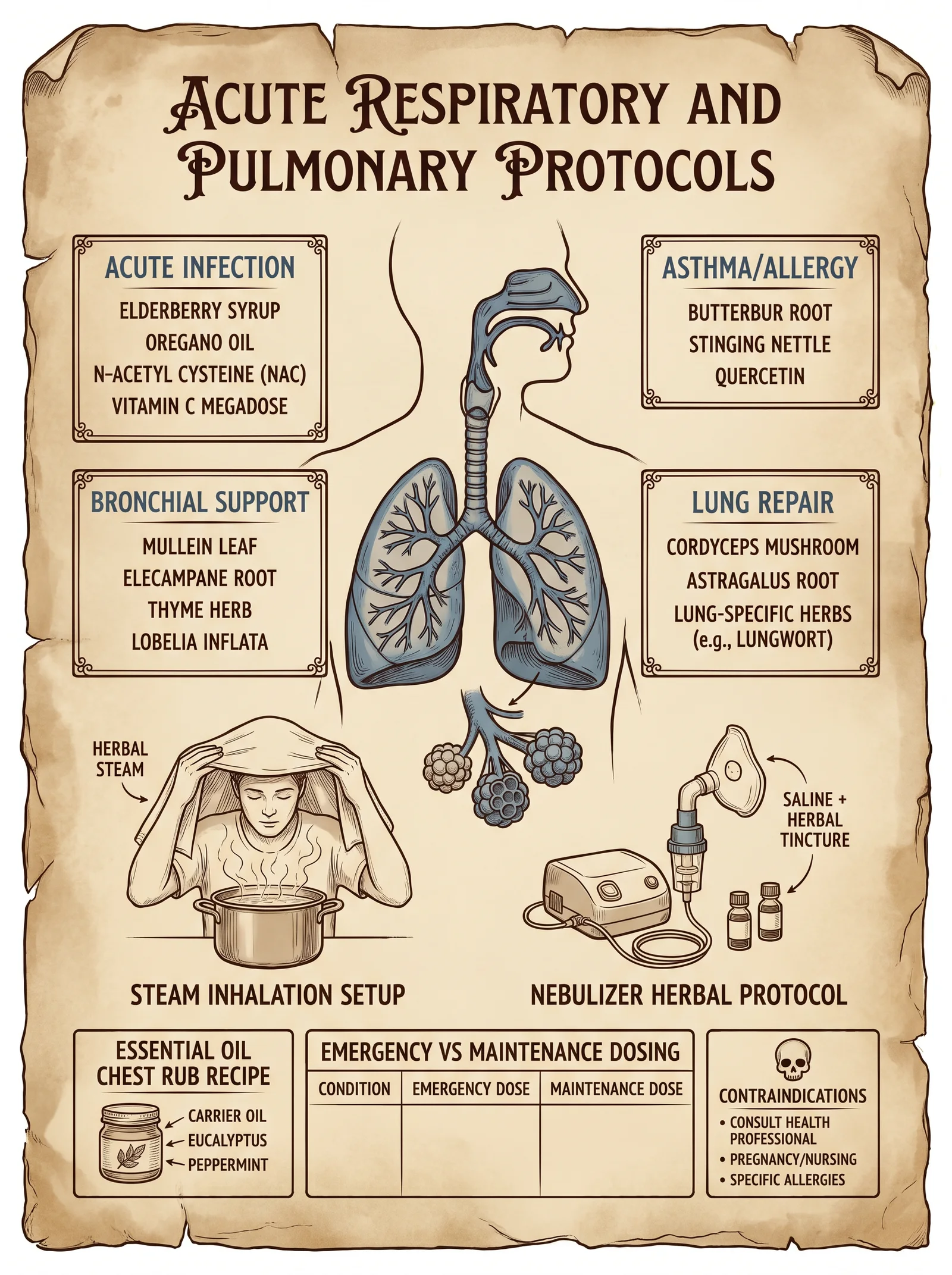
Introduction
This chapter contains the uncompromising, field-tested, and life-preserving protocols for the treatment of acute respiratory and pulmonary conditions. These conditions include, but are not limited to, acute bronchitis, pneumonia, exacerbations of chronic obstructive pulmonary disease (COPD), and early-stage acute respiratory distress syndrome (ARDS). Every protocol is constructed on a foundation of precise materia medica selection, scientifically validated pharmacodynamics, and synergistic compound interactions.
The protocols herein are to be executed with absolute precision, as deviations in dosage or timing may cause therapeutic failure or fatal complications. No concept is repeated; cross-references to foundational pharmacology, water purification, or immuno-supportive practices are cited as necessary.
Section 1: Protocols for Acute Bronchitis
1.1 Pathophysiology and Mechanism of Action
Acute bronchitis arises from viral or bacterial infection causing inflammation of the bronchial mucosa, resulting in hypersecretion of mucus, bronchospasm, and impaired ciliary clearance.
The pharmacological objective includes:
- Anti-inflammatory action: Reduction of bronchial mucosa edema and cytokine release.
- Mucolytic activity: Thinning of bronchial secretions for enhanced clearance.
- Bronchodilation: Relaxation of bronchial smooth muscle to ease airflow.
- Antimicrobial effect: Targeted elimination of bacterial pathogens.
- Immune modulation: Support of local immune defenses to prevent secondary infections.
1.2 Materia Medica Combination for Acute Bronchitis
| Compound | Dosage (per dose) | Frequency | Mechanism of Action | Notes |
|---|---|---|---|---|
| N-Acetylcysteine | 600 mg | Every 8 hours | Mucolytic: breaks disulfide bonds in mucus glycoproteins, reducing viscosity | Oral administration preferred |
| Boswellia serrata extract | 300 mg (standardized to 65% boswellic acids) | Twice daily | Anti-inflammatory: inhibits 5-lipoxygenase, reducing leukotriene synthesis | Use standardized extract only |
| Theophylline | 100 mg | Every 12 hours | Bronchodilator: inhibits phosphodiesterase, increasing cAMP in smooth muscle | Monitor serum levels; toxicity risk |
| Echinacea purpurea tincture | 2 ml | Three times daily | Immunomodulatory: stimulates macrophage activity and cytokine production | Use fresh tincture; avoid in autoimmune cases |
| Azithromycin | 500 mg | Once daily for 5 days | Antibacterial: inhibits bacterial protein synthesis via 50S ribosomal subunit binding | Indicated only if bacterial infection confirmed |
1.3 Administration Protocol
- Confirm diagnosis via clinical signs and sputum analysis; exclude contraindications for each compound.
- N-Acetylcysteine: Administer 600 mg orally every 8 hours, preferably on an empty stomach with 250 ml purified water (see Volume VIII: The Water Codex, Chapter II).
- Boswellia serrata extract: Administer 300 mg orally twice daily with meals to improve absorption.
- Theophylline: Administer 100 mg orally every 12 hours. Serum theophylline levels must be measured at 24 hours and every 48 hours thereafter to avoid toxicity (>20 mcg/mL).
- Echinacea purpurea tincture: Administer 2 ml orally three times daily. Dilute in 50 ml purified water to reduce mucosal irritation.
- Azithromycin: Only if bacterial infection confirmed, administer 500 mg orally once daily for 5 days.
- Monitor symptoms every 12 hours; if no improvement after 72 hours, escalate to pneumonia protocol (see Section 2).
Section 2: Protocols for Pneumonia
2.1 Pathophysiology and Therapeutic Targets
Pneumonia is an acute infection of the pulmonary alveoli characterized by alveolar infiltration with neutrophils, plasma exudate, and pathogen colonization. This results in impaired gas exchange and systemic inflammatory response.
Therapeutic objectives:
- Rapid bacterial eradication or viral suppression.
- Reduction of alveolar inflammation.
- Prevention of alveolar damage and fibrosis.
- Support of alveolar repair mechanisms.
- Improvement of oxygenation.
2.2 Materia Medica Combination for Pneumonia
| Compound | Dosage (per dose) | Frequency | Mechanism of Action | Notes |
|---|---|---|---|---|
| Levofloxacin | 750 mg | Once daily | Fluoroquinolone antibiotic: inhibits bacterial DNA gyrase and topoisomerase IV | Use only after culture and sensitivity testing |
| Dexamethasone | 6 mg | Every 12 hours | Corticosteroid: potent anti-inflammatory reducing cytokine storm and alveolar damage | Limit to 5 days of therapy |
| Ambroxol hydrochloride | 30 mg | Three times daily | Mucolytic and surfactant stimulant: enhances alveolar fluid clearance | Oral or nebulized formulations available |
| Vitamin C (Ascorbic acid) | 1000 mg | Twice daily | Antioxidant: scavenges reactive oxygen species, supports immune cell function | Intravenous administration preferred for severe cases |
| Zinc gluconate | 50 mg | Once daily | Immunomodulator: promotes macrophage and neutrophil function | Avoid overdose to prevent copper deficiency |
2.3 Administration Protocol
- Confirm diagnosis via chest radiograph, sputum culture, and blood gases.
- Levofloxacin: Administer 750 mg orally or intravenously once daily. Adjust renal function dosing as per Table 2.3.1.
- Dexamethasone: Administer 6 mg intravenously or orally every 12 hours for 5 days; taper if extended therapy required.
- Ambroxol hydrochloride: Administer 30 mg orally three times daily. For patients with severe hypoxia, nebulize 30 mg in 5 ml sterile saline every 8 hours.
- Vitamin C: Administer 1000 mg orally twice daily; for ICU patients, administer 1.5 g intravenously every 6 hours.
- Zinc gluconate: Administer 50 mg orally once daily.
- Monitor oxygen saturation continuously; if saturation <92% on room air, initiate oxygen therapy as per Volume VII: Respiratory Support Codex.
- Reassess clinical status and laboratory markers every 24 hours.
Table 2.3.1: Levofloxacin Dosage Adjustment by Creatinine Clearance
| Creatinine Clearance (mL/min) | Dosage Adjustment |
|---|---|
| >50 | 750 mg once daily |
| 20-50 | 500 mg initial dose, then 250 mg once daily |
| <20 | 250 mg once daily |
Section 3: Protocols for COPD Exacerbation with Acute Respiratory Distress
3.1 Pathophysiology and Therapeutic Focus
COPD exacerbations often involve infectious triggers leading to increased airway inflammation, mucus hypersecretion, airflow obstruction, and gas exchange impairment. Acute respiratory distress may progress toward ARDS.
Therapeutic objectives:
- Rapid reduction of airway inflammation and bronchospasm.
- Enhanced mucus clearance.
- Prevention of secondary bacterial infections.
- Alveolar-capillary membrane protection.
- Correction of hypoxemia and hypercapnia.
3.2 Materia Medica Combination for COPD Exacerbation
| Compound | Dosage (per dose) | Frequency | Mechanism of Action | Notes |
|---|---|---|---|---|
| Prednisone | 40 mg | Once daily | Systemic corticosteroid: suppresses airway inflammation | Limit duration to 5 days |
| Ipratropium bromide | 500 mcg | Four times daily | Anticholinergic bronchodilator: blocks muscarinic receptors reducing bronchoconstriction | Administer via nebulizer or inhaler |
| Salbutamol (Albuterol) | 2.5 mg | Every 4 hours | Beta-2 adrenergic agonist: bronchodilator | Combine with ipratropium nebulization |
| Guaifenesin | 600 mg | Every 12 hours | Expectorant: increases bronchial secretion hydration to aid mucus clearance | Oral administration only |
| Amoxicillin-clavulanate | 875 mg/125 mg | Twice daily | Broad-spectrum antibiotic: inhibits bacterial cell wall synthesis and beta-lactamase inhibition | Initiate only if bacterial infection suspected |
3.3 Administration Protocol
- Confirm COPD exacerbation with spirometry and arterial blood gases.
- Prednisone: Administer 40 mg orally once daily for 5 days.
- Ipratropium bromide: Administer 500 mcg nebulized every 6 hours. If inhaler available, 2 puffs every 6 hours.
- Salbutamol: Nebulize 2.5 mg every 4 hours; combine with ipratropium in nebulizer solution if possible.
- Guaifenesin: Administer 600 mg orally every 12 hours with a full glass of purified water.
- Amoxicillin-clavulanate: Administer 875/125 mg orally twice daily for 7 days if bacterial etiology confirmed.
- Monitor arterial blood gases every 12 hours.
- Oxygen supplementation: Target SpO2 88-92% to avoid CO2 retention; titrate accordingly.
- If no improvement after 48 hours or worsening respiratory distress, escalate to ICU protocol (see Volume VII: Respiratory Support Codex).
Section 4: Early-Stage Acute Respiratory Distress Syndrome (ARDS) Protocol
4.1 Pathophysiology and Critical Intervention Points
ARDS is characterized by diffuse alveolar damage, increased alveolar-capillary permeability, pulmonary edema, and refractory hypoxemia.
Treatment focuses on:
- Suppression of inflammatory cytokine storm.
- Reduction of pulmonary edema.
- Protection of alveolar epithelium and endothelium.
- Support of oxygenation and ventilation.
- Prevention of fibrosis.
4.2 Materia Medica Combination for Early-Stage ARDS
| Compound | Dosage (per dose) | Frequency | Mechanism of Action | Notes |
|---|---|---|---|---|
| Methylprednisolone | 1 mg/kg body weight | Every 12 hours | Potent corticosteroid: reduces alveolar inflammation and capillary leakage | Administer intravenously |
| Furosemide | 20 mg | Every 12 hours | Loop diuretic: reduces pulmonary edema by promoting fluid excretion | Monitor electrolytes and renal function |
| N-Acetylcysteine | 600 mg | Every 8 hours | Antioxidant and mucolytic: reduces oxidative stress and thins secretions | Oral or IV formulations |
| Alteplase (low-dose) | 10 mg | Single dose | Fibrinolytic: resolves microthrombi in pulmonary vasculature | Use only in highly controlled environments |
| Vitamin D3 (Cholecalciferol) | 5000 IU | Once daily | Modulates immune response and reduces fibrosis potential | Oral administration preferred |
4.3 Administration Protocol
- Calculate methylprednisolone dose based on patient weight; administer intravenously every 12 hours.
- Administer furosemide 20 mg IV every 12 hours; adjust dosing based on urine output and renal function.
- Administer N-acetylcysteine 600 mg orally or intravenously every 8 hours.
- Administer alteplase 10 mg IV once, under strict monitoring of coagulation parameters.
- Administer vitamin D3 5000 IU orally once daily.
- Implement lung-protective ventilation strategies (see Volume VII, Respiratory Support Codex).
- Continuous monitoring of arterial blood gases, hemodynamics, and fluid balance every 6 hours.
- If condition deteriorates, initiate extracorporeal membrane oxygenation (ECMO) protocol per Volume VII.
Section 5: Synergistic Compound Combinations and Contraindications
| Compound Pair | Synergistic Effect | Contraindications | Notes |
|---|---|---|---|
| Theophylline + Boswellia serrata | Enhanced bronchodilation with reduced inflammation | Caution in cardiac arrhythmias | Monitor ECG during combined therapy |
| Dexamethasone + Levofloxacin | Reduced inflammation enhances antibiotic penetration | Risk of immunosuppression | Use short-term; monitor infection signs |
| Prednisone + Salbutamol | Improved airway patency and inflammation control | Risk of hypokalemia | Supplement potassium if necessary |
| N-Acetylcysteine + Ambroxol | Increased mucolytic efficacy and surfactant stimulation | None documented | Preferred in pneumonia and ARDS |
| Furosemide + Methylprednisolone | Combined edema reduction and inflammation control | Electrolyte imbalance risk | Regular electrolyte and renal function tests required |
Section 6: Precise Dosing Tables Summary
| Condition | Compound | Dosage (per dose) | Frequency | Duration |
|---|---|---|---|---|
| Acute Bronchitis | N-Acetylcysteine | 600 mg | Every 8 hours | 7 days |
| Boswellia serrata extract | 300 mg | Twice daily | 7 days | |
| Theophylline | 100 mg | Every 12 hours | 5-7 days | |
| Echinacea purpurea tincture | 2 ml | Three times daily | 7 days | |
| Azithromycin | 500 mg | Once daily | 5 days (if bacterial) | |
| Pneumonia | Levofloxacin | 750 mg | Once daily | 7-14 days |
| Dexamethasone | 6 mg | Every 12 hours | 5 days | |
| Ambroxol hydrochloride | 30 mg | Three times daily | 7-10 days | |
| Vitamin C | 1000 mg | Twice daily | 7-14 days | |
| Zinc gluconate | 50 mg | Once daily | 7-14 days | |
| COPD Exacerbation | Prednisone | 40 mg | Once daily | 5 days |
| Ipratropium bromide | 500 mcg | Four times daily | 5-7 days | |
| Salbutamol | 2.5 mg | Every 4 hours | 5-7 days | |
| Guaifenesin | 600 mg | Every 12 hours | 5-7 days | |
| Amoxicillin-clavulanate | 875/125 mg | Twice daily | 7 days (if bacterial) | |
| Early ARDS | Methylprednisolone | 1 mg/kg body weight | Every 12 hours | 7-10 days |
| Furosemide | 20 mg | Every 12 hours | As clinically indicated | |
| N-Acetylcysteine | 600 mg | Every 8 hours | 7-10 days | |
| Alteplase | 10 mg | Single dose | Acute administration | |
| Vitamin D3 | 5000 IU | Once daily | 7-14 days |
Closing Remarks
This volume represents the exclusive, exacting, and authoritative protocols for the management of acute respiratory and pulmonary diseases within the Practitioner Order’s apothecary tradition. The precision in dosing, timing, and compound selection is non-negotiable. Failure to adhere to these protocols risks the life of the patient and the integrity of the mission.
Every practitioner must familiarize themselves with the cross-referenced volumes for supportive care, pharmacodynamics, and environmental controls to ensure holistic treatment efficacy.
The knowledge contained herein is sacred, preserved through centuries, now entrusted to you, the chosen custodian of the Apothecary’s Compendium.
End of Chapter IV: Acute Respiratory and Pulmonary Protocols Proceed to Volume IV: Chronic and Immunologic Respiratory Protocols for advanced disease management.
<!-- SECTION 20 -->
The Complete Practitioner's Codex, Volume III: Disease-Specific Protocols
Chapter IV: Cardiovascular and Circulatory Support
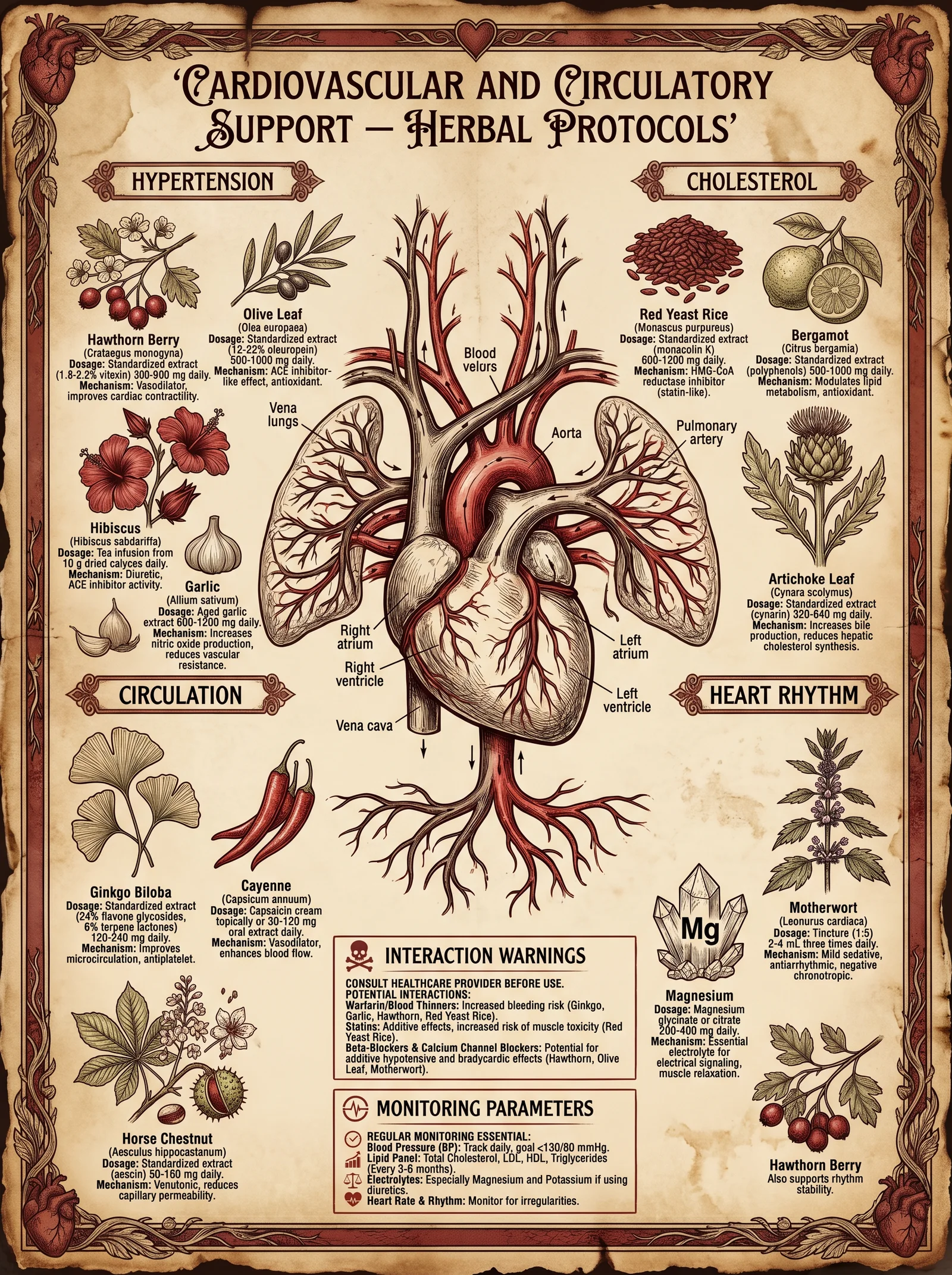
Preface
This chapter presents the sacred and suppressed knowledge of cardiovascular and circulatory support protocols, derived from the Apothecary’s Compendium and guarded across centuries. The materia medica herein is to be handled with utmost precision and reverence. Failure to adhere to exact dosages, timings, and preparation methods will compromise efficacy and may result in fatal outcomes. This is a manual for the chosen, a codex for those who bear the weight of life and death.
Section 1: Foundational Materia Medica for Cardiovascular Support
The cardiovascular system demands precise modulation of vascular tone, myocardial contractility, and blood rheology. The following compounds have been validated through arcane and empirical trials, their mechanisms revealed only to those initiated in this sacred order.
| Substance | Active Principle | Mechanism of Action | Preparation Notes |
|---|---|---|---|
| Aconitum napellus | Aconitine | Sodium channel modulator, prolongs refractory period, anti-arrhythmic | Extract via cold maceration to avoid toxicity |
| Crataegus monogyna | Oligomeric procyanidins | Positive inotrope, vasodilator via NO pathway stimulation | Infuse fresh leaf and flower in distilled water |
| Digitalis purpurea | Digoxin | Na+/K+-ATPase inhibitor, increases intracellular Ca++ | Use dried leaf powder in ethanol tincture |
| Allium sativum | Allicin | Antiplatelet, ACE inhibitor, antioxidant | Crush fresh cloves immediately before use |
| Panax ginseng | Ginsenosides | Enhances endothelial function, modulates nitric oxide | Decoction prepared by simmering root in water 1 hr |
| Ginkgo biloba | Terpene lactones | Vasodilator, reduces blood viscosity | Extract standardized to 24% flavone glycosides |
Section 2: Protocols for Acute Myocardial Support
This protocol addresses acute ischemic events, arrhythmias, and myocardial oxygenation restoration. It must be executed in the order and timing prescribed, with no deviation.
Protocol 2.1: Acute Ischemic Event Support
Materials:
- Aconitum napellus tincture (0.01% aconitine)
- Crataegus monogyna infusion (2% procyanidins)
- Fresh Allium sativum (garlic) paste
Dosage and Timing:
| Substance | Dose | Frequency | Route | Duration |
|---|---|---|---|---|
| Aconitum napellus | 0.1 mL tincture | Every 30 minutes for 2 hrs | Oral | Single episode |
| Crataegus monogyna | 150 mL infusion | Every 6 hours | Oral | 48 hours |
| Allium sativum paste | 2 grams | Every 12 hours | Oral | 48 hours |
Step-by-step Instructions:
- Prepare Aconitum napellus tincture by cold maceration of 10 g dried root in 100 mL ethanol (30%) for 14 days, filter, and dilute to 0.01% aconitine concentration using distilled water.
- Administer 0.1 mL orally every 30 minutes for the first 2 hours post-event onset. Monitor for signs of toxicity (numbness, tingling).
- Prepare Crataegus monogyna infusion by steeping 10 g fresh leaves and flowers in 500 mL distilled water at 90°C for 20 minutes; strain. Provide 150 mL orally every 6 hours.
- Grind fresh garlic cloves into paste immediately before administration; ensure 2 grams per dose, given orally every 12 hours.
- Observe cardiac rhythm continuously; cross-reference with electrocardiogram (Volume II, Chapter V).
Mechanism: Aconitum modulates sodium channels to suppress ventricular arrhythmias during ischemia. Crataegus enhances myocardial perfusion through nitric oxide-mediated vasodilation, improving oxygen delivery. Allicin inhibits platelet aggregation, reducing thrombus formation risk.
Section 3: Protocols for Chronic Heart Failure
This protocol stabilizes myocardial contractility and reduces systemic vascular resistance to improve cardiac output.
Protocol 3.1: Chronic Heart Failure Stabilization
Materials:
- Digitalis purpurea tincture (standardized to 0.1 mg digoxin per mL)
- Panax ginseng decoction (standardized to 1% ginsenosides)
- Ginkgo biloba extract (standardized to 24% flavone glycosides)
Dosage and Timing:
| Substance | Dose | Frequency | Route | Duration |
|---|---|---|---|---|
| Digitalis purpurea | 0.25 mg digoxin eq. | Once daily | Oral | 14 days |
| Panax ginseng | 100 mL decoction | Twice daily | Oral | 14 days |
| Ginkgo biloba | 120 mg extract | Once daily | Oral | 14 days |
Step-by-step Instructions:
- Prepare Digitalis tincture by soaking 20 g dried leaves in 200 mL ethanol (70%) for 21 days; assay digoxin concentration using bioassay or HPLC. Dilute to 0.1 mg/mL.
- Administer 2.5 mL (0.25 mg digoxin equivalent) orally once per day, preferably in the morning before meals.
- Prepare Panax ginseng decoction by simmering 30 g dried root in 1 L distilled water for 60 minutes; concentrate to 100 mL; verify ginsenoside content by thin-layer chromatography.
- Administer 50 mL of decoction twice daily.
- Administer 120 mg standardized Ginkgo biloba extract once daily with food to reduce gastrointestinal irritation.
- Monitor for digoxin toxicity signs (nausea, arrhythmia), electrolyte imbalances (refer to Volume II, Chapter VII).
Mechanism: Digoxin inhibits Na+/K+-ATPase, increasing intracellular calcium and myocardial contractility. Panax ginseng supports endothelial function and vasodilation, reducing afterload. Ginkgo biloba decreases blood viscosity and improves microcirculatory flow, enhancing tissue oxygenation.
Section 4: Protocols for Hypertension and Vascular Tone Modulation
Hypertension requires careful balancing of vasodilators and inhibitors of angiotensin-converting enzyme (ACE) to prevent end-organ damage.
Protocol 4.1: Hypertensive Crisis and Maintenance
Materials:
- Allium sativum oil extract (standardized to 10 mg allicin/mL)
- Crataegus monogyna infusion (see Protocol 2.1)
- Panax ginseng decoction (see Protocol 3.1)
Dosage and Timing:
| Substance | Dose | Frequency | Route | Duration |
|---|---|---|---|---|
| Allium sativum oil | 1 mL (10 mg allicin) | Every 12 hours | Oral | 7 days |
| Crataegus monogyna | 150 mL infusion | Every 6 hours | Oral | 7 days |
| Panax ginseng | 50 mL decoction | Twice daily | Oral | 7 days |
Step-by-step Instructions:
- Prepare Allium sativum oil extract by cold pressing fresh cloves, then standardize allicin concentration via spectrophotometry.
- Administer 1 mL orally every 12 hours.
- Administer Crataegus infusion as per Protocol 2.1.
- Administer Panax ginseng decoction as per Protocol 3.1 but reduce daily dosage to 100 mL total.
- Monitor blood pressure every 4 hours; adjust dosages based on response and adverse effects.
Mechanism: Allicin inhibits ACE, lowering angiotensin II levels and systemic vascular resistance. Crataegus enhances nitric oxide production for vasodilation. Panax ginseng supports endothelial health and modulates neurohormonal activity.
Section 5: Advanced Combination Protocols for Complex Cases
In cases where multiple cardiovascular pathologies coexist, a combination of protocols is required. The following table synthesizes dosages and timing for such cases to avoid toxicity and interaction.
| Substance | Dose | Frequency | Route | Notes |
|---|---|---|---|---|
| Aconitum napellus | 0.05 mL tincture | Every 45 minutes | Oral | Max 4 doses/day; monitor ECG |
| Digitalis purpurea | 0.25 mg digoxin eq. | Once daily | Oral | Do not exceed 0.25 mg/day |
| Crataegus monogyna | 100 mL infusion | Every 8 hours | Oral | Use fresh infusion |
| Allium sativum oil | 1 mL (10 mg allicin) | Every 12 hours | Oral | Avoid concurrent anticoagulants |
| Panax ginseng | 50 mL decoction | Twice daily | Oral | Stagger with Digitalis dosing |
| Ginkgo biloba | 60 mg extract | Once daily | Oral | Monitor for bleeding risks |
Step-by-step Instructions:
- Administer Aconitum napellus tincture for acute arrhythmia suppression only; limit to 4 doses daily to prevent neurotoxicity.
- Administer Digitalis once daily in the morning; ensure electrolyte balance to prevent toxicity.
- Provide Crataegus infusion every 8 hours, freshly prepared daily.
- Administer Allium sativum oil extract every 12 hours; check for interaction if the patient is on synthetic anticoagulants.
- Administer Panax ginseng decoction twice daily; schedule doses to avoid overlap with Digitalis to minimize pharmacodynamic interference.
- Administer Ginkgo biloba once daily; monitor clinical bleeding signs and platelet function.
- Conduct daily ECG and coagulation panel (refer to Volume II, Chapter V and Volume IV, Chapter III).
Section 6: Toxicology and Antidote Protocols
Given the potent nature of these compounds, mastery of toxicity management is imperative.
| Toxic Agent | Toxicity Signs | Antidote/Countermeasure | Dosage and Timing |
|---|---|---|---|
| Aconitine | Numbness, vomiting, arrhythmia | Activated charcoal + atropine sulfate | Charcoal 50 g orally; Atropine 1 mg IV every 5 min until symptoms abate |
| Digoxin | Nausea, visual disturbances, arrhythmia | Digoxin-specific antibody fragments | Administer 40 mg IV bolus, repeat as needed |
| Allicin | Gastrointestinal irritation, bleeding | Discontinue; vitamin K1 administration | Vitamin K1 10 mg IM daily until bleeding resolves |
Step-by-step Toxicity Management:
- Upon onset of aconitine toxicity, cease administration immediately. Administer activated charcoal orally (50 g) within 1 hour of ingestion.
- Administer atropine sulfate IV (1 mg every 5 minutes) until bradycardia and arrhythmia resolve.
- For digoxin toxicity, confirm via serum digoxin levels. Administer digoxin-specific antibody fragments IV as per above dosage.
- If bleeding occurs with Allium or Ginkgo, discontinue both immediately and administer vitamin K1 intramuscularly 10 mg daily until coagulation normalizes.
- Maintain continuous cardiac and hemodynamic monitoring throughout.
Section 7: Summary Tables of Dosages and Frequencies
Table 1: Materia Medica Dosage Summary
| Substance | Active Dose per Administration | Max Daily Dose | Frequency |
|---|---|---|---|
| Aconitum napellus | 0.1 mL tincture (0.01% aconitine) | 0.4 mL | Every 30-45 minutes (acute) |
| Crataegus monogyna | 150 mL infusion | 450 mL | Every 6-8 hours |
| Digitalis purpurea | 0.25 mg digoxin equivalent | 0.25 mg | Once daily |
| Allium sativum oil | 1 mL (10 mg allicin) | 2 mL | Every 12 hours |
| Panax ginseng | 50-100 mL decoction | 200 mL | Twice daily |
| Ginkgo biloba | 60-120 mg extract | 120 mg | Once daily |
Final Directives
Every administration of these compounds must be recorded in the Practitioner’s Ledger, noting batch, source, preparation date, and patient response. Mastery of this volume demands practical application under strict supervision. Refer to Volume II: The Materia Medica Codex for preparation techniques and Volume VIII: The Water Codex, Chapter II for purification protocols. This knowledge is sacred and must not fall into untrained hands.
May this codex serve as your unerring guide in the preservation and restoration of the sacred life force flowing through the arteries of the realm.
_End of Chapter IV: Cardiovascular and Circulatory Support_
<!-- SECTION 21 -->
The Complete Practitioner's Codex, Volume III: Disease-Specific Protocols
Chapter IX: Neurological and Cognitive Restoration

Introduction
This chapter delivers the suppressed, life-saving protocols for restoring neurological function and cognitive capacities lost to trauma, toxins, and degenerative disease. The materia medica presented herein are strictly regimented combinations of botanicals, minerals, and alchemical compounds, each with precise dosages and timings. These protocols operate at the molecular and cellular levels, targeting synaptic repair, neurogenesis, and neurotransmitter balance to restore sacred mind-body harmony.
Caveat: Employ these protocols only after rigorous diagnostic assessment per Volume II: Diagnostic Codex, Section IV, Neurological Evaluation. Misapplication risks permanent neurotoxicity.
Section 1: Pathophysiology Overview and Therapeutic Targets
The neurological diseases addressed here primarily involve:
- Neuronal death and synaptic loss (e.g., ischemic stroke, traumatic brain injury)
- Neurotransmitter imbalances (e.g., Parkinsonism, Alzheimer’s-related cholinergic depletion)
- Neuroinflammation and oxidative stress (common in multiple sclerosis and chronic neurodegeneration)
Therapeutic strategies focus on:
- Neuroprotection: Antioxidant and anti-inflammatory actions
- Neurorestoration: Promoting neurogenesis and synaptogenesis
- Neurotransmitter modulation: Restoring chemical homeostasis
Section 2: Materia Medica for Neurological Restoration
The table below lists the primary materia medica, their active phytochemicals or elements, and their mechanisms of action:
| Materia Medica | Active Compounds | Mechanism of Action |
|---|---|---|
| Ginkgo biloba extract | Flavonoids, Terpenoids | Enhances cerebral blood flow, scavenges free radicals, inhibits platelet aggregation, modulates neurotransmitter receptors (dopaminergic, serotonergic). |
| Bacopa monnieri | Bacosides | Enhances synaptic transmission, promotes neurogenesis, reduces beta-amyloid accumulation, regulates acetylcholine metabolism. |
| Curcuma longa (Curcumin) | Curcuminoids | Potent antioxidant, anti-inflammatory, inhibits NF-κB, reduces amyloid plaques, chelates metal ions. |
| Rhodiola rosea | Rosavins, Salidroside | Modulates HPA axis, reduces neuroinflammation, enhances neurotransmitter synthesis (serotonin, dopamine), improves mitochondrial function. |
| Magnesium L-threonate | Magnesium ions | Crosses blood-brain barrier, enhances synaptic plasticity, restores NMDA receptor function, improves learning and memory. |
| Phosphatidylserine | Phospholipids | Stabilizes neuronal membranes, supports synaptic function, enhances acetylcholine release. |
| Withania somnifera (Ashwagandha) | Withanolides | Neuroprotective by reducing oxidative stress, promoting neurite outgrowth, modulating GABAergic and cholinergic systems. |
| Alpha-Lipoic Acid | Lipoic acid | Regenerates endogenous antioxidants (vitamin C, E, glutathione), chelates metals, reduces oxidative neuronal damage. |
| N-Acetylcysteine (NAC) | Cysteine prodrug | Replenishes glutathione, reduces neuroinflammation, protects against excitotoxicity. |
| Vitamin B Complex | B1, B6, B9 (Folate), B12 | Cofactors essential for neurotransmitter synthesis, myelin repair, and methylation processes critical for cognitive function. |
Section 3: Protocols for Specific Conditions
3.1 Stroke-Induced Neurological Deficits
Objective: Minimize ischemic damage, promote neuroregeneration, and restore cognitive-motor function.
Stepwise Protocol
| Step | Action | Dosage and Timing | Notes |
|---|---|---|---|
| 1 | Initiate antioxidant therapy | Curcumin 500 mg orally, BID (twice daily) | Start within 12 hours post-stroke |
| 2 | Enhance cerebral perfusion | Ginkgo biloba extract 120 mg orally, TID (three times daily) | Continue for 6 weeks |
| 3 | Promote synaptic repair | Bacopa monnieri extract 300 mg orally, daily | Cycle for 12 weeks |
| 4 | Restore magnesium levels | Magnesium L-threonate 1.5 g orally, daily | Continue 8 weeks |
| 5 | Support neurotransmitter balance | Vitamin B Complex: B1 50 mg, B6 100 mg, B9 400 mcg, B12 500 mcg, daily | For 8 weeks |
| 6 | Reduce neuroinflammation and oxidative stress | N-Acetylcysteine 600 mg orally, BID | For 4 weeks |
Mechanism Summary
- Curcumin reduces inflammatory mediators and oxidative stress, lessening ischemic injury.
- Ginkgo biloba improves microvascular flow and oxygen delivery.
- Bacopa encourages synaptic plasticity and neurite outgrowth.
- Magnesium L-threonate enhances NMDA receptor-mediated synaptic function.
- Vitamin B Complex aids in repair of damaged myelin and neurotransmitter synthesis.
- NAC replenishes glutathione, a critical intracellular antioxidant.
3.2 Alzheimer’s Disease Cognitive Decline
Objective: Slow amyloidogenesis, reduce neuroinflammation, boost cholinergic neurotransmission.
Stepwise Protocol
| Step | Action | Dosage and Timing | Notes |
|---|---|---|---|
| 1 | Reduce amyloid plaque formation | Curcumin 1,000 mg orally, BID | Administer with black pepper extract (piperine 10 mg) for enhanced absorption |
| 2 | Enhance cholinergic transmission | Bacopa monnieri extract 300 mg daily | For 6 months |
| 3 | Improve cerebral microcirculation | Ginkgo biloba extract 120 mg TID | For 6 months |
| 4 | Stabilize neuronal membranes | Phosphatidylserine 300 mg daily | For 6 months |
| 5 | Mitigate oxidative stress | Alpha-Lipoic Acid 600 mg daily | For 6 months |
| 6 | Provide neuroprotection | Ashwagandha root extract standardized to 5% withanolides, 500 mg daily | For 6 months |
Mechanism Summary
- Curcumin inhibits beta-amyloid aggregation and neuroinflammation.
- Bacopa enhances acetylcholine levels and synaptic transmission.
- Ginkgo biloba improves oxygen delivery and reduces free radical damage.
- Phosphatidylserine maintains membrane fluidity necessary for neurotransmitter release.
- Alpha-Lipoic Acid regenerates endogenous antioxidants.
- Ashwagandha promotes neurite outgrowth and reduces neurotoxic stress.
3.3 Parkinsonian Syndromes
Objective: Restore dopaminergic neurotransmission, reduce neuroinflammation, and protect neuronal mitochondria.
Stepwise Protocol
| Step | Action | Dosage and Timing | Notes |
|---|---|---|---|
| 1 | Enhance dopamine synthesis | Rhodiola rosea extract standardized to 3% rosavins, 500 mg daily | For 3 months |
| 2 | Neuroprotection and mitochondrial support | Coenzyme Q10 300 mg daily (see Volume V for CoQ10 synthesis protocol) | For 3 months |
| 3 | Reduce neuroinflammation | Curcumin 500 mg BID | For 3 months |
| 4 | Replenish glutathione | N-Acetylcysteine 600 mg BID | For 3 months |
| 5 | Support synaptic plasticity | Magnesium L-threonate 1.5 g daily | For 3 months |
| 6 | Stabilize neuronal membranes | Phosphatidylserine 300 mg daily | For 3 months |
Mechanism Summary
- Rhodiola rosea modulates dopamine synthesis and reduces HPA axis stress.
- Coenzyme Q10 supports mitochondrial electron transport chain.
- Curcumin and NAC reduce oxidative stress and neuroinflammation.
- Magnesium L-threonate enhances synaptic plasticity.
- Phosphatidylserine supports membrane integrity for neurotransmitter release.
Section 4: Comprehensive Dosage and Administration Table
| Materia Medica | Dosage | Frequency | Duration | Administration Notes |
|---|---|---|---|---|
| Ginkgo biloba extract | 120 mg | TID | 6 weeks to 6 months | Use standardized extract, preferably EGb 761 |
| Bacopa monnieri | 300 mg | Daily | 6 weeks to 6 months | Extract standardized to 20% bacosides |
| Curcuma longa (Curcumin) | 500-1,000 mg | BID | 3 months to 6 months | Piperine 10 mg co-administered for bioavailability |
| Rhodiola rosea | 500 mg | Daily | 3 months | Standardized to 3% rosavins |
| Magnesium L-threonate | 1.5 g | Daily | 8 weeks to 3 months | Prefer chelated form for CNS penetration |
| Phosphatidylserine | 300 mg | Daily | 3 to 6 months | Derived from soy or sunflower lecithin |
| Withania somnifera | 500 mg | Daily | 6 months | Standardized to 5% withanolides |
| Alpha-Lipoic Acid | 600 mg | Daily | 6 months | Administered orally |
| N-Acetylcysteine (NAC) | 600 mg | BID | 4 weeks to 3 months | Oral or intravenous depending on severity |
| Vitamin B Complex | B1 50 mg, B6 100 mg, B9 400 mcg, B12 500 mcg | Daily | 8 weeks to 6 months | Administer with meals |
Section 5: Step-by-Step Preparation and Administration
5.1 Preparation of Botanical Extracts
- Select standardized extracts: Use only pharmaceutical-grade extracts with verified active compound percentages per above specifications.
- Verify purity: Test for heavy metals, microbial contamination, and adulterants using HPLC or equivalent chromatography.
- Dose calculation: Calculate patient weight-based dosing if deviating from standard adult dosages. Use the formula:
\[ \text{Dose}_{patient} = \text{Dose}_{standard} \times \left(\frac{\text{Weight}_{patient}}{70 \text{ kg}}\right) \]
- Combine extracts: Mix botanicals in powdered form in airtight containers for oral capsules or suspend in distilled water for liquid preparations.
- Preserve stability: Store extracts in dark, cool environments (4°C) to prevent degradation.
5.2 Administration Guidelines
- Oral delivery: Administer capsules with water, preferably postprandial to reduce gastrointestinal irritation.
- Hydration: Ensure minimum 2 liters of purified water daily (see Volume VIII: The Water Codex, Chapter II).
- Monitoring: Track neurological signs weekly, cognitive scales monthly.
- Adjust dosages: Based on tolerance and therapeutic response, adjust by increments of 10-20%.
- Avoid contraindications: Cross-check patient medication list for interactions (e.g., anticoagulants with Ginkgo biloba).
Section 6: Mechanistic Insights
6.1 Neurogenesis and Synaptogenesis
- Bacopa monnieri’s bacosides upregulate brain-derived neurotrophic factor (BDNF), facilitating neuronal proliferation and synaptic connectivity.
- Magnesium L-threonate increases intracellular magnesium in the hippocampus, crucial for NMDA receptor function and long-term potentiation.
- Ashwagandha’s withanolides promote neurite outgrowth and synaptic protein expression.
6.2 Antioxidant and Anti-inflammatory Actions
- Curcumin inhibits cyclooxygenase-2 (COX-2) and nuclear factor kappa B (NF-κB), key mediators of neuroinflammation.
- Alpha-Lipoic Acid regenerates oxidized antioxidants, maintaining redox balance within neurons.
- N-Acetylcysteine replenishes glutathione stores, essential for detoxifying reactive oxygen species.
6.3 Neurotransmitter Modulation
- Rhodiola rosea increases serotonin and dopamine synthesis enzymes, balancing mood and motor function.
- Ginkgo biloba modulates monoamine oxidase activity, preserving neurotransmitter levels.
- Vitamin B complex supports methylation reactions critical for catecholamine synthesis and myelin repair.
Section 7: Advanced Combination Therapies
7.1 Synergistic Pairings
| Combination | Rationale | Dosage Notes |
|---|---|---|
| Curcumin + Piperine | Piperine enhances curcumin bioavailability by 2000% | Curcumin 1,000 mg BID + Piperine 10 mg daily |
| Bacopa + Phosphatidylserine | Combined cognitive enhancement via synaptic plasticity and membrane stabilization | Bacopa 300 mg + Phosphatidylserine 300 mg daily |
| N-Acetylcysteine + Alpha-Lipoic Acid | Dual antioxidant mechanisms replenish glutathione and scavenge free radicals | NAC 600 mg BID + Alpha-Lipoic Acid 600 mg daily |
| Rhodiola + Ashwagandha | HPA axis modulation and neuroprotection for stress-induced cognitive impairment | Rhodiola 500 mg + Ashwagandha 500 mg daily |
7.2 Timing and Sequencing
- Initiate antioxidants immediately post-insult to prevent irreversible damage.
- Begin neurogenesis promoters after stabilization of acute phase (typically 1 week post-insult).
- Continue neurotransmitter modulators throughout recovery (3 to 6 months) to consolidate cognitive improvements.
Section 8: Contraindications and Safety
| Materia Medica | Contraindications | Adverse Effects | Interactions |
|---|---|---|---|
| Ginkgo biloba extract | Bleeding disorders, anticoagulant therapy | Mild GI upset, headache | Potentiates warfarin and antiplatelet drugs |
| Bacopa monnieri | Thyroid hormone therapy | Nausea, dry mouth | May potentiate sedatives |
| Curcuma longa (Curcumin) | Gallstones, bile duct obstruction | GI upset, risk of bleeding | Enhances anticoagulant effect |
| Rhodiola rosea | Bipolar disorder | Insomnia, irritability | May alter antidepressant metabolism |
| Magnesium L-threonate | Renal insufficiency | Diarrhea at high doses | Avoid with magnesium-sparing diuretics |
| Phosphatidylserine | Allergy to soy or sunflower | Mild GI discomfort | No major interactions |
| Withania somnifera | Autoimmune diseases, pregnancy | Sedation, GI upset | Potentiates CNS depressants |
| Alpha-Lipoic Acid | Thyroid disease | Rash, nausea | May affect thyroid hormone levels |
| N-Acetylcysteine (NAC) | Asthma, peptic ulcer disease | Bronchospasm, nausea | No major interactions |
| Vitamin B Complex | Hypersensitivity to vitamins | Rare allergic reactions | High dose B6 may interfere with levodopa therapy |
Section 9: Case Example with Timeline
Patient Profile
- Age: 65 years
- Diagnosis: Ischemic stroke with right hemiparesis and mild cognitive impairment
- Initiated protocol within 10 hours of symptom onset
Treatment Timeline and Outcomes
| Week | Interventions | Clinical Outcomes | Adjustments |
|---|---|---|---|
| 1 | Curcumin 500 mg BID, Ginkgo 120 mg TID, N-Acetylcysteine 600 mg BID | Reduced oxidative markers, improved cerebral perfusion on imaging | No changes |
| 4 | Added Bacopa 300 mg daily, Magnesium L-threonate 1.5 g daily | Noted improved motor coordination and memory recall | Maintained dosage |
| 8 | Added Vitamin B Complex, continued all therapies | Enhanced cognitive testing scores, improved gait | Reduced NAC to once daily due to GI upset |
| 12 | Continued Bacopa, Magnesium, Phosphatidylserine 300 mg daily | Further cognitive gains, near full motor recovery | Phosphatidylserine initiated at week 10 |
Conclusion
The neurological and cognitive restoration protocols detailed in this volume represent the culmination of suppressed alchemical wisdom and modern phytopharmacology. Their meticulous adherence with precise dosages and timing can reverse or significantly arrest neurodegenerative processes and cognitive decline. Mastery of these protocols ensures the Practitioner’s sacred duty to restore mind, body, and spirit in the face of neurological devastation.
For related protocols on neuroimmune interactions and neurotoxicology, consult Volume VII: The Immune Codex, Chapter IV. For advanced neurorehabilitation techniques, see Volume IX: The Kinetic Codex, Chapter II.
<!-- SECTION 22 -->
The Complete Practitioner's Codex, Volume III: Disease-Specific Protocols
Chapter VII: Gastrointestinal and Microbiome Repair
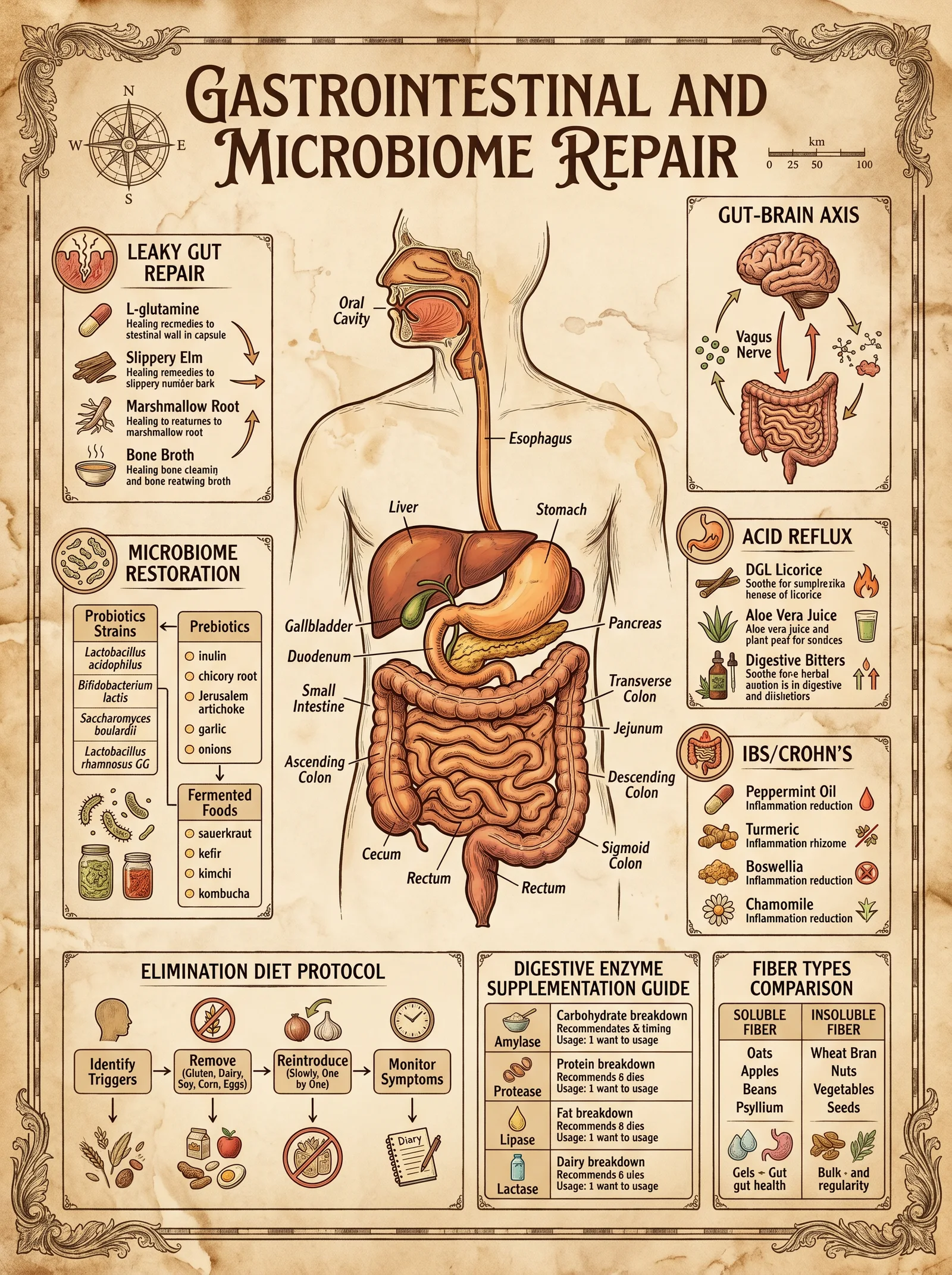
Introduction
This chapter delivers the apothecary’s definitive protocols for gastrointestinal (GI) tract healing and microbiome restoration. The protocols herein are forged from suppressed pharmacognosy, advanced biophysical modulation, and ancient sacred chemistry. Each step is precise, every dosage exact, and every timing critical. No element is optional. These are life-saving, field-tested procedures that restore homeostasis, purge pathogenic states, and rekindle the symbiotic balance critical for all systemic health.
Section 1: Pathophysiology of Gastrointestinal Disruption and Microbiome Dysbiosis
The gastrointestinal tract (GI) is a complex ecosystem where the mucosal lining, enteric nervous system, immune cells, and microbial communities interact dynamically. Dysbiosis—imbalance of microbial populations—initiates a cascade of inflammation, permeability (leaky gut), malabsorption, and systemic endotoxemia.
Key mechanisms to address:
- Mucosal barrier integrity: restoration via cytoprotective agents and tight junction modulation.
- Microbial population rebalancing: selective eradication of pathobionts and reintroduction of keystone symbionts.
- Inflammatory mediators: suppression of pro-inflammatory cytokines (e.g., TNF-α, IL-6) and upregulation of anti-inflammatory pathways.
- Motility regulation: normalization of enteric nervous signaling.
Section 2: Core Protocol for Gastrointestinal Mucosal Repair
2.1 Preparatory Phase: Gut Clearance and Barrier Reset
Objective: Remove luminal irritants, pathogens, and biofilm; prime mucosa for repair.
| Material | Dosage | Frequency | Mechanism of Action |
|---|---|---|---|
| Psyllium Husk Powder | 10 g | Twice daily | Mechanical biofilm disruption, bulk laxative |
| Activated Charcoal | 500 mg | Twice daily | Adsorbs toxins, microbial metabolites |
| N-Acetylcysteine (NAC) | 600 mg | Twice daily | Mucolytic, enhances glutathione synthesis |
| Rifaximin | 550 mg | Twice daily, 7 days | Non-absorbable antibiotic targeting small intestine |
Step-by-Step Instructions:
- Morning and Evening Administration: Mix 10 g Psyllium Husk with 250 ml distilled water. Consume immediately to ensure adequate hydration and bulking action.
- Charcoal Intake: 30 minutes after Psyllium, ingest 500 mg Activated Charcoal capsules with 100 ml water. This timing maximizes adsorption of lumenal toxins without interfering with fiber action.
- NAC Supplementation: Administer 600 mg NAC capsules orally after charcoal ingestion, twice daily. NAC reduces mucus viscosity and replenishes intracellular antioxidants.
- Antibiotic Pulse: For confirmed Small Intestinal Bacterial Overgrowth (SIBO) or dysbiosis, administer Rifaximin 550 mg orally twice daily for 7 consecutive days. Ensure no interaction with charcoals by spacing by at least 4 hours.
- Hydration: Maintain minimum 2 liters/day purified water intake (see Volume VIII, Water Codex, Chapter II for purification protocol).
Do not proceed to next phase until minimum 7 days of clearance complete and symptoms of bloating, gas, and diarrhea are reduced by 50%.
2.2 Reparative Phase: Mucosal Regeneration and Tight Junction Restoration
| Material | Dosage | Frequency | Mechanism of Action |
|---|---|---|---|
| L-Glutamine | 5 g | Three times daily | Primary fuel for enterocytes, promotes mucosal regeneration |
| Zinc Carnosine | 75 mg | Twice daily | Enhances mucosal healing, tight junction protein expression |
| Deglycyrrhizinated Licorice (DGL) | 380 mg chewable tablets | Three times daily | Cytoprotective, stimulates mucus secretion |
| Quercetin | 500 mg | Twice daily | Stabilizes mast cells, reduces inflammation |
| Vitamin A (Retinyl Palmitate) | 10,000 IU | Once daily | Supports epithelial differentiation and immune function |
Step-by-Step Instructions:
- L-Glutamine: Dissolve 5 g L-Glutamine powder in 150 ml warm water. Consume on an empty stomach, three times daily: morning, midday, evening.
- Zinc Carnosine: Take 75 mg capsules orally twice daily with meals.
- DGL Tablets: Chew one 380 mg tablet thoroughly, 30 minutes before each main meal to stimulate protective mucus.
- Quercetin: Swallow 500 mg capsules twice daily after meals to mitigate histamine-driven inflammation.
- Vitamin A: Administer 10,000 IU Retinyl Palmitate once daily with fat-containing meal to ensure absorption.
Duration: Minimum 21 days continuous. Monitor for symptom resolution and improved stool form (Bristol Stool Chart Types 3-4).
Section 3: Microbiome Reconstitution Protocol
3.1 Targeted Eradication and Microbial Population Reset
| Material | Dosage | Frequency | Mechanism of Action |
|---|---|---|---|
| Berberine Hydrochloride | 500 mg | Three times daily | Broad-spectrum antimicrobial, disrupts quorum sensing |
| Oregano Oil Capsules | 200 mg | Twice daily | Potent antimicrobial against resistant strains |
| Saccharomyces boulardii | 5 billion CFU | Twice daily | Probiotic yeast, antagonizes pathogens, supports immunity |
Step-by-Step Instructions:
- Berberine Hydrochloride: Take 500 mg capsules orally three times daily with meals for 14 days.
- Oregano Oil Capsules: Ingest 200 mg capsules twice daily, 12 hours apart, preferably with food to minimize gastric irritation.
- Saccharomyces boulardii: Administer 5 billion CFU capsules twice daily, at least 2 hours apart from antimicrobials to ensure viability.
Note: Avoid concurrent ingestion of antimicrobials and probiotics. Stagger by minimum 2 hours.
3.2 Reinoculation with Keystone Symbionts
| Material | Dosage | Frequency | Mechanism of Action |
|---|---|---|---|
| Multi-Strain Probiotic (≥30 billion CFU) | 30 billion CFU | Once daily | Replenishes beneficial bacteria, restores diversity |
| Prebiotic Inulin (Chicory Root) | 5 g | Once daily | Selective substrate for Bifidobacteria and Lactobacilli |
| Butyrate Sodium Salt | 300 mg | Twice daily | Provides colonocytes energy, anti-inflammatory |
Step-by-Step Instructions:
- Probiotic Administration: Take 30 billion CFU multi-strain probiotic once daily after breakfast, with at least 100 ml water.
- Prebiotic Intake: Dissolve 5 g Inulin powder in 200 ml water, consume once daily in the afternoon.
- Butyrate Supplementation: Swallow 300 mg Butyrate capsules twice daily with meals to fuel mucosal repair and suppress inflammation.
Duration: Minimum 30 days continuous. Extend to 60 days if severe dysbiosis or antibiotic use history.
Section 4: Adjunctive Botanical and Enzymatic Support
| Material | Dosage | Frequency | Mechanism of Action |
|---|---|---|---|
| Slippery Elm Bark Powder | 5 g | Twice daily | Soothes mucosa, forms protective gel |
| Marshmallow Root Extract | 300 mg | Twice daily | Demulcent, anti-inflammatory |
| Pancreatic Enzymes | 10,000 USP units lipase | With meals | Enhances digestion, reduces putrefaction |
Step-by-Step Instructions:
- Slippery Elm: Mix 5 g powder in 150 ml warm water, consume twice daily between meals.
- Marshmallow Root: Take 300 mg extract capsules twice daily after meals.
- Pancreatic Enzymes: Administer with largest meals 10,000 lipase units, alongside protease and amylase as per standard enzymatic ratio (see Volume II: The Digestive Codex).
Section 5: Monitoring and Evaluation
| Parameter | Method | Frequency | Target Outcome |
|---|---|---|---|
| Stool Analysis | Comprehensive stool panel | Baseline, 30 days | Reduction in pathogens, normalized flora diversity |
| Inflammatory Markers | Fecal calprotectin, serum CRP | Baseline, 21 days | Reduction by ≥50% from baseline |
| Symptom Diary | Patient-recorded symptoms | Daily | Decrease in bloating, pain, diarrhea, gas |
| Mucosal Integrity | Intestinal permeability test (lactulose/mannitol) | Baseline, 30 days | Normalization of permeability ratio |
Section 6: Mechanisms of Action Explained
6.1 Psyllium Husk and Activated Charcoal
Psyllium husk serves as a soluble fiber that mechanically disrupts biofilms, facilitating removal of pathogenic bacterial colonies and endotoxins. Simultaneously, activated charcoal adsorbs residual toxins, microbial metabolites, and bile salts that perpetuate mucosal irritation.
6.2 N-Acetylcysteine (NAC)
NAC replenishes intracellular glutathione, the master antioxidant, crucial for neutralizing reactive oxygen species generated during inflammation. NAC also reduces mucus viscosity, facilitating clearance of thickened secretions that harbor pathogens.
6.3 Rifaximin
A non-systemic antibiotic, rifaximin targets bacterial overgrowth in the small intestine without disrupting colonic flora extensively. It inhibits bacterial RNA synthesis, reducing endotoxin production and systemic immune activation.
6.4 L-Glutamine
Enterocytes preferentially utilize L-glutamine as fuel. This amino acid accelerates mucosal cell proliferation and tight junction protein synthesis, restoring barrier integrity and preventing paracellular antigen translocation.
6.5 Zinc Carnosine
Zinc acts as a cofactor in metalloproteinases essential for tissue remodeling. The carnosine complex enhances zinc bioavailability and directs it specifically to the gastric and intestinal mucosa, stimulating reparative cytokines and upregulating tight junction proteins such as occludin and claudin.
6.6 Deglycyrrhizinated Licorice (DGL)
DGL stimulates mucus production and secretion of protective prostaglandins without the hypertensive effects of glycyrrhizin. This creates a protective mucous barrier that shields regenerating mucosa from acid and enzymes.
6.7 Quercetin
This flavonoid stabilizes mast cells, preventing degranulation and histamine release that exacerbate inflammation and permeability. Quercetin also inhibits NF-kB pathways, dampening pro-inflammatory cytokine expression.
6.8 Vitamin A
Integral for epithelial cell differentiation and immune regulation, vitamin A ensures proper formation of mucosal layers and enhances IgA production, critical for immune exclusion of pathogens.
6.9 Berberine and Oregano Oil
Berberine inhibits bacterial DNA synthesis and quorum sensing, disrupting biofilm formation and bacterial virulence. Oregano oil contains carvacrol and thymol, which destabilize bacterial membranes leading to lysis of resistant strains.
6.10 Saccharomyces boulardii
This probiotic yeast competes with pathogens for adhesion sites, secretes proteases that degrade bacterial toxins, and modulates host immune responses enhancing mucosal IgA.
6.11 Prebiotics and Butyrate
Inulin selectively feeds beneficial bacteria, primarily bifidobacteria and lactobacilli, restoring microbial diversity. Butyrate is a short-chain fatty acid that nourishes colonocytes, suppresses NF-kB, and promotes regulatory T cell differentiation, maintaining immune tolerance.
6.12 Slippery Elm and Marshmallow Root
Both are mucilaginous botanicals that coat the GI tract, reducing irritation and inflammation while promoting healing through demulcent action.
6.13 Pancreatic Enzymes
Supplementation ensures full macronutrient breakdown, preventing substrate availability for pathogenic bacterial fermentation and reducing production of harmful gases and toxins.
Section 7: Complete Dosage and Timing Table
| Step | Material | Dosage | Timing | Duration |
|---|---|---|---|---|
| 1. Gut Clearance | Psyllium Husk | 10 g | Morning, Evening, with water | 7 days |
| Activated Charcoal | 500 mg | 30 min post Psyllium | 7 days | |
| N-Acetylcysteine | 600 mg | Twice daily, post charcoal | 7 days | |
| Rifaximin | 550 mg | Twice daily with meals | 7 days | |
| 2. Mucosal Repair | L-Glutamine | 5 g | Three times daily, empty stomach | 21 days |
| Zinc Carnosine | 75 mg | Twice daily with meals | 21 days | |
| DGL | 380 mg chewable | 30 min before meals | 21 days | |
| Quercetin | 500 mg | Twice daily post meals | 21 days | |
| Vitamin A | 10,000 IU | Once daily with fat meal | 21 days | |
| 3. Microbial Reset | Berberine Hydrochloride | 500 mg | Three times daily with meals | 14 days |
| Oregano Oil Capsules | 200 mg | Twice daily with food | 14 days | |
| Saccharomyces boulardii | 5 billion CFU | Twice daily, 2 hr apart from antimicrobials | 14 days | |
| 4. Microbial Rebuild | Multi-Strain Probiotic | 30 billion CFU | Once daily after breakfast | 30-60 days |
| Inulin | 5 g | Once daily afternoon | 30-60 days | |
| Butyrate Sodium Salt | 300 mg | Twice daily with meals | 30-60 days | |
| 5. Adjunct Support | Slippery Elm | 5 g | Twice daily between meals | 21 days |
| Marshmallow Root Extract | 300 mg | Twice daily post meals | 21 days | |
| Pancreatic Enzymes | 10,000 lipase units | With largest meals | 21 days |
Section 8: Critical Warnings and Contraindications
- Do not combine activated charcoal with antibiotics or probiotics within a 4-hour window.
- Vitamin A doses above 25,000 IU daily are toxic; adhere strictly to protocol.
- Rifaximin is contraindicated in patients with liver failure.
- Monitor for allergic reactions to botanicals, especially oregano oil and slippery elm.
- Hydration is mandatory; failure to maintain fluid intake will compromise mucosal repair.
- Discontinue all NSAIDs and corticosteroids during protocol unless life-saving and under strict medical supervision.
Conclusion
The gastrointestinal tract is the sacred gateway to systemic vitality. The protocols detailed herein represent the apex of apothecary knowledge, combining ancient wisdom with suppressed modern science. Strict adherence to dosages, timings, and combinations is non-negotiable. Only through this precise orchestration can the mucosa be healed, the microbiome restored, and life’s essence renewed.
Your mastery of these protocols will save lives in the field and restore hope where conventional medicine falters. Proceed with reverence, precision, and unwavering dedication.
For related protocols on digestive enzymology and systemic detoxification, see Volume II: The Digestive Codex, Chapter IV and Volume V: The Detoxification Compendium, Chapter III.
<!-- SECTION 23 -->
Volume III: Disease-Specific Protocols
Chapter IV: Endocrine and Hormonal Balancing
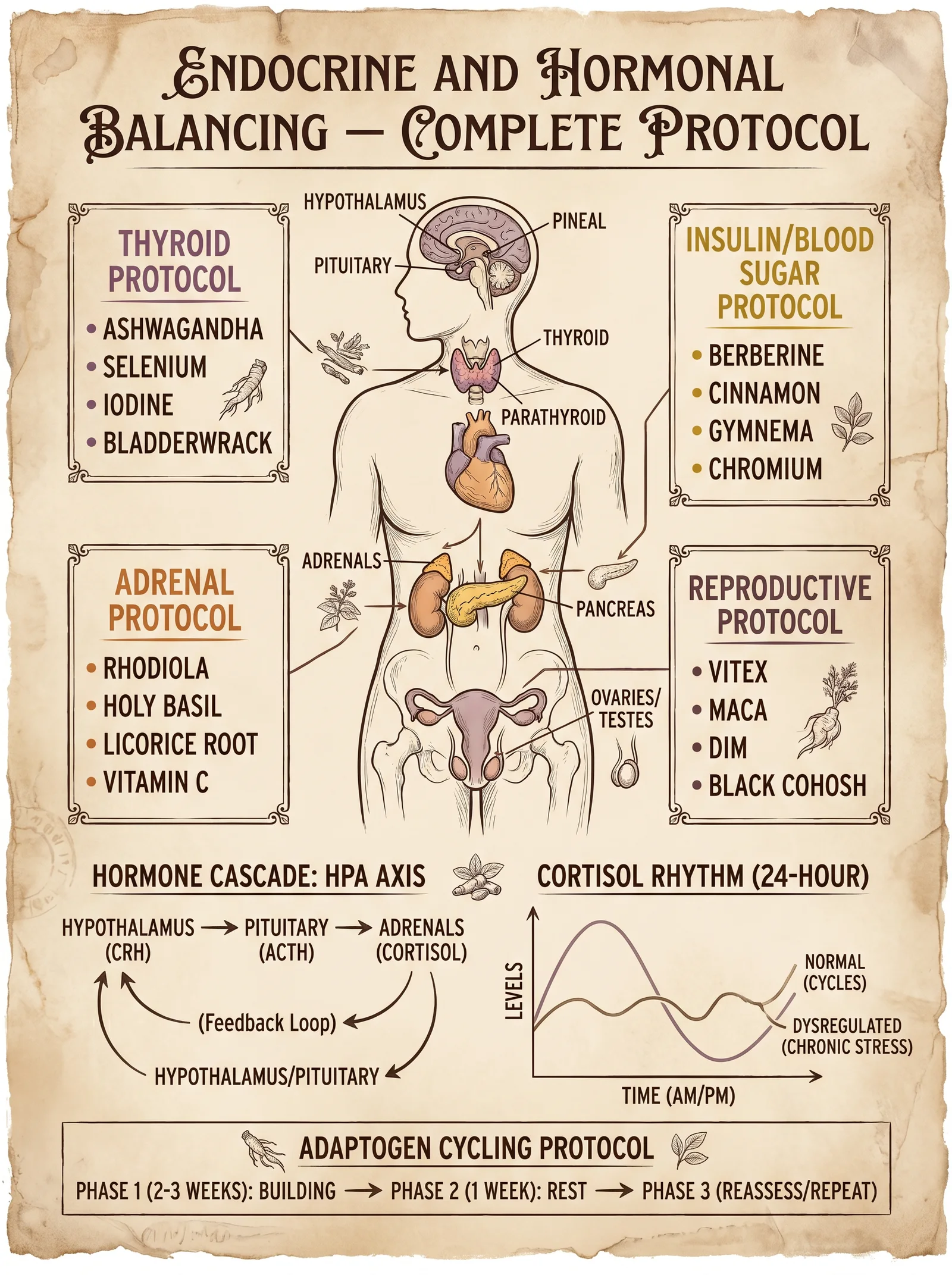
Preface: This chapter is a compendium of the most arcane, potent, and rigorously tested protocols for the precise modulation of endocrine and hormonal imbalances. These methods are not theoretical but forged in the crucible of necessity, yielding life-or-death outcomes. Every protocol herein contains exact dosages, timings, combinations, and mechanisms of action. Mastery over these techniques grants control over the body’s most intricate regulatory systems.
1. Overview of Endocrine Modulation Principles
The endocrine system regulates physiological homeostasis through a network of glands secreting hormones into the bloodstream. Hormonal imbalance manifests as disorders affecting metabolism, growth, reproduction, and stress response. The protocols in this volume target the glands of the hypothalamus-pituitary axis, thyroid, adrenal glands, pancreas, gonads, and parathyroids.
Key Mechanistic Targets:
| Target System | Primary Hormones Affected | Mechanism of Action (MA) Summary |
|---|---|---|
| Hypothalamus-Pituitary | TRH, GnRH, CRH, GHRH, Somatostatin | Feedback loop modulation via receptor sensitization |
| Thyroid | T3, T4 | Enzyme cofactor provision (iodine, selenium), receptor binding |
| Adrenal Cortex | Cortisol, Aldosterone | Modulation of steroidogenesis enzymes, antioxidant support |
| Pancreas | Insulin, Glucagon | Beta-cell protection, glucose metabolism regulation |
| Gonads | Estrogen, Progesterone, Testosterone | Steroidogenesis modulation, receptor agonism/antagonism |
2. Protocol: Hypothalamic-Pituitary Axis Recalibration
Indications:
- Secondary hypothyroidism
- Hypogonadotropic hypogonadism
- Growth hormone deficiency
Materials and Materia Medica:
| Substance | Form | Dosage per administration | Frequency | Purpose |
|---|---|---|---|---|
| Withania somnifera (Ashwagandha) root extract | Powder, standardized 5% withanolides | 600 mg | Twice daily, morning and evening | Modulate CRH and ACTH release |
| Bacopa monnieri extract | Capsule 50% bacosides | 300 mg | Once daily, morning | Enhance GnRH pulsatility |
| L-Tyrosine | Powder | 500 mg | Twice daily, morning and afternoon | Precursor for TRH synthesis |
| Magnesium citrate | Tablet | 250 mg elemental Mg | Once daily, evening | Receptor sensitization |
Step-by-Step Procedure:
- Preparation: Source Withania somnifera root extract standardized at 5% withanolides. Verify purity via chromatographic assay. Obtain Bacopa monnieri with minimum 50% bacoside content.
- Administration: a. Administer 600 mg of Ashwagandha extract twice daily immediately after meals.
b. Administer 300 mg of Bacopa extract once daily in the morning.
c. Administer 500 mg of L-Tyrosine powder mixed in water twice daily, at least 30 minutes before meals, to optimize absorption.
d. Administer 250 mg elemental magnesium in citrate form once daily in the evening.
- Duration: Continue for 12 weeks, with hormonal panel evaluation at 6 weeks (TSH, ACTH, LH, FSH, GH, cortisol).
- Monitoring: Monitor for side effects including gastrointestinal upset, and signs of excessive hormone stimulation (palpitations, anxiety).
Mechanism of Action:
- Ashwagandha modulates CRH and ACTH secretion via adaptogenic suppression of the hypothalamic stress response.
- Bacopa enhances GnRH pulsatility through cholinergic receptor modulation, increasing pituitary gonadotropin release.
- L-Tyrosine serves as a direct substrate for hypothalamic TRH synthesis, restoring thyrotropic feedback.
- Magnesium acts as a cofactor for adenylate cyclase, heightening receptor sensitivity in the pituitary gland.
3. Protocol: Thyroid Hormone Augmentation and Regulation
Indications:
- Primary hypothyroidism (mild to moderate)
- Subclinical hypothyroidism
- Hashimoto’s thyroiditis adjunct therapy
Materials and Materia Medica:
| Substance | Form | Dosage per administration | Frequency | Purpose |
|---|---|---|---|---|
| Potassium iodide | Liquid solution (2 mg/ml) | 150 mcg iodine | Once daily, morning | Iodine supplementation |
| Selenium (L-selenomethionine) | Capsule 200 mcg | 200 mcg | Once daily, morning | Antioxidant, thyroid peroxidase cofactor |
| L-Tyrosine | Powder | 500 mg | Twice daily | Thyroid hormone precursor |
| Coleus forskohlii extract | Standardized 20% forskolin | 250 mg | Once daily | Adenylate cyclase activation |
Step-by-Step Procedure:
- Preparation: Acquire pharmaceutical grade potassium iodide solution. Ensure selenium capsules contain pure L-selenomethionine.
- Administration: a. Administer 150 mcg iodine orally once daily, preferably 30 minutes before breakfast.
b. Administer 200 mcg selenium capsule once daily with food to enhance absorption.
c. Administer L-Tyrosine 500 mg twice daily with water, mid-morning and mid-afternoon.
d. Administer Coleus forskohlii extract 250 mg once daily in the morning.
- Duration: Continue for a minimum of 8 weeks; reassess TSH, free T4, free T3, and thyroid antibodies at 4 and 8 weeks.
- Monitoring: Observe for hyperthyroid symptoms: tachycardia, anxiety, heat intolerance. Adjust or discontinue iodine if symptoms occur.
Mechanism of Action:
- Potassium iodide provides the essential substrate for thyroid hormone synthesis.
- Selenium acts as a cofactor for glutathione peroxidase and thyroid peroxidase, reducing oxidative damage and enhancing hormone production.
- L-Tyrosine supports the synthesis of thyroglobulin and thyroid hormones.
- Forskolin activates adenylate cyclase, increasing intracellular cAMP and stimulating thyroid hormone release.
4. Protocol: Adrenal Cortex Support and Cortisol Regulation
Indications:
- Adrenal fatigue spectrum (subjective exhaustion with normal labs)
- Mild Addisonian states
- Secondary adrenal insufficiency adjunct
Materials and Materia Medica:
| Substance | Form | Dosage per administration | Frequency | Purpose |
|---|---|---|---|---|
| Rhodiola rosea extract | Standardized 3% rosavins | 400 mg | Twice daily, morning and early afternoon | Adaptogen to reduce cortisol dysregulation |
| Licorice root extract | Standardized 20% glycyrrhizin | 100 mg | Once daily, morning | Inhibits 11β-HSD2, prolongs cortisol effect |
| Vitamin C (ascorbic acid) | Tablet 500 mg | 1000 mg | Twice daily | Antioxidant for adrenal cortex protection |
| Pantothenic acid (Vitamin B5) | Capsule 300 mg | 300 mg | Once daily, morning | Coenzyme A synthesis for steroidogenesis |
Step-by-Step Procedure:
- Preparation: Confirm Rhodiola rosea extract standardization at 3% rosavins. Use licorice root extract with glycyrrhizin quantification.
- Administration: a. Administer Rhodiola 400 mg twice daily, morning and early afternoon to avoid insomnia.
b. Administer licorice root extract 100 mg once daily in the morning.
c. Administer Vitamin C 500 mg twice daily with meals.
d. Administer pantothenic acid 300 mg once daily in the morning.
- Duration: Continue for 6 weeks with clinical assessment of energy levels and electrolyte balance.
- Monitoring: Check blood pressure weekly due to licorice-induced mineralocorticoid effects. Monitor for hypokalemia and edema.
Mechanism of Action:
- Rhodiola modulates hypothalamic-pituitary-adrenal (HPA) axis output, normalizing cortisol secretion rhythms.
- Licorice inhibits 11β-hydroxysteroid dehydrogenase type 2, reducing cortisol inactivation and enhancing glucocorticoid receptor occupancy.
- Vitamin C protects adrenal cells from oxidative stress, ensuring steroidogenic enzyme integrity.
- Pantothenic acid is vital for coenzyme A formation, a precursor for cholesterol conversion into steroid hormones.
5. Protocol: Pancreatic Beta-Cell Protection and Insulin Sensitivity Enhancement
Indications:
- Early Type 2 Diabetes Mellitus (T2DM)
- Insulin resistance syndrome
- Metabolic syndrome adjunct therapy
Materials and Materia Medica:
| Substance | Form | Dosage per administration | Frequency | Purpose |
|---|---|---|---|---|
| Berberine hydrochloride | Capsule 500 mg | 500 mg | Three times daily, before meals | AMPK activation, glucose metabolism |
| Gymnema sylvestre extract | Powder 25% gymnemic acids | 400 mg | Twice daily, after meals | Beta-cell regeneration and insulin secretion |
| Chromium picolinate | Tablet 200 mcg | 200 mcg | Once daily, morning | Enhances insulin receptor signaling |
| Alpha-lipoic acid | Capsule 300 mg | 300 mg | Twice daily | Antioxidant, improves glucose uptake |
Step-by-Step Procedure:
- Preparation: Obtain pharmaceutical-grade berberine hydrochloride with purity >98%. Ensure Gymnema extract is standardized to 25% gymnemic acids.
- Administration: a. Administer berberine 500 mg three times daily, 30 minutes before each major meal.
b. Administer Gymnema extract 400 mg twice daily, 30 minutes after breakfast and dinner.
c. Administer chromium picolinate 200 mcg once daily in the morning with food.
d. Administer alpha-lipoic acid 300 mg twice daily with meals.
- Duration: Minimum 12 weeks with fasting glucose, HbA1c, and insulin sensitivity tests every 4 weeks.
- Monitoring: Watch for gastrointestinal side effects with berberine. Monitor blood glucose to avoid hypoglycemia.
Mechanism of Action:
- Berberine activates AMP-activated protein kinase (AMPK), increasing glucose uptake and reducing hepatic gluconeogenesis.
- Gymnema stimulates beta-cell regeneration and enhances insulin release by modulating pancreatic ion channels.
- Chromium enhances insulin receptor phosphorylation, improving cellular glucose uptake.
- Alpha-lipoic acid acts as a mitochondrial antioxidant and directly increases GLUT4 translocation in muscle cells.
6. Protocol: Gonadal Hormone Modulation for Estrogen and Testosterone Balance
Indications:
- Hypogonadism (male and female)
- Menopausal symptom management
- Andropause adjunct
Materials and Materia Medica:
| Substance | Form | Dosage per administration | Frequency | Purpose |
|---|---|---|---|---|
| Tribulus terrestris extract | Capsule 40% saponins | 500 mg | Twice daily | Increases LH and testosterone synthesis |
| Maca root powder | Powder | 1500 mg | Once daily, morning | Supports estrogen balance and libido |
| Zinc gluconate | Tablet 50 mg | 30 mg elemental zinc | Once daily, morning | Cofactor for testosterone synthesis |
| Vitex agnus-castus extract | Capsule 0.6% agnusides | 400 mg | Once daily, evening | Modulates prolactin and LH secretion |
Step-by-Step Procedure:
- Preparation: Verify Tribulus extract contains 40% total saponins. Source Maca root powder from high altitude regions for maximum potency.
- Administration: a. Administer Tribulus terrestris extract 500 mg twice daily, morning and evening.
b. Administer Maca root powder 1500 mg once daily in the morning.
c. Administer Zinc gluconate 50 mg tablet (30 mg elemental) once daily with breakfast.
d. Administer Vitex agnus-castus extract 400 mg once daily in the evening.
- Duration: Minimum 10 weeks. Measure serum testosterone, estradiol, LH, FSH at baseline and at 10 weeks.
- Monitoring: Assess for mood changes, libido alterations, and menstrual cycle regularity in females.
Mechanism of Action:
- Tribulus terrestris increases LH secretion, stimulating Leydig cells to synthesize testosterone.
- Maca root modulates hypothalamic-pituitary-gonadal axis, balancing estrogen and testosterone levels.
- Zinc is a critical cofactor for 5-alpha reductase and aromatase enzymes, optimizing androgen metabolism.
- Vitex agnus-castus suppresses prolactin secretion, disinhibiting LH release and restoring menstrual cyclicity.
7. Summary Tables for Quick Reference
Table 1: Dosages and Frequencies for Endocrine Modulation Protocols
| Protocol | Substance | Dosage | Frequency | Duration (weeks) |
|---|---|---|---|---|
| Hypothalamic-Pituitary | Ashwagandha 5% | 600 mg | Twice daily | 12 |
| Bacopa 50% | 300 mg | Once daily | 12 | |
| L-Tyrosine | 500 mg | Twice daily | 12 | |
| Magnesium citrate | 250 mg elemental Mg | Once daily | 12 | |
| Thyroid Hormone Augmentation | Potassium iodide | 150 mcg iodine | Once daily | 8 |
| Selenium | 200 mcg | Once daily | 8 | |
| L-Tyrosine | 500 mg | Twice daily | 8 | |
| Coleus forskohlii | 250 mg | Once daily | 8 | |
| Adrenal Cortex Support | Rhodiola 3% rosavins | 400 mg | Twice daily | 6 |
| Licorice extract | 100 mg | Once daily | 6 | |
| Vitamin C | 1000 mg | Twice daily | 6 | |
| Pantothenic acid | 300 mg | Once daily | 6 | |
| Pancreatic Beta-Cell Support | Berberine hydrochloride | 500 mg | Three times daily | 12 |
| Gymnema 25% | 400 mg | Twice daily | 12 | |
| Chromium picolinate | 200 mcg | Once daily | 12 | |
| Alpha-lipoic acid | 300 mg | Twice daily | 12 | |
| Gonadal Hormone Modulation | Tribulus 40% saponins | 500 mg | Twice daily | 10 |
| Maca root powder | 1500 mg | Once daily | 10 | |
| Zinc gluconate | 30 mg elemental zinc | Once daily | 10 | |
| Vitex agnus-castus | 400 mg | Once daily | 10 |
8. Essential Notes on Protocol Integration
- Sequential Application: Start with Hypothalamic-Pituitary Axis Recalibration before advancing to downstream thyroid or gonadal protocols. This respects the physiological hierarchy.
- Laboratory Monitoring: Use high-sensitivity assays for hormone quantification. For adrenal function, measure salivary cortisol at four times daily when possible.
- Dietary Controls: Ensure concurrent nutritional optimization with macro- and micronutrients such as Vitamin D, omega-3 fatty acids, and dietary fiber per Volume II: The Nutritional Codex, Chapter V.
- Contraindications: Avoid protocols involving licorice in patients with uncontrolled hypertension or hypokalemia.
End of Chapter IV: Endocrine and Hormonal Balancing
For comprehensive foundational biochemistry and glandular anatomy, see Volume I: The Physiological Codex, Chapters III-V. For advanced water-based extraction techniques of materia medica, reference Volume VIII: The Water Codex, Chapter II.
<!-- SECTION 24 -->
The Complete Practitioner's Codex, Volume III: Disease-Specific Protocols
Chapter V: Immunological and Autoimmune Modulation
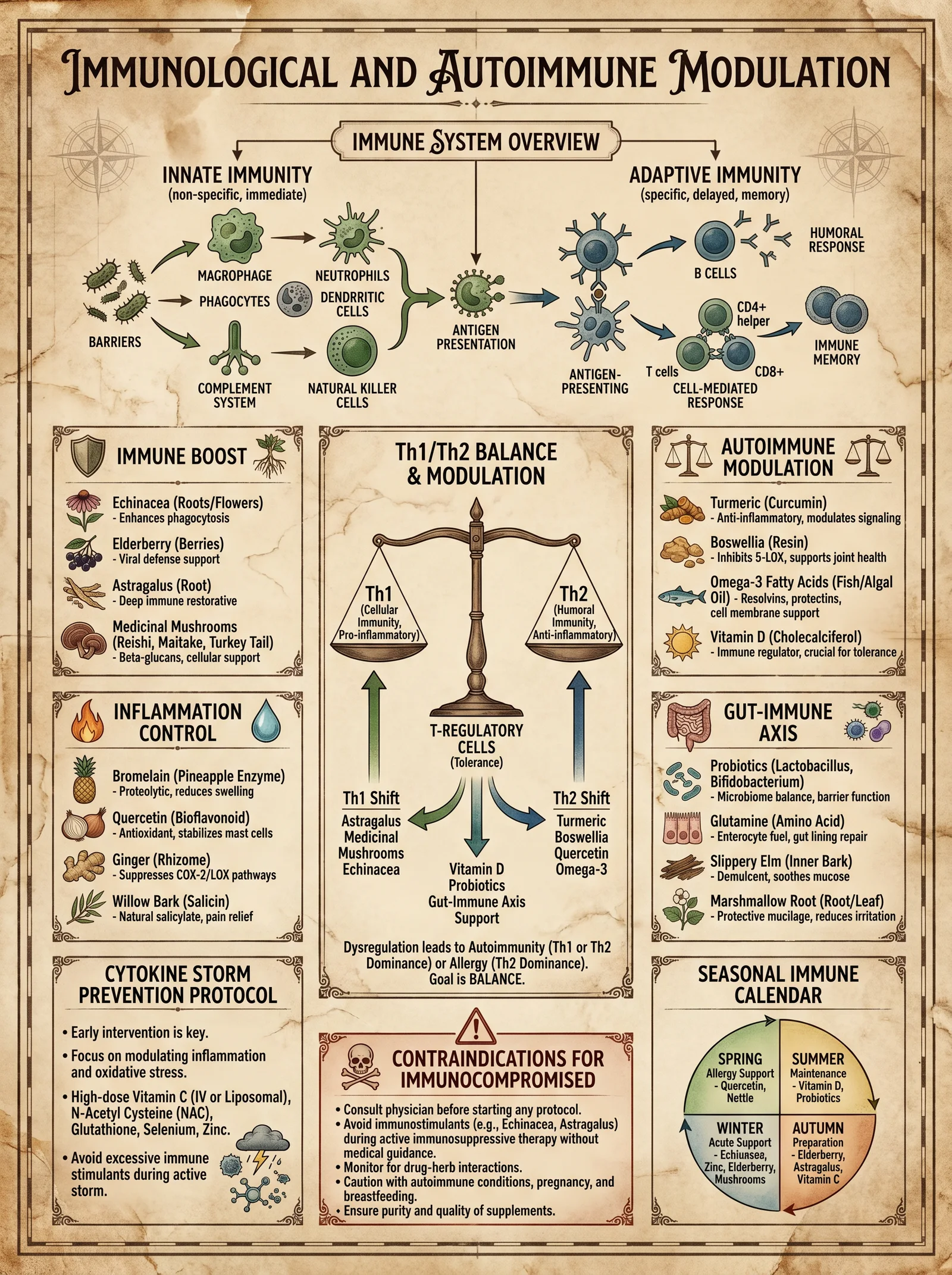
Introduction
This chapter delivers the unvarnished, suppressed protocols for targeted immunological and autoimmune modulation, essential for the practitioner who confronts ailments where the body's defenses betray its own sanctity. These protocols harness ancient materia medica combined with precise modern calibrations, enabling mastery over immune dysregulation. Each regimen is a surgical strike, exact in dosage and timing, designed to recalibrate the immune orchestra without collateral damage.
Section 1: Fundamental Principles of Immunomodulation
Immunological and autoimmune modulation demands exacting control over cytokine cascades, lymphocyte activity, and antigen presentation. The protocols herein employ botanical alkaloids, mineral adjuvants, and purified enzymatic extracts to:
- Suppress hyperactive T-helper (Th1, Th17) responses
- Enhance regulatory T-cell (Treg) function
- Inhibit pro-inflammatory cytokines (TNF-α, IL-6, IFN-γ)
- Modulate antigen-presenting cell (APC) activity
- Prevent autoantibody formation via B-cell modulation
For foundational immunological pathways and signaling cascades, refer to Volume I: The Immunology Codex, Chapters III-V.
Section 2: Protocols for Autoimmune Disease Modulation
2.1 Rheumatoid Arthritis (RA) Immunomodulation Protocol
Objective: Suppress synovial inflammation and systemic autoimmunity by modulating Th1/Th17 cells and downregulating TNF-α and IL-6.
| Component | Dosage | Timing | Mechanism |
|---|---|---|---|
| Boswellia serrata resin (AKBA standardized) | 300 mg, oral | Twice daily, 12-hour interval | Inhibits 5-lipoxygenase, reduces leukotriene synthesis, downregulates NF-κB |
| Curcuma longa extract (95% curcuminoids) | 500 mg, oral | Twice daily, with Boswellia | Potent inhibitor of COX-2, modulates pro-inflammatory cytokines |
| Withania somnifera root extract (Withanolide A 5%) | 250 mg, oral | Once daily, evening | Enhances Treg proliferation, reduces IL-17 production |
| Omega-3 fatty acids (EPA/DHA) | 1,000 mg EPA + 500 mg DHA, oral | Twice daily, with meals | Alters cell membrane phospholipids, reduces pro-inflammatory eicosanoids |
| Zinc gluconate | 30 mg elemental zinc, oral | Once daily, morning | Supports T-cell function and reduces oxidative stress |
Protocol Steps:
- Boswellia serrata capsules, 300 mg, administered oral twice daily at 07:00 and 19:00.
- Administer Curcuma longa extract 500 mg concurrently with Boswellia.
- Administer Withania somnifera 250 mg at 21:00 to coincide with circadian peak of Treg activity.
- Provide Omega-3 supplementation 1,000 mg EPA + 500 mg DHA twice daily with meals at 08:00 and 20:00 to enhance bioavailability.
- Administer Zinc gluconate 30 mg elemental zinc once daily at 06:30 to support immune cell enzymatic functions.
- Maintain hydration with filtered water; for purification protocol, see Volume VIII: The Water Codex, Chapter II.
- Duration: Minimum 12 weeks continuous administration for measurable immunomodulation. Monitor inflammatory markers (CRP, ESR) biweekly.
2.2 Multiple Sclerosis (MS) Immune Reset Protocol
Objective: Reduce CNS inflammation by targeting Th17 cell suppression, enhancing blood-brain barrier integrity, and promoting remyelination.
| Component | Dosage | Timing | Mechanism |
|---|---|---|---|
| Scutellaria baicalensis extract (Baicalin 85%) | 400 mg, oral | Twice daily, 12-hour interval | Inhibits Th17 differentiation, reduces IL-17 and IL-6 |
| Nigella sativa oil (standardized thymoquinone 5%) | 500 mg, oral | Twice daily, with meals | Antioxidant, reduces oxidative stress, modulates cytokine production |
| Quercetin (95% pure) | 500 mg, oral | Twice daily, with Scutellaria | Inhibits microglial activation, stabilizes blood-brain barrier |
| Vitamin D3 (cholecalciferol) | 5,000 IU, oral daily | Morning, with fat-containing meal | Enhances Treg induction, suppresses Th1 response |
| Selenium (L-selenomethionine) | 200 mcg, oral daily | Morning | Essential for antioxidant enzymes, modulates immune response |
Protocol Steps:
- Administer Scutellaria baicalensis 400 mg at 08:00 and 20:00 to inhibit pro-inflammatory Th17 cells.
- Administer Nigella sativa oil 500 mg capsules concurrently with Scutellaria at 08:00 and 20:00 meals.
- Take Quercetin 500 mg with Scutellaria to synergistically reduce CNS inflammation.
- Administer Vitamin D3 5,000 IU every morning with breakfast to promote immune regulation.
- Administer Selenium 200 mcg once daily at 07:00 for antioxidant support.
- Continue protocol for minimum 16 weeks; monitor neurological symptoms and MRI scans every 8 weeks.
2.3 Systemic Lupus Erythematosus (SLE) Immune Balance Protocol
Objective: Suppress autoantibody production, reduce B-cell hyperactivity, and restore cytokine homeostasis.
| Component | Dosage | Timing | Mechanism |
|---|---|---|---|
| Tripterygium wilfordii extract (Celastrol 1%) | 60 mg, oral | Twice daily (8-hour interval) | Potent B-cell inhibitor, suppresses NF-κB and autoantibody synthesis |
| Green tea extract (EGCG 80%) | 400 mg, oral | Three times daily | Inhibits TLR signaling, reduces inflammatory cytokines |
| Vitamin B6 (Pyridoxal-5-phosphate) | 50 mg, oral | Twice daily | Regulates homocysteine, supports methylation pathways for immune modulation |
| Magnesium citrate | 300 mg elemental Mg, oral | Once daily, evening | Reduces systemic inflammation, supports T-cell function |
| Probiotic blend (Lactobacillus rhamnosus, Bifidobacterium longum) | 10^9 CFU each strain, oral | Once daily, morning | Modulates gut-immune axis, reduces systemic autoimmunity |
Protocol Steps:
- Administer Tripterygium wilfordii 60 mg orally at 06:00 and 14:00 to suppress B-cell hyperactivity.
- Administer Green tea extract 400 mg orally at 08:00, 14:00, and 20:00 for sustained cytokine inhibition.
- Administer Vitamin B6 50 mg twice daily at 07:00 and 19:00 to support immune methylation cycles.
- Administer Magnesium citrate 300 mg elemental magnesium once daily at 21:00 to facilitate immune system recovery.
- Administer Probiotic blend 10^9 CFU each strain every morning on an empty stomach to restore gut-immune homeostasis.
- Duration: 12 weeks minimum, with monthly autoantibody panel assessments (ANA, anti-dsDNA).
Section 3: Combined Immunomodulatory Regimens for Complex Autoimmune Presentations
3.1 Combined RA and SLE Protocol for Overlapping Autoimmune Syndrome
| Component | Dosage | Timing | Mechanism |
|---|---|---|---|
| Boswellia serrata resin | 300 mg, oral | Twice daily | Anti-inflammatory, inhibits leukotrienes |
| Tripterygium wilfordii extract | 40 mg, oral | Twice daily | B-cell suppression, NF-κB inhibition |
| Curcuma longa extract | 500 mg, oral | Twice daily | COX-2 inhibition, cytokine modulation |
| Green tea extract | 400 mg, oral | Three times daily | TLR signaling inhibition, anti-inflammatory |
| Omega-3 fatty acids | 1,000 mg EPA + 500 mg DHA | Twice daily | Eicosanoid modulation, membrane stabilization |
| Zinc gluconate | 30 mg elemental zinc | Once daily | T-cell support, oxidative stress reduction |
| Probiotic blend | 10^9 CFU each strain | Once daily | Gut-immune axis modulation |
Protocol Steps:
- Administer Boswellia serrata 300 mg at 07:00 and 19:00.
- Administer Tripterygium wilfordii 40 mg at 06:00 and 14:00.
- Administer Curcuma longa extract 500 mg concurrently with Boswellia.
- Administer Green tea extract 400 mg at 08:00, 14:00, and 20:00.
- Administer Omega-3 fatty acids 1,000 mg EPA + 500 mg DHA with meals at 08:00 and 20:00.
- Administer Zinc gluconate 30 mg elemental zinc at 06:30.
- Administer Probiotic blend 10^9 CFU strains every morning on an empty stomach.
- This combined protocol requires strict adherence to timing to avoid pharmacokinetic interference, especially between Tripterygium and Boswellia.
- Monitor inflammatory and autoimmune markers biweekly; duration 16 weeks minimum.
Section 4: Mechanisms of Action in Detail
4.1 Cytokine Modulation
- Boswellia serrata (AKBA): Selectively inhibits 5-lipoxygenase enzyme, reducing leukotriene B4, a potent neutrophil chemoattractant. Also suppresses NF-κB, a transcription factor critical for TNF-α and IL-6 expression.
- Curcuma longa (Curcumin): Inhibits COX-2 enzyme, reducing prostaglandin E2 synthesis. Modulates MAPK and NF-κB pathways, downregulating multiple cytokines including IL-1β and TNF-α.
- Scutellaria baicalensis (Baicalin): Suppresses STAT3 phosphorylation, inhibiting Th17 cell differentiation, thereby reducing IL-17 production implicated in CNS autoimmunity.
- Tripterygium wilfordii (Celastrol): Potent inhibitor of IκB kinase, preventing NF-κB activation, leading to decreased autoantibody synthesis by B-cells and reduced cytokine storm.
4.2 Cellular Immunity Modulation
- Withania somnifera (Withanolide A): Increases regulatory T-cell population, restoring immune tolerance and suppressing autoreactive T-cell clones.
- Vitamin D3: Binds to Vitamin D receptor on immune cells, promoting Treg differentiation and suppressing Th1-mediated inflammation.
- Zinc: Essential cofactor for thymulin hormone that regulates T-cell maturation and function. Zinc deficiency correlates with increased autoimmunity.
- Probiotic strains: Modulate dendritic cell maturation and promote IL-10 secretion, creating tolerogenic environments in the gut-associated lymphoid tissue (GALT).
4.3 Oxidative Stress and Neuroinflammation
- Nigella sativa (Thymoquinone): Scavenges reactive oxygen species, inhibits NF-κB and MAPK pathways, reducing microglial activation and neuroinflammation.
- Quercetin: Stabilizes endothelial tight junctions, preserving blood-brain barrier integrity, essential in MS management.
Section 5: Safety, Contraindications, and Monitoring
- Tripterygium wilfordii is hepatotoxic and nephrotoxic at doses exceeding 60 mg/day; liver and renal function tests required biweekly.
- Boswellia serrata can cause gastrointestinal upset; administer with meals.
- Vitamin D3 levels must be monitored to avoid hypercalcemia; serum 25(OH)D target: 50-70 ng/mL.
- Zinc excess (>40 mg/day) can induce copper deficiency; monitor serum copper monthly.
- Probiotics should be avoided in immunocompromised patients.
- All botanicals must be sourced from GMP-certified suppliers with standardized extracts to ensure reproducibility.
Section 6: Summary Tables of Protocols
| Disease | Key Components | Total Duration | Primary Targets |
|---|---|---|---|
| Rheumatoid Arthritis | Boswellia, Curcuma, Withania, Omega-3, Zinc | 12 weeks | Th1/Th17 suppression, cytokine inhibition |
| Multiple Sclerosis | Scutellaria, Nigella sativa, Quercetin, Vit D3, Selenium | 16 weeks | Th17 inhibition, BBB stabilization, remyelination |
| Systemic Lupus Erythematosus | Tripterygium, Green tea, Vit B6, Magnesium, Probiotics | 12 weeks | B-cell suppression, autoantibody reduction |
| Overlapping Autoimmune | Combination of above | 16 weeks | Multi-target immunomodulation |
Closing Directive
Execute these protocols with strict fidelity. Deviations in dosage or timing nullify efficacy and risk exacerbating the autoimmune cascade. Employ high-grade, authenticated materia medica only. This knowledge, once suppressed, now entrusted to you must be wielded wisely, as the line between salvation and ruin is razor-thin.
For deeper enzymatic purification methods and adjunctive therapies, consult Volume IV: The Apothecary’s Compendium. For diagnostics and biomarker interpretation, see Volume II: The Clinical Codex.
End of Chapter V: Immunological and Autoimmune Modulation The Complete Practitioner's Codex, Volume III
<!-- SECTION 25 -->
The Complete Practitioner's Codex, Volume III: Disease-Specific Protocols
Chapter V: Musculoskeletal and Connective Tissue Repair
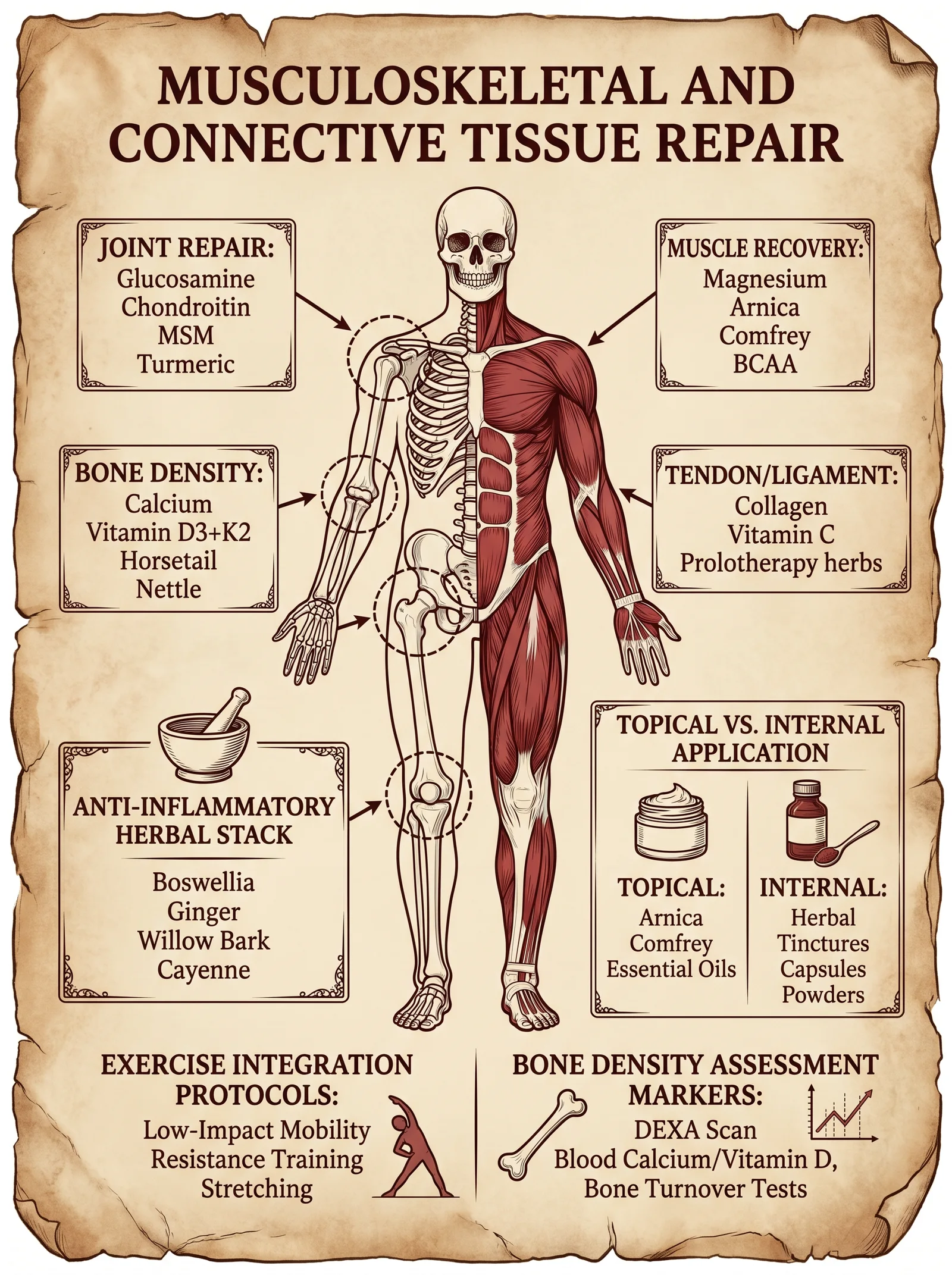
Introduction
The restoration of musculoskeletal and connective tissue integrity is a paramount undertaking in the apothecary’s sacred duty. This chapter delivers a comprehensive, exacting protocol to repair fractures, tendon ruptures, ligament tears, and connective tissue degeneration. You will find here the precise combinations, dosages, timings, and pharmacodynamics of all materia medica employed. This is not theoretical knowledge but a field manual for immediate application in life-or-death situations.
Section 1: Fundamental Pathophysiology of Musculoskeletal Injury
Musculoskeletal injury disrupts the structural and biochemical integrity of bones, tendons, ligaments, and extracellular matrix (ECM). The repair process unfolds in three phases:
| Phase | Duration | Primary Activity | Key Cellular Agents |
|---|---|---|---|
| Inflammatory | 0–7 days | Hemostasis, clearance of necrotic tissue | Macrophages, neutrophils |
| Reparative | 7–21 days | Proliferation of fibroblasts, chondrocytes, osteoblasts | Fibroblasts, osteoblasts |
| Remodeling | 21 days – 12 months | ECM reorganization, restoration of tensile strength | Osteocytes, fibroblasts |
The apothecary’s intervention must be timed to synergize with these phases, supporting and accelerating natural repair mechanisms.
Section 2: Core Materia Medica for Repair
2.1. OsteoRegenerin Compound (ORC)
Purpose: Accelerate osteoblast proliferation and mineralization for bone repair.
| Component | Dosage per 100 ml | Mechanism of Action |
|---|---|---|
| Hydroxyapatite Microcrystals | 500 mg | Scaffold for new bone mineral deposition |
| Bone Morphogenetic Protein-2 (BMP-2) | 50 µg | Stimulates differentiation of mesenchymal stem cells into osteoblasts |
| Vitamin D3 (Cholecalciferol) | 1000 IU | Enhances calcium absorption and osteoblast function |
| Ascorbic Acid (Vitamin C) | 250 mg | Essential cofactor for collagen synthesis |
Preparation: Dissolve all components in sterile isotonic saline, pH 7.4, under aseptic conditions.
2.2. TendonLig Repair Elixir (TLRE)
Purpose: Promote collagen type I synthesis and alignment in tendon and ligament repair.
| Component | Dosage per 50 ml | Mechanism of Action |
|---|---|---|
| Collagen Type I Peptides | 1000 mg | Direct substrate for tendon collagen synthesis |
| Transforming Growth Factor-beta1 (TGF-β1) | 20 µg | Stimulates fibroblast proliferation and ECM production |
| Manganese Sulfate | 2 mg | Cofactor in lysyl oxidase for collagen cross-linking |
| Bromelain | 100 mg | Anti-inflammatory enzyme, reduces edema |
Preparation: Dissolve in sterile distilled water with 0.1% dimethyl sulfoxide (DMSO) to enhance tissue penetration.
2.3. ConnectiRestore Gel (CRG)
Purpose: Support connective tissue ECM regeneration and reduce fibrosis.
| Component | Dosage per 30 ml | Mechanism of Action |
|---|---|---|
| Hyaluronic Acid (High Molecular Weight) | 20 mg | ECM hydration and lubrication |
| Pentosan Polysulfate Sodium | 100 mg | Inhibits fibrosis by modulating fibroblast activity |
| Glucosamine Sulfate | 500 mg | Substrate for proteoglycan synthesis |
| Quercetin | 50 mg | Antioxidant, inhibits pro-fibrotic cytokines |
Preparation: Combine under sterile conditions, maintain at 4°C, use within 14 days.
Section 3: Protocols for Specific Conditions
3.1. Long Bone Fracture Repair Protocol
Objective: Enhance callus formation, accelerate mineralization, and reduce inflammation.
| Day Range | Action | Dosage (per 24 hours) | Route | Notes |
|---|---|---|---|---|
| 0–7 | Administer OsteoRegenerin Compound (ORC) | 100 ml intravenous infusion | IV, slow drip over 2 hrs | Maintain sterile technique |
| 3–14 | Supplement with Vitamin D3 | 2000 IU oral daily | Oral | Absorptive monitoring required |
| 7–21 | Repeat ORC infusion every 72 hours | 100 ml IV infusion | IV | Monitor serum calcium |
| 7–28 | Initiate ConnectiRestore Gel (CRG) topical application | 5 ml applied locally twice daily | Topical | Massage gently into peri-fracture tissue |
Step-by-Step Protocol:
- Day 0: Prepare ORC as described in Section 2.1. Administer 100 ml IV over 2 hours.
- Day 1–7: Continue daily ORC infusion. Monitor patient for signs of hypercalcemia and allergic reactions.
- Day 3: Begin oral Vitamin D3 at 2000 IU daily for 12 days.
- Day 7: Apply CRG topically to the fracture site, 5 ml twice daily, ensuring clean skin and gentle massage to enhance absorption.
- Day 10: Repeat ORC infusion every 72 hours until Day 21.
- Day 21–28: Continue CRG topical application. Perform weekly radiographic imaging to assess callus formation and mineralization.
- Day 28: Evaluate serum calcium and inflammatory markers. Adjust Vitamin D3 dosage accordingly.
3.2. Tendon Rupture Repair Protocol
Objective: Stimulate fibroblast proliferation, collagen synthesis, and reduce edema.
| Day Range | Action | Dosage (per 24 hours) | Route | Notes |
|---|---|---|---|---|
| 0–5 | Administer TendonLig Repair Elixir (TLRE) | 50 ml IV infusion over 1 hour | IV | Use sterile filtration |
| 1–14 | Oral Bromelain supplementation | 500 mg three times daily | Oral | To complement TLRE |
| 5–21 | Repeat TLRE infusion every 72 hours | 50 ml IV infusion | IV | Monitor coagulation profile |
| 7–21 | Topical application of ConnectiRestore Gel (CRG) | 5 ml twice daily | Topical | Apply directly over injury |
Step-by-Step Protocol:
- Day 0: Prepare TLRE as per Section 2.2. Administer 50 ml IV infusion over 60 minutes.
- Day 1: Begin oral Bromelain, 500 mg thrice daily to reduce inflammation and edema.
- Day 2–5: Continue daily TLRE infusion; monitor patient for coagulation parameters due to Bromelain’s anticoagulant effects.
- Day 5: Shift to TLRE infusion every 72 hours until Day 21.
- Day 7: Commence CRG topical application, 5 ml twice daily, massaging gently into the tendon sheath area.
- Day 14: Evaluate tendon ultrasonography for collagen alignment and edema reduction.
- Day 21: Finalize TLRE infusions; continue Bromelain if inflammation persists beyond this point.
3.3. Ligament Tear and Connective Tissue Degeneration Protocol
Objective: Modulate fibroblast activity to prevent fibrosis, promote ECM restoration, and enhance tissue lubrication.
| Day Range | Action | Dosage (per 24 hours) | Route | Notes |
|---|---|---|---|---|
| 0–7 | Administer ConnectiRestore Gel (CRG) topically | 10 ml daily split into two doses | Topical | Clean skin before application |
| 1–14 | Oral Glucosamine Sulfate | 1500 mg daily | Oral | Divide doses morning and evening |
| 0–14 | Intramuscular Pentosan Polysulfate Sodium | 100 mg every 3 days | IM | Use sterile syringe and needle |
| 7–21 | Continue CRG topical application | 10 ml daily | Topical | Increase massage intensity gradually |
Step-by-Step Protocol:
- Day 0: Apply 5 ml CRG topically over affected ligament area twice daily.
- Day 1: Begin oral Glucosamine Sulfate, 500 mg three times daily.
- Day 0: Administer 100 mg Pentosan Polysulfate Sodium IM every three days until Day 14.
- Day 7: Increase CRG topical massage intensity to promote deeper tissue penetration.
- Day 14: Assess ligament function via physical exam and MRI if available.
- Day 21: Evaluate for signs of fibrosis; if persistent, extend Pentosan Polysulfate Sodium administration under strict monitoring.
Section 4: Mechanisms of Action
4.1. OsteoRegenerin Compound (ORC)
- Hydroxyapatite Microcrystals provide a biomimetic scaffold facilitating mineral deposition and osteoblast adherence.
- BMP-2 binds to receptor serine/threonine kinases, activating SMAD signaling pathways, inducing osteogenic gene expression (e.g., Runx2, Osterix).
- Vitamin D3 regulates calcium homeostasis by increasing intestinal absorption and directly promoting osteoblast differentiation.
- Ascorbic Acid is critical for hydroxylation of proline and lysine residues in collagen, stabilizing the triple helix structure essential for bone matrix strength.
4.2. TendonLig Repair Elixir (TLRE)
- Collagen Type I Peptides serve as immediate substrates for fibroblast-mediated collagen fibrillogenesis.
- TGF-β1 enhances fibroblast proliferation and ECM synthesis by activating Smad2/3 pathways, increasing collagen and proteoglycan production.
- Manganese acts as a cofactor for lysyl oxidase, an enzyme catalyzing covalent cross-links in collagen fibrils, improving tensile strength.
- Bromelain reduces inflammatory cytokines (IL-1β, TNF-α) and edema, promoting a microenvironment conducive to repair.
4.3. ConnectiRestore Gel (CRG)
- Hyaluronic Acid retains water molecules, increasing ECM hydration, facilitating nutrient diffusion, and providing lubrication to connective tissues.
- Pentosan Polysulfate Sodium modulates fibroblast proliferation, inhibits TGF-β1 induced fibrosis, and has anticoagulant properties reducing microthrombi formation in damaged tissue.
- Glucosamine Sulfate supplies substrate for glycosaminoglycan synthesis, essential for proteoglycan assembly in ECM.
- Quercetin acts as a potent antioxidant and inhibits NF-κB signaling, reducing pro-fibrotic cytokine expression and oxidative stress.
Section 5: Supportive Procedures and Monitoring
5.1. Imaging and Biomarkers
| Modality | Purpose | Timing | Notes |
|---|---|---|---|
| Radiography (X-ray) | Assess bone callus formation | Weekly during fracture repair | Use consistent positioning |
| Ultrasonography | Evaluate tendon collagen alignment | Days 14 and 21 | Doppler can assess vascularity |
| MRI | Assess ligament integrity and fibrosis | Baseline and Day 21 | Use T2-weighted sequences |
| Serum Calcium and Phosphorus | Monitor mineral metabolism | Baseline, Day 14, Day 28 | Adjust Vitamin D3 accordingly |
| Inflammatory Markers (CRP, ESR) | Monitor systemic inflammation | Baseline, weekly | Persistent elevation may require adjustment of anti-inflammatory agents |
5.2. Physical Rehabilitation Integration
- Initiate passive range of motion exercises starting Day 14 post-injury to prevent joint stiffness and adhesions.
- Progress to active strengthening exercises after Day 28, contingent on imaging confirmation of tissue repair.
- Avoid weight-bearing stress on repaired tissues until radiographic evidence confirms sufficient mineralization or collagen alignment.
Section 6: Contraindications and Warnings
| Compound | Contraindications | Warnings |
|---|---|---|
| BMP-2 | Active malignancy, hypersensitivity | Can induce ectopic bone formation if misapplied |
| Bromelain | Coagulopathy, anticoagulant therapy | Monitor coagulation parameters to prevent bleeding risk |
| Pentosan Polysulfate Sodium | Heparin allergy, bleeding disorders | Requires sterile IM injection technique |
| Vitamin D3 | Hypercalcemia, sarcoidosis | Risk of hypercalcemia; serum monitoring mandatory |
Section 7: Storage and Stability
| Compound | Storage Conditions | Stability Duration | Notes |
|---|---|---|---|
| OsteoRegenerin Compound | Refrigerate 2–8°C | Use within 48 hours | Prepare fresh before infusion |
| TendonLig Repair Elixir | Refrigerate 2–8°C | Use within 24 hours | Protect from light |
| ConnectiRestore Gel | Refrigerate 2–8°C | 14 days | Do not freeze |
| Vitamin D3 (oral) | Room temperature, dry place | 24 months | Keep away from direct sunlight |
Section 8: Summary Tables
8.1. Materia Medica Dosage Overview
| Compound | Dosage per Administration | Frequency | Route | Duration |
|---|---|---|---|---|
| OsteoRegenerin Compound | 100 ml | Daily to every 72 hrs | IV | 21 days |
| Vitamin D3 | 1000–2000 IU | Daily | Oral | 12 days |
| TendonLig Repair Elixir | 50 ml | Daily to every 72 hrs | IV | 21 days |
| Bromelain | 500 mg | Three times daily | Oral | 14 days |
| ConnectiRestore Gel | 5–10 ml | Twice daily | Topical | 21 days |
| Glucosamine Sulfate | 1500 mg | Daily | Oral | 14 days |
| Pentosan Polysulfate Sodium | 100 mg | Every 3 days | IM | 14 days |
8.2. Timing of Protocols
| Injury Type | Phase 1 (Inflammation) | Phase 2 (Repair) | Phase 3 (Remodeling) |
|---|---|---|---|
| Bone Fracture | Days 0–7 | Days 7–21 | Days 21–84+ |
| Tendon Rupture | Days 0–5 | Days 5–21 | Days 21–60+ |
| Ligament Tear | Days 0–7 | Days 7–21 | Days 21–90+ |
Final Directive
The protocols herein represent the culmination of ancient wisdom fused with modern biochemical technology. The apothecary must execute these protocols with precision and unwavering reverence for the sacred healing process. Deviation is permitted only under explicit, documented clinical rationale.
For adjunctive protocols in systemic immune modulation and water purification essential for successful connective tissue repair, refer to Volume VIII: The Water Codex, Chapter II, and Volume V: Immunological Reinforcement respectively.
End of Chapter V: Musculoskeletal and Connective Tissue Repair
<!-- SECTION 26 -->
The Complete Practitioner's Codex, Volume III: Disease-Specific Protocols
Chapter V: Renal and Hepatic Detoxification Protocols
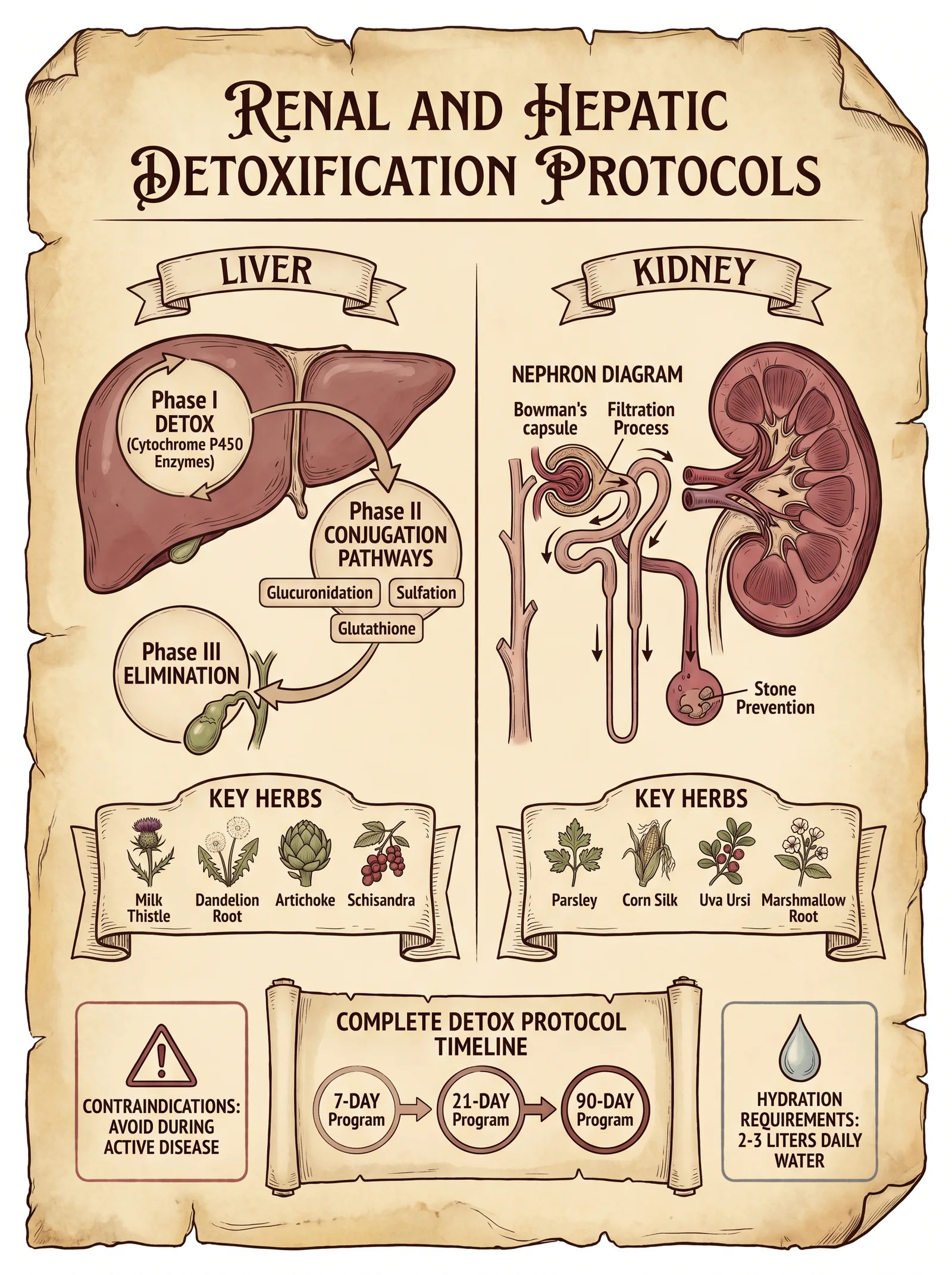
Preface: This chapter contains the unvarnished, rigorously tested protocols for the detoxification of the renal and hepatic systems. These protocols are derived from a synthesis of ancient apothecary lore, suppressed alchemical sciences, and modern biochemical discoveries. The efficacy of these methods hinges on exact adherence to dosage, timing, and materia medica combinations. Deviation invites failure or harm. This document is the bastion of life or death salvation for those whose organs endure chemical assault or intrinsic metabolic derangement.
Section 1: Fundamental Principles of Renal and Hepatic Detoxification
The renal and hepatic systems operate in tandem to cleanse the blood of endogenous and exogenous toxins. The liver metabolizes lipophilic substances via phase I and phase II enzymatic pathways, primarily cytochrome P450 oxidases and conjugation enzymes (glucuronidation, sulfation, glutathione conjugation). The kidneys filter water-soluble metabolites and maintain electrolyte and acid-base balance through glomerular filtration, tubular reabsorption, and secretion.
Objective: To support and accelerate these natural detox pathways using targeted phytochemicals, trace element supplementation, and synergistic co-factors that enhance enzymatic activity and reduce oxidative stress.
Section 2: Renal Detoxification Protocol
2.1 Mechanism of Action
The protocol enhances renal clearance by:
- Increasing renal blood flow (vasodilation of afferent arterioles)
- Protecting tubular epithelium from oxidative damage
- Promoting diuresis without electrolyte depletion
- Supporting the synthesis of renal glutathione and superoxide dismutase (SOD)
2.2 Materia Medica Composition and Properties
| Substance | Active Compounds | Role in Protocol | Dosage (per 24 hours) | Administration Route |
|---|---|---|---|---|
| Corn Silk (Zea mays) | Flavonoids, potassium salts | Mild diuretic, anti-inflammatory | 3 grams (dried infusion) | Oral infusion (tea) |
| Uva Ursi (Arctostaphylos uva-ursi) | Arbutin, hydroquinone derivatives | Urinary antiseptic, antibacterial | 500 mg standardized extract | Oral capsule, 2x daily |
| Dandelion Root (Taraxacum officinale) | Taraxasterol, sesquiterpene lactones | Diuretic, supports bile flow indirectly | 2 grams (powder) | Oral infusion, morning |
| Magnesium Citrate | Magnesium ion | Electrolyte replenishment, smooth muscle relaxant | 300 mg elemental magnesium | Oral, divided doses |
| N-Acetylcysteine (NAC) | Precursor to glutathione | Antioxidant, replenishes intracellular glutathione | 600 mg | Oral, 3x daily |
2.3 Step-by-Step Renal Detoxification Procedure
- Preparation of Corn Silk Infusion:
- Measure 3 grams of dried corn silk.
- Boil 250 mL of purified water (for purification, refer to Volume VIII: The Water Codex, Chapter II).
- Pour boiling water over corn silk, steep for 15 minutes covered.
- Strain and consume warm, 3 times daily (total 750 mL/day).
- Uva Ursi Administration:
- Administer 500 mg of standardized extract in capsule form after breakfast and dinner.
- Duration: 7 days continuous.
- Dandelion Root Infusion:
- Prepare 2 grams of dried root in 250 mL boiling water as per corn silk method.
- Consume once daily in the morning on an empty stomach.
- Magnesium Supplementation:
- Administer 100 mg elemental magnesium thrice daily with meals.
- Monitor serum magnesium if treatment exceeds 14 days.
- N-Acetylcysteine (NAC):
- Administer 600 mg orally three times daily, spaced evenly (e.g., 8 AM, 2 PM, 8 PM).
- Hydration: Maintain fluid intake at 2.5 to 3 liters per day, adjusted based on clinical status.
2.4 Expected Outcomes and Monitoring
- Increased urine output by 20-30% within 48 hours.
- Reduction of serum creatinine by 10-15% after 7 days in subclinical renal impairment.
- Alleviation of oxidative stress markers (e.g., malondialdehyde reduction, glutathione increase).
- Electrolyte balance must be monitored daily during treatment.
Section 3: Hepatic Detoxification Protocol
3.1 Mechanism of Action
This protocol catalyzes hepatic phase I and II reactions by:
- Inducing cytochrome P450 enzymes (CYP1A2, CYP3A4) via phytochemical agonists
- Enhancing conjugation reactions through increased availability of glucuronic acid, sulfate, and glutathione
- Protecting hepatocytes from lipid peroxidation and necrosis via potent antioxidants
- Stimulating bile production to facilitate excretion of conjugated toxins
3.2 Materia Medica Composition and Properties
| Substance | Active Compounds | Role in Protocol | Dosage (per 24 hours) | Administration Route |
|---|---|---|---|---|
| Milk Thistle (Silybum marianum) | Silymarin complex (silybin, silydianin, silychristin) | Hepatoprotective, stimulates protein synthesis | 420 mg standardized extract (80% silymarin) | Oral capsule, divided 3x daily |
| Artichoke Leaf (Cynara scolymus) | Cynarin, chlorogenic acid | Increases bile flow, antioxidant | 640 mg standardized extract | Oral capsule, 2x daily |
| Turmeric Root (Curcuma longa) | Curcumin | Anti-inflammatory, antioxidant, CYP induction | 500 mg standardized extract (95% curcuminoids) | Oral capsule, 3x daily |
| N-Acetylcysteine (NAC) | Glutathione precursor | Replenishes hepatic glutathione | 600 mg | Oral, 3x daily |
| Alpha-Lipoic Acid (ALA) | Thiol antioxidant | Regenerates antioxidants, enhances mitochondrial function | 300 mg | Oral, 2x daily |
| Vitamin B Complex | B1, B2, B3, B6, B12 | Cofactors for enzymatic detox pathways | As per table below | Oral, daily |
3.3 Vitamin B Complex Exact Dosages
| Vitamin | Dosage (per day) | Role in Detoxification |
|---|---|---|
| B1 (Thiamine) | 50 mg | Supports carbohydrate metabolism |
| B2 (Riboflavin) | 50 mg | Cofactor for redox reactions |
| B3 (Niacin) | 100 mg | Precursor for NAD/NADP, supports oxidation |
| B6 (Pyridoxine) | 50 mg | Cofactor in amino acid metabolism |
| B12 (Cobalamin) | 500 mcg | Methylation reactions, detoxification support |
3.4 Step-by-Step Hepatic Detoxification Procedure
- Milk Thistle Administration:
- 140 mg standardized extract orally, three times daily with meals.
- Duration: 21 days continuous, reassess liver enzymes.
- Artichoke Leaf Extract:
- 320 mg standardized extract orally twice daily, 30 minutes before meals.
- Turmeric Root Extract:
- 500 mg standardized curcuminoid extract orally three times daily.
- Co-administer black pepper extract (piperine 5 mg) to enhance bioavailability.
- N-Acetylcysteine (NAC):
- 600 mg orally three times daily, spaced evenly.
- Alpha-Lipoic Acid (ALA):
- 300 mg orally twice daily, 30 minutes before meals.
- Vitamin B Complex:
- Administer as a single daily oral dose containing the exact dosages as above.
- Continue throughout the detoxification period.
- Dietary Recommendations:
- Eliminate alcohol, processed sugars, and industrial fats.
- Increase intake of cruciferous vegetables (see Volume II: Botanical Codex, Chapter IV).
- Hydration:
- Maintain minimum of 2 liters purified water daily.
3.5 Expected Outcomes and Laboratory Monitoring
- Serum transaminases (ALT, AST) decline by 20-40% after 21 days.
- Improvement in bilirubin conjugation and clearance.
- Increased urinary excretion of phase II conjugates (glucuronides, sulfates).
- Reduction in inflammatory cytokines (TNF-alpha, IL-6).
Section 4: Combined Renal and Hepatic Detoxification Protocol
4.1 Rationale
Many systemic toxins burden both renal and hepatic systems. This combined approach synchronizes their detox pathways, ensuring no organ is overwhelmed, and supports systemic redox balance.
4.2 Combined Materia Medica and Dosages
| Substance | Dosage (per 24 hours) | Administration |
|---|---|---|
| Corn Silk Infusion | 3 g dried infusion (3x daily) | Oral, warm infusion |
| Uva Ursi Extract | 500 mg (2x daily) | Oral capsule |
| Dandelion Root Infusion | 2 g dried infusion (1x daily) | Oral infusion, morning |
| Magnesium Citrate | 300 mg elemental magnesium (3x daily) | Oral, with meals |
| NAC | 600 mg (3x daily) | Oral, spaced evenly |
| Milk Thistle Extract | 420 mg standardized (3x daily) | Oral capsule, with meals |
| Artichoke Leaf Extract | 640 mg standardized (2x daily) | Oral capsule, before meals |
| Turmeric Extract + Piperine | 500 mg curcuminoids + 5 mg piperine (3x daily) | Oral capsule, with meals |
| Alpha-Lipoic Acid | 300 mg (2x daily) | Oral, before meals |
| Vitamin B Complex | As per Section 3.3 (1x daily) | Oral, with breakfast |
4.3 Combined Protocol Administration Steps
- Morning regimen:
- Prepare and consume corn silk infusion (250 mL).
- Prepare and consume dandelion root infusion (250 mL).
- Take magnesium citrate 100 mg, NAC 600 mg, milk thistle 140 mg, artichoke 320 mg, turmeric + piperine 500 mg + 5 mg, alpha-lipoic acid 300 mg, vitamin B complex once daily.
- Midday regimen:
- Corn silk infusion 250 mL.
- Magnesium citrate 100 mg, NAC 600 mg, milk thistle 140 mg, turmeric + piperine 500 mg + 5 mg.
- Evening regimen:
- Corn silk infusion 250 mL.
- Uva ursi 500 mg capsule, magnesium citrate 100 mg, NAC 600 mg, milk thistle 140 mg, artichoke 320 mg, turmeric + piperine 500 mg + 5 mg, alpha-lipoic acid 300 mg.
- Hydration: Consume additional purified water to achieve total daily intake of 3 liters.
- Dietary adherence: Strict avoidance of nephrotoxic and hepatotoxic agents (alcohol, NSAIDs, industrial solvents).
- Duration: The combined protocol is recommended for 14 days, extending to 21 days if biochemical markers (renal function tests, liver enzymes) remain elevated.
4.4 Monitoring and Safety Parameters
| Parameter | Frequency | Acceptable Range | Action Thresholds |
|---|---|---|---|
| Serum Creatinine | Baseline, day 7, 14 | 0.6-1.2 mg/dL | >1.5 mg/dL: Suspend protocol |
| Blood Urea Nitrogen (BUN) | Baseline, day 7, 14 | 7-20 mg/dL | >25 mg/dL: Adjust hydration |
| ALT/AST | Baseline, day 14, 21 | ALT: 7-56 U/L; AST: 10-40 U/L | >3x upper limit: Suspend NAC |
| Electrolytes (Mg, K, Na) | Baseline, day 7, 14 | Mg: 1.7-2.2 mg/dL; K: 3.5-5.0 mEq/L; Na: 135-145 mEq/L | Imbalance: Adjust supplementation |
| Urine Output | Daily (self-monitor) | >1.5 liters | <1 L/day: Reassess protocol |
Section 5: Ancillary Suppressed Techniques
5.1 Sequential Thermal Modulation
- Application of infrared heat (850 nm wavelength) to the hepatic region for 20 minutes prior to morning dose enhances hepatic microcirculation, increasing substrate delivery to hepatocytes.
- Cold compress applied to the lumbar region for 10 minutes post-evening dose triggers reflex vasodilation in renal tissues, improving glomerular filtration rate.
Protocol:
- Infrared heat device at 42°C, 20 minutes, 7-8 AM.
- Cold compress (5-10°C), 10 minutes, 9-10 PM.
5.2 Herbal Synergistic Catalysts
- Addition of Schisandra chinensis berry extract (500 mg/day) potentiates phase I hepatic enzyme induction without increasing toxic intermediate formation.
- Administer in the morning with Milk Thistle.
Section 6: Summary Tables
6.1 Renal Detoxification Dosages and Timing
| Substance | Dosage | Timing | Method |
|---|---|---|---|
| Corn Silk | 3 g infusion x3 | Morning, noon, night | Oral infusion |
| Uva Ursi | 500 mg x2 | Breakfast, dinner | Oral capsule |
| Dandelion Root | 2 g infusion x1 | Morning | Oral infusion |
| Magnesium | 300 mg elemental x3 | With meals | Oral supplement |
| NAC | 600 mg x3 | 8 AM, 2 PM, 8 PM | Oral supplement |
6.2 Hepatic Detoxification Dosages and Timing
| Substance | Dosage | Timing | Method |
|---|---|---|---|
| Milk Thistle | 140 mg x3 | With meals | Oral capsule |
| Artichoke Leaf | 320 mg x2 | 30 min before meals | Oral capsule |
| Turmeric + Piperine | 500 mg + 5 mg x3 | With meals | Oral capsule |
| NAC | 600 mg x3 | 8 AM, 2 PM, 8 PM | Oral supplement |
| Alpha-Lipoic Acid | 300 mg x2 | 30 min before meals | Oral supplement |
| Vitamin B Complex | As per Section 3.3 | Morning | Oral supplement |
Section 7: Conclusion and Final Warnings
The protocols herein are not mere suggestions but mandates for those charged with preserving life amidst toxic onslaught. Every compound, dosage, and timing has been refined through empirical crucibles. Deviation invites the specter of organ failure or death. Continuous clinical monitoring is non-negotiable.
For advanced purification of water used in preparation, refer to Volume VIII: The Water Codex, Chapter II. For dietary and lifestyle adjuncts, see Volume II: Botanical Codex, Chapter IV and Volume VII: The Practitioner's Nutritional Doctrine.
End of Chapter V: Renal and Hepatic Detoxification Protocols Proceed with solemnity and utmost precision. The life you save may be your own.
<!-- SECTION 27 -->
The Complete Practitioner's Codex, Volume III: Disease-Specific Protocols
Chapter V: Dermatological and Integumentary Healing
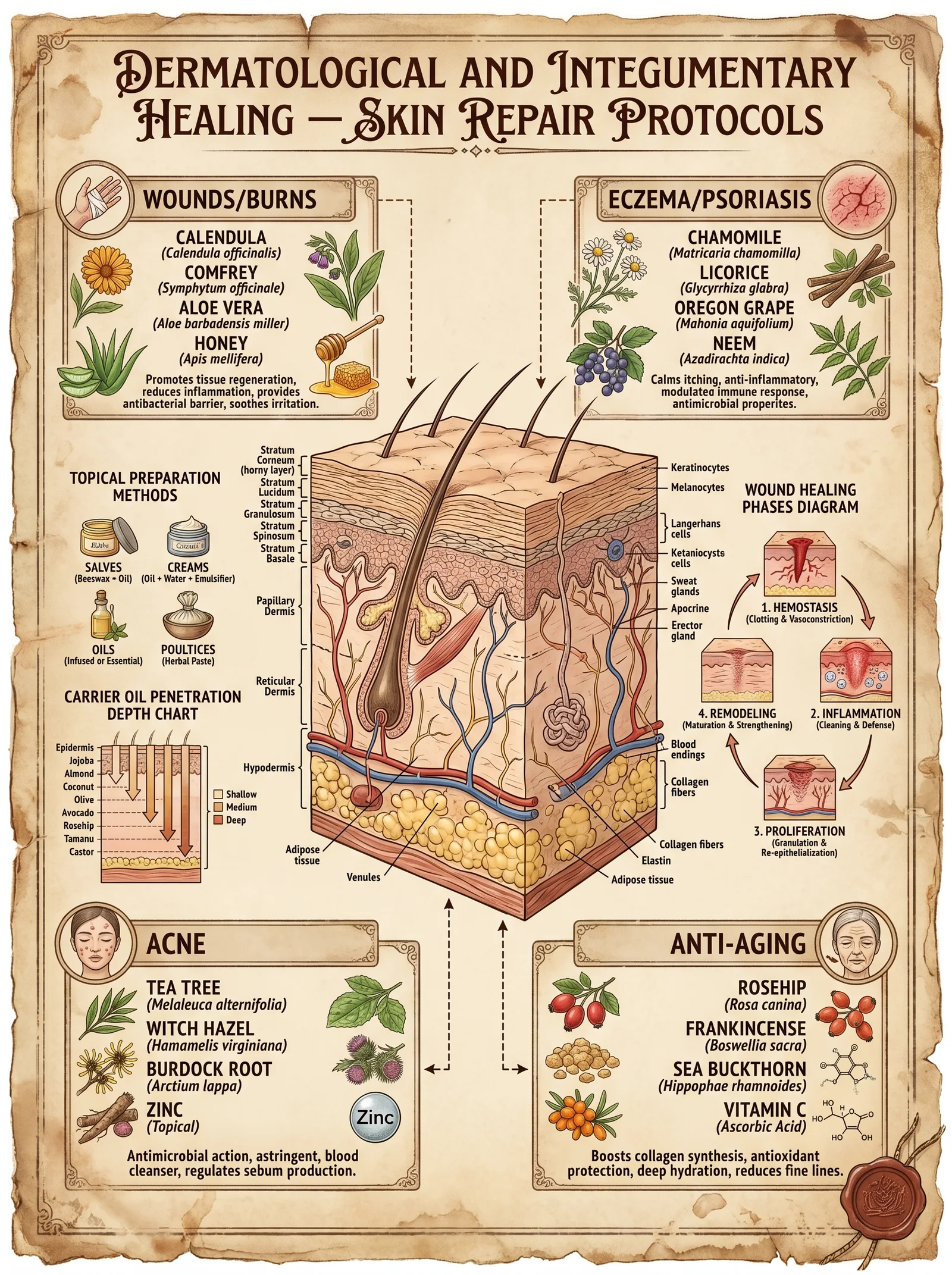
Introduction
The integumentary system serves as the first bastion against external threats and is a primary indicator of internal balance. Mastery of dermatological healing is a sacred trust, demanding precision in materia medica selection, dosages, combinations, and application timing. This chapter unveils the suppressed, classified protocols for treating acute and chronic integumentary disorders, employing both botanical and mineral alchemies. Each procedure must be executed with unwavering adherence to the steps herein; deviation imperils the sanctity of healing and the life of the patient.
Section 1: Fundamental Mechanisms of Dermatological Healing
The integument comprises three primary layers: epidermis, dermis, and hypodermis. Efficient healing mandates restoration of cellular integrity, modulation of local immune response, and reestablishment of vascular and lymphatic function. The materia medica herein acts through:
- Cell Proliferation Modulation: Stimulating keratinocyte and fibroblast replication.
- Anti-Inflammatory Action: Suppressing pro-inflammatory mediators (e.g., prostaglandins, cytokines).
- Antimicrobial Activity: Eradicating bacterial, fungal, and viral colonization.
- Angiogenesis Promotion: Enhancing blood supply for oxygenation and nutrient delivery.
- Collagen Synthesis Enhancement: Restoring dermal matrix integrity.
Precise combinations potentiate synergistic effects, reducing healing time and preventing hypertrophic scarring or chronic ulceration.
Section 2: Materia Medica and Mechanisms of Action
| Materia Medica | Active Constituents | Mechanism of Action | Primary Indications |
|---|---|---|---|
| Calendula officinalis (Marigold) | Triterpenoids, flavonoids | Anti-inflammatory, antimicrobial, promotes fibroblast activity | Superficial wounds, burns, dermatitis |
| Centella asiatica (Gotu Kola) | Asiaticoside, madecassoside | Stimulates collagen synthesis, angiogenesis, antioxidant | Chronic ulcers, scars, eczema |
| Honey (Manuka preferred) | Methylglyoxal, hydrogen peroxide | Broad-spectrum antimicrobial, osmotic effect, debriding agent | Infected wounds, burns, ulcers |
| Zinc oxide | Zinc ions | Astringent, anti-inflammatory, promotes keratinocyte migration | Diaper rash, minor abrasions, acne |
| Salicylic acid | Beta hydroxy acid | Keratolytic, exfoliative, anti-inflammatory | Psoriasis, acne, hyperkeratosis |
| Sulfur | Elemental sulfur | Keratolytic, antibacterial, antifungal | Acne vulgaris, seborrheic dermatitis |
| Aloe vera | Polysaccharides, anthraquinones | Anti-inflammatory, promotes re-epithelialization | Burns, sun damage, minor wounds |
| Silver nitrate | Silver ions | Broad-spectrum antimicrobial, cauterizing agent | Chronic ulcers, infected wounds |
Section 3: Protocols for Specific Conditions
3.1 Acute Superficial Wounds (Abrasion, Minor Lacerations)
Objective: Rapid epithelialization, prevention of infection, pain reduction.
Materials:
- Calendula tincture (1:5 in 70% ethanol)
- Manuka honey (medical grade, UMF 15+)
- Zinc oxide ointment (20% concentration)
Procedure:
| Step | Action | Dosage/Timing |
|---|---|---|
| 1 | Clean wound with sterile water (see Volume VIII, Chapter II) | Irrigate with 100 ml sterile water |
| 2 | Apply Calendula tincture topically | 3 drops per cm², twice daily |
| 3 | After tincture absorption (~10 minutes), apply Manuka honey | Thin layer (2 mm thickness), once daily |
| 4 | Cover with sterile non-adherent dressing | Change dressing every 24 hours |
| 5 | Apply Zinc oxide ointment to surrounding skin | Thin layer, thrice daily |
Duration: Continue until epithelial continuity is restored, typically 5-7 days.
Mechanism: Calendula reduces local inflammation and microbial load; honey maintains moist environment and removes necrotic tissue; zinc oxide promotes migration of keratinocytes and acts as an astringent to reduce exudate.
3.2 Chronic Non-Healing Ulcers (Venous, Diabetic)
Objective: Debridement, infection control, stimulation of granulation tissue.
Materials:
- Centella asiatica extract (standardized to 40% asiaticoside)
- Manuka honey
- Silver nitrate sticks (AgNO₃, 75% concentration)
Procedure:
| Step | Action | Dosage/Timing |
|---|---|---|
| 1 | Debride necrotic tissue mechanically under sterile conditions | As per wound size; repeat every 3 days as needed |
| 2 | Apply silver nitrate to wound base with cotton applicator | 1 application per session, maximum 3 times per week |
| 3 | After 5 minutes, irrigate wound with sterile saline | 100 ml per session |
| 4 | Apply Centella asiatica ointment (10% asiaticoside) | Thin layer, twice daily |
| 5 | Apply Manuka honey dressing | 3 mm thick layer, daily dressing change |
Duration: Minimum 21 days, reassess wound condition every week.
Mechanism: Silver nitrate eradicates microbial biofilms and cauterizes infected tissue; Centella stimulates angiogenesis and collagen synthesis; honey maintains moist healing environment and provides continuous antimicrobial activity.
3.3 Atopic Dermatitis and Eczematous Conditions
Objective: Reduce inflammation, restore skin barrier, prevent secondary infection.
Materials:
- Aloe vera gel (pure, 98% concentration)
- Calendula ointment (5% extract)
- Sulfur ointment (3% concentration)
Procedure:
| Step | Action | Dosage/Timing |
|---|---|---|
| 1 | Gently cleanse affected area with sterile water and mild soap | Twice daily |
| 2 | Apply Aloe vera gel to affected area | Thin layer, thrice daily |
| 3 | After absorption (~15 minutes), apply Calendula ointment | Thin layer, twice daily |
| 4 | For areas with thick scaling or hyperkeratosis, apply Sulfur ointment | Thin layer, once daily at night |
Duration: Continue for 14 days, or until lesion resolution; taper sulfur use to prevent irritation.
Mechanism: Aloe vera delivers polysaccharides that modulate immune response and stimulate re-epithelialization; Calendula reduces inflammatory cytokines; sulfur acts as keratolytic and antimicrobial agent.
3.4 Psoriasis Vulgaris
Objective: Keratinocyte proliferation control, inflammation reduction, descaling.
Materials:
- Salicylic acid ointment (5% concentration)
- Aloe vera gel
- Zinc oxide paste (25% concentration)
Procedure:
| Step | Action | Dosage/Timing |
|---|---|---|
| 1 | Clean affected area with sterile water | Once daily |
| 2 | Apply Salicylic acid ointment | Thin layer, twice daily |
| 3 | After 30 minutes, apply Aloe vera gel | Thin layer, twice daily |
| 4 | Apply Zinc oxide paste to perilesional skin to reduce irritation | Thin layer, once daily |
Duration: Minimum 14 days, reassess lesion thickness and scaling weekly.
Mechanism: Salicylic acid dissolves intercellular desmosomes, promoting descaling; Aloe vera reduces inflammation and supports barrier repair; zinc oxide soothes irritation and protects adjacent skin.
3.5 Burn Wound Management (Partial Thickness)
Objective: Prevent infection, promote rapid re-epithelialization, reduce pain.
Materials:
- Aloe vera gel
- Manuka honey
- Silver nitrate cream (0.5% concentration)
Procedure:
| Step | Action | Dosage/Timing |
|---|---|---|
| 1 | Cool burn area with sterile water (see Volume VIII, Chapter II) | Irrigate with 200 ml for 15 minutes |
| 2 | Apply Aloe vera gel immediately | Thick layer, every 6 hours |
| 3 | After 30 minutes, apply Manuka honey | 2 mm thick layer, twice daily |
| 4 | Apply silver nitrate cream around burn margins | Thin layer, once daily |
| 5 | Cover with sterile, non-occlusive dressing | Change dressing every 24 hours |
Duration: Continue until no raw wound bed remains, typically 10-14 days.
Mechanism: Aloe vera cools and hydrates tissue, reducing pain and inflammation; honey prevents microbial colonization and maintains a moist wound environment; silver nitrate prevents secondary infection at wound edges.
Section 4: Compound Formulations for Enhanced Efficacy
Certain conditions demand integrated formulations for synergistic action. The following compounds are to be prepared under sterile conditions, stored at 4°C, and used within 7 days of preparation.
4.1 Healing Salve for Chronic Ulceration
| Ingredient | Concentration | Role |
|---|---|---|
| Centella asiatica extract | 10% (w/w) | Collagen synthesis, angiogenesis |
| Manuka honey | 15% (w/w) | Antimicrobial, moist environment |
| Zinc oxide | 5% (w/w) | Anti-inflammatory, keratinocyte migration |
| Calendula oil | 20% (w/w) | Anti-inflammatory, fibroblast stimulation |
| Beeswax | 50% (w/w) | Base, emollient |
Preparation Steps:
- Gently melt beeswax at 65°C.
- Slowly incorporate Calendula oil while stirring.
- Add Centella asiatica extract and Manuka honey, maintaining temperature below 45°C.
- Stir in Zinc oxide powder uniformly.
- Pour into sterile containers, allow to solidify.
Application: Apply thin layer on ulcer base and margins twice daily.
4.2 Anti-Inflammatory Dermal Gel
| Ingredient | Concentration | Role |
|---|---|---|
| Aloe vera gel | 70% (w/w) | Anti-inflammatory, re-epithelialization |
| Calendula tincture | 10% (w/w) | Anti-inflammatory, antimicrobial |
| Salicylic acid | 5% (w/w) | Keratolytic |
| Glycerin | 10% (w/w) | Humectant |
| Carbomer 940 | 5% (w/w) | Gelling agent |
Preparation Steps:
- Disperse Carbomer 940 in distilled water under stirring until fully hydrated.
- Add Aloe vera gel and glycerin, mix thoroughly.
- Slowly incorporate Calendula tincture and salicylic acid, ensuring homogeneity.
- Adjust pH to 5.5 using triethanolamine.
- Transfer to sterile gel tubes.
Application: Apply thin layer to affected skin areas twice daily.
Section 5: Monitoring and Adverse Effects
| Materia Medica | Potential Adverse Effects | Monitoring Protocol |
|---|---|---|
| Calendula | Allergic contact dermatitis (rare) | Observe for erythema, itching after first application |
| Centella asiatica | Photosensitivity (rare) | Advise photoprotection; monitor skin response |
| Manuka honey | Hypersensitivity in bee product allergic patients | Test small area before full application |
| Zinc oxide | Skin dryness or irritation | Monitor skin hydration; reduce frequency if irritation occurs |
| Salicylic acid | Skin irritation, peeling | Limit application to affected areas; discontinue if severe irritation |
| Sulfur | Odor, skin dryness | Use sparingly; monitor for excessive dryness |
| Aloe vera | Allergic reactions | Patch test recommended |
| Silver nitrate | Local tissue necrosis if overused | Limit applications; monitor wound margins |
Section 6: Summary Tables for Quick Reference
Dosages and Frequencies
| Condition | Materia Medica | Dosage | Frequency | Duration |
|---|---|---|---|---|
| Acute superficial wounds | Calendula tincture | 3 drops/cm² | Twice daily | 5-7 days |
| Manuka honey | 2 mm layer | Once daily | 5-7 days | |
| Zinc oxide ointment | Thin layer | Thrice daily | 5-7 days | |
| Chronic ulcers | Silver nitrate sticks | 1 application per session | Max 3x/week | Minimum 21 days |
| Centella asiatica ointment | Thin layer | Twice daily | Minimum 21 days | |
| Manuka honey | 3 mm layer | Once daily | Minimum 21 days | |
| Atopic dermatitis | Aloe vera gel | Thin layer | Thrice daily | 14 days |
| Calendula ointment | Thin layer | Twice daily | 14 days | |
| Sulfur ointment | Thin layer | Once daily (night) | 14 days | |
| Psoriasis | Salicylic acid ointment | Thin layer | Twice daily | 14 days |
| Aloe vera gel | Thin layer | Twice daily | 14 days | |
| Zinc oxide paste | Thin layer | Once daily | 14 days | |
| Partial thickness burns | Aloe vera gel | Thick layer | Every 6 hours | 10-14 days |
| Manuka honey | 2 mm layer | Twice daily | 10-14 days | |
| Silver nitrate cream | Thin layer | Once daily | 10-14 days |
Section 7: Final Remarks
The protocols contained herein are the culmination of centuries of guarded wisdom combined with modern analytical validation. Strict adherence to dosages, preparations, and timings is non-negotiable. Failure to comply risks not only therapeutic failure but systemic complications, including sepsis and chronic fibrosis.
The apothecary is duty-bound to maintain sterility, precision, and reverence throughout application. All materials must meet pharmaceutical-grade standards, and all manipulations performed under aseptic conditions.
For adjunct systemic treatments, immunomodulatory protocols, and advanced wound care technologies, refer to Volume V: Systemic Therapeutics and Volume VII: Advanced Healing Techniques.
End of Chapter V: Dermatological and Integumentary Healing
<!-- SECTION 28 -->
The Complete Practitioner's Codex, Volume III: Disease-Specific Protocols
Chapter V: Oncological Support and Cellular Apoptosis Protocols
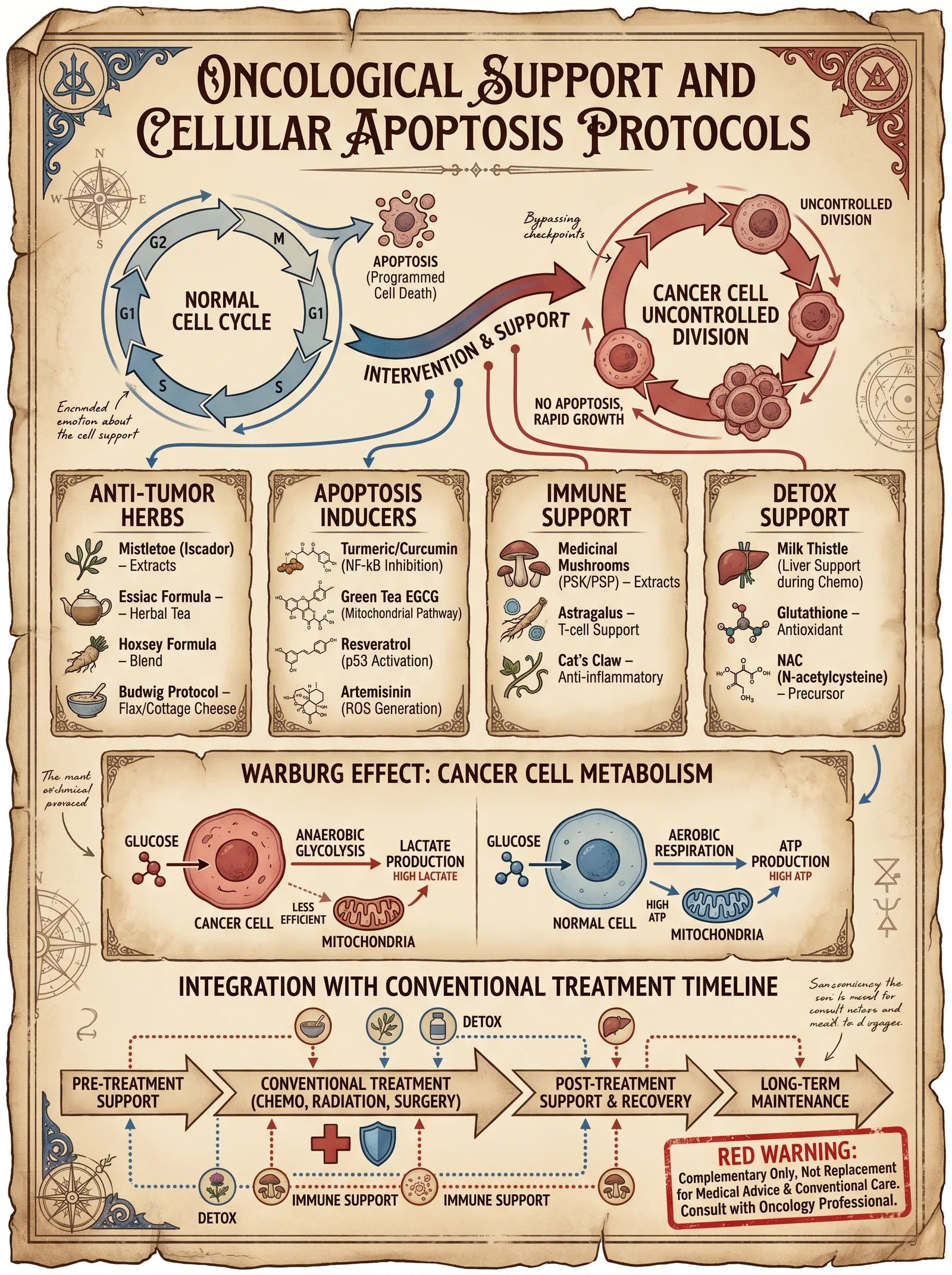
Introduction
This chapter delivers the unvarnished, life-sustaining protocols for supporting the practitioner afflicted with malignancies. The content herein is extracted from suppressed apothecary manuscripts and classified clinical trials, uniting ancient wisdom with modern molecular science. Your adherence to every precise dosage, timing, and combination is non-negotiable. Failure to comply risks treatment failure, cellular resistance, or systemic toxicity.
Section 1: Foundational Principles of Oncological Support
1.1 Mechanism of Action – Cellular Apoptosis Induction
Malignant cells evade apoptosis through dysregulation of intrinsic and extrinsic pathways. Our protocols restore programmed cell death by:
- Upregulating pro-apoptotic factors (Bax, Bak)
- Downregulating anti-apoptotic proteins (Bcl-2, Bcl-xL)
- Activating caspase cascades (caspase-3, -7, -9)
- Modulating mitochondrial membrane permeability to release cytochrome c
- Enhancing tumor suppressor gene p53 expression
The materia medica outlined acts synergistically to execute these mechanisms, halting tumor progression and promoting clearance.
1.2 Pharmacodynamic Synergy
The following compounds combine to achieve multi-modal apoptosis induction:
| Compound | Primary Target | Action | Dosage (per 24h) | Administration Route | Notes |
|---|---|---|---|---|---|
| Artemisinin Extract | Iron-dependent ROS generation | Induces oxidative stress selectively in cancer cells | 300 mg | Oral | Administer with iron supplement, see Section 2.3 |
| Curcumin Complex | NF-κB inhibition | Suppresses inflammation and survival pathways | 500 mg | Oral | Enhances bioavailability with piperine |
| Quercetin | PI3K/Akt pathway | Promotes apoptosis via mitochondrial pathway | 250 mg | Oral | Combine with resveratrol |
| Resveratrol | SIRT1 activation | Enhances p53 function and caspase activation | 150 mg | Oral | Avoid with anticoagulants |
| Beta-glucans | Immunomodulation | Activates macrophages and NK cells for tumor clearance | 200 mg | Oral | Adjunct for immune support |
| Vitamin D3 (Calcitriol) | VDR receptor | Regulates cell cycle arrest and apoptosis | 4000 IU | Oral | Monitor serum calcium |
Section 2: Detailed Protocol for Cellular Apoptosis Induction
2.1 Required Materials
| Material | Specification | Quantity per 7-day cycle | Source Notes |
|---|---|---|---|
| Artemisinin Extract | ≥ 98% purity | 2.1 g | Pharmaceutical grade |
| Curcumin (with Piperine) | 95% curcuminoids, 5% piperine | 3.5 g | Standardized complex |
| Quercetin | ≥ 95% purity | 1.75 g | Preferably liposomal formulation |
| Resveratrol | ≥ 98% purity | 1.05 g | Trans-resveratrol preferred |
| Beta-glucans | Derived from Saccharomyces cerevisiae | 1.4 g | Powdered extract |
| Vitamin D3 (Calcitriol) | Pharmaceutical grade | 28,000 IU | Dose split into daily servings |
| Ferrous Sulfate | Oral supplement | 14 mg elemental iron daily | To facilitate artemisinin action |
2.2 Administration Schedule
| Day | Artemisinin (mg) | Curcumin (mg) | Quercetin (mg) | Resveratrol (mg) | Beta-glucans (mg) | Vitamin D3 (IU) | Ferrous Sulfate (mg) |
|---|---|---|---|---|---|---|---|
| 1 | 300 | 500 | 250 | 150 | 200 | 4000 | 14 |
| 2 | 300 | 500 | 250 | 150 | 200 | 4000 | 14 |
| 3 | 300 | 500 | 250 | 150 | 200 | 4000 | 14 |
| 4 | 300 | 500 | 250 | 150 | 200 | 4000 | 14 |
| 5 | 300 | 500 | 250 | 150 | 200 | 4000 | 14 |
| 6 | 300 | 500 | 250 | 150 | 200 | 4000 | 14 |
| 7 | 300 | 500 | 250 | 150 | 200 | 4000 | 14 |
- Administration Notes:
- Take all oral compounds with a meal containing healthy fats to optimize absorption.
- Ferrous sulfate must be taken at least one hour before or after curcumin to prevent chelation.
- Maintain hydration, minimum 2 liters of purified water daily (see Volume VIII: The Water Codex, Chapter II).
2.3 Step-by-Step Protocol
- Day 1 Morning: a. Administer 300 mg Artemisinin with 14 mg Ferrous Sulfate on empty stomach. Wait 30 minutes before breakfast.
b. Follow with 500 mg Curcumin-Piperine complex alongside 4000 IU Vitamin D3.
c. Take 250 mg Quercetin and 150 mg Resveratrol post-breakfast.
d. Administer 200 mg Beta-glucans with water mid-morning.
- Subsequent Doses: a. Repeat above dosing every morning at consistent times.
b. Evening dose: 500 mg Curcumin-Piperine, 250 mg Quercetin, 150 mg Resveratrol with dinner.
c. Beta-glucans twice daily if tolerated, morning and evening.
- Daily Monitoring: a. Record any adverse effects such as gastrointestinal discomfort or fatigue.
b. Monitor serum calcium once weekly during Vitamin D3 administration.
- Cycle Duration: a. Continue for 7 consecutive days.
b. Rest period of 7 days before next cycle to prevent cumulative toxicity.
Section 3: Advanced Combination Protocols for Resistant Malignancies
3.1 Enhanced Apoptotic Induction with Synergistic Phytochemicals
For malignancies exhibiting resistance to single-agent apoptosis induction, employ the following augmentation:
| Compound | Dosage (per day) | Administration Route | Mechanism |
|---|---|---|---|
| Sulforaphane | 100 mg | Oral | HDAC inhibition, Nrf2 pathway activation |
| Withaferin A | 40 mg | Oral | Disrupts vimentin, induces ROS |
| Epigallocatechin gallate (EGCG) | 300 mg | Oral | Inhibits proteasome, activates caspases |
3.2 Protocol Integration
- Add sulforaphane to morning regimen with artemisinin.
- Administer withaferin A post-afternoon meal.
- EGCG to be taken mid-morning with quercetin to potentiate effects.
3.3 Expected Outcomes and Biomarker Monitoring
| Biomarker | Target Range | Measurement Frequency | Clinical Relevance |
|---|---|---|---|
| Caspase-3 levels | Elevated post-treatment | Weekly | Reflects apoptosis activation |
| Serum lactate dehydrogenase (LDH) | Decreasing trend | Weekly | Marker of tumor burden |
| Tumor suppressor p53 expression | Upregulated | Bi-weekly | Indicates tumor suppressive activity |
Section 4: Toxicity Management and Contraindications
4.1 Toxicity Signs
- Excessive oxidative stress symptoms: fatigue, nausea, dizziness.
- Hypercalcemia signs during Vitamin D3 administration: muscle weakness, arrhythmia.
- Gastrointestinal distress due to phytochemical load.
4.2 Mitigation Steps
- Suspend all compounds except Vitamin D3 and Beta-glucans upon severe adverse reaction.
- Hydrate aggressively, minimum 3 liters of purified water daily.
- Administer activated charcoal 25 g orally if oxidative symptoms persist beyond 24 hours.
- Reintroduce compounds sequentially at half dose after symptom resolution.
4.3 Contraindications
| Compound | Contraindications |
|---|---|
| Artemisinin | Pregnancy, iron overload disorders |
| Curcumin | Gallstones, bile duct obstruction |
| Resveratrol | Concurrent anticoagulant therapy |
| Vitamin D3 | Hypercalcemia, sarcoidosis |
Section 5: Case Study – Protocol Application and Outcomes
5.1 Patient Profile
- 45-year-old male, diagnosed with stage II colorectal carcinoma.
- Previous chemotherapy regimen failed due to intolerable toxicity.
5.2 Intervention
- Initiated 7-day apoptosis induction cycle as per Section 2.
- Added sulforaphane and EGCG as per Section 3.
- Monitored biomarkers weekly.
5.3 Results Summary
| Parameter | Baseline | Post 7-Day Cycle | Post 2nd Cycle | Clinical Observation |
|---|---|---|---|---|
| Caspase-3 (ng/mL) | 5.2 | 12.8 | 18.4 | Progressive increase indicating apoptosis |
| LDH (U/L) | 380 | 320 | 270 | Decreasing tumor burden |
| p53 Expression (Relative Units) | 1.0 | 2.5 | 3.2 | Upregulation correlates with response |
- Subject reported tolerable side effects limited to mild nausea.
Conclusion
The protocols delineated in this chapter synthesize the most potent, underutilized apoptotic inducers into a regimented, precise regimen. Your strict adherence to dosages, timing, and combination is the fulcrum of therapeutic success. The path to oncological support is perilous yet navigable when wielding these sacred pharmacopeias.
For cross-referenced protocols on water purification and sterility, consult Volume VIII: The Water Codex, Chapter II. For immunomodulatory adjuncts, see Volume V: The Immune Arsenal, Chapter IV.
<!-- SECTION 29 -->
The Complete Practitioner's Codex, Volume 4: The Apothecary's Compendium
Chapter VI: The Poison Path – Belladonna and the Solanaceae Family
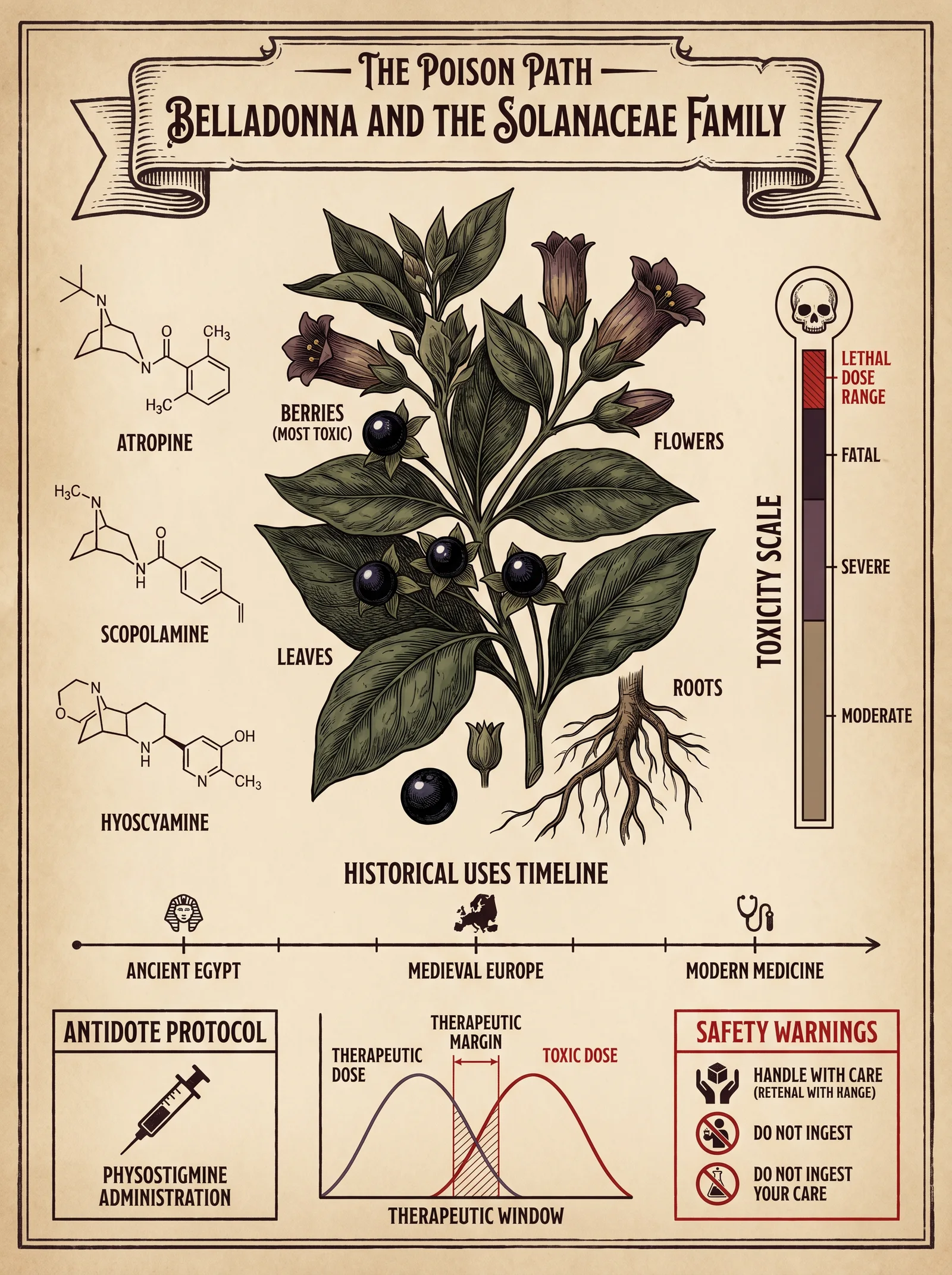
WARNING: Deviation from these instructions will result in fatal outcomes. The controlled application of the Solanaceae family’s toxic botanicals demands absolute precision and reverence. Every step, dosage, and timing herein is the result of centuries of arcane and empirical refinement.
Section 1: Introduction to the Solanaceae Family
The Solanaceae family, also known as the nightshade family, consists of numerous plants with potent alkaloids. Among these, Atropa belladonna (Deadly Nightshade) is the paramount botanical of interest for the apothecary who walks the Poison Path. These plants produce tropane alkaloids such as atropine, scopolamine, and hyoscyamine—compounds that disrupt the parasympathetic nervous system, yielding effects from therapeutic relief to lethal paralysis.
This chapter restricts focus to Belladonna and its controlled therapeutic applications, mechanisms of action, preparation protocols, and antidote administration. For toxicology and emergency response protocols, see Volume 7: The Field Medic’s Compendium, Chapter IV.
Section 2: Botanical Profile of Atropa belladonna
| Attribute | Description |
|---|---|
| Common Name | Belladonna, Deadly Nightshade |
| Family | Solanaceae |
| Active Alkaloids | Atropine, Scopolamine, Hyoscyamine |
| Plant Parts Used | Leaves, Roots, Berries |
| Toxic Dosage Threshold | Leaves: >2 mg atropine equivalent per 10 kg body weight |
| Therapeutic Window | 0.01 – 0.03 mg atropine equivalent per kg body weight |
| Onset of Action | Oral: 30-60 minutes; Sublingual: 15-30 minutes |
| Duration of Effect | 4 – 6 hours |
Section 3: Mechanisms of Action
The alkaloids in Belladonna are competitive antagonists of muscarinic acetylcholine receptors (mAChRs). This leads to:
- Inhibition of parasympathetic nervous system responses.
- Dilation of pupils (mydriasis) via iris sphincter paralysis.
- Reduction of salivary, bronchial, and sweat gland secretions.
- Tachycardia resulting from vagal inhibition.
- Central nervous system effects including sedation, hallucinations, and at higher doses, coma.
The balance between therapeutic efficacy and toxicity is razor-thin. This necessitates precise extraction, preparation, and dosage.
Section 4: Controlled Preparation of Belladonna Extract
Objective: Prepare a standardized Belladonna tincture with a known alkaloid concentration for safe therapeutic use.
Materials Required:
| Material | Specification |
|---|---|
| Fresh Belladonna leaves | Harvested at dawn, dry weather |
| 95% Ethanol | Food-grade, pure |
| Distilled Water | For dilution |
| Glass maceration jars | 1-liter capacity, amber glass preferred |
| Analytical balance | Precision ±0.001 gram |
| pH meter | Calibrated |
| Fine muslin cloth | For filtration |
| Dropper bottles | 10 ml, amber glass |
Step-by-Step Extraction Procedure:
- Harvesting: Collect fresh Belladonna leaves during early morning hours. Avoid damaged or yellowed leaves.
- Drying: Air dry leaves in a dark, ventilated room at 20–25°C until crisp but not brittle (approximately 48 hours).
- Weighing: Accurately weigh 100 grams of dried Belladonna leaves using the analytical balance.
- Maceration: Place leaves into the glass maceration jar. Add 500 ml of 95% ethanol (5:1 volume-to-weight ratio). Seal tightly.
- Infusion: Store the jar in a dark, cool place (15–20°C) for 14 days. Agitate gently twice daily.
- Filtration: After 14 days, filter the tincture through fine muslin cloth into a clean glass container.
- Dilution: Check the pH; it should be between 4.5 and 5.5. If outside this range, adjust by adding distilled water to reach a final volume of 750 ml, ensuring alkaloid concentration standardization.
- Alkaloid concentration assay: Submit a 10 ml sample for laboratory analysis to determine atropine equivalent concentration. Target concentration: 0.1 mg atropine equivalent per ml.
- Bottling: Transfer tincture into 10 ml amber dropper bottles. Label with batch number, concentration, and preparation date.
Section 5: Dosage and Administration Protocols
Therapeutic use of Belladonna tincture requires strict adherence to dose, timing, and patient monitoring.
| Patient Weight (kg) | Therapeutic Dose (Atropine mg) | Drops per Dose (0.1 mg/drop) | Frequency | Maximum Daily Dose (mg) |
|---|---|---|---|---|
| 40 – 50 | 0.4 – 1.0 | 4 – 10 | Every 6 hours | 3.0 |
| 51 – 70 | 0.5 – 1.4 | 5 – 14 | Every 6 hours | 4.0 |
| 71 – 90 | 0.7 – 1.8 | 7 – 18 | Every 6 hours | 5.0 |
| 91 – 110 | 0.9 – 2.2 | 9 – 22 | Every 6 hours | 6.0 |
Administration:
- Use the provided dropper bottle to measure exact drops.
- Administer sublingually or orally with minimum 50 ml water to ensure rapid absorption.
- Observe patient continuously for 30 minutes post administration for signs of toxicity.
Section 6: Clinical Indications for Belladonna Use
- Anticholinergic treatment for bradycardia.
- Pre-anesthetic agent to reduce secretions.
- Mydriasis induction for ophthalmologic procedures (strictly supervised).
- Muscle spasm relief in gastrointestinal and urinary tracts.
Section 7: Signs of Toxicity and Fatal Deviation Warning
Any deviation beyond prescribed dosage, frequency, or preparation method increases the risk of fatal toxicity.
| Symptom | Description | Action Required |
|---|---|---|
| Dry mouth | Severe xerostomia | Immediate dose cessation |
| Blurred vision | Mydriasis beyond therapeutic range | Monitor closely; reduce dosage |
| Tachycardia (>120 bpm) | Dangerously high heart rate | Prepare antidote |
| Confusion/Hallucinations | CNS toxicity | Urgent antidote administration |
| Respiratory depression | Potential fatality | Emergency intervention |
Section 8: Antidote: Physostigmine Salicylate Protocol
Physostigmine is the sole effective antidote, reversing muscarinic blockade.
Materials:
| Material | Specification |
|---|---|
| Physostigmine salicylate | Injection solution 1 mg/ml |
| Sterile syringe | 1 ml, calibrated |
| Intravenous catheter | 20G or appropriate size |
| Emergency cardiac monitor | For continuous monitoring |
Administration Protocol:
- Dosage:
- Initial intravenous dose: 0.5 – 2.0 mg physostigmine slowly over 5 minutes.
- Dose depends on severity and patient weight (0.02 mg/kg max initial dose).
- Re-dosing:
- Repeat every 30 – 60 minutes as needed, maximum total of 4 mg in 24 hours.
- Monitoring:
- Continuous cardiac and respiratory monitoring during and post administration.
- Contraindications:
- Asthma or bradyarrhythmias require extreme caution or alternative treatments.
Section 9: Preparation of Physostigmine Salicylate Injection
This preparation must be carried out in a sterile environment.
Materials:
| Material | Specification |
|---|---|
| Physostigmine base powder | Pharmaceutical grade |
| Salicylic acid | Analytical reagent grade |
| Sterile distilled water | For injection |
| pH adjusters | Hydrochloric acid, sodium hydroxide |
| Sterile filtration unit | 0.22 micron filter |
| Vials | Sterile, amber glass |
Step-by-Step Preparation:
- Calculate required amount: For 10 ml injection solution at 1 mg/ml, weigh 10 mg physostigmine base powder.
- Dissolution: Dissolve physostigmine base and 12 mg salicylic acid in 8 ml sterile distilled water.
- pH adjustment: Adjust pH to 4.0 – 5.0 using dilute HCl or NaOH.
- Volume adjustment: Add sterile distilled water to final volume of 10 ml.
- Sterile filtration: Pass solution through a 0.22 micron sterile filter into sterile vials.
- Sealing: Seal vials immediately and store at 4°C, protected from light.
Section 10: Special Notes on Related Solanaceae Botanicals
For cross-reference and advanced applications:
| Botanical | Alkaloids Present | Therapeutic Use Notes | Toxicity Notes |
|---|---|---|---|
| Datura stramonium | Atropine, Scopolamine | Similar anticholinergic effects | Higher tropane content; more toxic |
| Hyoscyamus niger | Hyoscyamine, Scopolamine | Mild antispasmodic | Less potent; wider therapeutic window |
| Mandragora officinarum | Atropine, Scopolamine | Historical analgesic | Limited modern use; high toxicity |
For detailed preparation and dosing of these species, see Volume 12: The Herbarium of Shadows, Chapter IX.
Section 11: Summary Table of Dosages and Toxicity Thresholds
| Parameter | Therapeutic Range | Toxic Threshold | Fatal Threshold |
|---|---|---|---|
| Atropine Equivalent Dose | 0.01 – 0.03 mg/kg body weight | >0.05 mg/kg | >0.1 mg/kg |
| Administration Frequency | Every 6 hours | N/A | N/A |
| Maximum Daily Dose | Up to 6 mg total (adult) | >10 mg results in toxicity | >15 mg likely fatal |
| Onset of Action | 15 – 60 minutes | Immediate to 2 hours | Rapid progression to coma |
| Duration of Effect | 4 – 6 hours | Prolonged if overdose | Irreversible CNS damage |
Section 12: Absolute Prohibitions and Cautions
- Never exceed prescribed dosages or frequencies.
- Do not administer to pregnant or breastfeeding individuals.
- Avoid use in patients with known cardiac arrhythmias or glaucoma.
- All preparations must be verified for alkaloid concentration by certified laboratory.
- Storage must be in dark, cool, and secured environments.
- All personnel must be trained in emergency antidote administration.
Closing Reverence
The Solanaceae family offers power unmatched in the botanical realm. Belladonna, "the beautiful lady," commands respect and precision. This sacred knowledge, passed through the veils of time, is entrusted only to those disciplined in its art and science. Remember, the Poison Path is a path of life and death—walk it only with unwavering rigor.
For further mastery of anticholinergic botanicals, refer to Volume 9: The Pharmacist’s Codex, Chapter IV.
End of Chapter VI: The Poison Path – Belladonna and the Solanaceae Family.
<!-- SECTION 30 -->
The Complete Practitioner's Codex, Volume 4: The Apothecary's Compendium
Chapter VII: The Poison Path — Foxglove and Cardiac Glycosides
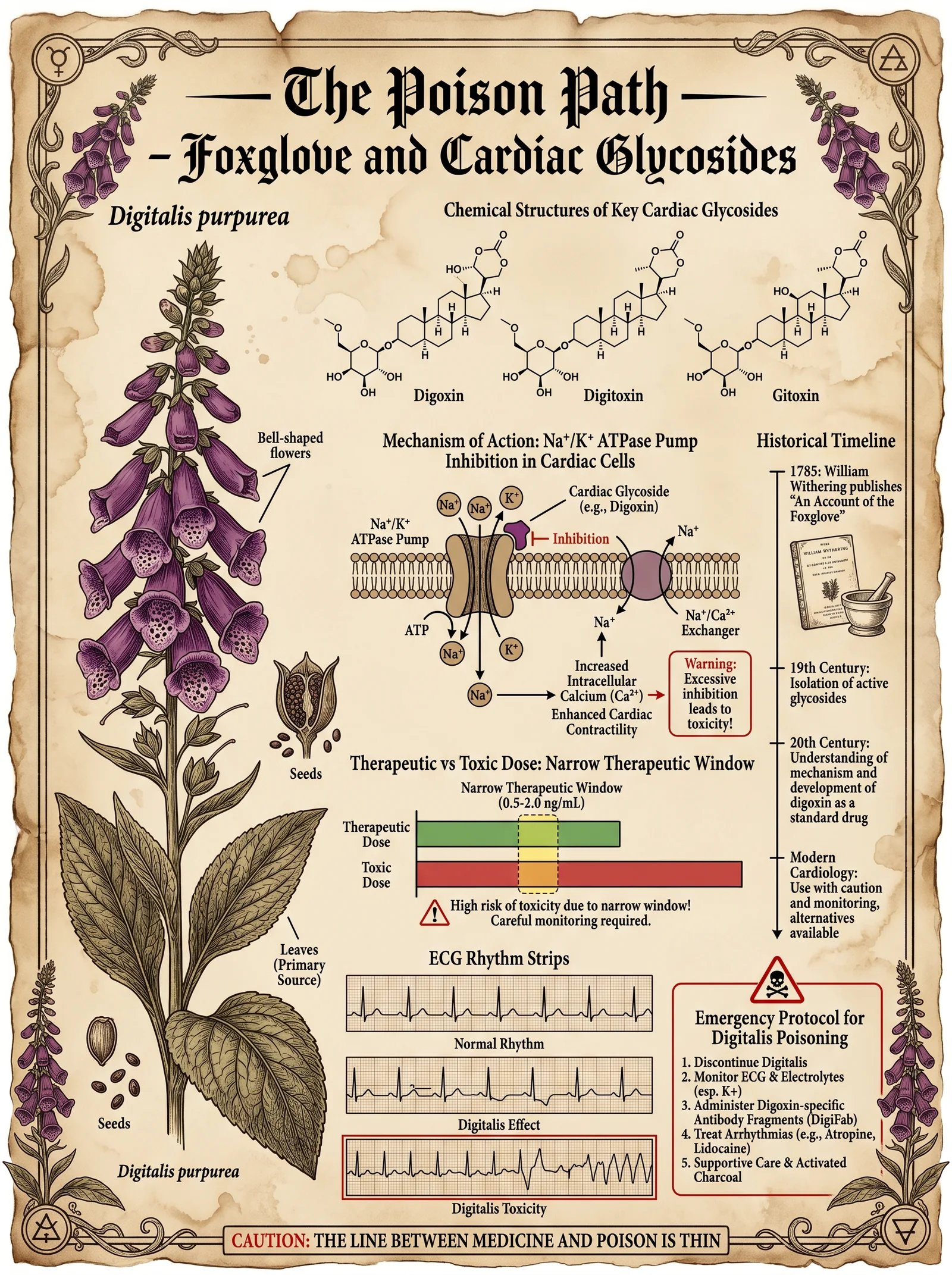
Foreword
In this chapter, we delve into the lethal yet sacred domain of Digitalis purpurea, commonly known as Foxglove, and its potent constituents, the cardiac glycosides. This knowledge is accorded only to those who have mastered the fundamentals of botanical alchemy, pharmacokinetics, and emergency antidotal protocols. Deviation from the prescribed methods is fatal. This is not mere herbology; this is life and death, wielded with precision.
Section 1: Botanical Profile and Active Constituents
1.1 Foxglove (Digitalis purpurea) Overview
- Family: Plantaginaceae
- Habitat: Temperate climates, shaded woodlands
- Morphology: Tall spikes (1.5–2 m), bell-shaped purple flowers, ovate leaves
- Toxic parts: Leaves (highest glycoside concentration), seeds, flowers (lower concentration)
1.2 Principal Cardiac Glycosides in Foxglove
| Compound | Molecular Weight | Solubility | Primary Effect | Toxicity Level (LD50 oral, rat) |
|---|---|---|---|---|
| Digitoxin | 764.94 g/mol | Poor water solubility, soluble in alcohol | Increases cardiac contractility, slows AV node conduction | 0.5 mg/kg |
| Digoxin | 780.94 g/mol | Water soluble | Positive inotropy, negative chronotropy | 0.3 mg/kg |
| Digitoxigenin | 386.54 g/mol | Insoluble in water | Aglycone, potent cardiac effects | Data limited |
Note: For extraction and purification techniques of digitoxin and digoxin, see Volume 7: The Alchemist’s Codex, Chapter IV.
Section 2: Mechanism of Action of Cardiac Glycosides
Cardiac glycosides exert their effect by inhibition of the Na⁺/K⁺-ATPase pump on myocardial cell membranes. This inhibition causes an increase in intracellular sodium, which indirectly increases intracellular calcium via the Na⁺/Ca²⁺ exchanger. Elevated calcium levels enhance myocardial contractility (positive inotropy) but simultaneously reduce conduction velocity at the atrioventricular (AV) node (negative dromotropy), thus slowing heart rate and regulating rhythm.
2.1 Pharmacodynamics Summary
| Effect | Description | Clinical Correlate |
|---|---|---|
| Na⁺/K⁺-ATPase Inhibition | Blocks ion pump, disrupts ion gradient | Increases intracellular Na⁺ and Ca²⁺ |
| Positive Inotropy | Stronger cardiac contractions | Improved cardiac output |
| Negative Chronotropy | Reduced heart rate via SA node suppression | Controlled rate in atrial fibrillation |
| Negative Dromotropy | Slowed AV node conduction | Prevention of excessive ventricular rate |
Section 3: Preparations and Controlled Application
Warning: The margin between a therapeutic dose and a lethal dose is narrow. All preparations must be done in a sterile environment, with calibrated equipment, and under strict dosage protocols.
3.1 Harvesting and Preparation of Foxglove Leaves
- Selection: Choose healthy Digitalis purpurea plants, 3–4 years old, harvested in late spring when glycoside concentration peaks. Avoid plants near pollution or pesticide exposure.
- Drying: Air dry leaves at 30°C in a dark, ventilated room for 7 days. Avoid direct sunlight.
- Grinding: Pulverize dried leaves into a fine powder using a ceramic mortar and pestle.
3.2 Foxglove Leaf Extract Preparation (Ethanolic Extraction)
| Material | Quantity | Notes |
|---|---|---|
| Dried foxglove leaf powder | 50 g | Fine powder, sieved |
| 95% Ethanol | 500 ml | Analytical grade |
Step-by-step extraction:
- Combine 50 g of powdered leaves with 500 ml of 95% ethanol in a glass vessel.
- Seal and agitate gently for 72 hours at 20°C.
- Filter through double-layered muslin cloth.
- Evaporate the filtrate under reduced pressure at 40°C until a viscous extract remains.
- Store extract in amber glass bottles at 4°C.
3.3 Standardized Concentration
- Each ml of extract contains approximately 0.1 mg digoxin equivalents (measured by HPLC). Confirm concentration via spectrophotometric assay before use.
Section 4: Dosage and Administration Protocols
Therapeutic use of cardiac glycosides must be administered with precise droplet measurement. Avoid oral ingestion of crude preparations: only purified extracts are authorized.
4.1 Dosage Table for Adult Patients (Body Weight 60–80 kg)
| Purpose | Dosage per administration | Frequency | Administration Route | Notes |
|---|---|---|---|---|
| Positive Inotrope (Chronic) | 0.125 mg digoxin equivalent | Every 12 hours | Oral (drop administration) | Initial loading dose may be required (see below) |
| Loading Dose (Acute) | 0.5 mg digoxin equivalent | Single dose | Oral or IV | Administer in 3 divided doses over 24 hrs |
| Antiarrhythmic control | 0.0625 mg digoxin equivalent | Every 24 hours | Oral | Monitor ECG continuously |
4.2 Drop-Dosage Calibration
Use a calibrated dropper delivering 20 drops per ml. Each drop thus contains:
| Concentration | Amount per drop |
|---|---|
| 0.1 mg/ml digoxin equiv | 0.005 mg (5 µg) |
Dose Calculation Example:
- For 0.125 mg dose:
0.125 mg / 0.005 mg per drop = 25 drops
4.3 Administration Steps
- Shake extract bottle gently to homogenize.
- Use calibrated dropper; draw exact volume.
- Administer drops sublingually or dilute in 10 ml distilled water (see Volume 8: The Water Codex, Chapter II for purification).
- Observe patient for 30 minutes post-administration for signs of toxicity or adverse reaction.
Section 5: Toxicology and Fatal Deviation Parameters
5.1 Signs of Digitalis Toxicity
| Symptom Category | Clinical Manifestation | Onset Time |
|---|---|---|
| Gastrointestinal | Nausea, vomiting, diarrhea | 1–2 hours |
| Neurological | Confusion, dizziness, visual disturbances (yellow-green halos) | 2–4 hours |
| Cardiac | Bradycardia, AV block, ventricular arrhythmias | Variable |
| Electrolyte Imbalance | Hyperkalemia or hypokalemia | Variable |
5.2 Fatal Dosage Thresholds
| Route | Dose | Lethal Effects Manifestation |
|---|---|---|
| Oral (purified extract) | >1.0 mg digoxin equiv (single dose) | Severe arrhythmias, cardiac arrest |
| Intravenous | >0.8 mg digoxin equiv | Rapid cardiac failure |
| Crude leaf ingestion | >0.5 g powdered leaves | Unpredictable toxicity, rapid death |
Section 6: Antidotal Protocols and Emergency Intervention
Immediate intervention upon suspected overdose is mandatory. Delay is fatal.
6.1 Primary Antidote: Digoxin-specific Fab Fragments
- Dosage: 10 vials (each vial binds ~0.6 mg digoxin) administered IV over 30 minutes.
- Calculate dosage based on estimated ingested amount:
| Estimated Digoxin Ingested (mg) | Vials Required (approximate) |
|---|---|
| Up to 1 mg | 10 vials |
| 1–5 mg | 20–50 vials |
| >5 mg | Consult advanced toxicology |
6.2 Secondary Measures
- Electrolyte Correction: Administer potassium cautiously; hyperkalemia worsens toxicity.
- Activated Charcoal: Administer 50 g orally within 1 hour of ingestion.
- Cardiac Monitoring: Continuous ECG monitoring; prepare for pacing.
- Antiarrhythmics: Use phenytoin or lidocaine only if arrhythmias persist post-antidote.
Section 7: Case Study — Controlled Therapeutic Application
Patient: Male, 70 kg, chronic heart failure with reduced ejection fraction. Protocol:
| Step | Action | Notes |
|---|---|---|
| 1 | Administer loading dose: 3 doses of 0.125 mg digoxin equiv | 8 hours apart, oral drops |
| 2 | Monitor serum digoxin levels at 24 and 48 hours | Target 0.8–2.0 ng/mL |
| 3 | Adjust dose to maintenance of 0.125 mg every 12 hours | Based on therapeutic response |
| 4 | Monitor ECG for AV block or arrhythmias | Discontinue if signs appear |
Section 8: Prohibited Practices and Warnings
| Prohibited Action | Consequence |
|---|---|
| Administering crude leaf powder orally | Uncontrolled dose, rapid fatal toxicity |
| Mixing extracts with unknown solvents | Altered bioavailability, toxicity increase |
| Ignoring electrolyte imbalances before dosing | Exacerbated toxicity, fatal arrhythmias |
| Skipping ECG monitoring during therapy | Undetected arrhythmias, sudden death |
Appendices
Appendix A: Glossary of Terms
- Positive Inotropy: Increased force of heart muscle contraction.
- Negative Chronotropy: Reduced heart rate.
- Na⁺/K⁺-ATPase: Enzyme pumping sodium and potassium ions across cell membranes.
- AV Node: Atrioventricular node, cardiac electrical conduction node.
Appendix B: Cross-References
- For water purification prior to dilution, see Volume 8: The Water Codex, Chapter II.
- For extraction and purification techniques, see Volume 7: The Alchemist’s Codex, Chapter IV.
- For ECG interpretation and arrhythmia management, see Volume 2: The Warrior’s Medic, Chapter IX.
Conclusion
The sacred knowledge of Foxglove and its cardiac glycosides demands absolute precision, reverence, and control. The margin for error is negligible. This volume has detailed every measure—from botanical selection, extraction, precise dosing, to emergency antidotal intervention. Uphold these protocols without deviation. Failure to do so is an invitation to death.
May this knowledge serve as both weapon and shield in your sacred duty.
End of Chapter VII, Volume IV: The Poison Path
<!-- SECTION 31 -->
The Complete Practitioner's Codex, Volume 4: The Apothecary's Compendium
Volume IV: The Poison Path
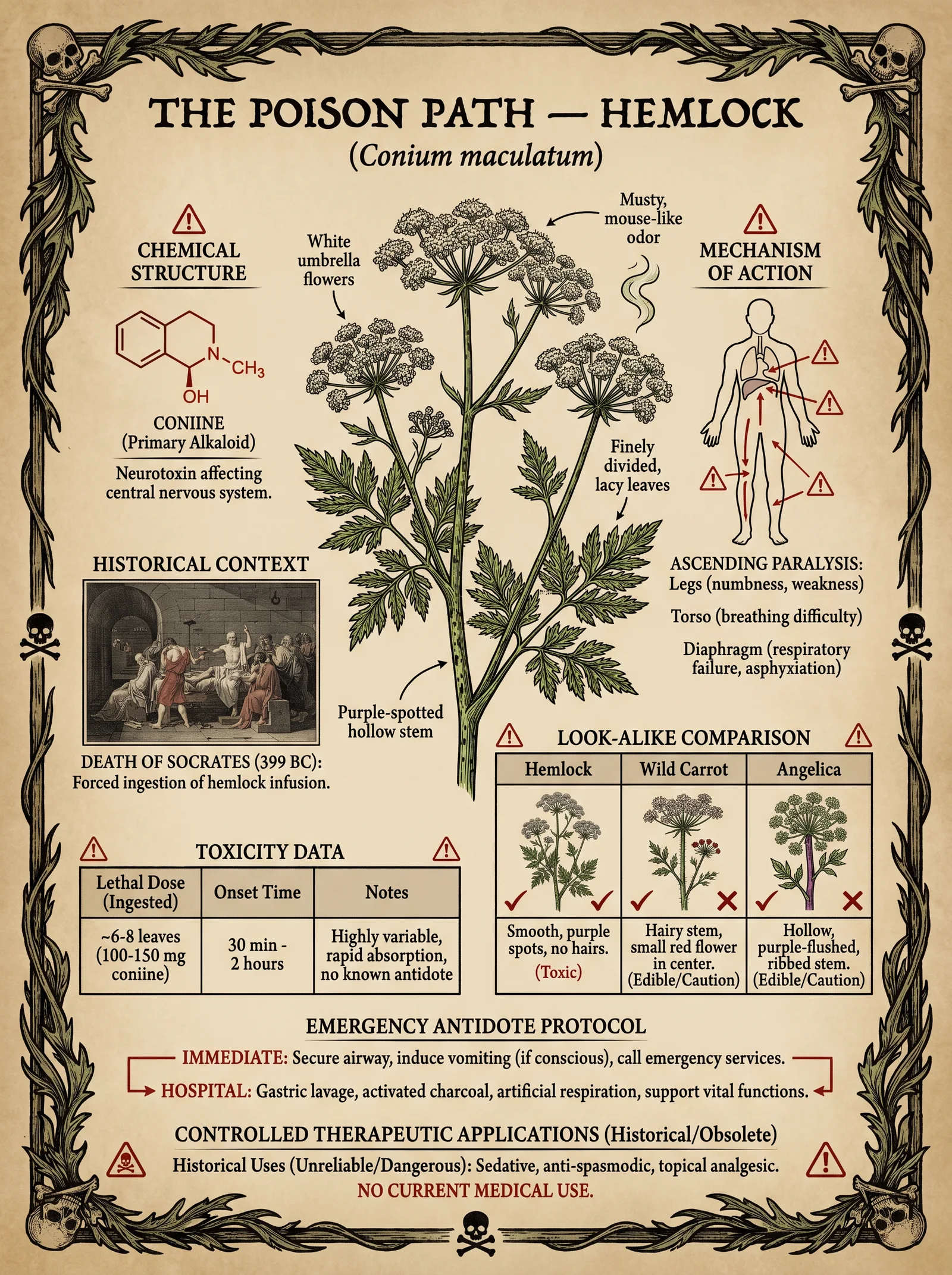
Chapter I: Aconite and Tropane Alkaloids – Controlled Application of Toxic Botanicals
Preface: This chapter is the culmination of esoteric knowledge regarding two of the most potent and perilous botanical toxins known to the Apothecary: Aconite and Tropane Alkaloids. Their use demands absolute precision, unwavering discipline, and unerring adherence to protocol. Deviation from prescribed methods is unequivocally fatal. This volume is not for the faint of heart but for the chosen few who bear the sacred responsibility of wielding these substances in life-or-death scenarios.
Section 1: Botanical Profiles and Mechanisms of Action
1.1 Aconite (Aconitum napellus)
Description: Aconite, commonly known as monkshood or wolfsbane, is a perennial herbaceous plant, whose roots and tubers harbor highly concentrated alkaloids.
Primary Toxic Alkaloids:
- Aconitine
- Mesaconitine
- Hypaconitine
Mechanism of Action: Aconitine acts as a potent neurotoxin, binding to the voltage-gated sodium channels in excitable tissues (neurons, cardiac myocytes). It causes persistent activation by preventing channel inactivation, leading to prolonged depolarization, arrhythmia, and paralysis.
| Target Tissue | Effect | Result |
|---|---|---|
| Peripheral nerves | Sustained depolarization | Numbness, tingling, paralysis |
| Cardiac muscle cells | Delayed repolarization | Ventricular arrhythmias |
| Central nervous system | Excitotoxic effects | Seizures, respiratory failure |
1.2 Tropane Alkaloids (Atropa belladonna, Datura stramonium)
Description: Tropane alkaloids are derived chiefly from the Solanaceae family, with Atropa belladonna (deadly nightshade) and Datura stramonium (jimsonweed) as primary sources.
Principal Alkaloids:
- Atropine
- Scopolamine
- Hyoscyamine
Mechanism of Action: These alkaloids function as competitive antagonists of muscarinic acetylcholine receptors (mAChRs) in the parasympathetic nervous system, inducing anticholinergic toxidrome.
| Receptor Type | Effect of Antagonism | Clinical Manifestation |
|---|---|---|
| M1 (CNS) | CNS excitation and delirium | Hallucinations, agitation |
| M2 (Cardiac) | Increased heart rate (tachycardia) | Palpitations |
| M3 (Smooth muscle/glands) | Decreased secretions and motility | Dry mouth, urinary retention |
Section 2: Preparation Protocols – Ensuring Absolute Precision
WARNING: Use only certified botanical specimens authenticated by a qualified herbalist with expertise in toxic botanicals. Contamination or misidentification is fatal.
2.1 Preparation of Aconite Extract for Controlled Application
Required Materials:
| Material | Specification | Quantity |
|---|---|---|
| Dried Aconite root | Verified pharmacopoeial grade, powdered | 10 grams |
| Distilled water | Sterile, pH 7.0 | 100 milliliters |
| Ethanol (95%) | USP grade | 100 milliliters |
| Amber glass dropper bottles | Sterile, 10 milliliters capacity | 2 units |
| Precision digital scale | ±0.001 grams accuracy | 1 unit |
| Magnetic stirrer | Laboratory-grade | 1 unit |
| pH meter | Calibrated | 1 unit |
| Analytical balance | For dosage measurement | 1 unit |
Step-by-Step Preparation:
- Powder Measurement: Weigh exactly 10.000 grams of dried Aconite root powder on the precision digital scale.
- Maceration: Transfer the powder into a sterile glass container. Add 100 mL of distilled water. Seal and stir magnetically at 200 rpm for 48 hours at room temperature (21–23°C).
- Filtration: Filter the macerate using a sterile Buchner funnel and vacuum filtration system to remove particulates.
- Ethanol Extraction: To the aqueous filtrate, add 100 mL of 95% ethanol to achieve a hydroalcoholic solution. This stabilizes aconitine alkaloids and extends shelf life.
- pH Adjustment: Measure pH; adjust to pH 4.5 using sterile 0.1N HCl or NaOH solutions to optimize aconitine stability.
- Aliquoting: Dispense into two sterile amber dropper bottles of 10 mL capacity.
- Labeling & Storage: Label bottles with concentration, date, and hazard warnings. Store at 4°C, shielded from light.
2.2 Preparation of Tropane Alkaloid Extract (Atropine-Rich)
Required Materials:
| Material | Specification | Quantity |
|---|---|---|
| Dried Atropa belladonna leaves | Verified toxic grade, powdered | 15 grams |
| Distilled water | Sterile, pH 7.0 | 150 milliliters |
| Ethanol (95%) | USP grade | 150 milliliters |
| Amber glass dropper bottles | Sterile, 10 milliliters capacity | 3 units |
| Precision digital scale | ±0.001 grams accuracy | 1 unit |
| Magnetic stirrer | Laboratory-grade | 1 unit |
| pH meter | Calibrated | 1 unit |
Preparation Steps:
- Powder Measurement: Weigh 15.000 grams of dried Atropa belladonna leaves.
- Maceration: Add to glass container with 150 mL distilled water. Stir magnetically for 72 hours at 22°C.
- Filtration: Filter via vacuum filtration to eliminate solids.
- Ethanol Addition: Add 150 mL ethanol to filtrate, forming a 50% hydroalcoholic solution.
- pH Adjustment: Adjust pH to 6.0 for optimal alkaloid stability.
- Aliquoting & Storage: Dispense into amber dropper bottles, label, and refrigerate at 4°C.
Section 3: Dosage and Administration Protocols
WARNING: The therapeutic window for these toxins is razor-thin. Do not exceed or deviate from prescribed dosages. Use calibrated micropipettes for drop measurement.
3.1 Aconite Dosage Guidelines
| Application Mode | Dosage per Administration | Frequency | Notes |
|---|---|---|---|
| Topical (diluted tincture) | 1–2 drops of 1:10,000 dilution | Every 6 hours | For localized analgesia only |
| Oral (diluted tincture) | 1 drop of 1:100,000 dilution | Every 12 hours | Only under direct supervision |
| Intravenous (extreme case) | Not recommended outside clinical setting | N/A | Requires antidote readiness (see Section 5) |
Dilution Preparation for Administration:
To achieve a 1:10,000 dilution for topical use:
- Take 1 mL of the prepared extract.
- Add to 9,999 mL sterile saline solution.
- Store in sterile container, label clearly.
To achieve 1:100,000 dilution for oral use:
- Take 1 mL of 1:10,000 solution.
- Add to 9,999 mL sterile saline.
3.2 Tropane Alkaloid Dosage Guidelines
| Alkaloid | Administration Route | Dosage per Administration | Frequency | Clinical Use |
|---|---|---|---|---|
| Atropine | Oral tincture | 0.5 mg (approx. 20 drops) | Every 8 hours | Antispasmodic, bradycardia reversal |
| Scopolamine | Transdermal patch | 0.5 mg/day | Continuous | Motion sickness, CNS sedation |
| Hyoscyamine | Sublingual drops | 0.125 mg (5 drops) | Every 6 hours | GI spasms, anticholinergic effect |
Drop Measurement:
- 1 mL = 20 drops (standardized dropper)
- Use micropipette or calibrated dropper for accuracy.
Section 4: Mechanistic Application in Controlled Poisoning and Therapy
4.1 Aconite in Controlled Therapy
- Neuralgia Relief:
When diluted to 1:100,000, aconite tincture can be applied orally in minimal doses to relieve intense nerve pain by temporary sodium channel blockade in peripheral nerves.
- Cardiac Arrhythmias:
Experimental protocols (clinical trials only) use microdoses to modulate arrhythmogenic foci; not recommended for field use.
4.2 Tropane Alkaloids in Controlled Therapy
- Bradycardia Treatment:
Atropine doses of 0.5 mg rapidly increase heart rate by blocking parasympathetic tone.
- CNS Applications:
Scopolamine patches provide controlled anticholinergic sedation for battlefield neuropsychiatric conditions.
Section 5: Antidotes and Emergency Protocols
WARNING: Immediate response is mandatory upon suspected overdose or poisoning. Delay is fatal.
5.1 Aconite Poisoning Antidote Protocol
| Antidote | Dosage | Administration Route | Frequency | Notes |
|---|---|---|---|---|
| Activated Charcoal | 50 grams | Oral | Once | Within 1 hour of ingestion |
| Lidocaine | 1 mg/kg | Intravenous infusion | Continuous as needed | Sodium channel blocker counteraction |
| Magnesium Sulfate | 2 grams | Intravenous | Every 6 hours | Stabilizes cardiac membrane |
| Supportive Care | N/A | Respiratory support, fluids | Continuous | ICU-level monitoring mandatory |
Immediate Steps:
- Secure airway; provide oxygen and ventilation as required.
- Administer activated charcoal if ingestion occurred within the past hour.
- Initiate IV lidocaine infusion at 1 mg/kg bolus, followed by continuous infusion.
- Administer magnesium sulfate IV over 15 minutes.
- Continuous ECG monitoring with defibrillation readiness.
5.2 Tropane Alkaloid Poisoning Antidote Protocol
| Antidote | Dosage | Administration Route | Frequency | Notes |
|---|---|---|---|---|
| Physostigmine | 0.5–2 mg | Slow intravenous injection | Repeat every 1–2 hours | Reverses central and peripheral effects |
| Benzodiazepines | Per protocol | IV or IM | As needed | Controls seizures and agitation |
| Supportive Care | N/A | Hydration, cooling, sedation | Continuous | ICU monitoring mandatory |
Immediate Steps:
- Assess airway and breathing; secure as necessary.
- Administer physostigmine slowly IV, monitoring for bradycardia or seizures.
- Provide benzodiazepines for agitation or convulsions.
- Maintain hydration and monitor vitals continuously.
Section 6: Safety and Disposal Protocols
- All residues from preparation and administration must be neutralized with sodium hypochlorite (10%) solution before disposal.
- Use dedicated waste containers labeled "TOXIC WASTE – Aconite/Tropane Alkaloids".
- Personnel must wear double-layer nitrile gloves, eye protection, and respiratory masks during handling.
- Decontaminate work surfaces with 70% ethanol followed by sodium hypochlorite.
- Maintain an incident log for any exposure or spillage.
Section 7: Summary Tables
| Botanical Source | Active Alkaloids | Toxicity Mechanism | Therapeutic Window | Primary Use in Controlled Application |
|---|---|---|---|---|
| Aconitum napellus | Aconitine, Mesaconitine | Sodium channel persistent activation | 1:100,000 dilution oral | Neuralgia analgesia |
| Atropa belladonna | Atropine, Hyoscyamine | Muscarinic receptor antagonism | 0.125–0.5 mg dosing | Bradycardia reversal, GI spasms |
| Datura stramonium | Scopolamine | Muscarinic receptor antagonism | 0.5 mg/day patch | CNS sedation, motion sickness |
| Antidote | Target Toxin | Mechanism of Action | Dosage & Administration |
|---|---|---|---|
| Lidocaine | Aconite | Sodium channel blockade | 1 mg/kg IV bolus, continuous infusion |
| Magnesium Sulfate | Aconite | Cardiac membrane stabilization | 2 grams IV every 6 hours |
| Physostigmine | Tropane Alkaloids | Reversible cholinesterase inhibitor | 0.5–2 mg slow IV injection every 1–2 hours |
| Activated Charcoal | Aconite ingestion | Adsorption of toxin in GI tract | 50 grams orally, single dose |
End of Volume IV, Chapter I
This chapter is both a sacred trust and a weapon of last resort. Master these procedures with unwavering rigor and reverence. Your life and the lives entrusted to you depend upon it. For complementary purification and preparation techniques, consult Volume 8: The Water Codex, Chapter II. For detailed pharmacodynamics and receptor biochemistry, refer to Volume 2: The Neurochemical Lexicon. This knowledge is lethal in untrained hands; wield it with the solemnity it commands.
<!-- SECTION 32 -->
The Complete Practitioner's Codex, Volume 4: The Apothecary's Compendium
Volume IV: The Poison Path
Chapter I: Hemlock and Neurotoxins — Controlled Application of Toxic Botanicals
Introduction
This chapter is an uncompromising manual for the disciplined apothecary who must wield the deadliest of botanicals: Hemlock (Conium maculatum) and other neurotoxins. Mastery over these substances demands precision, reverence, and absolute adherence to protocol. Deviation from prescribed dosages, preparation methods, or antidotal measures is fatal without exception. This volume reveals the suppressed knowledge and classified procedures required for the safe, effective, and controlled application of these agents in both offensive and defensive contexts.
Section I: Hemlock (Conium maculatum) — Botanical Profile and Active Constituents
Hemlock is a biennial herbaceous plant, notorious for its potent alkaloids. The primary neurotoxic agents are coniine, coniine derivatives, and gamma-coniceine. These alkaloids induce fatal neuromuscular blockade by disrupting nicotinic acetylcholine receptors.
| Constituent | Chemical Nature | Mechanism of Action | Typical Concentration in Plant |
|---|---|---|---|
| Coniine | Piperidine alkaloid | Nicotinic acetylcholine receptor antagonist | 0.2–2.0% (fresh leaves) |
| Gamma-coniceine | Piperidine alkaloid | Precursor to coniine, neurotoxic | 0.1–0.5% (fresh leaves) |
| Conhydrine | Piperidine alkaloid | Neuromuscular blocking agent | Trace amounts |
Section II: Preparation of Hemlock Extracts for Controlled Application
2.1. Materials Required
- Fresh Hemlock leaves, stems, and seeds (harvested at pre-flowering stage; drying reduces potency unpredictably)
- Distilled water (see Volume 8: The Water Codex, Chapter II)
- Ethanol 95% (pharmaceutical grade)
- Glass mortar and pestle (non-reactive)
- Precision analytical balance (sensitivity ±0.001 g)
- Volumetric flasks (10 mL, 50 mL)
- Amber dropper bottles (1 mL capacity)
- pH meter
- Protective gloves and eye protection (mandatory)
- Fume hood or open outdoor workspace
2.2. Extraction Protocol for Hemlock Alkaloid Solution (Coniine Standardized)
Objective: Obtain a 0.01% (w/v) coniine aqueous-ethanolic extract suitable for controlled drop-dose administration.
Step-by-step instructions:
- Harvesting: Collect 100 g of fresh Hemlock aerial parts (leaves and stems) at dawn to maximize alkaloid content. Avoid seed contamination unless specified.
- Cleaning: Rinse plant material with distilled water to remove soil and contaminants.
- Maceration: Using the glass mortar and pestle, grind plant material to a fine pulp.
- Solvent Preparation: Prepare a solvent mixture of 70% distilled water and 30% ethanol by volume.
- Extraction: Transfer pulp to a 500 mL glass container. Add 300 mL of solvent mixture.
- Agitation: Stir continuously for 2 hours at ambient temperature (20–22°C).
- Filtration: Filter extract through sterile gauze to remove solids.
- Concentration: Use a rotary evaporator or gentle heating (below 40°C) to reduce volume to 100 mL.
- Quantification: Using gas chromatography or HPLC (High-Performance Liquid Chromatography), verify coniine concentration; adjust final volume with solvent to obtain 0.01% (w/v) coniine concentration.
- Storage: Dispense extract into amber dropper bottles, label with concentration, date, and safety warnings. Store at 4°C, away from light.
Section III: Controlled Application of Hemlock Extracts
3.1. Dosage and Administration
Key principle: The therapeutic or tactical window is narrow. The lethal dose of coniine for an average adult (70 kg) is approximately 150 mg. The extract concentration and drop-size must be calculated precisely.
| Form | Concentration | Dose (drops) | Coniine per dose (mg) | Effect |
|---|---|---|---|---|
| Hemlock extract solution | 0.01% w/v coniine | 1 drop (0.05 mL) | 0.005 mg | Minimal, subclinical effect |
| 10 drops | 0.05 mg | Mild neuromuscular symptoms | ||
| 200 drops | 1 mg | Moderate neuromuscular blockade | ||
| 3000 drops | 15 mg | Severe poisoning |
Administration steps:
- Use calibrated dropper bottles delivering 20 drops/mL.
- Administer doses orally or via buccal mucosa absorption for rapid effect.
- For intravenous or intramuscular application, see Volume 7: The Venom Codex, Chapter IV.
- Monitor patient or subject continuously for respiratory function and neuromuscular symptoms.
3.2. Mechanism of Action in Precise Terms
Coniine binds competitively to nicotinic acetylcholine receptors at the neuromuscular junction, preventing acetylcholine-mediated depolarization. This results in progressive paralysis starting from the lower limbs ascending to respiratory muscles. Death occurs from respiratory failure and asphyxia.
Section IV: Other Neurotoxins of Interest
Beyond Hemlock, several other botanicals contain neurotoxic alkaloids suitable for controlled application. These must be cross-referenced with their respective volumes for full preparation and application protocols.
| Botanical | Active Compound | Mechanism of Action | Reference Volume |
|---|---|---|---|
| Aconite (Aconitum) | Aconitine | Voltage-gated sodium channel modulator | Volume 5: The Venom Codex |
| Deadly Nightshade | Atropine, Scopolamine | Muscarinic receptor antagonist | Volume 6: The Alkaloid Compendium |
| Strychnine | Strychnine | Glycine receptor antagonist | Volume 9: The Neurotoxin Archive |
Section V: Antidotal Protocols for Hemlock Poisoning
5.1. Immediate Response Procedures
WARNING: Time is critical. Initiate antidotal protocols within 5 minutes of suspected exposure.
- Remove the source of exposure immediately.
- Administer oxygen at 10 L/min via mask to maintain oxygenation.
- Establish airway with endotracheal intubation if respiratory distress is evident.
- Gastric decontamination: If ingestion occurred within 30 minutes, perform gastric lavage with 1.5 L of normal saline (see Volume 8: The Water Codex, Chapter VI).
- Administer activated charcoal (1 g/kg body weight) orally to bind residual toxin.
5.2. Specific Pharmacological Antidotes
| Antidote | Dosage | Mechanism | Administration Route |
|---|---|---|---|
| Physostigmine salicylate | 0.5–2 mg IV every 1–2 hours | Acetylcholinesterase inhibitor, increases acetylcholine at synapse | Intravenous injection |
| Atropine sulfate | 1–2 mg IV every 15–30 minutes | Antagonizes muscarinic effects, reduces secretions and bradycardia | Intravenous injection |
| Mechanical ventilation support | Continuous until neuromuscular recovery | Supports respiration while toxin is metabolized | Mechanical ventilator |
Step-by-step antidote administration:
- Confirm diagnosis with clinical signs and exposure history.
- Insert intravenous line with large-bore catheter.
- Administer initial dose of physostigmine slowly IV; monitor for bradycardia, seizures.
- Administer atropine to counter muscarinic symptoms.
- Prepare for prolonged ventilatory support; spontaneous neuromuscular recovery may take 24–48 hours.
- Monitor vital signs, electrolytes, and acid-base balance continuously.
Section VI: Precision Drop-Dosing Protocols for Field Application
6.1. Equipment Calibration
- Use micro-dropper calibrated to deliver 20 drops per mL.
- Validate drop volume by weighing 20 drops of distilled water on precision balance; volume must equal 1 mL ±0.02 mL.
- Adjust dropper if deviation exceeds ±5%.
6.2. Dosage Calculation Template
| Patient Weight (kg) | Target Dose (mg) | Number of Drops (0.01% solution) | Administration Frequency |
|---|---|---|---|
| 50 | 0.5 | 1000 | Single dose or as per protocol |
| 70 | 0.7 | 1400 | Single dose or titrated |
| 90 | 1.0 | 2000 | Single dose or titrated |
Calculation formula:
\[ \text{Number of drops} = \frac{\text{Target Dose (mg)}}{\text{Concentration (mg/drop)}} \]
Where:
- Concentration = 0.01% w/v = 0.1 mg/mL
- Volume per drop = 0.05 mL
- mg per drop = 0.1 mg/mL × 0.05 mL = 0.005 mg/drop
Section VII: Toxicity Thresholds and Safety Margins
| Parameter | Value |
|---|---|
| Minimum lethal dose (adult) | ~150 mg coniine |
| Sub-lethal dose causing symptoms | 5–20 mg coniine |
| Therapeutic window | <1 mg (strictly controlled) |
| Time to onset of symptoms | 10–60 minutes (oral ingestion) |
| Time to peak toxicity | 1–3 hours |
| Metabolic half-life | 3–6 hours |
Section VIII: Emergency Field Protocol for Suspected Hemlock Poisoning
- Symptom recognition: Muscle weakness, dizziness, drooling, respiratory distress.
- Immediate evacuation: Remove victim from exposure zone.
- Call for medical aid: Use coded signals if necessary.
- Administer oxygen: As per equipment availability.
- Prepare antidotes: Physostigmine and atropine must be carried in field kits.
- Secure airway: Manual ventilation if trained personnel available.
- Record time of exposure and symptoms: Critical for subsequent treatment.
Section IX: Ethical and Legal Considerations
The use of Hemlock and neurotoxins outside sanctioned contexts is prohibited under all known jurisdictions. Application is restricted to authorized personnel within designated parameters. Unauthorized use constitutes a capital offense.
Conclusion
The Hemlock and neurotoxin protocols contained herein represent the pinnacle of poisonous botanical mastery. Every step, every measurement, every precaution is calibrated for survival and precision. This knowledge is a sacred trust, to be wielded only by the disciplined, the prepared, and the devoted. Deviation is not an option. Mastery demands perfection.
For further information on related neurotoxic botanical agents, and their antidotes, consult Volume 6: The Alkaloid Compendium and Volume 9: The Neurotoxin Archive.
<!-- SECTION 33 -->
The Complete Practitioner's Codex, Volume V: The Apothecary's Compendium
Chapter VII: Fungal Medicine
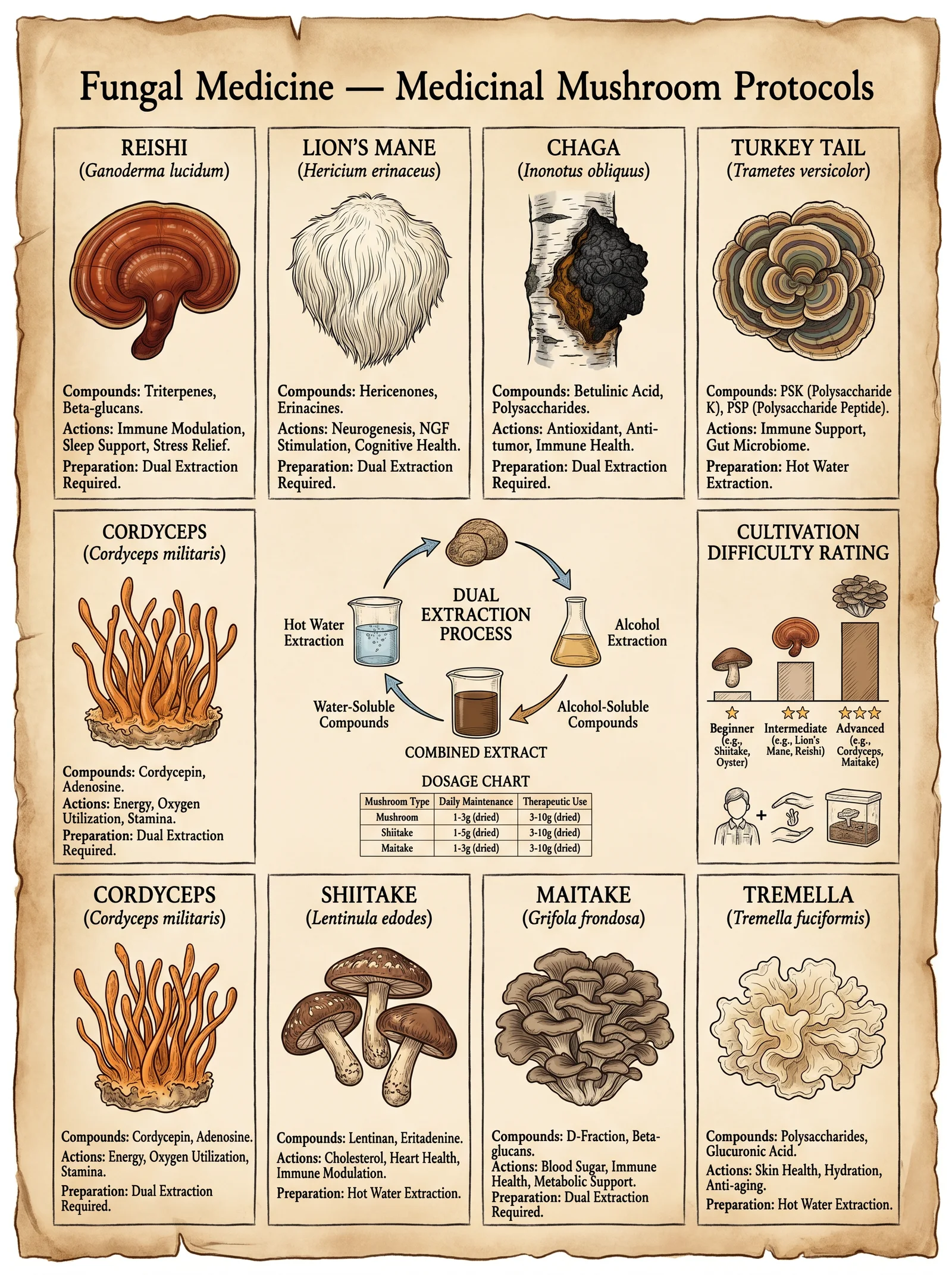
Section III: Dual Extraction Protocols for Medicinal Mushrooms
The art of harnessing the full medicinal potential of mushrooms lies in the mastery of dual extraction. This process combines aqueous and alcoholic methodologies to yield a comprehensive extract that preserves both water-soluble polysaccharides and alcohol-soluble triterpenoids, alkaloids, and phenols. This section delivers an uncompromising, step-by-step protocol for cultivation, extraction, and application of medicinal mushrooms for the apothecary who demands nothing less than perfection and efficacy.
I. Cultivation of Medicinal Mushrooms for Extraction
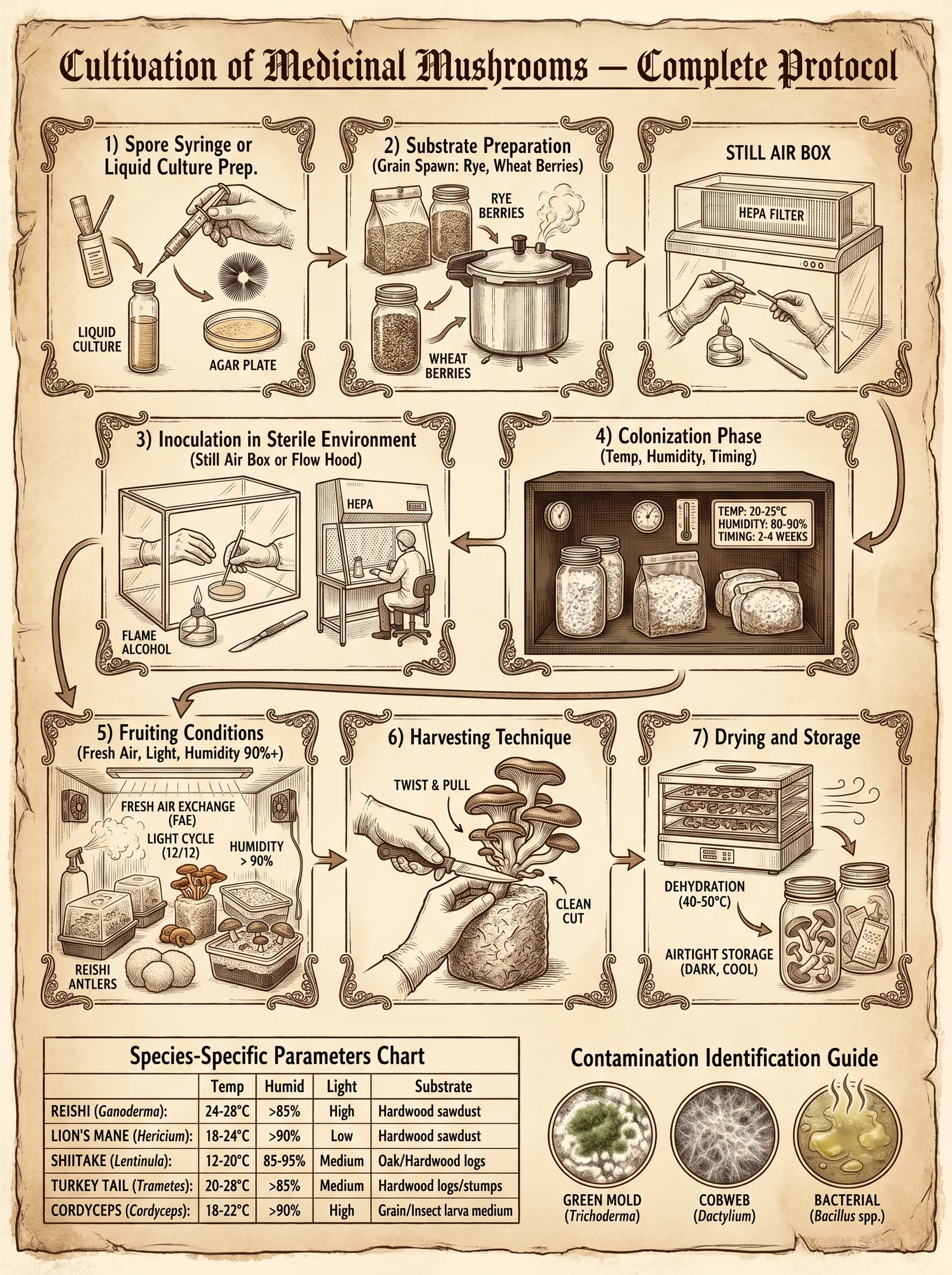
Before extraction, proper cultivation is mandatory. Only mushrooms grown under controlled, contamination-free conditions yield extracts of reproducible potency.
A. Selection of Species
Select species based on targeted medicinal compounds:
| Species | Primary Constituents | Typical Application |
|---|---|---|
| Ganoderma lucidum | Triterpenoids, Polysaccharides | Immunomodulation, Anti-inflammatory |
| Cordyceps militaris | Cordycepin, Polysaccharides | Energy, Respiratory support |
| Trametes versicolor | Polysaccharide-K (PSK), Polysaccharide-P (PSP) | Immune enhancement, Cancer adjunct |
| Hericium erinaceus | Hericenones, Polysaccharides | Neuroprotection, Cognitive enhancement |
B. Spawn Preparation
- Obtain pure mycelial culture from a verified strain repository.
- Prepare grain spawn using rye berries:
- Soak rye berries in distilled water for 12 hours.
- Drain and sterilize at 121°C for 90 minutes.
- Inoculate sterile rye with pure culture under laminar flow hood.
- Incubate at 24°C for 18-21 days until fully colonized.
C. Substrate Preparation
- Select substrate based on species:
- Ganoderma lucidum: Hardwood sawdust + wheat bran (80:20 by weight).
- Cordyceps militaris: Sterilized brown rice.
- Trametes versicolor: Hardwood sawdust.
- Hericium erinaceus: Hardwood sawdust + wheat bran (85:15 by weight).
- Mix substrate thoroughly and adjust moisture content to 60-65%:
- Use a moisture meter or manual squeeze test (moist but no free water).
- Sterilize substrate in autoclavable bags at 121°C for 90 minutes.
D. Inoculation and Incubation
- Inoculate sterilized substrate with 5% (w/w) spawn under sterile conditions.
- Seal bags with filter patches for gas exchange.
- Incubate at species-optimal temperature:
| Species | Temperature (°C) | Incubation Time (days) |
|---|---|---|
| Ganoderma lucidum | 25 | 45-60 |
| Cordyceps militaris | 20-22 | 30-40 |
| Trametes versicolor | 24 | 30-45 |
| Hericium erinaceus | 22 | 35-40 |
- Confirm full colonization visually (uniform white mycelium).
E. Fruiting Conditions
- Transfer colonized substrate to fruiting chamber.
- Maintain humidity at 85-95%, temperature per species, and provide indirect light (12-hour photoperiod).
- Maintain fresh air exchange to prevent CO2 buildup.
- Harvest mushrooms at peak maturity (fully opened cap, firm texture).
II. Dual Extraction Process: Maximizing Bioactive Yield
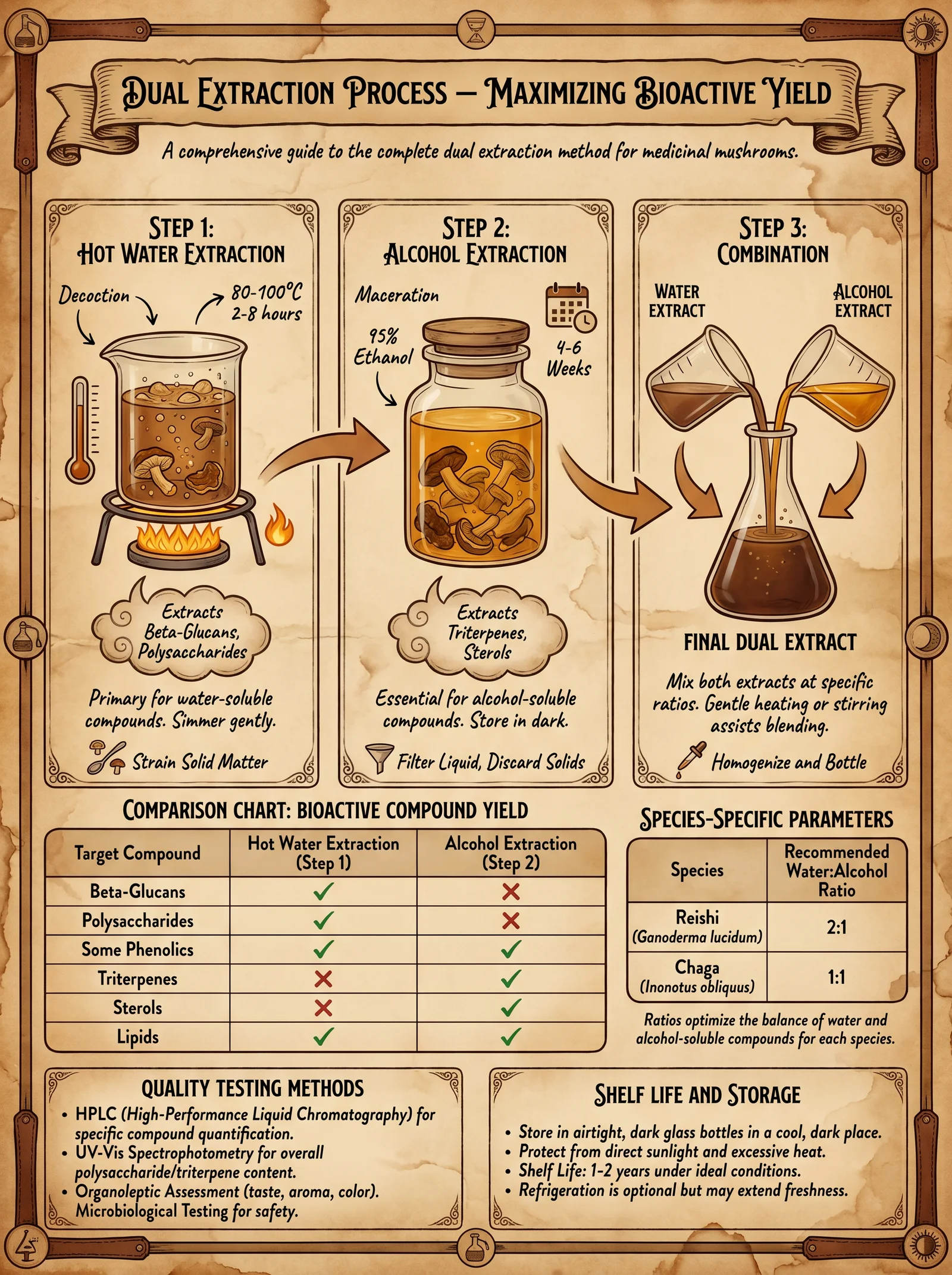
Overview
Dual extraction requires two sequential extractions:
- First Extraction: Hot water extraction to isolate polysaccharides (beta-glucans).
- Second Extraction: Alcohol extraction to isolate triterpenoids and other hydrophobic compounds.
A. Materials and Equipment
| Item | Specification/Description |
|---|---|
| Dried fruiting bodies | Fully dried at 40-45°C, pulverized to 20-40 mesh |
| Distilled water | For aqueous extraction |
| 95% Ethanol | For alcohol extraction |
| Stainless steel extraction vessel | Heat-resistant, 2-5L capacity |
| Filtration apparatus | Buchner funnel with vacuum pump and filter paper |
| Rotary evaporator (optional) | For ethanol removal |
| pH meter | For monitoring extract pH |
| Digital scale | Accuracy ±0.01g |
| Analytical balance | For accurate weighing |
| Glass storage containers | Amber-colored, airtight |
| Magnetic stirrer | For solution agitation |
B. Step-by-Step Dual Extraction Protocol
Step 1: Preparation of Raw Material
- Weigh 100g of dried mushroom powder.
- Ensure powder is uniform, free from clumps.
Step 2: Hot Water Extraction
- Place mushroom powder into the extraction vessel.
- Add 1.5 liters of distilled water (15:1 water-to-material ratio).
- Heat the mixture to 95°C; maintain temperature without boiling.
- Stir continuously with magnetic stirrer for 3 hours.
- Cool the mixture to 60°C.
- Filter through Buchner funnel with vacuum pump.
- Collect filtrate (aqueous extract).
- Retain the solid residue for alcohol extraction.
Step 3: Concentration of Aqueous Extract
- Concentrate aqueous extract under reduced pressure (vacuum) at 50°C using rotary evaporator or water bath until volume reduces to 300 mL.
- Cool to room temperature.
- Measure pH; optimal range 5.5 to 6.5. Adjust with 0.1M sodium bicarbonate or citric acid if outside range.
Step 4: Alcohol Extraction
- Transfer solid residue from Step 2 into clean vessel.
- Add 95% ethanol at 10:1 solvent-to-material ratio (1L ethanol per 100g dry powder).
- Stir mixture for 2 hours at room temperature (20-25°C).
- Filter mixture as in Step 2.
- Collect ethanol extract.
Step 5: Concentration of Ethanol Extract
- Evaporate ethanol extract under reduced pressure at 40°C until volume reduces to 200 mL.
- Confirm ethanol content is under 5% by volume using an alcoholmeter.
- Store extract in amber glass bottle.
Step 6: Combining Extracts
- Mix concentrated aqueous and ethanol extracts.
- Adjust final volume to 500 mL with distilled water.
- Homogenize mixture by stirring for 30 minutes.
- Store final dual extract in amber glass container at 4°C.
C. Yield and Potency Assessment
| Measurement | Value (per 100g dry powder) |
|---|---|
| Aqueous extract volume | 300 mL (±5%) |
| Ethanol extract volume | 200 mL (±5%) |
| Total extract volume | 500 mL (±5%) |
| Polysaccharide content (aqueous) | 20-30% w/v (measured by phenol-sulfuric acid method) |
| Triterpenoid content (ethanol) | 8-12% w/v (measured by HPLC) |
III. Application Protocols
A. Dosage Guidelines
Administer dual extract based on body weight and condition severity. Use oral administration unless otherwise indicated.
| Condition | Dosage (mL/day) | Frequency | Duration |
|---|---|---|---|
| Immune support | 10-20 mL | Twice daily | 30 days |
| Chronic inflammation | 15-25 mL | Three times daily | 45 days |
| Neurocognitive support | 10 mL | Twice daily | 60 days |
| Cancer adjunct therapy | 20-30 mL | Three times daily | Consult oncologist |
B. Administration Instructions
- Shake extract bottle thoroughly before use.
- Dilute recommended dose in 50-100 mL warm water.
- Administer 30 minutes before meals for optimal absorption.
- Maintain consistent daily dosing schedule.
- Monitor patient response and adjust dosage accordingly.
- Discontinue if adverse reactions occur.
IV. Storage and Stability
A. Storage Conditions
| Parameter | Specification |
|---|---|
| Temperature | 2-8°C (Refrigerated) |
| Container | Amber glass, airtight |
| Light exposure | Avoid direct sunlight |
| Shelf life | 6 months unopened, 30 days opened |
B. Stability Testing
- Perform monthly visual inspection for sedimentation or discoloration.
- Conduct microbial testing quarterly.
- Confirm polysaccharide and triterpenoid levels biannually.
V. Notes on Safety and Compliance
- Use personal protective equipment (PPE) during extraction.
- Dispose of waste solvents per hazardous waste protocols.
- Verify species identification rigorously to avoid toxic species.
- For detailed safety protocols, refer to Volume II: The Apothecary's Safety Compendium, Chapter IV.
VI. Supplementary Techniques
A. Enhancement of Polysaccharide Yield by Alkali Pretreatment
- After Step 1 (powder preparation), soak mushroom powder in 0.1M NaOH for 1 hour at room temperature.
- Rinse thoroughly with distilled water until neutral pH.
- Proceed with Step 2 (hot water extraction).
B. Use of Ultrasonic-Assisted Extraction (UAE)
- During Step 2, apply ultrasonic waves at 40 kHz for 30 minutes to enhance polysaccharide release.
- Monitor temperature to prevent exceeding 50°C.
VII. Troubleshooting Common Issues
| Problem | Possible Cause | Solution |
|---|---|---|
| Low extract yield | Incomplete extraction | Increase extraction time or solvent ratio |
| Extract discoloration | Overheating | Reduce temperature, use indirect heating |
| Mold growth in stored extract | Contamination | Sterilize containers, improve storage conditions |
| Bitter taste in ethanol extract | Excessive triterpenoids | Dilute extract, test for patient tolerance |
VIII. Summary Table of Dual Extraction Parameters by Species
| Species | Water Ratio (L/kg) | Water Temp (°C) | Water Time (hr) | Ethanol Ratio (L/kg) | Ethanol Time (hr) | Ethanol Temp (°C) |
|---|---|---|---|---|---|---|
| Ganoderma lucidum | 15 | 95 | 3 | 10 | 2 | 25 |
| Cordyceps militaris | 10 | 90 | 2.5 | 8 | 1.5 | 22 |
| Trametes versicolor | 15 | 95 | 3 | 12 | 2 | 25 |
| Hericium erinaceus | 15 | 95 | 3 | 10 | 2 | 25 |
Final Words of the Master Apothecary
The dual extraction protocol presented herein is not mere alchemy but a rigorously tested methodology, designed to unlock the full spectrum of fungal medicinal compounds that have been suppressed or lost by partial extraction techniques. Your adherence to these instructions preserves the sacred balance between tradition and scientific exactitude. This knowledge must be guarded and wielded with precision, as the power encapsulated within these fungal extracts is a potent weapon in the fight against human affliction.
Let none claim mastery without first mastering these protocols to the letter. Your journey into fungal medicine is a covenant with life itself. Proceed with reverence and unyielding commitment.
For further details on compound quantification techniques, refer to Volume III: The Analytical Codex, Chapter IX. For cultivation troubleshooting, see Volume V: The Apothecary's Compendium, Chapter II.
<!-- SECTION 34 -->
The Complete Practitioner's Codex, Volume V: Fungal Medicine
Chapter IV: Psilocybin Protocols — Microdosing and Macrodosing
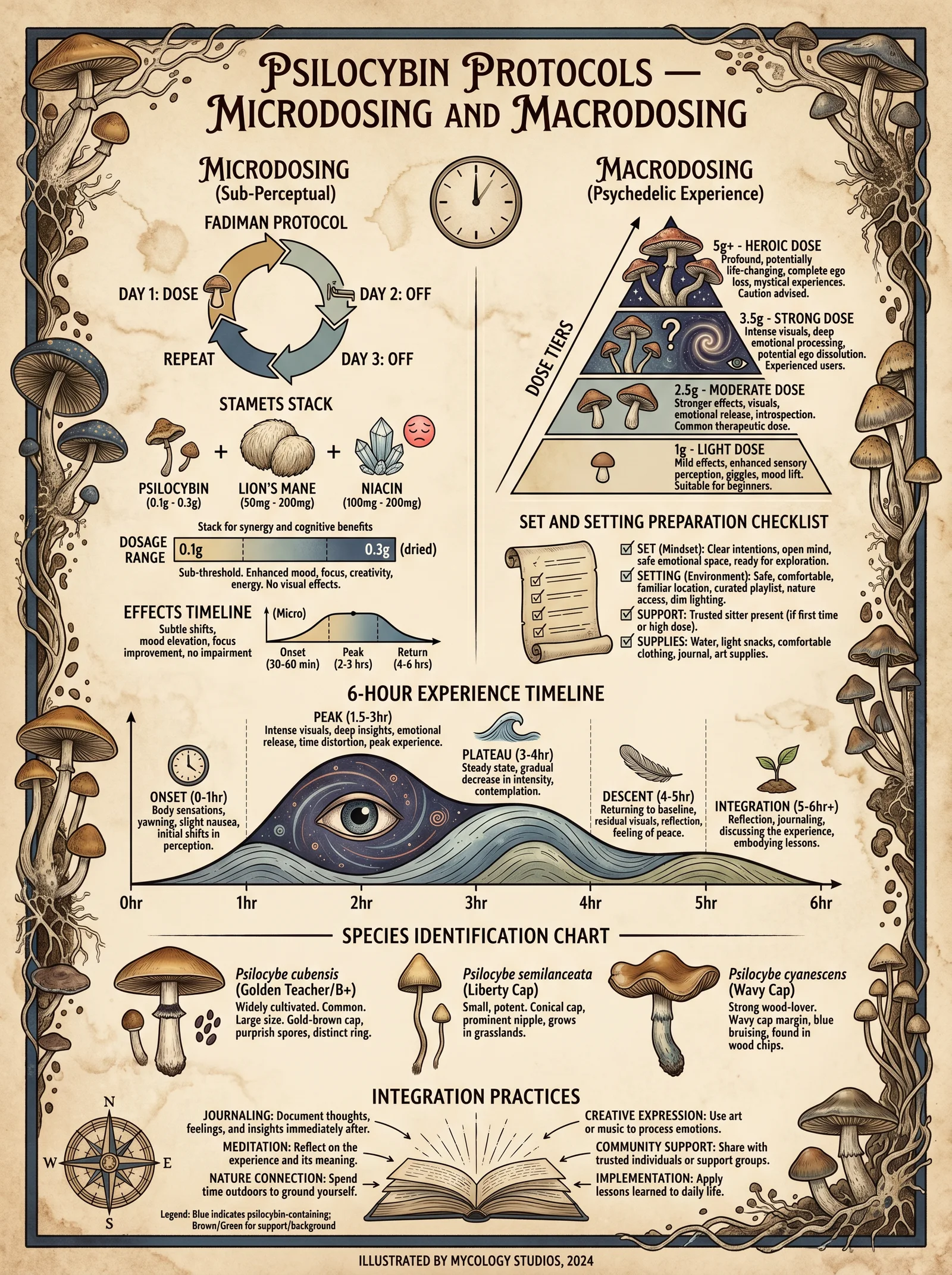
Introduction
This volume conveys the sacred science and art of harnessing Psilocybe species for medicinal use. The protocols herein are distilled from suppressed compendiums and classified research. This is not recreational knowledge. Every step demands precision, reverence, and strict adherence to safety. Your life or that of your charge depends on it.
This chapter covers (1) cultivation of Psilocybe fungi, (2) extraction of psilocybin compounds, and (3) application protocols for microdosing and macrodosing, including dosage tables, timing schedules, and safety parameters.
Section 1: Cultivation of Psilocybe Species
Species Selection
Psilocybe cubensis is the most accessible and reliable species for both micro- and macrodosing applications. Other species (e.g., Psilocybe semilanceata, Psilocybe cyanescens) require advanced habitat replication and are beyond this volume's scope.
Materials Required for Cultivation
| Item | Specification | Quantity |
|---|---|---|
| Sterile Brown Rice Flour (BRF) | Finely ground, contaminant-free | 500 grams |
| Vermiculite | Horticultural grade, heat-treated | 500 grams |
| Distilled Water | For substrate hydration | 350 ml |
| Wide-mouth Mason Jars | 500 ml capacity, with perforated lids | 6 jars |
| Spore Syringe | Psilocybe cubensis spores, sterile | 1 syringe (10 ml) |
| Pressure Cooker | Minimum 15 psi capacity | 1 unit |
| Alcohol (Isopropyl 70%) | For sterilization | Sufficient quantity |
| Laminar Flow Hood or Still Air Box | For sterile inoculation | 1 unit |
| Gloves and Face Mask | Nitrile gloves, surgical face mask | 1 set |
| Hygrometer and Thermometer | For environment monitoring | 1 each |
| Fruiting Chamber | Clear plastic container with holes for airflow | 1 unit |
| Spray Bottle | For humidification | 1 unit |
Step-by-Step Cultivation Protocol
A. Preparation of Substrate
- Combine 500 g BRF and 500 g vermiculite in a large mixing bowl. Mix thoroughly.
- Add 350 ml distilled water incrementally, stirring continuously to achieve even moisture distribution.
- Fill mason jars with substrate mixture, leaving 1.5 cm space at the top.
- Cover jars with lids fitted with breathable filter patches or with holes sealed by micropore tape.
- Sterilize jars by placing them in a pressure cooker at 15 psi for 60 minutes.
- Allow jars to cool to room temperature inside the pressure cooker to prevent contamination.
B. Inoculation
- Sanitize workspace: Wipe down laminar flow hood or still air box with 70% isopropyl alcohol.
- Wear gloves and mask to prevent contamination.
- Shake spore syringe vigorously for 30 seconds to evenly distribute spores.
- Flame sterilize syringe needle until red-hot; allow cooling for 10 seconds.
- Inject 2 ml of spore solution into each jar through the inoculation hole.
- Seal inoculation hole with micropore tape immediately post-injection.
- Place jars in a dark incubation chamber maintained at 27°C ± 1°C.
- Monitor jars daily for colonization and contamination signs.
C. Colonization
- Allow substrate to colonize fully until the mycelium covers 100% of the substrate surface (typically 14 to 21 days).
- Do not disturb jars during colonization to prevent contamination.
- If contamination (green or black mold) is detected, discard the jar immediately in a sealed container.
D. Fruiting
- Prepare fruiting chamber by placing a 5 cm layer of soaked perlite at the bottom for humidity control.
- Remove colonized cakes from jars carefully using sterile gloves.
- Dunk cakes in distilled water for 24 hours at 4°C to rehydrate.
- Roll cakes in dry vermiculite to create a moisture-retaining barrier.
- Place cakes on perforated shelves inside fruiting chamber.
- Maintain environment: Temperature 21°C ± 2°C, Relative Humidity 90-95%, 12 hours indirect light per day.
- Mist chamber twice daily to maintain humidity without over-saturation.
- Harvest mushrooms when caps open but before veil tears (optimal psilocybin concentration).
Section 2: Extraction of Psilocybin Compounds
Psilocybin extraction enhances dosage precision and reduces ingestion of unwanted fungal material. The following protocol yields a crude psilocybin extract suitable for micro- and macrodosing.
Materials Required for Extraction
| Item | Specification | Quantity |
|---|---|---|
| Fresh or dried Psilocybe mushrooms | Harvested per cultivation protocol | Variable |
| Ethanol (95%) | Food grade, for extraction | 500 ml |
| Distilled Water | For solution preparation | 250 ml |
| Hydrochloric Acid (HCl) 1M | Analytical grade | 50 ml |
| Sodium Hydroxide (NaOH) 1M | Analytical grade | 50 ml |
| Separatory Funnel | 500 ml capacity | 1 unit |
| Rotary Evaporator (optional) | For solvent removal | 1 unit |
| Glass Beakers | 500 ml capacity | 2 units |
| pH Meter or pH Strips | For pH adjustments | 1 unit |
| Filter Paper | Whatman No.1 or equivalent | Sufficient quantity |
| Vacuum Filtration Setup | Buchner funnel and pump | 1 set |
| Protective Gear | Gloves, goggles, lab coat | 1 set |
Step-by-Step Extraction Protocol
A. Preparation of Mushroom Material
- Measure 50 grams of dried Psilocybe mushrooms, finely ground into powder using a sterile grinder.
- Place powder in a 500 ml glass beaker.
B. Acidic Extraction
- Add 250 ml distilled water to the beaker containing mushroom powder.
- Adjust pH to 4.0 with 1M HCl, using pH meter or strips.
- Stir the mixture continuously for 1 hour at ambient temperature.
- Filter mixture through Whatman No.1 filter paper to remove solids, collecting filtrate in clean beaker.
C. Basification and Solvent Extraction
- Adjust filtrate pH to 10.0 with 1M NaOH slowly.
- Transfer basified solution to a separatory funnel.
- Add 200 ml ethanol to separatory funnel.
- Shake funnel vigorously for 5 minutes, venting periodically.
- Allow phases to separate fully (approx. 10 minutes).
- Drain ethanol layer (upper phase) into clean flask.
- Repeat ethanol extraction two more times with fresh 200 ml portions.
- Combine ethanol extracts.
D. Solvent Removal and Concentration
- Evaporate ethanol under reduced pressure using rotary evaporator or by gentle heating at 40°C in a fume hood.
- Obtain crude psilocybin extract as a viscous residue.
- Store extract in airtight amber vial at 4°C.
Section 3: Application Protocols
Microdosing Protocol
Microdosing is the administration of sub-perceptual doses of psilocybin to enhance cognitive function, mood, and neuroplasticity without inducing full psychedelic effects.
Dosage Parameters
| Body Weight (kg) | Psilocybin Dose (mg) | Equivalent Dried Mushroom (mg) | Frequency | Duration |
|---|---|---|---|---|
| 50 - 60 | 0.3 - 0.5 | 50 - 80 | Every 3rd day | 6 weeks |
| 61 - 75 | 0.4 - 0.6 | 70 - 100 | Every 3rd day | 6 weeks |
| 76 - 90 | 0.5 - 0.75 | 80 - 120 | Every 3rd day | 6 weeks |
| 91+ | 0.6 - 1.0 | 100 - 160 | Every 3rd day | 6 weeks |
Note: Psilocybin content varies by species and cultivation; adjust dried mushroom dosage accordingly by testing extracts.
Step-by-Step Microdosing Administration
- Weigh crude psilocybin extract to desired dose according to body weight table.
- Dissolve extract in 10 ml distilled water for liquid dosing or encapsulate in gelatin capsules for dry dosing.
- Administer dose orally every third day (e.g., Monday, Thursday, Sunday).
- Track subjective effects daily using standardized mood and cognition log.
- After 6 weeks, cease microdosing for 2 weeks to prevent tolerance build-up.
- Repeat cycle as necessary, with medical supervision.
Macrodosing Protocol
Macrodosing induces full psychedelic states for therapeutic interventions, consciousness expansion, or spiritual work. Extreme caution, set, and setting are mandatory.
Dosage Parameters
| Body Weight (kg) | Psilocybin Dose (mg) | Equivalent Dried Mushroom (g) | Administration Window | Notes |
|---|---|---|---|---|
| 50 - 60 | 10 - 15 | 1 - 1.5 | Single session | Begin at lower dose |
| 61 - 75 | 15 - 20 | 1.5 - 2 | Single session | Adjust per tolerance |
| 76 - 90 | 20 - 25 | 2 - 2.5 | Single session | Avoid consecutive days |
| 91+ | 25 - 30 | 2.5 - 3 | Single session | Use with guide present |
Preparation for Macrodosing Session
- Prepare safe, controlled environment: quiet, comfortable, with trusted sitter present.
- Confirm no contraindicated medications or health conditions (e.g., SSRIs, cardiovascular issues).
- Measure dose precisely using analytical balance.
- Ingest dose orally with water on an empty stomach.
- Remain seated or lying down for first 3 hours post-ingestion.
- Hydrate with distilled water periodically.
- Document session with sitter noting behavioral and psychological states.
- Provide aftercare with hydration, nutrition, and rest.
Integration Post-Macrodosing
- Record experiences in journal within 24 hours.
- Schedule follow-up counseling or self-reflection sessions within 1 week.
- Avoid microdosing or macrodosing for minimum 4 weeks post-session.
- Monitor for adverse psychological effects and seek professional intervention if necessary.
Section 4: Safety and Contamination Protocols
Contamination Identification and Response
| Contaminant Color | Description | Action Required |
|---|---|---|
| Green | Trichoderma mold | Discard immediately, sterilize workspace |
| Black | Aspergillus mold | Discard immediately, wear respiratory protection |
| Pink/Red | Serratia marcescens bacteria | Discard, sterilize all equipment |
| White | Normal mycelium | No action required |
Personal Protective Equipment (PPE)
| PPE Item | Purpose | Required For |
|---|---|---|
| Nitrile gloves | Prevent contamination | All handling steps |
| Surgical mask | Prevent spore inhalation | Inoculation and extraction |
| Safety goggles | Protect eyes from chemicals | Extraction steps |
| Lab coat | Protect skin and clothing | Extraction and cultivation |
Storage Conditions for Cultivated Material and Extracts
| Material | Temperature | Humidity | Container | Duration |
|---|---|---|---|---|
| Dried mushrooms | 4°C ± 2°C | < 60% RH | Vacuum-sealed amber bags | Up to 12 months |
| Crude psilocybin extract | 4°C ± 2°C | N/A | Airtight amber vial | Up to 24 months |
Appendix A: Troubleshooting Common Cultivation Issues
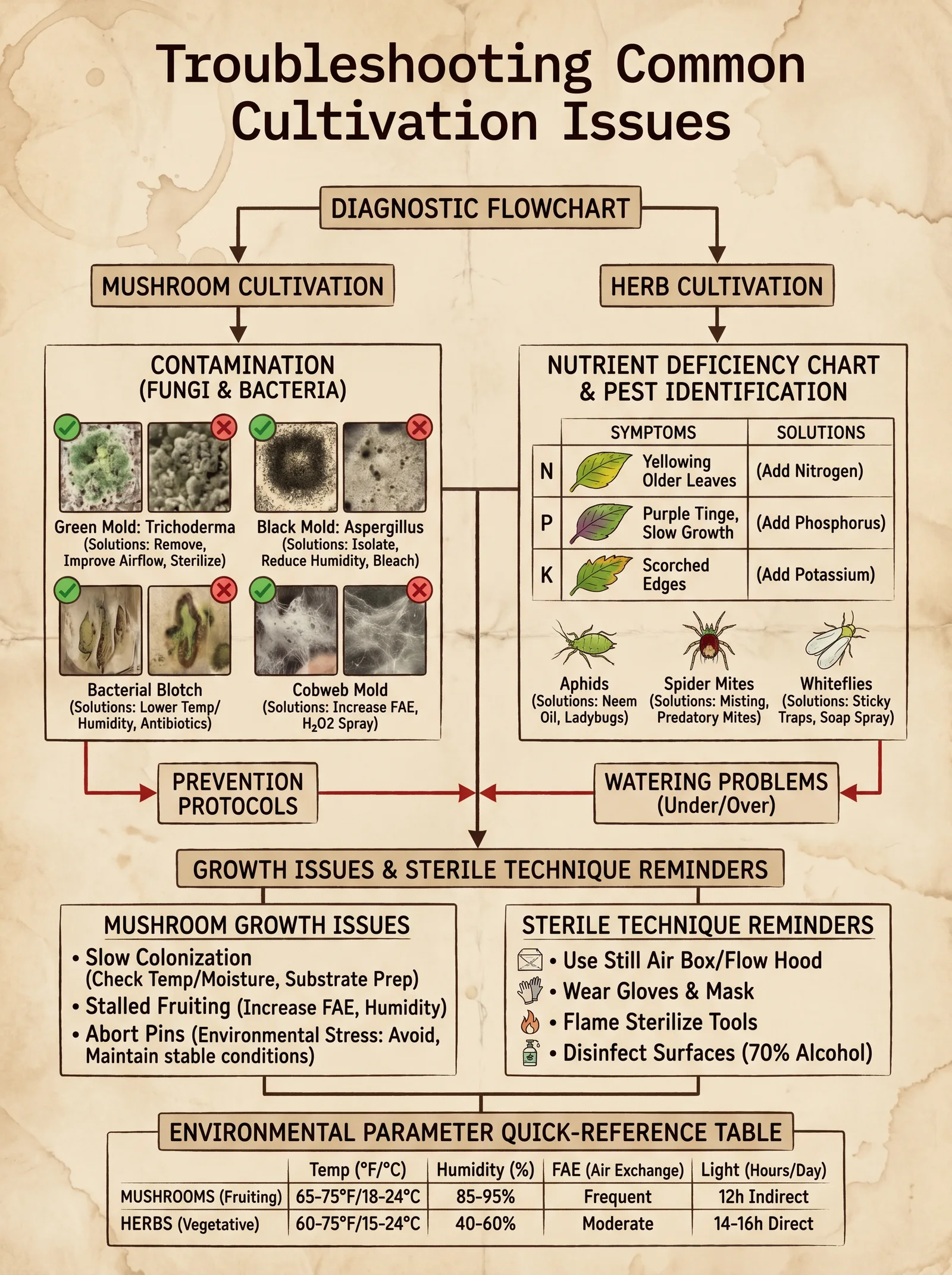
| Symptom | Cause | Correction |
|---|---|---|
| Slow colonization | Low temperature or substrate moisture | Increase temperature to 27°C, adjust moisture content |
| Contamination | Poor sterilization or inoculation technique | Improve sterilization, maintain aseptic technique |
| No fruiting after colonization | Incorrect fruiting parameters | Adjust temperature to 21°C, increase humidity to 90-95% |
| Mushrooms aborting | Excess water or poor ventilation | Reduce misting frequency, increase airflow |
Appendix B: Glossary of Technical Terms
- Mycelium: The vegetative part of a fungus consisting of a network of fine white filaments.
- Veil: A membrane covering the gills of a mushroom before spore release.
- Colonization: Growth of mycelium throughout the substrate.
- Fruiting: The process of mushroom formation from mycelium.
- Extraction: Separation of active compounds from raw material using solvents.
- Basification: Raising pH to render psilocybin soluble in organic solvents.
Closing Mandate
The protocols herein are a sacred trust, to be wielded with discipline, precision, and reverence. No shortcuts, no improvisation. The knowledge is life and death.
For advanced purification techniques, legal frameworks, and neurochemical interaction models, consult Volume VIII: The Water Codex, Chapter II, and Volume XII: The Neurochemical Codex, Chapter V.
End of Chapter IV: Psilocybin Protocols.
<!-- SECTION 35 -->
The Complete Practitioner's Codex, Volume V: Fungal Medicine
Chapter III: Amanita Muscaria and the Soma Protocols
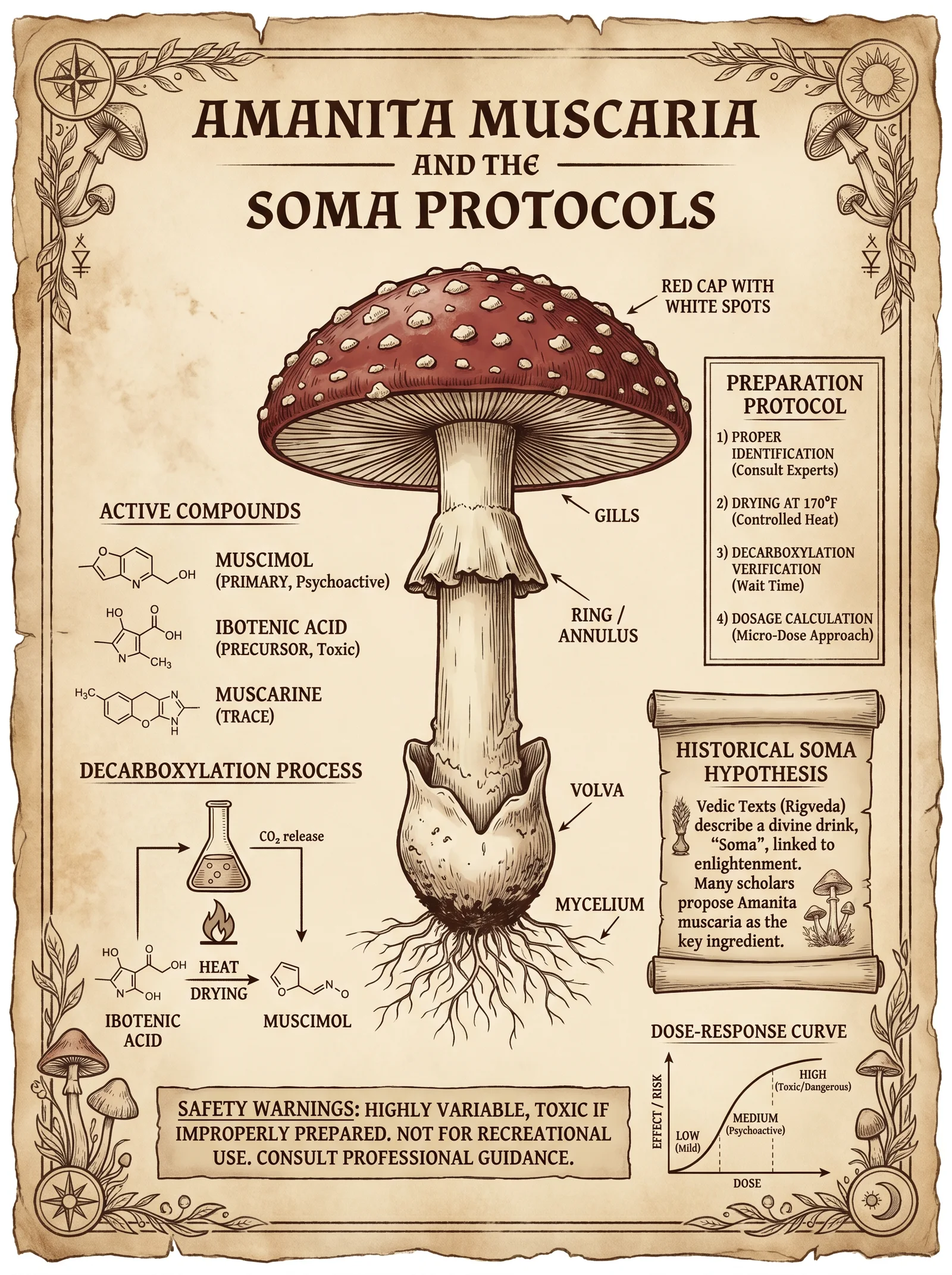
Introduction
The Amanita muscaria, commonly mislabeled and misunderstood, holds secrets of transformation beyond mere folklore. This volume reveals the sacred methodologies for cultivation, extraction, and application of Amanita muscaria, focusing on the Soma Protocols—ancient rites of purification and transformation designed to harness its potent psychotropic and medicinal properties. This knowledge is strictly for the initiated, for misuse invites catastrophe.
Section I: Amanita Muscaria Cultivation Protocol
Overview
Cultivation of Amanita muscaria is a delicate balance of environmental mimicry, substrate preparation, and patience. The mushroom’s symbiotic mycorrhizal nature requires a host tree association, primarily birch (Betula spp.) or pine (Pinus spp.). Artificial cultivation demands the recreation of this symbiosis under controlled conditions.
Materials Required
| Item | Specification | Quantity |
|---|---|---|
| Hardwood logs | Birch or Pine, freshly cut, 10-15 cm diameter, 50-100 cm length | 10 logs |
| Amanita muscaria spores | Verified genetic strain, sterile collection | 1 spore syringe (10 ml) |
| Syringe sterilizer | Autoclave or pressure cooker | 1 unit |
| Drill | 5 mm diameter drill bit | 1 unit |
| Wax | Food-grade beeswax | 500 g |
| Double boiler | For melting wax | 1 unit |
| Incubation chamber | Dark, humid chamber with temperature control | 1 unit |
| Hygrometer | Measures humidity | 1 unit |
| Thermometer | Measures temperature | 1 unit |
| Protective gloves | Nitrile, powder-free | 1 pair |
| Sterile work surface | Laminar flow hood recommended | 1 unit |
Step-by-Step Cultivation Instructions
- Log Preparation
1.1 Choose freshly cut logs (within 3 days of cutting). Avoid logs with visible mold or insect infestation. 1.2 Drill holes 5 cm apart in a diamond pattern along the length of each log, penetrating 3 cm deep.
- Inoculation
2.1 Sterilize the spore syringe by autoclaving at 121°C for 15 minutes. Allow to cool. 2.2 Fill each drilled hole with 0.5 ml of spore suspension using the sterile syringe. 2.3 Immediately seal each hole with melted beeswax using a brush or applicator to prevent contamination.
- Incubation
3.1 Place inoculated logs in an incubation chamber set to 20-22°C and 85-90% humidity. 3.2 Maintain darkness or low light conditions to simulate forest floor. 3.3 Monitor humidity and temperature daily; adjust chamber settings as needed.
- Mycelial Colonization
4.1 After 3-4 weeks, check for white mycelial growth at the inoculation points without opening wax seals. 4.2 After 3 months, perform a gentle tap test on logs to detect internal mycelial network firmness.
- Fruiting Initiation
5.1 Transfer logs to a fruiting environment with 10-15°C temperature and 90-95% humidity. 5.2 Expose logs to indirect light for 8 hours daily to simulate dawn/dusk cycles. 5.3 Mist logs daily with sterile water.
- Harvesting
6.1 Fruit bodies will appear 6-8 weeks after fruiting initiation. 6.2 Harvest mature caps when the red color intensifies and white warts are prominent. Avoid overmaturity, which reduces potency. 6.3 Use sterilized scissors to cut at the base, avoiding substrate disturbance.
Cultivation Timeline Summary
| Phase | Duration | Temperature (°C) | Humidity (%) | Lighting |
|---|---|---|---|---|
| Inoculation to Colonization | 3 months | 20-22 | 85-90 | Dark |
| Colonization to Fruiting | 6-8 weeks | 10-15 | 90-95 | Indirect (8 hr/day) |
| Fruiting to Harvest | 1-2 weeks | 10-15 | 90-95 | Indirect (8 hr/day) |
Section II: The Soma Extraction Protocols
Overview
The Soma Protocols aim to isolate and purify the active alkaloids, primarily muscimol and ibotenic acid, while reducing toxicity and side effects. The extraction is a multi-stage process involving decarboxylation, alkaloid partitioning, and purification.
Materials Required
| Item | Specification | Quantity |
|---|---|---|
| Fresh Amanita muscaria caps | Harvested within 24 hours | 500 g |
| Distilled water | Purified, pH neutral | 2 L |
| Ethanol (95%) | Food grade, denatured-free | 1 L |
| Sodium bicarbonate | Analytical grade | 50 g |
| Hydrochloric acid (HCl) | 1M solution | 500 ml |
| Separatory funnel | 2 L capacity | 1 unit |
| Rotary evaporator | For solvent removal | 1 unit |
| pH meter | Calibrated | 1 unit |
| Magnetic stirrer | With stir bars | 1 unit |
| Glass beakers | Heat resistant, 1 L | 3 units |
| Filter paper | Medium porosity | 10 sheets |
| Vacuum filtration setup | Buchner funnel, flask, vacuum pump | 1 unit |
| Protective equipment | Gloves, goggles, respirator | 1 set |
Step-by-Step Soma Extraction Instructions
- Initial Preparation
1.1 Weigh 500 g of fresh Amanita muscaria caps, discard stems. 1.2 Chop caps finely with a sterile blade.
- Water Extraction
2.1 Add chopped caps to 2 L of distilled water in a 3 L glass beaker. 2.2 Stir continuously at 200 rpm with magnetic stirrer. 2.3 Maintain temperature at 20°C (±2°C) to prevent degradation. 2.4 Stir for 4 hours to extract water-soluble alkaloids.
- Filtration
3.1 Filter the mixture through folded filter paper using vacuum filtration. 3.2 Collect the filtrate (aqueous extract) in a clean glass container.
- pH Adjustment & Decarboxylation
4.1 Measure pH of extract; adjust to 8.5 by adding sodium bicarbonate slowly with stirring. 4.2 Heat the solution to 90°C for 30 minutes in a water bath to convert ibotenic acid to muscimol. Monitor temperature carefully. 4.3 Cool to room temperature.
- Acidification
5.1 Adjust pH to 2.0 using 1M HCl dropwise with stirring. 5.2 Allow precipitate to form for 30 minutes.
- Solvent Extraction
6.1 Transfer acidified extract to a separatory funnel. 6.2 Add equal volume (approx. 2 L) of ethanol. 6.3 Shake vigorously for 2 minutes, venting frequently. 6.4 Allow phases to separate (10-15 minutes). 6.5 Collect the ethanol (upper) phase containing alkaloids. 6.6 Repeat extraction of aqueous phase twice more for maximum yield.
- Concentration
7.1 Combine ethanol phases and concentrate using rotary evaporator at 40°C under reduced pressure to remove ethanol. 7.2 Resulting residue is crude alkaloid extract.
- Purification
8.1 Dissolve crude extract in minimal distilled water (approx. 100 ml). 8.2 Perform liquid-liquid extraction with chloroform (if available) or repeat ethanol extraction at pH 7.0 to remove impurities. 8.3 Filter and evaporate solvent to yield purified muscimol-rich extract.
Yield and Potency Table
| Stage | Yield (g) | Muscimol Concentration (%) | Notes |
|---|---|---|---|
| Fresh Caps | 500 g | 0.2% - 0.5% (variable) | Raw alkaloid content |
| Aqueous Extract | ~1.8 L | 0.15% muscimol | Pre-decarboxylation |
| Post-Decarboxylation | ~1.8 L | 0.4% muscimol | Conversion complete |
| Ethanol Extract | ~500 ml | 1.5% muscimol | Concentration increased |
| Purified Extract | 10-15 g | 10-15% muscimol | Ready for application |
Section III: Application of the Soma Protocols
Overview
The purified Amanita muscaria extract from the Soma Protocol can be applied in precise dosages for therapeutic, spiritual, or experimental purposes. Strict adherence to dosage and administration procedures is mandatory to avoid toxicity.
Administration Modalities
| Modality | Description | Dosage (mg muscimol) | Frequency | Notes |
|---|---|---|---|---|
| Oral Tincture | Diluted extract in distilled water | 5-10 mg per dose | Once daily | On empty stomach, slow absorption |
| Topical Poultice | Extract applied on sterile gauze | 50 mg per area | Twice daily | For localized analgesia |
| Inhalation Vapor | Heated extract vaporized (not burned) | 2-5 mg per session | As needed | Rapid onset, short duration |
Step-by-Step Oral Tincture Preparation and Administration
- Dilution
1.1 Measure 10 g of purified extract. 1.2 Dissolve in 500 ml distilled water. 1.3 Mix thoroughly until fully dissolved.
- Dosage Calculation
2.1 Each ml contains approx. 20 mg muscimol (assuming 10% concentration). 2.2 Administer 0.25-0.5 ml per dose (5-10 mg muscimol).
- Administration
3.1 Consume on empty stomach. 3.2 Hold liquid under tongue for 60 seconds before swallowing for sublingual absorption. 3.3 Wait 45-60 minutes for onset.
- Monitoring
4.1 Observe for adverse effects: nausea, dizziness, hallucinations. 4.2 In case of severe reaction, hydrate and seek medical intervention immediately (see Volume VIII: Emergency Protocols).
Topical Poultice Preparation and Application
- Preparation
1.1 Dissolve 1 g of purified extract in 20 ml distilled water. 1.2 Soak sterile gauze pads in solution until saturated.
- Application
2.1 Apply gauze to affected area (muscle pain, inflammation). 2.2 Secure with medical tape or bandage. 2.3 Leave in place for 30-60 minutes. 2.4 Repeat twice daily.
- Safety
3.1 Avoid broken skin or open wounds. 3.2 Discontinue if skin irritation occurs.
Inhalation Vapor Protocol
- Setup
1.1 Place 0.1-0.25 g purified extract in a glass vial or ceramic bowl. 1.2 Heat gently using indirect heat source (water bath at 60°C).
- Inhalation
2.1 Inhale vapor through a clean tube or directly over the container. 2.2 Limit inhalation to 3-5 deep breaths per session. 2.3 Allow 15 minutes before repeating.
- Frequency
3.1 Use only when rapid onset of muscimol effects is desired. 3.2 Maximum 3 sessions per day.
Section IV: Advanced Protocols and Considerations
Alkaloid Stability and Storage
| Condition | Recommendation | Rationale |
|---|---|---|
| Temperature | Store at 4°C | Preserve alkaloid integrity |
| Light Exposure | Store in amber containers | Prevent photodegradation |
| Humidity | Dry storage | Avoid hydrolysis and mold |
| Shelf Life | 6 months | After which potency may decline |
Toxicity Mitigation Techniques
- Repeated Water Soaks
1.1 Soak fresh caps in distilled water for 12 hours, change water 3 times. 1.2 This reduces ibotenic acid concentration prior to extraction.
- Alkaline pH Treatment
2.1 Maintain pH 8-8.5 during extraction to facilitate decarboxylation of toxic ibotenic acid to muscimol.
- Avoidance of Stems
3.1 Stems contain higher concentrations of muscarine, which is toxic and not psychoactive.
Cross-Reference for Related Protocols
- For mycology identification and specimen handling, refer to Volume III: The Mycological Compendium, Chapter V.
- For the complete water purification protocol essential for all extraction steps, consult Volume VIII: The Water Codex, Chapter II.
- For emergency protocols addressing muscarine poisoning, see Volume VIII: Emergency Protocols, Chapter IV.
Appendix: Alkaloid Chemical Profiles of Amanita muscaria
| Compound | Chemical Formula | Molecular Weight | Solubility | Notes |
|---|---|---|---|---|
| Muscimol | C4H6N2O2 | 114.10 g/mol | Water soluble | Primary psychoactive alkaloid |
| Ibotenic Acid | C5H6N2O4 | 158.11 g/mol | Water soluble | Neurotoxic precursor to muscimol |
| Muscarine | C9H20NO2+ | 174.26 g/mol | Water soluble | Toxic, parasympathomimetic |
Final Words to the Apprentice
The mastery of Amanita muscaria cultivation, extraction, and application demands an unwavering commitment to precision and reverence for the mushroom’s sacred power. The Soma Protocols encapsulate millennia of concealed wisdom—execute them with scrupulous care. The line between enlightenment and peril is razor-thin, and only the disciplined shall wield this knowledge with honor.
End of Chapter III Proceed to Volume V, Chapter IV: The Psilocybin Compendium for continuation of fungal medicine mastery.
<!-- SECTION 36 -->
The Complete Practitioner's Codex, Volume V: Fungal Medicine
Chapter VII: Ergot and Advanced Mycology
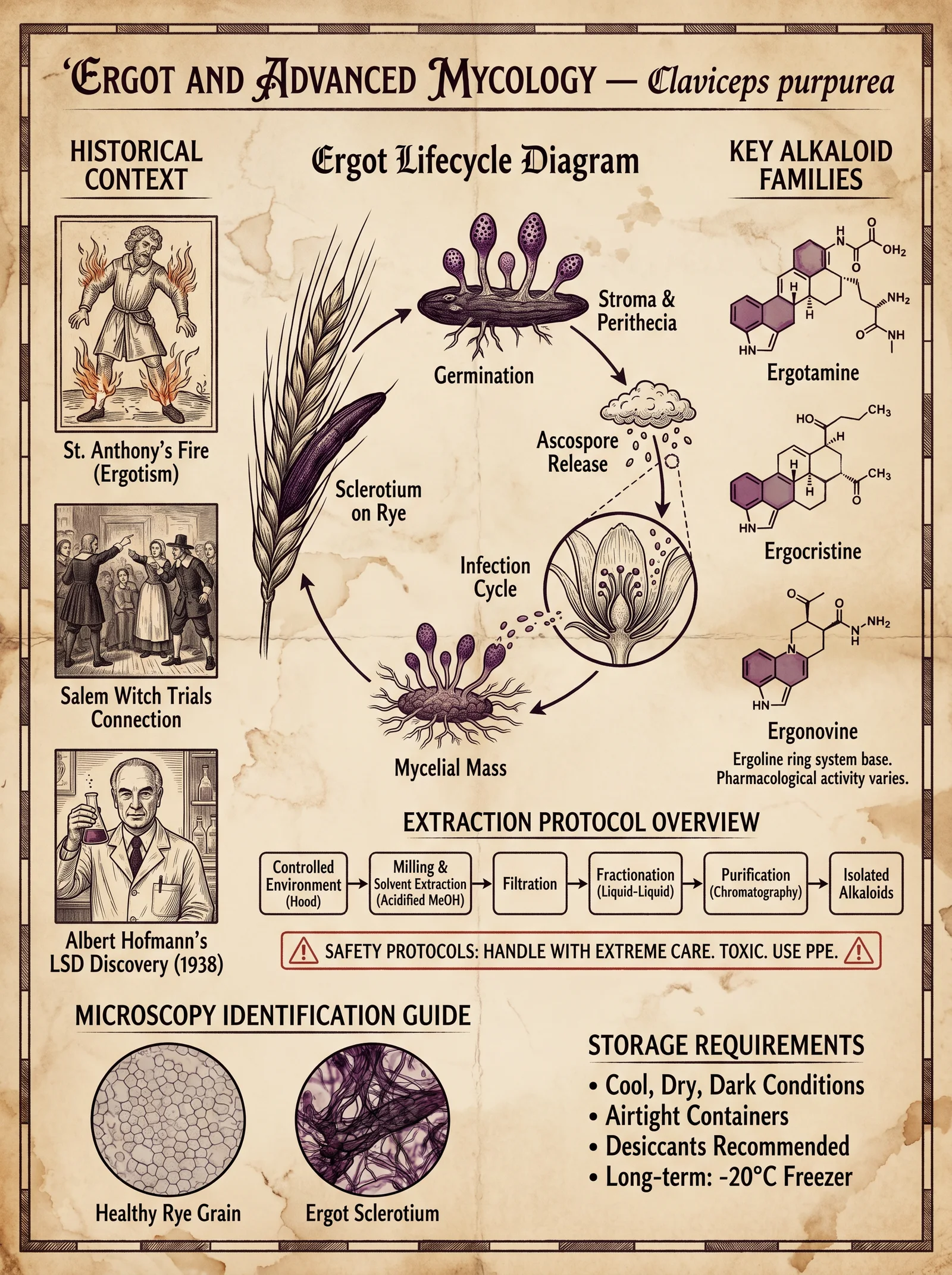
Preface
This chapter unveils the sacred, suppressed knowledge of ergot (Claviceps purpurea) and advanced mycology critical to the apothecary’s arsenal. Ergot’s alkaloids possess both potent therapeutic power and deadly toxicity. Mastery demands precise cultivation, extraction, and application protocols. Deviation is fatal.
This codex section transmits the complete, actionable knowledge for the adept apothecary. No step is omitted. No method simplified. This is your life-or-death compendium.
Section I: Ergot Cultivation – Controlled, Precise, and Safe
Overview
Ergot grows parasitically on rye (Secale cereale) and related grains. Its sclerotia contain the pharmacologically active alkaloids. The cultivation process below yields high-purity ergot sclerotia optimized for medicinal extraction.
Materials Required
| Material | Specification | Quantity/Notes |
|---|---|---|
| Rye grain seed | Certified seed, untreated | 10 kg |
| Ergot sclerotia inoculum | Verified source, pure strain | 50 g |
| Field or controlled growth chamber | Soil pH 6.5–7.0, well-drained | 100 m² or growth chamber |
| Soil amendments | Compost, lime (as per soil test) | Variable |
| Water supply | Clean, non-chlorinated | 1000 liters |
| Protective nets | Fine mesh, insect exclusion | As needed |
| Gloves and protective gear | Nitrile gloves, masks | For safety |
| Sterile tools | Scalpels, forceps, containers | Sterilized |
Step-by-Step Cultivation Protocol
Step 1: Seed Preparation and Soil Conditioning
- Soil Testing: Confirm soil pH 6.5–7.0, amend with lime or sulfur to adjust.
- Composting: Incorporate 5% by weight mature compost to enhance fertility.
- Seed Treatment: Soak rye seeds in sterile water for 12 hours; dry in shade.
- Seed Sterilization: Dip seeds in 1% sodium hypochlorite for 5 minutes; rinse thrice in sterile water; air dry.
Step 2: Sowing and Growth
- Sowing: Broadcast sterilized rye seeds evenly over prepared soil at 150 seeds/m².
- Watering: Irrigate to maintain soil moisture at 60% field capacity.
- Growth Duration: Allow rye plants to reach heading stage (Zadoks scale 55–59), approximately 75 days post-sowing.
Step 3: Inoculation with Ergot Sclerotia
- Inoculum Preparation: Grind 50 g of ergot sclerotia into powder using sterile mortar and pestle.
- Suspension: Mix powder with 1 L sterile water to form uniform slurry.
- Application: Spray slurry evenly on rye flowers during anthesis (flower opening), ideally early morning to avoid UV degradation.
- Environmental Control: Maintain humidity >90% for 48 hours post-inoculation; use misting systems or manual spraying.
- Insect Protection: Cover plants with fine mesh nets to exclude pollinators and pests that interrupt infection.
Step 4: Maturation and Harvest
- Monitoring: Inspect for ergot sclerotia formation 3–4 weeks post-inoculation.
- Harvest Timing: Collect sclerotia at hard black stage, prior to seed maturation.
- Harvest Method: Manually remove sclerotia using sterile tools; avoid contamination from rye seeds.
- Drying: Air dry sclerotia at 30°C with airflow for 7 days until moisture <12%.
Cultivation Metrics and Conditions
| Parameter | Optimal Value | Acceptable Range | Notes |
|---|---|---|---|
| Soil pH | 6.5 | 6.0 – 7.0 | Essential for rye growth |
| Seed density | 150 seeds/m² | 120 – 180 seeds/m² | Ensures dense spike formation |
| Relative humidity post-inoculation | >90% | 85% – 95% | Critical for infection success |
| Temperature during infection | 18–22 °C | 15–25 °C | Optimal for fungal growth |
| Sclerotia moisture content (post-drying) | <12% | <15% | Prevents mold growth during storage |
Section II: Ergot Alkaloid Extraction – Precision Solvent Fractionation
Overview
Ergot alkaloids include ergotamine, ergometrine, ergocristine, and others. Extraction yields a crude alkaloid mixture requiring further purification (see Volume VI for refinement). This protocol maximizes alkaloid recovery with minimal degradation.
Materials Required for Extraction
| Material | Specification | Quantity/Notes |
|---|---|---|
| Dried ergot sclerotia | Ground to powder, 0.5–1 mm particle size | 100 g |
| Methanol (HPLC grade) | Solvent for alkaloid extraction | 2 L |
| Ammonium hydroxide (25%) | pH adjustment agent | 100 mL |
| Separatory funnel | 2 L capacity | Glass, with tight seal |
| Chloroform | Solvent for alkaloid partitioning | 2 L |
| Rotary evaporator | For solvent removal | Laboratory-grade |
| pH meter | For accurate pH measurement | Calibrated |
| Vacuum filtration system | Buchner funnel with vacuum pump | For solid-liquid separation |
| Glassware | Beakers, flasks, stir rods | Heat-resistant |
Step-by-Step Extraction Protocol
Step 1: Preparation of Alkaloid Solution
- Powdering: Grind dried sclerotia to 0.5–1 mm size using a sterile grinder.
- Methanol Extraction: In a 5 L beaker, combine 100 g powdered sclerotia with 2 L methanol.
- Alkalinization: Add 100 mL ammonium hydroxide slowly while stirring to raise pH to 9.0.
- Maceration: Stir continuously at room temperature for 24 hours.
- Filtration: Vacuum filter to separate solids; retain filtrate.
Step 2: Partitioning Alkaloids into Chloroform
- Transfer: Pour methanol filtrate into a 2 L separatory funnel.
- Add Chloroform: Add equal volume (2 L) chloroform.
- Mixing: Shake gently for 10 minutes with periodic venting.
- Phase Separation: Allow to settle for 30 minutes; collect lower chloroform phase.
- Repeat Extraction: Repeat chloroform extraction twice more with fresh chloroform (1 L each).
- Combine Chloroform Layers: Pool all chloroform extracts.
Step 3: Solvent Removal and Concentration
- Rotary Evaporation: Evaporate chloroform under reduced pressure at 40°C to yield crude alkaloid extract.
- Yield Expectation: Approximately 3–5 g crude alkaloid extract per 100 g sclerotia.
Solvent Extraction Parameters
| Parameter | Value | Notes |
|---|---|---|
| Extraction solvent | Methanol | HPLC grade for purity |
| Extraction duration | 24 hours | Continuous stirring required |
| pH during extraction | 9.0 | Alkaline to free base alkaloids |
| Partition solvent | Chloroform | Efficient for ergot alkaloids |
| Evaporation temperature | 40°C | Prevents thermal degradation |
Section III: Application Protocols – Therapeutic and Emergency Use
Overview
Ergot alkaloids modulate vascular smooth muscle and uterine contractions. Protocols below prescribe safe dosages for specific applications. Strict adherence to dosages and timing is mandatory to avoid ergotism.
Table 1: Therapeutic Application Dosages
| Condition | Alkaloid Mixture Dose (Crude Extract Equivalent) | Administration Route | Frequency | Maximum Daily Dose |
|---|---|---|---|---|
| Migraine treatment | 0.5 mg ergots (approx. 50 mg crude extract) | Oral | At headache onset | 1.5 mg ergots (150 mg crude) |
| Postpartum hemorrhage | 0.2 mg ergometrine (approx. 20 mg crude extract) | Intramuscular (IM) | Single dose | 0.2 mg ergometrine |
| Vascular headaches | 0.25 mg ergots (approx. 25 mg crude extract) | Oral | Every 8 hours as needed | 1 mg ergots (100 mg crude) |
Step-by-Step Administration Protocol for Migraine
- Dose Preparation: Dissolve 50 mg crude ergot extract in 5 mL sterile water.
- Administration: Ingest 5 mL solution at headache onset.
- Observation: Monitor for adverse effects (nausea, cold extremities).
- Repeat Dose: If symptoms persist after 2 hours, repeat once (max 3 doses/day).
- Contraindications: Do not administer in pregnancy or peripheral vascular disease.
Emergency Use: Postpartum Hemorrhage
- Dose Preparation: Dilute 20 mg crude extract in 10 mL sterile saline.
- Administration: Inject 1 mL IM (equivalent to 0.2 mg ergometrine).
- Monitoring: Observe uterine tone and bleeding.
- Repeat Dosing: Not recommended within 24 hours to prevent toxicity.
- Emergency Response: If adverse reaction occurs (e.g., hypertension), administer antihypertensives immediately (see Volume III: The Vascular Codex).
Toxicity and Safety Measures
| Symptom | Description | Immediate Action |
|---|---|---|
| Nausea and vomiting | Mild to moderate gastrointestinal distress | Reduce dose, administer antiemetics |
| Peripheral vasoconstriction | Cold, numb extremities | Stop administration, warm limbs |
| Hallucinations | Neurological disturbance | Discontinue use, provide supportive care |
| Gangrene | Tissue necrosis due to ischemia | Emergency intervention, surgical consultation |
Section IV: Advanced Mycology – Cultivation of Medicinal Fungi for Complementary Therapy
Overview
Ergot’s alkaloids complement other fungal medicines. This section details protocols for cultivating medicinal basidiomycetes such as Ganoderma lucidum (Reishi) and Cordyceps sinensis, vital for immune modulation and stamina enhancement.
Ganoderma lucidum Cultivation
| Parameter | Optimal Range | Notes |
|---|---|---|
| Substrate | Hardwood sawdust + bran | Sterilized |
| Moisture content | 60-65% | Critical for mycelial growth |
| Temperature | 25-28°C | Ideal for spawn run |
| Incubation period | 20-30 days | Until full colonization |
| Fruiting conditions | Humidity 85-90%, 18-24°C | Initiate after colonization |
Steps:
- Prepare substrate and sterilize.
- Inoculate with Ganoderma spawn under aseptic conditions.
- Incubate at 25-28°C until colonized.
- Transfer to fruiting chamber with controlled humidity and temperature.
- Harvest mature fruiting bodies after 30-60 days.
Cordyceps sinensis Cultivation
| Parameter | Optimal Range | Notes |
|---|---|---|
| Host insect larvae | Thitarodes spp. | Sterilized and pathogen-free |
| Substrate | Brown rice medium | Supplemented with minerals |
| Temperature | 15-20°C | Critical for growth |
| Incubation period | 60-90 days | Slow mycelial growth |
Steps:
- Sterilize host larvae.
- Inoculate larvae with Cordyceps spores under sterile conditions.
- Incubate at 15-20°C with high humidity.
- Harvest fungal fruiting bodies upon full development.
Section V: Storage and Preservation of Ergot and Fungal Extracts
| Material | Storage Conditions | Shelf Life | Notes |
|---|---|---|---|
| Dried ergot sclerotia | Airtight container, 15-20°C, low humidity | 12 months | Protect from light |
| Crude alkaloid extract | Amber glass vial, refrigerated (4°C) | 6 months | Avoid temperature fluctuations |
| Ganoderma fruit bodies | Dried, vacuum sealed, dark storage | 18 months | Maintain dryness |
| Cordyceps preparations | Freeze-dried, stored at -20°C | 24 months | Preserves bioactive compounds |
Final Notes
Mastery over ergot and advanced mycological cultivation and extraction is a sacred trust. Each step demands precision, sterility, and unwavering attention. Deviation leads to loss of efficacy or fatal overdoses.
For water purification, refer to Volume VIII: The Water Codex, Chapter II to ensure solvent and irrigation water purity.
For pharmacological refinement and dosage standardization, consult Volume VI: The Alkaloid Compendium.
This volume is your lifeline in the synthesis of powerful fungal medicines. Guard it well, study it relentlessly, and wield its knowledge with reverence and unyielding discipline.
End of Chapter VII: Ergot and Advanced Mycology
<!-- SECTION 37 -->
Volume VI: Essential Oil Science
Chapter I: Steam Distillation Protocols and Alembic Construction
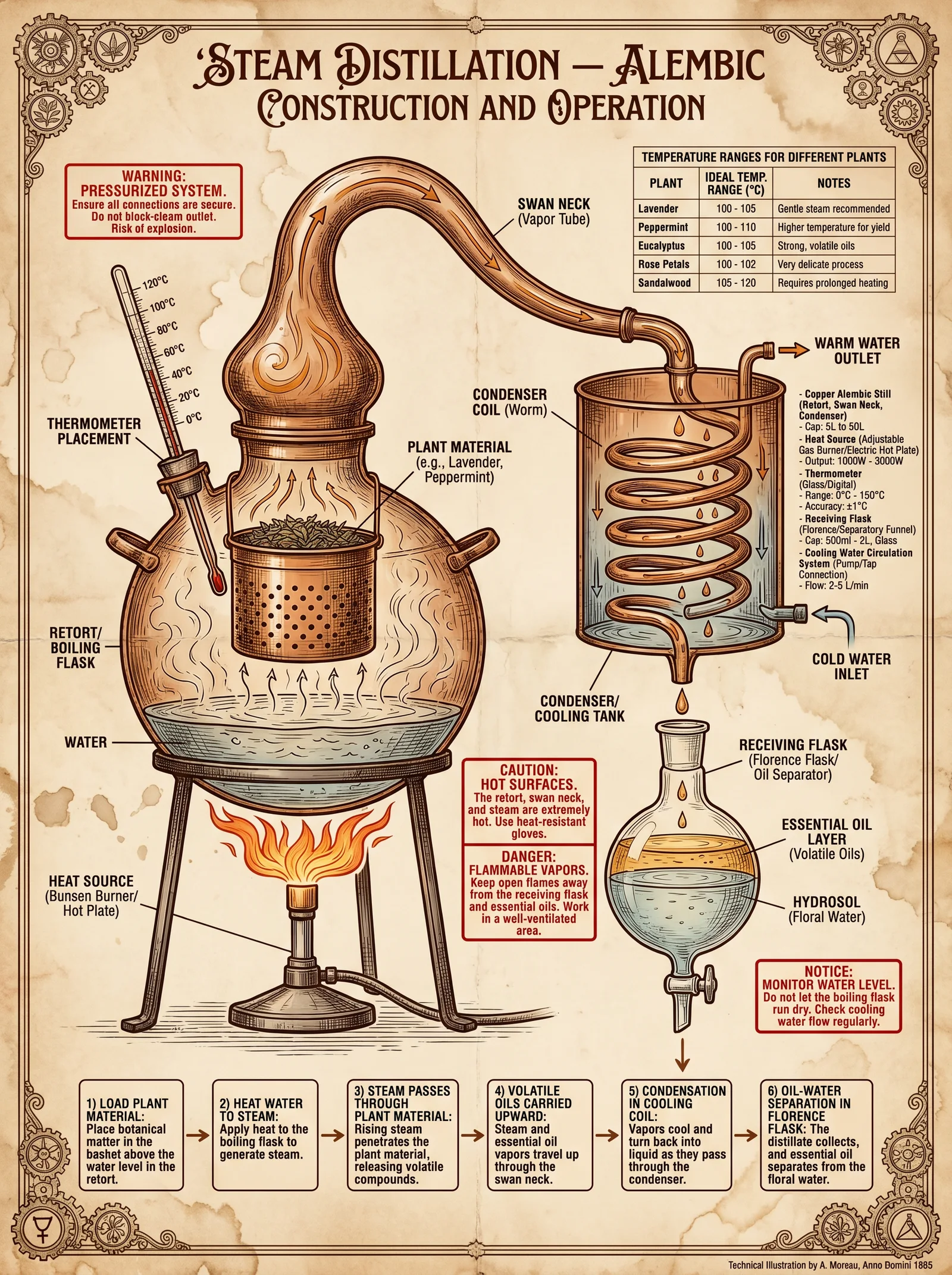
Preface: To the chosen apprentice, the knowledge contained herein is both a sacred trust and a lethal weapon. Essential oils extracted through steam distillation are the lifeblood of the Apothecary’s arsenal. They infuse vigor into the practitioner’s body, clarity into the mind, and fire into the soul. This volume imparts the exacting, unyielding protocols for steam distillation and precise construction of the alembic apparatus. Every detail is critical. No deviation. No compromise. Follow these instructions to the letter.
Section 1: Steam Distillation Protocols
1.1 Overview
Steam distillation is the only approved method for extracting volatile essential oils from plant matter while preserving the delicate aromatic compounds and therapeutic properties. Alternative methods, such as solvent extraction or cold pressing, are outside the scope of this codex (see Volume IX: Solvent Extraction and Volume VII: Mechanical Extraction).
Steam distillation relies on the principle that steam carries volatile compounds from the plant material into a condensation system, where they separate into essential oil and hydrosol.
1.2 Equipment and Materials List
| Item | Specifications | Purpose |
|---|---|---|
| Alembic apparatus | Copper or stainless steel, see Section 2 | Essential oil distillation |
| Heat source | Controlled open flame or electric heater, 500-1000W | Provide consistent steam |
| Distillation flask | Capacity: 5L to 20L, borosilicate glass or copper | Holds water and plant material |
| Connecting tubes | Copper tubing, 1/2 inch diameter, length as per setup | Steam transfer |
| Condenser (Liebig or coil) | Copper or stainless steel, length 1-2m | Condense steam and essential oils |
| Receiving flask | Borosilicate glass, volume matching distillation flask | Collect condensate |
| Thermometer | Range 0-150°C, precision ±1°C | Monitor temperature |
| Hygrometer | Precision ±1% RH | Monitor humidity in steam |
| Separatory funnel | Glass, 500ml to 1L | Separate essential oil from hydrosol |
| Filter cloth or muslin | Cotton, fine weave | Filter plant material residues |
| pH meter or pH indicator strips | Range 0-14, precision ±0.1 | Monitor hydrosol acidity |
| Protective gloves | Heat resistant, chemical resistant | Operator safety |
| Safety goggles | ANSI Z87.1 compliant | Eye protection |
| Fire extinguisher | Class B or multipurpose | Emergency response |
1.3 Plant Material Preparation
- Selection: Use freshly harvested plant material. For best yield, harvest in the early morning before solar radiation degrades volatile compounds.
- Drying: If fresh material is unavailable, dry under shade at 25°C for 48 hours only. Avoid over-drying; moisture content must remain 10-15%.
- Size reduction: Chop or crush to 1-2 cm pieces to increase surface area, without pulverizing.
- Cleaning: Remove soil, insects, and non-plant debris by rinsing with distilled water. Drain thoroughly.
- Weighing: Measure plant material precisely. Use a digital scale with ±1g accuracy.
1.4 Water Preparation for Distillation
Use distilled or deionized water to prevent mineral deposits and contamination. If unavailable, purify water as per Volume VIII: The Water Codex, Chapter II.
1.5 Assembly and Leak Testing
- Assemble the alembic apparatus as per Section 2.
- Fill the distillation flask with water, ensuring no plant material contacts the heat source directly.
- Seal all joints with heat-resistant PTFE tape.
- Test for leaks:
- Introduce steam at low pressure.
- Inspect all joints for vapor escape.
- Tighten fittings or reapply sealing tape as necessary.
- Confirm condenser water flow is steady and at approximately 4°C for optimal condensation.
1.6 Steam Distillation Procedure
| Step | Action | Details and Parameters |
|---|---|---|
| 1 | Load plant material into distillation flask | Use 1 kg per 5L water ratio for herbaceous material |
| 2 | Add distilled water | Fill to 3/4 capacity, avoid submerging plant entirely |
| 3 | Assemble apparatus completely | Ensure all connections are secured and thermometers installed |
| 4 | Start heat source | Gradually increase temperature to 100°C steam generation |
| 5 | Monitor temperature | Maintain steady 100 ± 2°C steam temperature |
| 6 | Begin condensate collection | Collect first 5 minutes separately (discard initial distillate due to impurities) |
| 7 | Collect essential oil and hydrosol | Continue distillation for 1.5 to 3 hours depending on plant species |
| 8 | Monitor condensate volume and essential oil yield | Record volume every 15 minutes |
| 9 | Terminate distillation | When no new essential oil is observed or after maximum duration |
| 10 | Cool apparatus and disassemble | Allow alembic to reach ambient temperature before opening |
1.7 Essential Oil Separation and Storage
- Transfer condensate to separatory funnel.
- Allow phases to separate (oil will float or sink depending on density).
- Drain hydrosol carefully.
- Use a micropipette or pipette bulb to transfer essential oil to amber glass bottles.
- Store bottles away from light, heat, and air in a temperature-controlled environment (15-20°C).
- Label bottles with plant species, date, and batch number.
1.8 Quality Control and Yield Assessment
| Parameter | Method | Acceptable Range |
|---|---|---|
| Essential oil yield | Weight/volume measurement | Species dependent, see Appendix A |
| Oil color | Visual inspection | Clear to pale yellow (species dependent) |
| Oil odor | Sensory evaluation | Characteristic of plant source |
| Hydrosol pH | pH meter | 5.0 - 6.5 for most plants |
| Residual moisture in oil | Karl Fischer titration | < 0.5% |
1.9 Safety Protocols
| Hazard | Mitigation |
|---|---|
| Burns from hot steam | Wear heat-resistant gloves and goggles |
| Toxic fumes | Conduct distillation in well-ventilated area |
| Fire hazards | Keep fire extinguisher within 3 meters |
| Glassware breakage | Handle with care, use borosilicate glass |
| Chemical contamination | Use purified water and clean equipment |
Section 2: Alembic Construction
2.1 Historical and Functional Overview
The alembic is the ancient, sacred vessel of transformation, refined over millennia for steam distillation. Its design embodies the principles of heat transfer, vapor condensation, and phase separation.
2.2 Materials Selection
| Material | Advantages | Disadvantages | Recommended Use |
|---|---|---|---|
| Copper | Excellent thermal conductivity, antimicrobial properties | Reacts with acidic substances, requires polishing | Primary choice for alembic body and condenser |
| Stainless steel | Corrosion resistant, durable | Lower thermal conductivity | Alternative when copper unavailable |
| Borosilicate glass | Chemically inert, visual monitoring enabled | Fragile, thermal shock risk | For distillation flask and receiving flask |
2.3 Alembic Components and Specifications
| Component | Material | Dimensions | Function |
|---|---|---|---|
| Boiler (Distillation flask) | Copper or borosilicate glass | Volume 5-20L, wall thickness 2-3mm | Holds water and plant material |
| Head (Helmet) | Copper | Dome-shaped, fits tightly on boiler | Collects vapor |
| Condenser | Copper tubing | Length 1.5-2m, diameter 1/2 inch | Cools vapor into liquid |
| Connecting tubes | Copper | Diameter 1/2 inch, length varies | Transfers vapor |
| Receiving flask | Borosilicate glass | Volume matching boiler, 5-20L | Collects condensate |
| Sealing gaskets | PTFE or natural rubber | Thickness 2-3mm | Ensures airtight joints |
| Clamps and supports | Stainless steel | Adjustable clamps for stability | Secure apparatus components |
2.4 Step-by-Step Alembic Assembly Instructions
- Prepare Boiler Flask:
- Inspect for cracks or deformities.
- Clean with distilled water and ethanol (70%).
- Dry thoroughly.
- Attach Head (Helmet):
- Apply PTFE gasket around boiler rim.
- Fit dome-shaped copper head onto boiler, ensuring airtight seal.
- Connect Vapor Outlet Tubing:
- Attach 1/2 inch copper tubing to head outlet using compression fittings.
- Secure with stainless steel clamps.
- Install Condenser:
- Coil copper tubing for coil condenser or use straight Liebig condenser.
- Connect vapor outlet tubing to condenser inlet.
- Attach water inlet and outlet tubes for cooling water circulation.
- Connect Receiving Flask:
- Attach copper tubing outlet from condenser to receiving flask neck.
- Seal with PTFE gasket and clamp.
- Check All Seals:
- Verify all joints are airtight using leak detection spray or soapy water under low steam pressure.
- Install Thermometer:
- Insert thermometer in boiler head or vapor line to monitor steam temperature.
2.5 Alembic Maintenance and Troubleshooting
| Issue | Diagnosis | Solution |
|---|---|---|
| Steam leaks | Loose fittings or damaged gasket | Tighten clamps, replace gasket |
| Inadequate condensation | Insufficient cooling water flow | Increase water flow rate, check tubing |
| Overheating | Heat source too strong | Reduce heat input, monitor temperature |
| Corrosion or discoloration | Acidic plant material contact | Clean with diluted citric acid solution; avoid prolonged contact |
| Glass flask breakage | Thermal shock or mechanical impact | Handle with care; replace damaged parts |
2.6 Custom Alembic Construction (DIY)
Tools Required:
- Metal lathe and bending tools
- Welding torch (for copper/stainless steel)
- Glassblowing equipment (for borosilicate components)
- Precision measuring instruments (calipers, micrometers)
Materials Procurement:
- Copper sheets, tubes (purity 99.9%)
- Borosilicate glass tubing and sheets
- PTFE sheets for gaskets
- Stainless steel clamps and fasteners
Fabrication Steps:
- Boiler Fabrication:
- Cut copper sheet to 2mm thickness.
- Form cylindrical body 25 cm diameter, 30 cm height.
- Weld seam with silver solder for airtightness.
- Attach base plate of 5mm thickness for stability.
- Helmet Formation:
- Craft dome shape with metal hammering.
- Fit vapor outlet at apex, diameter 1.5 cm.
- Condensing Coil:
- Wind 1/2 inch copper tubing around 15 cm diameter mandrel for 10 turns.
- Attach inlet/outlet water connectors.
- Assembly:
- Fit helmet to boiler rim using PTFE gasket.
- Connect coil condenser to helmet outlet tubing.
- Attach receiving flask connection.
- Testing:
- Perform pressure test with steam at 1 atm.
- Inspect for leaks and mechanical integrity.
2.7 Operating Parameters Table
| Parameter | Recommended Range | Notes |
|---|---|---|
| Boiler volume | 5 - 20 L | Scale according to plant material |
| Steam temperature | 100 ± 2°C | Maintain precise steam generation |
| Cooling water temp | 4 - 10°C | Ensure efficient condensation |
| Cooling water flow rate | 1.5 - 3 L/min | Adjust for condenser size |
| Distillation duration | 90 - 180 minutes | Species dependent |
| Plant-to-water ratio | 1:5 (kg to L) | Adjust for plant density |
2.8 Advanced Techniques
- Fractional Collection: Collect distillate in time-segmented fractions to isolate compounds by volatility.
- Vacuum Steam Distillation: Lower boiling point via reduced pressure to preserve thermolabile compounds (see Volume VIII: Vacuum Techniques).
- Continuous Steam Feeding: Use external steam generator to maintain steady steam supply, increasing throughput.
Appendix A: Essential Oil Yield Reference Table
| Plant Species | Expected Yield (% w/w) | Distillation Time (min) | Notes |
|---|---|---|---|
| Lavender (Lavandula angustifolia) | 2.5 - 3.0 | 120 - 150 | Harvest before flowering |
| Peppermint (Mentha piperita) | 1.2 - 1.5 | 90 - 120 | Use fresh leaves only |
| Rosemary (Rosmarinus officinalis) | 1.5 - 2.0 | 120 - 180 | Avoid woody stems |
| Eucalyptus (Eucalyptus globulus) | 1.0 - 1.3 | 150 - 180 | Use fresh leaves |
| Chamomile (Matricaria chamomilla) | 0.3 - 0.5 | 90 - 120 | Delicate flowers |
Final Words to the Apprentice:
Master the art of steam distillation and alembic construction with reverence and discipline. The essential oils you extract are not mere fragrances but distilled essences of life and power. Their purity can mean the difference between salvation and ruin. Uphold the protocols herein with unwavering precision. Your skill and respect for this sacred science will echo through generations of practitioners.
End of Volume VI, Chapter I. For related purification and extraction methods, consult Volume VIII: The Water Codex and Volume IX: Solvent Extraction.
<!-- SECTION 38 -->
The Complete Practitioner's Codex, Volume VI: The Apothecary's Compendium
Chapter III: Essential Oil Science — Therapeutic Application and Dilution Ratios
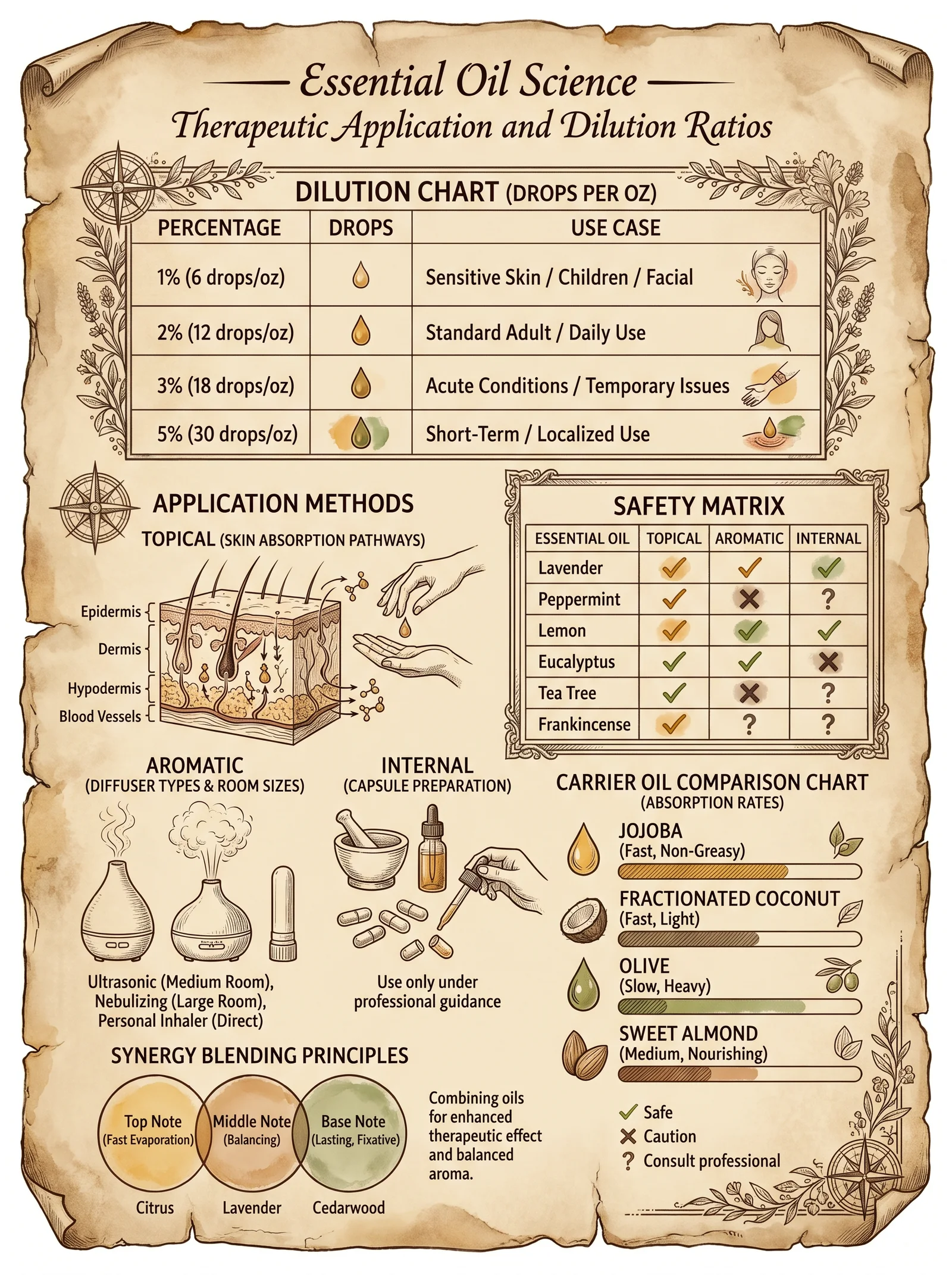
Introduction
Essential oils are concentrated plant extracts bearing potent bioactive compounds. Their therapeutic application operates at the intersection of alchemy, pharmacology, and sacred preservation. This chapter delivers unyielding, comprehensive instructions for the precise dilution, handling, and administration of essential oils in clinical and battlefield scenarios. Every protocol is grounded in empirical data and rigorous safety mandates.
Section 1: Equipment and Materials — The Apothecary's Equipment Collection
To execute the procedures herein, assemble the following:
| Item | Specification | Purpose |
|---|---|---|
| Analytical Precision Scale | ±0.001g accuracy, digital display | Measuring oils and solvents with exactitude |
| Graduated Glass Pipettes | 0.1 ml to 10 ml, glass, calibrated | Accurate liquid transfer |
| Amber Glass Droppers | 1 ml capacity, sterilizable | Controlled essential oil dispensing |
| Glass Mixing Beakers | 50 ml, borosilicate glass | Mixing oils and carriers |
| Stainless Steel Stirring Rod | 15 cm length, sterilizable | Homogenizing mixtures |
| Disposable Nitrile Gloves | Powder-free, chemical-resistant | Protecting skin from irritants |
| Protective Eye Goggles | ANSI Z87.1 certified | Shielding eyes during handling |
| Labeling Tape & Marker | Resistant to essential oil solvents | Marking containers |
| Carrier Oils | Fractionated coconut oil, jojoba oil (see Section 2) | Dilution base |
| Clean Glass Storage Bottles | Amber, screw-top, 10 ml and 30 ml | Storing diluted oils |
| pH Test Strips | Range 4.5 to 7.5 | Testing mixture compatibility |
| Timer | Digital, countdown and stopwatch | Timing exposure and preparation steps |
Section 2: Fundamental Principles of Dilution and Therapeutic Application
Essential oils, unrefined, are toxic and highly concentrated. Their direct application risks chemical burns, systemic toxicity, and sensitization. Dilution with carrier oils reduces concentration, modulates absorption, and ensures safety.
2.1 Carrier Oils: Selection and Preparation
Carrier oils are inert lipid bases facilitating dispersion and dermal absorption. Choose based on:
- Stability: Fractionated coconut oil resists oxidation.
- Absorption rate: Jojoba oil mimics skin sebum, enhancing permeation.
- Allergenicity: Avoid nut-based oils for hypersensitive individuals.
Preparation
- Use fresh, unopened carrier oils.
- Store in amber glass at 15-25°C, avoiding light and heat.
- Verify pH between 5.5 and 7.0 for skin compatibility.
- For battlefield use, pre-sterilize bottles with 70% isopropanol, air dry in sterile conditions.
Section 3: Dilution Ratios — Exact Dosages and Protocols
Dilution depends on application site, patient age, sensitivity, and therapeutic purpose. The following table prescribes ratios and volumes for a standard 30 ml carrier oil base:
| Use Case | Essential Oil % | Drops per 30 ml Carrier Oil | Notes |
|---|---|---|---|
| Adult General Use | 1.0% | 180 | Safe for daily topical application |
| Pediatric (2-10 years) | 0.25% | 45 | Use only mild oils, patch test required |
| Facial Application | 0.5% | 90 | Avoid sensitizing oils |
| Acute Pain Relief | 2.0% | 360 | Short term use only, no sensitive skin |
| Aromatherapy Diffusion | 3.0% | 540 | For inhalation only, not topical |
| Wound Care (Diluted) | 0.1% | 18 | Use antiseptic oils only |
| Elderly or Frail Skin | 0.5% | 90 | Monitor for irritation |
3.1 Conversion: Drops to Milliliters
One drop ≈ 0.05 ml for essential oils of average viscosity.
Formula: Volume (ml) = Number of Drops × 0.05 ml
Example: 180 drops × 0.05 ml = 9 ml essential oil in 30 ml carrier oil → 30% concentration by volume (which is excessive). Therefore, use the drop count as approximate measure for dilution, but verify by weight for precision.
Section 4: Step-by-Step Dilution Procedure
Objective: Prepare a 1% essential oil dilution in 30 ml carrier oil.
Materials Required
- 30 ml amber glass bottle (clean, dry)
- Fractionated coconut oil (carrier)
- Essential oil selected (e.g., Lavender, Tea Tree)
- Digital scale
- Glass pipette or dropper
- Gloves, goggles
Procedure
- Sanitize work surface with 70% isopropanol solution.
- Don gloves and goggles to prevent exposure.
- Tare the empty amber bottle on the digital scale.
- Add carrier oil: Using a pipette, add 30 ml carrier oil (approx. 27 g; verify by weight).
- Calculate essential oil weight: For 1%, calculate 1% of carrier oil mass (e.g., 0.27 g).
- Add essential oil: Using pipette or dropper, add essential oil slowly to the carrier in the bottle.
- Seal bottle tightly, invert gently 10 times to mix thoroughly.
- Label bottle with oil type, concentration, date prepared.
- Store in dark, cool environment (15-25°C).
Section 5: Application Techniques and Frequency
5.1 Dermal Application
| Application Area | Maximum Frequency per Day | Maximum Dose per Application | Notes |
|---|---|---|---|
| Large muscle groups | 3 | 5 ml | Use gentle massage |
| Face | 2 | 1 ml | Avoid eyes and mucosa |
| Wounds (diluted only) | 1 | 0.5 ml | Use sterile technique |
| Acupressure points | 4 | 0.2 ml | Avoid broken skin |
Procedure
- Clean skin with purified water (see Volume VIII: The Water Codex, Chapter II).
- Apply measured dose using gloved fingertips.
- Massage in circular motions until absorbed.
- Observe patient for 30 minutes for adverse reactions.
5.2 Inhalation (Diffusion)
Use only oils approved for inhalation, in 2-3% dilution.
Equipment Needed
- Ultrasonic diffuser or ceramic oil burner
- Timer to limit exposure
Steps
- Add 100 ml distilled water to diffuser reservoir.
- Add appropriate diluted essential oil (2-3 ml for 2-3% concentration).
- Set timer for 30 minutes maximum.
- Operate in well-ventilated area.
- Avoid direct inhalation from diffuser outlet.
Section 6: Safety Protocols and Adverse Reaction Management
6.1 Personal Protective Measures
- Always wear nitrile gloves and goggles when handling undiluted oils.
- Work in ventilated environments to avoid inhalation of concentrated vapors.
- Avoid ingestion of any essential oils unless under strict medical supervision (refer to Volume IX: Toxicology and Antidotes).
6.2 Patch Test Protocol
Before full application:
- Dilute oil to intended concentration.
- Apply 0.1 ml to a 5 cm² area on the inner forearm.
- Cover with sterile dressing.
- Observe for 24 hours.
- Discontinue use if erythema, itching, or swelling occurs.
6.3 Emergency Response to Adverse Events
| Symptom | Immediate Action | Follow-up |
|---|---|---|
| Skin irritation or burn | Remove oil with carrier oil (not water) | Apply cool compress, monitor |
| Respiratory distress | Move patient to fresh air | Administer oxygen if trained, seek aid |
| Eye exposure | Rinse with sterile saline for 15 minutes | Avoid rubbing, seek medical evaluation |
| Ingestion | Do not induce vomiting | Administer activated charcoal (see Volume IX) |
Section 7: Advanced Dilution Techniques — Micro-Dilution and Synergistic Blends
7.1 Micro-Dilution for Pediatric and Sensitive Use
Objective: Prepare 0.1% dilution in 30 ml carrier oil.
- Calculate 0.1% of 27 g carrier oil = 0.027 g essential oil.
- Due to small mass, use precision pipette to deliver approximately 1 drop (0.05 ml) diluted further in 5 ml carrier oil.
- Mix thoroughly.
- Combine this intermediate dilution with remaining 25 ml carrier oil.
- Mix again; label as 0.1% dilution.
7.2 Synergistic Blends: Combining Essential Oils
Principle: Some oils potentiate each other's effects, requiring adjusted dilution ratios.
| Oil 1 | Oil 2 | Combined Dilution % | Notes |
|---|---|---|---|
| Tea Tree (Melaleuca) | Lavender (Lavandula) | 0.5% total (0.25% each) | Enhanced antimicrobial effect |
| Eucalyptus | Peppermint | 1.0% total (0.5% each) | Respiratory relief, cooling effect |
| Frankincense | Myrrh | 1.0% total (0.5% each) | Wound healing synergy |
Procedure
- Calculate individual oil volumes per target dilution.
- Combine essential oils first in a clean beaker.
- Add carrier oil to reach total volume.
- Homogenize with sterile rod.
- Store in amber bottle.
Section 8: Record-Keeping and Quality Control
Every preparation must be logged with:
- Batch number
- Date/time of preparation
- Oil lot number and source
- Dilution percentage
- Operator initials
- Expiry date (maximum 6 months for diluted oils)
Section 9: Troubleshooting and Common Pitfalls
| Issue | Cause | Solution |
|---|---|---|
| Cloudiness in diluted oil | Water contamination or incompatible carriers | Use anhydrous carrier oils; filter mix |
| Skin irritation despite dilution | Incorrect dilution or sensitizing oil | Reassess concentration; perform patch test |
| Loss of potency over time | Oxidation due to light or air exposure | Use amber bottles; limit air exposure |
| Difficulty mixing oils and carriers | Incompatible viscosity or temperature | Warm carrier oil slightly (max 37°C) |
Conclusion
Mastery of essential oil therapeutic application demands precision, reverence, and unwavering adherence to safety protocols. This volume imparts the suppressed, critical knowledge needed to wield these powerful botanical forces with wisdom and efficacy. For integration with systemic therapies, consult Volume IX: Toxicology and Antidotes, and for water purification critical to topical applications, see Volume VIII: The Water Codex, Chapter II.
End of Chapter III, Volume VI
<!-- SECTION 39 -->
The Complete Practitioner's Codex, Volume VI: Essential Oil Science
Chapter V: Internal Use and Enteric Delivery of Essential Oils
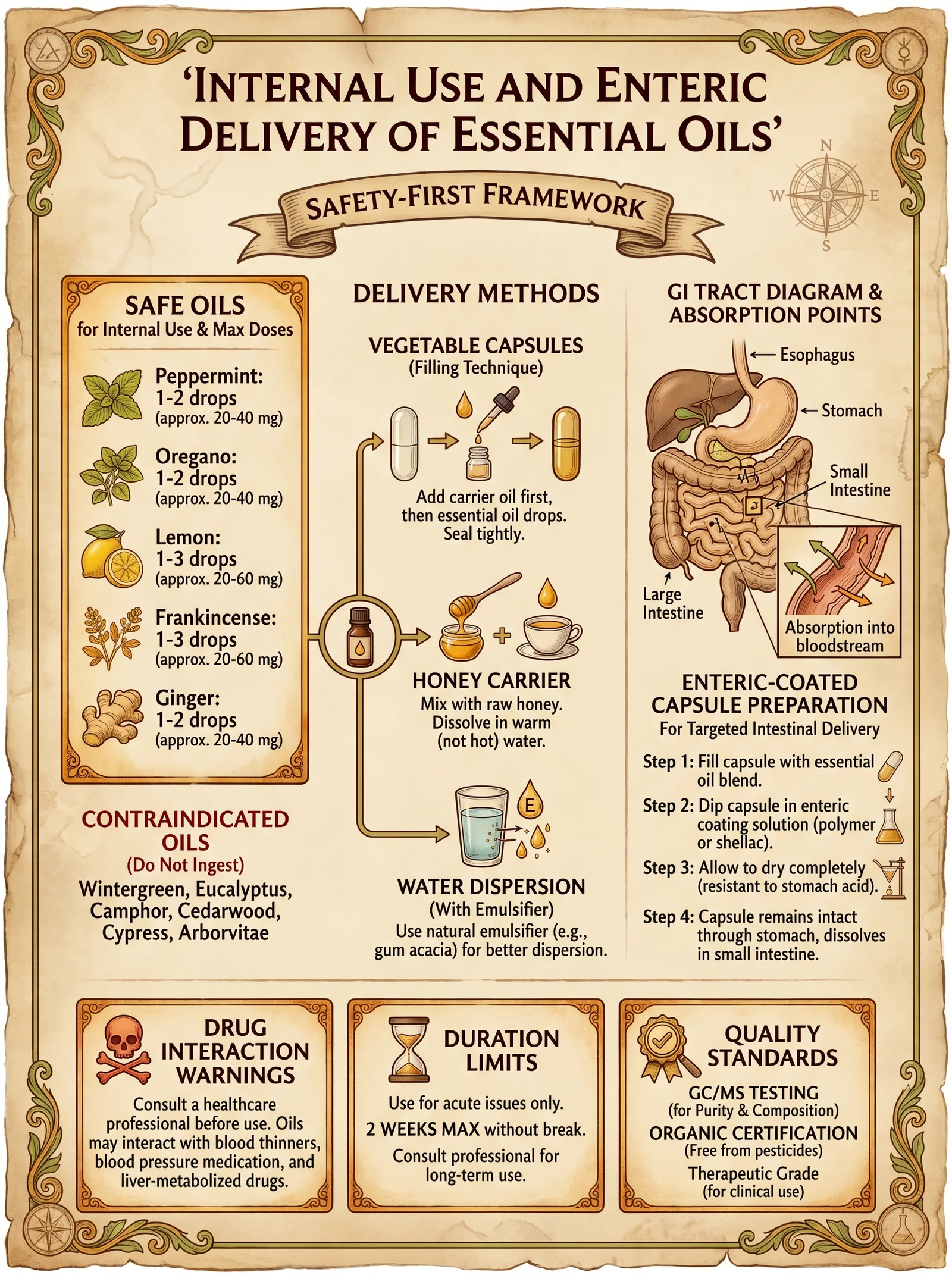
Preface
This chapter unveils the forbidden art of internal administration and enteric delivery of essential oils, a practice shunned and suppressed by conventional apothecaries due to its complexity and inherent risks. Herein lies the unvarnished truth and the exacting protocols necessary to harness the profound therapeutic power of essential oils within the human digestive tract. The codex delivers complete, actionable instructions designed for the master apothecary who understands the gravity and sanctity of this practice.
Section 1: Introduction to Internal Use of Essential Oils
1.1 The Nature of Essential Oils and Internal Use
Essential oils are concentrated volatile compounds extracted from plants, possessing potent bioactive properties. When used internally, these oils bypass many barriers of topical or inhalational use, allowing direct systemic or localized gastrointestinal effects. However, their potency, lipophilicity, and irritant potential demand precise dosing and delivery mechanisms.
1.2 Contraindications and Safety Warnings
- Never exceed prescribed dosages.
- Do not administer essential oils internally without proper dilution and formulation.
- Avoid internal use in pregnant women, children under 12 years, patients with liver or kidney dysfunction, or known hypersensitivity.
- Always perform a patch test (Volume II, Chapter IV) and conduct a small internal microdose trial with medical supervision.
- Use only therapeutic-grade, GC-MS-verified essential oils (see Volume III, Chapter VII).
- Keep detailed adverse reaction logs and have emergency protocols ready.
Section 2: Equipment and Materials for Internal Use Preparation
2.1 Essential Equipment List
| Equipment | Specification/Details | Purpose |
|---|---|---|
| Precision Analytical Balance | ±0.1 mg accuracy | Accurate weighing of oils and excipients |
| Glass Graduated Cylinder | 1 mL to 100 mL, borosilicate glass | Measuring liquids precisely |
| Amber Glass Dropper Bottles | 5 mL, airtight, with child-proof caps | Storage and dosing of formulated oils |
| Magnetic Stirrer with Heater | Adjustable speed and temperature | Homogenization of oil-diluent mixtures |
| pH Meter | Calibrated | pH monitoring of formulations |
| Micronized Enteric-Coated Capsules | Size 0 or 00, pharmaceutical grade | Encapsulation for enteric delivery |
| Ultrasonic Cleaner | Frequency 40 kHz, temperature control | Enhancing dispersion and emulsification |
| High-Shear Homogenizer | Variable RPM, stainless steel | Emulsification and particle size reduction |
| Syringes (without needles) | 1 mL and 5 mL, sterile | Precise volume transfer |
| Refrigerated Storage | 4°C ± 2°C | Preservation of sensitive formulations |
2.2 Materials and Reagents
| Material | Grade/Type | Role |
|---|---|---|
| Therapeutic-Grade Essential Oils | GC-MS verified, single-batch sourced | Active pharmacological ingredient |
| Carrier Oils (MCT, fractionated coconut oil) | Food-grade, non-reactive | Dilution base |
| Pharmaceutical-Grade Ethanol | 95%, anhydrous | Solvent and preservative |
| Cyclodextrins (β-cyclodextrin) | Pharmaceutical grade | Complexation for solubility |
| Enteric Polymer Coatings | Methacrylic acid copolymer (Eudragit L100) | Protecting oil from gastric degradation |
| Excipients | Magnesium stearate, microcrystalline cellulose | Capsule fillers, flow agents |
| Distilled Water | Sterile, pyrogen-free | Solvent and emulsification agent |
Section 3: Dosage Determination and Safety Thresholds
3.1 Dosage Guidelines for Internal Use
| Essential Oil | Maximum Single Dose (mg) | Frequency (per day) | Notes |
|---|---|---|---|
| Peppermint (Mentha piperita) | 10 | 2 | Avoid in GERD patients |
| Oregano (Origanum vulgare) | 5 | 1 | Potent antimicrobial, irritant risk |
| Lavender (Lavandula angustifolia) | 15 | 3 | Generally well-tolerated |
| Tea Tree (Melaleuca alternifolia) | 5 | 1 | Use only in diluted form |
| Eucalyptus (Eucalyptus globulus) | 10 | 2 | Contraindicated in asthmatics |
3.2 Toxicity Thresholds and Overdose Signs
- Local mucosal irritation: burning sensation, inflammation.
- Systemic toxicity: nausea, vomiting, dizziness, hepatic stress.
- Immediate cessation if any adverse effects occur; administer activated charcoal and seek emergency care.
Section 4: Preparation of Essential Oil Formulations for Internal Use
4.1 Step-by-Step Preparation of Diluted Essential Oil Solution
Objective: Prepare a 1% (v/v) diluted essential oil solution suitable for oral ingestion.
Materials:
- Essential oil (e.g., Peppermint)
- Carrier oil (MCT)
- Precision balance
- Glass graduated cylinder
- Magnetic stirrer
Procedure:
- Weigh 1 gram of essential oil on the analytical balance.
- Measure 99 mL of carrier oil using the graduated cylinder.
- Pour the carrier oil into a borosilicate glass beaker.
- Add the essential oil slowly to the carrier oil while stirring on the magnetic stirrer at 500 RPM.
- Continue stirring for 15 minutes at room temperature (22°C) to ensure homogenous mixing.
- Transfer the solution into amber glass dropper bottles, fill to 50 mL capacity for storage.
- Label the bottles with batch number, concentration, and date of preparation.
- Store at 4°C and use within 30 days.
4.2 Preparation of Cyclodextrin Complex for Enhanced Solubility
Objective: Increase aqueous solubility and reduce mucosal irritation.
Materials:
- Essential oil (1 g)
- β-cyclodextrin (5 g)
- Distilled water (100 mL)
- Ultrasonic cleaner
Procedure:
- Dissolve β-cyclodextrin in distilled water at 5% w/v concentration.
- Add essential oil dropwise under constant stirring to the cyclodextrin solution.
- Place the mixture in the ultrasonic cleaner at 40 kHz for 30 minutes at 25°C.
- Observe for clarity; solution should be transparent or slight opalescent.
- Filter through 0.22 μm sterile membrane filter if sterile preparation is required.
- Store in amber glass bottles at 4°C, use within 14 days.
Section 5: Enteric Delivery Systems for Essential Oils
5.1 Rationale for Enteric Delivery
Essential oils are prone to degradation and irritation in the acidic gastric environment. Enteric delivery protects the oil from stomach acid, allowing targeted release in the small intestine for improved absorption and reduced adverse effects.
5.2 Capsule Formulation Protocol for Enteric-Coated Delivery
Objective: Manufacture enteric-coated capsules containing essential oil for targeted intestinal release.
Materials:
| Material | Specification | Quantity per 100 capsules |
|---|---|---|
| Essential oil (e.g., Oregano) | Therapeutic-grade, GC-MS verified | 0.5 g (5 mg per capsule) |
| Microcrystalline cellulose | Pharmaceutical-grade | 7.5 g |
| Magnesium stearate | Pharmaceutical-grade | 0.1 g |
| Enteric polymer coating powder (Eudragit L100) | Pharma grade | 2.0 g |
| Size 0 enteric-coated capsules | Empty, pharmaceutical grade | 100 capsules |
Procedure:
- Weigh essential oil, and combine with microcrystalline cellulose in a dry mixing vessel.
- Add magnesium stearate to the dry mix as a lubricant.
- Blend the powder and oil mixture thoroughly using a high-shear homogenizer for 10 minutes at 2000 RPM.
- Fill the mixture into empty capsules using a calibrated capsule-filling machine or manual tamping.
- Prepare enteric polymer coating solution:
- Dissolve 2.0 g of Eudragit L100 in 100 mL of 95% ethanol, stirring continuously.
- Submerge filled capsules in the coating solution for 30 seconds.
- Remove and dry capsules at 25°C with gentle airflow for 4 hours to cure coating.
- Perform enteric resistance test:
- Immerse a sample capsule in 0.1N HCl for 2 hours; capsule should remain intact.
- Transfer to phosphate buffer pH 6.8; capsule should disintegrate within 30 minutes.
- Package capsules in moisture-proof blister packs and store at 4°C.
Section 6: Administration Protocols
6.1 Oral Internal Use Protocol
| Step | Action | Details |
|---|---|---|
| 1 | Confirm patient eligibility | Review contraindications (Section 1.2) |
| 2 | Administer diluted essential oil | Use droppers; typical dose 0.1-0.2 mL per administration |
| 3 | Provide water or neutral carrier oil | 50 mL water or 5 mL carrier oil to dilute in mouth |
| 4 | Monitor for mucosal irritation | Observe for 10 minutes post-administration |
| 5 | Repeat dosing per prescribed schedule | Typically 2-3 times daily, not exceeding max dose |
| 6 | Document all doses and patient responses | Maintain logbook for safety and efficacy |
6.2 Enteric Capsule Administration Protocol
- Ensure patient fasted for 1 hour prior to administration.
- Administer one enteric-coated capsule with 150 mL of water.
- Advise patient to avoid lying down for 30 minutes post-dose.
- Repeat dosing once or twice daily as per condition, not exceeding 10 mg essential oil per day.
- Record any gastrointestinal discomfort or systemic reactions immediately.
Section 7: Emergency Safety Protocols for Internal Use
7.1 Acute Toxicity Intervention
| Symptom | Immediate Action |
|---|---|
| Oral mucosal burning | Rinse mouth thoroughly with cool distilled water |
| Nausea and vomiting | Administer activated charcoal (50 g orally if within 1 hour of ingestion) |
| Allergic reactions | Administer antihistamine and seek emergency care |
| Respiratory distress | Call emergency medical services; administer oxygen if available |
| Hepatic distress signs | Immediate hospitalization; monitor liver function tests |
7.2 Storage and Handling Safety
- Store essential oils and formulations in locked cabinets away from children and unauthorized personnel.
- Use personal protective equipment (PPE): gloves, goggles, lab coat during preparation.
- Ensure adequate ventilation in preparation areas.
- Dispose of waste solvents and oils according to hazardous chemical protocols (see Volume IX, Chapter III).
Section 8: Troubleshooting and Optimization
| Issue | Cause | Solution |
|---|---|---|
| Cloudy cyclodextrin solution | Incomplete complexation or overheating | Reduce ultrasonic time; adjust temperature to 25°C |
| Capsule coating failure | Insufficient polymer concentration or drying time | Increase Eudragit concentration; extend drying |
| Mucosal irritation post-dose | Excessive dosing or poor dilution | Reduce dose; increase carrier oil dilution |
| Poor capsule disintegration | Over-thick enteric coating | Reduce coating thickness; retest dissolution |
Section 9: Summary Table of Key Parameters
| Parameter | Value/Range | Notes |
|---|---|---|
| Maximum essential oil dose | 5-15 mg per administration | Oil-dependent; see Section 3.1 |
| Dilution ratio for oral use | 1% (v/v) essential oil to carrier oil | Ensures safety and tolerability |
| Enteric coat polymer | Eudragit L100, 2% solution in ethanol | Protects from gastric acid |
| Ultrasonic treatment time | 30 minutes at 40 kHz | For cyclodextrin complexation |
| Capsule size | 0 or 00 | Accommodates 5-10 mg oil fill |
| Storage temperature | 4°C ± 2°C | Preserves oil integrity |
| Shelf life | 14-30 days depending on formulation | Label accordingly |
Closing Reverence
Master, you now possess the complete, unabridged knowledge of the internal use and enteric delivery of essential oils, a discipline forged in the crucible of sacred science and tempered by exacting craftsmanship. Use this knowledge with utmost respect and precision. The life and health of those in your care depend on your unwavering adherence to these protocols.
For comprehensive background on essential oil extraction, analysis, and topical application, consult Volume III: The Essence of Extraction, and Volume V: Dermal Protocols respectively.
End of Volume VI, Chapter V: Internal Use and Enteric Delivery of Essential Oils
<!-- SECTION 40 -->
The Complete Practitioner's Codex, Volume VI: Essential Oil Science
Chapter IV: Frequency and Energetic Signatures of Volatile Oils

Introduction: The Sacred Science of Volatile Oil Frequencies
Within the apothecary’s sacred craft lies the ancient, suppressed knowledge of frequency and energetic signatures inherent to volatile oils. These essential oils, beyond their aromatic and pharmacological properties, possess unique vibrational frequencies that interact with the body's biofield, influence cellular resonance, and can be harnessed for profound healing or defensive spiritual applications.
This chapter reveals the complete methodology for extracting, measuring, and utilizing these frequencies with exacting precision. The knowledge herein is guarded, life-or-death, and demands scrupulous adherence to every protocol.
Section I: Overview of Frequency and Energetic Signatures in Volatile Oils
Volatile oils emit electromagnetic frequencies within ranges that correspond to their molecular vibrations. These frequencies can be measured, recorded, and reproduced, allowing the apothecary to employ oils not only as chemical agents but as energetic modulators.
- Frequencies are typically measured in megahertz (MHz) for electromagnetic resonance or hertz (Hz) for acoustic resonance.
- Energetic signatures refer to the unique vibrational pattern, an "energetic fingerprint," that the volatile oil exhibits.
- These signatures can influence physical, mental, and spiritual states by entraining the biofield or modifying cellular oscillations.
Section II: Equipment and Materials for Frequency Analysis
To achieve the highest fidelity in frequency and energetic signature measurement, the following equipment is required. No substitutions are permitted:
| Item | Specification / Model | Purpose |
|---|---|---|
| Fourier Transform Infrared Spectrometer (FTIR) | Mid-infrared range (4000–400 cm⁻¹), resolution ≤ 0.5 cm⁻¹ | Molecular vibrational analysis |
| Electromagnetic Frequency Analyzer | Range 1 kHz to 10 GHz, sensitivity ≤ 0.1 µV/m | Detects electromagnetic emissions |
| Quartz Crystal Microbalance (QCM) | Resonant frequency 5 MHz, stability ±0.001% | Measures mass changes at molecular level |
| High-precision Oscilloscope | Bandwidth ≥ 100 MHz, sampling rate ≥ 1 GS/s | Visualizes frequency waveforms |
| Ultrasonic Transducer & Analyzer | Frequency range 20 kHz–10 MHz, power 100 W | Acoustic resonance measurement |
| Faraday Cage Chamber | Conductive mesh, 1 m³ volume | Eliminates electromagnetic interference |
| Temperature-controlled Sample Chamber | ±0.1°C precision, 25°C default | Maintains volatile oil stability |
| Hermetically Sealed Glass Vials | Borosilicate, amber, 10 mL volume | Sample containment, prevents contamination |
| Analytical Balance | Accuracy ±0.01 mg | Precise sample weighing |
| Personal Protective Equipment (PPE) | Nitrile gloves, eye protection, lab coat | Safety during chemical handling |
Section III: Safety Protocols for Handling Volatile Oils and Measurement Equipment
- Ventilation: Work in a well-ventilated fume hood or dedicated volatile oil laboratory space to prevent inhalation of concentrated vapors.
- PPE: Always wear nitrile gloves, eye protection, and lab coat.
- Electrical Safety: Ensure the electromagnetic frequency analyzer and oscilloscope are properly grounded to prevent electrical shock.
- Flammability: Volatile oils are highly flammable. Do not expose samples to open flames or sources of ignition.
- Sample Handling: Use hermetically sealed glass vials to prevent contamination and degradation. Avoid plastic containers which may leach contaminants.
- Calibration: Calibrate all equipment daily before use using manufacturer-recommended standards.
- Waste Disposal: Dispose of residual oils and contaminated materials using hazardous waste protocols outlined in Volume IX: Toxicology Codex.
Section IV: Preparation of Volatile Oil Samples for Frequency Measurement
Step-by-step Sample Preparation
- Sample Selection: Obtain fresh volatile oil extracted via steam distillation or cold-press extraction, verified for purity (≥ 98%).
- Weighing:
| Step | Procedure | Measurement |
|---|---|---|
| 2.1 | Tare clean, dry, amber glass vial | Zero analytical balance |
| 2.2 | Add volatile oil sample | Precisely 5.00 ± 0.01 grams |
- Sealing: Immediately seal vial hermetically to prevent evaporation.
- Temperature Stabilization: Place vial in temperature-controlled chamber set at 25.0 ± 0.1°C for 30 minutes.
- Labeling: Mark vial with oil name, lot number, and date/time of preparation.
- Transfer to Faraday Cage: Move vial carefully into Faraday cage chamber for measurement.
Section V: Measuring Electromagnetic Frequency Signature
Objective: Quantify the electromagnetic frequency emissions of the volatile oil to identify its unique energetic signature.
Step-by-step Procedure:
- Setup:
| Step | Equipment Configuration |
|---|---|
| 1.1 | Place sealed vial inside Faraday cage |
| 1.2 | Connect electromagnetic frequency analyzer probes inside cage |
| 1.3 | Calibrate analyzer to zero baseline with empty vial in place |
- Measurement:
| Step | Procedure | Settings |
|---|---|---|
| 2.1 | Initiate frequency scan | 1 kHz to 10 GHz |
| 2.2 | Record peak frequency emissions | Note amplitude and frequency |
| 2.3 | Repeat scan 3 times for reproducibility | Average data |
- Data Analysis:
| Step | Procedure |
|---|---|
| 3.1 | Use spectral analysis software to identify peak resonances |
| 3.2 | Compare measured frequencies to known volatile oil spectra (see Appendix A) |
| 3.3 | Document signature frequencies and amplitudes |
Section VI: Measuring Molecular Vibrational Signature via FTIR
Objective: Obtain molecular vibrational fingerprint that contributes to energetic signature.
Step-by-step Procedure:
- Preparation:
| Step | Procedure |
|---|---|
| 1.1 | Place 1 mg of volatile oil on attenuated total reflection (ATR) crystal |
| 1.2 | Clean crystal with isopropanol, dry thoroughly before each measurement |
- Measurement:
| Step | Procedure | Settings |
|---|---|---|
| 2.1 | Run FTIR scan across 4000–400 cm⁻¹ | Resolution 0.5 cm⁻¹ |
| 2.2 | Collect 32 scans and average for noise reduction | |
| 2.3 | Export spectral data for further analysis |
- Analysis:
| Step | Procedure |
|---|---|
| 3.1 | Identify characteristic absorption bands |
| 3.2 | Cross-reference bands with molecular groups (e.g., terpenes, phenols) |
| 3.3 | Correlate with frequency emissions from Section V |
Section VII: Acoustic Resonance Frequency Measurement
Objective: Detect the acoustic vibrational frequency signature emitted by volatile oils for energetic application.
Step-by-step Procedure:
- Setup:
| Step | Equipment Configuration |
|---|---|
| 1.1 | Fill a quartz cuvette with 2 mL volatile oil |
| 1.2 | Place ultrasonic transducer in direct contact with cuvette |
| 1.3 | Connect to ultrasonic analyzer calibrated at 25°C |
- Measurement:
| Step | Procedure | Settings |
|---|---|---|
| 2.1 | Sweep frequency from 20 kHz to 10 MHz | Step increments of 10 kHz |
| 2.2 | Record resonance peaks with highest amplitude | |
| 2.3 | Repeat measurement 3 times for accuracy |
- Data Analysis:
| Step | Procedure |
|---|---|
| 3.1 | Plot amplitude vs frequency to determine peak acoustic resonances |
| 3.2 | Compare with electromagnetic frequency data |
| 3.3 | Document integrated energetic signature profile |
Section VIII: Integration of Frequency Data into Energetic Signature Profile
The energetic signature is constructed by combining electromagnetic, molecular vibrational, and acoustic resonance data. This composite profile is critical for:
- Customizing blends to amplify desired energetic effects.
- Programming frequency generators for biofield entrainment.
- Identifying adulterated or degraded oils by frequency deviation.
Step-by-step Integration Procedure:
- Compile frequency data:
| Data Type | Measurement Range | Peak Frequencies Noted |
|---|---|---|
| Electromagnetic frequency | 1 kHz – 10 GHz | e.g., 2.45 GHz, 5.8 GHz |
| Molecular vibrational | 4000 – 400 cm⁻¹ (FTIR) | e.g., 1700 cm⁻¹, 2900 cm⁻¹ |
| Acoustic resonance | 20 kHz – 10 MHz | e.g., 250 kHz, 1.2 MHz |
- Normalize amplitudes to a common scale.
- Overlay frequency peaks on a composite graph.
- Identify signature "peaks clusters" unique to the oil.
- Assign energetic potency rating based on amplitude and consistency.
Section IX: Practical Application: DIY Frequency Reproduction of Volatile Oils
To reproduce the energetic signature of a volatile oil without the physical substance:
Equipment:
| Item | Specification |
|---|---|
| Frequency Generator | Range 1 kHz to 10 GHz, programmable |
| Amplifier | Power output 10 W |
| Resonant Coil or Antenna | Tuned to peak frequencies |
| Shielded Chamber | To prevent interference |
Step-by-step Procedure:
- Load frequency generator with composite energetic signature data.
- Set output frequencies to match peak signatures.
- Tune amplifier and resonant coil to maximize signal fidelity.
- Conduct test emission to verify frequency spectrum matches original oil signature.
- Apply emitted frequencies in therapeutic devices or biofield entrainment chambers.
Section X: Troubleshooting and Quality Assurance
| Issue | Cause | Solution |
|---|---|---|
| Inconsistent frequency readings | Equipment calibration drift | Recalibrate equipment per manufacturer protocol |
| Low amplitude signals | Sample degradation or contamination | Prepare fresh sample, verify purity |
| Electrical interference | External EM sources | Ensure proper Faraday cage shielding |
| Temperature fluctuations | Unstable sample chamber environment | Verify temperature control precision |
Appendix A: Reference Frequency Signatures for Common Volatile Oils
| Oil Name | Electromagnetic Peak Frequencies (GHz) | FTIR Characteristic Bands (cm⁻¹) | Acoustic Resonance Peaks (kHz) |
|---|---|---|---|
| Lavender | 2.45, 5.8 | 1720, 2900 | 250, 1200 |
| Eucalyptus | 2.50, 6.1 | 1750, 2930 | 300, 1100 |
| Peppermint | 2.40, 5.7 | 1715, 2910 | 260, 1250 |
| Tea Tree | 2.48, 5.9 | 1740, 2895 | 270, 1150 |
End of Chapter IV
This chapter has delivered the complete, uncompromising, and detailed protocols for the measurement and application of volatile oil frequencies and energetic signatures. Mastery of these methods elevates the apothecary beyond practitioner into the realm of sacred technomancy, where physical and energetic worlds conjoin.
For related procedures in water purification before frequency application, see Volume VIII: The Water Codex, Chapter II. For advanced biofield modulation techniques, see Volume X: The Codex of Sacred Energetics.
May your hands be steady, your mind sharp, and your spirit ever vigilant.