Sovereignty Module: Tend the Flock
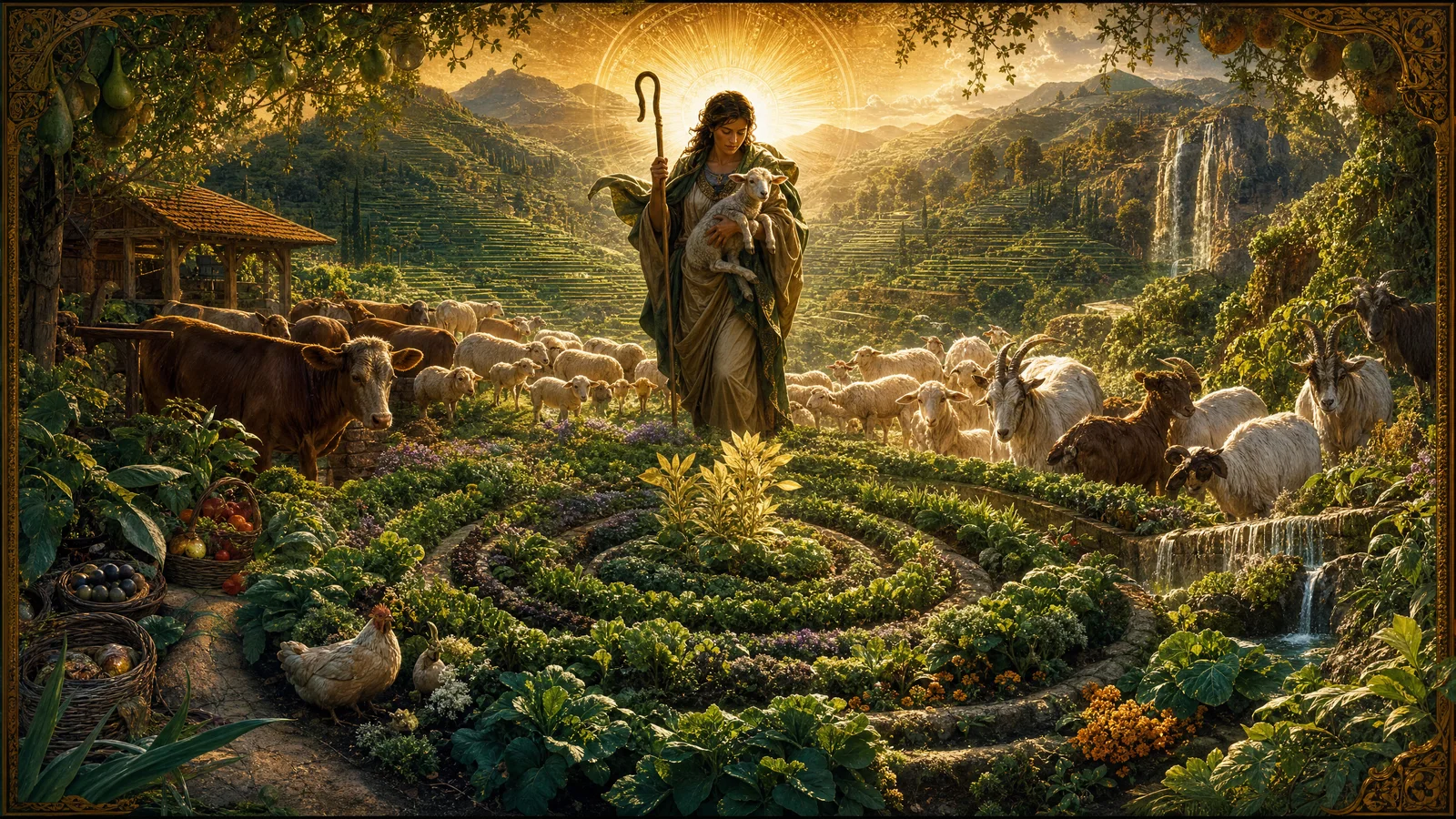
Tend the Flock
Complete Animal Husbandry: From Selection to Breeding
Complete Animal Husbandry: From Selection to Breeding
Animals multiply human labor, provide food, fiber, and companionship. This campaign covers selection, housing, feeding, breeding, health, and processing for all major livestock.
Chapter 1: Livestock Selection by Need
| Animal | Primary Products | Secondary Products | Space Needed | Feed Cost | Difficulty | Climate |
|---|---|---|---|---|---|---|
| Chickens | Eggs (300/yr/hen), meat | Pest control, compost | 4 sq ft/bird (coop) + run | Very low | Very easy | Any |
| Ducks | Eggs (200-300/yr), meat | Pest/slug control | 6 sq ft/bird + water access | Low | Easy | Temperate, wet |
| Rabbits | Meat (fast breeding), fur | Manure (garden gold) | 6-8 sq ft/rabbit | Low | Easy | Any (shade in heat) |
| Goats (dairy) | Milk (1-3 qt/day), cheese | Brush clearing, fiber (some breeds) | 200+ sq ft/goat + pasture | Low-moderate | Moderate | Any |
| Sheep | Wool (5-10 lbs/yr), meat, milk | Grazing, lanolin | 200+ sq ft + pasture | Low-moderate | Moderate | Temperate, cool |
| Pigs | Meat (200+ lbs/pig), lard | Rooting/clearing land, manure | 80+ sq ft/pig + outdoor area | Moderate | Moderate | Temperate |
| Cattle (dairy) | Milk (3-8 gal/day), cheese, butter | Manure, draft power, leather, meat | 1-2 acres/cow (pasture) | High | Moderate-high | Temperate |
| Cattle (beef) | Meat (400-600 lbs), leather | Manure, draft power (oxen) | 2-5 acres/cow (pasture) | Moderate-high | Moderate | Any (with forage) |
| Horses | Draft power, transportation | Manure | 2-5 acres/horse | High (need grain) | High | Temperate |
| Bees | Honey (30-60 lbs/hive/yr), wax | Pollination (increases crop yield 30%+) | Minimal (hive space) | None (self-feeding) | Moderate | Temperate |
Chapter 2: Housing Requirements
| Animal | Shelter Type | Space/Animal | Ventilation | Bedding | Fencing |
|---|---|---|---|---|---|
| Chickens | Coop (predator-proof) | 4 sq ft inside, 10 sq ft run | High (ammonia control) | Straw, wood shavings (6") | Hardware cloth (1/2") |
| Goats | Three-sided shed | 15-20 sq ft inside | Moderate | Straw (deep litter) | 4-5 ft fence (they climb) |
| Sheep | Three-sided shed or barn | 15-20 sq ft inside | Moderate | Straw (deep litter) | 4 ft woven wire |
| Pigs | Shelter + wallow | 50-80 sq ft inside | High | Straw (deep) | Strong (hog panels, electric) |
| Cattle | Barn or run-in shed | 40-50 sq ft inside | High | Straw, sawdust | Strong (board, electric, barbed) |
| Horses | Barn or run-in shed | 100-150 sq ft (stall) | Very high | Straw, shavings | Strong (board, electric) |
| Rabbits | Hutch (raised, wire floor) | 6-8 sq ft/rabbit | Good (wire sides) | Hay in nest box | Wire cage (14 gauge) |
Chapter 3: Feeding Principles
| Animal | Primary Feed | Supplement | Water (daily) | Feed/Day | Notes |
|---|---|---|---|---|---|
| Chickens (layers) | Grain mix (corn, wheat, oats) | Calcium (oyster shell), grit, greens | 1 pint/bird | 1/4-1/3 lb/bird | Free-range reduces feed 30% |
| Goats (dairy) | Hay (grass or legume) | Grain (1 lb per 3 lbs milk), minerals | 1-2 gallons | 3-5 lbs hay + grain | Browse (brush) preferred over grass |
| Sheep | Pasture or hay | Mineral block, grain (pregnant/lactating) | 1-2 gallons | 3-4 lbs hay | Copper toxic to sheep (no cattle minerals) |
| Pigs | Grain (corn, barley, wheat) | Pasture, kitchen scraps, protein supplement | 3-5 gallons | 5-8 lbs (growing) | Will eat almost anything |
| Cattle (dairy) | Hay/pasture + grain | Mineral, salt, protein supplement | 15-30 gallons | 25-40 lbs hay + 10-20 lbs grain | Highest feed requirements |
| Cattle (beef) | Pasture or hay | Mineral, salt | 10-20 gallons | 25-30 lbs hay (or equivalent pasture) | Can thrive on grass alone |
| Horses | Hay/pasture | Grain (working horses), mineral, salt | 10-15 gallons | 15-25 lbs hay + 5-10 lbs grain | Easy keepers can founder on rich feed |
Chapter 4: Breeding and Reproduction
| Animal | Sexual Maturity | Gestation | Offspring/Birth | Births/Year | Breeding Season | Productive Life |
|---|---|---|---|---|---|---|
| Chickens | 5-6 months | 21 days (incubation) | 1 chick/egg | Year-round (with rooster) | Year-round | 2-3 years (laying) |
| Rabbits | 4-6 months | 31 days | 6-12 kits | 4-6 litters/year | Year-round | 3-4 years |
| Goats | 7-10 months | 150 days (5 months) | 1-3 kids | 1/year | Fall (short days trigger) | 8-12 years |
| Sheep | 7-12 months | 147 days (5 months) | 1-3 lambs | 1/year | Fall (short days trigger) | 6-10 years |
| Pigs | 6-8 months | 114 days (3 months, 3 weeks, 3 days) | 8-14 piglets | 2 litters/year | Year-round | 4-6 years |
| Cattle | 12-18 months | 283 days (9.5 months) | 1 calf (twins rare) | 1/year | Year-round | 10-15 years |
| Horses | 2-3 years | 340 days (11 months) | 1 foal | 1/year | Spring-summer | 15-25 years |
Chapter 5: Common Health Issues
| Animal | Disease/Issue | Signs | Prevention | Treatment |
|---|---|---|---|---|
| Chickens | Coccidiosis | Bloody droppings, lethargy | Clean coop, don't overcrowd | Apple cider vinegar, clean environment |
| Chickens | Mites/lice | Feather loss, pale comb, restless | Dust bath (diatomaceous earth) | Wood ash dust bath, clean coop |
| Goats | Parasites (worms) | Weight loss, pale gums, rough coat | Rotational grazing, browse | Herbal dewormers, rotational grazing |
| Goats | Bloat | Distended left side, distress | Avoid sudden feed changes, no wet legumes | Walk animal, vegetable oil drench |
| Sheep | Foot rot | Lameness, foul smell between toes | Dry ground, trim hooves regularly | Trim, copper sulfate foot bath |
| Pigs | Mange | Hair loss, itching, crusty skin | Clean housing, quarantine new animals | Ivermectin, clean bedding |
| Cattle | Mastitis | Swollen udder, clots in milk, fever | Clean milking, teat dip, dry treatment | Antibiotics (vet), hot compresses |
| Horses | Colic | Rolling, pawing, looking at flank | Regular feeding schedule, dental care | Walk horse, vet if severe |
| All | Internal parasites | Weight loss, rough coat, poor condition | Rotational grazing, clean water | Dewormers (rotate types), management |
Chapter 6: Processing and Products
| Product | Animal | Process | Yield | Storage |
|---|---|---|---|---|
| Eggs | Chickens, ducks | Collect daily, clean dry | 250-300/hen/year | 2-4 weeks (room temp), months (water glass) |
| Milk | Goats, cattle | Milk 2×/day, strain, cool | 1-3 qt (goat), 3-8 gal (cow)/day | 5-7 days refrigerated |
| Cheese | Goats, cattle | Heat milk, add culture + rennet, press | 1 lb per gallon milk | Weeks to years (aged) |
| Butter | Cattle (cream) | Separate cream, churn, wash, salt | 1 lb per 2.5 gallons milk | Weeks (salted), months (frozen) |
| Meat (chicken) | Chickens | Dispatch, scald, pluck, eviscerate | 3-5 lbs dressed weight | Days (fresh), months (smoked/salted) |
| Meat (pork) | Pigs | Dispatch, scald, scrape, butcher | 150-200 lbs (hanging weight) | Months (smoked, salted, cured) |
| Meat (beef) | Cattle | Dispatch, skin, hang (7-14 days), butcher | 400-600 lbs (hanging weight) | Months (frozen, dried, canned) |
| Wool | Sheep | Shear (spring), skirt, wash, card | 5-10 lbs/sheep/year | Indefinite (clean, dry, moth-free) |
| Honey | Bees | Harvest frames, uncap, extract, strain | 30-60 lbs/hive/year | Indefinite (never spoils) |
| Leather | Cattle, goats, deer | Skin, flesh, tan (bark or brain), soften | 1 hide per animal | Indefinite (properly tanned) |
Reference Card
- Start with chickens: easiest livestock. Eggs in 5-6 months. Low space, low feed, high return. Learn animal care basics.
- Goats: best small-farm dairy animal. 1-3 quarts milk/day. Browse (brush) preferred over grass. Excellent cheese.
- Rotational grazing: move animals to fresh pasture every 3-7 days. Breaks parasite cycles. Improves pasture. Essential practice.
- Water: most critical daily need. Clean, fresh, adequate. Dehydration kills faster than starvation. Check water twice daily.
- Breeding: know gestation periods. Plan births for spring (mild weather, abundant feed). Keep records of all breedings.
- Butchering: dispatch humanely (instant unconsciousness). Cool carcass quickly. Cleanliness prevents spoilage. Learn anatomy.
- Fencing: your most important infrastructure. Good fences = good neighbors. Match fence to animal (goats climb, pigs root).
- Observation: check animals twice daily minimum. Early detection of illness = successful treatment. Know normal behavior.
TransmissionCOMPLETE — unaltered & unabridged
Words1,508 — every one of them
SHA-256 of source text2c639e3da3bb767a1dce559447a1b5a3ebed82470777ef52b4d25480275c437b
Canonical textdownload campaign-animal-husbandry-complete.md — byte-identical to what this page renders