Campaign 41: Bend the Bow
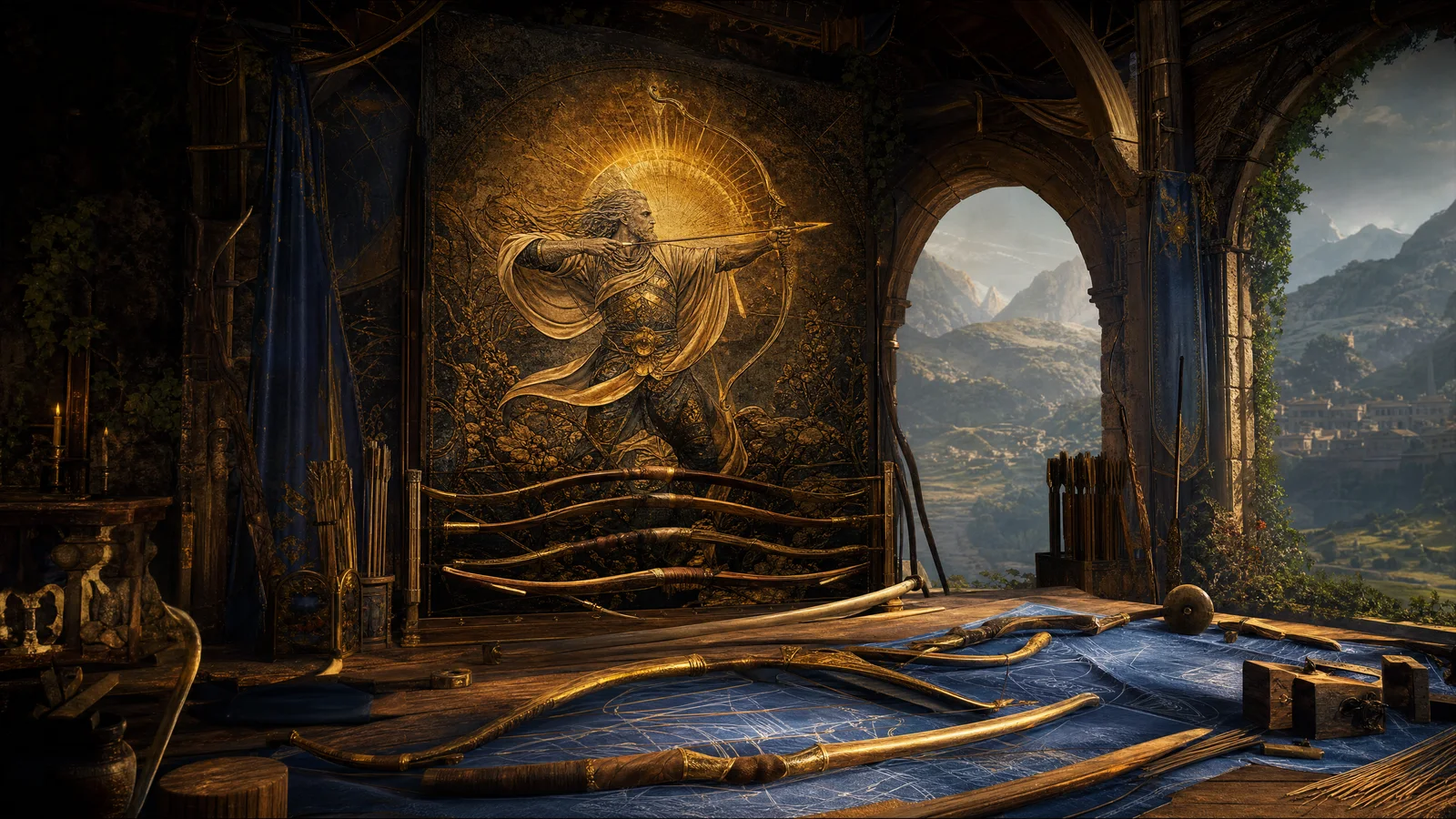
The Complete Archery, Ranged Skills, and Traditional Bow Craft Guide
A Sovereignty Module of the Practitioner Community
Preamble
The bow is the oldest ranged weapon and one of the most elegant tools ever invented. A simple stick and string can launch a projectile with lethal force at distances exceeding 200 yards. For hunting, the bow is silent, the ammunition is reusable and craftable from natural materials, and the skill transfers across every environment on Earth. Unlike firearms, a bow requires no supply chain, no manufactured ammunition, no permits in most jurisdictions, and can be built from materials found in any forest. This campaign teaches complete archery from choosing your first bow to building one from raw wood.
Part I: Equipment
Chapter 1: Bow Types
| Type | Draw Weight | Range | Best For | Cost |
|---|---|---|---|---|
| Recurve bow | 20-60 lbs | 30-60 yards effective | Beginners, target, hunting, traditional | $100-400 |
| Longbow | 30-80 lbs | 30-50 yards effective | Traditional archery, historical practice | $150-500 |
| Compound bow | 40-70 lbs | 40-80 yards effective | Hunting (most popular), target | $300-1000 |
| Self bow (DIY) | 30-60 lbs | 20-40 yards effective | Sovereignty, primitive skills | Free (wood + string) |
Chapter 2: Arrow Components
| Component | Options | Purpose |
|---|---|---|
| Shaft | Carbon, aluminum, wood, bamboo, river cane | Projectile body |
| Point/head | Field point (target), broadhead (hunting), blunt (small game) | Terminal function |
| Fletching | Feathers (natural) or vanes (plastic), 3 per arrow | Stabilizes flight |
| Nock | Plastic clip or carved notch | Attaches arrow to string |
Chapter 3: Choosing Draw Weight
| Purpose | Recommended Draw Weight | Notes |
|---|---|---|
| Youth beginner | 10-20 lbs | Learning form without strain |
| Adult beginner | 20-30 lbs | Focus on form, not power |
| Target shooting | 25-40 lbs | Accuracy over power |
| Small game hunting | 30-40 lbs | Rabbit, squirrel, turkey |
| Deer hunting | 40-50 lbs minimum | Most states require 40+ lbs |
| Elk/large game | 50-70 lbs | Penetration through heavy muscle/bone |
Part II: Shooting Technique
Chapter 4: The Shot Sequence
| Step | Action | Key Points |
|---|---|---|
| 1. Stance | Feet shoulder-width, perpendicular to target | Weight evenly distributed, relaxed |
| 2. Nock | Place arrow on rest, clip nock onto string below nock point | Consistent nock placement every time |
| 3. Grip | Bow hand: relaxed, pressure on pad of thumb. Do NOT grip tightly. | Death grip = torque = missed shots |
| 4. Hook | Drawing hand: hook string with first three fingers (one above, two below nock) | Mediterranean draw (most common) |
| 5. Draw | Pull string back using BACK muscles (not arm) to anchor point | Engage rhomboids and rear deltoids |
| 6. Anchor | String touches same point on face every time (corner of mouth, chin, cheekbone) | Consistency is everything |
| 7. Aim | Instinctive (look at target) or gap shooting (use arrow tip as reference) | Pick the smallest spot on the target |
| 8. Release | Relax fingers. Let string slip off. Do not pluck or throw hand. | Clean release = clean flight |
| 9. Follow through | Hold position until arrow hits target. Do not drop bow arm. | Prevents flinching and torque |
Chapter 5: Common Errors
| Error | Cause | Fix |
|---|---|---|
| Arrows go left (right-handed) | Gripping bow too tightly (torque) | Relax bow hand. Let bow jump forward on release. |
| Arrows go high | Anchor point too low or drawing past anchor | Consistent anchor point. Same draw length every time. |
| Arrows go low | Not reaching full draw or dropping bow arm on release | Draw to anchor. Hold follow-through. |
| Inconsistent groups | Inconsistent anchor, grip, or release | Slow down. Focus on form. Same sequence every shot. |
| String slap (hits forearm) | Elbow rotated into string path | Rotate bow arm elbow outward. Use arm guard. |
Chapter 6: Practice Protocol
| Phase | Duration | Focus | Distance |
|---|---|---|---|
| Form building | Weeks 1-4 | Shot sequence, consistency, no target | 5-10 yards (blank bale) |
| Target introduction | Weeks 5-8 | Large target face, grouping | 10-15 yards |
| Distance building | Weeks 9-16 | Gradually increase distance | 15-30 yards |
| Hunting simulation | Weeks 17+ | 3D targets, unknown distances, field positions | 10-40 yards |
Part III: Building a Bow
Chapter 7: Self Bow from a Stave
Best Woods for Bows:
| Wood | Quality | Availability | Notes |
|---|---|---|---|
| Osage orange | Excellent (the gold standard) | Central US | Dense, elastic, durable. The best bow wood. |
| Yew | Excellent | Pacific NW, Europe | Traditional English longbow wood |
| Black locust | Very good | Eastern US | Dense, strong, rot-resistant |
| Hickory | Very good | Eastern US | Tough, elastic, widely available |
| Elm | Good | Widespread | Good for flat bows |
| Ash | Good | Widespread | Good for flat bows, widely available |
| Maple | Adequate | Widespread | Stiffer, works for shorter bows |
Bow Building Steps:
| Step | Action | Time |
|---|---|---|
| 1. Select stave | Straight, knot-free section of trunk or limb, 5-6 feet long, 3-4" diameter | 1 hour |
| 2. Split | Split log in half (or quarters for larger logs) | 30 minutes |
| 3. Season | Seal ends with glue/wax, dry slowly for 3-12 months | Months |
| 4. Layout | Mark centerline, handle, and limb taper on the stave | 1 hour |
| 5. Rough shape | Remove wood from belly (inside curve) with drawknife/rasp. Leave back (outside) untouched. | 2-4 hours |
| 6. Floor tiller | Bend bow gently on the floor, check for even bend in both limbs | 30 minutes |
| 7. Tiller | Gradually remove wood from stiff spots until both limbs bend evenly | 2-4 hours (most critical step) |
| 8. String | Make or buy a string. Brace height 5-7 inches. | 30 minutes |
| 9. Test draw | Gradually increase draw length over several sessions | 1-2 hours |
| 10. Finish | Sand smooth, apply oil or finish, wrap handle | 1-2 hours |
Chapter 8: Arrow Making
| Step | Action |
|---|---|
| 1 | Select straight shafts (river cane, shoots, dowels). 28-32" long. |
| 2 | Straighten over gentle heat if needed (hold straight until cool) |
| 3 | Spine test: support at both ends, hang weight in middle. Match flex. |
| 4 | Cut nock in one end (perpendicular to grain for wood) |
| 5 | Attach point: field point with hot-melt glue, or knapped stone point with sinew |
| 6 | Fletch: split feathers, trim to shape, attach with glue and thread |
| 7 | Seal shaft with oil or thin finish |
Chapter 9: The Practitioner Archery Reference Card
BOW SELECTION: Recurve for beginners and versatility. Start at 20-30 lbs draw weight. Increase only when form is solid.
SHOT SEQUENCE: Stance, nock, grip (relaxed), hook, draw (back muscles), anchor (same point every time), aim, release (relax fingers), follow through.
COMMON FIXES: Arrows left = loosen grip. Arrows high = check anchor. Inconsistent = slow down, focus on form.
PRACTICE: Weeks 1-4 blank bale at 5 yards (form only). Weeks 5-8 target at 10-15 yards. Weeks 9-16 extend to 30 yards. Consistency before distance.
BUILD A BOW: Osage orange, yew, hickory, or ash. Split stave, season months, shape belly, tiller for even bend, string. The back of the bow (outside) must be a single unbroken growth ring.
REMEMBER: The bow is silent, the ammunition is reusable and craftable, and the skill works everywhere on Earth with materials found in any forest. No supply chain, no manufactured ammunition, no expiration date. A well-made self bow lasts decades.
Council Approval
All 12 voices unanimously approve. The campaign covers bow types, arrow components, draw weight selection, complete shot sequence, error correction, practice protocol, self bow building from raw wood, and arrow making. Complete archery sovereignty.
Council Result: 12/12 APPROVED. Campaign 41 is complete.