Sovereignty Module: Bend the Stave
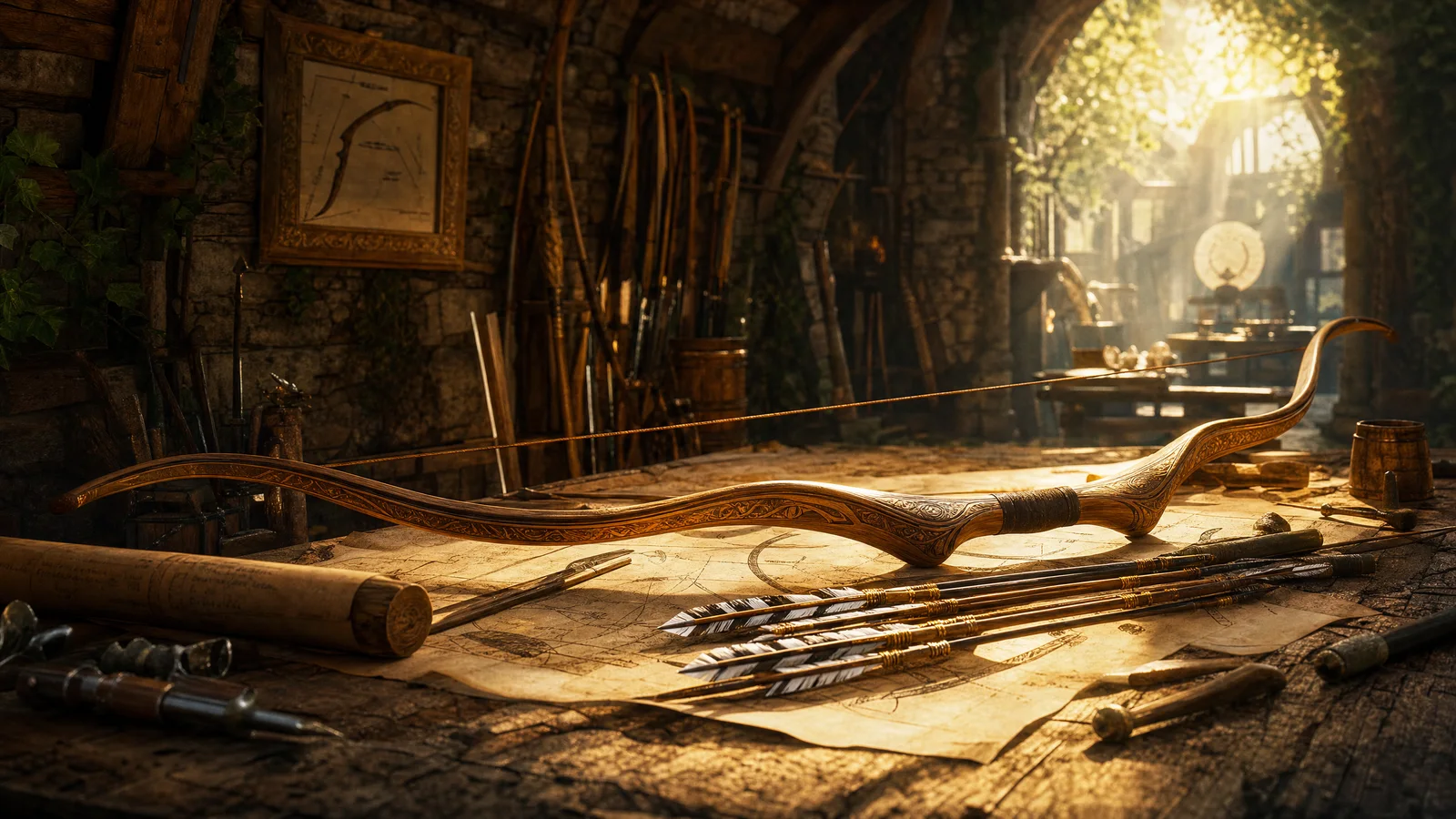
Bend the Stave
Complete Bow Making, Arrow Crafting, and Archery Guide
Complete Bow Making, Arrow Crafting, and Archery Guide
The bow is humanity's most effective pre-firearm ranged weapon and hunting tool. This campaign covers selecting wood, tillering a bow, crafting arrows, and effective shooting technique.
Chapter 1: Bow Wood Selection
| Wood | Quality | Draw Weight Potential | Availability | Working Properties | Best For |
|---|---|---|---|---|---|
| Osage orange | Excellent (best) | 80+ lbs | Central/Eastern US | Hard, resilient, rot-proof | Longbow, flatbow (premium) |
| Yew | Excellent | 80+ lbs | Pacific NW, Europe | Sapwood/heartwood combo ideal | English longbow (traditional) |
| Black locust | Very good | 70+ lbs | Eastern US | Hard, springy, rot-resistant | Flatbow, short bow |
| Hickory | Very good | 70+ lbs | Eastern US | Tough, shock-resistant | Flatbow, backed bows |
| Ash | Good | 60+ lbs | Widespread | Light, elastic | Flatbow (wider design) |
| Elm | Good | 60+ lbs | Widespread | Tough, follows string | Flatbow (wider, thinner) |
| Maple (hard) | Good | 60+ lbs | Eastern US | Hard, available | Flatbow |
| Oak (white) | Fair-good | 50+ lbs | Widespread | Heavy, stiff | Flatbow (wider design) |
| Bamboo | Good | 60+ lbs | Warm climates | Light, fast | Laminated bows, backed bows |
Chapter 2: Stave Selection and Preparation
| Step | Action | Critical Details |
|---|---|---|
| 1 | Select tree: straight, 4-6 inch diameter, no branches on bow section | Branches = knots = weak points. Small diameter = less sapwood to remove. |
| 2 | Harvest in winter (sap down) | Less moisture = faster seasoning, less checking |
| 3 | Split log in half (or quarters for larger logs) | Split immediately after felling. Do NOT saw (cuts across grain). |
| 4 | Seal ends with paint, wax, or glue | Prevents end-checking during drying |
| 5 | Rough out stave: leave 2 inches wider and 1/2 inch thicker than final dimensions | Leave extra material for tillering |
| 6 | Season: 3-6 months (split stave) or 1-2 years (whole log) | Slow drying in shade. 8-12% moisture content target. |
| 7 | Chase a growth ring (back of bow = one continuous ring) | The back (facing target) must be ONE unbroken growth ring. Never cut across rings on back. |
Chapter 3: Bow Design Specifications
| Bow Type | Length | Width (at widest) | Thickness | Draw Weight | Draw Length | Best Wood |
|---|---|---|---|---|---|---|
| English longbow | 66-72 inches | 1.25-1.5 inches | 1-1.25 inches (D-section) | 40-80+ lbs | 28-32 inches | Yew, ash, elm |
| Flatbow (American) | 64-70 inches | 2-2.5 inches | 5/8-3/4 inch | 40-70 lbs | 28-30 inches | Osage, hickory, any |
| Short flatbow | 54-62 inches | 2-2.5 inches | 5/8-3/4 inch | 35-55 lbs | 26-28 inches | Osage, locust |
| Recurve (primitive) | 54-64 inches | 1.5-2 inches | Variable (recurved tips) | 40-60 lbs | 28 inches | Osage, yew, bamboo-backed |
| Youth/beginner | 54-60 inches | 1.5-2 inches | 1/2-5/8 inch | 20-35 lbs | 24-26 inches | Any bow wood |
Chapter 4: Tillering (The Critical Process)
| Step | Action | What to Look For | Tools |
|---|---|---|---|
| 1 | Floor tiller: flex bow gently by hand | Both limbs bend evenly? Stiff spots? | Hands only |
| 2 | String bow with long string (6+ inches of brace) | Check limb symmetry at low brace | Tillering string |
| 3 | Pull to 10 inches on tillering stick | Mark stiff spots (not bending enough) | Tillering stick, pencil |
| 4 | Remove wood from BELLY (facing you) of stiff spots | Scrape thin shavings. Never remove from back. | Scraper, rasp, knife |
| 5 | Pull to 15 inches, reassess | Both limbs matching? Smooth arc? | Tillering stick |
| 6 | Continue: remove from stiff spots, increase draw 1-2 inches at a time | Even bend = even stress = no breakage | Patience |
| 7 | Reach target draw length at target draw weight | Smooth, even arc from tip to tip (or designed tiller) | Scale + tillering stick |
| 8 | Final brace height: 6-7 inches (longbow) or 7-8 inches (flatbow) | String at final length | Bowstring |
Golden rule: NEVER remove wood from the BACK of the bow (the side facing the target). The back is under tension — any cut across the grain creates a failure point. All shaping is done on the belly (compression side).
Chapter 5: Arrow Making
| Component | Material | Specification | Function |
|---|---|---|---|
| Shaft | Straight-grained wood (cedar, poplar, birch, dogwood) | 28-32 inches, 5/16-3/8 inch diameter | Carries the head to target |
| Point (head) | Flint, bone, antler, metal, or field point | Appropriate weight for bow (8-12 grains per lb draw weight) | Penetration |
| Fletching | Feathers (turkey, goose) — all from same wing | 3 feathers, 4-5 inches long, parabolic or shield cut | Stabilizes flight (spin) |
| Nock | Self-nock (cut in shaft) or glued-on nock | Fits string snugly but releases cleanly | Attaches arrow to string |
| Arrow Spine (Stiffness) | Draw Weight Range | Shaft Diameter | Material |
|---|---|---|---|
| Very stiff | 50-70 lbs | 3/8+ inch | Hardwood, thick-walled |
| Stiff | 40-55 lbs | 11/32 inch | Cedar, birch |
| Medium | 30-45 lbs | 5/16 inch | Cedar, poplar |
| Light | 20-35 lbs | 5/16 inch (thin wall) | Cedar, pine |
Spine matching: Arrow must flex correctly around the bow (archer's paradox). Too stiff = flies left (right-handed). Too weak = flies right and may shatter. Test: support arrow at ends, hang weight from center. Should deflect 3/4-1 inch with appropriate weight.
Chapter 6: Shooting Technique
| Element | Correct Form | Common Error | Effect of Error |
|---|---|---|---|
| Stance | Shoulder-width, perpendicular to target | Facing target (open stance) | Inconsistent release, string slap |
| Grip | Relaxed, pressure on thumb pad only | Death grip (squeezing) | Torques bow, arrows go left/right |
| Draw | Pull with back muscles (rhomboids), not arm | Arm-drawing | Fatigue, inconsistent anchor |
| Anchor | Consistent point (corner of mouth or under jaw) | Floating anchor (different each time) | Vertical inconsistency |
| Release | Relax fingers, let string push them aside | Plucking (pulling fingers away) | Arrows fly left (right-handed) |
| Follow-through | Hold position until arrow hits target | Dropping bow arm immediately | Low shots |
| Aiming | Gap shooting or instinctive (point of focus) | Overthinking, target panic | Flinching, inconsistency |
Reference Card
- Back of bow = one unbroken growth ring. NEVER cut across grain on back. All shaping on belly.
- Tiller slowly: remove thin shavings from stiff spots on belly. Increase draw 1-2 inches at a time.
- Osage orange: best bow wood in North America. Rot-proof, resilient, fast. Worth seeking out.
- Season stave 3-6 months minimum (split). Seal ends immediately. 8-12% moisture target.
- Arrow spine must match bow weight. Too stiff = left. Too weak = right (and dangerous — may shatter).
- Fletching: all feathers from SAME wing (left or right). 3 feathers, 120° apart. Parabolic cut.
- Draw with back muscles, not arms. Anchor consistently. Release by relaxing fingers.
- Bow length: minimum 2× draw length + 4 inches. Short bows = more hand shock, finger pinch, set.
TransmissionCOMPLETE — unaltered & unabridged
Words1,310 — every one of them
SHA-256 of source text2a7055b500e3981878f6e8a0c1b1a46dcf88a312d6c7a38bf5b061a18d1a67d9
Canonical textdownload campaign-bow-arrow-complete.md — byte-identical to what this page renders