Sovereignty Module: Brew the Ale
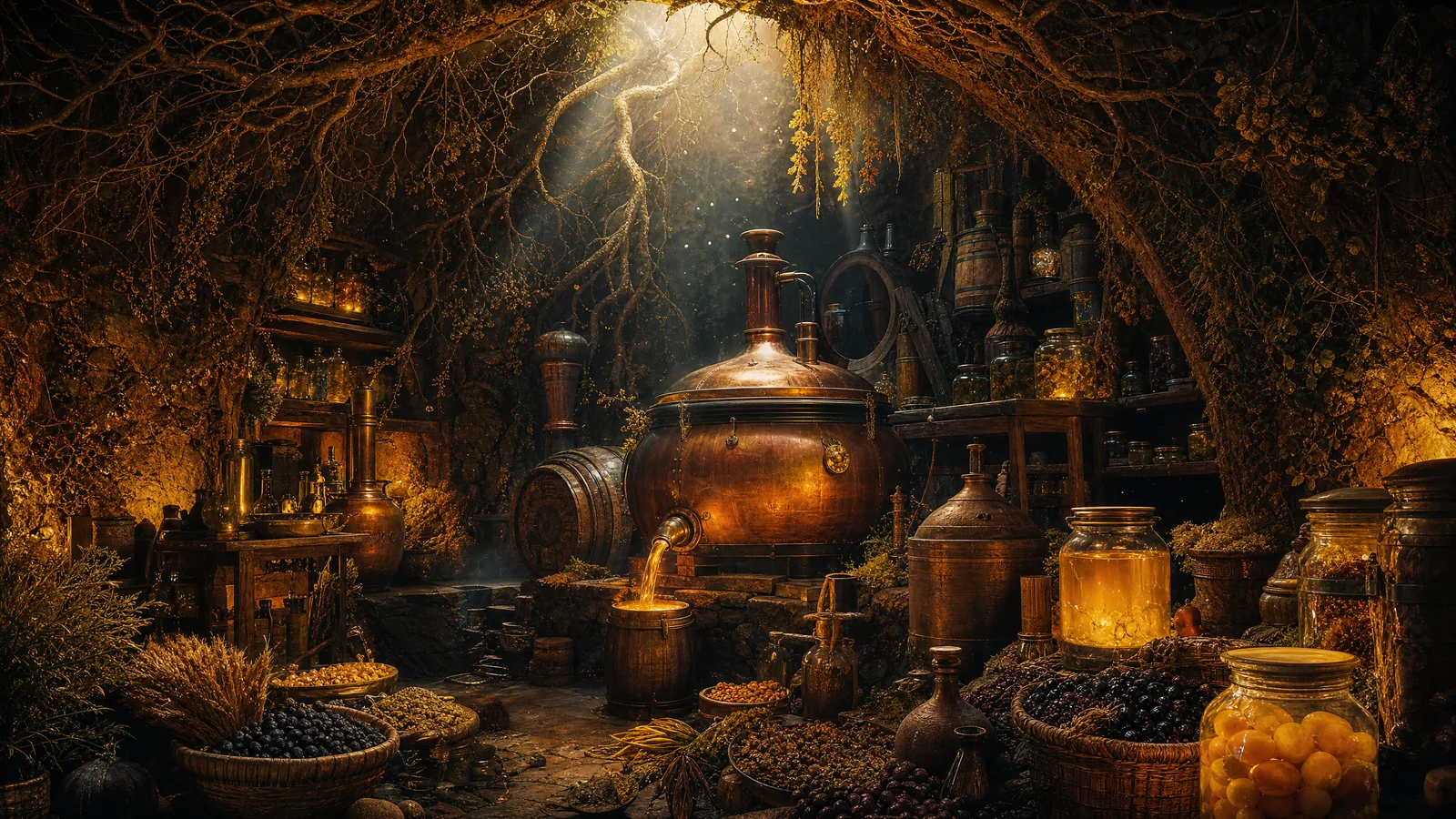
Brew the Ale
Complete Brewing, Mead Making, and Fermented Beverage Production Guide
Complete Brewing, Mead Making, and Fermented Beverage Production Guide
Fermented beverages provide safe drinking water (alcohol kills pathogens), calories, nutrition, medicine, and trade goods. Every civilization brewed. This campaign covers beer, mead, wine, and cider from raw ingredients.
Chapter 1: Fermented Beverages Overview
| Beverage | Base Ingredient | Alcohol % | Difficulty | Time to Ready | Shelf Life |
|---|---|---|---|---|---|
| Beer/ale | Grain (barley, wheat) | 3-8% | Moderate | 2-4 weeks | 1-6 months |
| Mead | Honey + water | 8-18% | Low | 1-6 months | Years-decades |
| Wine (grape) | Grapes | 10-14% | Low-moderate | 2-12 months | Years-decades |
| Cider | Apples | 4-8% | Low | 2-6 weeks | 3-12 months |
| Perry | Pears | 4-8% | Low | 2-6 weeks | 3-12 months |
| Kvass | Bread (stale) | 1-3% | Very low | 2-3 days | 1-2 weeks |
| Ginger beer | Ginger + sugar | 2-5% | Low | 3-7 days | 2-4 weeks |
| Pulque | Agave sap | 4-8% | Low | 1-2 weeks | Days (fresh) |
| Sake | Rice | 15-20% | High | 1-3 months | Months-years |
| Kombucha | Tea + sugar | 0.5-2% | Very low | 7-14 days | 1-3 months |
Chapter 2: Basic Brewing Process (All-Grain Beer)
| Step | Action | Temperature | Time | Details |
|---|---|---|---|---|
| 1 | Malt grain (sprout barley, then dry/kiln) | 50-70F (sprouting), 150-200F (kilning) | 5-7 days sprout, 1 day kiln | Creates enzymes that convert starch to sugar |
| 2 | Crush malt (crack kernels, don't flour) | Room temp | 30 minutes | Roller mill or rolling pin |
| 3 | Mash (soak crushed malt in hot water) | 148-156F | 60 minutes | Enzymes convert starch → fermentable sugar |
| 4 | Sparge (rinse grain bed with hot water) | 168-170F | 30-60 minutes | Extracts remaining sugars |
| 5 | Boil wort (sweet liquid) | 212F (rolling boil) | 60-90 minutes | Sterilizes, concentrates, extracts hops |
| 6 | Add hops (bittering at 60 min, flavor at 15, aroma at 0) | During boil | See schedule | Balances sweetness, preserves |
| 7 | Cool rapidly to fermentation temperature | 60-70F (ale), 45-55F (lager) | 30-60 minutes | Prevent infection during cooling |
| 8 | Transfer to fermenter, add yeast (pitch) | 60-70F | 5 minutes | Yeast converts sugar → alcohol + CO₂ |
| 9 | Ferment (primary) | 60-70F (ale) | 7-14 days | Airlock: bubbles = active fermentation |
| 10 | Bottle with priming sugar (carbonation) | Room temp | 2 weeks in bottle | 3/4 cup corn sugar per 5 gallons |
Chapter 3: Simple Mead (Honey Wine)
| Step | Action | Details |
|---|---|---|
| 1 | Mix honey + water (3-4 lbs honey per gallon water) | More honey = stronger, sweeter mead |
| 2 | Optional: heat to 150F for 15 minutes (pasteurize) | Or use no-heat method (sulfite) |
| 3 | Cool to 70F | Must be cool before adding yeast |
| 4 | Add yeast (wine yeast or bread yeast) | Wine yeast preferred (cleaner flavor) |
| 5 | Add nutrients (raisins, or yeast nutrient) | Honey lacks nutrients yeast needs |
| 6 | Ferment with airlock (1-4 weeks primary) | Bubbling stops when done |
| 7 | Rack (transfer off sediment) to secondary | Clears mead, improves flavor |
| 8 | Age 1-6 months (longer = smoother) | Mead improves dramatically with age |
| 9 | Bottle when clear and stable | No more sediment forming |
Mead ratio guide: Light/session (8-10%): 2 lbs honey/gallon. Standard (12-14%): 3-3.5 lbs/gallon. Strong/sack (16-18%): 4-5 lbs/gallon.
Chapter 4: Hops Substitutes (Gruit)
| Plant | Flavor | Preservation | Availability | Use Rate |
|---|---|---|---|---|
| Yarrow | Bitter, herbal | Moderate | Wild (common) | 1-2 oz per 5 gallons |
| Mugwort | Bitter, sage-like | Good | Wild (common) | 0.5-1 oz per 5 gallons |
| Sweet gale (bog myrtle) | Resinous, spicy | Good | Wetlands | 1-2 oz per 5 gallons |
| Juniper berries | Piney, gin-like | Excellent | Wild (common) | 1-2 oz per 5 gallons |
| Spruce tips | Citrusy, piney | Moderate | Conifer forests | 2-4 oz per 5 gallons |
| Heather | Floral, honey-like | Moderate | Moors, heathland | 2-4 oz per 5 gallons |
| Horehound | Very bitter | Good | Wild/garden | 0.5-1 oz per 5 gallons |
Before hops became standard (post-1400s), all beer was brewed with gruit (herb mixture). These plants grow wild and provide bitterness and preservation without commercial hops.
Chapter 5: Equipment (Minimum Required)
| Item | Function | Substitute | Priority |
|---|---|---|---|
| Fermenter (5+ gallon container) | Holds fermenting liquid | Food-grade bucket, carboy, crock | Essential |
| Airlock | Lets CO₂ out, keeps air/bacteria out | Balloon with pinhole, water trap | Essential |
| Large pot (3-5 gallons) | Boiling wort | Any large cookpot | Essential |
| Thermometer | Temperature control | Hand test (wrist = ~100F) | Important |
| Hydrometer | Measures sugar/alcohol content | Not essential (estimate by taste) | Helpful |
| Siphon/tubing | Transfers liquid without disturbing sediment | Careful pouring | Important |
| Bottles + caps | Stores finished product | Any sealable container | Essential |
| Sanitizer (Star San or bleach solution) | Kills bacteria on equipment | 1 tbsp bleach per gallon water, rinse | Essential |
Chapter 6: Troubleshooting
| Problem | Cause | Prevention | Fix |
|---|---|---|---|
| No fermentation (no bubbles) | Dead yeast, too hot/cold, no sugar | Fresh yeast, correct temp, enough sugar | Add fresh yeast |
| Sour/vinegar taste | Acetobacter (bacteria) infection | Sanitize everything, use airlock | Cannot fix (make vinegar instead) |
| Rotten egg smell (H₂S) | Stressed yeast, nutrient deficiency | Add nutrients, control temperature | Usually dissipates with aging |
| Overcarbonation (bottle bombs) | Too much priming sugar, bottled too early | Measure sugar precisely, wait for fermentation to finish | Refrigerate immediately, open carefully |
| Haze (won't clear) | Protein, yeast, starch | Irish moss in boil, cold crash, time | Gelatin fining, or just wait |
| Off-flavors (band-aid, plastic) | Wild yeast (Brettanomyces), chlorine | Sanitize, use filtered water | Cannot fix easily |
Reference Card
- Simplest fermented drink: honey + water + yeast = mead (ready in 4-6 weeks)
- All-grain beer: mash crushed malt at 148-156F for 60 minutes → boil → ferment
- SANITIZE everything that touches cooled liquid: #1 cause of bad beer is infection
- Fermentation temperature: ales 60-70F, lagers 45-55F. Too hot = off-flavors.
- Hops alternatives (gruit): yarrow, mugwort, juniper, spruce tips (all grow wild)
- Mead improves dramatically with age: 6 months minimum, 1-2 years ideal
- Priming sugar for carbonation: 3/4 cup corn sugar per 5 gallons at bottling
- Kvass (bread beer): stale bread + water + sugar + yeast = drinkable in 2-3 days
TransmissionCOMPLETE — unaltered & unabridged
Words1,230 — every one of them
SHA-256 of source textc8b8182069bbb623745f9ac4899f8e15bc4f81397e23afaec2c10e72a674a3e4
Canonical textdownload campaign-brewing-complete.md — byte-identical to what this page renders