Sovereignty Module: Cross the Waters
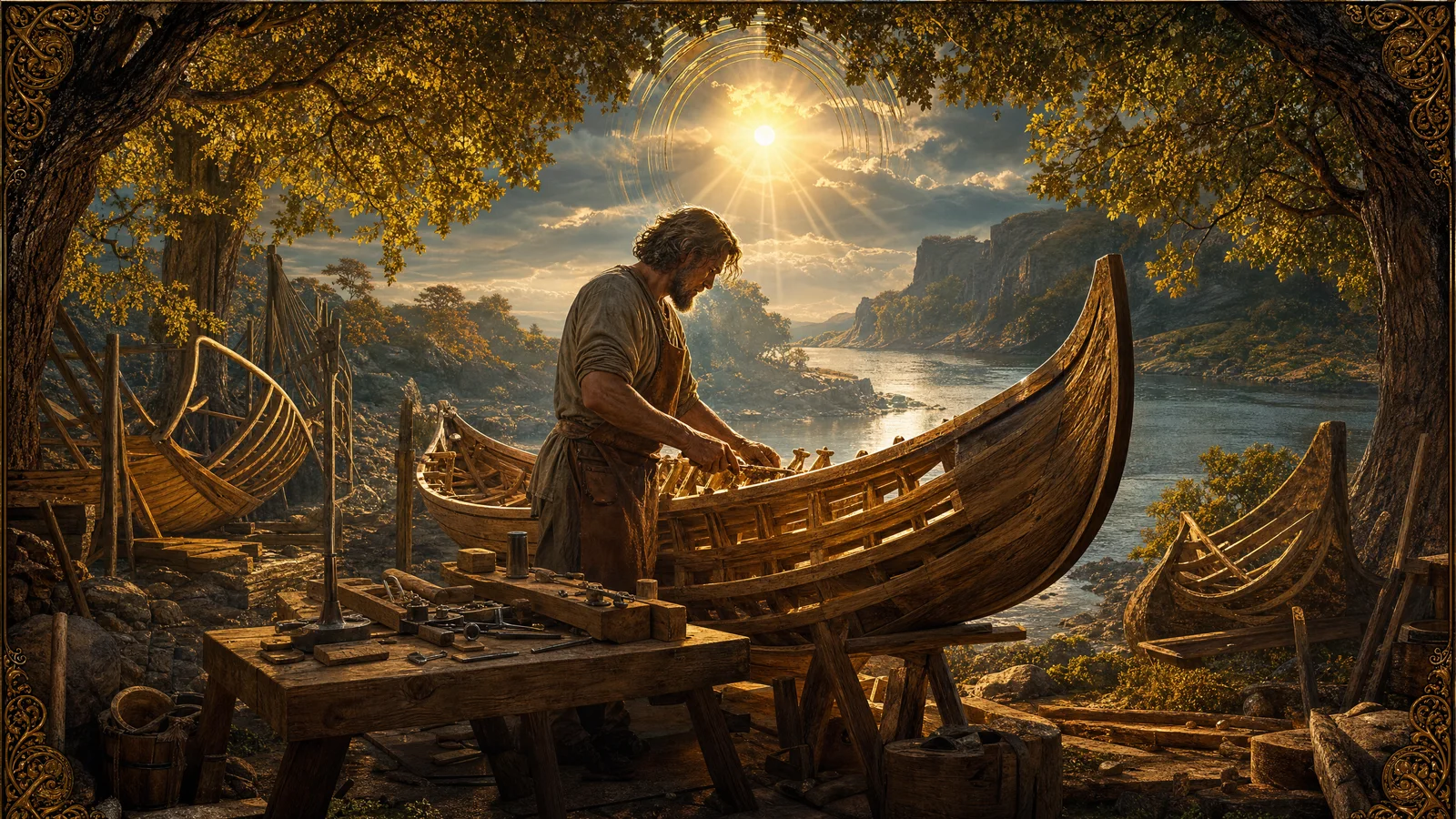
Complete Canoe, Boat Building, and Watercraft Construction Guide
Water is the original highway. Boats provide transportation, fishing access, trade routes, and escape routes. This campaign covers every watercraft type buildable from natural materials without industrial tools.
Chapter 1: Watercraft Types
| Craft | Capacity | Build Time | Materials | Water Type | Skill Level |
|---|---|---|---|---|---|
| Log raft | 2-10 people + cargo | 1-3 days | Logs, cordage | Calm rivers, lakes | Low |
| Dugout canoe | 1-4 people | 1-4 weeks | Single large log | Rivers, lakes, coast | Moderate |
| Bark canoe (birch) | 1-4 people | 1-2 weeks | Birch bark, cedar, spruce root | Rivers, lakes | High |
| Skin boat (coracle) | 1-2 people | 2-5 days | Willow frame, hide/canvas | Rivers, lakes | Moderate |
| Skin boat (kayak) | 1 person | 1-3 weeks | Driftwood/willow frame, seal/canvas | Ocean, rivers | High |
| Plank boat (clinker) | 4-20+ people | 2-6 months | Planks, iron nails, oakum | Ocean, large lakes | High |
| Reed boat | 1-4 people | 3-7 days | Bundled reeds (totora, cattail) | Lakes, calm rivers | Moderate |
| Skin boat (currach) | 4-12 people | 2-4 weeks | Willow/hazel frame, hide/canvas | Ocean (Atlantic) | High |
Chapter 2: Dugout Canoe Construction
| Step | Action | Time | Details |
|---|---|---|---|
| 1 | Select tree: straight, 18-36 inch diameter, no rot | 1 day | Tulip poplar, cedar, cottonwood, pine (soft woods easier) |
| 2 | Fell tree, cut to length (12-20 feet) | 1 day | Longer = more stable, harder to maneuver |
| 3 | Remove bark, flatten bottom slightly | 1 day | Stable base for working |
| 4 | Mark outline: pointed bow and stern, flat bottom | 1 hour | Chalk or charcoal lines |
| 5 | Remove wood from interior (fire and adze method) | 1-3 weeks | Build small fires, scrape charred wood with adze |
| 6 | Thin walls to 1-2 inches (use depth gauges) | Days | Drill holes to depth, carve to holes |
| 7 | Shape exterior (adze, drawknife) | 2-3 days | Smooth, hydrodynamic shape |
| 8 | Fire-harden interior (light controlled burn) | 1 day | Hardens wood, prevents rot |
| 9 | Seal with pine pitch or oil | 1 day | Waterproofing |
| 10 | Carve paddle (one piece, hardwood) | 2-4 hours | 5-6 feet long, blade 6-8 inches wide |
Dugout advantages: Extremely durable (decades-centuries), heavy (stable), simple concept. Disadvantages: heavy to portage, requires large tree, slow to build. The oldest known boats are dugouts (8,000+ years old found preserved).
Chapter 3: Birch Bark Canoe
| Step | Action | Time | Details |
|---|---|---|---|
| 1 | Harvest bark: large birch tree, spring (bark peels easily) | 1 day | Sheet as large as possible, don't girdle living tree |
| 2 | Build frame: gunwales (cedar strips, 14-18 feet) | 1-2 days | Two long strips define canoe shape |
| 3 | Sew bark to gunwales with spruce root | 2-3 days | Spruce root splits and sews like thread |
| 4 | Install ribs (cedar, steam-bent to shape) | 2-3 days | Press outward against bark, define hull shape |
| 5 | Add sheathing (thin cedar strips inside, lengthwise) | 1-2 days | Protects bark from inside damage |
| 6 | Seal all seams with heated spruce gum + charcoal | 1 day | Waterproof every stitch hole and seam |
| 7 | Install thwarts (cross-braces) and seats | 1 day | Structural rigidity |
| 8 | Final waterproofing: coat exterior seams with pitch | 1 day | Re-apply as needed throughout life |
Birch bark canoe: The finest wilderness watercraft ever developed. Light enough for one person to portage (50-80 lbs), fast, maneuverable, repairable in the field with natural materials. Requires birch bark availability (northern forests).
Chapter 4: Coracle (Skin Boat)
| Step | Action | Time | Details |
|---|---|---|---|
| 1 | Cut willow or hazel rods (1/2-1 inch, 5-6 feet long) | 1-2 hours | Green, flexible wood |
| 2 | Weave frame: oval basket shape (4-5 feet across) | 4-8 hours | Interwoven ribs and stringers |
| 3 | Stretch hide (cow, horse, or deer) over frame | 2-4 hours | Hair side out, overlap edges |
| 4 | Lash hide to frame rim with cord | 1-2 hours | Tight, no gaps |
| 5 | Seal seams with tallow, pitch, or tar | 1-2 hours | Must be completely waterproof |
| 6 | Let dry (hide shrinks tight on frame) | 1-2 days | Becomes drum-tight |
| 7 | Paddle with single paddle (figure-8 stroke) | - | Unique paddling technique |
Coracle: One-person boat, weighs 20-35 lbs, carries one person + 200 lbs cargo. Used for river crossing, fishing. Built in 1-2 days. Carried on back when not in water. Used in Wales, Ireland, India, Vietnam for thousands of years.
Chapter 5: Plank Boat (Clinker/Lapstrake)
| Component | Material | Function | Specification |
|---|---|---|---|
| Keel | Oak (single piece, straight) | Backbone of boat | Length of boat, 3-4 inch square |
| Stem/stern posts | Oak (curved) | Bow and stern structure | Scarfed to keel ends |
| Planks (strakes) | Oak, cedar, or pine | Hull skin | 1/2-3/4 inch thick, overlapping |
| Frames (ribs) | Oak (steam-bent) | Internal structure | Installed after planking |
| Nails/rivets | Iron or copper | Fasten planks | Clinch nails (bent over rove) |
| Caulking | Oakum (tarred hemp) or moss | Seal between planks | Driven into seams |
| Tar/pitch | Pine tar | Waterproof exterior | Applied annually |
Clinker building: Each plank overlaps the one below (like clapboard siding). Fastened with clinch nails. Frames added after planking. This is how Vikings built their ships. Strong, flexible, seaworthy. Requires more skill and iron than other methods.
Reference Card
- Simplest watercraft: log raft (lash logs together). 1-3 days, no skill required.
- Dugout canoe: burn and scrape interior of large log. Extremely durable. 1-4 weeks.
- Birch bark canoe: lightest, fastest, most elegant. 50-80 lbs, portage-able. 1-2 weeks.
- Coracle: one-person skin boat, 20-35 lbs. Built in 1-2 days. Carried on back.
- Seal ALL seams with pitch/tar: a leak is just an unsealed seam.
- Stability: wider = more stable. Longer = faster. Deeper = more cargo capacity.
- Always carry repair materials: pitch, bark patches, cordage. Fix leaks immediately.
- Never overload: freeboard (distance from water to rim) must be 6+ inches minimum.