Sovereignty Module: Teach the Children
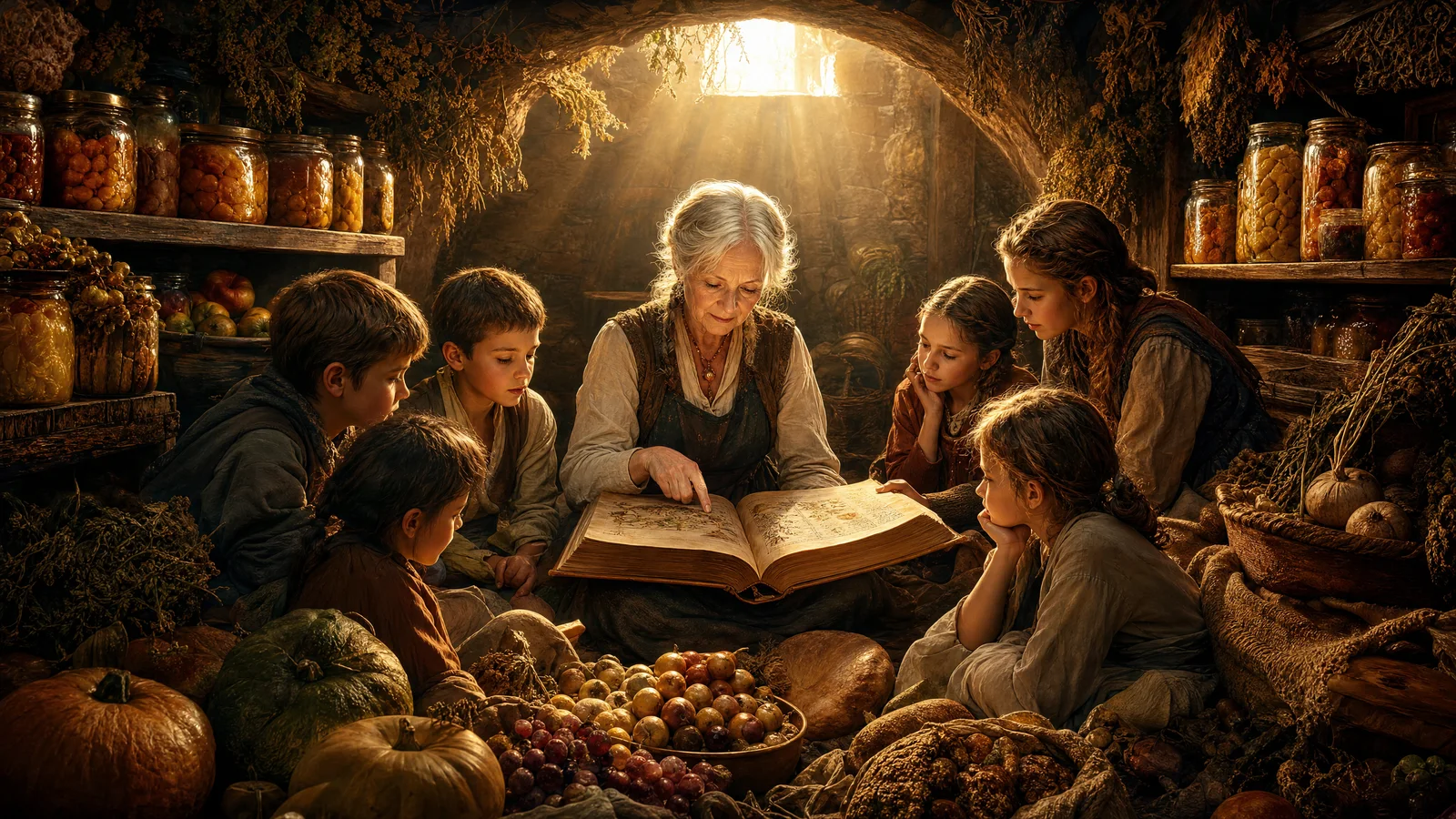
Complete Education and Knowledge Transfer: Preserving and Transmitting Knowledge Across Generations
Knowledge dies with its holder unless transmitted. This campaign covers teaching methods, curriculum design, apprenticeship, record-keeping, and library building.
Chapter 1: Education Priorities by Age
| Age | Focus | Method | Hours/Day | Key Skills |
|---|---|---|---|---|
| 3-6 | Play-based learning, stories, nature | Observation, imitation, guided play | 2-4 | Language, counting, social skills, nature awareness |
| 7-10 | Reading, writing, arithmetic, basic skills | Structured lessons + hands-on practice | 4-6 | Literacy, numeracy, basic tool use, gardening |
| 11-14 | Applied knowledge, apprenticeship begins | Half classroom, half practical | 6-8 | Trade skills, advanced math, science, history |
| 15-18 | Specialization, mastery, community contribution | Apprenticeship + self-directed study | 8-10 | Master trade, leadership, teaching others |
| 18+ | Continuous learning, teaching, innovation | Self-directed + mentoring others | Ongoing | Expertise, innovation, knowledge creation |
Chapter 2: Core Curriculum
| Subject | Why Essential | Minimum Competency | Teaching Method |
|---|---|---|---|
| Reading/writing | Access all recorded knowledge | Read fluently, write clearly | Phonics + practice (daily) |
| Mathematics | Engineering, trade, planning | Arithmetic, fractions, basic geometry | Progressive problems + real application |
| Science (natural philosophy) | Understanding cause and effect | Scientific method, basic physics/chemistry/biology | Observation + experiment |
| History | Learn from past, avoid repeating errors | Major civilizations, key lessons | Stories + primary sources |
| Agriculture | Food production | Grow food from seed to harvest | Hands-on garden (every student) |
| Health/first aid | Save lives | Wound care, vital signs, herbal medicine | Practice + memorization |
| Trade/craft (chosen specialty) | Economic contribution | Journeyman-level competence | Apprenticeship (3-7 years) |
| Ethics/philosophy | Moral reasoning, community cohesion | Logical argument, ethical frameworks | Discussion + case studies |
| Physical training | Health, defense capability | Endurance, strength, self-defense | Daily exercise + martial training |
| Music/art | Culture, morale, creativity | One instrument or art form | Practice + performance |
Chapter 3: Apprenticeship System
| Stage | Duration | Role | Compensation | Evaluation |
|---|---|---|---|---|
| Observer (pre-apprentice) | 1-3 months | Watch, ask questions, do simple tasks | None (learning) | Interest and aptitude assessment |
| Apprentice (beginner) | 1-2 years | Learn fundamentals, assist master | Room + board | Can perform basic tasks independently |
| Journeyman (intermediate) | 2-4 years | Work independently, refine skills | Wages | Produces quality work consistently |
| Master (expert) | Ongoing | Innovate, teach, lead | Full compensation | Creates masterwork, takes apprentices |
Apprenticeship rules: Master provides instruction, materials, and fair treatment. Apprentice provides labor, attention, and respect. Minimum age: 11-12 (with family consent). Duration: 3-7 years depending on trade complexity. Completion: journeyman piece evaluated by guild/masters.
Chapter 4: Record-Keeping and Archives
| Record Type | Purpose | Format | Storage | Update Frequency |
|---|---|---|---|---|
| Census (population) | Know your people | Name, age, skills, family | Bound book | Annual |
| Property/land | Prevent disputes | Maps + written descriptions | Bound book + map case | As changes occur |
| Laws and decisions | Consistent governance | Written code + tribunal records | Bound book (multiple copies) | As enacted |
| Technical knowledge | Preserve skills | Manuals, drawings, procedures | Library (organized) | Continuous |
| History/events | Learn from past | Chronicle (dated entries) | Bound book | Monthly minimum |
| Trade/economic | Track resources | Ledgers (double-entry) | Bound book | Daily-weekly |
| Medical | Track health, treatments | Patient records + formulary | Secure storage | As events occur |
| Agricultural | Optimize food production | Planting records, yields, weather | Bound book | Seasonal |
Chapter 5: Library and Knowledge Preservation
| Medium | Durability | Reproducibility | Storage Requirements | Best For |
|---|---|---|---|---|
| Paper (acid-free) | 100-500 years | Moderate (hand copying) | Dry, cool, dark, pest-free | General knowledge, records |
| Vellum/parchment | 500-1,000+ years | Low (expensive) | Dry, cool | Critical documents, maps |
| Clay tablets | 1,000-5,000+ years | Low | Any (very durable) | Permanent records |
| Stone inscription | 1,000-10,000+ years | Very low | Outdoor (weather-resistant) | Laws, monuments, critical info |
| Metal plates (copper/bronze) | 1,000-5,000+ years | Very low | Any | Critical permanent records |
| Oral tradition (memorized) | Generations (if maintained) | High (teaching) | None (human memory) | Stories, songs, procedures |
| Microfilm/microfiche | 500+ years (if stored properly) | Moderate | Cool, dry, dark | Compact storage of large volumes |
Library organization: Classify by subject (Dewey-like system). Catalog every item (title, author, subject, location). Multiple copies of critical works. Lending system with accountability. Dedicated librarian/archivist. Climate control (temperature, humidity, pest prevention).
Chapter 6: Teaching Methods
| Method | Best For | Engagement | Retention | Preparation Needed |
|---|---|---|---|---|
| Lecture (telling) | Facts, overview, large groups | Low | Low (10-20%) | Low |
| Demonstration (showing) | Skills, procedures | Moderate | Moderate (30-50%) | Moderate |
| Discussion (Socratic) | Critical thinking, ethics | High | Moderate-high (50-70%) | Moderate |
| Practice (doing) | Physical skills, trades | Very high | High (75-90%) | High (materials) |
| Teaching others | Mastery, deep understanding | Very high | Very high (90%+) | High |
| Project-based | Integration, problem-solving | Very high | Very high | High |
| Storytelling | History, values, culture | High | High (memorable) | Low-moderate |
Learning pyramid: People retain 10% of what they read, 20% of what they hear, 30% of what they see, 50% of what they discuss, 75% of what they practice, 90% of what they teach others. Implication: structure education around DOING and TEACHING, not listening.
Reference Card
- Literacy first: reading unlocks all other knowledge. Teach every child to read by age 8. No exceptions.
- Apprenticeship: most effective skill transfer. 3-7 years under a master. Produces competent practitioners.
- Learning pyramid: practice (75% retention) and teaching others (90%) beat lectures (10%). Structure accordingly.
- Multiple copies: critical knowledge in at least 3 copies, stored in different locations. Fire/flood destroys one, others survive.
- Oral tradition: memorized knowledge survives when books burn. Songs, rhymes, and stories encode critical information.
- Record everything: census, property, laws, decisions, techniques, history. Memory fails; written records endure.
- Library: organize by subject, catalog everything, control climate (cool, dry, dark), prevent pests. Dedicated keeper.
- Every adult teaches: the community's knowledge is only as strong as its transmission. Teaching is a duty, not optional.