Sovereignty Module: Harness the Forces
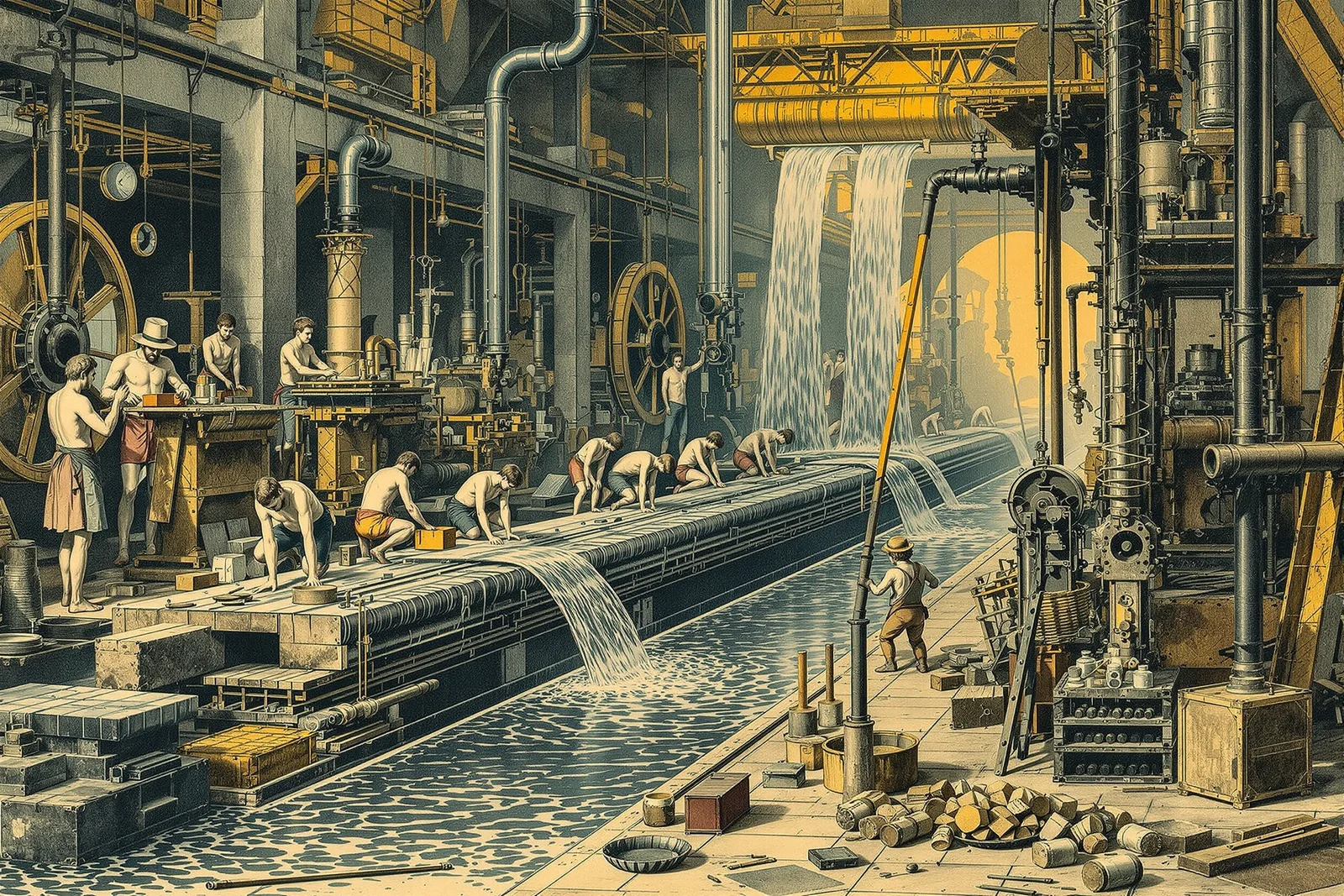
Complete Energy Production: From Muscle to Generator
Energy multiplies human capability. This campaign covers every energy source from human muscle to electricity generation.
Chapter 1: Energy Sources Comparison
| Source | Power Output | Reliability | Fuel | Complexity | Best For |
|---|---|---|---|---|---|
| Human muscle | 75-100 watts (sustained) | Very high | Food | None | Small tasks |
| Animal power | 500-750 watts (horse) | High | Forage + grain | Low | Agriculture, transport |
| Water wheel (overshot) | 2-50 kW | High | Flowing water | Moderate | Milling, sawing |
| Windmill | 1-25 kW | Variable | Wind | Moderate-high | Pumping, milling |
| Steam engine | 5-500+ kW | High | Wood, coal | High | Industrial power |
| Water turbine | 5-500+ kW | Very high | Flowing water | High | Electricity |
| Biogas | 1-10 kW | High | Manure, waste | Moderate | Cooking, engines |
Chapter 2: Water Power
Power calculation: Head(m) x Flow(L/s) x 9.81 x Efficiency = Watts. Example: 10m head x 50 L/s x 9.81 x 0.7 = 3,434W.
| Type | Head Required | Efficiency | Output | Complexity |
|---|---|---|---|---|
| Undershot wheel | 2-6 ft | 25-45% | 1-10 kW | Low-moderate |
| Overshot wheel | 10-30 ft | 60-90% | 2-50 kW | Moderate |
| Breastshot wheel | 5-15 ft | 50-70% | 2-20 kW | Moderate |
| Pelton turbine | 50-1000+ ft | 80-90% | 1-100+ kW | High |
| Crossflow turbine | 5-200 ft | 65-85% | 2-100+ kW | Moderate-high |
Overshot wheel: Water enters at top, weight turns wheel. Diameter = 80-90% of available head. Width 2-4 feet. RPM 5-15 (gear up for machinery). Most efficient traditional design.
Chapter 3: Wind Power
Power = 0.5 x air density x swept area x wind speed cubed. Doubling wind speed = 8x power. Tower height critical. Need 9+ mph average.
| Component | Function | Materials | Notes |
|---|---|---|---|
| Rotor (blades) | Capture wind energy | Wood, fiberglass, metal | 3 blades most common |
| Tower | Elevate rotor | Steel pipe, wood, guyed | 30+ ft above obstacles |
| Generator | Rotation to electricity | Permanent magnet alternator | Match to rotor speed |
| Tail/yaw | Orient into wind | Sheet metal, pipe | Furling for overspeed |
| Battery bank | Store energy | Deep-cycle lead-acid | 3-5 days autonomy |
| Inverter | DC to AC | Electronic | Pure sine wave for sensitive loads |
Chapter 4: Steam Power
Steam safety: Boiler explosions are catastrophic. NEVER operate without: pressure gauge, safety valve, water level gauge, blowdown valve. Test safety valve regularly. Never let water level drop below minimum.
| Component | Function | Safety Level |
|---|---|---|
| Boiler | Generate steam | CRITICAL (pressure vessel) |
| Firebox | Burn fuel | Moderate |
| Engine (piston) | Steam to motion | Moderate |
| Condenser | Cool exhaust steam | Low |
| Governor | Regulate speed | Important (prevents runaway) |
| Flywheel | Smooth power | Moderate (stored energy) |
Chapter 5: Biogas Production
1 cow's daily manure = cooking gas for 1 family. Composition: 50-70% methane, 30-50% CO2.
| Component | Function | Sizing |
|---|---|---|
| Digester tank | Anaerobic decomposition | 1 cubic meter per cow |
| Inlet | Feed organic material | Daily: manure + water (1:1) |
| Gas storage | Collect methane | 0.5-1 day capacity |
| Outlet | Remove slurry (fertilizer) | Automatic overflow |
| Scrubber | Remove H2S | Iron filings in container |
| Burner | Burn for cooking | 1 cubic meter = 1 hour cooking |
Chapter 6: Electricity Basics
| System | Voltage | Storage | Distribution | Best For |
|---|---|---|---|---|
| 12V DC | 12 volts | Lead-acid batteries | Short (<50 ft) | Single building |
| 24V DC | 24 volts | Lead-acid batteries | Moderate (<100 ft) | Larger home |
| 48V DC | 48 volts | Lead-acid or lithium | Moderate (<200 ft) | Off-grid community |
| 120/240V AC | Standard | Battery + inverter | Long distance | Community, workshops |
Safety: Electricity kills at 50+ milliamps. Always disconnect before working. Use insulated tools. Ground all metal frames. Install fuses/breakers. Keep water away from electrical.
Reference Card
- Water power: most reliable renewable. Calculate: Head(m) x Flow(L/s) x 9.81 x efficiency = watts.
- Overshot wheel: 60-90% efficient. Best traditional water power. Diameter = 80-90% of available head.
- Wind: power increases with cube of wind speed. Tower height critical. Need 9+ mph average.
- Steam: most powerful but most dangerous. NEVER operate without safety valve and pressure gauge.
- Biogas: free cooking fuel from manure. 1 cow = 1 family's cooking gas. Sealed digester + 30 days = methane.
- Batteries: deep-cycle only. Keep charged (never below 50%). Ventilate (hydrogen gas).
- Start simple: human + animal power first. Add water/wind as available. Steam/electricity when community can maintain.
- Ram pump: lifts water without fuel using stream flow. No electricity needed. Runs 24/7.