Sovereignty Module: Power the Future
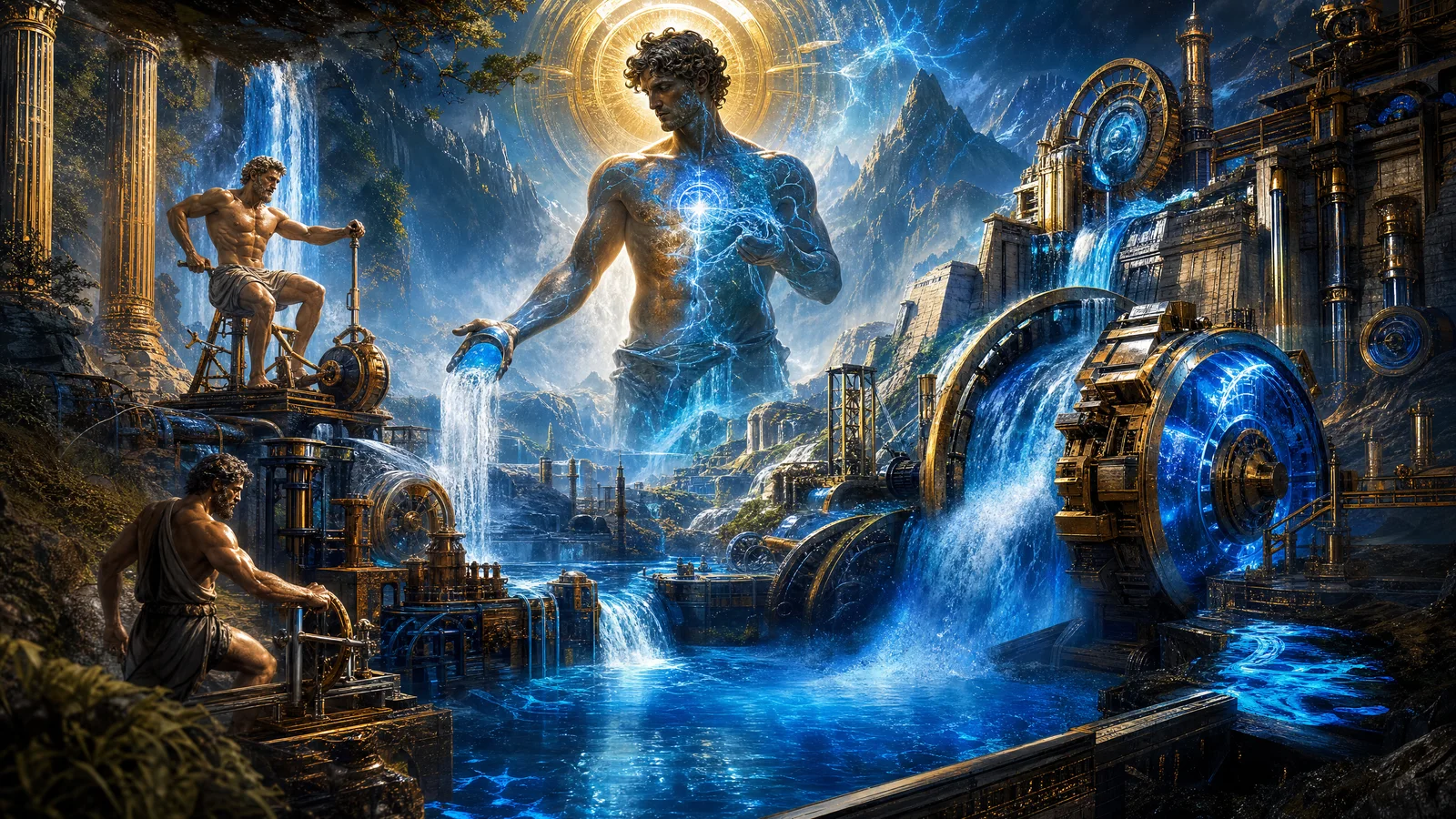
Complete Energy and Power Systems: From Muscle to Electricity
Energy multiplies human capability. This campaign covers all energy sources from human/animal muscle through water, wind, steam, and electrical generation.
Chapter 1: Energy Sources Comparison
| Source | Power Output | Reliability | Fuel Cost | Infrastructure | Maintenance |
|---|---|---|---|---|---|
| Human muscle | 75-100 watts sustained | Very high | Food | Minimal | None |
| Animal (horse/ox) | 500-750 watts sustained | High | Forage/grain | Harness, equipment | Animal care |
| Water wheel (overshot) | 2-50 kW | High (if stream reliable) | None (water flow) | Dam, wheel, gearing | Moderate |
| Windmill | 1-25 kW | Variable (wind-dependent) | None (wind) | Tower, blades, gearing | Moderate-high |
| Steam engine | 5-500+ kW | Very high (if fuel available) | Wood/coal (large quantity) | Boiler, engine, fuel supply | High |
| Micro-hydro (turbine) | 1-100 kW | Very high | None (water flow) | Penstock, turbine, generator | Low-moderate |
| Solar (photovoltaic) | 100-300 watts/panel | Moderate (daylight only) | None | Panels, batteries, inverter | Very low |
| Biogas | 1-10 kW | Moderate | Organic waste | Digester, engine/generator | Moderate |
| Wood gasifier | 5-50 kW | High (if wood available) | Wood/charcoal | Gasifier, engine | Moderate-high |
Chapter 2: Water Power
| Type | Head (fall) | Flow Needed | Output | Efficiency | Best For |
|---|---|---|---|---|---|
| Undershot wheel | 1-3 feet | High flow | 1-5 kW | 20-30% | Low-head, high-flow streams |
| Breastshot wheel | 3-8 feet | Moderate flow | 2-15 kW | 50-65% | Medium head sites |
| Overshot wheel | 8-30+ feet | Low-moderate flow | 5-50 kW | 60-90% | High head, lower flow |
| Pelton turbine | 50-1,000+ feet | Low flow OK | 1-100+ kW | 80-90% | High head, low flow (mountain) |
| Crossflow turbine | 3-60 feet | Moderate flow | 1-50 kW | 60-80% | Medium head, variable flow |
| Archimedes screw | 3-30 feet | Moderate-high flow | 1-20 kW | 60-80% | Fish-friendly, low head |
Overshot water wheel: Most efficient traditional design. Water enters at top, weight of water turns wheel. Build: wooden or steel frame, buckets on rim, axle on bearings. Size: diameter = available head (fall height). Width: 1-4 feet depending on flow. Gearing converts slow rotation to useful speed.
Power calculation: Power (watts) = Head (meters) × Flow (liters/second) × 9.81 × Efficiency. Example: 5 meter head × 20 liters/second × 9.81 × 0.7 efficiency = 687 watts. Enough for basic lighting and tools.
Chapter 3: Wind Power
| Component | Material | Function | DIY Feasibility |
|---|---|---|---|
| Blades (3) | Wood (carved) or sheet metal | Capture wind energy | Moderate (carving skill) |
| Hub | Steel or hardwood | Connect blades to shaft | Moderate |
| Generator/alternator | Permanent magnet alternator | Convert rotation to electricity | Moderate (wind from magnets + coils) |
| Tower | Steel pipe, wood, or guyed pole | Elevate turbine above obstacles | Moderate-high |
| Tail vane | Sheet metal or wood | Orient turbine into wind | Easy |
| Furling mechanism | Spring + hinge | Protect in high winds | Moderate |
| Charge controller | Electronics | Regulate battery charging | Low (buy or build simple) |
| Battery bank | Lead-acid or lithium | Store energy for calm periods | Low (buy) |
Wind power reality: Wind is intermittent. Average wind speed must be 10+ mph for worthwhile generation. Tower height critical — every 10 feet higher = significantly more wind. Battery storage essential. Best as supplement to other sources, not sole power.
Chapter 4: Steam Power
| Component | Material | Function | Safety Concern |
|---|---|---|---|
| Boiler | Steel plate (welded/riveted) | Contains pressurized steam | EXPLOSION RISK if poorly built |
| Firebox | Fire brick + steel shell | Burns fuel to heat water | Fire management |
| Safety valve | Brass/steel spring-loaded | Releases excess pressure | MUST function — life safety |
| Pressure gauge | Bourdon tube or mercury | Monitors boiler pressure | Must be accurate |
| Steam engine (piston) | Cast iron/steel | Converts steam pressure to motion | Hot surfaces, moving parts |
| Flywheel | Cast iron or steel | Smooths power output | Heavy, stores energy (dangerous if fails) |
| Governor | Centrifugal mechanism | Regulates speed | Prevents runaway |
| Condenser (optional) | Copper/steel tubes | Recovers water, improves efficiency | Increases complexity |
Steam safety: Boilers are BOMBS if improperly built or maintained. NEVER operate without: functional safety valve, accurate pressure gauge, proper water level, regular inspection. Operating pressure: start low (15-30 PSI for beginners). Test to 2× operating pressure before use. NEVER leave unattended while firing.
Chapter 5: Electrical Generation
| Generator Type | Output | Speed | Magnets | Coils | DIY Feasibility |
|---|---|---|---|---|---|
| Permanent magnet alternator | AC (variable frequency) | 100-1,000 RPM | Neodymium or ferrite | Copper wire on iron cores | Moderate |
| Car alternator (modified) | DC 12-14V | 1,000-6,000 RPM | Electromagnetic (field coil) | Stator windings | Easy (salvage) |
| Induction motor (as generator) | AC (grid frequency) | Slightly above synchronous | None (capacitor-excited) | Existing windings | Easy (if motor available) |
| Bicycle generator | DC 12V, 50-100W | Pedal speed | Permanent magnet | Copper coils | Easy |
Simple system: Water wheel or windmill → belt/gear to generator → charge controller → battery bank (12V or 24V) → inverter (DC to AC) → household loads. Start small: lighting + phone charging + radio. Expand as generation capacity grows.
Battery bank sizing: Daily energy use (watt-hours) ÷ battery voltage × 2 (for 50% depth of discharge) × 3 (for 3 days autonomy) = battery capacity needed (amp-hours). Example: 1,000 Wh/day ÷ 12V × 2 × 3 = 500 Ah battery bank.
Chapter 6: Energy Conservation
| Strategy | Savings | Cost | Difficulty | Priority |
|---|---|---|---|---|
| LED lighting (vs incandescent) | 80-90% lighting energy | Low | Easy | Very high |
| Insulation (walls + ceiling) | 30-50% heating energy | Moderate | Moderate | Very high |
| Passive solar design | 30-70% heating energy | None (design) | None | Very high |
| Efficient cookstove (vs open fire) | 50-70% cooking fuel | Low-moderate | Easy | High |
| Solar water heating | 50-80% water heating energy | Moderate | Moderate | High |
| Thermal mass (heat storage) | 20-40% heating energy | Low-moderate | Moderate | High |
| Draft sealing (windows, doors) | 10-30% heating energy | Very low | Easy | High |
| Scheduling (use energy when available) | 20-40% storage needs | None | Easy | Moderate |
Reference Card
- Water power: most reliable renewable. Calculate: Head (m) × Flow (L/s) × 9.81 × efficiency = watts. Even small streams = useful power.
- Overshot wheel: 60-90% efficient. Diameter = head height. Simple to build from wood. Gearing converts slow rotation to useful speed.
- Wind: intermittent. Need 10+ mph average. Tower height critical. Battery storage essential. Best as supplement.
- Steam: powerful but DANGEROUS. Boilers explode. Safety valve, pressure gauge, water level = non-negotiable. Start at low pressure.
- Batteries: lead-acid most available. Size for 3 days autonomy at 50% depth of discharge. Keep charged. Ventilate (hydrogen gas).
- Conservation first: reducing energy need is cheaper than generating more. Insulate, use LED, passive solar, efficient stoves.
- Start small: lighting + communication + water pumping. These transform quality of life. Expand generation as community grows.
- Hybrid systems: combine water + wind + solar + biogas. Different sources complement each other. Redundancy = reliability.