Sovereignty Module: Build the Forge
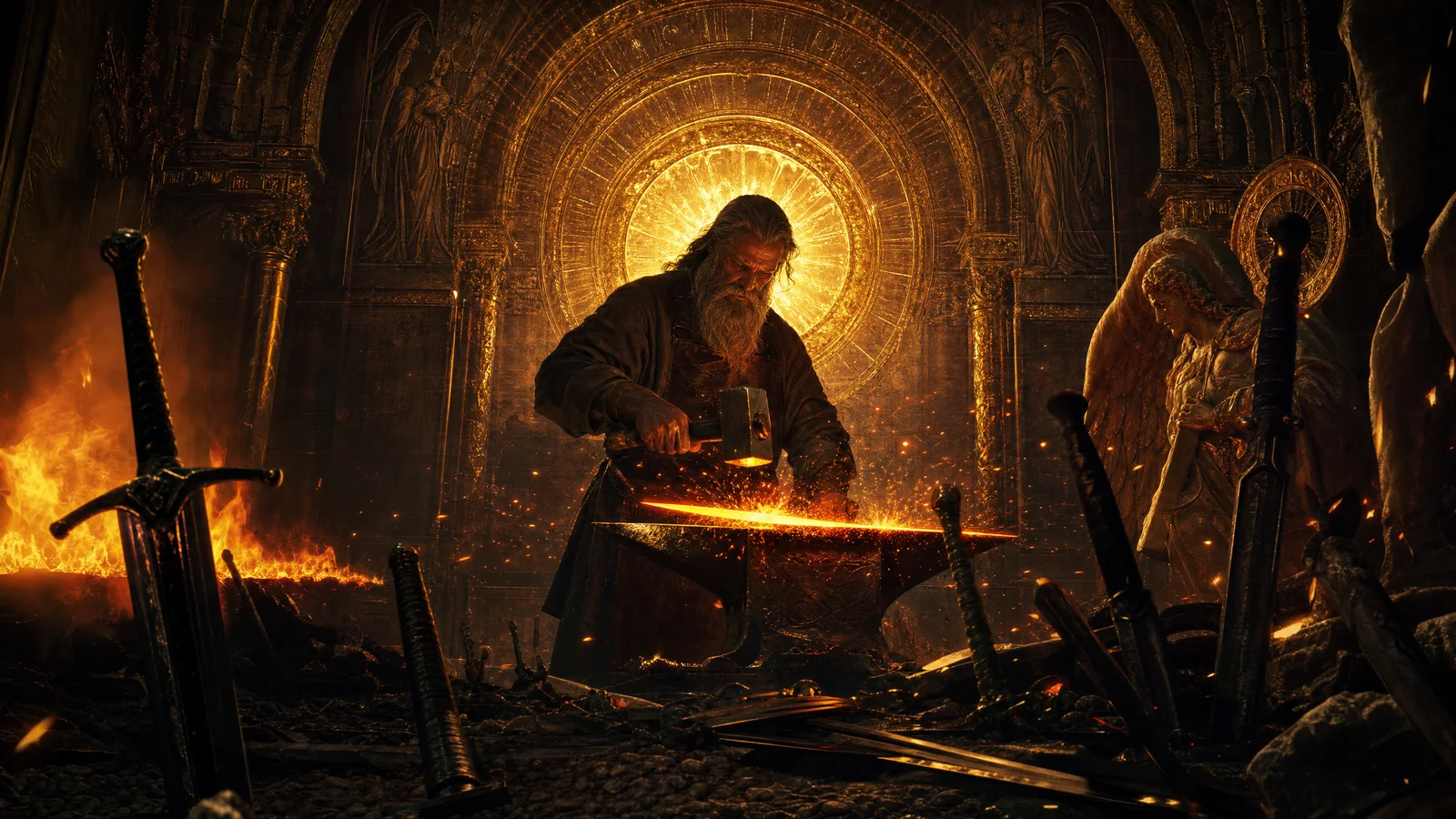
Build the Forge
Complete Forge Construction, Blacksmithing Setup, and Metalworking Infrastructure Guide
Complete Forge Construction, Blacksmithing Setup, and Metalworking Infrastructure Guide
The forge is the foundation of all metalworking. Without a forge, there are no tools, no weapons, no hardware, no civilization. This campaign covers building a complete blacksmith shop from raw materials.
Chapter 1: Forge Types
| Type | Fuel | Temperature | Complexity | Cost | Best For |
|---|---|---|---|---|---|
| Ground forge (pit) | Charcoal | 1800-2200F | Very low | Free | Emergency, primitive |
| Side-blast forge (brick) | Charcoal or coal | 2000-2400F | Low-moderate | Low | General blacksmithing |
| Bottom-blast forge (firepot) | Coal or coke | 2200-2800F | Moderate | Moderate | Heavy forging, welding |
| Gas forge (propane) | Propane | 2000-2400F | Moderate | Moderate-high | Clean, consistent heat |
| Induction forge | Electricity | 2000-3000F+ | High | High | Precision, speed |
Chapter 2: Building a Coal/Charcoal Forge
| Component | Material | Specification | Function |
|---|---|---|---|
| Fire pot (hearth) | Steel plate (3/8"+), cast iron, or firebrick | 12-18 inch square, 4-6 inches deep | Contains fire |
| Tuyere (air inlet) | Steel pipe (1-2 inch) | Enters from side or bottom | Delivers air to fire |
| Ash dump | Gate below tuyere | Removable plate or clinker breaker | Removes ash/clinker |
| Air supply (bellows or blower) | Leather bellows, hand-crank blower, or electric blower | Must deliver 100-300 CFM | Forces air into fire |
| Table/hearth | Steel plate or firebrick on steel frame | Working height (30-34 inches) | Supports fire and work |
| Hood and chimney | Sheet metal | 18-24 inch opening, 8-12 inch pipe | Removes smoke |
| Water trough (slack tub) | Metal barrel or trough | Near forge, always full | Quenching, cooling tools |
Simplest forge: Dig hole in ground (12 inches diameter, 6 inches deep). Run pipe from side (tuyere). Attach bellows or hair dryer to pipe. Fill with charcoal. Light. You now have a forge. Upgrade from there.
Chapter 3: Essential Blacksmith Tools
| Tool | Function | Minimum Spec | Priority |
|---|---|---|---|
| Anvil | Work surface for hammering | 100+ lbs (heavier = better) | #1 (essential) |
| Cross-peen hammer (2-3 lbs) | General forging, drawing out | Good steel, comfortable handle | #1 (essential) |
| Tongs (flat-jaw) | Holding hot metal | 18-24 inches long | #1 (essential) |
| Tongs (wolf-jaw/V-bit) | Holding round stock | 18-24 inches long | #2 (important) |
| Hardy (hot cut) | Cutting hot metal on anvil | Fits anvil hardy hole | #2 (important) |
| Punch (various sizes) | Making holes in hot metal | Good tool steel, hardened | #2 (important) |
| Vise (post or leg vise) | Holding work for filing, bending | 4-6 inch jaws | #2 (important) |
| Files (bastard, smooth) | Shaping cold metal | 10-12 inch | #3 (needed) |
| Swage block | Shaping curves, holes, channels | Cast iron, various shapes | #3 (needed) |
| Flatter | Smoothing surfaces | Flat face, handled | #3 (needed) |
Anvil substitutes: Railroad track (turned on side), large sledgehammer head, thick steel plate on stump, large rock (for primitive work). Any hard, heavy, flat surface works.
Chapter 4: Basic Forging Operations
| Operation | Description | Heat Color | Technique |
|---|---|---|---|
| Drawing out | Making metal longer and thinner | Bright orange-yellow | Hammer on anvil face, rotate 90° |
| Upsetting | Making metal shorter and thicker | Bright orange-yellow | Hammer on end (like a nail) |
| Bending | Creating angles or curves | Orange-cherry | Hammer over anvil edge or in vise |
| Punching | Making holes through hot metal | Bright orange | Drive punch through, flip, drive from other side |
| Splitting | Dividing metal into sections | Orange | Hot chisel or hardy cut |
| Welding (forge weld) | Joining two pieces permanently | White/sparking (2300F+) | Flux, heat to welding temp, hammer together |
| Scrolling | Creating decorative spirals | Cherry red | Hammer tip over anvil horn, work inward |
| Twisting | Rotating bar along its axis | Even cherry red | Grip in vise, twist with wrench |
| Drifting | Enlarging/shaping holes | Orange | Drive tapered drift through punched hole |
| Swaging | Shaping to specific profile | Orange | Top and bottom swage dies |
Chapter 5: First Projects (Skill Progression)
| Project | Skills Practiced | Difficulty | Utility |
|---|---|---|---|
| S-hook | Drawing, scrolling, bending | Beginner | Hanging pots, tools |
| Nail | Drawing, heading, cutting | Beginner | Fastening |
| Tent stake | Drawing, pointing | Beginner | Camping, construction |
| Tongs | Drawing, bending, riveting | Intermediate | Making more tools |
| Knife (from railroad spike) | Drawing, beveling, heat treat | Intermediate | Cutting tool |
| Hammer | Punching, drifting, heat treat | Intermediate-advanced | Making more tools |
| Axe | Drawing, punching, welding, heat treat | Advanced | Essential tool |
| Chain links | Bending, welding | Advanced | Lifting, securing |
| Horseshoe | Drawing, bending, punching | Advanced | Farrier work |
Chapter 6: Heat Colors and Temperature
| Color (in dim light) | Temperature (F) | Temperature (C) | Use |
|---|---|---|---|
| Black heat (barely visible) | 400-500 | 200-260 | Tempering range |
| Dark red (just visible) | 900-1000 | 480-540 | Minimum forging (light work) |
| Cherry red | 1300-1400 | 700-760 | General forging |
| Bright cherry | 1400-1500 | 760-815 | Good forging heat |
| Orange | 1600-1800 | 870-980 | Ideal forging (most work done here) |
| Light orange/yellow | 1800-2000 | 980-1090 | Heavy forging, upsetting |
| Yellow | 2000-2100 | 1090-1150 | Maximum forging (risk of burning) |
| Light yellow/white | 2100-2300 | 1150-1260 | Forge welding temperature |
| White/sparking | 2300+ | 1260+ | Burning steel (too hot, material lost) |
NEVER forge below cherry red (1300F): cold forging cracks steel internally (cold shuts). Always return to forge and reheat when color drops below cherry.
Reference Card
- Simplest forge: hole in ground + pipe + bellows + charcoal = working forge
- Anvil substitutes: railroad track, sledgehammer head, thick steel plate on stump
- Forge at orange heat (1600-1800F): ideal for most operations
- Never forge below cherry red (1300F): causes internal cracking (cold shuts)
- Forge welding: white heat (2300F+) + flux (borax) + hammer = permanent joint
- First tools to make: tongs (so you can hold things) and a punch (so you can make holes)
- Charcoal burns cleaner than coal and won't contaminate steel (better for beginners)
- Quench in oil (most steels) for hardening. Water quench is more severe (risk of cracking).
TransmissionCOMPLETE — unaltered & unabridged
Words1,176 — every one of them
SHA-256 of source texte39649751b51ef3a6d318a9e9e321a74013847ce4f8059c10001e4278a63d8f6
Canonical textdownload campaign-forge-construction.md — byte-identical to what this page renders