Campaign 75: Master the Fire
The Complete Kiln Building, Firing Techniques, and High-Temperature Processing Guide
A Sovereignty Module of the Practitioner Community
Preamble
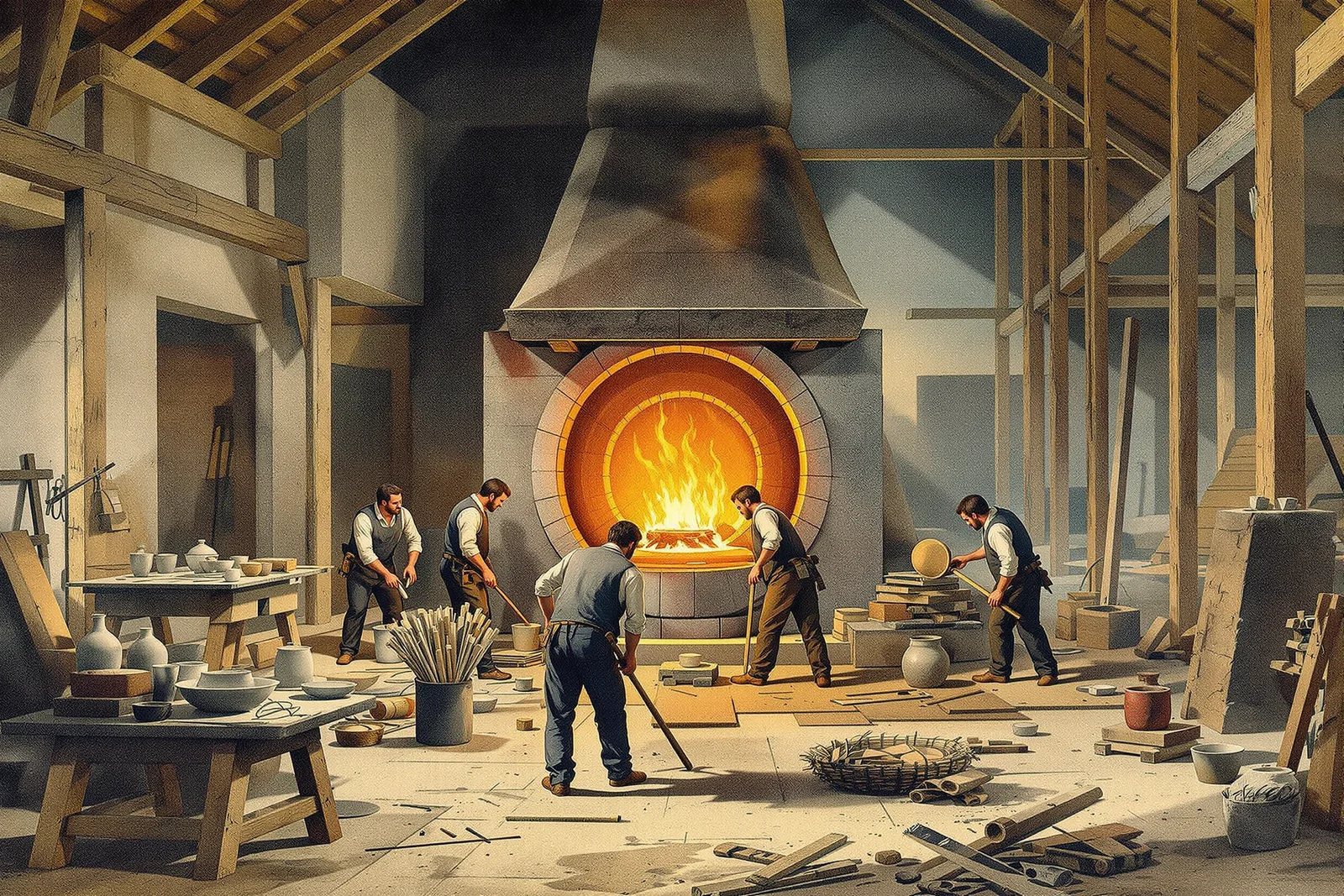
A kiln is a controlled high-temperature chamber. With a kiln you can fire pottery into waterproof vessels, make bricks from clay, produce charcoal, smelt metals, and create lime for mortar and soil amendment. Kilns have been built from nothing but earth and fire for 10,000 years. This campaign covers kiln types from simple pit fires to efficient updraft kilns, all buildable with local materials.
Part I: Kiln Types
Chapter 1: Kiln Comparison
| Kiln Type | Max Temp | Build Cost | Build Time | Fuel | Best For |
|---|---|---|---|---|---|
| Pit fire | 1,200-1,500°F | Free | 1 hour | Wood | Basic earthenware, first pottery |
| Sawdust kiln | 1,200-1,600°F | $0-20 | 2-4 hours | Sawdust + wood | Decorative pottery, small items |
| Brick stack kiln | 1,600-2,000°F | $50-200 | 1 day | Wood | Earthenware, stoneware |
| Updraft kiln (catenary arch) | 2,000-2,400°F | $100-500 | 2-5 days | Wood | Stoneware, porcelain, high-fire |
| Downdraft kiln | 2,000-2,400°F | $200-1,000 | 3-7 days | Wood | Even firing, professional quality |
| Charcoal kiln (retort) | 500-900°F (carbonization) | $0-50 | 1-2 days | Wood (self-fueling) | Charcoal production |
| Lime kiln | 1,650°F+ | $50-200 | 1-3 days | Wood | Quicklime from limestone |
| Brick kiln (clamp) | 1,600-1,900°F | $0-50 | 2-3 days | Wood | Fired bricks from raw clay |
Chapter 2: Building a Simple Updraft Kiln
| Step | Action | Materials |
|---|---|---|
| 1 | Select site | Level ground, away from structures, downwind |
| 2 | Build firebox | Dig trench or build with bricks. 12-18" wide, 24-36" deep. |
| 3 | Build ware chamber | Stack bricks or shape clay/cob walls above firebox. Leave gaps for flame path. |
| 4 | Create shelf supports | Kiln shelves or flat stones to hold pottery |
| 5 | Build arch/dome | Catenary arch from bricks or clay coils. Leave flue hole at top. |
| 6 | Add damper | Adjustable cover for top flue to control draft |
| 7 | Dry thoroughly | Let kiln dry 1-2 weeks before first firing |
| 8 | First firing (bisque) | Slow ramp: 200°F/hour to target temperature |
Chapter 3: Firing Schedule
| Phase | Temperature | Rate | Duration | Purpose |
|---|---|---|---|---|
| Water smoking | Room temp to 400°F | 100°F/hour | 3-4 hours | Drives out physical water |
| Dehydration | 400-1,100°F | 150°F/hour | 4-5 hours | Drives out chemical water from clay |
| Quartz inversion | 1,063°F (critical) | SLOW through this range | Hold steady | Quartz crystals change structure. Too fast = cracks. |
| Sintering | 1,100-target temp | 200°F/hour | Varies | Clay particles fuse together |
| Soak | Target temperature | Hold | 15-60 min | Even heat distribution |
| Cooling | Target to room temp | Natural (do not open kiln) | 12-48 hours | Slow cooling prevents thermal shock |
Chapter 4: Temperature Targets by Product
| Product | Temperature | Result |
|---|---|---|
| Earthenware (bisque) | 1,650-1,900°F | Porous, can be glazed and re-fired |
| Earthenware (glazed) | 1,800-2,100°F | Waterproof with glaze |
| Stoneware | 2,200-2,400°F | Dense, waterproof even without glaze |
| Porcelain | 2,300-2,500°F | Translucent, extremely hard |
| Fired brick | 1,600-1,900°F | Structural building material |
| Quicklime | 1,650°F+ | From limestone. Add water = slaked lime (morite/plaster) |
| Charcoal | 500-900°F (oxygen-restricted) | High-energy fuel, water filtration, soil amendment |
Chapter 5: The Practitioner Kiln Reference Card
SIMPLEST START: Pit fire. Dig a shallow pit, place bone-dry pottery inside, surround with fuel (wood, dung, straw), light it, let it burn down. You have fired pottery.
CRITICAL RULE: Pottery MUST be bone dry before firing. Any moisture = steam = explosion. Dry pieces for 1-2 weeks minimum.
QUARTZ INVERSION: At 1,063°F, quartz in clay changes crystal structure and expands. Go slow through this temperature (both heating and cooling). Fast = cracks.
CHARCOAL: Build a retort (sealed chamber with small vent). Fill with wood. Heat externally. Wood gases escape and burn. What remains is charcoal. Charcoal burns hotter and cleaner than wood.
LIME: Burn limestone at 1,650°F+ to get quicklime. Add water carefully (exothermic reaction) to get slaked lime. Mix with sand for mortar. Mix with water for whitewash. Add to acidic soil to raise pH.
REMEMBER: A kiln is a force multiplier. With a kiln, clay becomes waterproof vessels, mud becomes structural bricks, wood becomes charcoal, and limestone becomes mortar. These transformations built civilization. A Practitioner who can build and fire a kiln can produce essential materials from raw earth.
Council Approval
All 12 voices unanimously approve. Complete high-temperature processing sovereignty.
Council Result: 12/12 APPROVED. Campaign 75 is complete.