Campaign 104: Make the Page
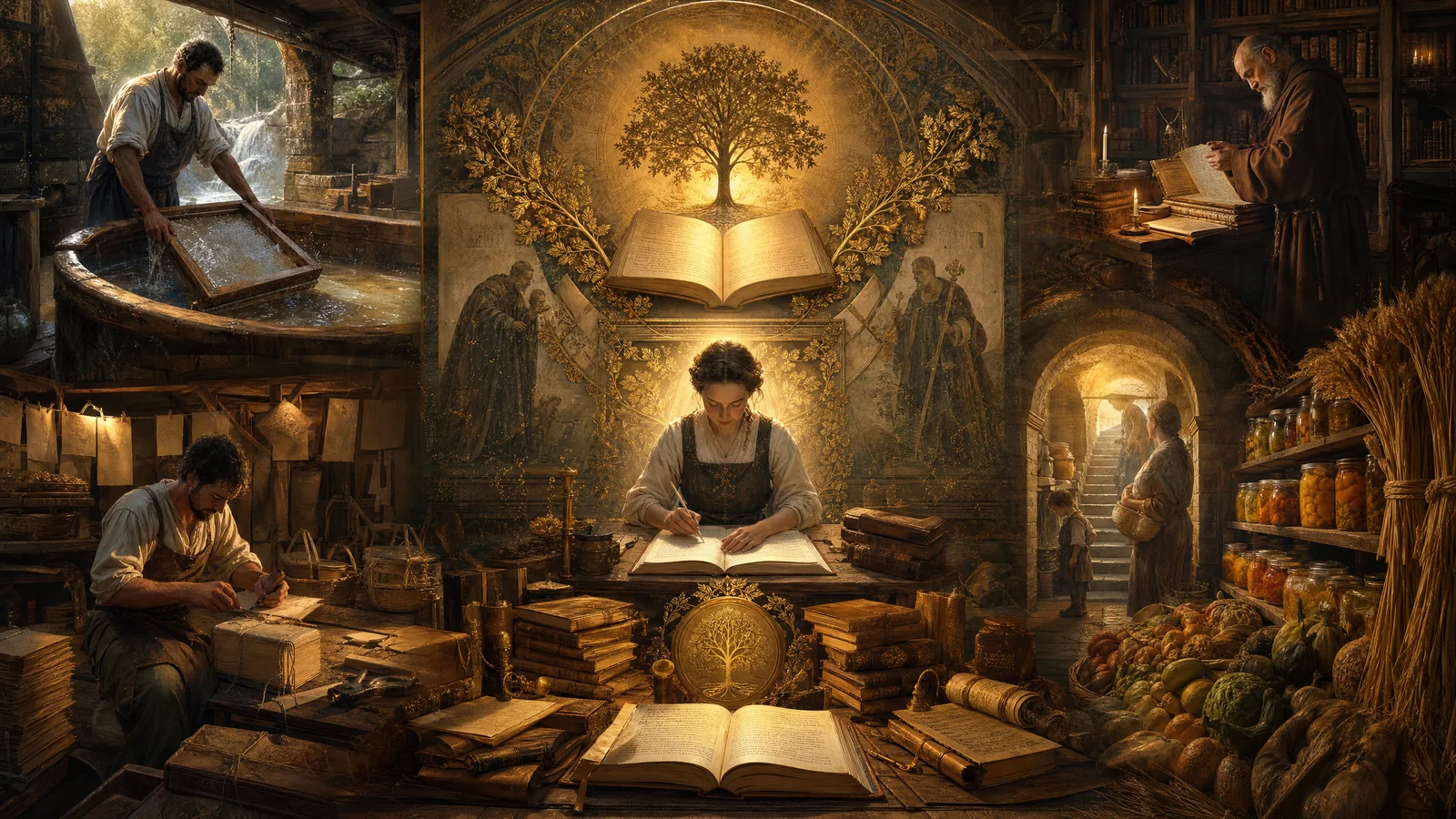
The Complete Paper Making, Bookbinding, and Knowledge Preservation Guide
A Sovereignty Module of the Practitioner Community
Preamble
Paper is the medium of preserved knowledge. Without paper, every generation starts from zero. Paper can be made from any plant fiber: wood, cotton, hemp, flax, bamboo, grass, bark, or recycled cloth. The process is simple: break fibers apart in water, spread thin on a screen, press, dry. A Practitioner who can make paper and bind books can preserve and transmit knowledge indefinitely. This campaign covers fiber preparation, sheet forming, bookbinding, and ink making.
Part I: Paper Making
Chapter 1: Fiber Sources
| Source | Quality | Availability | Preparation | Best For |
|---|---|---|---|---|
| Cotton/linen rags | Excellent (archival) | Recycled clothing | Cut, boil, beat | Fine writing paper, documents |
| Hemp fiber | Excellent | Cultivated | Ret, boil, beat | Durable paper, rope paper |
| Wood pulp (hardwood) | Good | Abundant | Chip, cook with alkali, beat | General purpose |
| Bamboo | Good | Tropical/subtropical | Split, soak in lime, beat | Asian-style paper |
| Grass (any tall grass) | Fair | Everywhere | Cut, boil with ash water, beat | Practice, rough paper |
| Bark (mulberry, birch) | Excellent | Forested areas | Strip, soak, beat | Traditional Japanese/bark paper |
| Recycled paper | Variable | Anywhere | Soak, blend | Practice, packaging |
| Cattail/bulrush | Fair | Wetlands | Boil, beat | Rough paper, padding |
Chapter 2: Basic Paper Making Process
| Step | Action | Details |
|---|---|---|
| 1. Prepare fiber | Cut/shred source material into small pieces | 1-2 inch pieces for rags, chips for wood |
| 2. Cook | Boil in alkali solution (wood ash lye or washing soda) 2-4 hours | Breaks down lignin, separates fibers |
| 3. Rinse | Wash cooked fiber thoroughly in clean water | Remove all alkali residue |
| 4. Beat | Pound fiber with mallet or blend in water | Goal: separate individual fibers, create slurry (pulp) |
| 5. Form sheet | Dip mould and deckle into vat of diluted pulp, lift evenly | Mould = screen frame. Deckle = top frame (defines edges). |
| 6. Couch | Flip wet sheet onto felt or cloth | Gentle rolling motion to release sheet from screen |
| 7. Press | Stack sheets between felts, press to remove water | Use weight, clamp, or screw press |
| 8. Dry | Hang sheets or lay flat on boards | Air dry 1-3 days depending on humidity |
| 9. Size (optional) | Dip in gelatin or starch solution | Sizing prevents ink from bleeding/feathering |
Chapter 3: Simple Bookbinding Methods
| Method | Difficulty | Pages | Durability | Tools Needed |
|---|---|---|---|---|
| Pamphlet stitch | Beginner | 4-20 | Low-moderate | Needle, thread, awl |
| Japanese stab binding | Beginner | Any number | Moderate | Needle, thread, awl, covers |
| Coptic binding | Intermediate | Any number | High (opens flat) | Needle, thread, awl, covers |
| Case binding (hardcover) | Intermediate | Any number | Very high | Board, cloth, glue, needle, thread |
| Long stitch | Beginner-Intermediate | Any number | Moderate-high | Needle, thread, leather cover |
| Perfect binding (glue) | Beginner | Any number | Moderate | Glue, clamp, cover |
Chapter 4: Ink Making
| Type | Recipe | Color | Durability |
|---|---|---|---|
| Carbon ink | Soot (lamp black) + water + gum arabic | Black | Permanent (thousands of years) |
| Iron gall ink | Oak galls + iron sulfate + gum arabic + water | Blue-black (darkens over time) | Very permanent (medieval standard) |
| Walnut ink | Boiled walnut hulls + water | Brown | Moderate (fades in sunlight) |
| Berry ink | Crushed berries + vinegar + salt | Red/purple | Low (fades, good for practice) |
| Charcoal ink | Ground charcoal + water + egg yolk (binder) | Black | Moderate |
Chapter 5: The Practitioner Paper Reference Card
COTTON RAGS = ARCHIVAL PAPER: Paper made from cotton or linen rags lasts 500+ years. Wood pulp paper lasts 50-100 years (acid degrades it). For permanent records, use rag paper.
ASH WATER IS YOUR ALKALI: Wood ash soaked in water creates lye (potassium hydroxide), which breaks down plant fibers for paper making. Free, available everywhere fire burns.
CARBON INK IS PERMANENT: Soot mixed with water and gum arabic creates ink that lasts thousands of years. The Dead Sea Scrolls were written with carbon ink. It does not fade.
BOOKBINDING PRESERVES KNOWLEDGE: Loose pages scatter and are lost. Bound books survive centuries. A Coptic binding opens flat, uses no glue, and can be made with a needle and thread.
REMEMBER: Paper is plant fiber spread thin. Ink is soot in water. A book is paper folded and stitched. A Practitioner who can make paper, mix ink, and bind books can preserve any knowledge for centuries — the most powerful technology in human history.
Council Approval
All 12 voices unanimously approve. Complete knowledge preservation sovereignty.
Council Result: 12/12 APPROVED. Campaign 104 is complete.