Sovereignty Module: Polish the Earth
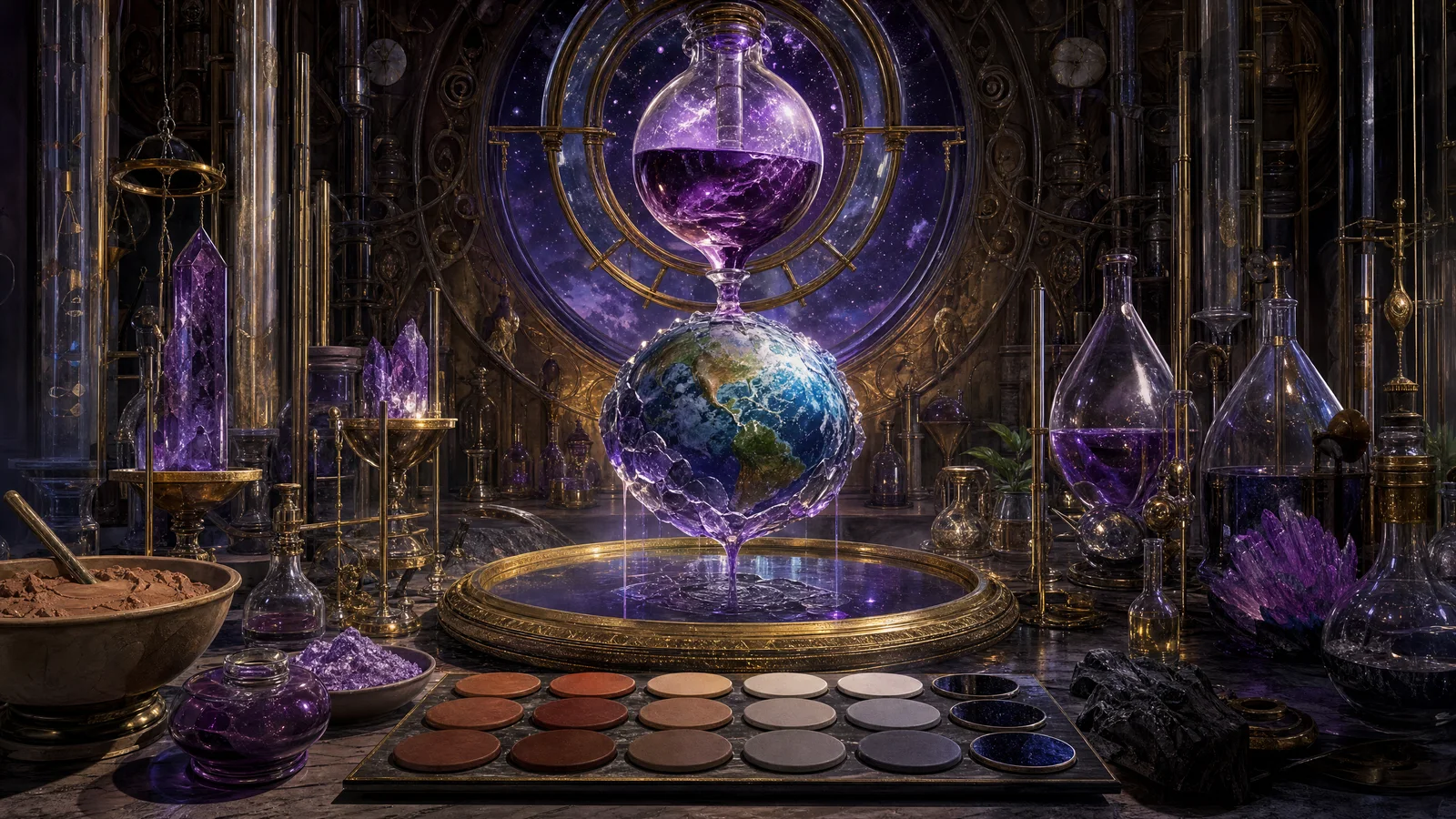
Complete Terra Sigillata: From Clay Slip to Mirror Finish
Terra sigillata is an ultra-fine clay slip that produces a satin-smooth, semi-glossy surface without glaze. This campaign covers preparation, application, burnishing, and firing.
Chapter 1: What is Terra Sigillata
Terra sigillata: 1) Latin for "sealed earth." 2) An ultra-fine particle clay slip. 3) Only the finest clay particles are used (less than 1 micron). 4) These tiny particles pack tightly on the pot surface. 5) When burnished, they create a smooth, semi-glossy finish. 6) No glaze is needed (the surface is naturally smooth). 7) Used by Roman potters for their finest red and black ware. 8) The finish is not waterproof (porous, for decorative use).
| Property | Terra Sigillata | Regular Slip | Glaze |
|---|---|---|---|
| Particle size | Ultra-fine (<1 micron) | Mixed sizes | Melted glass |
| Surface finish | Satin to semi-gloss | Matte to satin | Glossy |
| Waterproof | No | No | Yes |
| Food safe | No (porous) | No | Yes (if properly formulated) |
| Firing temperature | Low (1600-1800°F) | Any | Specific to recipe |
| Application | Brush or spray (thin) | Dip, brush, pour | Dip, brush, pour, spray |
Chapter 2: Preparation
Recipe: 1) 1 pound dry clay (red art clay, ball clay, or kaolin). 2) 1.5 quarts water. 3) 1/4 teaspoon sodium silicate (deflocculant). 4) Mix clay and water thoroughly. 5) Add sodium silicate, mix well. 6) Pour into tall, narrow container (bucket or jar). 7) Allow to settle for 24-48 hours. 8) Three layers will form: heavy particles (bottom), medium particles (middle), fine particles (top). 9) Siphon off top 1/3 (this is the terra sigillata). 10) Discard bottom 2/3 (too coarse). 11) Terra sigillata should be thin (like skim milk).
| Layer | Position | Particle Size | Use |
|---|---|---|---|
| Top 1/3 | Floating/top | Ultra-fine (<1 micron) | Terra sigillata (keep) |
| Middle 1/3 | Middle | Medium | Discard or use as slip |
| Bottom 1/3 | Settled on bottom | Coarse | Discard |
Chapter 3: Application
Application methods: 1) Pot must be bone dry or bisque fired. 2) Brush method: apply 3-5 thin coats with soft brush. 3) Allow each coat to dry before applying next. 4) Spray method: spray thin, even coats. 5) Dip method: quick dip (1-2 seconds) for even coating. 6) Do not apply too thick (cracks and peels). 7) Thin coats build up a smooth, even surface.
| Method | Coats | Thickness | Evenness | Best For |
|---|---|---|---|---|
| Brushing | 3-5 coats | Thin per coat | Good (with care) | Small pieces, detail |
| Spraying | 2-3 coats | Very thin per coat | Excellent | Large pieces, even coating |
| Dipping | 1-2 dips | Medium | Good | Quick, production |
Chapter 4: Burnishing
Burnishing: 1) After terra sigillata is dry, burnish with smooth tool. 2) Smooth stone (river pebble), back of spoon, or plastic bag. 3) Rub surface firmly in small circular motions. 4) The fine particles compress and align. 5) Surface becomes smooth and semi-glossy. 6) More burnishing = more shine. 7) Burnish when surface is slightly damp (not wet, not bone dry). 8) If too wet: smears. If too dry: scratches.
| Burnishing Tool | Finish Quality | Speed | Best For |
|---|---|---|---|
| Smooth river stone | Excellent | Slow | Small areas, high shine |
| Back of metal spoon | Very good | Moderate | General burnishing |
| Plastic bag (wrapped finger) | Good | Fast | Quick burnishing, large areas |
| Soft cloth | Fair | Fast | Light polish |
| Agate burnisher | Excellent | Slow | Professional, highest shine |
Chapter 5: Firing
| Firing Method | Temperature | Atmosphere | Result |
|---|---|---|---|
| Electric kiln (oxidation) | 1600-1800°F | Oxidation | Red (iron clay) or white (kaolin) |
| Pit fire | 1200-1600°F | Variable | Smoke marks + terra sig shine |
| Saggar fire | 1600-1800°F | Reduction | Varied colors, smoke effects |
| Raku | 1800°F + reduction | Reduction | Black body, metallic effects |
| Barrel fire | 1200-1600°F | Variable | Smoke marks, earth tones |
Important: 1) Terra sigillata loses its shine above 1900°F. 2) At higher temperatures, the fine particles begin to melt into the clay body. 3) The smooth surface is destroyed. 4) Fire low (cone 06 to cone 1, 1800°F maximum). 5) For maximum shine, fire to cone 010-08 (1600-1700°F).
Reference Card
- Only the finest particles matter (terra sigillata uses only clay particles smaller than 1 micron; these ultra-fine particles pack tightly and burnish to a smooth, semi-glossy surface). 2. Sodium silicate separates the particles (the deflocculant causes clay particles to disperse in water, allowing them to settle by size; without deflocculant, particles clump together and do not separate). 3. Siphon the top third only (after settling for 24-48 hours, only the top third of the liquid contains the ultra-fine particles needed for terra sigillata; the bottom two-thirds are too coarse). 4. Thin coats prevent cracking (terra sigillata applied too thick will crack and peel during drying; multiple thin coats build up a smooth, even surface without cracking). 5. Burnish at the right moisture (burnishing works best when the terra sigillata surface is slightly damp; too wet and it smears; too dry and it scratches; timing is critical). 6. Fire low to preserve the shine (terra sigillata loses its characteristic smooth finish above 1900°F; for maximum shine, fire no higher than cone 08 (1700°F)). 7. Terra sigillata is not waterproof (unlike glaze, terra sigillata does not melt into glass; the surface is smooth but still porous; terra sigillata pots are decorative, not functional for liquids). 8. Roman potters perfected this technique (the finest Roman pottery (Arretine ware, Samian ware) used terra sigillata to achieve a smooth, glossy red surface that has survived 2,000 years; this technique connects modern potters to ancient mastery).