Sovereignty Module: Raise the Roof
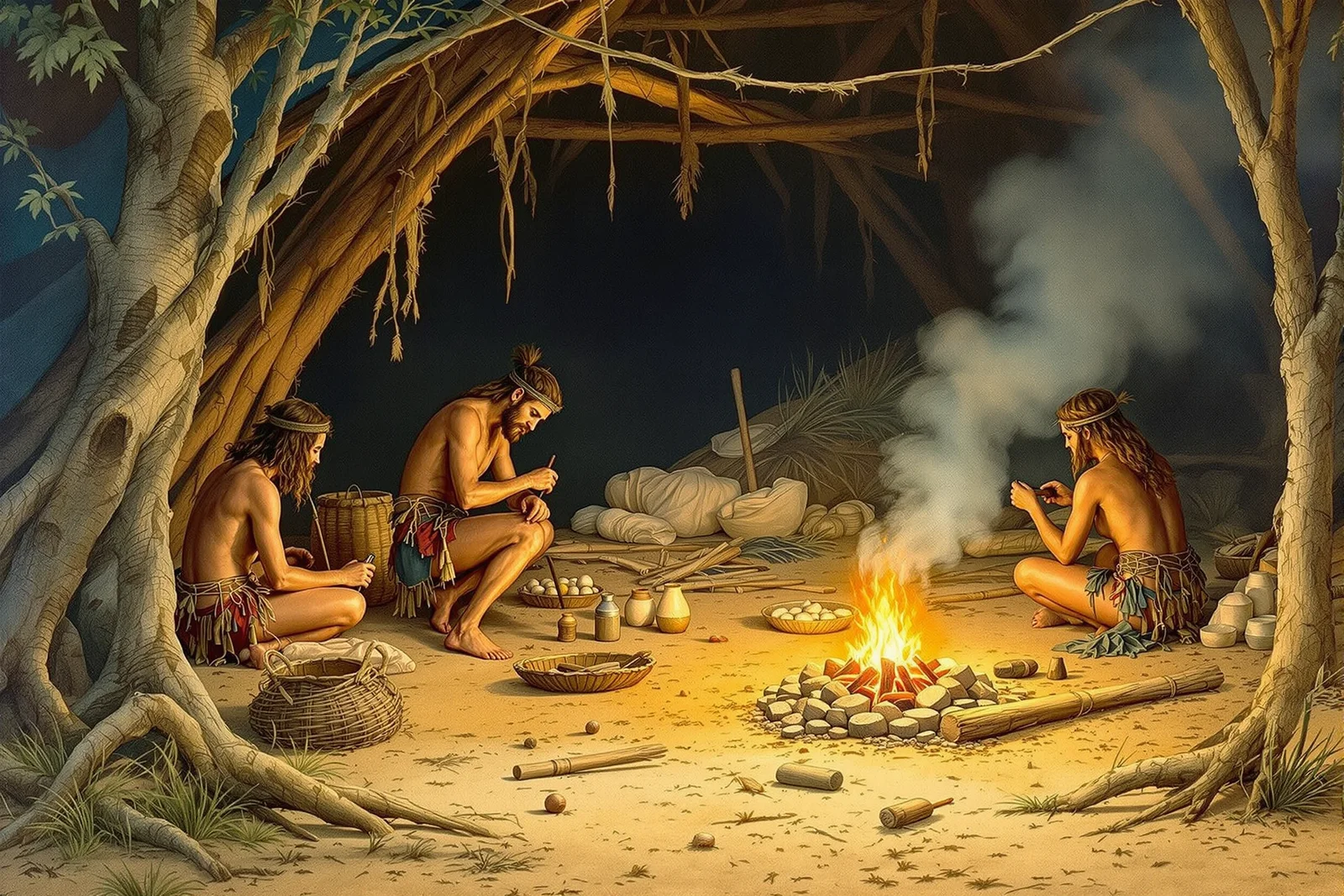
Complete Primitive Shelter and Debris Hut: From Forest Floor to Warm Refuge
Shelter is the most urgent survival priority after immediate safety. This campaign covers shelter site selection, debris hut construction, lean-to building, and insulation principles.
Chapter 1: Shelter Priorities
| Factor | Priority | Why | How to Assess |
|---|---|---|---|
| Protection from wind | Highest | Wind chill kills fastest | Feel wind direction, observe trees |
| Protection from rain/snow | Very high | Wet = cold = hypothermia | Check weather, sky, season |
| Insulation from ground | Very high | Ground conducts heat 25x faster than air | Feel ground temperature |
| Insulation from air | High | Trapped dead air = warmth | Thickness of walls/roof |
| Size (small) | High | Body heat warms small space faster | Just big enough to lie down |
| Fire compatibility | Moderate | Heat source if possible | Opening faces fire, ventilation |
| Location safety | High | Avoid hazards | Check for dead trees, flood risk, animal signs |
Site selection: 1) Avoid hilltops (wind exposure). 2) Avoid valley bottoms (cold air pools, flooding). 3) Choose mid-slope with natural windbreak. 4) Avoid dead trees overhead (widow makers). 5) Avoid dry riverbeds (flash flood risk). 6) Near water source but not in flood zone. 7) Near building materials (debris, branches). 8) South-facing slope (warmer in Northern Hemisphere). 9) Natural features: rock overhang, fallen tree, dense thicket.
Chapter 2: Debris Hut
Debris hut construction: 1) Find or create ridgepole: strong branch, 9-12 ft long. 2) Prop one end on stump, rock, or forked stick (2-3 ft high). 3) Other end rests on ground. 4) Ridgepole should be just long enough to lie under (body length + 1 ft). 5) Lean ribs: branches from ridgepole to ground on both sides (every 6-8 inches). 6) Ribs angle at 45-60 degrees. 7) Lattice: weave small branches horizontally through ribs. 8) Pile debris on top: leaves, pine needles, grass, ferns (2-3 ft thick minimum). 9) More debris = more insulation (you cannot have too much). 10) Stuff interior with dry leaves (your sleeping insulation). 11) Block entrance with debris plug (pull in behind you). 12) A properly built debris hut can keep you warm in below-freezing temperatures with no fire.
| Component | Material | Quantity | Function |
|---|---|---|---|
| Ridgepole | Strong branch (3-4 inch diameter) | 1, body length + 1 ft | Spine of shelter |
| Ribs | Branches (1-2 inch diameter) | 30-50 | Walls/roof framework |
| Lattice | Small branches, sticks | Many | Holds debris in place |
| Debris (exterior) | Leaves, needles, grass | 2-3 ft thick layer | Insulation, waterproofing |
| Debris (interior) | Dry leaves, grass | Fill interior | Sleeping insulation |
| Door plug | Bundle of debris | 1 | Seals entrance |
Chapter 3: Lean-To Shelter
Lean-to construction: 1) Find two trees 7-8 ft apart. 2) Lash horizontal ridgepole between trees at 4-5 ft height. 3) Lean branches against ridgepole at 45-60 degrees (one side only). 4) Weave horizontal lattice through leaning branches. 5) Pile debris on leaning side (leaves, boughs, bark). 6) Build fire 4-6 ft in front of open side. 7) Build reflector wall behind fire (stacked logs). 8) Heat reflects from fire and reflector wall into shelter. 9) Lean-to is warmer with fire than debris hut (radiant heat). 10) But lean-to without fire is colder than debris hut (open side loses heat).
Chapter 4: Insulation Principles
| Material | R-value (per inch) | Availability | Moisture Resistance | Notes |
|---|---|---|---|---|
| Dry leaves (loose) | 1-2 | Very high (deciduous forest) | Low (absorbs moisture) | Best in quantity |
| Pine needles | 1.5-2.5 | High (conifer forest) | Moderate | Good, slightly better than leaves |
| Dry grass | 2-3 | High (meadows) | Low | Excellent when dry |
| Cattail fluff | 3-4 | Moderate (wetlands) | Moderate | Excellent insulator |
| Evergreen boughs | 1-2 | High (conifer forest) | Good | Good ground insulation |
| Bark (thick) | 1-2 | Moderate | Good | Waterproofing + insulation |
| Snow | 1 (per inch) | Seasonal | N/A (frozen water) | Excellent windbreak, moderate insulation |
| Animal fur/hide | 3-5 | Low (requires hunting) | Moderate-good | Best natural insulator |
Ground insulation: 1) Most critical insulation layer (ground steals heat fastest). 2) Minimum 4-6 inches of compressed debris between you and ground. 3) Evergreen boughs: lay tips all pointing one direction, overlap like shingles. 4) Dry leaves: pile 12+ inches (compresses to 4-6 under body weight). 5) Grass bundles: tie into mattress-sized bundles. 6) Bark slabs: layer on ground as moisture barrier, debris on top. 7) Test: lie on insulation for 5 minutes; if you feel cold from below, add more.
Chapter 5: Advanced Shelters
| Shelter | Effort | Warmth | Weather Protection | Duration | Best Climate |
|---|---|---|---|---|---|
| Debris hut | 2-4 hours | Very good (no fire) | Good | Days to weeks | Temperate forest |
| Lean-to + fire | 1-2 hours | Good (with fire) | Moderate | 1-3 nights | Any with firewood |
| Snow cave | 2-4 hours | Good (32°F inside) | Excellent | Days to weeks | Snow country |
| Quinzhee | 3-5 hours | Good | Excellent | Days to weeks | Snow country |
| Wickiup | 3-6 hours | Moderate-good | Good | Weeks to months | Arid, semi-arid |
| Tarp shelter | 15-30 minutes | Low-moderate | Good (rain) | Any | Any |
Reference Card
- Shelter before fire (in cold conditions, shelter is more urgent than fire; a debris hut can save your life without fire). 2. Small is warm (your body heat warms the space; a shelter just big enough to lie in warms fastest). 3. Insulate from the ground first (the ground steals heat 25 times faster than air; 6 inches of debris under you is more important than 6 inches above). 4. You cannot have too much debris (2-3 feet of leaves on a debris hut is minimum; more is always better). 5. Dry materials only (wet insulation conducts heat instead of trapping it; if materials are wet, you're worse off). 6. Wind is the enemy (even a slight breeze strips body heat; block wind completely before worrying about other factors). 7. Test before dark (build your shelter with enough daylight to test it; lie inside and check for cold spots, leaks, drafts). 8. Location matters more than construction (the best-built shelter in a bad location is worse than a simple shelter in a good location).