Sovereignty Module: Heat the Home
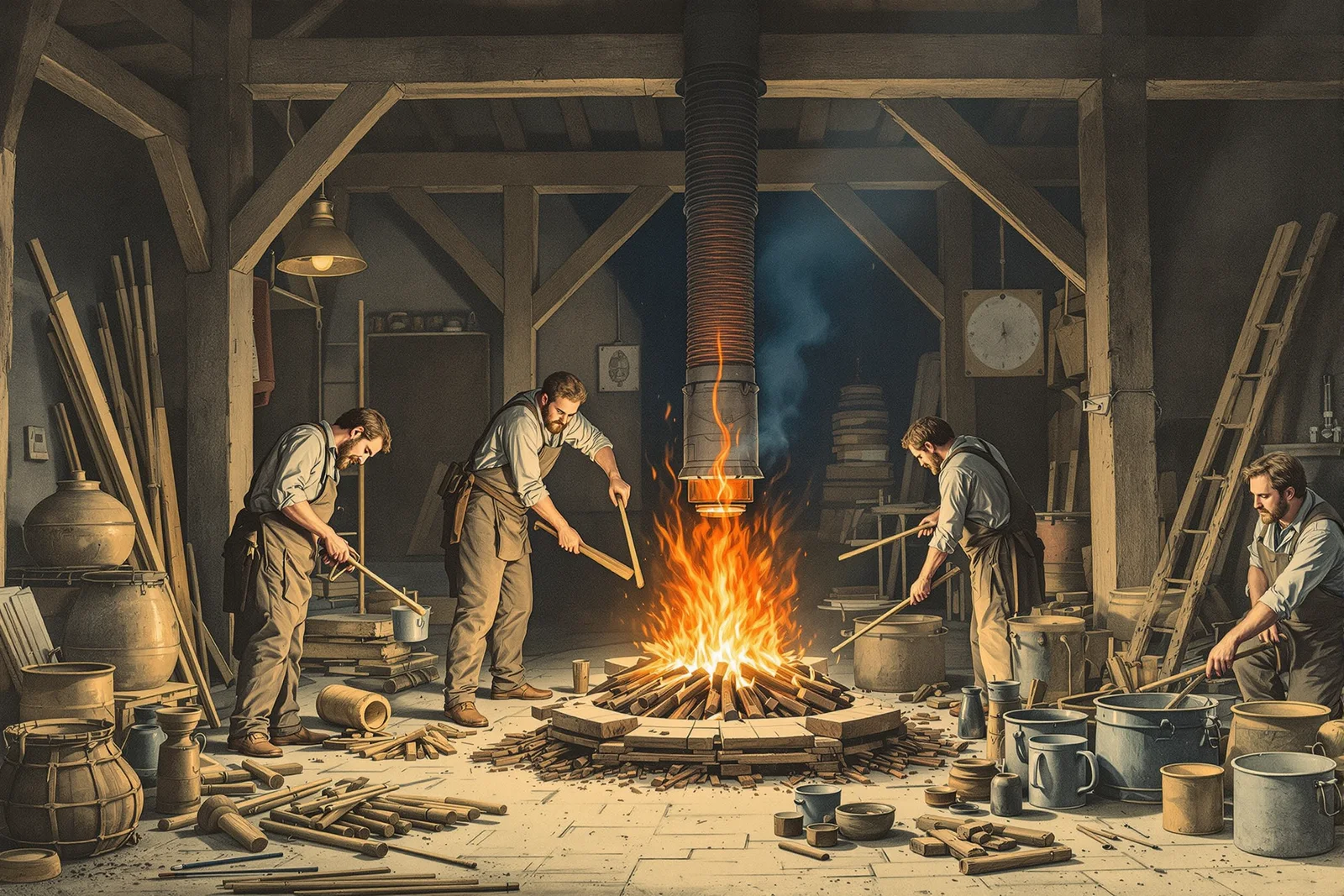
Heat the Home
Complete Rocket Mass Heater and Efficient Wood Heating Systems
Complete Rocket Mass Heater and Efficient Wood Heating Systems
A rocket mass heater burns 80-90% less wood than an open fireplace while heating a home for 12-24 hours from a single firing. This campaign covers construction and operation.
Chapter 1: Heating Systems Compared
| System | Efficiency | Wood Use | Heat Duration | Complexity | Cost |
|---|---|---|---|---|---|
| Open fireplace | 10-15% | Very high | While burning only | Low | Low |
| Franklin stove | 30-40% | High | 2-4 hours after fire dies | Low | Moderate |
| Masonry heater (Finnish/Russian) | 80-90% | Very low | 12-24 hours per firing | Very high | High |
| Rocket mass heater | 80-90% | Very low | 12-24 hours per firing | Moderate | Low-moderate |
| Rocket stove (cooking only) | 60-70% | Low | While burning only | Very low | Very low |
| Wood gasifier | 85-95% | Very low | While burning | High | Moderate-high |
| Kang/ondol (heated floor) | 70-80% | Low | 8-12 hours | Moderate | Low |
Chapter 2: Rocket Mass Heater Principles
| Principle | How It Works | Why It Matters |
|---|---|---|
| Insulated combustion chamber | Burns at 1,800°F+ (complete combustion) | No smoke, no creosote, minimal pollution |
| J-tube or L-tube burn tunnel | Creates powerful draft (rocket effect) | Self-feeding air, intense heat, clean burn |
| Heat riser (insulated vertical chimney) | Hot gases rise rapidly (creates draft) | Drives entire system, no fan needed |
| Thermal mass (cob/brick bench) | Absorbs heat from exhaust, releases slowly | 12-24 hour heat storage from 1-2 hour fire |
| Long horizontal exhaust run | Extracts maximum heat before exit | Exhaust exits at 100-150°F (vs. 400°F+ in stove) |
| Low exhaust temperature | Almost all heat captured in mass | Minimal heat wasted up chimney |
Chapter 3: Construction Components
| Component | Material | Dimensions | Function |
|---|---|---|---|
| Feed tube | Firebrick or steel pipe | 6-8 inch diameter, angled 45-90° | Where wood is loaded |
| Burn tunnel | Firebrick (insulated) | 6-8 inch diameter, 12-18 inches long | Primary combustion zone |
| Heat riser | Steel barrel or insulated chimney | 6-8 inch diameter, 3-4 feet tall | Creates draft, secondary combustion |
| Barrel (bell) | 55-gallon steel drum (inverted over heat riser) | 22 inch diameter, 33 inches tall | Radiates heat, redirects exhaust down |
| Exhaust manifold | Steel pipe at barrel base | 6-8 inch diameter | Connects barrel to mass bench |
| Mass bench (thermal battery) | Cob (clay+sand+straw) over exhaust pipe | 8-16 inches of mass around 6-8 inch pipe | Stores and releases heat for hours |
| Chimney (final exit) | Metal or masonry pipe | 6 inch diameter, extends above roofline | Provides draft, removes cooled exhaust |
Chapter 4: Step-by-Step Construction
| Step | Action | Materials | Critical Notes |
|---|---|---|---|
| 1 | Build foundation (non-combustible base) | Concrete, brick, or stone pad | Must support 2,000-4,000 lbs of mass |
| 2 | Construct J-tube from firebrick | Firebrick + refractory mortar | Insulate with perlite/vermiculite around burn tunnel |
| 3 | Install heat riser (insulated) | Steel pipe wrapped in ceramic fiber or perlite | MUST be insulated (drives the system) |
| 4 | Place barrel over heat riser (inverted, 2-inch gap at top) | 55-gallon drum, cut bottom out | Gap between riser top and barrel top = gases reverse direction |
| 5 | Connect exhaust at barrel base (2 outlets or 1) | 6-inch stovepipe | Exhaust exits barrel at bottom, enters bench |
| 6 | Lay horizontal exhaust run through bench area | 6-inch stovepipe (20-30 feet total) | Slight downward slope toward chimney (condensation drainage) |
| 7 | Build mass bench around exhaust pipe | Cob: 1 part clay + 3 parts sand + straw | 8-12 inches of mass on all sides of pipe |
| 8 | Connect to chimney (vertical exit through roof/wall) | 6-inch stovepipe + chimney cap | Must extend above roofline for draft |
| 9 | Cure slowly (small fires, increasing over 1-2 weeks) | - | Cob must dry slowly or it cracks |
| 10 | Test and adjust (observe draft, smoke, temperature) | Thermometer, observation | Adjust feed rate, air intake |
Chapter 5: Operation
| Rule | Details | Reason |
|---|---|---|
| Burn small, hot fires (1-2 hours) | Finger-thick sticks, fed continuously | Complete combustion = no smoke, no creosote |
| Feed wood vertically (gravity-fed) | Stand sticks upright in feed tube | Burns from bottom, self-feeding |
| Use dry wood only (under 20% moisture) | Split, stacked, dried 6-12 months | Wet wood = smoke, creosote, poor performance |
| One firing per day (in mild weather) | Mass stores heat 12-24 hours | Don't overheat — mass releases slowly |
| Two firings per day (in extreme cold) | Morning and evening, 1-2 hours each | Mass maintains comfortable temperature |
| Listen for the "rocket roar" | Indicates proper draft and combustion | No roar = blockage, wet wood, or design problem |
| Clean exhaust run annually | Remove ash from horizontal pipes | Ash buildup reduces draft over time |
Chapter 6: Rocket Stove (Cooking Version)
| Component | Material | Dimensions | Notes |
|---|---|---|---|
| Combustion chamber | Brick, cob, or metal can | 4-6 inch square | Insulated for maximum heat |
| Feed shelf | Flat surface for wood entry | Same width as chamber | Allows air under fuel |
| Insulation | Ash, perlite, vermiculite, or air gap | 2-4 inches around chamber | Critical for efficiency |
| Pot support | Metal grate or 3 stones | 1/2 inch gap around pot edge | Gap allows hot gas to flow around pot |
| Skirt (optional) | Metal cylinder around pot | 1/2 inch gap between skirt and pot | Forces hot gas against pot sides (doubles efficiency) |
A rocket stove boils water in 3-5 minutes using a handful of sticks. Burns 60-70% less wood than open fire. Can be built from 3 bricks, a tin can, or cob in 30 minutes.
Reference Card
- Rocket mass heater: burns 80-90% less wood than fireplace. Heats home 12-24 hours from 1-2 hour fire.
- Key principle: insulated burn tunnel → heat riser → barrel → long exhaust through thermal mass → chimney.
- Heat riser MUST be insulated. This drives the entire system. Without insulation, no draft, no function.
- Burn small, dry sticks (finger-thick). Complete combustion = no smoke visible from chimney. Clean burn.
- Thermal mass: 8-12 inches of cob around exhaust pipe. More mass = longer heat storage. Bench = heated seating.
- Exhaust exits at 100-150°F (almost all heat captured). Conventional stove exhausts at 400-600°F (wasted).
- Rocket stove (cooking): 3 bricks + insulation. Boils water in 3-5 minutes. Handful of sticks. 30-minute build.
- Cure cob slowly (2 weeks of small, increasing fires). Rushing = cracking = rebuild.
TransmissionCOMPLETE — unaltered & unabridged
Words1,223 — every one of them
SHA-256 of source textfe488a2ca2d5b8d89c5ca54ce213a90a4ab5e1c0cefa1c03302c94665cea61b6
Canonical textdownload campaign-rocket-heater.md — byte-identical to what this page renders