Sovereignty Module: Shape the Art
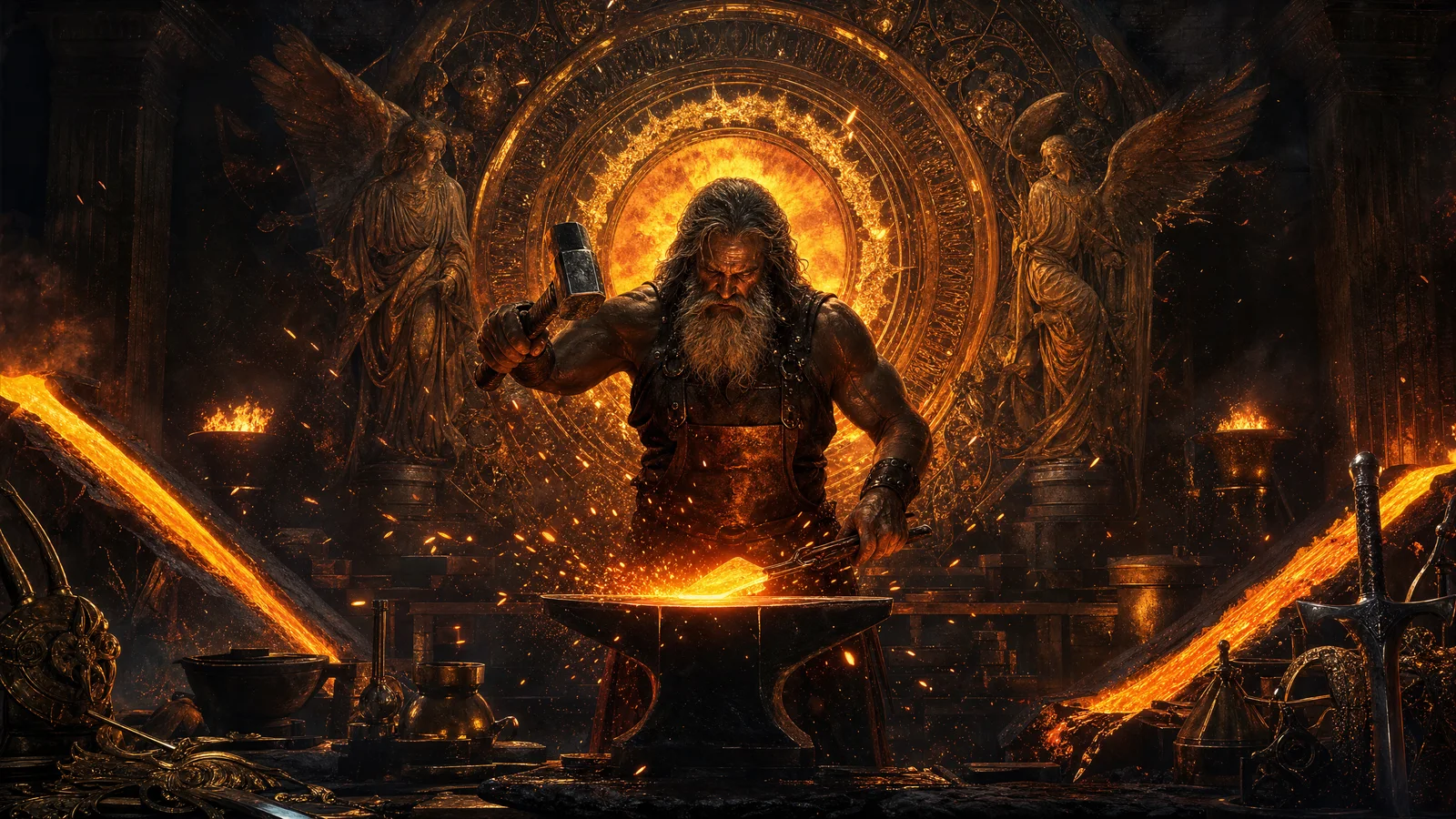
Shape the Art
The Art of the Forge: From Craft to Fine Art
The Art of the Forge: From Craft to Fine Art
Blacksmithing transcends utility when the smith brings artistic vision to iron. This campaign covers artistic ironwork, sculptural forging, surface treatments, and the philosophy of iron as an art medium.
Chapter 1: Artistic Ironwork Traditions
| Tradition | Period | Region | Characteristics |
|---|---|---|---|
| Gothic | 12th-16th century | Europe | Pointed arches, tracery, religious motifs |
| Renaissance | 15th-17th century | Italy, France | Classical motifs, symmetry, refinement |
| Baroque | 17th-18th century | Europe | Elaborate scrollwork, dynamic movement |
| Art Nouveau | 1890-1910 | France, Belgium | Organic forms, flowing lines, nature motifs |
| Art Deco | 1920-1940 | France, USA | Geometric, streamlined, bold |
| Contemporary | 1960-present | Global | Conceptual, mixed media, experimental |
Chapter 2: Sculptural Techniques
| Technique | Description | Effect |
|---|---|---|
| Forged texture | Hammer marks left intentional | Organic, hand-made quality |
| Chasing | Surface decoration with punches | Relief patterns |
| Repoussé | Raising forms from reverse side | Three-dimensional relief |
| Inlay | Different metals set into iron | Color contrast |
| Patina | Chemical surface treatment | Color, depth |
| Wax finish | Hot wax applied to warm iron | Rich, dark finish |
| Paint | Specialized metal paint | Color, protection |
| Rust | Controlled oxidation | Natural, aged appearance |
Chapter 3: Surface Finishes
| Finish | Method | Appearance | Durability |
|---|---|---|---|
| Beeswax | Apply to warm metal | Dark, satin | Indoor only |
| Linseed oil | Brush on, heat cure | Dark, matte | Moderate |
| Clear lacquer | Spray application | Glossy, transparent | Good outdoor |
| Powder coat | Electrostatic application, oven cure | Any color, smooth | Excellent outdoor |
| Hot zinc (galvanize) | Dip in molten zinc | Silver-gray | Excellent outdoor |
| Forge scale | Natural oxide from forging | Blue-black | Fair |
| Blacksmith's finish | Wire brush + wax | Dark, textured | Indoor |
Chapter 4: Commission Process
| Stage | Activity | Deliverable |
|---|---|---|
| Consultation | Meet client, understand needs | Written brief |
| Concept | Sketches and design options | 2-3 concept drawings |
| Proposal | Detailed design, timeline, cost | Written proposal |
| Approval | Client review and sign-off | Signed contract |
| Fabrication | Forge, assemble, finish | Completed work |
| Installation | Deliver and install | Installed piece |
| Follow-up | Client satisfaction, warranty | Relationship maintenance |
Chapter 5: Pricing Artistic Work
| Factor | Consideration | Impact on Price |
|---|---|---|
| Material cost | Steel, consumables, finish materials | Base cost |
| Labor hours | Forging, finishing, installation | Major factor |
| Skill level | Complexity of techniques required | Premium for difficulty |
| Design time | Concept development, drawings | Often undervalued |
| Uniqueness | One-of-a-kind vs production | Premium for unique |
| Market | Local economy, client budget | Contextual |
| Reputation | Portfolio, awards, recognition | Premium for established artists |
Reference Card
- Iron is an art medium (for thousands of years, blacksmiths have created works of beauty and meaning in iron; the forge is as much an artist's studio as a craftsperson's workshop). 2. Artistic ironwork requires both skill and vision (technical mastery of forging is necessary but not sufficient; the artist-blacksmith must also develop design sense, aesthetic judgment, and creative vision). 3. Surface finish transforms the work (the same forged piece can look completely different depending on finish; a wire-brushed wax finish looks rustic; a polished lacquer finish looks refined; choose finish intentionally). 4. Study historical ironwork (the great ironwork traditions of Europe, Asia, and the Americas offer centuries of design inspiration; visit museums, study photographs, and draw from the masters). 5. Commissions require clear communication (the gap between what a client imagines and what the smith creates can lead to disappointment; detailed drawings, material samples, and regular communication prevent misunderstandings). 6. Price your work fairly (artistic ironwork is labor-intensive and requires years of skill development; pricing too low devalues the craft and makes it unsustainable; know your costs and charge accordingly). 7. The hammer mark is the signature of hand-forged work (machine-made ironwork is smooth and uniform; hand-forged work bears the marks of the hammer, the evidence of human effort; these marks are not flaws but features). 8. Iron connects past and future (every piece of artistic ironwork joins a tradition stretching back millennia; the contemporary artist-blacksmith honors the past while creating for the future).
TransmissionCOMPLETE — unaltered & unabridged
Words797 — every one of them
SHA-256 of source text01327078f40e1fe43f1bfc58bfc8a919e708cebd15c1d11d56e5feeae90fe747
Canonical textdownload campaign-shape-art.md — byte-identical to what this page renders