Complete Clay Sculpture and Figurative Work: From Clay to Artistic Expression
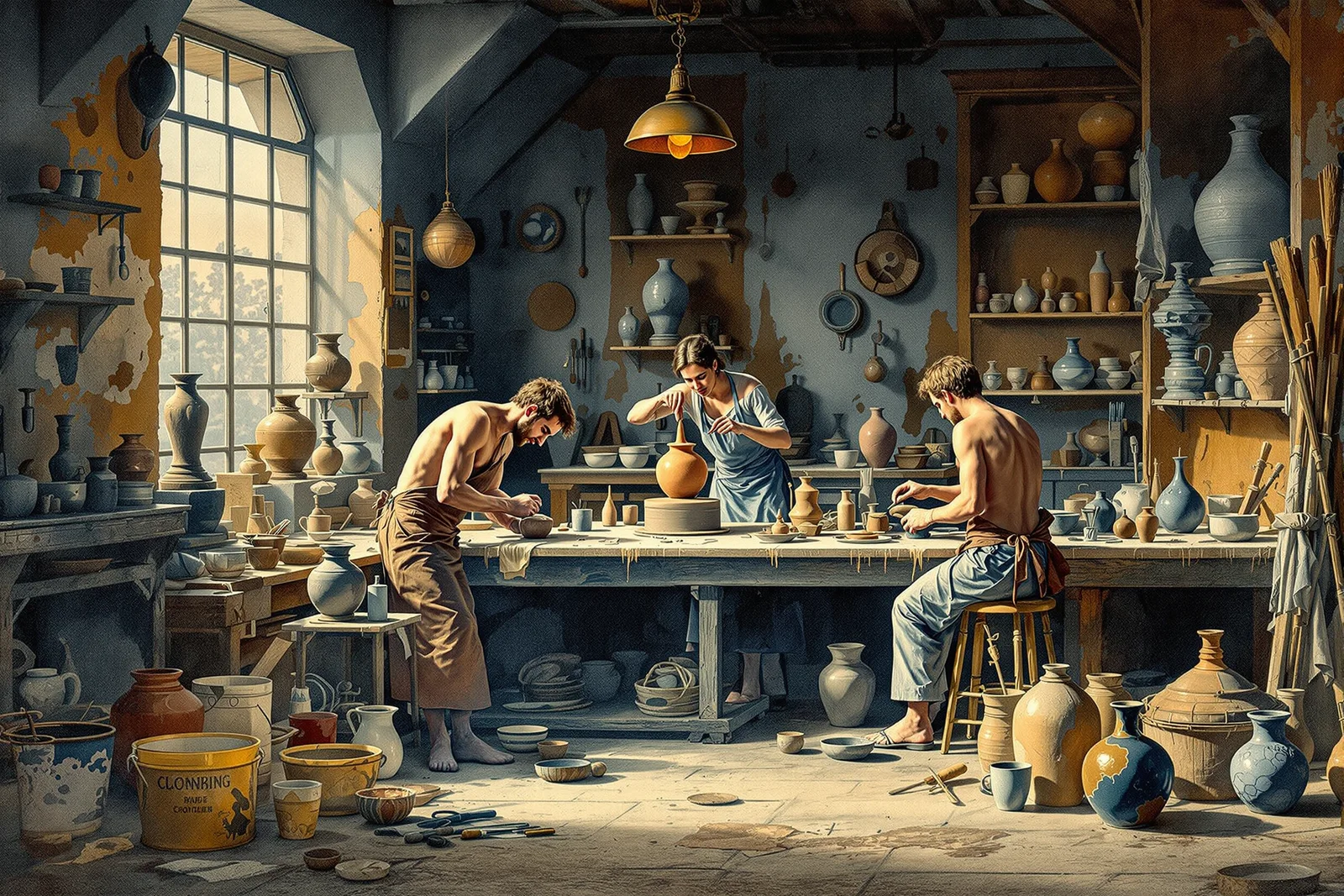
⟁ cover painted for this edition — the source module carried no illustrations
Complete Clay Sculpture and Figurative Work: From Clay to Artistic Expression
Clay sculpture extends pottery skills into artistic expression. This campaign covers armature building, hand-building techniques, hollow construction, and firing large sculptural pieces.
Chapter 1: Sculpture Types
Type
Size
Construction
Firing
Small figurine
Under 6 inches
Solid or hollow
Standard kiln
Medium figure
6-18 inches
Hollow, even walls
Standard kiln
Large sculpture
18-36 inches
Hollow, sectional
Large kiln or pit fire
Relief panel
Flat, 1-2 inch depth
Slab-built
Standard kiln
Architectural
Over 36 inches
Sectional, assembled
Sectional firing
Garden sculpture
Any size
Hollow, weather-resistant
High-fire
Chapter 2: Hollow Construction
Why hollow: 1) Solid clay thicker than 1 inch risks explosion during firing. 2) Trapped air and moisture expand, shattering the piece. 3) All sculpture thicker than 1 inch must be hollow. 4) Even wall thickness: 3/8-3/4 inch depending on size. 5) Vent hole: at least one small hole to allow steam escape.
Method
Best For
Complexity
Pinch and coil
Small to medium figures
Moderate
Slab construction
Geometric forms, relief
Moderate
Hollow throw and alter
Round forms, vessels
Moderate
Press mold
Repeatable forms
Low (after mold made)
Solid then hollow
Complex forms
High
Solid-then-hollow method: 1) Build solid form (easier to sculpt details). 2) Allow to firm to soft leather-hard. 3) Cut in half with wire or knife. 4) Hollow each half (scoop out clay). 5) Leave 1/2-3/4 inch walls. 6) Score and slip edges. 7) Rejoin halves. 8) Blend seam. 9) Pierce vent hole in hidden location.
Chapter 3: Armature and Support
Support Type
Material
Use
Remove Before Firing?
Newspaper wad
Newspaper
Internal support for hollow forms
Burns out in firing
Wooden dowel
Wood
Temporary support during building
Yes, must remove
Wire armature
Steel wire
Internal skeleton
Yes, must remove
Clay coil support
Same clay
Temporary internal bracing
Can remain if hollow
Foam core
Polystyrene
Large hollow forms
Burns out (ventilate kiln)
Chapter 4: Surface Treatment
Technique
Method
Effect
Smooth finish
Rib and sponge
Clean, refined surface
Textured finish
Tools, stamps, fingers
Organic, expressive
Carved detail
Carving tools at leather-hard
Precise, detailed
Applied elements
Attach small clay pieces
Dimensional, decorative
Underglaze painting
Paint with colored slip
Colored surface
Oxide wash
Iron or copper oxide in water
Earthy, antiqued
Chapter 5: Drying and Firing Large Pieces
Stage
Duration
Method
Initial drying
1-2 weeks
Cover loosely with plastic
Slow drying
1-2 weeks
Remove plastic gradually
Final drying
1 week
Uncovered, room temperature
Candling
8-12 hours
Kiln at lowest setting (below 200°F)
Bisque firing
12-16 hours
Slow ramp, especially below 500°F
Glaze firing
10-14 hours
Standard schedule for clay body
Reference Card
All sculpture thicker than 1 inch must be hollow (solid clay traps moisture and air; during firing, trapped water turns to steam and expands, causing the piece to explode; hollow construction prevents this). 2. Even wall thickness prevents cracking (thick sections heat and cool slower than thin sections; this difference creates stress that causes cracking; maintain consistent wall thickness throughout). 3. Include at least one vent hole (even hollow sculpture traps some air; a small vent hole allows expanding air and steam to escape during firing; place the hole in an inconspicuous location). 4. Dry large pieces very slowly (large sculptures have more mass and more moisture; rapid drying causes the outside to shrink while the inside remains wet, creating cracks; allow weeks for drying). 5. The solid-then-hollow method produces the best detail (sculpting a solid form allows full artistic freedom; hollowing afterward preserves the detail while making the piece safe to fire). 6. Remove all non-clay armature before firing (wood, wire, and metal expand differently than clay during firing; any foreign material left inside will cause cracking or explosion). 7. Clay sculpture is the oldest art form (humans have been sculpting clay for over 25,000 years; every figurine connects the sculptor to this ancient tradition of giving form to imagination). 8. Sculpture transforms the potter into an artist (functional pottery serves daily needs; sculpture serves the human need for beauty, expression, and meaning; it is the highest expression of the clay arts).