Sovereignty Module: Share the Forge
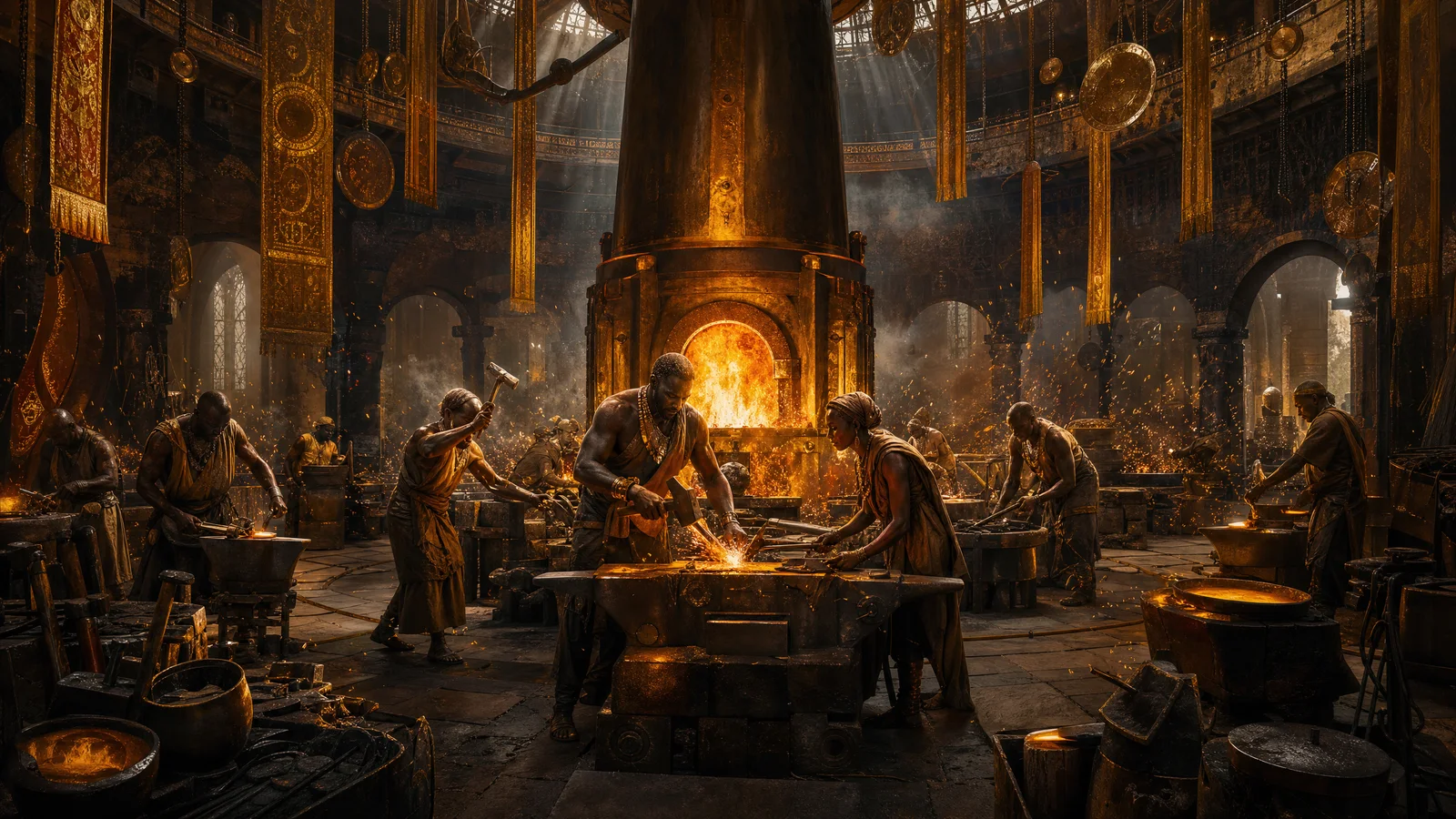
Share the Forge
Complete Community Workshop and Shared Tools: From Individual Craft to Collective Capability
Complete Community Workshop and Shared Tools: From Individual Craft to Collective Capability
A community workshop multiplies the capability of every member. This campaign covers workshop design, tool sharing systems, scheduling, safety protocols, and governance.
Chapter 1: Workshop Types
| Type | Focus | Size | Members |
|---|---|---|---|
| Blacksmith co-op | Shared forge, anvils, tools | 1,000-2,000 sq ft | 5-15 smiths |
| Pottery co-op | Shared wheels, kiln, glazes | 1,500-3,000 sq ft | 8-20 potters |
| Woodworking co-op | Shared power tools, bench space | 2,000-4,000 sq ft | 10-25 woodworkers |
| Makerspace | Multiple crafts, general tools | 3,000-10,000 sq ft | 20-100+ members |
| Community forge | Public access, classes | 500-1,500 sq ft | Open enrollment |
| Tool library | Tool lending, no workspace | 500-1,000 sq ft | Community-wide |
Chapter 2: Governance
| Model | Decision Making | Best For |
|---|---|---|
| Cooperative | Member vote (one member, one vote) | Established groups |
| Nonprofit | Board of directors | Community-serving mission |
| Owner-operated | Owner decides, members rent | Simplest to start |
| Collective | Consensus | Small, tight-knit groups |
| Hybrid | Board + member input | Growing organizations |
Chapter 3: Tool Sharing Systems
| System | Method | Tracking | Maintenance |
|---|---|---|---|
| Open access | All members use all tools | Honor system | Shared responsibility |
| Check-out | Sign out tools, return after use | Log book or app | User responsible |
| Reservation | Reserve tools/stations in advance | Calendar system | Scheduled maintenance |
| Tiered access | Skill-based access levels | Training records | Trained users only |
| Tool captain | Designated person manages each area | Captain tracks | Captain maintains |
Chapter 4: Safety and Training
| Requirement | Implementation | Enforcement |
|---|---|---|
| Safety orientation | Required before first use | No access without completion |
| Tool-specific training | Required for each tool/station | Certified users only |
| Safety equipment | Provided and required | Posted rules, peer enforcement |
| Emergency procedures | Posted, practiced | Regular drills |
| Incident reporting | Written reports, review | Continuous improvement |
| Insurance | Liability coverage | Required for operation |
Chapter 5: Financial Sustainability
| Revenue Source | Amount | Frequency |
|---|---|---|
| Monthly membership | $50-200 per member | Monthly |
| Day passes | $15-30 per visit | Per use |
| Class fees | $50-200 per class | Per class |
| Equipment rental | $10-25 per session | Per use |
| Material sales | Markup on bulk purchases | Ongoing |
| Events and fundraisers | Variable | Quarterly-annually |
| Grants | Variable | As available |
Reference Card
- Shared tools multiply capability (tools that sit idle in individual shops are wasted capacity; a shared workshop puts expensive tools to work for many people, making advanced equipment accessible to all). 2. Clear governance prevents conflict (when multiple people share resources, disagreements are inevitable; clear rules, fair governance, and transparent decision-making prevent conflicts from destroying the community). 3. Safety training is mandatory (in a shared workshop, one untrained person endangers everyone; require safety orientation and tool-specific training before granting access; no exceptions). 4. Maintenance is everyone's responsibility (shared tools wear out faster than personal tools; establish maintenance schedules, assign responsibilities, and fund repairs through membership fees). 5. Financial sustainability requires planning (rent, utilities, insurance, and tool replacement are ongoing costs; membership fees and class revenue must cover these costs or the workshop will fail). 6. The community workshop preserves traditional crafts (many traditional skills are dying because individuals cannot afford the tools and space; a shared workshop makes these crafts accessible to a new generation). 7. Teaching sustains the workshop (classes generate revenue, attract new members, and pass on skills; a workshop that teaches is a workshop that grows and thrives). 8. A community workshop is more than a building (it is a gathering place where skills are shared, friendships are forged, and the ancient tradition of making things by hand is kept alive; the workshop is the heart of the maker community).
TransmissionCOMPLETE — unaltered & unabridged
Words721 — every one of them
SHA-256 of source text6dd9ddd7baf54d156aa159f2540a00ebb5c2219ff495121d9c6ab9b83c13eaf7
Canonical textdownload campaign-share-forge.md — byte-identical to what this page renders