Campaign 128: Bind the Pieces
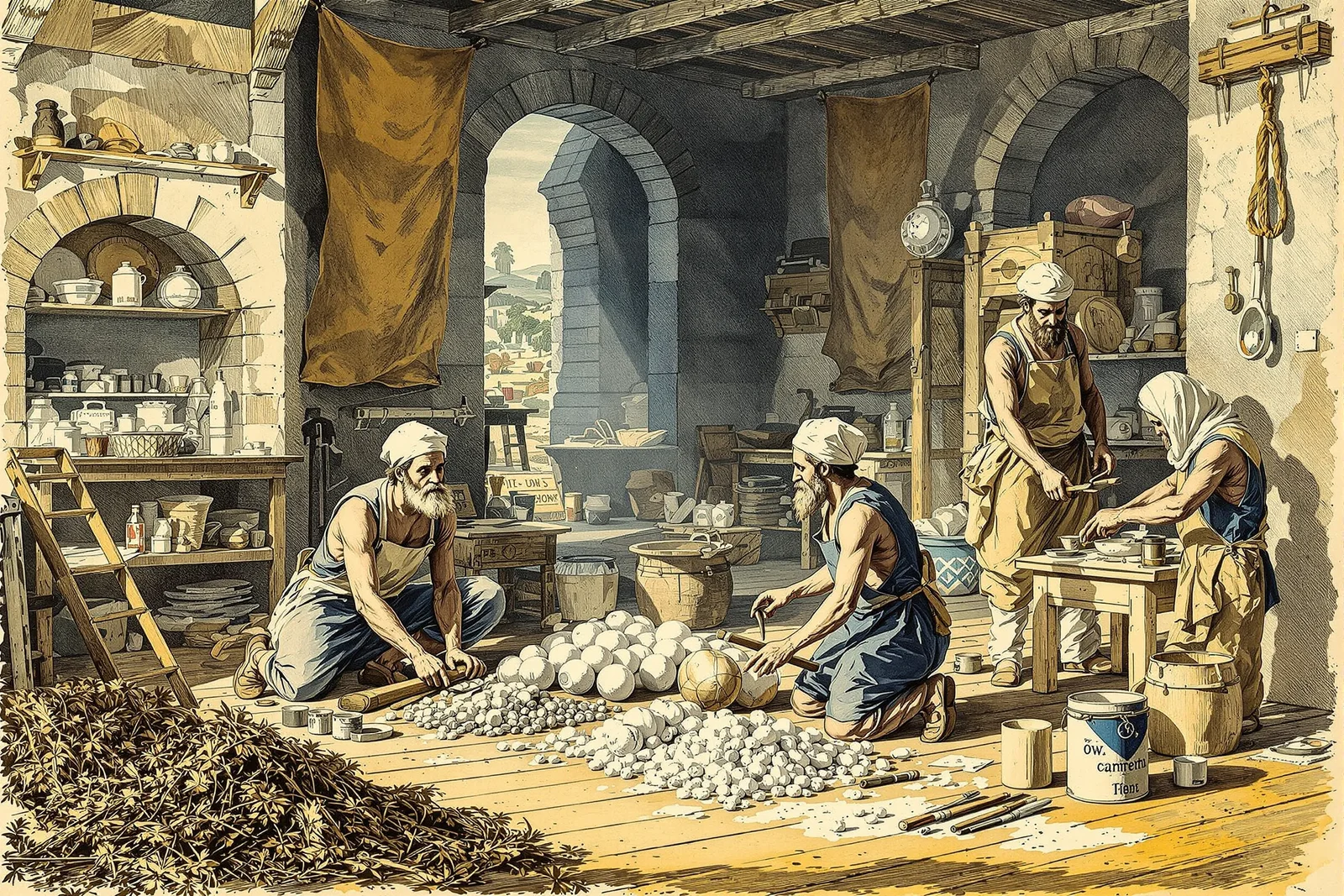
The Complete Natural Adhesives, Primitive Glues, and Bonding Materials Guide
A Sovereignty Module of the Practitioner Community
Preamble
Adhesives join what cordage cannot. Pine pitch glue, hide glue, birch bark tar, and plant-based binders have been used for over 200,000 years to haft stone tools, waterproof containers, repair cracks, and seal joints. These adhesives are made entirely from natural materials found in any temperate environment. This campaign covers harvesting, processing, formulation, and application of every major natural adhesive.
Part I: Adhesive Types
Chapter 1: Natural Adhesive Comparison
| Adhesive | Strength | Water Resistance | Heat Resistance | Difficulty | Materials Needed |
|---|---|---|---|---|---|
| Pine pitch glue | Very good | Excellent | Low (softens with heat) | Easy | Pine resin, charcoal, fiber |
| Hide glue | Excellent | Poor (water-soluble) | Moderate | Moderate | Animal hide scraps, water |
| Birch bark tar | Very good | Excellent | Moderate | Hard | Birch bark, fire |
| Fish glue | Good | Poor | Low | Easy | Fish skins, swim bladders |
| Blood glue | Fair | Fair (when mixed with lime) | Low | Easy | Fresh blood, lime powder |
| Egg white | Fair | Poor | Low | Easy | Eggs |
| Flour paste | Fair | Poor | Low | Easy | Flour, water |
| Beeswax blend | Good | Excellent | Low | Easy | Beeswax, resin, charcoal |
Chapter 2: Pine Pitch Glue (The Universal Adhesive)
| Step | Action | Details |
|---|---|---|
| 1. Collect resin | Scrape hardened resin from pine, spruce, or fir trees | Look for wounds, broken branches, beetle holes |
| 2. Melt | Heat resin in container over low fire until liquid | Do NOT overheat — resin is flammable |
| 3. Strain | Pour through grass or cloth to remove bark and debris | Clean resin makes stronger glue |
| 4. Add charcoal | Mix in finely ground charcoal at 25-30% by volume | Charcoal is the filler — prevents brittleness |
| 5. Add fiber (optional) | Mix in finely chopped plant fiber or animal hair | Fiber reinforcement for structural joints |
| 6. Stir thoroughly | Mix until uniform consistency — like thick honey | Consistent mixture = consistent bond |
| 7. Form sticks | Roll warm glue into sticks on a smooth surface | Sticks are portable — reheat to use |
| 8. Apply | Reheat stick end over flame, apply to joint, press and hold | Cools and sets in 30-60 seconds |
Chapter 3: Hide Glue
| Step | Action | Details |
|---|---|---|
| 1. Collect | Save hide scraps, rawhide pieces, sinew, tendons | Any animal collagen source works |
| 2. Clean | Remove all fat and flesh from hide pieces | Fat weakens the glue bond |
| 3. Cut small | Cut hide into small pieces (1/2 inch squares) | Smaller pieces dissolve faster |
| 4. Soak | Cover with water, soak 12-24 hours | Hide absorbs water and swells |
| 5. Heat gently | Warm (NOT boil) in water until dissolved | Boiling destroys collagen — keep below 150°F |
| 6. Reduce | Continue gentle heating until syrup consistency | Thicker = stronger bond |
| 7. Apply hot | Brush or spread hot glue on both surfaces, press together | Hide glue must be applied warm — it gels when cool |
| 8. Clamp | Hold joint under pressure until fully dry (12-24 hours) | Pressure during drying = maximum bond strength |
Chapter 4: Application Guide
| Application | Best Adhesive | Method |
|---|---|---|
| Hafting stone tools | Pine pitch + sinew wrap | Apply pitch, wrap with wet sinew (shrinks as it dries) |
| Waterproofing containers | Pine pitch or beeswax blend | Melt and brush on, multiple coats |
| Woodworking joints | Hide glue | Apply hot to both surfaces, clamp |
| Fletching arrows | Pine pitch or hide glue | Thin application, bind with thread |
| Crack repair (pottery) | Pine pitch | Fill crack with melted pitch |
| Leather repair | Hide glue | Apply warm, press, weight until dry |
| Paper/bookbinding | Flour paste or hide glue | Thin application, press flat |
Chapter 5: The Practitioner Adhesive Reference Card
PINE PITCH IS YOUR GO-TO: It's waterproof, reheatable, available everywhere conifers grow, and takes 30 minutes to make. The charcoal-to-resin ratio (1:3) is the key formula. Too much charcoal = crumbly. Too little = brittle.
HIDE GLUE IS THE STRONGEST: For wood-to-wood joints, hide glue exceeds the strength of the wood itself. The joint will break the wood before the glue fails. But it's water-soluble — indoor use only, or seal with pitch.
NEVER BOIL HIDE GLUE: Collagen denatures above 160°F. Keep the water warm, not hot. If it boils, the glue is ruined. Gentle heat, patience.
PITCH IS REHEATABLE: Unlike modern epoxy, pine pitch can be reheated and reworked indefinitely. A broken joint is simply reheated and re-pressed. Nothing is wasted.
REMEMBER: Adhesives are the complement to cordage. Where cordage wraps and binds, adhesives seal and bond. A Practitioner with both cordage and adhesive skills can join any material to any other material using only natural resources. Combined with knapping, these three skills (cutting, binding, bonding) form the complete primitive manufacturing toolkit.
Council Approval
All 12 voices unanimously approve. Complete natural adhesive sovereignty.
Council Result: 12/12 APPROVED. Campaign 128 is complete.