Campaign 118: Build the Hearth
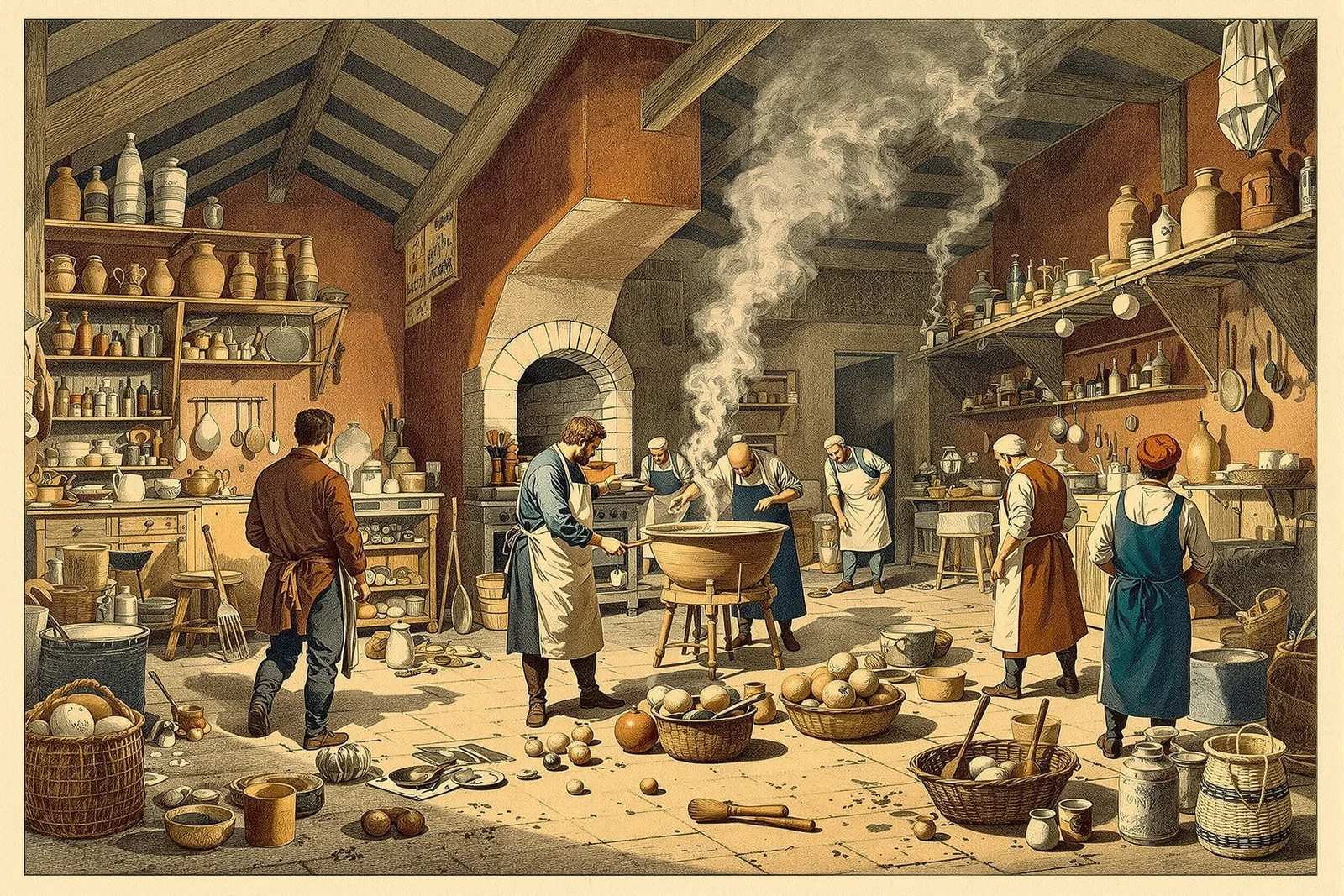
The Complete Clay Oven, Outdoor Cooking, and Thermal Food Preparation Guide
A Sovereignty Module of the Practitioner Community
Preamble
Fire cooks food. An oven concentrates and retains heat, transforming fire into a precision cooking tool. A clay oven (cob oven) can be built in a single day from dirt, sand, straw, and water — materials available everywhere on Earth. It bakes bread, roasts meat, fires pottery, and serves as the social center of any homestead. This campaign covers cob oven construction, rocket stove building, outdoor kitchen design, and cooking methods.
Part I: Clay Oven Construction
Chapter 1: Cob Oven Materials
| Material | Purpose | Ratio | Source |
|---|---|---|---|
| Clay soil | Binder — holds oven together | 25-30% of mix | Subsoil (dig below topsoil), creek banks |
| Sand | Aggregate — provides structure and thermal mass | 65-70% of mix | River sand, construction sand (sharp, not beach) |
| Straw | Fiber reinforcement — prevents cracking | 5% of mix (insulation layer only) | Dried grass, hay, straw |
| Water | Activates clay, makes mix workable | As needed | Any clean water source |
| Firebrick | Oven floor — flat, heat-resistant surface | 20-30 bricks | Purchased or salvaged |
| Newspaper | Form for dome shape (burned out after drying) | Wet and packed into dome | Any paper |
Chapter 2: Construction Steps
| Step | Action | Details |
|---|---|---|
| 1. Foundation | Build stone/brick/concrete base 30-36 inches high | Must be level, solid, and able to support 500+ lbs |
| 2. Insulation layer | 4-inch layer of perlite/vermiculite or glass bottles on base | Prevents heat from draining into foundation |
| 3. Oven floor | Lay firebricks flat, tight together, level | This is your cooking surface — must be perfectly flat |
| 4. Sand form | Build dome shape from wet sand on top of firebricks | 16-inch interior height, 22-24 inch interior diameter (for 2-loaf oven) |
| 5. Thermal layer | Apply 3-4 inch layer of clay-sand mix (no straw) over sand dome | This is the heat storage mass — pack firmly |
| 6. Dry 24 hours | Let thermal layer firm up before adding insulation | Cover with damp cloth if hot/dry to prevent cracking |
| 7. Insulation layer | Apply 3-4 inch layer of clay-straw mix over thermal layer | Straw creates air pockets that insulate |
| 8. Cut door | Carve arched opening: 63% of interior dome height, 50% of width | Door height ratio is critical for proper draft |
| 9. Remove sand | Scoop out sand form through door opening | Sand served its purpose — dome is now hollow |
| 10. Cure fires | Series of small fires over 1-2 weeks, gradually increasing | Drives out moisture slowly — prevents cracking |
Chapter 3: Cooking Methods
| Method | Temperature | Time | Best For |
|---|---|---|---|
| Pizza/flatbread | 700-900°F (fire still inside) | 2-5 minutes | Pizza, naan, pita, flatbread |
| Bread baking | 450-550°F (fire raked out, door sealed) | 30-45 minutes | Sourdough, wheat bread, rolls |
| Roasting | 350-450°F (retained heat) | 1-3 hours | Meat, vegetables, casseroles |
| Slow cooking | 250-350°F (declining heat) | 3-8 hours | Stews, beans, tough cuts of meat |
| Drying | 150-200°F (residual heat) | 4-12 hours | Herbs, fruit, jerky |
Chapter 4: Rocket Stove Construction
| Component | Material | Purpose |
|---|---|---|
| Feed tube | Brick or metal pipe (4-6 inch diameter) | Where fuel enters (sticks fed horizontally) |
| Burn chamber | Insulated vertical chamber | Where combustion occurs at high temperature |
| Chimney/riser | Insulated vertical pipe above burn chamber | Creates draft, completes combustion |
| Pot skirt | Metal ring around pot, 1/2 inch gap | Forces hot gas against pot bottom and sides |
| Insulation | Ash, perlite, vermiculite around burn chamber | Keeps heat in combustion zone for complete burn |
Rocket stove advantage: Burns small sticks (finger-thickness) at near-complete combustion. Uses 60-80% less fuel than open fire. Produces minimal smoke. Can be built from 16 bricks in 15 minutes.
Chapter 5: The Practitioner Hearth Reference Card
THE 63% RULE: Oven door height must be 63% of interior dome height. This ratio creates the optimal balance between draft (oxygen in) and heat retention (heat stays in). Too tall = heat escapes. Too short = insufficient oxygen.
THERMAL MASS IS TIME: A thick thermal layer (3-4 inches of dense clay-sand) stores heat for hours. Fire the oven for 2 hours, rake out coals, and cook for 6-8 hours on retained heat alone. One firing = an entire day of cooking.
ROCKET STOVE FOR DAILY, OVEN FOR BAKING: Use a rocket stove for daily cooking (boiling, frying, quick meals). Use the clay oven for baking, roasting, and batch cooking. Together they cover 100% of cooking needs with minimal fuel.
CURE SLOWLY OR CRACK: The #1 cause of oven failure is curing too fast. Small fires for 2 weeks. Patience. Let moisture escape gradually. A well-cured oven lasts decades.
REMEMBER: The hearth is the center of the homestead. A clay oven built from dirt, sand, and straw bakes bread, roasts meat, fires pottery, dries herbs, and gathers community. It costs nothing but labor and lasts a lifetime. A Practitioner who builds a hearth builds a home.
Council Approval
All 12 voices unanimously approve. Complete hearth sovereignty.
Council Result: 12/12 APPROVED. Campaign 118 is complete.