Sovereignty Module: Distill the Spirit
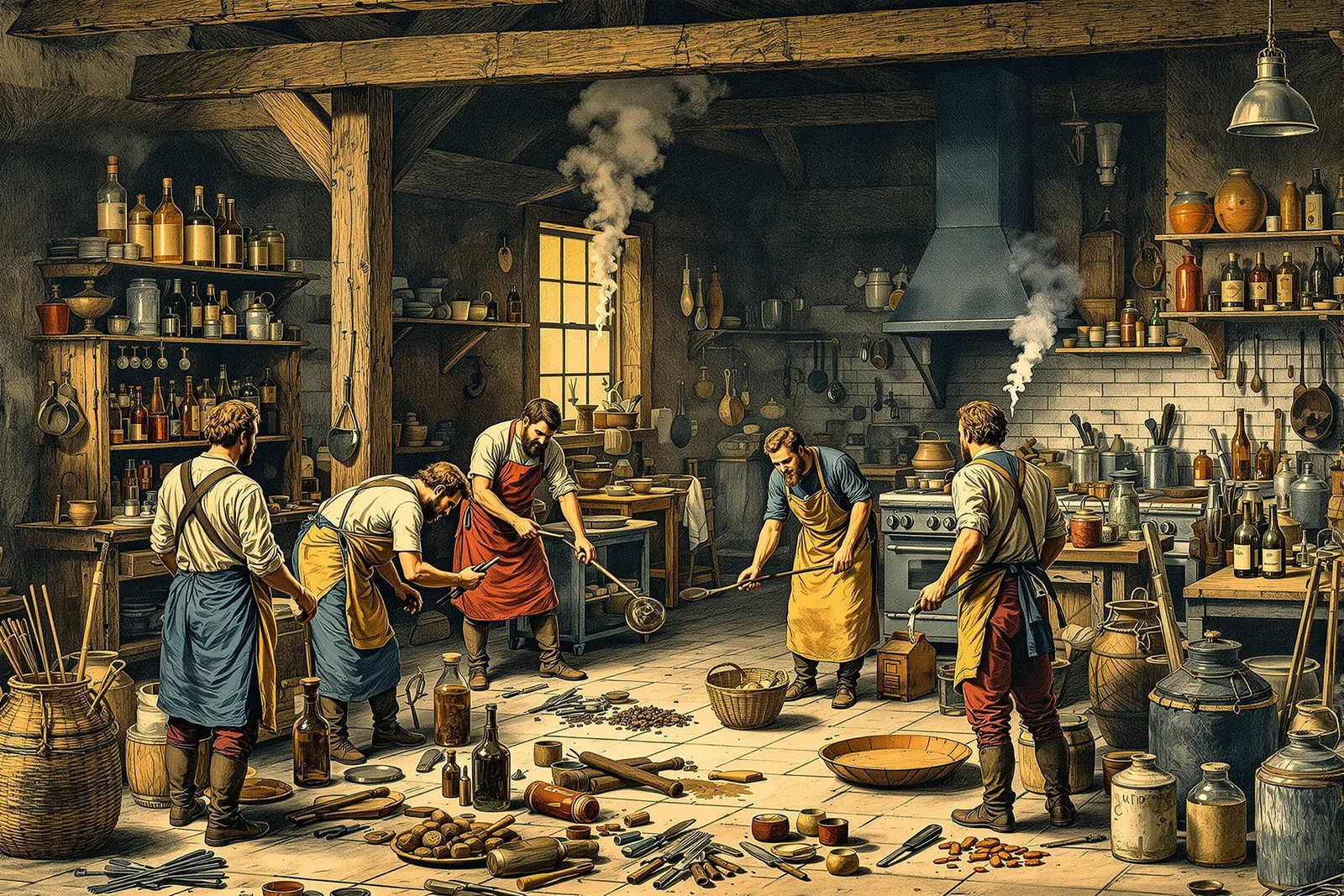
Complete Alcohol Production for Fuel, Medicine, and Preservation
Ethanol is simultaneously fuel, solvent, disinfectant, preservative, and trade good. Any sugar or starch source can produce it. This campaign covers fermentation, distillation, and practical applications of alcohol production from scratch.
Chapter 1: Fermentable Materials
| Source | Sugar Content | Yield (gallons ethanol per ton) | Preparation | Fermentation Time |
|---|---|---|---|---|
| Sugar cane/juice | 12-18% sugar | 20-25 gallons | Crush, extract juice | 3-7 days |
| Molasses | 50-55% sugar | 70-80 gallons | Dilute with water (1:3) | 5-10 days |
| Fruit (grapes, apples) | 10-25% sugar | 15-20 gallons | Crush, press juice | 7-21 days |
| Honey (mead) | 80% sugar | 100+ gallons (diluted) | Dilute to 20% sugar | 14-60 days |
| Corn/maize (starch) | 70% starch | 25-30 gallons | Cook + malting/enzymes to convert starch | 5-7 days |
| Wheat/barley (starch) | 65% starch | 22-28 gallons | Malt (sprout grain) to create enzymes | 5-7 days |
| Potatoes (starch) | 18% starch | 8-12 gallons | Cook + malt enzymes | 5-7 days |
| Wood/cellulose | 50-70% cellulose | 10-15 gallons (with acid treatment) | Acid hydrolysis (complex) | 5-10 days |
Chapter 2: Fermentation Process
| Step | Action | Temperature | Time | Details |
|---|---|---|---|---|
| 1 | Prepare sugar solution (wash/wort/must) | - | 1-4 hours | Target 10-20% sugar content |
| 2 | For starch: mash (cook grain + add malt) | 148-158F | 1-2 hours | Enzymes convert starch to sugar |
| 3 | Cool to fermentation temperature | 65-80F | 1-2 hours | Too hot kills yeast |
| 4 | Add yeast (bread yeast works, distiller's yeast better) | 65-80F | 5 minutes | 1 packet per 5 gallons |
| 5 | Seal with airlock (allows CO2 out, no air in) | 65-80F | - | Balloon with pinhole works |
| 6 | Ferment until bubbling stops | 65-80F | 3-21 days | Yeast converts sugar to alcohol + CO2 |
| 7 | Result: "wash" at 8-14% alcohol | - | - | Ready for distillation |
Yeast nutrition: Add 1 tsp yeast nutrient per 5 gallons (or substitute: 1 tbsp tomato paste, raisins, or a crushed multivitamin). Healthy yeast = complete fermentation = maximum alcohol yield.
Chapter 3: Distillation (Concentrating Alcohol)
| Step | Action | Temperature | Details |
|---|---|---|---|
| 1 | Load wash into still (pot or column) | Room temp | Fill 2/3 full maximum (foaming risk) |
| 2 | Heat slowly to 173F (ethanol boils) | 173F target | Water boils at 212F — alcohol comes first |
| 3 | Collect foreshots (DISCARD first 50ml per 5 gallons) | 148-165F | Contains methanol and acetone — TOXIC |
| 4 | Collect heads (harsh, solvent-like smell) | 165-175F | Set aside (redistill later or discard) |
| 5 | Collect hearts (smooth, clean smell) | 175-195F | THIS is the good product |
| 6 | Stop collecting when tails begin (wet cardboard smell) | 195-205F | Fusel oils — unpleasant, can cause headache |
| 7 | Result: 60-80% alcohol (120-160 proof) | - | Dilute to desired strength with clean water |
CRITICAL SAFETY: Methanol (wood alcohol) is DEADLY. Always discard foreshots. Methanol is produced in tiny amounts during all fermentation. The foreshot cut removes it. Never drink distillate from wood/cellulose fermentation without extreme care.
Chapter 4: Still Construction
| Type | Complexity | Output Quality | Throughput | Materials |
|---|---|---|---|---|
| Pot still (simple) | Low | Good (requires cuts) | 1-5 gallons/run | Copper pot + copper tube + condenser |
| Reflux/column still | Moderate | Very high (cleaner) | 1-5 gallons/run | Column packed with copper mesh |
| Solar still (survival) | Very low | Low volume, pure | Cups per day | Plastic sheet + container + sun |
Simple pot still: Large copper or stainless pot (5-15 gallon) with sealed lid. Copper tube (1/2-3/4 inch) exits lid, coils downward through cold water bath (condenser). Vapor rises, travels through tube, condenses back to liquid in cold coil. Collected in jar.
Chapter 5: Ethanol as Fuel
| Application | Concentration Needed | Modifications Required | Performance |
|---|---|---|---|
| Oil lamp fuel | 70%+ (140 proof) | Wider wick, adjust airflow | Burns clean, bright, no soot |
| Cooking stove | 70%+ | Alcohol burner (simple can design) | Clean, no smoke, indoor-safe |
| Gasoline engine | 95%+ (190+ proof, anhydrous) | Larger jets, timing advance | 70-80% energy of gasoline |
| Diesel engine (blend) | 10-20% blend with diesel | None (low blends) | Reduces emissions |
| Disinfectant | 60-70% (optimal for killing bacteria) | None | Kills 99.9% of bacteria |
| Tincture solvent | 40-95% (depending on herb) | None | Extracts medicinal compounds |
| Preservative | 20%+ (prevents bacterial growth) | None | Preserves fruit, herbs indefinitely |
Fuel ethanol: A simple pot still produces 140-160 proof (70-80%). For engine fuel, need 190+ proof (95%+). Achieving this requires either: multiple distillations, a reflux column still, or molecular sieves (zeolite) to remove final water.
Chapter 6: Legal and Safety Notes
| Hazard | Prevention | Response |
|---|---|---|
| Methanol poisoning | Always discard foreshots (first 50ml/5gal) | Seek medical help. Antidote: ethanol (paradoxically) |
| Explosion (vapor ignition) | No open flames near still. Ventilate. Ground equipment. | Smother fire (no water on alcohol fire) |
| Scalding (hot vapor/liquid) | Sealed connections, pressure relief | Cool burns with water |
| Over-pressure (blocked condenser) | Never seal still completely. Pressure relief valve. | Release pressure immediately |
| Contamination (lead, copper excess) | Use food-grade materials. No lead solder. Clean copper. | Discard contaminated product |
Reference Card
- Any sugar source ferments to alcohol: fruit, honey, grain (after malting), sugar cane, molasses.
- Yeast converts sugar to alcohol + CO2. Target: 10-20% sugar solution. Result: 8-14% alcohol wash.
- Distillation separates alcohol (boils 173F) from water (boils 212F). Heat slowly, collect vapor.
- ALWAYS discard foreshots (first 50ml per 5 gallons): contains methanol (DEADLY).
- Hearts = good product (175-195F). Heads and tails = harsh (redistill or discard).
- Fuel ethanol: 70%+ for lamps/stoves, 95%+ for engines. Multiple distillations increase purity.
- 60-70% alcohol = optimal disinfectant. Higher concentrations evaporate too fast to kill bacteria.
- Simple pot still: sealed pot + copper coil through cold water. Produces 1-5 gallons per run.