Sovereignty Module: Tend the Flock
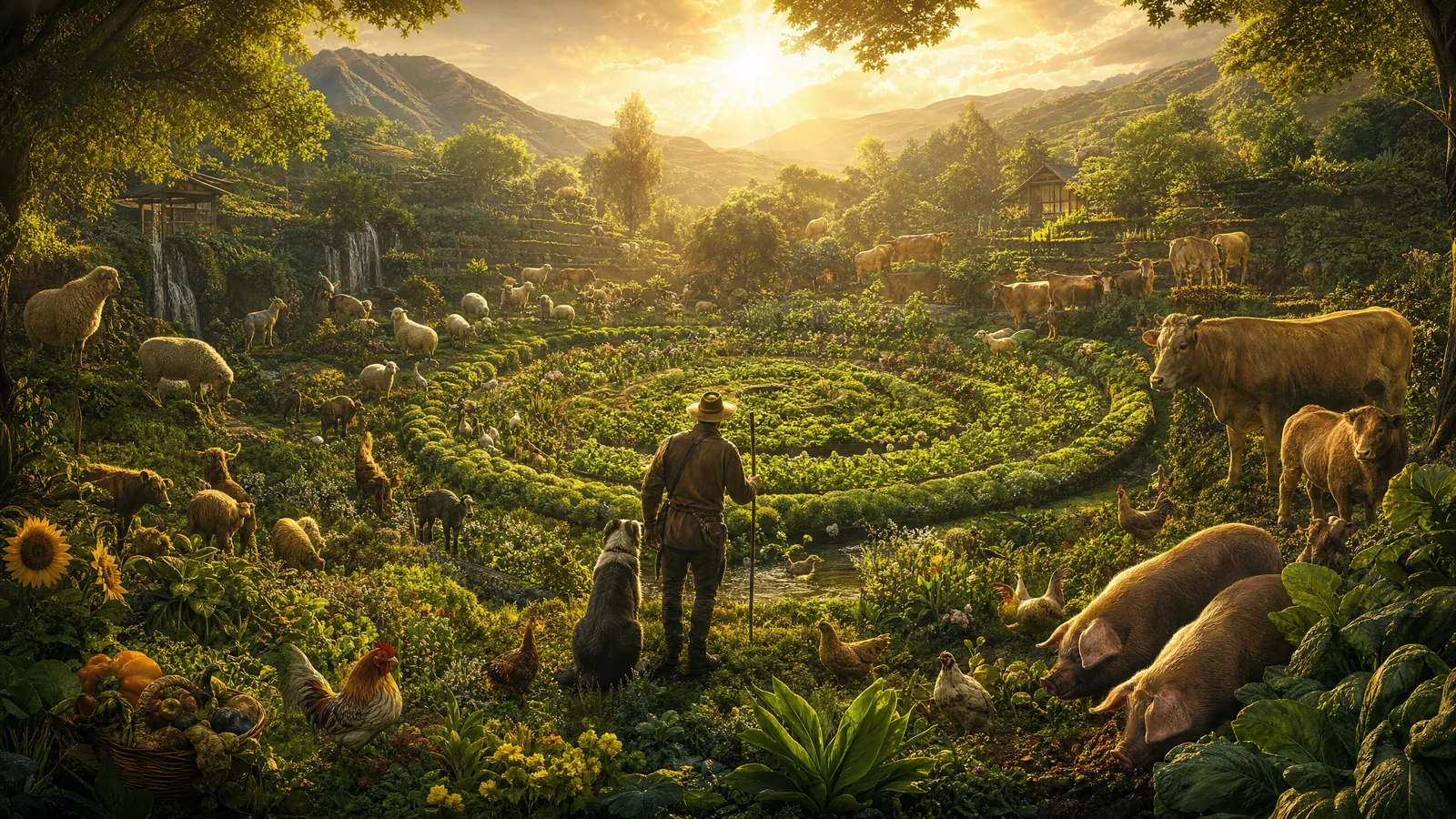
Tend the Flock
Complete Animal Husbandry: From Selection to Harvest
Complete Animal Husbandry: From Selection to Harvest
Livestock provides food, fiber, labor, and fertilizer. This campaign covers species selection, housing, feeding, breeding, health, and processing.
Chapter 1: Species Selection by Purpose
| Animal | Primary Products | Space/Animal | Feed Cost | Difficulty | ROI Speed |
|---|---|---|---|---|---|
| Chickens (layers) | Eggs, meat, fertilizer | 4 sq ft + run | Very low | Very easy | Immediate (eggs in 5 months) |
| Chickens (meat/broilers) | Meat | 2 sq ft (short term) | Low | Very easy | 6-8 weeks to harvest |
| Rabbits | Meat, fur, fertilizer | 6-8 sq ft | Low | Easy | 8-12 weeks to harvest |
| Ducks | Eggs, meat, pest control | 6 sq ft + water | Low | Easy | 5-6 months (eggs) |
| Goats (dairy) | Milk, cheese, meat, brush clearing | 200 sq ft + pasture | Moderate | Moderate | 1-2 years (first kid/milk) |
| Goats (meat) | Meat, brush clearing | 200 sq ft + pasture | Low-moderate | Easy-moderate | 6-12 months |
| Sheep | Wool, meat, milk, lanolin | 1/4 acre + shelter | Low (pasture) | Moderate | 1 year (first shearing) |
| Pigs | Meat, lard, leather, clearing | 80 sq ft + outdoor | Moderate | Moderate | 6-8 months to harvest |
| Cattle (dairy) | Milk, butter, cheese, calves | 2+ acres | High | Moderate-high | 2-3 years (first calf/milk) |
| Cattle (beef) | Meat, leather, tallow | 2+ acres | Moderate (pasture) | Moderate | 18-24 months to harvest |
| Horses | Labor, transport | 2+ acres | High | High | Immediate (if trained) |
| Bees | Honey, wax, pollination | Hive (2×2 ft) | None (forage) | Moderate | 1 year (first harvest) |
Chapter 2: Housing Requirements
| Animal | Shelter Type | Ventilation | Bedding | Fencing | Predator Protection |
|---|---|---|---|---|---|
| Chickens | Coop (enclosed at night) | High (ammonia) | Straw, shavings (deep litter) | Chicken wire + hardware cloth | Close at night, hardware cloth (not chicken wire alone) |
| Rabbits | Hutch (raised, wire floor) | Moderate | Straw in nest box | Wire cage | Raised hutch, secure latches |
| Goats | Three-sided shelter minimum | High | Straw (they hate wet) | 4-5 ft fence (they climb/jump) | Secure fencing, guardian animal |
| Sheep | Three-sided shelter | Moderate | Straw | 4 ft fence (woven wire) | Guardian dog, secure fencing |
| Pigs | Shelter from sun/rain | Moderate | Straw, mud wallow | Strong fence (electric or heavy) | Strong fencing (pigs root under) |
| Cattle | Minimal (trees, run-in shed) | Natural (outdoor) | Optional (outdoor) | Barbed wire, electric, or board | Minimal (size is protection) |
Chapter 3: Feeding
| Animal | Daily Feed | Water | Supplements | Pasture Needed | Notes |
|---|---|---|---|---|---|
| Chicken (layer) | 1/4 lb grain + forage | 1 pint | Calcium (oyster shell), grit | Optional (reduces feed 30%) | Free-range reduces feed cost significantly |
| Rabbit | Hay (unlimited) + 1/4 cup pellets | 1 pint | Salt lick | Optional (supervised) | Hay is primary diet, not pellets |
| Goat (dairy) | 3-5 lbs hay + 1-2 lbs grain | 2-4 gallons | Minerals, baking soda | 1/4 acre/goat | Browse (brush) preferred over grass |
| Sheep | 3-5 lbs hay or pasture | 1-2 gallons | Mineral block (no copper!) | 1/4 acre/sheep | Copper is TOXIC to sheep |
| Pig | 5-8 lbs feed (grain, scraps) | 3-5 gallons | Pasture, minerals | Optional (reduces feed) | Will eat almost anything |
| Cow (dairy) | 30-50 lbs hay/silage + grain | 15-30 gallons | Minerals, salt | 2+ acres/cow | Milking increases feed needs |
Chapter 4: Breeding
| Animal | Maturity | Gestation | Offspring/Year | Breeding Ratio | Notes |
|---|---|---|---|---|---|
| Chicken | 5-6 months | 21 days (incubation) | 50-200 chicks/hen (if broody) | 1 rooster : 8-12 hens | Not all hens go broody. Incubator helps |
| Rabbit | 4-5 months | 31 days | 24-48 kits/doe | 1 buck : 8-10 does | Breed every 6-8 weeks. Prolific |
| Goat | 7-10 months | 150 days (5 months) | 1-3 kids/year | 1 buck : 25-30 does | Breed in fall for spring kids |
| Sheep | 7-12 months | 147 days (5 months) | 1-3 lambs/year | 1 ram : 25-35 ewes | Breed in fall for spring lambs |
| Pig | 6-8 months | 114 days (3 months, 3 weeks, 3 days) | 8-14 piglets/litter, 2 litters/year | 1 boar : 15-20 sows | Very prolific. Rapid multiplication |
| Cow | 15-18 months | 283 days (9.5 months) | 1 calf/year | 1 bull : 20-30 cows | Slow reproduction. Plan ahead |
Chapter 5: Health and Common Problems
| Problem | Species | Symptoms | Treatment | Prevention |
|---|---|---|---|---|
| Parasites (worms) | All | Weight loss, poor coat, pale gums | Dewormers, rotation | Rotate pastures, don't overstock |
| Coccidiosis | Poultry, rabbits | Bloody droppings, lethargy | Amprolium, clean housing | Clean dry bedding, don't overcrowd |
| Bloat | Cattle, goats | Distended left side, distress | Trocar (emergency), oil drench | Gradual feed changes, avoid wet legumes |
| Foot rot | Sheep, goats, cattle | Lameness, foul smell | Trim, zinc sulfate foot bath | Dry ground, regular trimming |
| Mastitis | Dairy (all) | Hot/hard udder, abnormal milk | Strip out, warm compress, antibiotics | Clean milking, dry teats, teat dip |
| Respiratory | All | Coughing, nasal discharge | Ventilation, isolation, antibiotics | Good ventilation, don't overcrowd |
| Egg binding | Poultry | Straining, lethargy, no eggs | Warm bath, calcium, lubricate vent | Adequate calcium, proper lighting |
| Fly strike | Sheep | Maggots in wool/wounds | Shear, clean, treat wound | Shear, keep clean, fly prevention |
Chapter 6: Slaughter and Processing
| Animal | Age at Slaughter | Live Weight | Dressed Weight | Meat Yield | Method |
|---|---|---|---|---|---|
| Chicken (meat) | 8-12 weeks | 5-8 lbs | 3.5-5.5 lbs | 70% of live | Cervical dislocation or cone + knife |
| Rabbit | 8-12 weeks | 4-5 lbs | 2.5-3 lbs | 60% of live | Cervical dislocation |
| Goat | 6-12 months | 50-80 lbs | 25-40 lbs | 50% of live | Throat cut (halal/kosher method) |
| Sheep | 6-12 months | 80-130 lbs | 40-65 lbs | 50% of live | Throat cut |
| Pig | 6-8 months | 200-280 lbs | 150-200 lbs | 70% of live | Stun + bleed (or .22 + bleed) |
| Cattle | 18-24 months | 1,000-1,400 lbs | 600-850 lbs | 60% of live | Stun + bleed (or .22 + bleed) |
Reference Card
- Start with chickens: easiest livestock. Eggs in 5 months. Eat scraps. Fertilize garden. Meat at end of laying life. Low space.
- Rabbits: most efficient meat conversion. 3:1 feed to meat ratio. Quiet. Small space. 8-12 weeks to harvest. Very prolific.
- Goats: best dairy for small holdings. 1-3 quarts/day. Eat brush (clear land). Hardy. Cheese, yogurt, soap from milk.
- Rotate pastures: prevents parasite buildup. Move animals every 1-2 weeks. Rest pasture 4-6 weeks between grazing.
- Copper kills sheep: NEVER use cattle/goat minerals for sheep. Sheep-specific minerals only. Common fatal mistake.
- Pigs: fastest large meat production. 6-8 months to 200+ lbs. Eat anything. Clear land. Lard for cooking and soap.
- Breeding math: 1 doe rabbit = 50+ lbs meat/year. 1 dairy goat = 300+ gallons milk/year. Plan breeding for spring births.
- Humane slaughter: quick, clean, respectful. Sharp knife. Calm animal. No suffering. Use every part. Waste nothing.
TransmissionCOMPLETE — unaltered & unabridged
Words1,352 — every one of them
SHA-256 of source text8cf80732f078306e9f1ba4ed576904c9dd79fbffc239e1cf0132f391ad630fd6
Canonical textdownload campaign-animals-complete-v2.md — byte-identical to what this page renders