Sovereignty Module: Feed the People
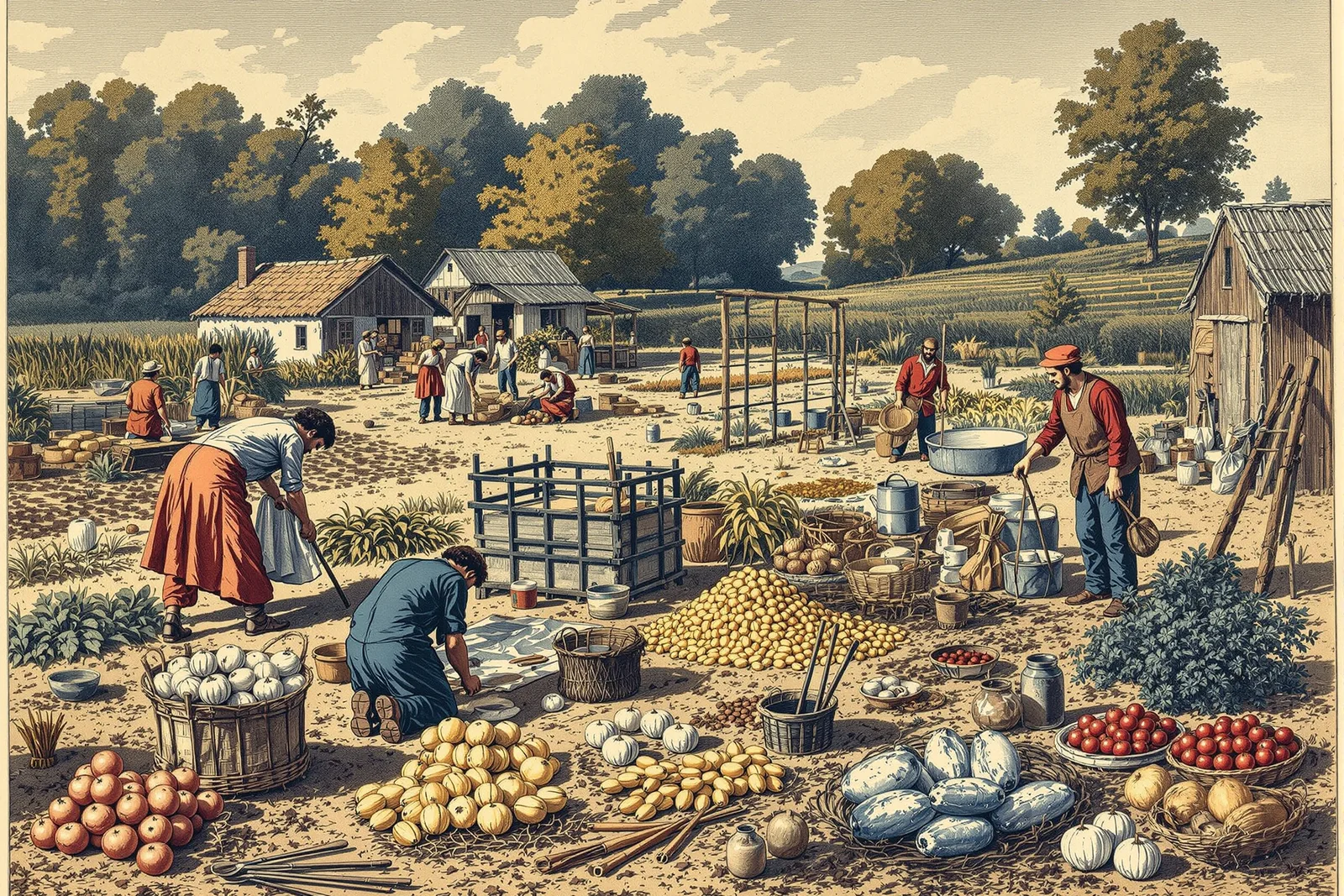
Complete Food Production: From Soil to Table
Food security is the foundation of civilization. This campaign covers soil preparation, crop selection, growing, harvesting, and year-round food production.
Chapter 1: Soil Preparation
| Soil Type | Texture | Drainage | Fertility | Amendment Needed | Best Crops |
|---|---|---|---|---|---|
| Sandy | Gritty, loose | Excessive (dries fast) | Low (nutrients wash out) | Compost, clay, organic matter | Root crops, melons, herbs |
| Clay | Sticky, heavy | Poor (waterlogged) | High (holds nutrients) | Sand, compost, gypsum | Brassicas, beans, fruit trees |
| Loam | Balanced, crumbly | Good | High | Maintain with compost | Everything (ideal soil) |
| Silt | Smooth, silky | Moderate | High | Compost for structure | Most vegetables, grains |
| Peat | Dark, spongy | Variable | Low (acidic) | Lime, minerals | Blueberries, potatoes |
Soil building: Add 2-4 inches of compost annually. Mulch with organic matter (straw, leaves, wood chips). Never leave soil bare. Rotate crops (different families each year). Cover crop in winter (clover, rye). No-till when possible (preserves soil structure). Healthy soil = healthy plants = healthy people.
Chapter 2: Essential Crops (Priority Order)
| Crop | Calories/acre | Protein | Storage Life | Growing Difficulty | Days to Harvest |
|---|---|---|---|---|---|
| Potato | 15-20 million | Low | 4-6 months (cool, dark) | Easy | 70-120 |
| Corn (maize) | 8-12 million | Moderate | Years (dried) | Easy-moderate | 60-100 |
| Wheat | 6-8 million | High | Years (dried) | Moderate | 90-120 |
| Rice (paddy) | 8-12 million | Moderate | Years (dried) | Moderate-high | 120-180 |
| Beans (dry) | 4-6 million | Very high | Years (dried) | Easy | 80-100 |
| Squash (winter) | 3-5 million | Low | 3-6 months (cool) | Easy | 80-120 |
| Sweet potato | 12-16 million | Low | 4-6 months | Easy (warm climates) | 90-150 |
| Oats | 5-7 million | Moderate | Years (dried) | Easy | 80-100 |
| Cabbage/kale | 2-4 million | Low | Months (root cellar) | Easy | 60-90 |
| Turnip/rutabaga | 3-5 million | Low | 4-6 months (cool) | Very easy | 40-90 |
The Three Sisters (companion planting): Corn (structure/calories) + Beans (nitrogen fixation/protein, climb corn) + Squash (ground cover, shades weeds, stores well). Together provide complete nutrition. Indigenous American system. Plant corn first, beans 2 weeks later, squash 1 week after beans.
Chapter 3: Livestock for Food
| Animal | Space Needed | Feed | Products | Difficulty | Yield/Year |
|---|---|---|---|---|---|
| Chickens (layers) | 4 sq ft/bird (coop) + run | Grain, scraps, forage | Eggs (250-300/year), meat, fertilizer | Very easy | 250+ eggs, 5 lbs meat |
| Rabbits | 6-8 sq ft/rabbit | Hay, greens, pellets | Meat (lean), fur, fertilizer | Easy | 50+ lbs meat/doe |
| Goats (dairy) | 200+ sq ft/goat + pasture | Browse, hay, grain | Milk (1-3 qt/day), cheese, meat | Moderate | 300+ gallons milk |
| Pigs | 80+ sq ft/pig | Grain, scraps, forage | Meat (200+ lbs), lard, leather | Moderate | 150-200 lbs meat |
| Sheep | 1/4+ acre/sheep | Pasture, hay | Wool, meat, milk, lanolin | Moderate | 50-80 lbs meat + wool |
| Cattle (dairy) | 2+ acres/cow | Pasture, hay, grain | Milk (5-8 gal/day), meat, leather | Moderate-high | 1,500+ gallons milk |
| Ducks | 6 sq ft/duck + water | Grain, forage, bugs | Eggs (200-300/year), meat, down | Easy | 200+ eggs, 5-7 lbs meat |
| Bees | Hive (2×2 ft) + forage area | Flowers (3-mile radius) | Honey (30-60 lbs), wax, pollination | Moderate | 30-60 lbs honey |
Chapter 4: Preservation Methods
| Method | Shelf Life | Equipment | Energy Needed | Best For | Nutrition Retained |
|---|---|---|---|---|---|
| Drying/dehydrating | 1-2+ years | Racks, sun or low heat | Low (sun) to moderate | Fruits, herbs, meat (jerky), vegetables | Good (some vitamin loss) |
| Smoking | 1-6 months | Smokehouse | Moderate (fire) | Meat, fish, cheese | Good |
| Salt curing | 6-12+ months | Salt (lots) | None | Meat, fish, vegetables | Good (high sodium) |
| Fermentation | Months to years | Crocks, salt | None | Vegetables (sauerkraut, kimchi), dairy | Excellent (adds probiotics) |
| Root cellar | 1-6 months | Underground space | None (natural cool) | Root crops, apples, cabbage, squash | Excellent (fresh) |
| Canning (water bath) | 1-5+ years | Jars, lids, large pot | High (boiling) | High-acid foods (fruits, tomatoes, pickles) | Good |
| Canning (pressure) | 1-5+ years | Pressure canner, jars | High (pressure/heat) | Low-acid foods (meat, vegetables, beans) | Good |
| Lard/fat sealing (confit) | 3-6 months | Fat, crocks | Moderate (cooking) | Meat (duck, pork) | Good |
Fermentation (sauerkraut): Shred cabbage. Salt at 2% by weight (2 tsp per pound). Massage until liquid covers. Pack tightly in crock/jar. Weight to keep submerged. Cover (allow gas to escape). Room temperature 1-4 weeks. Taste at 1 week. Refrigerate or cool-store when ready. Lasts months. Full of probiotics and vitamin C.
Chapter 5: Year-Round Production Calendar
| Month | Plant | Harvest | Preserve | Maintain |
|---|---|---|---|---|
| January | (Indoor starts: onions, peppers) | Stored crops, sprouts | — | Plan, order seeds, repair tools |
| February | Indoor starts: tomatoes, peppers | Stored crops | — | Prepare beds, prune fruit trees |
| March | Peas, spinach, lettuce, potatoes | Overwintered kale, leeks | — | Turn compost, amend soil |
| April | Brassicas, beets, carrots, herbs | Asparagus, rhubarb, greens | — | Transplant starts, mulch |
| May | Beans, corn, squash, tomatoes | Greens, radishes, peas | — | Weed, water, thin seedlings |
| June | Succession plant beans, lettuce | Strawberries, peas, greens | Jam, dry herbs | Weed, water, pest control |
| July | Fall crops: brassicas, carrots | Beans, tomatoes, berries, squash | Can tomatoes, dry beans | Water, harvest daily |
| August | Cover crops, garlic (fall plant) | Corn, peppers, melons, potatoes | Can, dry, freeze everything | Harvest, process, store |
| September | Garlic, cover crops | Apples, squash, root crops | Cider, sauerkraut, root cellar | Harvest, clean beds |
| October | Garlic, overwintering crops | Late root crops, greens | Final canning, root cellar fill | Mulch beds, clean up |
| November | — | Stored crops only | Butchering season | Compost leaves, winterize |
| December | — | Stored crops, sprouts | — | Plan next year, maintain tools |
Reference Card
- Potato: highest calories per acre. Easy to grow. Store 4-6 months in cool dark. Plant eyes 12" apart, 4" deep. Hill as they grow.
- Three Sisters: corn + beans + squash. Complete nutrition. Companion planting. Indigenous wisdom. Plant together.
- Compost: 2-4 inches annually. Never leave soil bare. Mulch everything. Healthy soil = healthy food = healthy people.
- Fermentation: simplest preservation. Salt + vegetable + time. No energy needed. Adds nutrition (probiotics, vitamins). Lasts months.
- Root cellar: 32-40°F, 85-95% humidity. Stores potatoes, carrots, beets, cabbage, apples for months. No energy needed.
- Chickens: easiest livestock. 250+ eggs/year per hen. Eat scraps and bugs. Fertilize garden. Meat at end of laying life.
- Crop rotation: never plant same family in same spot two years running. Prevents disease buildup. Legumes add nitrogen.
- Save seed: let best plants go to seed. Dry thoroughly. Store cool and dark. Self-sufficiency means growing your own seed.