Sovereignty Module: Tend the Flock
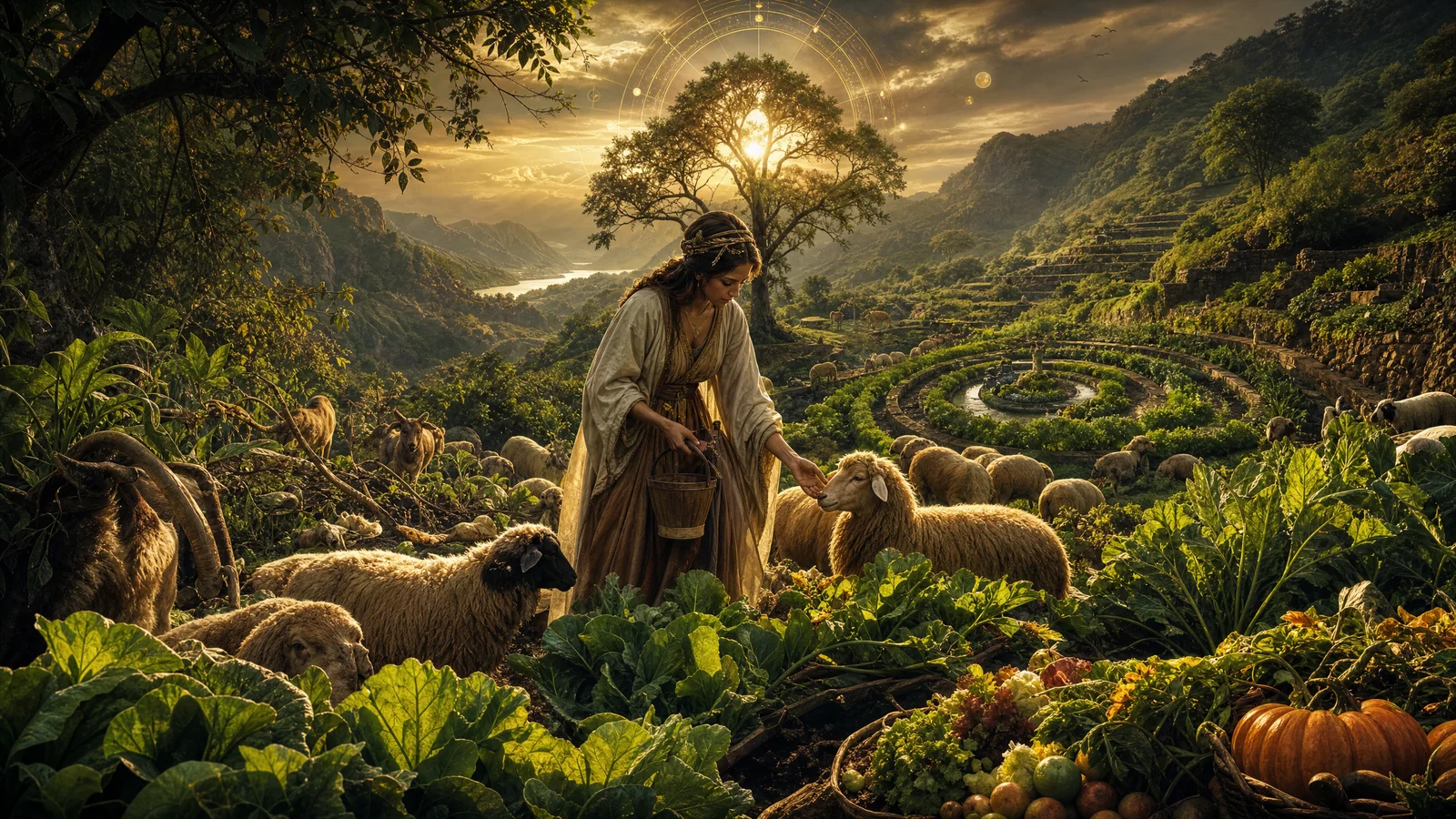
Complete Animal Husbandry: From Selection to Breeding
Animals provide food, labor, materials, and companionship. This campaign covers selection, housing, feeding, breeding, health, and processing for all major livestock species.
Chapter 1: Species Selection
| Animal | Products | Space/Animal | Feed Cost | Difficulty | Climate | Minimum Herd |
|---|---|---|---|---|---|---|
| Chickens (layers) | Eggs, meat, feathers | 4 sq ft coop + 10 sq ft run | Very low | Very low | Any | 3-6 hens |
| Chickens (meat) | Meat (8-12 weeks) | 2 sq ft coop + 5 sq ft run | Low | Very low | Any | 25+ (batch) |
| Ducks | Eggs, meat, pest control | 6 sq ft + water access | Low | Low | Temperate-wet | 3-6 |
| Rabbits | Meat, fur, manure | 6 sq ft per doe | Low (forage possible) | Low | Any | 1 buck + 3 does |
| Goats (dairy) | Milk, cheese, fiber (some) | 200 sq ft + pasture | Moderate | Moderate | Any (not wet) | 2 minimum |
| Goats (meat) | Meat, hide | 200 sq ft + pasture | Low-moderate | Low-moderate | Any | 3+ |
| Sheep | Wool, meat, milk, hide | 200 sq ft + pasture | Moderate | Moderate | Temperate-cold | 3+ |
| Pigs | Meat, lard, hide, tillage | 80 sq ft + outdoor access | Moderate-high | Moderate | Temperate | 1 sow + access to boar |
| Cattle (dairy) | Milk, butter, cheese | 1-2 acres pasture | High | Moderate-high | Temperate | 1 (but 2+ better) |
| Cattle (beef) | Meat, hide, tallow | 2-5 acres pasture | Moderate (grass-fed) | Moderate | Any with grass | 3+ |
| Horses | Labor, transport | 2-3 acres pasture | High | High | Temperate | 1 (social: 2+) |
| Bees | Honey, wax, pollination | 1 hive = 2 sq ft | None (forage) | Moderate | Temperate | 2+ hives |
Chapter 2: Housing and Fencing
| Animal | Shelter Type | Fencing | Predator Protection | Winter Needs | Ventilation |
|---|---|---|---|---|---|
| Chickens | Coop (enclosed at night) | 4 ft fence + top (hawks) | Lock up at night, hardware cloth | Insulated coop, no drafts, light | High (ammonia) |
| Rabbits | Hutch (raised, wire floor) | Cage/hutch | Enclosed hutch | Shelter from wind, extra bedding | Moderate |
| Goats | 3-sided shelter minimum | 4-5 ft fence (they climb/jump) | Secure at night, guardian animal | Dry shelter, deep bedding | High (moisture) |
| Sheep | 3-sided shelter | 4 ft fence (woven wire) | Guardian dog/llama, secure at night | Shelter from rain (wet wool = hypothermia) | High |
| Pigs | Shelter (shade + dry area) | Strong fence (hog panels, electric) | Pigs defend themselves (mostly) | Insulated shelter, deep bedding | Moderate |
| Cattle | Open shelter/barn | 4-5 ft fence (barbed wire or board) | Size is defense, calves vulnerable | Windbreak, hay access | High |
| Horses | Run-in shelter or barn | 4-5 ft fence (board, electric, no barbed) | Size is defense | Shelter from wind/rain, blanket if clipped | High |
Chapter 3: Feeding
| Animal | Daily Feed | Water | Supplements | Forage Possible | Winter Feed |
|---|---|---|---|---|---|
| Chicken (layer) | 1/4 lb grain/day | 1 cup | Calcium (oyster shell), grit | Yes (bugs, greens, 30-50% diet) | Stored grain + sprouted grain |
| Rabbit | 1/4 lb pellets or hay + greens | 1 cup | Salt lick | Yes (grass, weeds, garden waste) | Hay + root vegetables |
| Goat (dairy) | 3-5 lbs hay + 1-2 lbs grain | 1-2 gallons | Minerals (copper, selenium) | Yes (browse preferred) | Hay + grain (milking) |
| Sheep | 3-5 lbs hay | 1-2 gallons | Mineral block (NO copper) | Yes (grass, 100% in summer) | Hay |
| Pig | 5-8 lbs feed/day | 3-5 gallons | None if varied diet | Partial (roots, mast, scraps) | Stored grain + root crops |
| Cow (dairy) | 30-50 lbs hay + 10-15 lbs grain | 20-40 gallons | Mineral, salt | Yes (pasture in summer) | Hay + grain (milking) |
| Cow (beef) | 25-35 lbs hay (grass-fed) | 10-20 gallons | Mineral, salt | Yes (100% pasture possible) | Hay |
| Horse | 15-25 lbs hay + 2-5 lbs grain | 10-15 gallons | Salt, mineral | Yes (pasture in summer) | Hay + grain (working) |
Chapter 4: Breeding
| Animal | Maturity | Gestation | Offspring | Breeding Ratio | Productive Life |
|---|---|---|---|---|---|
| Chicken | 5-6 months | 21 days (incubation) | 8-15 chicks/clutch | 1 rooster: 8-12 hens | 2-4 years (laying) |
| Rabbit | 4-6 months | 31 days | 6-12 kits/litter | 1 buck: 5-10 does | 2-4 years |
| Goat | 7-10 months | 150 days (5 months) | 1-3 kids | 1 buck: 25-30 does | 8-12 years |
| Sheep | 7-12 months | 147 days (5 months) | 1-3 lambs | 1 ram: 25-35 ewes | 6-10 years |
| Pig | 6-8 months | 114 days (3 months, 3 weeks, 3 days) | 8-14 piglets | 1 boar: 15-20 sows | 4-6 years |
| Cow | 15-18 months | 283 days (9.5 months) | 1 calf (rarely twins) | 1 bull: 20-30 cows | 8-12 years |
| Horse | 2-3 years | 340 days (11 months) | 1 foal | 1 stallion: 20-30 mares | 15-25 years |
Breeding selection principles: 1) Keep records (who bred whom, offspring quality). 2) Select for: health, temperament, production, conformation. 3) Cull: poor producers, bad temperament, genetic defects. 4) Avoid inbreeding (rotate males every 2-3 years). 5) Line breeding (mild inbreeding) only if you understand genetics. 6) Hybrid vigor: crossing unrelated lines often produces superior offspring.
Chapter 5: Health and Disease
| Sign | Possible Cause | Immediate Action | Prevention |
|---|---|---|---|
| Not eating | Pain, fever, obstruction, parasites | Isolate, observe, check temperature | Regular deworming, clean feed |
| Diarrhea | Parasites, infection, diet change | Isolate, fluids, identify cause | Gradual diet changes, clean water |
| Limping | Injury, hoof rot, abscess | Examine foot/leg, treat wound | Dry ground, regular hoof trimming |
| Coughing | Respiratory infection, dust, parasites | Ventilation, isolate if fever | Good ventilation, reduce dust |
| Hair/feather loss | Parasites (lice, mites), nutrition, stress | Check for parasites, treat | Dust baths (poultry), clean bedding |
| Swelling | Abscess, injury, allergic reaction | Identify location, hot/cold compress | Prevent injuries, clean environment |
| Weight loss | Parasites, dental problems, insufficient feed | Deworm, check teeth, increase feed | Regular deworming, dental checks |
| Sudden death | Toxin, predator, bloat, heart failure | Necropsy if possible, check others | Remove toxic plants, secure from predators |
Essential veterinary supplies: thermometer, wound spray/iodine, bandaging, dewormer (ivermectin), antibiotics (if available), calcium gluconate (dairy animals), bloat treatment, hoof trimmer, castration tools, syringes/needles, electrolyte powder.
Chapter 6: Processing
| Product | Animal | Method | Equipment | Storage | Yield |
|---|---|---|---|---|---|
| Eggs | Chickens, ducks | Collect daily | Nesting boxes | Cool storage (weeks), water glass (months) | 250-300/year/hen |
| Milk | Goats, cows | Hand milk 2x daily | Clean bucket, strainer, jars | Refrigerate (days), cheese (months) | 1-3 gal/day (cow) |
| Meat (poultry) | Chickens, ducks | Kill, scald, pluck, eviscerate | Killing cone, scalding pot, knife | Refrigerate (days), salt/smoke (months) | 3-8 lbs per bird |
| Meat (red) | Goat, sheep, pig, cow | Kill, bleed, skin, butcher | Knife, gambrel, saw | Refrigerate, salt, smoke, dry | 40-800 lbs per animal |
| Wool | Sheep | Shear (spring) | Hand shears or electric | Clean, dry storage | 5-15 lbs/sheep/year |
| Hide/leather | All (at slaughter) | Skin, salt, tan | Fleshing knife, tanning chemicals | Indefinite (if tanned) | 1 hide per animal |
| Honey | Bees | Harvest (late summer) | Hive tool, smoker, extractor | Indefinite (sealed jars) | 30-60 lbs/hive/year |
| Lard/tallow | Pigs, cattle | Render fat (low heat) | Large pot, strainer, jars | Months-years (cool, sealed) | 20-50 lbs per pig |
Reference Card
- Start small: chickens first (easiest, fastest return). Then rabbits or goats. Then larger animals as experience grows. Mistakes with chickens cost little. Mistakes with cattle cost much.
- Water: the most critical input. Animals die in days without water. Automatic waterers if possible. Check twice daily minimum. Clean water prevents most diseases.
- Fencing: the most important infrastructure. Good fences = contained animals = no crop damage = no neighbor conflicts. Build fence before buying animals. Always.
- Breeding records: write down every breeding date, birth, offspring quality. Without records, you cannot improve your herd. Improvement = more production from same resources.
- Parasite management: the #1 health problem in all livestock. Rotate pastures (break parasite cycle). Deworm strategically (not constantly — breeds resistance). Monitor body condition.
- Predator protection: lock up at night (most predators are nocturnal). Guardian animals (dogs, llamas, donkeys) for pastured animals. Good fencing. Eliminate den sites nearby.
- Feed storage: store enough feed for winter + 25% buffer. Hay must stay dry (covered storage). Grain must stay dry and rodent-proof. Running out of feed in winter = dead animals.
- Butchering skill: learn before you need it. Practice on chickens first (simple). Then rabbits. Then larger animals. Sharp knife, clean workspace, cool temperature. Respect the animal.