Sovereignty Module: Feed the People
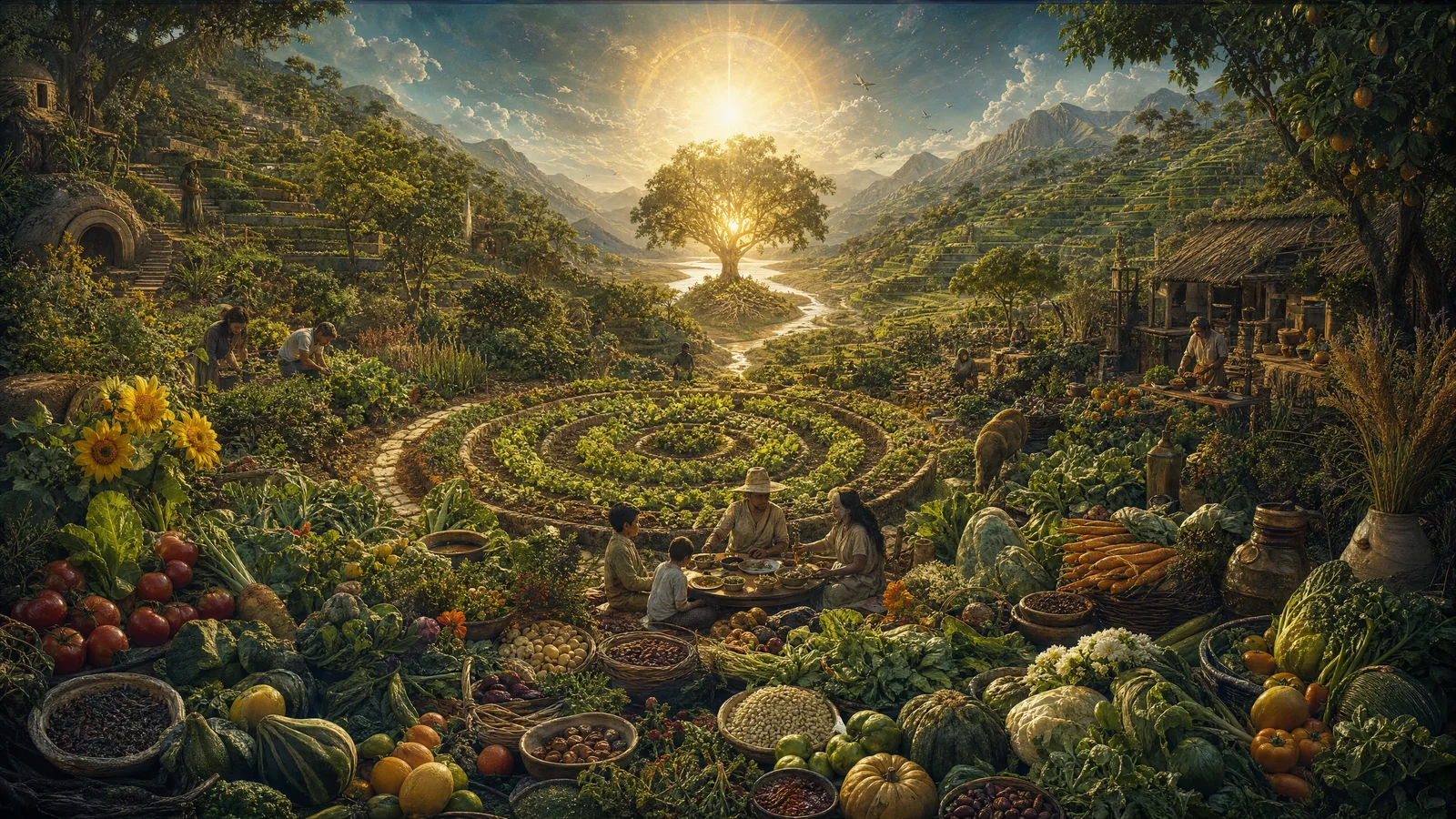
Feed the People
Complete Food Production: From Soil to Table
Complete Food Production: From Soil to Table
Food security is the foundation of civilization. This campaign covers soil preparation, crop selection, planting, harvest, processing, and year-round food production.
Chapter 1: Soil Management
| Soil Type | Characteristics | Drainage | Fertility | Amendment | Best Crops |
|---|---|---|---|---|---|
| Sandy | Light, drains fast, warms quickly | Excessive | Low (leaches) | Compost, clay, mulch | Root crops, early season |
| Clay | Heavy, holds water, slow to warm | Poor | High (holds nutrients) | Sand, compost, gypsum | Brassicas, late season |
| Loam | Balanced sand/silt/clay | Good | High | Compost (maintenance) | Everything (ideal) |
| Silt | Smooth, holds moisture | Moderate | Moderate-high | Compost, organic matter | Most crops |
| Peat | Dark, acidite, holds water | Poor | Low (acidic) | Lime, drainage | Blueberries, potatoes |
Soil building: Compost (kitchen scraps + yard waste + manure, 6-12 months). Cover crops (clover, rye, vetch — grow, then turn under). Mulch (straw, leaves, wood chips — suppress weeds, retain moisture, feed soil). Biochar (charcoal mixed into soil — permanent improvement). Rotation (never same crop in same spot two years running).
Chapter 2: Crop Selection by Climate
| Crop | Days to Harvest | Cold Tolerance | Heat Tolerance | Calories/Acre | Storage Life |
|---|---|---|---|---|---|
| Potato | 70-120 | Good (frost kills tops) | Moderate | 15-20 million | 4-8 months (cool, dark) |
| Corn (maize) | 60-100 | None (frost kills) | Excellent | 8-15 million | Years (dried) |
| Wheat | 90-120 | Excellent (winter wheat) | Moderate | 6-8 million | Years (dried) |
| Rice | 120-180 | None | Excellent | 10-15 million | Years (dried) |
| Beans (dry) | 80-100 | None (frost kills) | Good | 5-8 million | Years (dried) |
| Squash (winter) | 80-120 | None (frost kills) | Good | 2-4 million | 3-6 months (cool) |
| Cabbage | 70-100 | Excellent | Poor | 1-2 million | 3-6 months (cool) or ferment |
| Turnip/rutabaga | 50-90 | Excellent | Moderate | 3-5 million | 4-6 months (root cellar) |
| Carrot | 60-80 | Good | Moderate | 2-4 million | 4-8 months (sand/root cellar) |
| Onion | 90-120 | Good | Good | 1-2 million | 6-12 months (dry, cool) |
| Garlic | 240 (fall plant) | Excellent | Moderate | 1-2 million | 6-12 months (dry) |
| Sweet potato | 90-120 | None | Excellent | 10-15 million | 4-6 months (cured, warm) |
| Oats | 80-100 | Good | Moderate | 5-7 million | Years (dried) |
| Rye | 90-120 | Excellent | Moderate | 5-7 million | Years (dried) |
Chapter 3: Planting Calendar (Temperate Climate)
| Month | Indoor Start | Direct Sow | Transplant | Harvest | Other Tasks |
|---|---|---|---|---|---|
| January | Onions, leeks | — | — | Stored crops | Plan, order seeds |
| February | Peppers, eggplant, early tomato | — | — | Stored crops | Build beds, compost |
| March | Tomatoes, brassicas | Peas, spinach, lettuce | Onion sets | Overwintered crops | Prepare soil, prune fruit trees |
| April | Squash, melons, herbs | Beets, carrots, radish, potatoes | Brassicas, onions | Asparagus, rhubarb | Plant fruit trees |
| May | — | Beans, corn, squash | Tomatoes, peppers (after frost) | Lettuce, radish, peas | Mulch, weed |
| June | — | Succession beans, corn | Late brassicas | Strawberries, peas, lettuce | Weed, water, mulch |
| July | Fall brassicas | Fall carrots, beets, turnips | Fall brassicas | Beans, tomatoes begin, berries | Preserve harvest |
| August | — | Fall lettuce, spinach, radish | — | Tomatoes, corn, peppers, squash | Preserve, dry, can |
| September | — | Cover crops, garlic | — | Potatoes, apples, squash, beans | Harvest, preserve, store |
| October | — | Cover crops, garlic | — | Root crops, late squash, apples | Store crops, clean beds |
| November | — | — | — | Kale, Brussels sprouts | Mulch beds, compost |
| December | — | — | — | Stored crops, winter greens | Plan next year, maintain tools |
Chapter 4: Pest and Disease Management
| Method | Type | Effectiveness | Cost | Labor | Best For |
|---|---|---|---|---|---|
| Crop rotation | Prevention | High | None | Low | All crops (break disease cycles) |
| Companion planting | Prevention/deterrent | Moderate | None | Low | Specific pest problems |
| Row covers | Physical barrier | Very high | Low-moderate | Moderate | Insect exclusion |
| Hand picking | Direct removal | High (small scale) | None | High | Caterpillars, beetles |
| Beneficial insects | Biological control | High | Low (attract) | Low | Aphids, caterpillars |
| Neem oil | Organic pesticide | Moderate-high | Low | Moderate | Broad spectrum |
| Diatomaceous earth | Physical kill | Moderate | Low | Low | Crawling insects, slugs |
| Copper spray | Fungicide | Moderate-high | Low | Moderate | Blight, fungal diseases |
| Trap crops | Lure pests away | Moderate | Low | Low | Specific pests |
| Healthy soil | Prevention | Very high | Moderate (compost) | Moderate | All (strong plants resist disease) |
Chapter 5: Harvest and Processing
| Crop | Harvest Sign | Method | Processing | Storage Method | Storage Life |
|---|---|---|---|---|---|
| Potatoes | Tops die back | Dig carefully (fork) | Cure 2 weeks (dark, 50-60°F) | Root cellar (35-40°F, dark) | 4-8 months |
| Corn (dry) | Husks brown, kernels hard | Pick, husk, dry on cob | Shell when fully dry | Sealed container, dry | Years |
| Wheat/grain | Heads golden, grain hard | Cut stalks, bundle, dry | Thresh (beat), winnow (wind) | Sealed container, dry | Years |
| Beans (dry) | Pods brown, rattle | Pull plants, dry | Shell, dry thoroughly | Sealed container, dry | Years |
| Squash (winter) | Hard rind, stem dry | Cut with stem attached | Cure 2 weeks (warm, dry) | Cool room (50-55°F) | 3-6 months |
| Tomatoes | Full color, slight give | Hand pick | Can (pressure or water bath), dry, freeze | Canned (years), dried (years) | 1-5 years |
| Cabbage | Head firm, full size | Cut at base | Ferment (sauerkraut) or store fresh | Root cellar or fermented jar | 3-12 months |
| Onions | Tops fall over | Pull, cure in sun 1-2 weeks | Braid or bag | Cool, dry, ventilated | 6-12 months |
| Apples | Full color, easy twist-off | Hand pick carefully | Store fresh, dry, can, cider, vinegar | Root cellar (32-40°F) | 2-6 months |
| Carrots | Full size (check one) | Pull or fork out | Cut tops, don't wash | Sand in root cellar (32-40°F) | 4-8 months |
Chapter 6: Year-Round Food Security
| Strategy | Purpose | Method | Investment | Return |
|---|---|---|---|---|
| Root cellar | Store fresh produce all winter | Underground room (32-40°F, humid) | Moderate (dig + build) | 4-8 months fresh food |
| Canning | Preserve harvest indefinitely | Heat in sealed jars (pressure or water bath) | Moderate (jars, canner) | Years of preserved food |
| Drying | Preserve without equipment | Sun, air, or low heat dehydration | Low | Years (if kept dry) |
| Fermentation | Preserve + improve nutrition | Salt + time (sauerkraut, kimchi, pickles) | Very low | 6-12 months |
| Smoking | Preserve meat/fish | Smoke chamber + salt + time | Low-moderate | Months-years |
| Cold frames/greenhouse | Extend growing season | Glass/plastic over beds | Moderate | Year-round greens |
| Succession planting | Continuous harvest | Plant same crop every 2-3 weeks | Low (seed) | Continuous fresh food |
| Perennial crops | Food with no annual planting | Fruit trees, berries, asparagus, rhubarb | High (initial), then zero | Decades of food |
Reference Card
- Potatoes: highest calories per acre (15-20 million). Plant in March-April. Harvest in 70-120 days. Store in root cellar. Feed a family on 1/4 acre.
- Three Sisters: corn + beans + squash planted together. Corn = structure for beans. Beans = nitrogen for corn. Squash = ground cover (shade weeds).
- Compost: kitchen scraps + yard waste + manure. Turn monthly. Ready in 6-12 months. Best soil amendment. Free. Infinite supply.
- Rotation: never same crop family in same spot two years running. Prevents disease buildup. 4-year rotation minimum.
- Seed saving: save seeds from best plants. Dry thoroughly. Store cool and dry. Self-sufficiency = never buying seeds again.
- Root cellar: underground room, 32-40°F, 85-95% humidity. Stores potatoes, carrots, beets, cabbage, apples all winter. Essential.
- Fermentation: salt + vegetables + time = preserved food + probiotics + vitamins. Sauerkraut: shred cabbage, 2% salt, pack tight, wait 3-6 weeks.
- Fruit trees: plant now, harvest in 3-7 years. One apple tree = 500+ lbs fruit/year for 50+ years. Long-term investment. Plant immediately.
TransmissionCOMPLETE — unaltered & unabridged
Words1,583 — every one of them
SHA-256 of source textda59f560826e30bdf4d6e3f8dcd33f34ff68f415f5129699972ecc8a71d4789b
Canonical textdownload campaign-food-full.md — byte-identical to what this page renders