Sovereignty Module: Bend the Stave
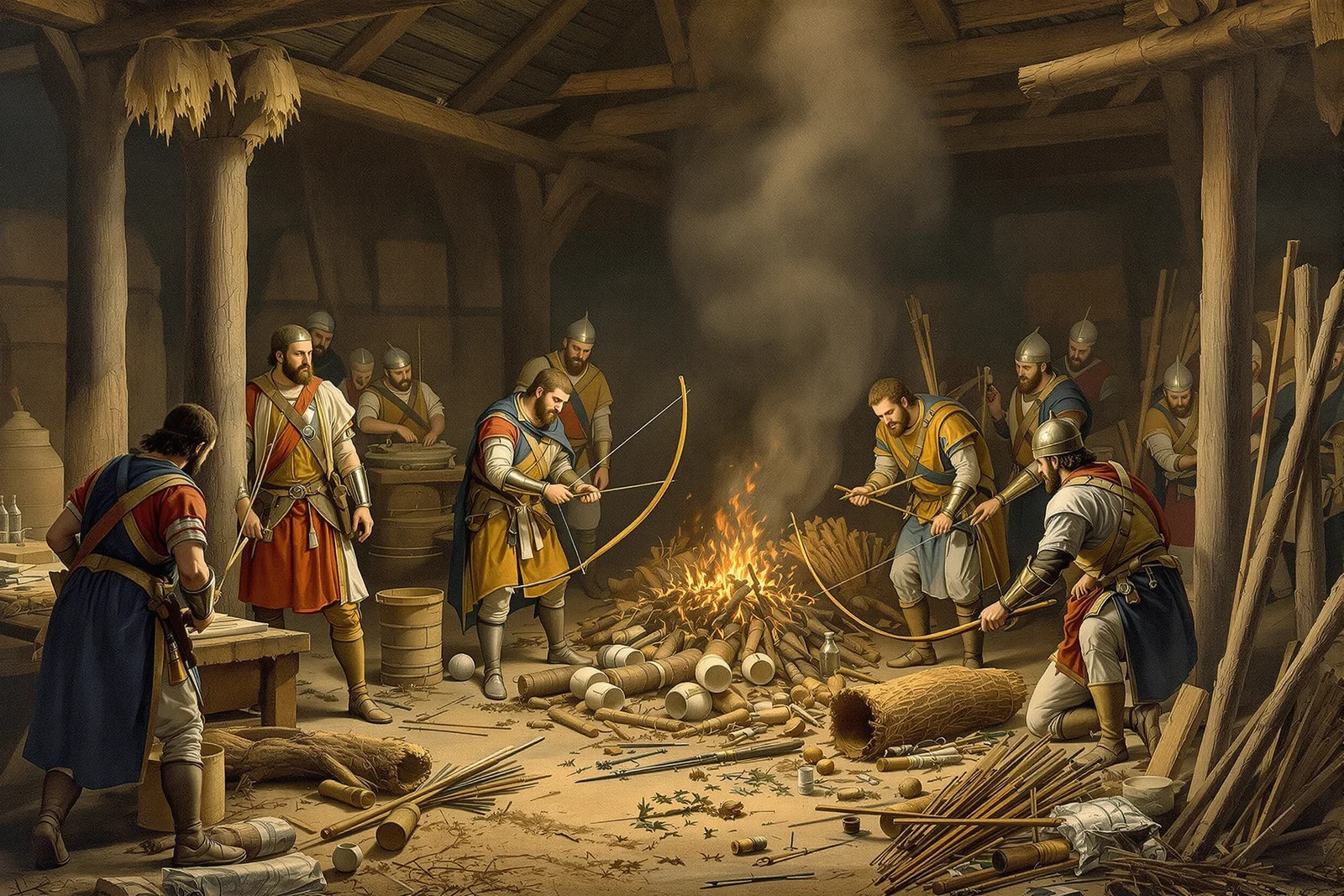
Complete Bow Making: From Tree to Finished Weapon
The bow is humanity's first stored-energy weapon — projecting force at distance. This campaign covers wood selection, stave preparation, tillering, and arrow making.
Chapter 1: Wood Selection
| Wood | Bow Quality | Properties | Availability | Notes |
|---|---|---|---|---|
| Osage orange | Excellent (best) | Dense, elastic, rot-resistant | Central N. America | Gold standard. Lasts decades. |
| Yew | Excellent | Perfect sapwood/heartwood balance | Pacific NW, Europe | Traditional English longbow wood |
| Black locust | Excellent | Very dense, strong, durable | Eastern N. America | Underrated. Excellent bow wood. |
| Hickory | Very good | Tough, flexible, takes abuse | Eastern N. America | Best for beginners (forgiving) |
| Elm | Good | Flexible, wide staves work | Widespread | Good flat bow wood |
| Ash | Good | Light, fast, responsive | Widespread | Good for lighter bows |
| Maple (hard) | Good | Dense, smooth | Widespread | Needs careful tillering |
| Oak (white) | Moderate | Strong but heavy, less elastic | Widespread | Works but not ideal. Heavy. |
| Bamboo | Good-excellent | Strong, light, consistent | Tropical/subtropical | Laminated or backed bows |
Chapter 2: Stave Preparation
| Step | Action | Time | Details |
|---|---|---|---|
| 1 | Select straight trunk/branch (3-4 inch diameter, 6 feet long) | - | No knots, twists, or damage in bow length |
| 2 | Split log in half (or quarters for larger logs) | Day 1 | Split with wedges along grain. Each half = one bow. |
| 3 | Seal ends immediately (glue, wax, paint) | Day 1 | Prevents end-checking (cracking from rapid drying) |
| 4 | Rough shape (remove excess wood, leave 1/2 inch extra) | Day 1-2 | Leave bark on back (outer ring = tension side) |
| 5 | Dry slowly (6-12 months ideal) | Months | In shade, good airflow. Weight ends to prevent warping. |
| 6 | OR speed-dry (heat over coals, careful) | 2-4 weeks | Risk of checking. Monitor closely. |
| 7 | Chase a ring (expose single growth ring on back) | After drying | Back MUST follow one continuous growth ring (no violations) |
Critical rule: The BACK of the bow (facing target) must be a single, unviolated growth ring. Any cut across a ring = failure point. The back is in tension — it must be perfect.
Chapter 3: Bow Design Specifications
| Bow Type | Length | Draw Weight | Draw Length | Cross Section | Best For |
|---|---|---|---|---|---|
| Flat bow (rectangular cross-section) | 64-72 inches | 40-60 lbs | 28 inches | Wide, thin (2" × 5/8") | Beginners, most woods |
| Longbow (D-section) | 66-72 inches | 45-80 lbs | 28-30 inches | Narrow, deep (1.5" × 1.25") | Yew, osage (dense woods) |
| Recurve (tips curve away) | 54-62 inches | 40-60 lbs | 28 inches | Variable | Advanced (more speed, shorter) |
| Short bow (horse bow style) | 48-54 inches | 35-50 lbs | 26-28 inches | Thin, wide, reflexed | Mounted/confined use |
| Self bow (any single-piece) | 60-72 inches | 35-70 lbs | 28 inches | Varies by wood | General hunting |
Chapter 4: Tillering (The Critical Skill)
| Step | Action | Tool | Goal |
|---|---|---|---|
| 1 | Mark center (handle) and fade points | Pencil | Handle: 4 inches. Fades: 2 inches each side. |
| 2 | Taper limbs from fades to tips | Rasp, scraper, knife | Gradual taper: thickest at fade, thinnest at tip |
| 3 | Floor tiller: flex bow on floor, check bend | Eyes | Both limbs should bend equally |
| 4 | Brace bow (string at low brace height: 4 inches) | Tillering string | First time under tension — watch for problems |
| 5 | Pull on tillering tree (1 inch at a time) | Tillering stick/tree | Observe bend. Mark stiff spots. |
| 6 | Remove wood from STIFF spots only | Scraper, sandpaper | Never remove from already-bending areas |
| 7 | Increase draw incrementally (1 inch per session) | Patience | Rush = broken bow. Take days. |
| 8 | Reach full draw (28 inches) at target weight | Scale | Measure draw weight at full draw |
| 9 | Exercise bow (100+ draws at full draw) | - | Bow settles, may lose 2-5 lbs. Normal. |
| 10 | Final sanding, sealing (oil or varnish) | Sandpaper, finish | Protects from moisture |
Tillering principle: The bow must bend in a smooth, even arc (no hinges, no flat spots). Stiff spots = stress concentrators = failure points. Remove wood from stiff spots to make them bend. NEVER remove wood from spots already bending too much.
Chapter 5: Arrow Making
| Component | Material | Specification | Function |
|---|---|---|---|
| Shaft | Straight-grained hardwood (birch, ash, poplar) | 28-30 inches, 5/16-3/8 inch diameter | Projectile body |
| Point | Flint, bone, metal, or fire-hardened wood | Securely attached, sharp | Penetration |
| Fletching | Feathers (turkey, goose — split) | 3 feathers, 4-5 inches long, same wing | Stabilization in flight |
| Nock | Self-nock (notch in shaft) or added piece | Fits string snugly but releases cleanly | String attachment |
Arrow spine (stiffness) must match bow weight. Too stiff = flies left (right-handed). Too weak = flies right or breaks. Test: support arrow at ends, hang weight from center. Correct deflection for 50 lb bow = ~0.5 inches with 2 lb weight.
Shaft straightening: Heat over coals (not flame), bend straight when hot, hold until cool. Repeat as needed. Perfectly straight shafts are essential for accuracy.
Chapter 6: Bow Performance
| Factor | Effect | Optimization |
|---|---|---|
| Draw weight | More energy = more penetration/range | Match to purpose (40 lb minimum for deer) |
| Draw length | Longer = more energy stored | Full draw (28-30 inches) |
| Bow length | Longer = less finger pinch, smoother draw | 66+ inches for 28-inch draw |
| Arrow weight | Heavier = more momentum, quieter, less stress on bow | 8-10 grains per pound of draw weight |
| String material | Affects speed and durability | Linen, sinew, or Dacron (modern) |
| Brace height | Affects speed and forgiveness | 6-7 inches (fistmele) for most bows |
Reference Card
- Back of bow = one unviolated growth ring. ANY cut across a ring = future break point. This is non-negotiable.
- Tiller by removing wood from STIFF spots only. Never from areas already bending. Smooth arc = strong bow.
- Dry stave 6-12 months. Seal ends immediately after splitting. Rushing = checking = ruined stave.
- Flat bow design (wide, thin) works with almost any wood. Best for beginners. Forgiving of imperfections.
- Arrow spine must match bow weight. Too stiff or too weak = inaccurate and dangerous.
- Minimum 40 lbs draw weight for deer hunting. 50-60 lbs preferred. Below 40 = insufficient penetration.
- Tillering takes days, not hours. Increase draw 1 inch at a time. Patience = unbroken bow.
- Best woods: osage orange, yew, black locust, hickory. Hickory most forgiving for first bow.