Campaign 63: Break the Bread
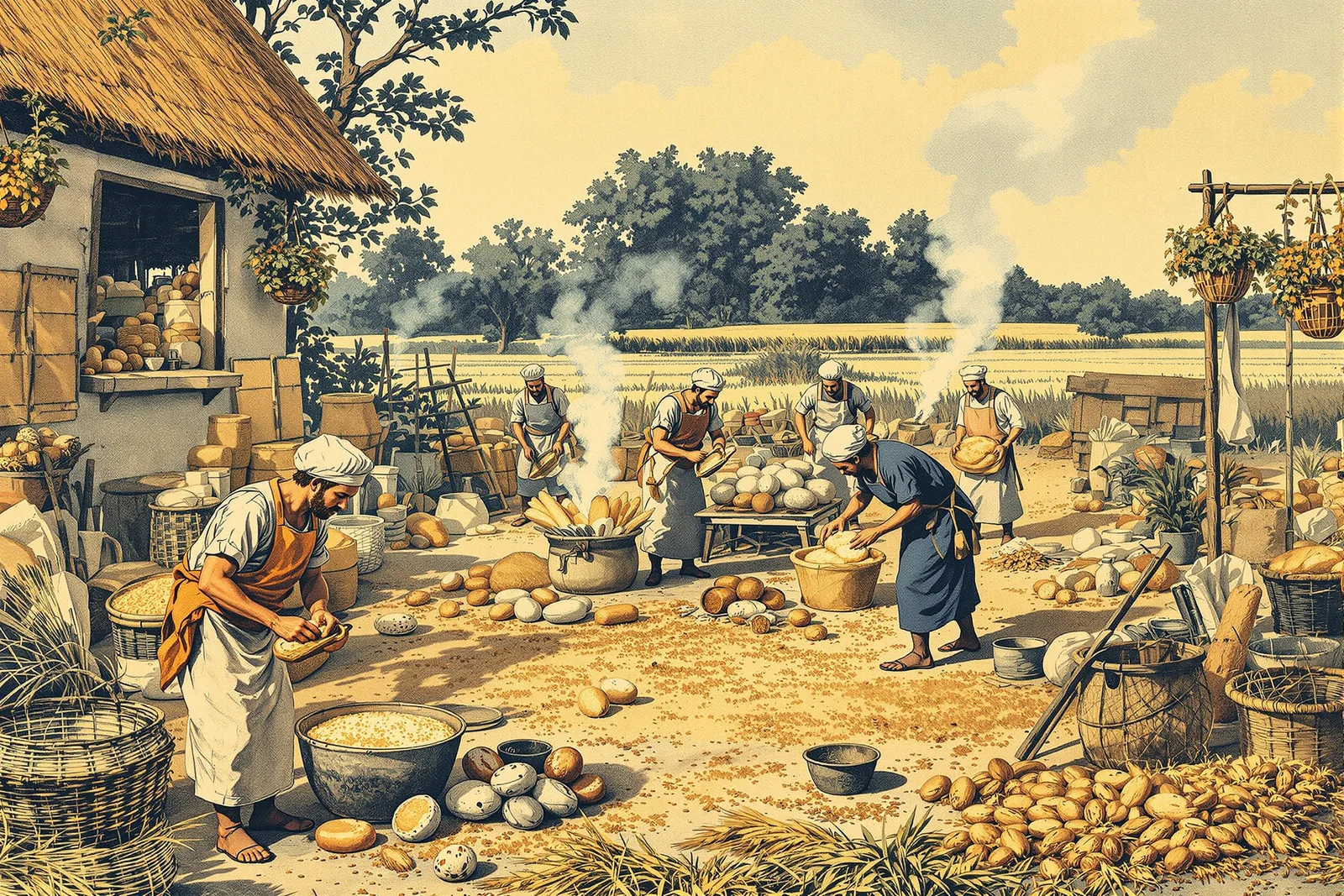
The Complete Bread Baking, Sourdough, and Grain Processing Guide
A Sovereignty Module of the Practitioner Community
Preamble
Bread is the foundation of human civilization. The ability to transform grain into bread is what allowed nomadic hunters to become settled communities. Bread provides calories, protein, B vitamins, and fiber. Sourdough fermentation makes nutrients more bioavailable and reduces phytic acid. A Practitioner who can bake bread from raw grain has mastered the most fundamental food transformation in human history. This campaign covers sourdough starter, basic bread, enriched breads, flatbreads, and grain milling.
Part I: Sourdough Foundation
Chapter 1: Creating a Sourdough Starter
| Day | Action | What to Expect |
|---|---|---|
| 1 | Mix 50g whole wheat or rye flour + 50g water (room temp). Cover loosely. | Nothing visible yet. |
| 2 | Discard half. Add 50g flour + 50g water. Stir. Cover. | May see a few bubbles. |
| 3 | Discard half. Add 50g flour + 50g water. Stir. Cover. | More bubbles. May smell sour or like acetone. Normal. |
| 4-6 | Same: discard half, feed 50g flour + 50g water daily. | Activity increases then may slow (bacterial shift). Keep going. |
| 7-14 | Continue daily feeds. Switch to unbleached all-purpose if desired. | Starter should double in 4-8 hours after feeding when mature. |
Mature starter test: Feed starter. Mark level on jar. If it doubles within 4-8 hours and smells pleasantly sour (like yogurt), it is ready to bake with.
Chapter 2: Maintaining Your Starter
| Method | Frequency | How |
|---|---|---|
| Room temperature | Daily | Discard half, feed 1:1:1 (starter:flour:water by weight) |
| Refrigerator | Weekly | Feed, let rise 1 hour at room temp, then refrigerate. Feed weekly. |
| Drying (backup) | Once | Spread thin on parchment, dry completely, break into flakes, store in jar. Rehydrate with water + flour when needed. |
| Freezing (backup) | Once | Freeze active starter in ice cube tray. Thaw and feed to reactivate. |
Chapter 3: Basic Sourdough Bread
| Step | Action | Time |
|---|---|---|
| 1 | Mix 100g active starter + 375g water + 500g bread flour + 10g salt | 10 min |
| 2 | Autolyse (rest after mixing, before kneading) | 30-60 min |
| 3 | Stretch and fold (4 sets, 30 min apart) | 2 hours |
| 4 | Bulk fermentation at room temperature (68-78°F) | 4-8 hours (until 50-75% volume increase) |
| 5 | Pre-shape: turn out on floured surface, shape into round, rest | 20-30 min |
| 6 | Final shape: shape into boule or batard, place in floured banneton | 5 min |
| 7 | Cold retard in refrigerator | 8-16 hours (develops flavor) |
| 8 | Preheat oven with Dutch oven inside to 500°F | 45-60 min |
| 9 | Score dough, place in Dutch oven, cover | Score with razor blade or sharp knife |
| 10 | Bake covered at 450°F | 20 min (steam trapped = crispy crust) |
| 11 | Remove lid, bake until deep golden brown | 20-25 min more |
| 12 | Cool on wire rack completely before cutting | 1-2 hours (internal cooking continues) |
Part II: Essential Breads
Chapter 4: Bread Varieties
| Bread | Key Difference from Basic | Difficulty | Time |
|---|---|---|---|
| Sourdough boule | Standard round loaf | Moderate | 24 hours (mostly waiting) |
| Sandwich bread | Add 30g butter + 30g honey. Bake in loaf pan. | Easy | 8-10 hours |
| Focaccia | Higher hydration (80%+), olive oil, dimpled, toppings | Easy | 6-8 hours |
| Pizza dough | Lower hydration (60-65%), olive oil, shaped thin | Easy | 6-24 hours |
| Flatbread/naan | No oven needed. Cook on hot skillet or griddle. | Easiest | 2-4 hours |
| Bagels | Shaped into rings, boiled in malt water, then baked | Moderate | 24 hours |
| Enriched bread (brioche) | Eggs, butter, sugar. Rich, soft crumb. | Moderate-hard | 12-24 hours |
| Whole wheat | Replace 30-50% bread flour with whole wheat. More water needed. | Moderate | 24 hours |
| Rye bread | Replace 20-40% with rye flour. Denser, stickier dough. | Moderate | 24 hours |
Chapter 5: Quick Breads (No Yeast/Starter Required)
| Bread | Leavening | Method | Time |
|---|---|---|---|
| Soda bread | Baking soda + buttermilk | Mix, shape, bake at 425°F for 40 min | 1 hour total |
| Cornbread | Baking powder | Mix wet and dry separately, combine, bake at 400°F for 20-25 min | 45 min total |
| Biscuits | Baking powder + cold butter | Cut butter into flour, pat out, cut, bake at 450°F for 12-15 min | 30 min total |
| Pancakes | Baking powder | Mix, cook on griddle at 375°F until bubbles form, flip | 20 min total |
| Tortillas (flour) | None (or small amount of baking powder) | Mix, rest, roll thin, cook on dry skillet 30 sec per side | 45 min total |
| Tortillas (corn) | None | Masa harina + water, press with tortilla press, cook on dry skillet | 30 min total |
Chapter 6: Grain Milling
| Mill Type | Power | Cost | Output | Best For |
|---|---|---|---|---|
| Hand grain mill (burr) | Manual | $50-200 | 1-2 cups/min | Off-grid, small batches |
| Electric grain mill | Electric | $200-500 | 5-10 cups/min | Regular baking, larger batches |
| Impact mill (Vitamix/Blendtec) | Electric | $300-500 (multi-use) | 2-4 cups/batch | Multi-purpose, acceptable flour |
| Stone mill | Manual or electric | $200-1,000 | Varies | Traditional, cool grinding preserves nutrients |
Grain storage: Whole grain berries store 25+ years in sealed containers with oxygen absorbers. Flour goes rancid in weeks to months. Store grain whole, mill as needed.
Chapter 7: The Practitioner Bread Reference Card
STARTER: Feed 1:1:1 by weight. Doubles in 4-8 hours = ready to bake. Smells like yogurt = healthy. Smells like acetone = hungry (feed more often).
HYDRATION: Wetter dough = more open crumb, crispier crust. Drier dough = tighter crumb, easier to handle. Start at 70% hydration, increase as you gain skill.
SALT: 2% of flour weight. Salt strengthens gluten and controls fermentation. Never skip salt.
TEMPERATURE: Warmer = faster fermentation. Cooler = slower, more flavor development. Cold retard in fridge overnight = best flavor.
STEAM: First 20 minutes of baking need steam for crust development. Dutch oven traps steam perfectly. Or spray water in oven and use a baking stone.
DONENESS: Internal temperature 200-210°F. Bottom sounds hollow when tapped. Crust is deep golden brown.
COOL COMPLETELY: Cutting hot bread releases steam and makes crumb gummy. Wait at least 1 hour. Patience.
REMEMBER: Bread is the most fundamental human food technology. Grain + water + time + heat = life. A Practitioner who can bake bread from whole grain has mastered the skill that built civilization. Sourdough requires no commercial yeast, no electricity, and no special ingredients. Flour, water, salt, and time. The same recipe has fed humanity for 6,000 years.
Council Approval
All 12 voices unanimously approve. Complete bread and grain sovereignty.
Council Result: 12/12 APPROVED. Campaign 63 is complete.