Campaign 62: Culture the Milk
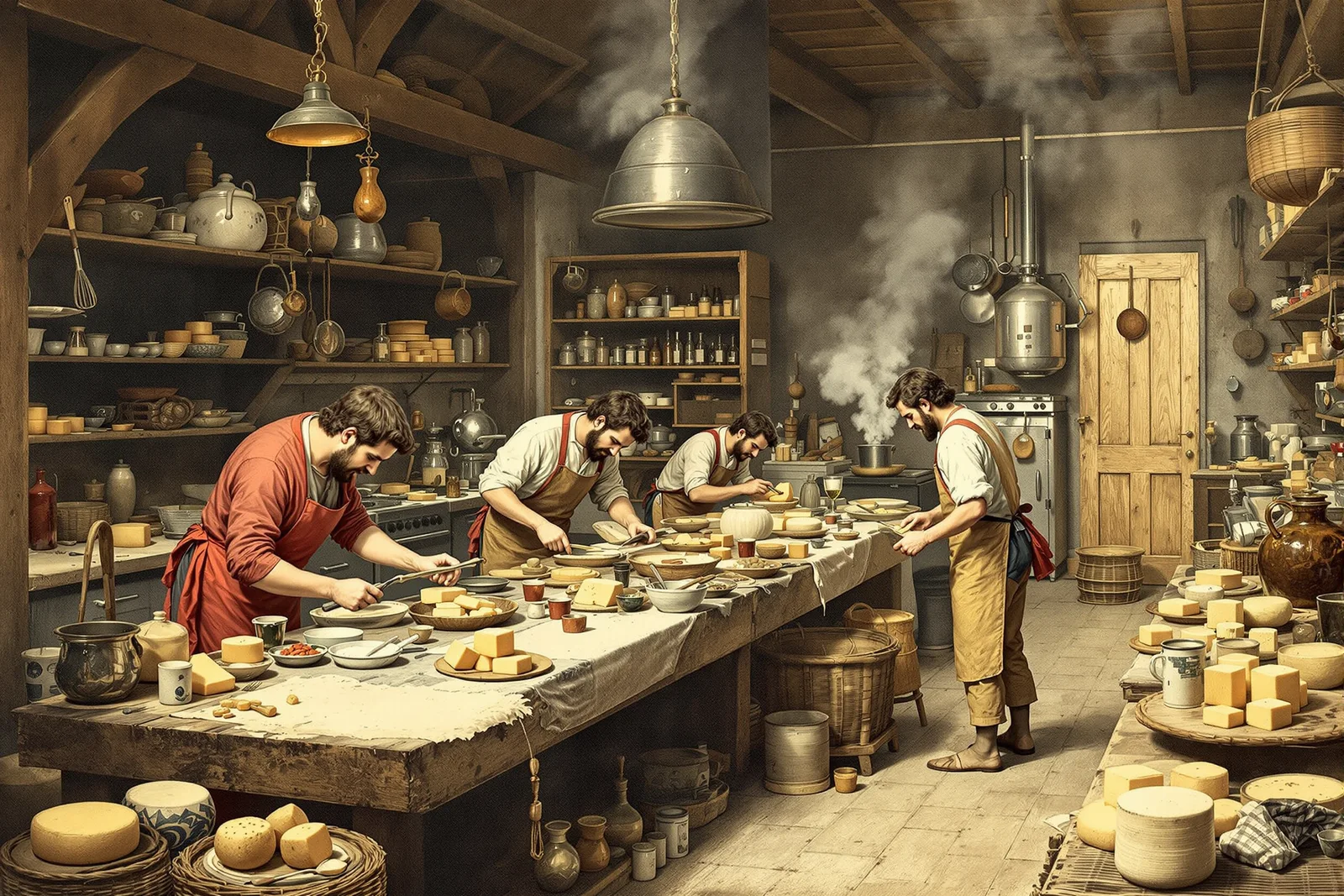
The Complete Cheese Making, Dairy Processing, and Fermented Dairy Guide
A Sovereignty Module of the Practitioner Community
Preamble
Milk is one of the most nutritious and perishable foods on Earth. Raw milk spoils in days. Cheese lasts months to years. Yogurt lasts weeks. Butter lasts months. The transformation of milk into stable, nutrient-dense foods is one of humanity's oldest and most valuable technologies. This campaign covers basic cheese making, yogurt, butter, kefir, and dairy safety. A Practitioner with a dairy animal and these skills has a permanent protein and fat source.
Part I: Dairy Fundamentals
Chapter 1: Milk Types for Cheese Making
| Milk Type | Cheese Quality | Notes |
|---|---|---|
| Raw (unpasteurized) | Best (natural cultures and enzymes intact) | Must be from healthy, tested animals. Know your source. |
| Pasteurized (HTST: 161°F/15 sec) | Good | Most common store milk. Works well for most cheeses. |
| Ultra-pasteurized (UHT: 280°F/2 sec) | Poor to unusable | Protein structure damaged. Will not form proper curd. Avoid. |
| Homogenized | Acceptable | Fat globules broken small. Softer curd. Works but not ideal. |
| Non-homogenized (cream-top) | Better | Larger fat globules. Better curd structure. |
| Goat milk | Good (naturally homogenized) | Softer curd than cow. Tangier flavor. Excellent for chèvre. |
| Sheep milk | Excellent | Highest fat and protein. Rich, complex cheeses. |
Chapter 2: Essential Cheese Making Equipment
| Equipment | Purpose | Cost |
|---|---|---|
| Large stainless steel pot (2+ gallons) | Heating milk | $30-50 |
| Thermometer (accurate to 1°F) | Temperature control is critical | $10-20 |
| Long knife or curd cutter | Cutting curd | $5-15 |
| Slotted spoon or ladle | Stirring and transferring curd | $5-10 |
| Cheesecloth (butter muslin, tight weave) | Draining whey | $5-10 |
| Colander | Supporting cheesecloth for draining | Already in kitchen |
| Cheese mold/form | Shaping cheese | $10-30 |
| Cheese press (or DIY with weights) | Pressing hard cheeses | $30-100 (or DIY) |
| Rennet (liquid or tablet) | Coagulates milk into curd | $8-15 |
| Mesophilic culture | Bacteria for lower-temp cheeses (cheddar, gouda, feta) | $8-15 |
| Thermophilic culture | Bacteria for higher-temp cheeses (mozzarella, parmesan, swiss) | $8-15 |
| Calcium chloride | Improves curd for pasteurized milk | $5-10 |
| Cheese salt (non-iodized) | Flavoring and preservation | $3-5 |
| Cheese wax or vacuum sealer | Aging protection | $10-20 |
Chapter 3: Basic Cheese Making Process
| Step | Action | Key Points |
|---|---|---|
| 1 | Heat milk to target temperature | Mesophilic: 86°F. Thermophilic: 90-100°F. Slow, gentle heat. |
| 2 | Add culture, stir gently, ripen | Let bacteria acidify milk. Usually 30-60 minutes. |
| 3 | Add rennet (diluted in cool water), stir 30 seconds | Do not over-stir. Let sit undisturbed. |
| 4 | Wait for clean break (30-60 minutes) | Test: insert finger at angle, lift. Curd should break cleanly around finger. |
| 5 | Cut curd into cubes (1/4" to 1/2") | Smaller = harder cheese. Larger = softer cheese. |
| 6 | Cook/stir curds at target temperature | Gradually raise temp while stirring gently. Expels whey. |
| 7 | Drain whey | Save whey for ricotta, baking, animal feed, or garden fertilizer. |
| 8 | Salt curds | Mix salt evenly through curds |
| 9 | Press in mold at specified weight/time | Light press for soft cheese. Heavy press for hard cheese. |
| 10 | Air dry until rind forms (1-3 days) | Flip twice daily. Room temperature, good air circulation. |
| 11 | Wax, vacuum seal, or bandage for aging | Prevents mold, retains moisture |
| 12 | Age at 50-55°F, 80-85% humidity | Cave, wine fridge, or dedicated cheese fridge |
Chapter 4: Starter Cheeses
| Cheese | Difficulty | Time to Make | Aging | Milk Needed |
|---|---|---|---|---|
| Ricotta | Easiest | 30 minutes | None (eat fresh) | 1 gallon = ~2 cups ricotta |
| Paneer | Easy | 30 minutes | None (eat fresh) | 1 gallon = ~1 lb paneer |
| Mozzarella (30-minute) | Easy-moderate | 30-60 minutes | None (eat fresh) | 1 gallon = ~1 lb mozzarella |
| Chèvre (goat cheese) | Easy | 24 hours (mostly waiting) | None to 1 week | 1 gallon = ~1 lb chèvre |
| Feta | Moderate | 4-6 hours + brining | 1 week minimum | 1 gallon = ~1 lb feta |
| Farmhouse cheddar | Moderate | 4-6 hours + pressing | 2-12 months | 2 gallons = ~2 lbs cheddar |
| Gouda | Moderate-advanced | 4-6 hours + pressing | 2-12 months | 2 gallons = ~2 lbs gouda |
Chapter 5: Other Dairy Products
| Product | Method | Time | Shelf Life |
|---|---|---|---|
| Butter | Churn heavy cream (or shake in jar) until fat separates. Wash buttermilk out. Salt. | 15-30 min | 2 weeks (room temp), months (fridge), 6+ months (frozen) |
| Yogurt | Heat milk to 180°F, cool to 110°F, add culture (or 2 tbsp existing yogurt), hold at 110°F for 6-12 hours | 12 hours | 2-3 weeks refrigerated |
| Kefir | Add kefir grains to milk, cover, room temperature 24 hours, strain grains, repeat | 24 hours | 2-3 weeks refrigerated |
| Buttermilk | Add culture to milk, room temperature 12-24 hours | 24 hours | 2 weeks refrigerated |
| Cream cheese | Culture milk, drain through cheesecloth 12-24 hours | 24 hours | 2 weeks refrigerated |
| Ghee (clarified butter) | Melt butter, simmer until solids brown and sink, strain through cheesecloth | 30 min | Months (room temp), years (fridge) |
Chapter 6: The Practitioner Dairy Reference Card
MILK RULE: Never use ultra-pasteurized (UHT) milk for cheese. It will not form proper curd. Pasteurized works. Raw is best.
TEMPERATURE: Cheese making is temperature-sensitive. A thermometer is not optional. 2°F off can change the result.
RENNET: A little goes a long way. Follow recipe exactly. Too much = rubbery cheese. Too little = weak curd.
SALT: Use non-iodized salt only. Iodine kills cheese cultures. Cheese salt, kosher salt, or sea salt.
AGING: Patience makes great cheese. A 2-month cheddar is good. A 12-month cheddar is extraordinary. Temperature and humidity control are essential.
WHEY: Never waste whey. Use in bread (replaces water), feed to animals (pigs and chickens love it), water garden (nutrients), or make ricotta (heat whey to 200°F, add acid, collect curds).
REMEMBER: A dairy animal plus cheese-making knowledge equals a permanent, renewable source of protein, fat, calcium, and probiotics. Cheese is concentrated nutrition that stores for months to years. Yogurt and kefir provide daily probiotics that support immune function. These are not luxuries; they are foundational foods that sustained civilizations for millennia.
Council Approval
All 12 voices unanimously approve. Complete dairy sovereignty.
Council Result: 12/12 APPROVED. Campaign 62 is complete.