Sovereignty Module: Brew the Bounty
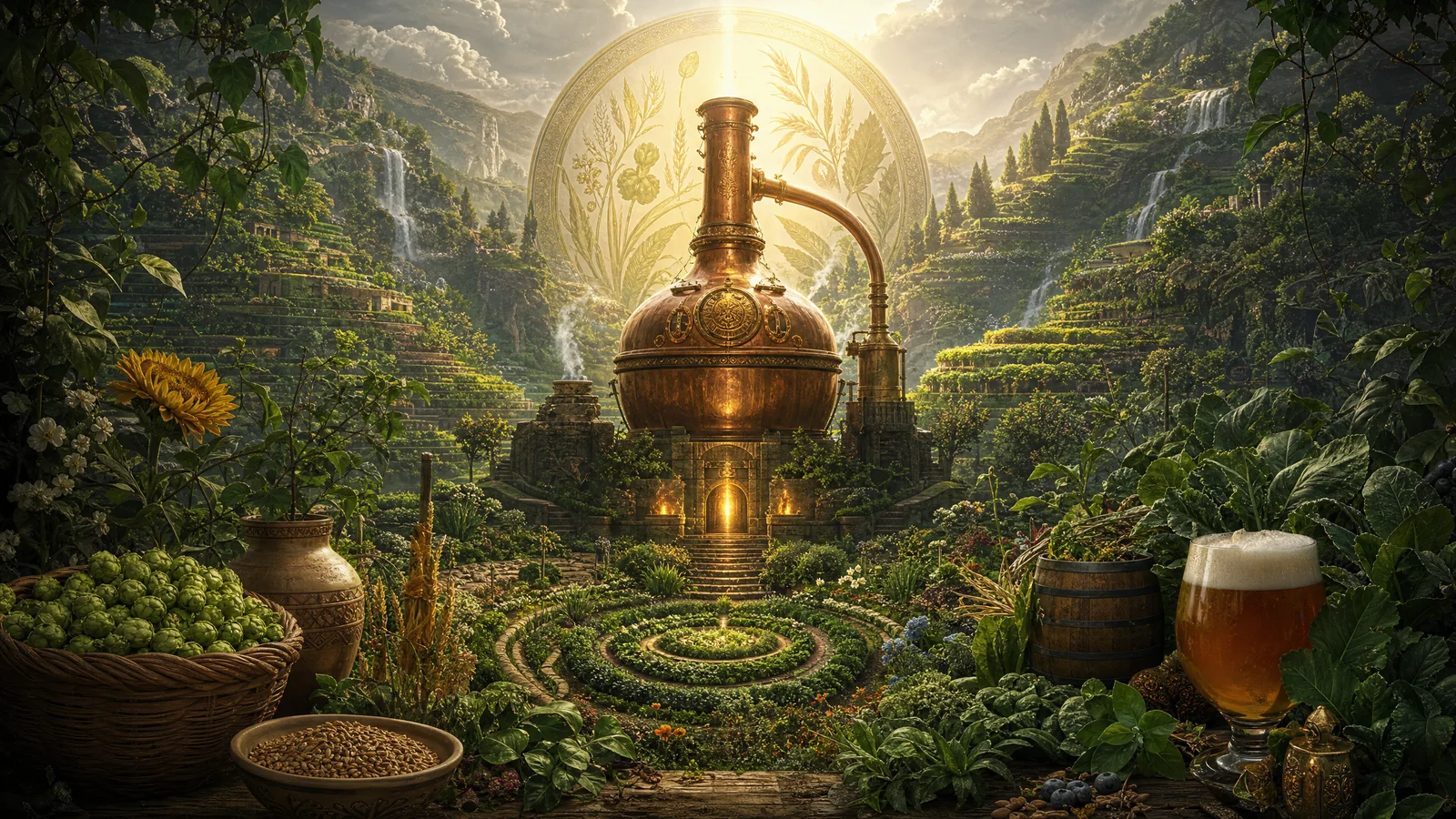
Complete Brewing and Fermentation: From Grain to Glass
Fermentation preserves food, purifies water, creates medicine, and builds community. This campaign covers beer, wine, mead, cider, vinegar, and fermented foods — the biochemistry of yeast harnessed for civilization.
Chapter 1: Fermentation Science
| Process | Organism | Input | Output | Temperature | Time |
|---|---|---|---|---|---|
| Alcoholic fermentation | Yeast (Saccharomyces) | Sugar + water | Alcohol + CO₂ | 60-75°F (15-24°C) | 1-4 weeks |
| Lactic fermentation | Lactobacillus | Vegetables + salt | Lactic acid (preserved food) | 60-75°F | 3-30 days |
| Acetic fermentation | Acetobacter | Alcohol + air | Vinegar (acetic acid) | 70-85°F (21-29°C) | 2-8 weeks |
| Malolactic | Oenococcus | Malic acid (wine) | Lactic acid (smoother wine) | 65-75°F | 2-4 weeks |
Key principles: 1) Yeast eats sugar, produces alcohol and CO₂. 2) Sanitation prevents unwanted organisms. 3) Temperature controls speed and flavor. 4) Airlock allows CO₂ out, keeps oxygen/bacteria out. 5) Gravity (specific gravity) measures sugar content and fermentation progress.
Chapter 2: Beer Brewing
| Style | Grain | Hops | Yeast | ABV | Fermentation | Difficulty |
|---|---|---|---|---|---|---|
| Ale (basic) | Barley malt | Moderate | Ale (top, warm) | 4-6% | 1-2 weeks | Low |
| Wheat beer | Wheat + barley | Low | Ale (wheat strain) | 4-5% | 1-2 weeks | Low |
| Porter/stout | Roasted barley | Moderate-high | Ale | 5-7% | 2-3 weeks | Moderate |
| Lager | Pale barley malt | Moderate | Lager (bottom, cold) | 4-5% | 4-8 weeks | Moderate-high |
| Gruit ale | Barley malt | None (herbs instead) | Ale | 4-6% | 1-2 weeks | Low |
| Small beer | Barley (second runnings) | Low | Ale | 1-3% | 3-7 days | Very low |
Basic ale process: 1) Malt grain (soak barley 2 days, sprout 5 days, kiln dry). 2) Crush malt coarsely. 3) Mash: soak crushed malt in 150-155°F water for 60 min (converts starch to sugar). 4) Sparge: rinse grain bed with hot water to extract sugars. 5) Boil wort 60 min (add hops at start for bitterness, end for aroma). 6) Cool rapidly to 65-70°F. 7) Add yeast (pitch). 8) Ferment 1-2 weeks in sealed vessel with airlock. 9) Bottle with small sugar addition (carbonation) or serve flat. 10) Age 2+ weeks before drinking.
Chapter 3: Wine and Mead
| Beverage | Base | Sugar Source | ABV | Aging | Difficulty | Shelf Life |
|---|---|---|---|---|---|---|
| Grape wine | Grapes | Natural grape sugar | 10-14% | 6-24 months | Moderate | Years-decades |
| Country wine | Any fruit | Fruit + added sugar | 10-14% | 3-12 months | Low-moderate | 1-5 years |
| Mead | Water | Honey (3-4 lbs/gal) | 10-18% | 6-24 months | Low-moderate | Years-decades |
| Cider | Apples | Natural apple sugar | 4-8% | 1-6 months | Low | 1-2 years |
| Perry | Pears | Natural pear sugar | 4-7% | 1-6 months | Low | 1 year |
| Cyser | Apples + honey | Apple + honey | 8-14% | 6-12 months | Moderate | Years |
Mead (simplest alcohol): 1) Heat 1 gallon water to warm (not boiling). 2) Dissolve 3-3.5 lbs honey. 3) Cool to 70°F. 4) Add yeast (bread yeast works, wine yeast better). 5) Ferment in jug with airlock 4-6 weeks. 6) Rack (siphon off sediment) to clean vessel. 7) Age 3-6 months minimum (improves dramatically with time). 8) Bottle when clear. No hops, no grain, no special equipment needed.
Chapter 4: Vinegar Production
| Base | Starting Material | Method | Time | Strength | Best Use |
|---|---|---|---|---|---|
| Apple cider vinegar | Hard cider or apple scraps | Open fermentation | 4-8 weeks | 4-6% acetic | Cooking, preserving, cleaning |
| Wine vinegar | Wine (any quality) | Mother culture | 4-8 weeks | 5-7% acetic | Cooking, dressing |
| Malt vinegar | Beer/ale | Open fermentation | 6-12 weeks | 4-6% acetic | Pickling, condiment |
| White vinegar | Sugar wash (distilled) | Mother culture | 4-8 weeks | 5-8% acetic | Cleaning, preserving |
Vinegar method: 1) Start with any alcohol (wine, cider, beer) at 5-10% ABV. 2) Add vinegar mother (gelatinous culture) or unpasteurized vinegar (1/4 volume). 3) Cover with cloth (needs air, not sealed). 4) Keep warm (70-85°F). 5) Wait 4-8 weeks (taste periodically). 6) When sufficiently sour, bottle and cap tightly. 7) Mother can be divided and shared indefinitely.
Chapter 5: Fermented Foods
| Food | Base Ingredient | Salt % | Temperature | Time | Shelf Life | Nutrition Benefit |
|---|---|---|---|---|---|---|
| Sauerkraut | Cabbage (shredded) | 2-3% by weight | 60-75°F | 2-6 weeks | 6-12 months | Vitamin C, probiotics |
| Kimchi | Cabbage + radish + chili | 2-3% | 60-70°F | 1-4 weeks | 3-6 months | Vitamins, probiotics |
| Pickles (lacto) | Cucumbers | 3-5% brine | 65-75°F | 3-7 days | 3-6 months | Probiotics, minerals |
| Sourdough starter | Flour + water | None | 70-80°F | 5-10 days (initial) | Indefinite (fed) | B vitamins, digestibility |
| Yogurt | Milk | None | 105-115°F | 6-12 hours | 1-2 weeks | Protein, calcium, probiotics |
| Kombucha | Sweet tea | None | 70-85°F | 7-14 days | 1-3 months | B vitamins, probiotics |
Sauerkraut (simplest preserved vegetable): 1) Shred cabbage finely. 2) Weigh cabbage, calculate 2% salt (20g salt per 1kg cabbage). 3) Mix salt into cabbage, massage 5-10 minutes until juicy. 4) Pack tightly into jar/crock (liquid should cover cabbage). 5) Weight down to keep submerged (plate + stone). 6) Cover with cloth. 7) Ferment at room temperature 2-6 weeks. 8) Taste weekly — done when pleasantly sour. 9) Transfer to cold storage (slows fermentation).
Reference Card
- Sanitation is everything (one dirty spoon ruins a batch — clean all equipment with boiling water). 2. Temperature controls flavor (cool = slow + clean; warm = fast + funky). 3. Airlock protects (CO₂ out, nothing in — prevents vinegar and mold). 4. Sugar feeds yeast (more sugar = more alcohol, up to yeast's tolerance ~14-18%). 5. Patience rewards (most fermented products improve dramatically with aging). 6. Salt preserves vegetables (2-3% salt + anaerobic = safe lactic fermentation). 7. Wild yeast is everywhere (fruit skins, grain, air — civilization fermented for millennia without packets). 8. Small beer is safe water (low-alcohol brew kills pathogens — historical daily drink for all ages).