Sovereignty Module: Feed the People
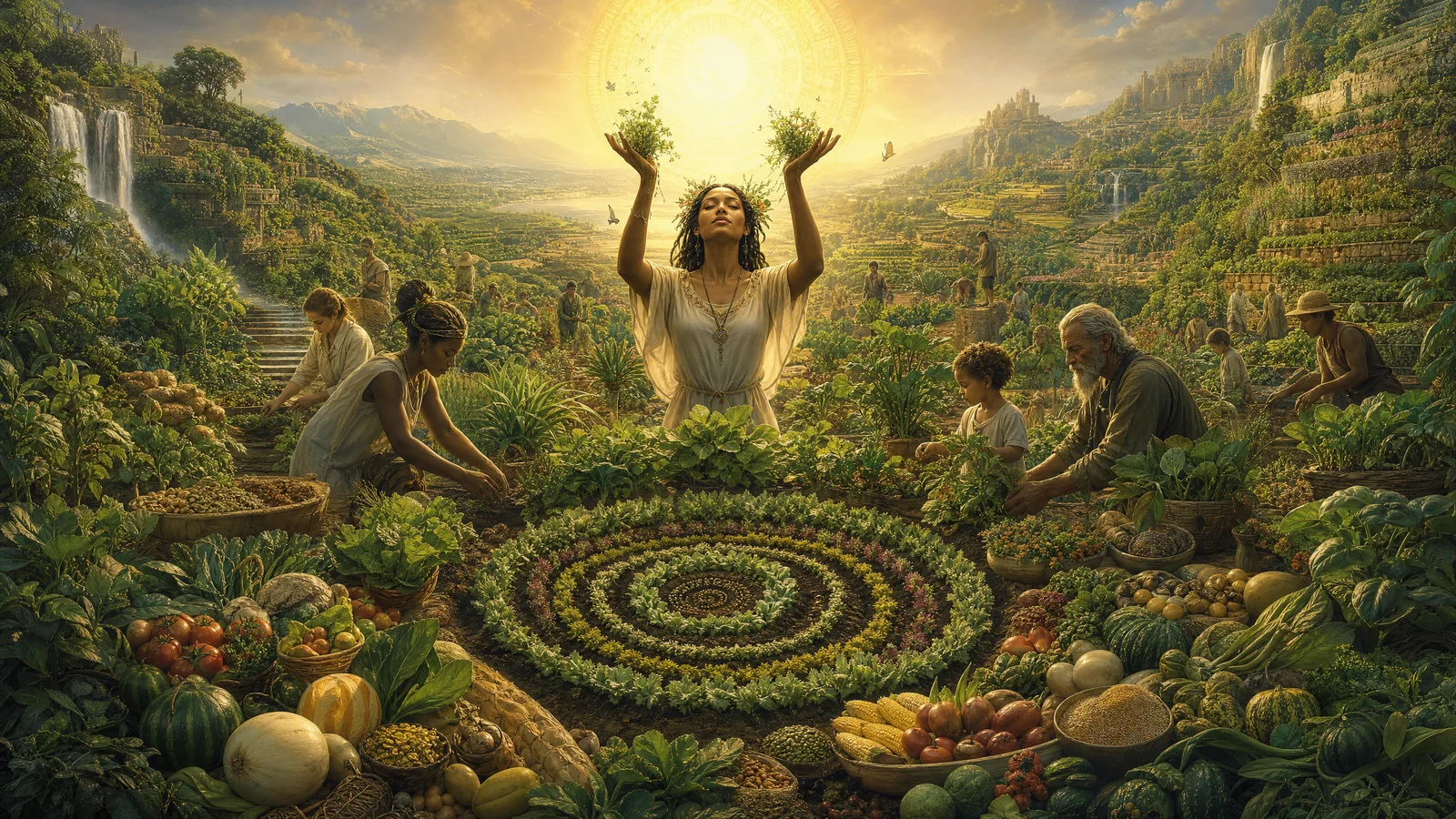
Feed the People
Complete Food Production: From Seed to Table
Complete Food Production: From Seed to Table
Food security is the foundation of civilization. This campaign covers soil preparation, planting, growing, harvesting, processing, and storage for year-round sustenance.
Chapter 1: Soil and Land Preparation
| Soil Type | Characteristics | Improvement | Best Crops |
|---|---|---|---|
| Clay | Heavy, holds water, slow to warm | Add sand, compost, gypsum | Brassicas, beans, fruit trees |
| Sandy | Light, drains fast, warms quickly | Add compost, clay, mulch | Root vegetables, herbs, melons |
| Loam | Balanced, ideal | Maintain with compost | Everything |
| Silt | Fine, fertile, compacts easily | Add compost, avoid compaction | Most vegetables, grains |
| Peat | Acidic, holds water | Add lime, drain | Blueberries, potatoes |
Soil building: 1) Clear land (remove trees, stumps, rocks). 2) Break sod (plow, mattock, or burn). 3) Add organic matter (compost, manure, leaf mold). 4) Adjust pH (lime for acid soil, sulfur for alkaline). 5) Build raised beds if drainage is poor. 6) Mulch to suppress weeds and retain moisture. 7) Rotate crops annually (prevents disease, balances nutrients).
Chapter 2: Essential Crops
| Crop | Calories/Acre | Growing Season | Storage Life | Difficulty | Climate |
|---|---|---|---|---|---|
| Potato | 15-18 million | 90-120 days | 4-6 months (cool/dark) | Low | Cool-temperate |
| Wheat | 6-8 million | 120-150 days | Years (dry) | Moderate | Temperate |
| Corn (maize) | 12-15 million | 80-120 days | Years (dry) | Low | Warm-temperate |
| Rice | 10-12 million | 120-180 days | Years (dry) | High (water management) | Warm, wet |
| Beans (dry) | 5-6 million | 80-100 days | Years (dry) | Low | Any temperate |
| Squash | 4-5 million | 90-120 days | 3-6 months (cool) | Low | Warm-temperate |
| Turnip/rutabaga | 8-10 million | 60-90 days | 4-6 months (cool) | Very low | Cool-temperate |
| Cabbage | 4-5 million | 70-100 days | 3-4 months (cool) or fermented | Low | Cool-temperate |
| Oats | 5-7 million | 90-120 days | Years (dry) | Low | Cool-temperate |
| Sweet potato | 14-16 million | 100-150 days | 4-6 months (warm/dry) | Moderate | Warm |
Chapter 3: Animal Protein
| Animal | Feed Conversion | Space Needed | Time to Harvest | Products | Difficulty |
|---|---|---|---|---|---|
| Chickens (meat) | 2:1 (feed:meat) | 2-4 sq ft each | 8-12 weeks | Meat, eggs, feathers | Very low |
| Chickens (eggs) | 4 lbs feed/dozen eggs | 4 sq ft each | 5-6 months to laying | Eggs (250-300/year) | Very low |
| Rabbits | 3:1 | 6-8 sq ft each | 8-12 weeks | Meat, fur, manure | Low |
| Goats (dairy) | Pasture + supplement | 200 sq ft + pasture | 2 years to milking | Milk (1-2 gal/day), cheese | Moderate |
| Pigs | 3.5:1 | 80 sq ft each | 6-8 months | Meat, lard, leather | Moderate |
| Fish (pond) | 1.5:1 | 1 acre pond = 500+ lbs/year | 6-12 months | Meat, oil | Moderate |
| Cattle (dairy) | Pasture + hay | 2-5 acres each | 2 years to milking | Milk (3-8 gal/day), butter, cheese | High |
| Sheep | Pasture | 0.5-1 acre each | 6-12 months (meat) | Meat, wool, milk, lanolin | Moderate |
Chapter 4: Processing and Preservation
| Method | Principle | Shelf Life | Best For | Equipment |
|---|---|---|---|---|
| Drying | Remove moisture | 1-2 years | Meat, fruit, herbs, grains | Racks, sun or smoke |
| Smoking | Antimicrobial + drying | 2-6 months | Meat, fish | Smokehouse |
| Salting | Osmotic dehydration | 6-12 months | Meat, fish, vegetables | Salt, containers |
| Fermentation | Beneficial bacteria preserve | 6-12 months | Vegetables, dairy, grain | Crocks, salt, time |
| Root cellar | Cool, dark, humid | 3-6 months | Root vegetables, apples | Underground room |
| Canning (hot pack) | Sterilization + seal | 1-5 years | Vegetables, fruit, meat | Jars, lids, boiling water |
| Pickling | Acid preservation | 1-2 years | Vegetables, eggs, meat | Vinegar, salt, containers |
| Sugaring/honey | Osmotic preservation | 1+ years | Fruit, meat (limited) | Sugar or honey |
| Freezing (natural) | Cold stops bacteria | Winter season | Meat, prepared foods | Cold climate, ice house |
| Oil/fat immersion | Oxygen exclusion | 6-12 months | Meat, cheese, herbs | Oil or rendered fat |
Chapter 5: Year-Round Food Calendar
| Month | Plant | Harvest | Preserve | Maintain |
|---|---|---|---|---|
| Early Spring | Peas, lettuce, onions, potatoes | Stored food, sprouts | — | Prepare beds, start seeds |
| Late Spring | Beans, corn, squash, tomatoes | Greens, radishes | — | Weed, thin, transplant |
| Early Summer | Succession plant beans, greens | Peas, early potatoes, berries | Dry herbs, make jam | Water, mulch, pest control |
| Late Summer | Fall crops (turnips, kale) | Tomatoes, beans, corn, fruit | Can, dry, pickle | Harvest daily |
| Early Fall | Garlic, cover crops | Potatoes, squash, apples, grains | Root cellar, ferment, dry | Prepare storage |
| Late Fall | — | Last root crops, nuts | Final preservation push | Clean up, compost |
| Winter | Plan, order seeds | Stored food, sprouts, greenhouse | — | Maintain animals, repair tools |
Reference Card
- Diversity is security (never depend on one crop — blight can destroy it). 2. Three Sisters (corn + beans + squash = complete nutrition, mutual support). 3. Rotate crops (same crop same spot = disease and depletion). 4. Preserve the surplus (summer abundance must feed winter scarcity). 5. Animals convert waste to food (scraps → eggs, manure → soil). 6. Seed saving is freedom (save best seeds each year, never depend on outside supply). 7. Compost everything organic (returns nutrients to soil, builds fertility). 8. Water is life (irrigation planning before planting, mulch to conserve).
TransmissionCOMPLETE — unaltered & unabridged
Words1,049 — every one of them
SHA-256 of source text1f3dda289aaaf333d4e895b766b922dcde1810c87703937a6d527d79dc515195
Canonical textdownload campaign-food-master.md — byte-identical to what this page renders