Sovereignty Module: Store the Harvest
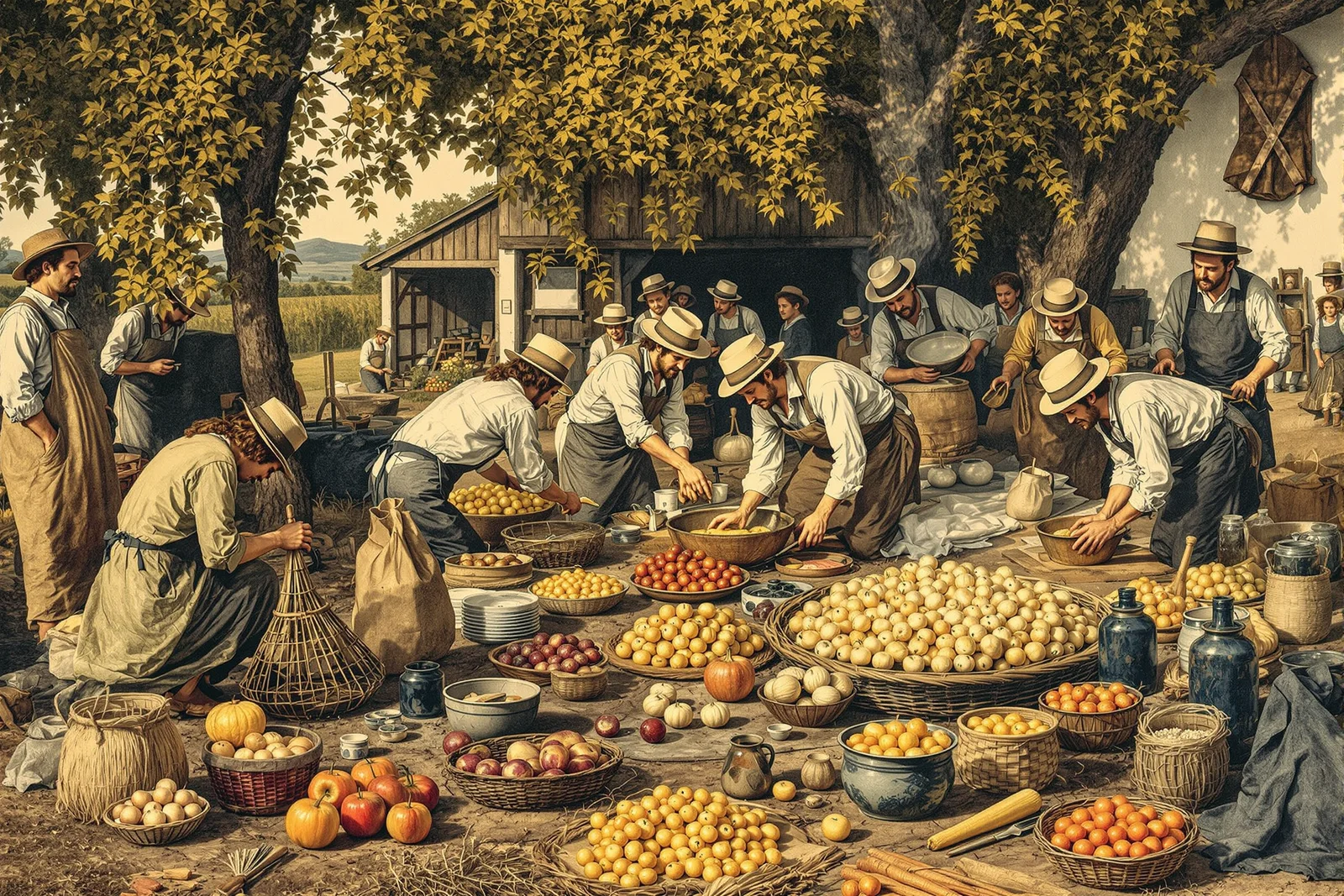
Complete Food Preservation: From Fresh to Year-Round Supply
Without preservation, food rots within days. This campaign covers every method of extending food life from hours to decades.
Chapter 1: Drying and Dehydration
| Food | Method | Temperature | Time | Storage Life | Rehydration |
|---|---|---|---|---|---|
| Meat (jerky) | Thin strips, air/smoke | 130-160°F | 4-12 hours | 1-2 years | Soak 30 min or eat dry |
| Fruit (leather/chips) | Thin slices or puree | 125-135°F | 6-12 hours | 1 year | Eat dry or soak |
| Vegetables | Blanch, slice thin | 125-135°F | 6-12 hours | 1 year | Soak 20-30 min, cook |
| Herbs | Hang bundles or spread | Air dry (no heat) | 1-2 weeks | 1-3 years | Use directly |
| Fish | Split, salt, air dry | Air + smoke | 1-7 days | 6-12 months | Soak overnight |
| Grain | Harvest dry, thresh | Sun dry to <14% moisture | Days | Years | Cook directly |
| Beans/peas | Dry on vine or spread | Sun/air dry | 1-2 weeks | Years | Soak overnight, cook |
Solar dehydrator: Box with black interior, glass/clear top, screened vents (bottom intake, top exhaust). Sun heats air, hot air rises through food on racks, moisture exits top. Temperature: 120-160°F depending on sun and design. Build 3-4 ft wide, 2 ft deep, angled toward sun.
Chapter 2: Smoking
| Type | Temperature | Time | Flavor | Preservation | Best For |
|---|---|---|---|---|---|
| Cold smoke | 60-90°F | 12-48 hours | Strong | Moderate (needs salt too) | Fish, cheese, sausage |
| Hot smoke | 120-180°F | 4-12 hours | Moderate | Good | Fish, meat, poultry |
| Smoke + dry | 90-130°F | 24-72 hours | Strong | Excellent | Jerky, fish, sausage |
Best smoking woods: Hickory (strong, bacon), apple (mild, sweet), oak (medium, versatile), cherry (mild, fruity), maple (mild, sweet). NEVER use: pine, cedar, spruce (toxic resins), treated wood, plywood.
Smokehouse construction: 1) Fire pit (separate from smoking chamber — 6-10 ft away). 2) Pipe or trench connecting fire to chamber (cools smoke). 3) Smoking chamber (wood or stone, 4×4×6 ft minimum). 4) Racks or hooks inside. 5) Vent at top (adjustable). 6) Door for access. Cold smoke: long pipe cools smoke below 90°F. Hot smoke: shorter connection or fire directly below.
Chapter 3: Salting, Brining, and Curing
| Method | Salt Ratio | Time | Storage Life | Best For |
|---|---|---|---|---|
| Dry salt (heavy) | 1 lb salt per 4 lbs meat | 1-4 weeks | 6-12 months | Pork, fish, beef |
| Brine (wet cure) | 1 cup salt per gallon water | 1-4 weeks | 3-6 months | Ham, corned beef, pickles |
| Sugar cure | Salt + sugar + nitrate | 2-4 weeks | 6-12 months | Bacon, ham |
| Salt + smoke | Salt 1 week, then smoke | 1-2 weeks + smoking | 1-2 years | Fish, sausage |
| Corning | Heavy brine + spices | 5-7 days | 3-4 months (refrigerated) | Beef, pork |
Salt preserves by: 1) Drawing moisture out of food (osmosis). 2) Drawing moisture out of bacteria (kills them). 3) Creating environment hostile to spoilage organisms. Minimum 3.5% salt concentration inhibits most bacteria. 10%+ kills nearly all. Use non-iodized salt (iodine can discolor food).
Chapter 4: Fermentation
| Product | Ingredients | Time | Storage Life | Difficulty |
|---|---|---|---|---|
| Sauerkraut | Cabbage + 2% salt | 2-6 weeks | 1+ year (in brine) | Very low |
| Kimchi | Vegetables + salt + spices | 1-4 weeks | 6+ months | Low |
| Pickles (lacto) | Cucumbers + 3-5% brine | 1-4 weeks | 1 year | Very low |
| Vinegar | Alcohol + time + air | 2-6 months | Indefinite | Low |
| Miso | Soybeans + koji + salt | 6-24 months | Years | Moderate |
| Yogurt | Milk + culture | 8-12 hours | 2 weeks | Very low |
| Cheese (hard) | Milk + culture + rennet | Months-years aging | Months-years | Moderate-high |
| Sourdough starter | Flour + water | 5-7 days to establish | Indefinite (fed) | Very low |
Lacto-fermentation principle: Salt suppresses harmful bacteria while allowing Lactobacillus (naturally present) to thrive. Lactobacillus produces lactic acid, which preserves food and creates tangy flavor. No vinegar needed — the bacteria make their own acid. Submerge food below brine (anaerobic). Temperature: 65-75°F ideal.
Chapter 5: Root Cellaring and Cold Storage
| Food | Temperature | Humidity | Storage Life | Conditions |
|---|---|---|---|---|
| Potatoes | 35-40°F | 90-95% | 4-6 months | Dark, humid, cold |
| Carrots/beets | 32-40°F | 90-95% | 4-6 months | In sand, dark |
| Onions/garlic | 32-40°F | 60-70% | 6-12 months | Dry, cold, ventilated |
| Winter squash | 50-55°F | 50-70% | 3-6 months | Cool, dry |
| Apples | 32-40°F | 80-90% | 2-6 months | Cold, separate (ethylene) |
| Cabbage | 32-40°F | 90-95% | 3-4 months | Cold, humid |
| Canned goods | 50-70°F | Low | 1-5 years | Cool, dark, dry |
| Dried foods | 50-70°F | Low (<15%) | 1-5 years | Cool, dark, dry, sealed |
Root cellar design: Underground or bermed (earth insulates). North-facing hillside ideal. Two vents (low intake, high exhaust) for temperature/humidity control. Dirt floor (maintains humidity). Shelving for organization. Separate strong-smelling items (onions away from apples). Monitor temperature and humidity.
Reference Card
- Dry = longest storage (years for grain, beans, jerky). 2. Salt + smoke = traditional combination (months-years). 3. Fermentation = living preservation (adds nutrition, probiotics). 4. Cold storage = simplest (root cellar, no processing needed). 5. Combine methods for best results (salt + smoke + dry). 6. Label everything (date, contents, method). 7. Check stored food monthly (remove spoiled before it spreads). 8. Diversity of methods = food security (don't rely on one technique).