Sovereignty Module: Tend the Flock
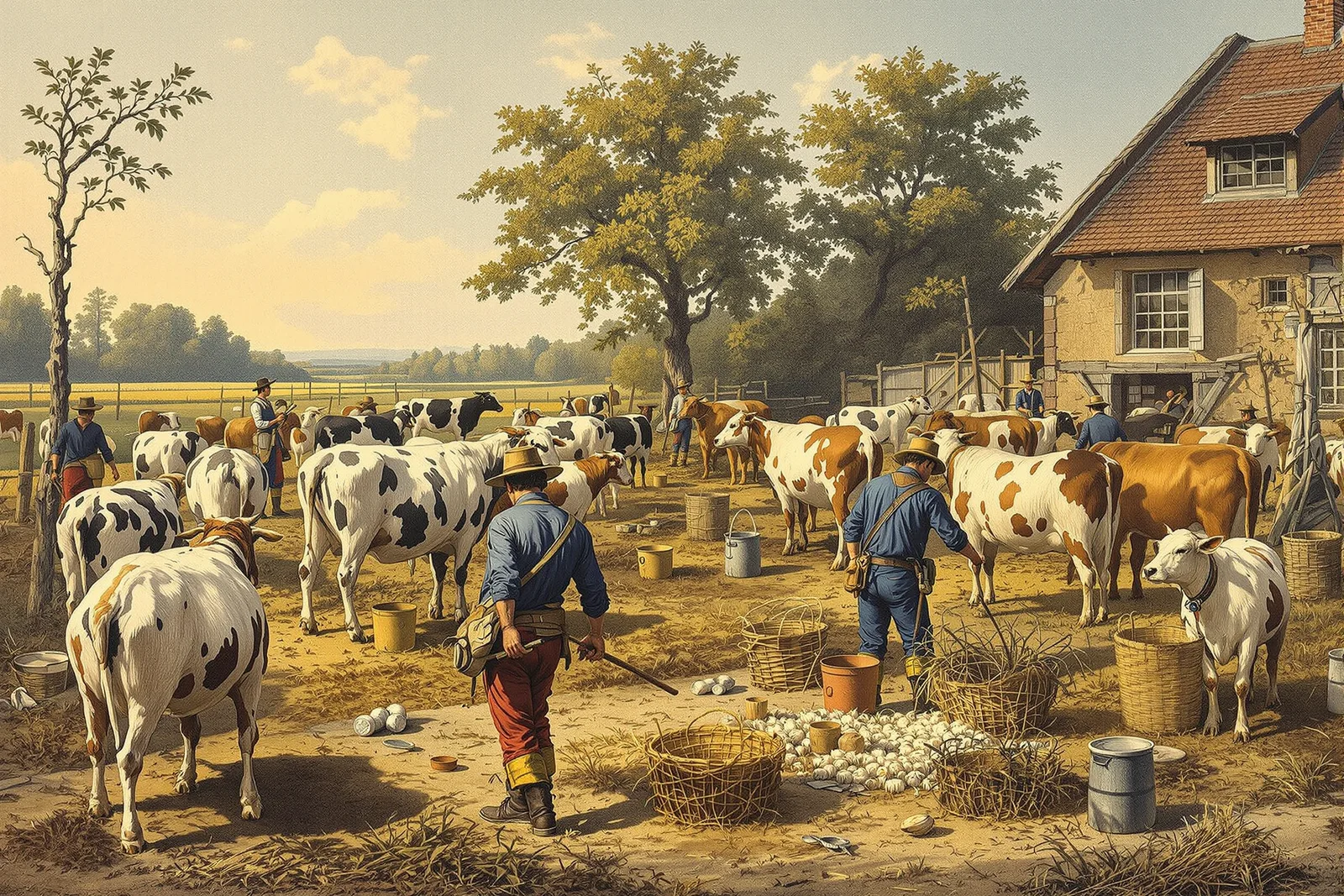
Complete Animal Husbandry: From Selection to Breeding
Livestock provides food, fiber, labor, and companionship. This campaign covers species selection, housing, feeding, health, breeding, and processing.
Chapter 1: Species Selection
| Animal | Products | Space/Animal | Feed/Day | Maturity | Difficulty | ROI |
|---|---|---|---|---|---|---|
| Chickens | Eggs, meat, pest control | 4 sq ft coop + 10 sq ft run | 1/4 lb grain + forage | 5-6 months (eggs) | Very low | Very high |
| Rabbits | Meat, fur, manure | 6 sq ft hutch | 4-6 oz pellets + hay | 3-4 months (meat) | Low | High |
| Goats (dairy) | Milk, meat, brush clearing | 200 sq ft + pasture | 3-5 lbs hay + browse | 1-2 years (milk) | Moderate | High |
| Sheep | Wool, meat, milk | 200 sq ft + pasture | 3-5 lbs hay + pasture | 1 year (wool) | Moderate | Moderate |
| Pigs | Meat, lard, tillage | 80 sq ft pen + pasture | 5-8 lbs feed + scraps | 6-8 months (meat) | Moderate | High |
| Cattle (dairy) | Milk, meat, draft power | 1-2 acres pasture | 25-35 lbs hay + pasture | 2 years (milk) | High | Moderate |
| Horses | Draft power, transport | 1-2 acres pasture | 20-25 lbs hay + grain | 3-4 years (work) | High | Low (work value) |
| Ducks | Eggs, meat, pest control | 4 sq ft + water access | 1/4 lb grain + forage | 5-6 months (eggs) | Low | High |
| Bees | Honey, wax, pollination | 1 hive = 2 sq ft | Flowers (no feed needed) | 1 year (first harvest) | Moderate | Very high |
Start with: Chickens (easiest, fastest return), then add rabbits or goats. Build skills before scaling up to larger animals.
Chapter 2: Housing and Fencing
| Animal | Shelter Needs | Fencing | Predator Protection | Winter Needs |
|---|---|---|---|---|
| Chickens | Dry, ventilated coop, roosts | 4-6 ft fence or enclosed run | Hardware cloth (not chicken wire), locked at night | Insulated coop, no drafts, light for laying |
| Goats | 3-sided shelter minimum | 4-5 ft woven wire or electric | Secure at night, guardian animal | Dry shelter, extra hay |
| Sheep | 3-sided shelter | 4 ft woven wire | Guardian dog or llama | Shelter from wind/rain |
| Pigs | Shade, wallow, shelter | Electric or very strong panels | Minimal (pigs are tough) | Insulated shelter, deep bedding |
| Cattle | Minimal (shade, windbreak) | 4-5 strand barbed or electric | Minimal (size deters) | Hay, windbreak, water heater |
Chapter 3: Feeding and Nutrition
| Animal | Protein Need | Energy Source | Supplements | Water/Day |
|---|---|---|---|---|
| Chickens (laying) | 16-18% | Grain (corn, wheat) | Calcium (oyster shell), grit | 1 pint |
| Goats (dairy) | 14-16% | Hay, browse, grain | Minerals (copper, selenium) | 1-3 gallons |
| Sheep | 12-14% | Pasture, hay | Minerals (NO copper — toxic) | 1-2 gallons |
| Pigs | 14-16% | Grain, scraps, roots | Minerals, salt | 3-5 gallons |
| Cattle | 10-14% | Pasture, hay, silage | Salt, minerals | 10-20 gallons |
Feed conversion ratios: Chickens (meat): 2 lbs feed = 1 lb meat. Pigs: 3.5 lbs feed = 1 lb meat. Cattle: 7 lbs feed = 1 lb meat. Rabbits: 3 lbs feed = 1 lb meat. For efficiency: rabbits and chickens first, then pigs, then cattle last.
Chapter 4: Health and Disease
| Sign | Possible Cause | Action |
|---|---|---|
| Not eating | Pain, illness, parasites, stress | Isolate, check temp, examine |
| Diarrhea | Parasites, bad feed, infection | Withhold grain, provide electrolytes, deworm |
| Limping | Foot rot, injury, arthritis | Examine feet, trim, treat |
| Coughing | Respiratory infection, dust, parasites | Improve ventilation, isolate, treat |
| Weight loss | Parasites, dental, inadequate feed | Deworm, check teeth, increase feed |
| Pale comb/gums | Anemia (parasites, lice) | Deworm, treat external parasites |
| Swelling | Abscess, injury, bloat | Lance abscess, treat injury, tube if bloat |
Prevention: 1) Clean water always. 2) Dry bedding. 3) Good ventilation. 4) Quarantine new animals (2 weeks). 5) Rotate pastures (breaks parasite cycles). 6) Proper nutrition. 7) Reduce stress (gentle handling, consistent routine). 8) Deworm on schedule (fecal tests guide timing).
Chapter 5: Breeding and Genetics
| Principle | Application | Goal |
|---|---|---|
| Select best performers | Breed only from top 25% | Improve herd over generations |
| Cull poor performers | Remove from breeding (not necessarily kill) | Prevent decline |
| Avoid inbreeding | Rotate males every 2-3 years | Maintain vigor |
| Line breeding (careful) | Breed related but not close relatives | Fix desirable traits |
| Hybrid vigor | Cross different breeds | First generation stronger |
| Record keeping | Track parents, production, health | Make informed decisions |
Reference Card
- Start small (5 chickens, not 50). 2. Housing before animals (build first, buy second). 3. Clean water is #1 health factor. 4. Dry bedding prevents 80% of disease. 5. Rotate pastures (rest land 30+ days). 6. Breed the best, cull the rest. 7. Gentle handling = less stress = more production. 8. Every animal earns its keep or goes (harsh but necessary for sustainability).