Sovereignty Module: Feed the People
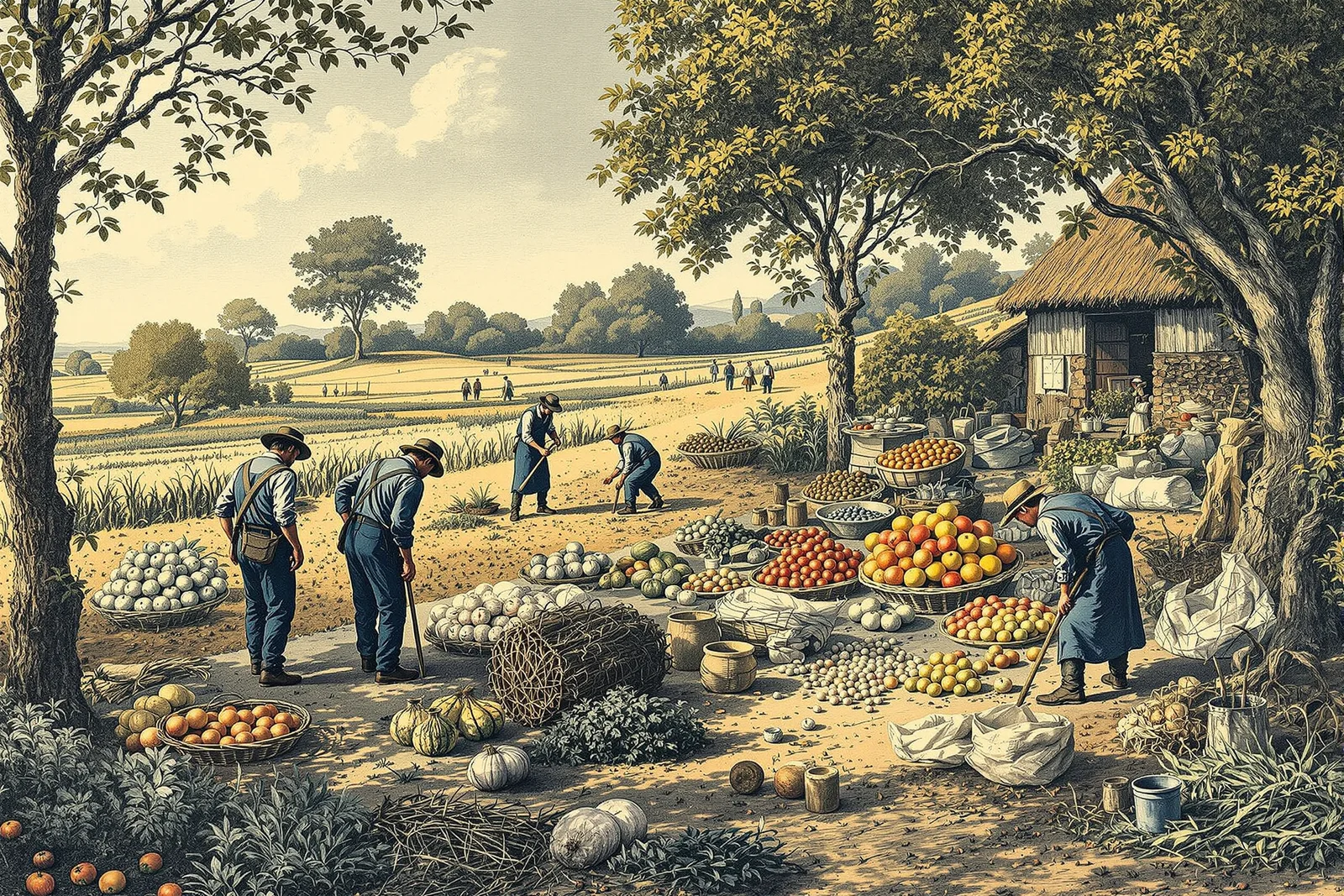
Complete Food Production: From Soil to Table
Food security is the foundation of civilization. This campaign covers soil preparation, crop selection, planting, pest management, harvest, and storage for year-round food supply.
Chapter 1: Soil Preparation
| Soil Type | Characteristics | Amendments | Best Crops | Drainage |
|---|---|---|---|---|
| Clay | Heavy, sticky when wet, hard when dry | Sand, compost, gypsum | Brassicas, beans, fruit trees | Poor (needs raised beds) |
| Sandy | Light, drains fast, low nutrients | Compost, clay, mulch | Root vegetables, herbs, melons | Excessive (needs organic matter) |
| Loam | Balanced, dark, crumbly | Compost (maintenance) | Everything | Good |
| Silt | Smooth, fertile, compacts easily | Compost, coarse material | Most vegetables, grains | Moderate |
| Peat | Acidic, high organic, wet | Lime (raise pH), drainage | Blueberries, potatoes | Poor (needs drainage) |
Composting: 1) Layer green (nitrogen: food scraps, grass, manure) and brown (carbon: leaves, straw, wood chips) at 3:1 brown-to-green ratio. 2) Keep moist (like wrung sponge). 3) Turn every 1-2 weeks (aeration). 4) Ready in 2-6 months (dark, crumbly, earthy smell). 5) Apply 2-4 inches to garden beds annually. This is the single most important soil-building practice.
Chapter 2: Crop Planning
| Category | Crops | Calories/Acre | Storage Life | Difficulty | Season |
|---|---|---|---|---|---|
| Staple grains | Wheat, corn, rice, oats | 2-6 million | Years (dry) | Moderate | Spring-fall |
| Root crops | Potato, turnip, carrot, beet | 4-8 million | Months (root cellar) | Low | Spring-fall |
| Legumes | Beans, peas, lentils | 1-2 million | Years (dry) | Low | Spring-summer |
| Brassicas | Cabbage, kale, broccoli | 500K-1M | Weeks-months | Moderate | Spring/fall (cool) |
| Cucurbits | Squash, pumpkin, melon | 1-3 million | Months (winter squash) | Low | Summer |
| Alliums | Onion, garlic, leek | 500K-1M | Months (dry) | Low | Spring-fall |
| Fruits | Apple, pear, berry, grape | Variable | Days-months | Moderate-high | Years to establish |
| Herbs | Basil, thyme, rosemary, mint | Minimal calories | Months (dried) | Very low | Spring-fall |
Calorie crops (feed a family of 4 on 1 acre): Potatoes (1/4 acre = 2,000 lbs). Corn (1/4 acre = 1,000 lbs grain). Beans (1/4 acre = 400 lbs dry). Squash (1/4 acre = 2,000 lbs). This combination provides carbohydrates, protein, fat, and vitamins. The "Three Sisters" (corn + beans + squash) is the most efficient polyculture in history.
Chapter 3: Planting and Growing
| Method | Space Efficiency | Labor | Water Use | Best For |
|---|---|---|---|---|
| Row planting | Moderate | Low (easy to weed/harvest) | Moderate | Grains, large gardens |
| Raised beds | High | Moderate (initial build) | Moderate | Vegetables, poor soil |
| Square foot gardening | Very high | Moderate | Low | Small spaces, intensive |
| Companion planting | High | Low | Low | Pest management, efficiency |
| Succession planting | Very high | High | Moderate | Continuous harvest |
| Permaculture (food forest) | High (long-term) | Low (once established) | Very low | Perennial food systems |
Chapter 4: Pest and Disease Management
| Pest/Disease | Signs | Organic Control | Prevention |
|---|---|---|---|
| Aphids | Clusters on new growth, sticky residue | Spray soapy water, ladybugs | Companion plants (nasturtium) |
| Caterpillars | Chewed leaves, frass | Hand pick, Bt spray, birds | Row covers, companion plants |
| Slugs/snails | Slime trails, holes in leaves | Beer traps, copper barriers, ducks | Dry mulch, raised beds |
| Blight (fungal) | Brown spots, wilting, spreading | Remove affected parts, copper spray | Air circulation, crop rotation |
| Powdery mildew | White powder on leaves | Milk spray (1:9), baking soda | Spacing, air flow, resistant varieties |
| Root rot | Wilting despite wet soil | Improve drainage, remove plant | Proper drainage, don't overwater |
Chapter 5: Harvest and Storage
| Crop | Harvest Sign | Storage Method | Storage Life | Conditions |
|---|---|---|---|---|
| Potatoes | Tops die back | Root cellar (dark, cool, humid) | 4-6 months | 35-40°F, 90% humidity, dark |
| Onions/garlic | Tops fall over, dry | Hang in mesh bags (dry, cool) | 6-12 months | 32-40°F, 60% humidity |
| Winter squash | Hard rind, stem dries | Cool dry room | 3-6 months | 50-55°F, 60% humidity |
| Dry beans | Pods rattle when shaken | Sealed containers (dry) | Years | Room temp, dry, sealed |
| Grain (wheat, corn) | Kernels hard, low moisture | Sealed containers (dry) | Years | Room temp, dry, sealed, pest-free |
| Carrots/beets | Mature size | Root cellar in sand | 4-6 months | 32-40°F, 90% humidity |
| Cabbage | Heads firm | Root cellar (hang upside down) | 3-4 months | 32-40°F, 90% humidity |
| Apples | Mature color, easy twist | Root cellar (separated) | 2-6 months | 32-40°F, 90% humidity |
Reference Card
- Compost is king: build soil with compost every year. Healthy soil = healthy plants = healthy people. 2. Grow calories first (potatoes, corn, beans, squash), then nutrition (greens, roots), then flavor (herbs, fruits). 3. Save seeds: select best plants, save seeds, adapt varieties to your conditions over generations. 4. Rotate crops: never plant same family in same spot two years running (prevents disease buildup). 5. Water deeply, less often (encourages deep roots). 6. Mulch everything (retains moisture, suppresses weeds, feeds soil). 7. Start small, expand as you learn. 8. Plan for storage: grow what stores well (root crops, dry beans, grain, winter squash) for year-round food security.