Sovereignty Module: Light the Dark
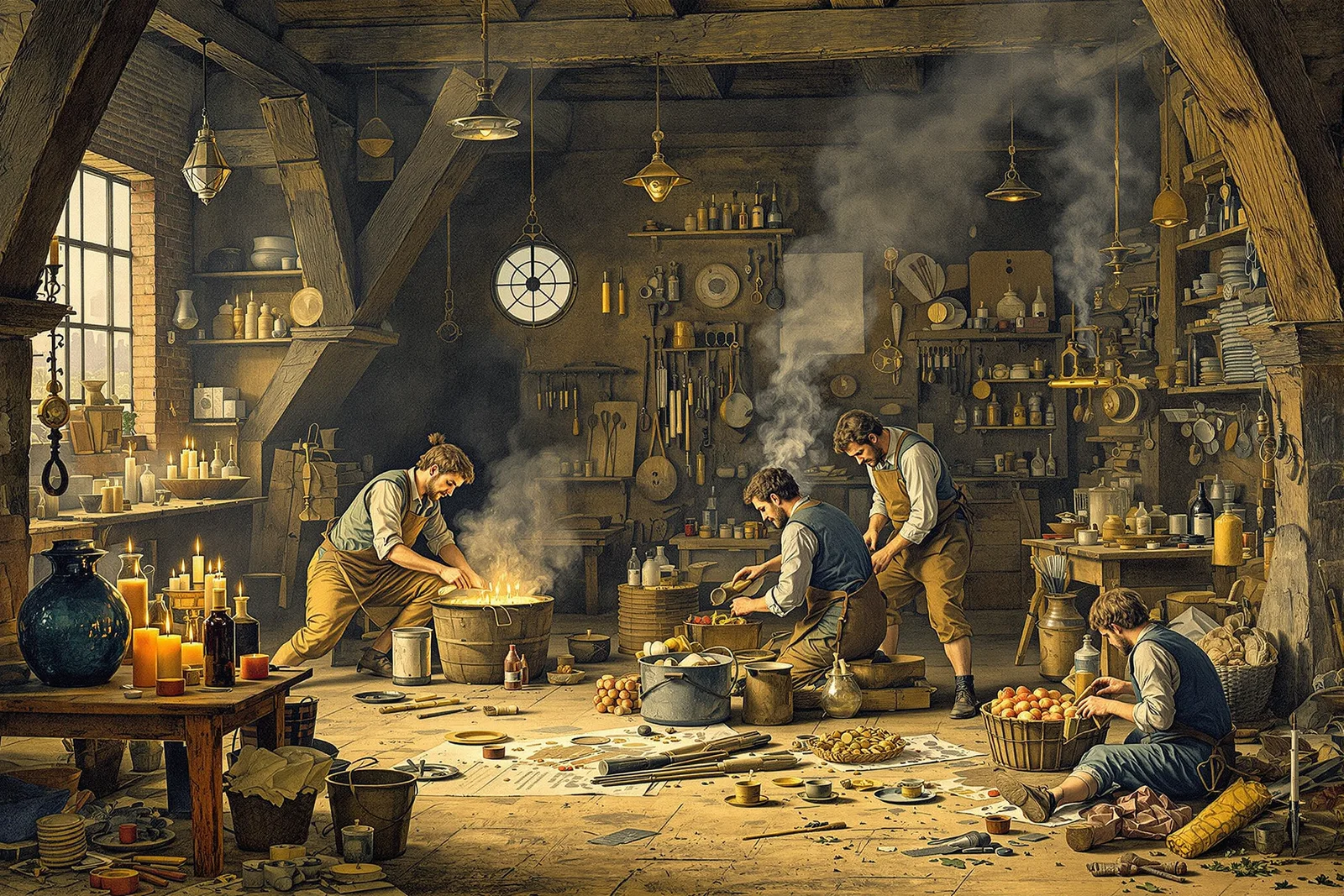
Light the Dark
Complete Candle Making, Oil Lamps, and Lighting Systems Guide
Complete Candle Making, Oil Lamps, and Lighting Systems Guide
Light extends the productive day, enables reading, provides security, and lifts morale. This campaign covers every method of producing artificial light from natural materials.
Chapter 1: Lighting Methods Compared
| Method | Brightness (lumens) | Burn Time | Fuel Source | Smoke/Soot | Cost |
|---|---|---|---|---|---|
| Tallow candle | 10-15 | 4-8 hours | Animal fat (beef/mutton) | Moderate (smelly) | Very low |
| Beeswax candle | 12-18 | 6-10 hours | Beeswax | Very low (pleasant smell) | High |
| Oil lamp (olive/vegetable) | 15-30 | 8-16 hours | Any vegetable oil | Low | Low-moderate |
| Oil lamp (animal fat/lard) | 10-20 | 8-12 hours | Rendered animal fat | Moderate | Very low |
| Rush light | 5-8 | 15-45 minutes | Rush pith + tallow | Moderate | Almost free |
| Pine torch (fatwood) | 50-100 | 30-60 minutes | Resinous pine | Heavy | Free (forest) |
| Alcohol lamp | 15-25 | 4-8 hours | Ethanol 70%+ | Very low | Moderate |
| Kerosene lamp | 50-100 | 8-16 hours | Petroleum distillate | Low (with chimney) | Moderate |
Chapter 2: Tallow Candle Production
| Step | Action | Time | Details |
|---|---|---|---|
| 1 | Collect fat: beef suet or mutton fat (kidney fat is best) | - | Trim off all meat. Pure fat only. |
| 2 | Render: chop fine, melt slowly in water (1:1 fat:water) | 2-4 hours | Low heat. Stir occasionally. Do not boil. |
| 3 | Strain through cloth: remove cracklings (solids) | 30 minutes | Pour through cheesecloth into container |
| 4 | Cool: fat solidifies on top of water | 4-12 hours | Lift solid fat cake off water |
| 5 | Re-render (optional): melt fat again, strain again | 1-2 hours | Cleaner tallow = less smoke, less smell |
| 6 | Prepare wicks: cotton string, twisted, dipped in tallow | 30 minutes | Wick must be tight twist (loose = smoky) |
| 7 | Dipping: dip wick in melted tallow, cool, repeat 20-30 times | 1-2 hours | Each dip adds thin layer. Cool between dips. |
| 8 | Or molding: pour melted tallow into mold around wick | 30 minutes | Faster than dipping. Any tube shape works. |
Yield: 1 pound of tallow = approximately 4-6 standard candles (6-8 inches). One beef kidney yields about 3-5 pounds of suet = 12-30 candles.
Chapter 3: Beeswax Candle Production
| Step | Action | Details |
|---|---|---|
| 1 | Harvest wax: melt old comb, cappings, burr comb | Separate from honey first |
| 2 | Melt in double boiler (NEVER direct heat — flash point 400F) | Water bath keeps temperature safe |
| 3 | Filter: pour through cloth to remove debris | Multiple filterings = cleaner wax |
| 4 | Dip or mold: same process as tallow but higher melting point | Beeswax melts at 144-147F |
| 5 | Beeswax candles burn longer, brighter, and smell pleasant | Premium product — trade value |
Beeswax advantage: No smoke, no smell (or pleasant honey scent), burns 2-3x longer than tallow per weight, harder (doesn't droop in heat). Worth 10x tallow historically.
Chapter 4: Oil Lamp Construction
| Component | Material | Function | Specification |
|---|---|---|---|
| Reservoir | Clay, metal, stone, glass | Holds fuel oil | Any non-flammable container |
| Wick | Cotton, linen, plant fiber | Draws oil to flame by capillary action | Flat wick = brighter than round |
| Wick holder/channel | Pinched clay lip, metal tube | Positions wick at edge of reservoir | Wick tip just above oil level |
| Chimney (optional) | Glass tube, metal cone | Improves draft, reduces smoke, protects flame | Open top and bottom for airflow |
| Base/stand | Stable platform | Prevents tipping | Wide base, low center of gravity |
Simple oil lamp: Any shallow dish + oil + wick. Pinch one edge of clay dish to form channel for wick. Fill with olive oil, vegetable oil, or rendered fat. Light wick. Burns for hours. This is the lamp of 10,000 years of human history.
Chapter 5: Wick Materials
| Material | Burn Quality | Availability | Preparation | Best For |
|---|---|---|---|---|
| Cotton string (braided) | Excellent | Cultivated/trade | Tight braid, 3-4 strands | Candles and lamps |
| Linen thread | Very good | Flax plant | Twisted tight | Oil lamps |
| Milkweed floss | Good | Wild (common) | Twist into cord | Emergency wicks |
| Cattail fluff | Fair (burns fast) | Wild (wetlands) | Pack into tube or twist | Emergency only |
| Mullein stalk (dried) | Good | Wild (common) | Dry completely, dip in fat | Torch/rush light |
| Rush pith | Fair | Wild (wetlands) | Peel outer skin, expose pith, dip in tallow | Rush lights |
| Jute/hemp string | Good | Cultivated | Use as-is or braid | Lamps |
Chapter 6: Fuel Oils for Lamps
| Oil | Smoke | Smell | Brightness | Availability | Burn Rate |
|---|---|---|---|---|---|
| Olive oil | Very low | Neutral/pleasant | Good | Mediterranean, trade | Slow (efficient) |
| Rendered lard/tallow | Moderate | Unpleasant (animal) | Moderate | Anywhere with livestock | Moderate |
| Rapeseed/canola oil | Low | Mild | Good | Cultivated (temperate) | Moderate |
| Walnut oil | Very low | Pleasant | Good | Nut-bearing regions | Slow |
| Fish oil | High | Strong (unpleasant) | Good | Coastal regions | Moderate |
| Coconut oil | Low | Pleasant | Good | Tropical | Moderate |
| Castor oil | Very low | Neutral | Excellent (brightest) | Tropical/cultivated | Slow |
| Sunflower oil | Low | Neutral | Good | Cultivated | Moderate |
Reference Card
- Tallow candles: render beef/mutton fat, strain, dip wick 20-30 times. 1 lb tallow = 4-6 candles.
- Beeswax: NEVER direct heat (flash point 400F). Double boiler only. Burns 2-3x longer than tallow.
- Oil lamp: any dish + any oil + any wick. Simplest lighting technology. Burns for hours.
- Wick must be tight twist/braid: loose wick = smoky, dim flame. Cotton is best.
- Castor oil: brightest lamp fuel, lowest smoke. Olive oil: second best, most pleasant.
- Trim wick to 1/4 inch above fuel: too long = smoky. Too short = dim. Trim regularly.
- Chimney (glass or metal tube around flame): doubles brightness by improving airflow/draft.
- Rush light (free lighting): peel rush stem, expose pith, dip in tallow. Burns 15-45 minutes.
TransmissionCOMPLETE — unaltered & unabridged
Words1,151 — every one of them
SHA-256 of source text9022d88cac0c5d4a99f4fc6c45b7f00031b851d6ec7c21cf7759133ee42de346
Canonical textdownload campaign-candles-complete.md — byte-identical to what this page renders