Sovereignty Module: Center the Mind
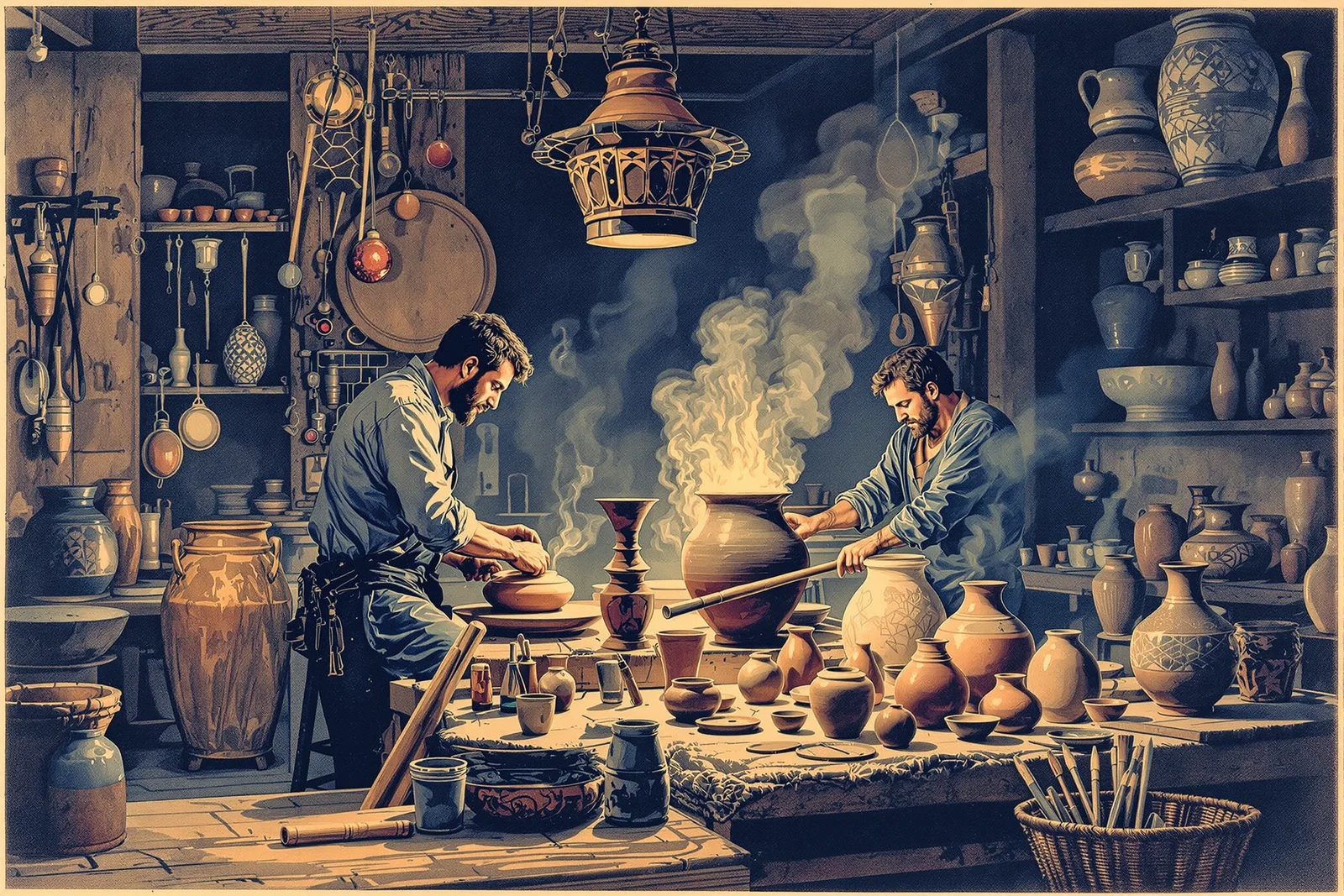
Center the Mind
The Potter's Philosophy: From Making Pots to Understanding Life
The Potter's Philosophy: From Making Pots to Understanding Life
Pottery teaches lessons that extend far beyond the studio. This campaign explores the philosophical dimensions of working with clay, the meditative aspects of throwing, and the life wisdom embedded in ceramic practice.
Chapter 1: Lessons from the Wheel
| Lesson | At the Wheel | In Life |
|---|---|---|
| Centering | Clay must be centered before shaping | Find your center before acting |
| Patience | Rushing collapses the pot | Rushing collapses the plan |
| Pressure | Too much destroys, too little fails | Find the right amount of effort |
| Letting go | Release the finished pot | Release attachment to outcomes |
| Failure | Collapsed pots teach technique | Failures teach wisdom |
| Repetition | Throwing 100 bowls builds skill | Practice builds mastery |
| Presence | Distraction ruins the pot | Distraction ruins the moment |
| Transformation | Fire changes clay permanently | Experience changes us permanently |
Chapter 2: Wabi-Sabi and Imperfection
| Concept | Meaning | Application |
|---|---|---|
| Wabi | Beauty in simplicity and imperfection | Value handmade irregularity |
| Sabi | Beauty in age and wear | Appreciate patina and use marks |
| Kintsugi | Repair with gold, honoring breaks | Celebrate repair, not concealment |
| Mushin | No-mind, unconscious action | Throw without overthinking |
| Ma | Negative space, emptiness | The space inside the pot matters |
| Mono no aware | Awareness of impermanence | Each pot is unique and temporary |
Chapter 3: The Mingei Movement
| Principle | Meaning | Application |
|---|---|---|
| Functional beauty | Beauty arises from use | Make pots for daily use |
| Anonymous craft | The maker's ego is secondary | Let the work speak, not the name |
| Natural materials | Use local, natural materials | Source clay and glazes locally |
| Honest process | Show the making process | Don't hide tool marks |
| Tradition | Build on inherited techniques | Learn from the past |
| Community | Craft serves the community | Make what people need |
Chapter 4: Meditation and Making
| Practice | Method | Benefit |
|---|---|---|
| Centering meditation | Focus on centering clay | Develops concentration |
| Breath awareness | Coordinate breath with throwing | Calms the mind |
| Repetitive throwing | Throw same form repeatedly | Enters flow state |
| Mindful glazing | Full attention on each brush stroke | Develops presence |
| Kiln meditation | Sit with the firing kiln | Practices patience and letting go |
| Tea ceremony | Use handmade pottery for tea | Connects making and using |
Chapter 5: The Potter's Legacy
| Legacy | Form | Duration |
|---|---|---|
| Pots | Functional and decorative ware | Centuries to millennia |
| Techniques | Methods passed to students | Generations |
| Community | Kiln cooperatives, studios | Decades to centuries |
| Knowledge | Written and oral tradition | Indefinite |
| Inspiration | Influence on other potters | Rippling outward |
| Culture | Contribution to cultural heritage | Permanent |
Reference Card
- Centering clay teaches centering the self (the physical act of centering a lump of clay on the wheel is a metaphor for finding inner balance; both require calm, focused attention and steady pressure). 2. Imperfection is not failure (the Japanese concept of wabi-sabi teaches that beauty exists in imperfection, irregularity, and the marks of making; a handmade pot is beautiful because it is imperfect). 3. The pot is empty (the most important part of a pot is the space inside; Lao Tzu wrote that we shape clay into a pot, but it is the emptiness inside that makes it useful; form serves function). 4. Repetition is the path to mastery (throwing one bowl teaches technique; throwing a thousand bowls teaches mastery; there is no shortcut; the path is the practice). 5. Fire transforms irreversibly (once clay enters the kiln, it can never return to clay; fire creates permanent change; this is a metaphor for all transformative experiences). 6. The potter serves the community (making pots for daily use is an act of service; the cup that holds morning tea, the bowl that serves dinner; these humble objects enrich daily life). 7. Letting go is essential (the potter must release the finished pot; attachment to any single piece prevents growth; make the best work possible, then let it go into the world). 8. Clay connects us to the earth (clay comes from the earth and returns to the earth; working with clay is a direct, physical connection to the planet; this connection grounds and humbles the potter).
TransmissionCOMPLETE — unaltered & unabridged
Words811 — every one of them
SHA-256 of source text99c10a4a2017858acdd04cd8d2bfb51f9b40895fe5bf693edc84fe8b1fb39725
Canonical textdownload campaign-center-mind.md — byte-identical to what this page renders