Sovereignty Module: Fire Together
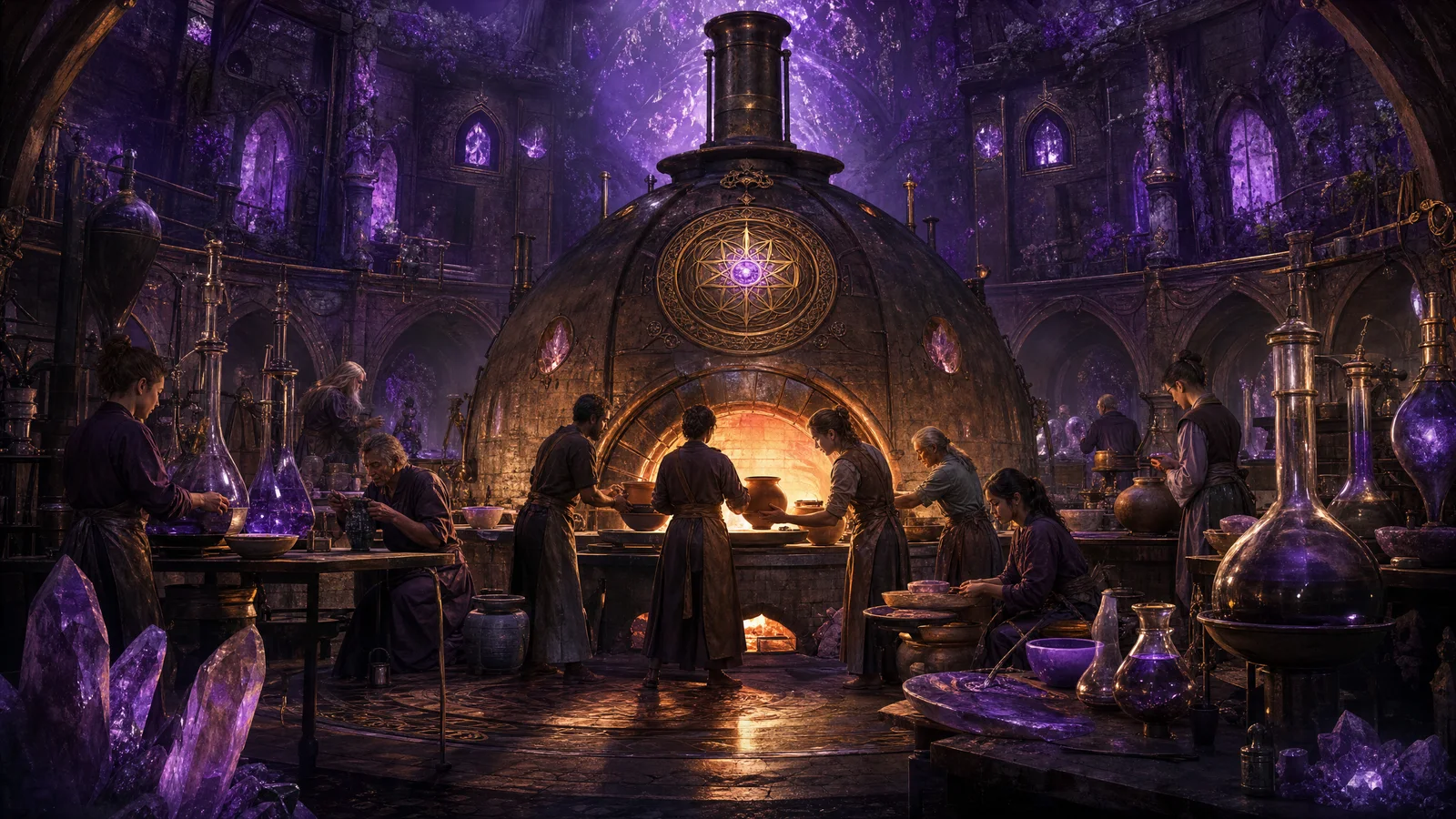
Fire Together
Complete Community Kiln and Cooperative Firing: From Individual Potter to Shared Resource
Complete Community Kiln and Cooperative Firing: From Individual Potter to Shared Resource
A community kiln multiplies the capability of every potter. This campaign covers cooperative kiln design, shared firing schedules, cost sharing, and the social dynamics of communal ceramic production.
Chapter 1: Community Kiln Benefits
| Benefit | Individual Kiln | Community Kiln |
|---|---|---|
| Cost per potter | Full cost borne alone | Shared among members |
| Kiln size | Limited by individual budget | Larger, more efficient |
| Fuel efficiency | Often fires half-empty | Full loads every firing |
| Knowledge sharing | Isolated learning | Collective wisdom |
| Labor for wood firing | Impossible alone | Shared stoking shifts |
| Social connection | Solitary | Community building |
Chapter 2: Kiln Design for Community Use
| Feature | Specification | Reason |
|---|---|---|
| Capacity | 30-100 cubic feet | Accommodate multiple potters |
| Loading access | Large door, easy stacking | Multiple people loading |
| Even heating | Well-designed flue system | Fair results for all members |
| Durability | Heavy-duty construction | Frequent use demands durability |
| Fuel storage | Covered wood shed nearby | Community wood supply |
| Work area | Covered staging area | Loading preparation space |
| Kiln shed | Roof over kiln | Weather protection |
Chapter 3: Cooperative Structure
| Element | Options | Best Practice |
|---|---|---|
| Membership | Open, limited, invitation | Limited to serious potters |
| Fees | Monthly dues, per-firing fee, or both | Per-firing fee is fairest |
| Scheduling | Rotating priority, first-come | Rotating priority |
| Wood supply | Each member contributes | Shared wood-cutting days |
| Maintenance | Shared labor, scheduled | Annual maintenance day |
| Decision making | Consensus, majority vote | Consensus for major decisions |
| Conflict resolution | Designated mediator | Address issues promptly |
Chapter 4: Firing Schedule Management
| Phase | Responsibility | Duration |
|---|---|---|
| Loading | All participating potters | 1-2 days |
| Warm-up | Designated fire master | 4-8 hours |
| Climbing | Stoking teams (2-hour shifts) | 12-36 hours |
| Peak temperature | Fire master oversight | 2-4 hours |
| Cooling | Passive (kiln sealed) | 24-72 hours |
| Unloading | All participating potters | 1 day |
Chapter 5: Cost Sharing Model
| Expense | Division Method | Example (10 members) |
|---|---|---|
| Kiln construction | Equal shares or proportional to use | $5,000 ÷ 10 = $500 each |
| Fuel (per firing) | Proportional to shelf space used | $200 ÷ proportional share |
| Maintenance | Annual dues | $50/year each |
| Kiln furniture | Shared purchase | $300 ÷ 10 = $30 each |
| Insurance | Annual dues | Included in membership |
Reference Card
- A community kiln is greater than the sum of its parts (ten potters sharing a kiln can afford a kiln ten times better than any individual could build alone; cooperation multiplies capability). 2. Fair scheduling prevents conflict (rotating priority for kiln placement ensures every member gets the best spots over time; perceived unfairness is the most common source of conflict in kiln cooperatives). 3. Shared wood-cutting builds community (gathering and processing firewood together is hard work that builds bonds; the shared labor of wood preparation is as valuable for community as for fuel). 4. The fire master role is essential (someone must have authority over firing decisions; temperature, atmosphere, and timing cannot be decided by committee; designate an experienced fire master for each firing). 5. Clear financial agreements prevent problems (document all cost-sharing arrangements in writing before building; disagreements about money destroy cooperatives; transparency and fairness are essential). 6. Maintenance is everyone's responsibility (a community kiln used by many wears faster than a private kiln; scheduled maintenance days with all members participating keep the kiln in good condition). 7. The unloading is a celebration (opening a community kiln after firing is an event; the anticipation, the reveals, the shared joy and disappointment; this is the social heart of the cooperative). 8. Community kilns preserve the tradition (wood firing requires labor that no individual can sustain alone; community kilns make wood firing possible and keep this ancient tradition alive for future generations).
TransmissionCOMPLETE — unaltered & unabridged
Words738 — every one of them
SHA-256 of source text5f8d0931665cd9d7e102e0971bc2e5db214ff0bd09bcfc2155966a3d60206cb0
Canonical textdownload campaign-fire-together.md — byte-identical to what this page renders