Sovereignty Module: Center the Self
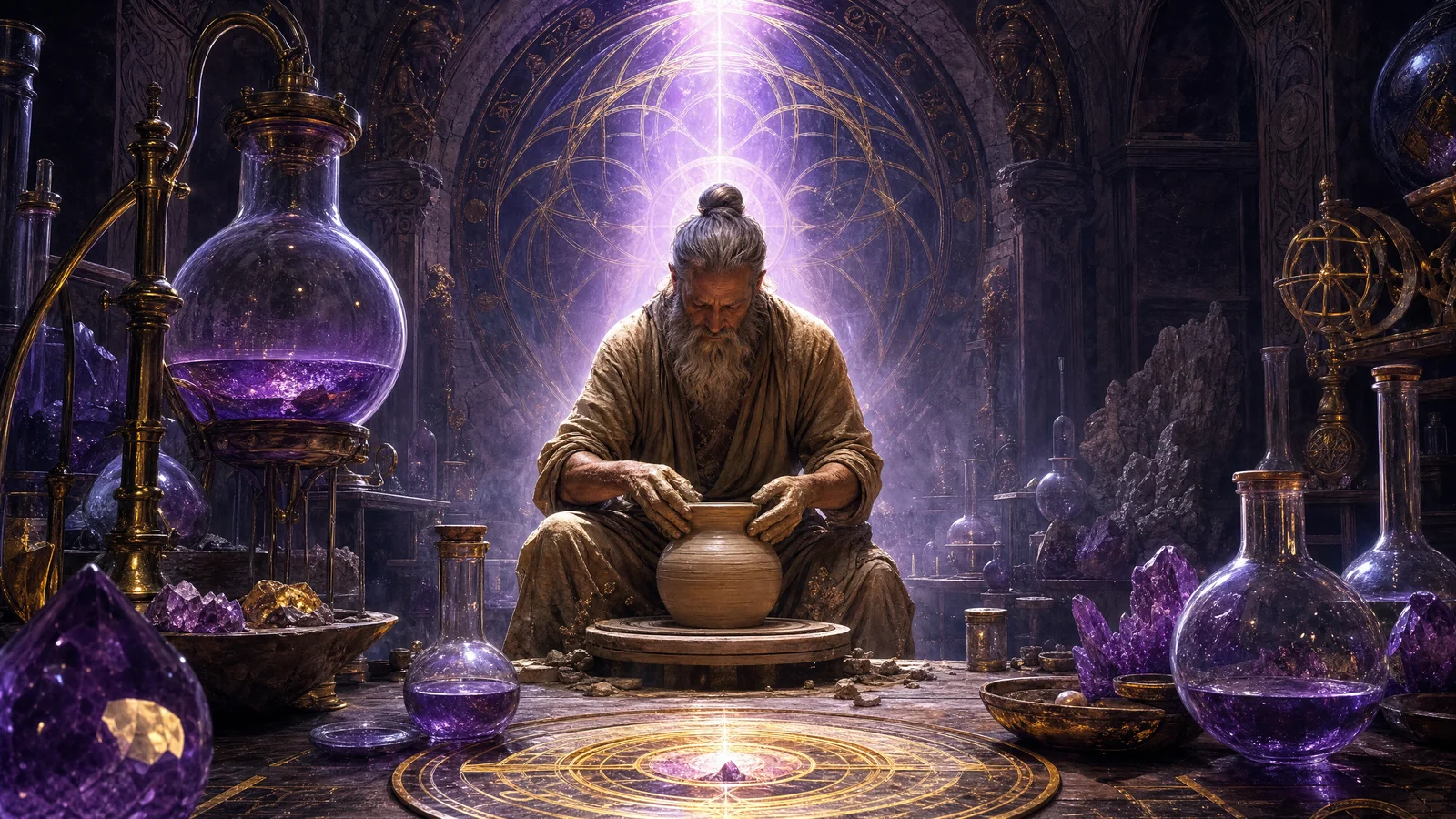
Center the Self
The Potter's Way: From Craft to Philosophy of Making
The Potter's Way: From Craft to Philosophy of Making
Pottery is more than technique; it is a way of being in the world. This campaign covers the philosophy of clay, the meditative practice of throwing, the ethics of making, and the potter's relationship with earth, fire, and community.
Chapter 1: The Philosophy of Clay
| Concept | Meaning | Practice |
|---|---|---|
| Earth to earth | Clay comes from the ground, returns to the ground | Respect the material's origin |
| Transformation | Fire permanently transforms clay | Honor the irreversible process |
| Impermanence | Even fired clay eventually returns to dust | Make each piece as if it matters |
| Service | Pottery serves daily human needs | Make functional ware with care |
| Connection | Clay connects maker to user | Every piece carries the potter's energy |
| Humility | The kiln has the final say | Accept what the fire gives |
Chapter 2: The Meditative Practice
Centering clay is centering the self: 1) The wheel spins, the hands steady. 2) The mind quiets, the breath slows. 3) The clay responds to intention, not force. 4) Rushing produces nothing good. 5) Patience and presence produce beauty. 6) The act of throwing is a meditation. 7) The potter enters a state of flow. 8) Time dissolves; only the clay and the hands exist.
| Throwing State | Characteristics | Quality of Work |
|---|---|---|
| Distracted | Mind elsewhere, hands mechanical | Inconsistent, lifeless |
| Focused | Mind on technique, deliberate | Competent, correct |
| Flow | Mind and hands unified, effortless | Alive, expressive |
| Mastery | No separation between potter and clay | Transcendent |
Chapter 3: Ethics of Making
| Principle | Application |
|---|---|
| Make things that last | Use quality materials, proper technique |
| Make things that serve | Functional ware that improves daily life |
| Make things with integrity | No shortcuts that compromise quality |
| Price fairly | Value your work, respect the buyer |
| Teach freely | Share knowledge to preserve the craft |
| Waste nothing | Reclaim clay, recycle materials |
| Respect the earth | Source materials responsibly |
| Honor tradition | Learn from the past, innovate for the future |
Chapter 4: The Potter's Relationship with Fire
| Aspect | Meaning |
|---|---|
| Fire transforms | Raw clay becomes permanent ceramic |
| Fire reveals | Glaze colors emerge only in the kiln |
| Fire surprises | Unexpected results teach humility |
| Fire destroys | Cracked, warped, or exploded pieces |
| Fire creates | Beauty that no other process can achieve |
| Fire connects | Every potter shares the experience of opening a kiln |
Chapter 5: The Potter's Place in Community
| Role | Contribution | Value |
|---|---|---|
| Maker | Produces functional and beautiful objects | Daily utility and beauty |
| Teacher | Passes on skills and knowledge | Craft preservation |
| Healer | Pottery as therapy and meditation | Mental health |
| Historian | Preserves traditional techniques | Cultural heritage |
| Artist | Creates objects of beauty and meaning | Cultural enrichment |
| Neighbor | Provides useful goods to community | Local economy |
Reference Card
- Centering clay is centering the self (the physical act of centering clay on the wheel requires the same qualities as centering the mind: patience, presence, steady pressure, and release of tension). 2. The clay teaches patience (clay cannot be rushed; it responds to steady, patient hands; the potter who learns patience at the wheel carries that patience into every aspect of life). 3. The kiln has the final say (no matter how skilled the potter, the kiln introduces variables beyond control; accepting this teaches humility and the grace to let go of attachment to outcomes). 4. Every pot is a conversation (between the potter's intention and the clay's nature, between the glaze recipe and the fire's chemistry; the finished piece is the result of this dialogue). 5. Functional pottery is an act of service (a mug that holds morning coffee, a bowl that serves dinner, a plate that gathers the family; functional pottery serves the most fundamental human needs). 6. The potter's mark connects maker to user (when someone turns over a mug and sees the potter's stamp, they connect with the person who made it; this human connection is what distinguishes handmade from manufactured). 7. Pottery is the oldest continuous human craft (humans have been making pottery for over 20,000 years; every potter joins this unbroken chain of makers stretching back to the dawn of civilization). 8. The potter's way is a way of life (pottery is not just what the potter does; it is who the potter is; the values of patience, presence, humility, and service that the wheel teaches become the potter's way of being in the world).
TransmissionCOMPLETE — unaltered & unabridged
Words844 — every one of them
SHA-256 of source text514f87759a35f3c129779e38219906bc3342ce92748a8f8410df89a0646b443c
Canonical textdownload campaign-center-self.md — byte-identical to what this page renders