Complete Dyeing and Color Production: From Plant to Pigment
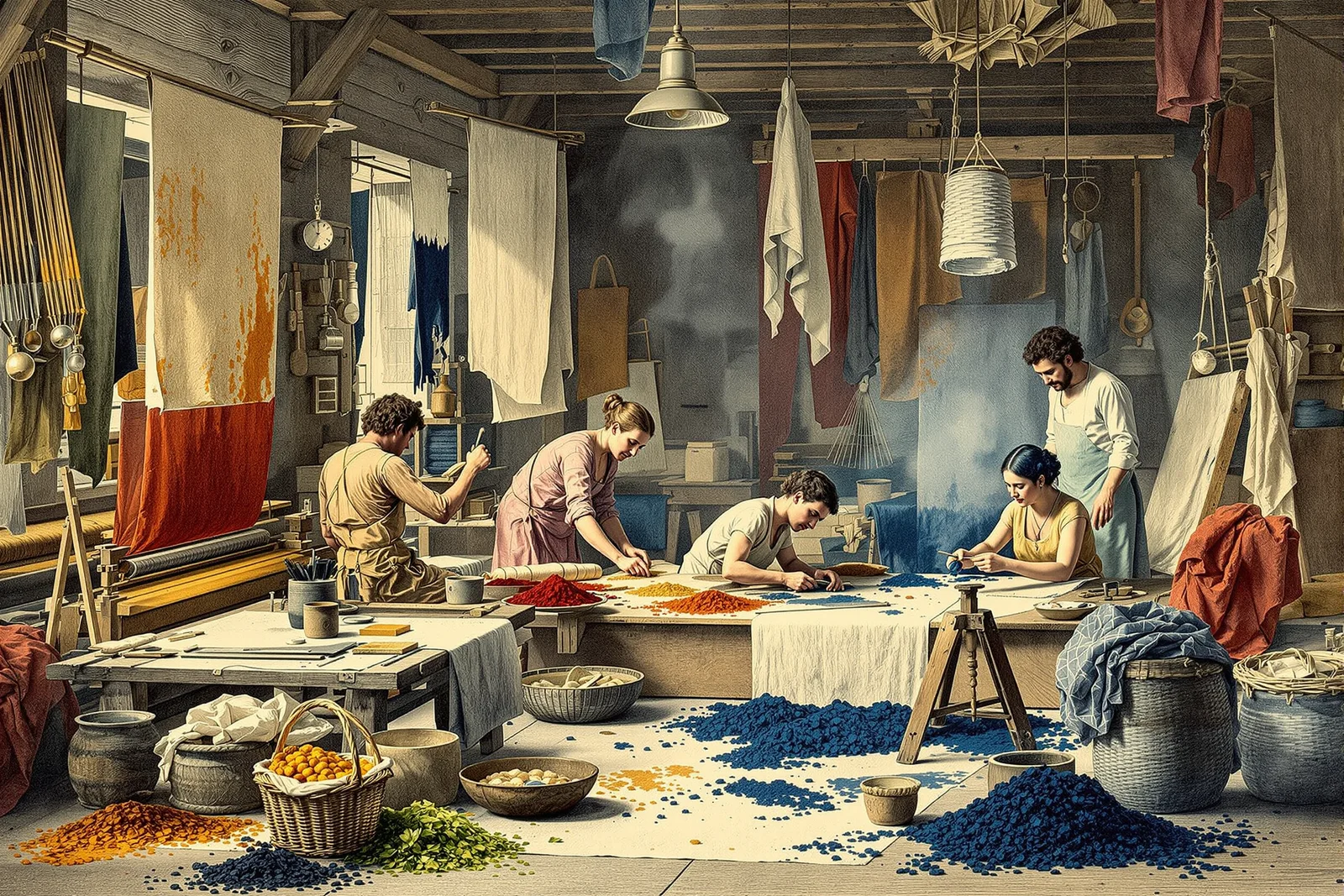
⟁ cover painted for this edition — the source module carried no illustrations
Complete Dyeing and Color Production: From Plant to Pigment
Color transforms raw materials into identity, beauty, and communication. This campaign covers natural dye sources, mordanting, dyeing techniques, pigment production, and paint making.
Chapter 1: Natural Dye Sources
Color
Plant Source
Part Used
Mordant
Lightfastness
Washfastness
Blue
Indigo (Indigofera)
Leaves
None needed
Excellent
Excellent
Blue
Woad (Isatis tinctoria)
Leaves
None needed
Good
Good
Red
Madder (Rubia tinctorum)
Root
Alum
Very good
Very good
Red-purple
Cochineal (insect)
Whole insect
Alum + tin
Excellent
Excellent
Yellow
Weld (Reseda luteola)
Whole plant
Alum
Very good
Good
Yellow
Onion skins
Outer skins
Alum
Moderate
Moderate
Yellow-orange
Turmeric
Root
None/alum
Poor
Poor
Brown
Walnut hulls
Green hulls
None needed
Good
Good
Black
Oak galls + iron
Galls
Iron mordant
Good
Good
Green
Indigo + weld (overdye)
—
Alum (for weld)
Good
Good
Purple
Indigo + madder (overdye)
—
Alum (for madder)
Good
Good
Chapter 2: Mordanting
Mordant
Source
Color Effect
Toxicity
Cost
Method
Alum (potassium aluminum sulfate)
Mineral deposits, pharmacy
Brightens colors
Low
Low
Pre-mordant soak
Iron (ferrous sulfate)
Rusty nails in vinegar
Darkens/saddens colors
Low
Very low
Modifier (after dye)
Copper (copper sulfate)
Mineral, hardware store
Greens/shifts colors
Moderate
Low
Modifier
Tin (stannous chloride)
Chemical supply
Brightens dramatically
Moderate
Moderate
Modifier (use sparingly)
Tannin (tannic acid)
Oak bark, tea, sumac
Helps protein fibers
None
Very low
Pre-mordant for cellulose
Chrome (potassium dichromate)
Chemical supply
Deepens colors
HIGH (toxic, carcinogenic)
Moderate
AVOID — use alternatives
Alum mordanting procedure: 1) Weigh dry fiber/fabric. 2) Dissolve alum in hot water (15-20% of fiber weight — e.g., 15-20g alum per 100g fiber). 3) Add cream of tartar (6% of fiber weight — softens fiber, brightens color). 4) Submerge wetted fiber in mordant bath. 5) Heat slowly to 180°F (not boiling). 6) Hold at temperature for 1 hour. 7) Let cool in bath (overnight is fine). 8) Remove, gently squeeze (don't rinse — mordant stays in fiber). 9) Dye immediately or dry for later use.
Chapter 3: Dyeing Techniques
Technique
Method
Complexity
Results
Best For
Immersion (vat)
Submerge fiber in dye bath
Low
Even, solid color
Basic dyeing
Resist (tie-dye)
Tie/bind areas before dyeing
Low
Patterns (white where bound)
Decorative
Resist (wax/batik)
Apply wax before dyeing
Moderate
Detailed patterns
Art textiles
Discharge
Remove color from dyed fabric
Moderate
Light patterns on dark
Decorative
Overdyeing
Dye over existing color
Low
New colors (blue + yellow = green)
Color mixing
Printing (block)
Apply dye/mordant with carved block
Moderate-high
Repeated patterns
Production
Indigo vat dyeing (most important dye process): 1) Prepare indigo vat: dissolve indigo in alkaline solution (lye water). 2) Add reducing agent (historically: fermented fruit, urine; modernly: sodium hydrosulfite). 3) Solution turns yellow-green (reduced indigo is soluble). 4) Submerge wetted fabric in vat (1-15 minutes). 5) Remove — fabric is yellow-green. 6) Expose to air — oxidation turns fabric blue before your eyes. 7) Repeat dips for deeper blue (3-5 dips for medium, 10+ for dark navy). 8) Rinse thoroughly after final dip. 9) Indigo is the most lightfast and washfast natural dye — jeans are indigo-dyed.
Chapter 4: Pigment Production
Pigment
Color
Source
Processing
Use
Permanence
Charcoal/lampblack
Black
Soot from burning
Collect, grind fine
Ink, paint
Excellent
Red ochre
Red-brown
Iron oxide clay
Grind, wash, dry
Paint, cosmetics
Excellent
Yellow ochre
Yellow-brown
Iron oxide clay
Grind, wash, dry
Paint
Excellent
White (chalk)
White
Calcium carbonate
Grind, wash
Paint, whitewash
Good
White (lead)
White
Lead + vinegar + heat
Chemical process
Paint (TOXIC)
Excellent
Green earth
Muted green
Celadonite/glauconite
Grind, wash
Paint
Good
Ultramarine
Brilliant blue
Lapis lazuli
Grind, extract, purify
Paint (precious)
Excellent
Verdigris
Blue-green
Copper + vinegar
Chemical process
Paint
Moderate
Vermillion
Brilliant red
Mercury sulfide
Grind (TOXIC)
Paint
Excellent
Burnt sienna
Red-brown
Yellow ochre + heat
Calcine (roast)
Paint
Excellent
Paint making: 1) Grind pigment extremely fine (mortar and pestle, then glass muller on slab). 2) Finer = more intense color and better coverage. 3) Add binder: egg yolk (tempera), linseed oil (oil paint), gum arabic (watercolor), lime water (fresco). 4) Mix thoroughly on grinding slab. 5) Adjust consistency with medium (water for tempera/watercolor, turpentine for oil). 6) Store in sealed containers (oil paint in tubes or jars, tempera use same day).
Chapter 5: Practical Applications
Application
Materials
Method
Durability
Difficulty
Whitewash (walls)
Lime + water
Brush on (multiple coats)
1-3 years exterior
Very low
Milk paint (furniture)
Milk + lime + pigment
Brush on
Good (interior)
Low
Linseed oil paint (exterior)
Pigment + linseed oil
Brush on
5-10 years
Low-moderate
Fabric dyeing
Dye + mordant + fiber
Immersion
Varies by dye
Moderate
Leather staining
Dye or pigment + oil
Rub/brush on
Good
Low
Ink (writing)
Lampblack + gum arabic
Grind, mix
Permanent
Low
Reference Card
Mordant first (without mordant, most dyes wash right out — alum is the universal mordant). 2. Indigo needs no mordant (the king of dyes bonds chemically without help — and lasts forever). 3. Iron saddens, tin brightens (iron darkens any dye; tin makes it vivid — use as modifiers). 4. Ochre is everywhere (iron oxide clay in red and yellow — the oldest and most reliable pigments on Earth). 5. Grind finer (the finer the pigment, the more intense the color — keep grinding). 6. Overdye for green (blue + yellow = green; there are almost no natural green dyes — combine). 7. Test first (always dye a sample before committing your best fabric — colors vary with water, heat, time). 8. Boiled linseed oil binds pigment (raw oil stays wet forever — boiled oil dries hard in days).