Campaign 127: Twist the Fiber
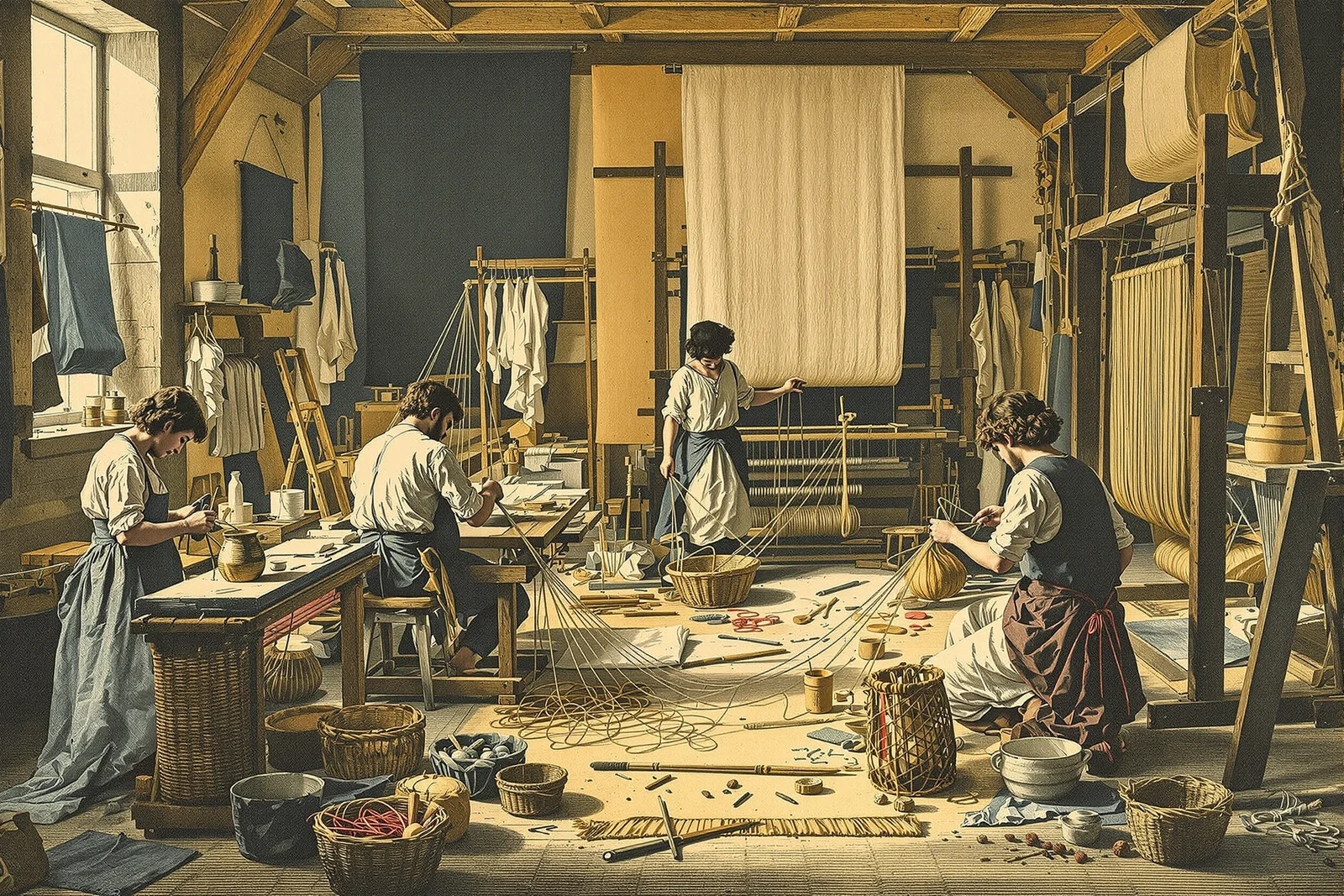
The Complete Cordage Making, Natural Fiber Processing, and Rope Production Guide
A Sovereignty Module of the Practitioner Community
Preamble
Cordage — string, twine, and rope made from natural fibers — is the invisible technology that holds civilization together. Without cordage, there are no bows, no fishing lines, no shelters, no nets, no snares, no lashings, no clothing, no boats. The reverse-twist method of making cordage from plant fibers is a skill that transforms grass, bark, and leaves into strong, functional line. This campaign covers fiber identification, processing, spinning, and rope construction.
Part I: Fiber Sources
Chapter 1: Plant Fiber Comparison
| Plant | Fiber Type | Strength | Availability | Processing |
|---|---|---|---|---|
| Dogbane (Indian hemp) | Bast (bark) | Excellent | Eastern US fields | Ret, strip, separate |
| Stinging nettle | Bast (bark) | Excellent | Moist woodland edges | Ret, strip, separate |
| Milkweed | Bast (bark) | Good | Fields, roadsides | Ret, strip, separate |
| Yucca | Leaf fiber | Very good | Arid regions | Pound, scrape, separate |
| Cattail | Leaf fiber | Fair | Wetlands | Twist green leaves |
| Inner bark (basswood, elm, cedar) | Bark fiber | Good-very good | Forest | Strip, soak, separate |
| Palm fiber | Leaf/trunk | Good | Tropical/subtropical | Strip, dry, twist |
| Flax | Bast (bark) | Excellent | Cultivated | Ret, break, hackle |
| Hemp | Bast (bark) | Excellent | Cultivated | Ret, break, hackle |
| Sisal/agave | Leaf fiber | Very good | Arid/tropical | Pound, scrape |
Chapter 2: Fiber Processing
| Step | Action | Details |
|---|---|---|
| 1. Harvest | Cut stalks at base when mature (fall/winter) | Dead, dry stalks are easiest to process |
| 2. Ret (optional) | Soak stalks in water 1-2 weeks until outer bark loosens | Retting breaks down pectin that binds fibers to woody core |
| 3. Break | Crush stalks to break woody core | Roll under foot, pound with rock, or bend repeatedly |
| 4. Strip | Peel fiber strips away from woody core | Long, continuous strips are best |
| 5. Separate | Pull fibers apart into thin bundles | Thinner fibers = finer, stronger cordage |
| 6. Dry | Air dry fibers completely before storage | Damp fibers rot in storage |
| 7. Soften | Before use, dampen slightly and roll between hands | Slightly damp fibers twist more easily |
Chapter 3: The Reverse Twist (Two-Ply Cordage)
| Step | Action | Details |
|---|---|---|
| 1. Select fibers | Take a bundle of fibers, slightly longer than desired cordage | Thicker bundle = thicker cordage |
| 2. Divide | Split bundle into two roughly equal groups at one end | Hold the split point between thumb and finger |
| 3. Twist A | Twist the top bundle clockwise (away from you) | 2-3 full twists |
| 4. Wrap | Bring twisted bundle A down and over bundle B (counterclockwise) | A is now on bottom, B is now on top |
| 5. Twist B | Twist the new top bundle (B) clockwise (away from you) | Same 2-3 twists |
| 6. Wrap | Bring B down and over A (counterclockwise) | Continue alternating |
| 7. Splice | When a bundle runs short, lay new fibers alongside and twist in | Stagger splices — never splice both bundles at the same point |
| 8. Continue | Repeat twist-wrap-twist-wrap for entire length | Opposing twists lock together — cordage will not unravel |
Chapter 4: Cordage Strength Reference
| Cordage Diameter | Approximate Breaking Strength | Equivalent Use |
|---|---|---|
| 1/16 inch (thread) | 5-15 lbs | Sewing, fishing line, snare triggers |
| 1/8 inch (twine) | 20-50 lbs | Snares, binding, bow string, netting |
| 1/4 inch (small rope) | 50-150 lbs | Lashing, shelter construction, tow lines |
| 1/2 inch (rope) | 150-400 lbs | Heavy lashing, hauling, climbing |
| 3/4 inch+ (heavy rope) | 400+ lbs | Mooring, heavy lifting, bridge construction |
Chapter 5: The Practitioner Cordage Reference Card
THE REVERSE TWIST IS UNIVERSAL: Every culture on Earth independently discovered the same technique: twist individual strands one direction, wrap them the opposite direction. The opposing forces lock together. This is the only cordage technique you need to know.
SPLICE BEFORE YOU RUN OUT: When a fiber bundle gets thin (3-4 inches remaining), lay new fibers alongside and twist them in together. The overlap zone should be at least 3 inches. Never let a bundle run completely out before splicing.
STAGGER YOUR SPLICES: If both bundles are spliced at the same point, that point is weak. Always splice one bundle at a time, with splices at least 2 inches apart.
WET FIBER TWISTS EASIER: Slightly damp fibers are more pliable and twist more smoothly. Don't soak them — just dampen. Finished cordage is stronger when dry.
REMEMBER: Cordage is the multiplier technology. Without it, you cannot make a bow, a net, a snare, a shelter, a raft, or a fishing line. With it, you can make all of these from natural materials. A Practitioner who can make cordage from plants has the connective tissue that holds every other primitive technology together.
Council Approval
All 12 voices unanimously approve. Complete cordage sovereignty.
Council Result: 12/12 APPROVED. Campaign 127 is complete.