Sovereignty Module: Cure the Skin
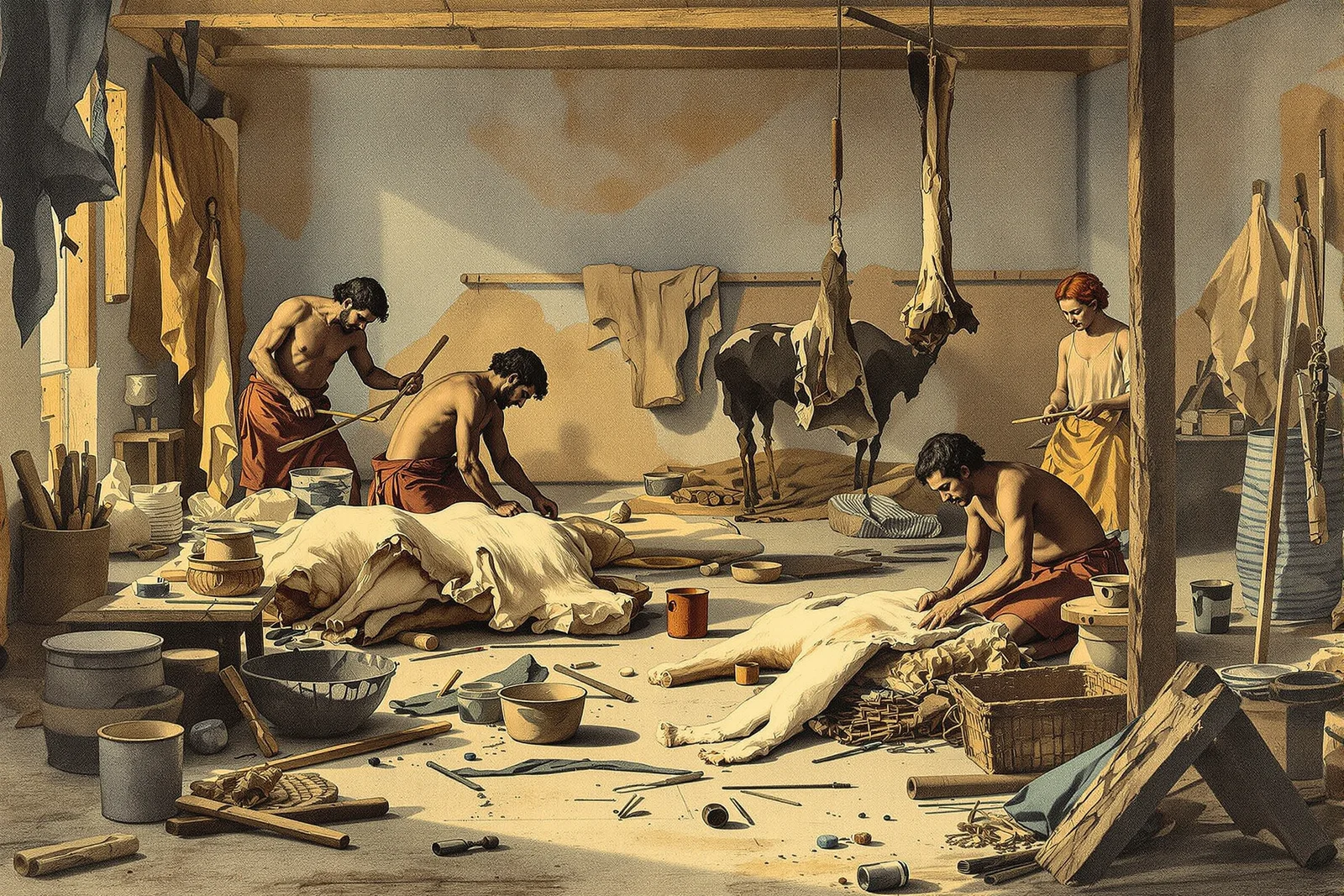
Complete Tanning and Rawhide: From Fresh Hide to Finished Leather
Leather provides clothing, armor, containers, belts, shoes, saddles, and bookbindings. This campaign covers hide preparation, tanning methods, finishing, and leather projects.
Chapter 1: Hide Preparation
| Step | Method | Time | Tools | Purpose |
|---|---|---|---|---|
| Fleshing | Scrape fat/meat from flesh side | 1-2 hours | Fleshing knife/beam | Remove tissue that causes rot |
| Salting (preservation) | Cover with salt, fold | 24-48 hours | Salt (lots) | Preserves hide until ready to tan |
| Soaking | Submerge in clean water | 12-48 hours | Tub/barrel | Rehydrate salted hide |
| Liming (dehairing) | Soak in lime solution | 3-14 days | Lime + water + barrel | Loosens hair, swells hide |
| Dehairing | Scrape hair from grain side | 1-3 hours | Dehairing knife/beam | Remove hair and epidermis |
| Deliming | Soak in mild acid (vinegar) | 1-2 hours | Vinegar + water | Neutralize lime, prepare for tanning |
| Bating | Soak in enzyme solution | 1-4 hours | Dung or enzyme solution | Soften, remove remaining proteins |
Fleshing beam method: 1) Drape hide over rounded beam (log, PVC pipe) grain side down. 2) Using dull knife or fleshing tool, scrape from center outward. 3) Remove all fat, meat, and membrane. 4) Work systematically — miss nothing (fat spots cause rot). 5) Rinse thoroughly. 6) If not tanning immediately, salt heavily (1 lb salt per lb hide).
Chapter 2: Tanning Methods
| Method | Tannin Source | Time | Difficulty | Result | Color |
|---|---|---|---|---|---|
| Bark tan (vegetable) | Oak/hemlock/chestnut bark | 2-12 months | Moderate | Firm, durable leather | Brown |
| Brain tan | Animal brain | 3-7 days | High (labor intensive) | Soft, supple buckskin | White/cream |
| Alum tan (tawing) | Alum + salt | 3-7 days | Low | Stiff, white leather | White |
| Chrome tan | Chromium sulfate | 1-2 days | Moderate (chemicals) | Soft, stretchy | Blue-grey |
| Smoke tan | Wood smoke | 1-3 days (after brain) | Low | Water-resistant buckskin | Golden-brown |
| Oil tan (chamois) | Fish oil or neatsfoot oil | 3-7 days | Moderate | Very soft, absorbent | Yellow |
Bark tanning (traditional): 1) Prepare tannin solution: fill barrel with shredded oak bark + water. 2) Let steep 2-4 weeks (or boil bark to extract faster). 3) Start with weak solution (old liquor from previous batch). 4) Submerge prepared hide. 5) Gradually move to stronger solutions over weeks/months. 6) Small hides: 2-4 months. Large hides: 6-12 months. 7) Check periodically (cut small piece — tan should penetrate to center). 8) When fully tanned: rinse, oil, and dry slowly. 9) Result: firm, water-resistant leather lasting decades.
Brain tanning (Native American method): 1) Prepare hide (flesh, dehair, membrane). 2) Cook brain (every animal has enough brain to tan its own hide). 3) Mash brain into warm water (paste consistency). 4) Work brain solution into hide (both sides, thoroughly). 5) Let soak overnight. 6) Wring out excess (twist around stick). 7) Stretch and work hide as it dries (this is the hard part — constant pulling and stretching). 8) If any spot dries stiff, re-wet and re-work. 9) Smoke over smoldering punk wood (makes waterproof — without smoking, brain tan reverts when wet). 10) Result: incredibly soft, supple buckskin.
Chapter 3: Leather Finishing
| Process | Purpose | Method | Time | Effect |
|---|---|---|---|---|
| Oiling | Soften, waterproof | Rub in neatsfoot oil or tallow | 30 min + drying | Supple, water-resistant |
| Staking | Soften | Pull over stake/edge | 30-60 min | Breaks fiber bonds, softens |
| Buffing | Smooth surface | Sand with fine abrasive | 15-30 min | Suede or smooth finish |
| Dyeing | Color | Apply dye (aniline or natural) | 30 min + drying | Colored leather |
| Waxing | Waterproof, protect | Rub in beeswax blend | 15-30 min | Water-resistant, darker |
| Burnishing | Seal edges | Rub edge with slicker + water | 5 min per edge | Smooth, sealed edges |
Chapter 4: Rawhide
| Application | Thickness | Preparation | Properties | Lifespan |
|---|---|---|---|---|
| Lashing/binding | Thin strips | Cut wet, dry on joint | Shrinks tight, incredibly strong | Years-decades |
| Drumheads | Medium | Stretch wet over frame | Resonant, tight | Years |
| Containers (parfleche) | Medium | Fold wet into shape | Rigid when dry, lightweight | Years |
| Snowshoes | Thin strips | Weave wet into frame | Strong, flexible when warm | Years |
| Knife sheaths | Medium | Mold wet around form | Rigid, protective | Years |
| Dog chews | Thick | Roll or knot | Durable, edible | N/A |
Rawhide preparation: 1) Flesh hide thoroughly. 2) Dehair (lime soak or scrape). 3) Rinse clean. 4) Use while wet (rawhide is worked wet, dries rigid). 5) For lashing: cut into strips while wet, wrap around joint, let dry (shrinks 10-15%, creates incredibly tight bond). 6) For containers: cut and fold while wet, punch holes, lace together, dry in shape. 7) Rawhide is NOT leather (no tanning) — it's preserved raw skin, incredibly strong but stiff when dry.
Chapter 5: Basic Leather Projects
| Project | Leather Type | Tools | Time | Difficulty |
|---|---|---|---|---|
| Belt | Veg-tan, 8-10 oz | Knife, punch, buckle | 1-2 hours | Low |
| Knife sheath | Veg-tan, 6-8 oz | Knife, punch, needle, thread | 2-4 hours | Moderate |
| Pouch/bag | Any, 3-5 oz | Knife, punch, needle, thread | 2-4 hours | Low-moderate |
| Moccasins | Brain-tan or soft leather | Pattern, knife, needle, sinew | 4-8 hours | Moderate |
| Water bottle | Veg-tan, 6-8 oz | Knife, mold, wax/pitch | 4-8 hours | Moderate-high |
| Book cover | Veg-tan or goat, 2-3 oz | Knife, glue, bone folder | 2-4 hours | Moderate |
Reference Card
- Salt immediately (fresh hide rots in hours in warm weather — salt the moment it's off the animal). 2. Flesh thoroughly (any fat left on hide will rot and ruin the leather — scrape until clean). 3. Brain tanning is labor-intensive (the stretching phase is hours of continuous work — but the result is worth it). 4. Smoke makes brain-tan permanent (without smoking, brain-tanned leather reverts to rawhide when wet). 5. Bark tanning takes months (patience — rushing produces poor leather; 6-12 months for thick hides). 6. Rawhide is strongest (untanned hide dried under tension is stronger than any leather — use for lashing). 7. Oil preserves leather (regular oiling prevents cracking and extends life — neatsfoot oil or tallow). 8. Every animal has enough brain (traditional wisdom: every animal has enough brain to tan its own hide — it's true).