Sovereignty Module: Distill the Spirit
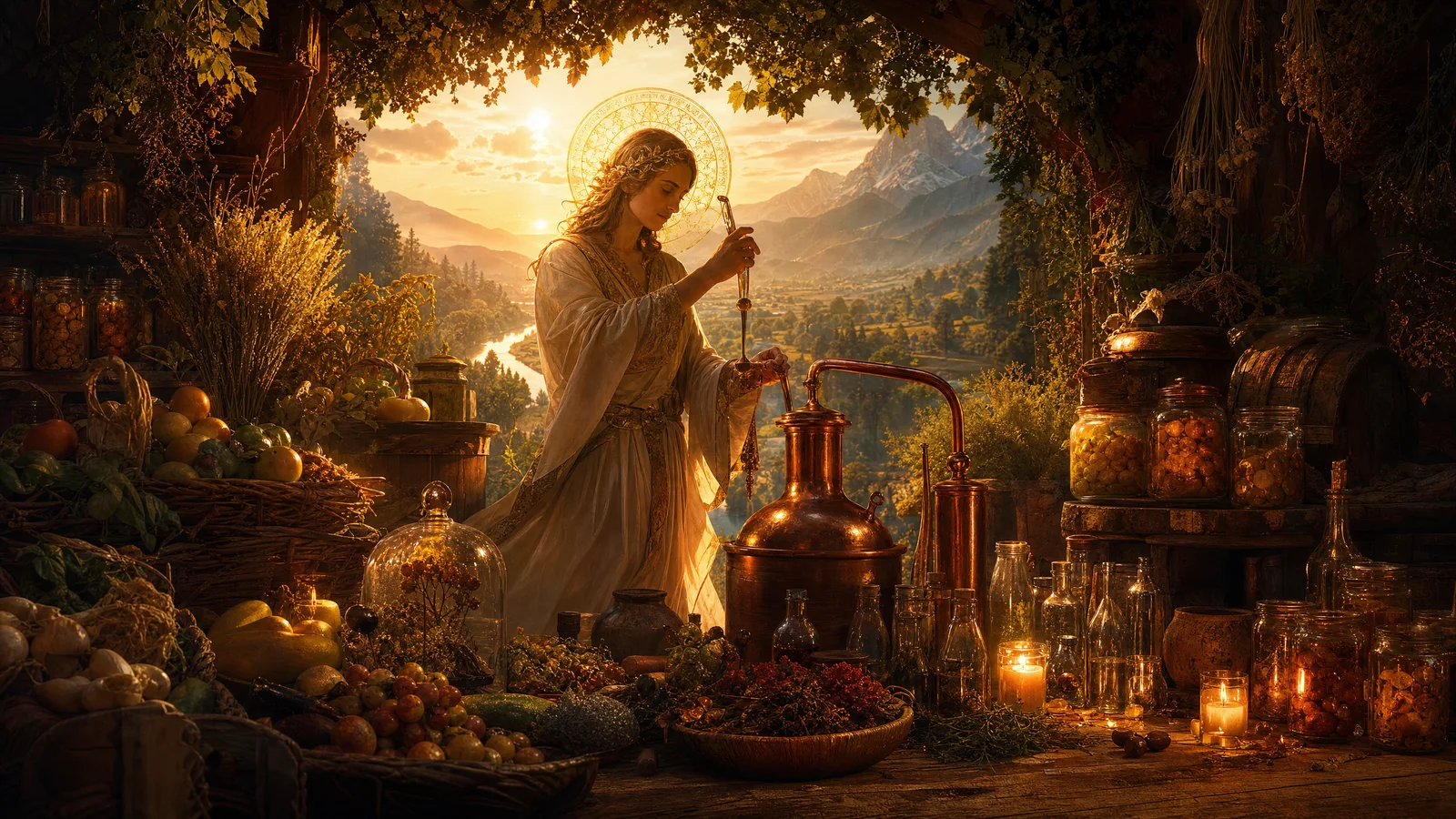
Complete Distillation, Alcohol Production, and Medicinal Spirits Guide
The Philosophy of Distillation
Distillation is the art of separation. By exploiting the different boiling points of liquids, we can purify water, concentrate alcohol, extract essential oils, and produce medicines. Alcohol itself is humanity's oldest antiseptic, preservative, solvent, and fuel. A community that can distill has access to wound disinfection, tincture medicine, fuel for lamps and engines, solvent for chemistry, and preservation of food and botanical extracts. This campaign covers fermentation, distillation apparatus construction, and the production of useful spirits.
Chapter 1: Fermentation Basics
What Fermentation Is:
Yeast (a single-celled fungus) consumes sugar and produces alcohol (ethanol) and carbon dioxide as waste products. This is anaerobic respiration.
Sugar + Yeast = Alcohol + CO2
Fermentable Sugar Sources:
| Source | Sugar Content | Potential Alcohol | Preparation |
|---|---|---|---|
| Honey (mead) | 70-80% | 12-18% | Dilute 1:3 with water |
| Grapes (wine) | 15-25% | 10-15% | Crush, no additional sugar needed |
| Apples (cider) | 10-15% | 5-8% | Press juice, ferment directly |
| Grain (beer/whiskey) | Starch (must convert) | 5-10% (beer), higher with distillation | Malt (sprout), mash, convert starch to sugar |
| Sugar cane/molasses | 50-70% | 10-15% (wash) | Dilute, add nutrients |
| Potatoes/root vegetables | Starch (must convert) | 8-12% (wash) | Cook, add malt enzymes or acid |
| Fruit (any) | 8-20% | 5-12% | Crush, press, ferment |
| Birch/maple sap | 2-5% | 1-3% (or concentrate first) | Collect in spring, ferment fresh |
Yeast Sources:
| Source | Reliability | Flavor | Method |
|---|---|---|---|
| Wild yeast (on fruit skins) | Variable | Complex, unpredictable | Crush fruit, wait |
| Sourdough starter (liquid portion) | Moderate | Sour, complex | Add liquid from active starter |
| Commercial wine/beer yeast | High | Clean, predictable | Purchased packets |
| Bread yeast | High | Bread-like (less clean) | Grocery store |
| Ginger bug (wild capture) | Moderate | Gingery, complex | Grated ginger + sugar + water, feed daily |
Chapter 2: Making a Wash (Fermented Liquid for Distillation)
Simple Sugar Wash (highest yield, simplest):
| Ingredient | Amount | Purpose |
|---|---|---|
| Water | 5 gallons | Solvent |
| Sugar (any type) | 8-10 lbs | Fermentable substrate |
| Yeast | 1 packet (or equivalent wild) | Fermentation agent |
| Yeast nutrient (optional) | 1 tsp | Helps yeast health (can substitute raisins or tomato paste) |
Process:
- Dissolve sugar in warm water (not hot, which kills yeast)
- Cool to 70-80F
- Add yeast
- Seal with airlock (allows CO2 out, prevents oxygen and bacteria in)
- Ferment 5-14 days at 65-75F until bubbling stops
- Result: 10-14% alcohol wash, ready for distillation
Grain Wash (for whiskey-type spirits):
- Crush or coarsely grind grain (corn, barley, rye, wheat)
- Cook in water (1 lb grain per gallon) at 150-160F for 60 minutes
- This activates enzymes in malted grain (or add commercial enzymes) that convert starch to sugar
- Cool to 70-80F
- Add yeast
- Ferment 5-7 days
- Strain off grain solids
- Distill
Chapter 3: Still Construction
Pot Still (simplest, most traditional):
| Component | Material | Function |
|---|---|---|
| Pot (boiler) | Copper, stainless steel, or food-grade vessel | Holds wash, applies heat |
| Column/swan neck | Copper pipe rising from pot | Carries vapor upward |
| Lyne arm | Copper pipe angling downward from column top | Directs vapor to condenser |
| Condenser (worm) | Copper coil submerged in cold water | Cools vapor back to liquid |
| Collection vessel | Glass jar or food-grade container | Catches distillate |
| Thermometer | At top of column | Monitors vapor temperature |
Building a Simple Pot Still:
- Pot: Any large cooking pot with a modified lid (or pressure cooker with valve removed)
- Column: 2-inch copper pipe, 18-24 inches tall, soldered or sealed to lid
- Lyne arm: 2-inch copper pipe, angled downward at 15-20 degrees
- Condenser: 1/2-inch copper tubing coiled 8-10 times, submerged in a bucket of cold running water
- All joints sealed with food-grade silicone, flour paste, or rye dough (traditional)
- Heat source: propane burner, wood fire, or electric element
Reflux Still (produces higher purity):
Adds a packed column (filled with copper mesh, glass beads, or ceramic rings) between the pot and condenser. Vapor rises through packing, partially condenses, falls back down (reflux), and is re-vaporized. Each cycle increases purity. Produces 85-95% alcohol in a single run (vs. 40-65% for pot still).
Chapter 4: The Distillation Process
Temperature Guide:
| Temperature (F) | What Comes Off | Action |
|---|---|---|
| 148-150 | Methanol (TOXIC, wood alcohol) | DISCARD (foreshots) |
| 150-175 | Acetone, aldehydes (harsh, toxic) | DISCARD (heads) |
| 175-195 | Ethanol (the good stuff) | KEEP (hearts) |
| 195-205 | Fusel oils (heavy alcohols, harsh) | Keep some or discard (tails) |
| 205-212 | Water (with trace compounds) | Stop collection |
The Cuts (critical for safety and quality):
| Cut | Volume (approximate) | Smell/Taste | Disposition |
|---|---|---|---|
| Foreshots | First 1-2 oz per gallon of wash | Solvent-like, sharp | ALWAYS DISCARD (contains methanol) |
| Heads | Next 10-15% of run | Harsh, acetone, nail polish | Discard or save for cleaning/fuel |
| Hearts | Middle 50-65% of run | Clean, smooth, pleasant | KEEP (this is your product) |
| Tails | Final 20-30% of run | Oily, heavy, wet cardboard | Save for re-distillation or discard |
SAFETY: METHANOL WARNING
Methanol (wood alcohol) is produced in small quantities during all fermentation. It boils at 148F (lower than ethanol at 173F) and comes off first. Methanol causes blindness and death. ALWAYS discard the first portion of distillate (foreshots). This is non-negotiable.
Fruit-based washes (especially apple and stone fruits) produce more methanol than grain or sugar washes. Extra caution with fruit spirits.
Chapter 5: Products and Applications
Drinking Spirits (diluted to 40-50% alcohol):
| Spirit | Base | Flavor | Aging |
|---|---|---|---|
| Whiskey | Grain (corn, barley, rye) | Grain character + oak | Aged in oak (months to years) |
| Brandy | Wine (grape) | Fruit, floral | Aged in oak |
| Rum | Sugar cane/molasses | Sweet, caramel | Aged in oak (optional) |
| Vodka | Any (sugar, grain, potato) | Neutral (multiple distillations) | None |
| Fruit brandy | Any fruit | Fruit character | Optional |
| Mead spirit | Honey wine | Honey, floral | Optional |
Medicinal Applications:
| Product | Alcohol Strength | Use | Preparation |
|---|---|---|---|
| Wound antiseptic | 60-70% | Kill bacteria on skin/wounds | Apply directly or dilute to 60-70% |
| Tincture solvent | 40-95% | Extract medicinal compounds from herbs | Soak herbs in alcohol 2-6 weeks |
| Liniment | 50-70% + herbs | Muscle/joint pain relief | Infuse warming herbs (cayenne, ginger) |
| Mouthwash | 20-30% + herbs | Oral antiseptic | Dilute with water, add mint/thyme |
| Preservative | 20%+ | Preserve fruit, herbs, biological specimens | Submerge in alcohol |
Industrial/Utility Applications:
| Use | Strength | Application |
|---|---|---|
| Lamp fuel | 70-95% | Burns clean in oil lamps (brighter than oil) |
| Solvent | 90-95% | Dissolves resins, shellac, essential oils |
| Engine fuel | 95%+ (anhydrous) | Runs internal combustion engines (with modification) |
| Cleaning agent | 60-70% | Disinfects surfaces, removes grease |
| Thermometer fluid | 95%+ (colored) | Fills glass tube thermometers |
| Fire starter | 70%+ | Ignites easily, burns hot |
Chapter 6: Essential Oil Distillation
Steam Distillation (for plant oils):
- Place plant material (flowers, leaves, bark, roots) on a screen above water in the still
- Heat water to produce steam
- Steam passes through plant material, carrying volatile oils
- Steam + oil vapor passes through condenser
- Condensed liquid separates into two layers: water (hydrosol) on bottom, essential oil floating on top
- Skim off oil with pipette or separating funnel
Yield Rates:
| Plant | Part Used | Oil Yield (% by weight) | Lbs of Plant per oz of Oil |
|---|---|---|---|
| Lavender | Flowers | 1.0-3.0% | 2-6 lbs |
| Peppermint | Leaves | 0.5-1.5% | 4-12 lbs |
| Rosemary | Leaves/flowers | 0.5-2.0% | 3-12 lbs |
| Eucalyptus | Leaves | 1.0-3.5% | 2-6 lbs |
| Tea tree | Leaves | 1.0-2.0% | 3-6 lbs |
| Rose | Petals | 0.02-0.05% | 1,200-3,000 lbs (extremely precious) |
| Pine/fir | Needles | 0.5-1.0% | 6-12 lbs |
| Cinnamon | Bark | 0.5-1.0% | 6-12 lbs |
| Clove | Buds | 15-20% | 0.3-0.4 lbs |
Chapter 7: Water Purification by Distillation
Distillation produces the purest water possible. All bacteria, viruses, parasites, dissolved minerals, heavy metals, and chemical contaminants are left behind in the boiler. Only pure H2O vapor passes through the condenser.
When to Use Distilled Water:
| Situation | Why |
|---|---|
| Contaminated water source (chemical) | Boiling alone does not remove chemicals; distillation does |
| Medical use (wound irrigation, IV fluid base) | Must be sterile and mineral-free |
| Battery electrolyte (lead-acid) | Minerals short-circuit batteries |
| Steam irons, humidifiers | Prevents mineral buildup |
| Laboratory/chemistry | Requires pure solvent |
Solar Still (zero-fuel distillation):
- Dig a pit (3 feet wide, 2 feet deep)
- Place a collection container in the center
- Cover pit with clear plastic sheet
- Seal edges with soil/rocks
- Place a small stone on plastic directly above the collection container (creates a low point)
- Sun heats the ground; moisture evaporates, condenses on the cooler plastic, runs to the low point, and drips into the container
- Output: 1-3 cups per day (survival quantity only)
Chapter 8: Vinegar Production
Vinegar is the next step after alcohol:
Alcohol + Oxygen + Acetobacter (bacteria) = Acetic Acid (vinegar)
Process:
- Start with any low-alcohol liquid (5-10%): wine, cider, beer, diluted spirits
- Expose to air (acetobacter needs oxygen)
- Add vinegar mother (gelatinous culture of acetobacter) or unpasteurized vinegar as starter
- Cover with cloth (allows air, prevents insects)
- Wait 2-8 weeks at room temperature
- A mother will form on the surface (rubbery disk)
- Taste periodically; when sufficiently sour (4-8% acetic acid), bottle and cap
Vinegar Uses:
| Use | Strength | Application |
|---|---|---|
| Food preservation (pickling) | 5%+ acetic acid | Submerge vegetables in vinegar brine |
| Cooking/condiment | 5-7% | Salad dressing, marinades, sauces |
| Cleaning/disinfecting | 5-10% | Surface cleaner, mild disinfectant |
| Medicine | 5% | Sore throat gargle, wound wash (diluted) |
| Herbicide | 10-20% (horticultural) | Kills weeds on contact |
| Fabric mordant | 5% | Helps set natural dyes |
| Rust removal | 5%+ | Soak rusty tools overnight |
Chapter 9: Safety and Legal Considerations
Distillation Safety:
| Hazard | Risk | Prevention |
|---|---|---|
| Fire/explosion | Alcohol vapor is highly flammable | Never distill near open flame; use electric heat or indirect fire; ventilate |
| Methanol poisoning | Blindness, death | ALWAYS discard foreshots (first 1-2 oz per gallon of wash) |
| Pressure buildup | Still explosion | NEVER seal the system completely; vapor must always have an exit path |
| Burns | Hot liquid, steam | Handle carefully; use heat-resistant gloves; keep children away |
| Carbon monoxide | If heating indoors with combustion | Ventilate; use electric heat indoors |
Quality Testing:
| Test | Method | Purpose |
|---|---|---|
| Proof/ABV | Hydrometer (alcoholmeter) in distillate at 60F | Measure alcohol content |
| Methanol check | Discard foreshots; smell test (solvent = bad) | Safety |
| Clarity | Visual inspection | Cloudy = tails contamination (fusel oils) |
| Taste | Small sip of diluted product | Quality assessment |
| Flame test | Ignite small sample | Blue flame = high proof; yellow = low proof or contaminants |
Chapter 10: Production Planning
For a Community of 50:
| Product | Annual Need | Wash Required | Distillation Runs |
|---|---|---|---|
| Medicinal alcohol (antiseptic) | 5-10 gallons | 25-50 gallons wash | 5-10 runs |
| Tincture solvent | 2-3 gallons | 10-15 gallons wash | 2-3 runs |
| Lamp fuel | 10-20 gallons | 50-100 gallons wash | 10-20 runs |
| Vinegar (food preservation) | 20-30 gallons | 20-30 gallons wine/cider | Fermentation only |
| Essential oils (medicine) | 1-2 quarts | 50-200 lbs plant material | 10-20 steam runs |
| Drinking spirits (morale) | 5-10 gallons | 25-50 gallons wash | 5-10 runs |
| Total distillation runs | 30-60 per year |
Sugar Requirements:
At 8-10 lbs sugar per 5-gallon batch:
- 50-100 lbs sugar equivalent per year for all distillation needs
- Sources: honey (from beekeeping campaign), fruit (orchard), grain (milling campaign), sugar beets, maple/birch sap
Reference Card
DISTILLATION ESSENTIALS:
- ALWAYS discard foreshots (first 1-2 oz per gallon): contains methanol (toxic)
- NEVER seal a still completely: pressure buildup causes explosion
- NEVER distill near open flame: alcohol vapor is explosive
- Hearts (the good stuff) come off at 175-195F vapor temperature
- Alcohol is medicine (antiseptic), fuel (lamps, engines), and solvent (tinctures, chemistry)
- Vinegar is alcohol + air + time (no distillation needed)
- Essential oils: steam through plant material, collect oil floating on condensed water
- A simple pot still can be built from a cooking pot, copper pipe, and a bucket of cold water
This campaign provides the complete knowledge to produce alcohol, essential oils, purified water, and vinegar from basic materials. A community with distillation capability has access to medicine (antiseptics, tinctures), fuel (lamp oil, engine fuel), preservation (vinegar, alcohol), and the chemical foundation for advanced manufacturing. Distillation is the bridge between agriculture and chemistry.