Sovereignty Module: Teach the Children
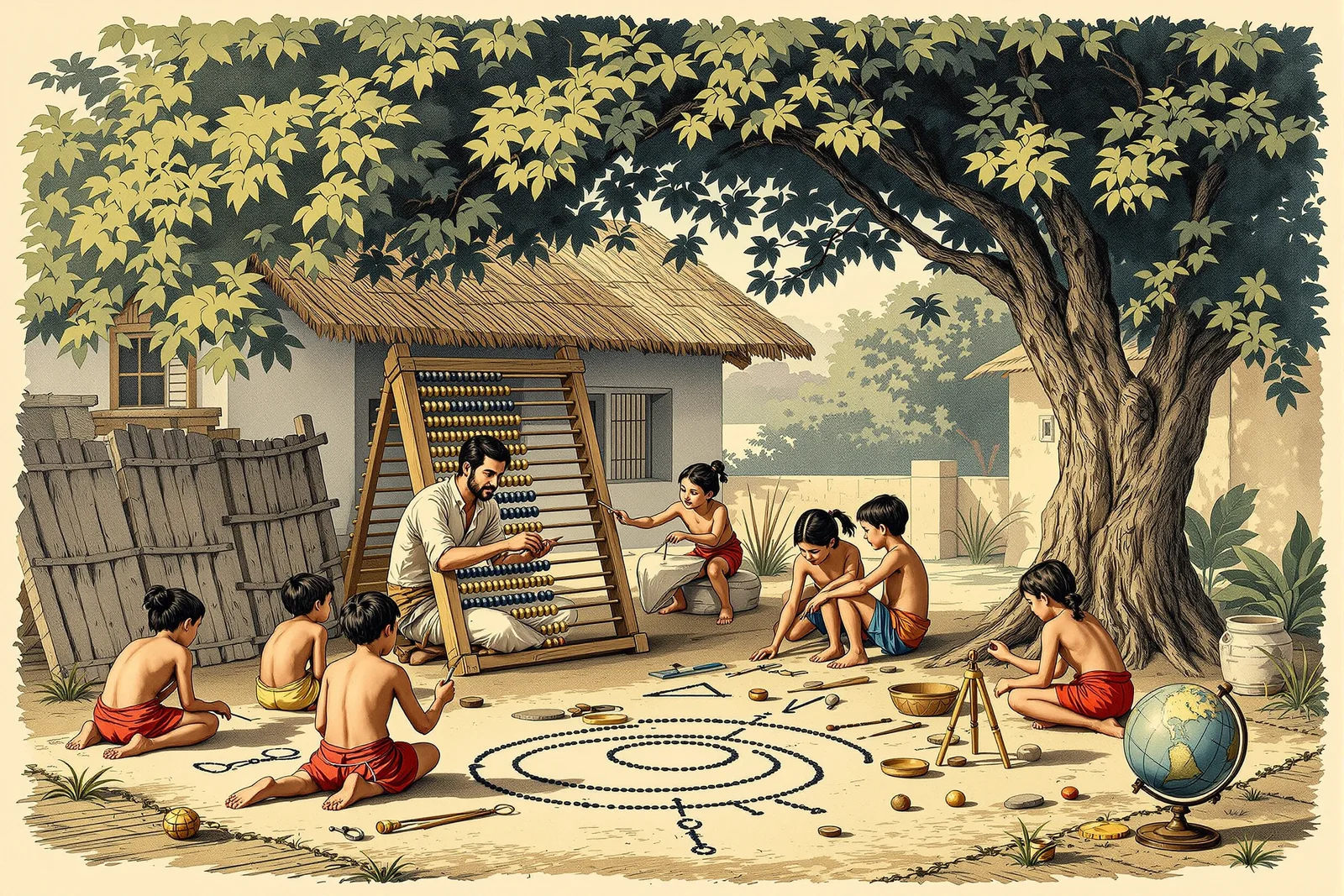
Complete Education and Knowledge Transfer
Knowledge dies with the knower unless deliberately transferred. This campaign covers teaching methods, curriculum design, apprenticeship, and building a learning community.
Chapter 1: Teaching Methods
| Method | Best For | Age Group | Resources Needed | Retention Rate |
|---|---|---|---|---|
| Demonstration + practice | Physical skills (crafts, farming) | All ages | Materials, workspace | 75% (practice) |
| Storytelling/oral tradition | History, values, culture | All ages | None | 50-70% (narrative) |
| Apprenticeship (1-on-1) | Complex trades (smithing, medicine) | 12+ years | Master + materials | 90%+ (immersion) |
| Lecture/explanation | Theory, concepts, principles | 10+ years | None (or board/paper) | 20-30% (passive) |
| Discussion/Socratic | Critical thinking, analysis | 12+ years | None | 50-70% (engagement) |
| Reading/writing | All academic subjects | 6+ years | Books, paper, writing tools | 30-50% (reading) |
| Group project | Collaboration, applied skills | 8+ years | Materials, workspace | 75%+ (application) |
| Teaching others | Mastery of any subject | 10+ years | Audience | 90%+ (teaching) |
Learning pyramid (retention after 24 hours): Lecture 5%. Reading 10%. Audio-visual 20%. Demonstration 30%. Discussion 50%. Practice 75%. Teaching others 90%. Implication: minimize lecture, maximize practice and peer teaching.
Chapter 2: Core Curriculum (Rebuild Civilization)
| Subject | Priority | Age to Begin | Mastery Time | Why Essential |
|---|---|---|---|---|
| Reading and writing | Critical | 5-6 years | 2-3 years (basic) | Access to all recorded knowledge |
| Mathematics (arithmetic) | Critical | 5-6 years | 3-4 years | Trade, construction, measurement |
| Agriculture/gardening | Critical | 4-5 years (helping) | Ongoing (seasonal) | Food production |
| Health/hygiene/first aid | Critical | 5-6 years | 1-2 years (basic) | Disease prevention, injury care |
| Swimming/water safety | Critical | 4-5 years | 1 year | Drowning prevention |
| Fire starting/management | Important | 8-10 years | Months | Warmth, cooking, signaling |
| Animal care | Important | 6-8 years | Ongoing | Food, labor, companionship |
| Construction basics | Important | 10-12 years | 2-3 years | Shelter, infrastructure |
| Self-defense | Important | 8-10 years | Ongoing | Personal safety |
| Navigation/orientation | Important | 8-10 years | 1-2 years | Travel, not getting lost |
| Music/art | Valuable | 4-5 years | Ongoing | Culture, morale, expression |
| History/civics | Valuable | 8-10 years | Ongoing | Context, governance, identity |
| Science/observation | Valuable | 6-8 years | Ongoing | Problem-solving, innovation |
| Trade/economics | Valuable | 10-12 years | 1-2 years | Commerce, resource management |
Chapter 3: Apprenticeship System
| Phase | Duration | Focus | Master's Role | Apprentice's Role |
|---|---|---|---|---|
| Observation | 1-3 months | Watch, learn vocabulary, assist | Demonstrate, explain, assign simple tasks | Watch carefully, ask questions, do chores |
| Guided practice | 6-12 months | Perform tasks under supervision | Correct, encourage, increase difficulty | Practice repeatedly, accept correction |
| Independent practice | 1-2 years | Work independently, handle problems | Review work, assign projects, reduce oversight | Produce quality work, solve problems |
| Mastery | 6-12 months | Teach others, innovate, specialize | Certify competence, release to independence | Demonstrate mastery, begin teaching |
Apprenticeship principles: Start age 12-14 (traditional). Duration 3-7 years depending on trade complexity. Master provides: housing, food, training, tools at completion. Apprentice provides: labor, obedience, dedication. Journeyman phase: travel, work under multiple masters, broaden skills. Master phase: establish own workshop, take apprentices.
Chapter 4: Library and Knowledge Preservation
| Format | Durability | Reproduction | Access | Cost | Best For |
|---|---|---|---|---|---|
| Oral tradition | Fragile (dies with person) | Easy (telling) | Immediate | None | Stories, songs, procedures |
| Handwritten book | 100-500+ years (good paper) | Slow (copying) | Requires literacy | Moderate | Detailed knowledge, reference |
| Printed book | 100-500+ years | Fast (press) | Requires literacy | Low (per copy) | Mass education, distribution |
| Stone/clay tablet | 1000+ years | Very slow | Requires literacy | High (labor) | Permanent records, laws |
| Apprenticeship (living) | Continuous (if chain unbroken) | Slow (1-on-1) | Personal | High (time) | Complex skills, tacit knowledge |
Library priorities (what to preserve first): 1. Medical knowledge (saves lives immediately). 2. Agricultural knowledge (food production). 3. Construction/engineering (shelter, infrastructure). 4. History and law (identity, governance). 5. Science and mathematics (innovation). 6. Literature and philosophy (meaning, culture).
Chapter 5: School Organization
| Age Group | Hours/Day | Subjects | Method | Teacher Ratio |
|---|---|---|---|---|
| 4-6 (early) | 2-3 hours | Letters, numbers, stories, play, nature | Play-based, exploration | 1:8-10 |
| 7-9 (primary) | 4-5 hours | Reading, writing, math, nature, crafts | Structured + hands-on | 1:12-15 |
| 10-12 (intermediate) | 5-6 hours | All academics + trade introduction | Mixed (lecture + practice) | 1:15-20 |
| 13-15 (secondary) | 6-7 hours | Academics + apprenticeship begins | Half classroom, half workshop | 1:10-15 |
| 16+ (advanced) | Full day | Specialization, apprenticeship | Primarily workshop/field | 1:3-5 (master:apprentice) |
One-room school model: All ages together. Older students teach younger (peer tutoring). Teacher focuses on new material and assessment. Advantages: older students reinforce learning by teaching. Younger students see what's ahead. Community bonds form across ages. Works with 1 teacher for 20-30 students.
Chapter 6: Assessment and Standards
| Skill Level | Indicator | Assessment Method | Certification |
|---|---|---|---|
| Awareness | Can describe the concept | Oral questioning | None needed |
| Understanding | Can explain why and how | Written or oral explanation | None needed |
| Application | Can perform with guidance | Observed practice (supervised) | Apprentice level |
| Proficiency | Can perform independently | Independent project completion | Journeyman level |
| Mastery | Can teach others and innovate | Teaching demonstration + original work | Master level |
Reference Card
- Practice > lecture: retention is 75% for practice, 5% for lecture. Teach by doing. Minimize talking, maximize hands-on.
- Teach to learn: having students teach others produces 90% retention. Use peer tutoring. Older teaches younger.
- Apprenticeship: the proven system for complex skills. Observation → guided practice → independent practice → mastery. 3-7 years.
- Reading: the master skill. All other knowledge becomes accessible through reading. Teach literacy first and relentlessly.
- Library: preserve knowledge in writing. Multiple copies in multiple locations. Knowledge lost is civilization lost.
- Start young: children learn fastest. Begin practical skills at 4-5 (gardening, animal care). Formal academics at 5-6.
- Assessment: can they DO it, not just describe it? Practical demonstration is the only real test of skill.
- Culture: music, stories, art, and celebration are not luxuries. They bind communities, preserve identity, and sustain morale.