Campaign 2: Grow the Foundation
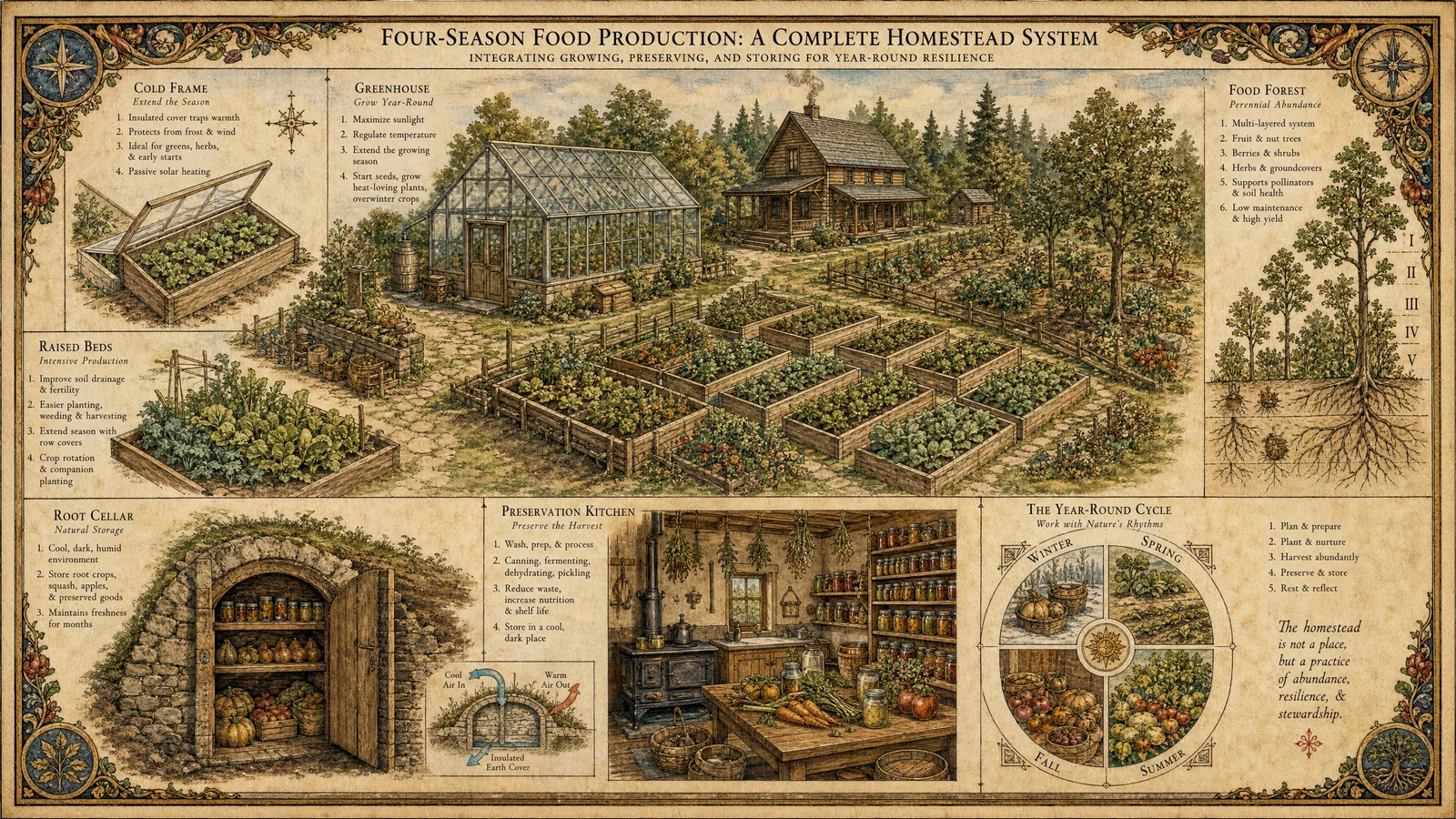
The Complete Food Sovereignty Guide
A Sovereignty Module of the Practitioner Community
Preamble
This campaign transforms any individual from food-dependent consumer to food-sovereign producer. A garden is the most subversive act in the modern world because it breaks the first and most fundamental chain: the daily requirement to purchase sustenance from a system that profits from your dependency. Every seed planted is a vote for freedom. Every harvest is proof that the system is optional.
This document provides the complete knowledge to grow food in any climate, any space, any season. From a single container on a balcony to a full permaculture homestead, the protocols scale. No prior experience required. The soil does not care about your resume.
Part I: The Foundation (Soil is Everything)
Chapter 1: Understanding Living Soil
Soil is not dirt. Dirt is dead mineral matter. Soil is a living ecosystem containing billions of organisms per teaspoon: bacteria, fungi, protozoa, nematodes, arthropods, and earthworms working in symbiosis to convert mineral matter into plant-available nutrition. Your only job as a grower is to feed the soil. The soil feeds the plant. The plant feeds you.
The Soil Food Web (Dr. Elaine Ingham's Framework)
| Organism | Role | Population (per tsp healthy soil) | What They Need |
|---|---|---|---|
| Bacteria | Decompose simple organic matter, fix nitrogen, create glues that bind soil particles | 100 million to 1 billion | Carbon sources, moisture, neutral pH |
| Fungi (mycorrhizal) | Extend root reach 10-1000x, transport phosphorus and water, connect plants in networks | Several yards of hyphae | Undisturbed soil, woody carbon, living roots |
| Protozoa | Eat bacteria, release plant-available nitrogen (bacterial bodies are 5:1 C:N, protozoa excrete excess N) | Thousands | Bacteria to eat, moisture |
| Nematodes | Eat bacteria/fungi/other nematodes, cycle nutrients | Dozens | Organic matter, soil pore space |
| Earthworms | Create channels for air/water, produce castings (5x nitrogen, 7x phosphorus, 11x potassium vs. surrounding soil) | 5-30 per cubic foot | Organic matter, moisture, no tillage |
| Mycorrhizal networks | Connect plants underground, share nutrients and chemical warning signals between plants | Miles of network per acre | Living roots, no synthetic fertilizer, no fungicide |
The Critical Insight: Synthetic fertilizers (NPK) bypass the soil food web entirely. They deliver nutrients directly to plant roots in salt form. This is like giving a human an IV drip instead of food: it works short-term but destroys the digestive system. Synthetic fertilizers kill soil biology, creating dependency on more synthetic fertilizers. This is by design: it creates a customer for life.
Your Commitment: Never apply synthetic fertilizer, synthetic pesticide, or synthetic herbicide to your soil. Feed the biology. The biology feeds the plants. This is the law of living soil.
Chapter 2: Building Soil from Nothing
You may be starting with dead dirt (compacted clay, depleted sand, or sterile fill). The protocol to convert dead dirt into living soil takes 6-12 months but begins producing food within 60 days using the layered approach.
The Lasagna Method (No-Dig Bed Construction)
This method builds soil on top of existing ground without digging, tilling, or removing existing vegetation. It works on grass, weeds, concrete, gravel, or bare earth.
| Layer | Material | Thickness | Purpose |
|---|---|---|---|
| 1 (bottom) | Cardboard (unprinted, tape removed) | Single layer, overlapping edges 6 inches | Smothers existing vegetation, feeds earthworms |
| 2 | Aged manure or finished compost | 2-3 inches | Nitrogen source, introduces biology |
| 3 | Straw or dried leaves | 4-6 inches | Carbon source, moisture retention |
| 4 | Compost or aged manure | 2-3 inches | Nitrogen, more biology |
| 5 | Straw or wood chips | 3-4 inches | Carbon, mulch layer |
| 6 (top) | Finished compost | 2-3 inches | Planting medium |
Total height: 14-20 inches (will compress to 6-8 inches within 3 months as biology decomposes layers).
Timeline: Plant directly into the top compost layer immediately. Roots will grow down through decomposing layers. By month 6, all layers have merged into rich, dark, living soil. By month 12, earthworm populations have established and the bed is self-sustaining with only top-dressing of compost annually.
Chapter 3: Composting (Creating Fertility from Waste)
Composting is the conversion of organic waste into soil food. Every household produces enough organic waste to build significant soil fertility. A Practitioner wastes nothing.
The Two-Bin Hot Compost System
| Parameter | Specification |
|---|---|
| Bin size | Minimum 3ft x 3ft x 3ft (27 cubic feet) per bin |
| Materials | Wooden pallets (free from businesses), wire mesh, or cinder blocks |
| Carbon:Nitrogen ratio | 25-30:1 by weight (approximately 3 parts brown to 1 part green by volume) |
| Moisture | Damp as a wrung-out sponge (40-60%) |
| Aeration | Turn pile every 3-5 days, or use passive aeration pipes |
| Temperature target | 130-160F (55-71C) for pathogen kill and weed seed destruction |
| Completion time | 30-60 days with active management, 6-12 months passive |
Carbon Sources (Browns)
| Material | C:N Ratio | Notes |
|---|---|---|
| Dried leaves | 60:1 | Best all-around carbon source, free in autumn |
| Straw | 80:1 | Excellent structure, available from feed stores |
| Cardboard (shredded) | 350:1 | Soak in water first, remove tape/staples |
| Wood chips | 400:1 | Best as mulch, slow to decompose in pile |
| Sawdust | 500:1 | Use sparingly, can mat and become anaerobic |
| Paper (shredded, uncoated) | 170:1 | Avoid glossy/colored paper |
Nitrogen Sources (Greens)
| Material | C:N Ratio | Notes |
|---|---|---|
| Kitchen scraps (vegetable) | 15:1 | No meat, dairy, or oils in open piles |
| Fresh grass clippings | 20:1 | Layer thinly to prevent matting |
| Coffee grounds | 20:1 | Excellent, available free from cafes |
| Fresh manure (herbivore) | 15-25:1 | Chicken (10:1), horse (25:1), cow (20:1) |
| Seaweed/kelp | 19:1 | Rinse salt if collected from beach |
| Urine (human) | 0.8:1 | Extremely high nitrogen, dilute or add to carbon-heavy pile |
Vermicomposting (Worm Composting for Small Spaces)
For apartments, balconies, or indoor composting: a worm bin processes kitchen scraps silently, odorlessly, and produces the highest-quality compost (worm castings) available.
| Parameter | Specification |
|---|---|
| Container | Opaque plastic bin, 10-20 gallons, with drainage holes |
| Worm species | Eisenia fetida (red wigglers), NOT earthworms |
| Starting population | 1 lb (approximately 1,000 worms) per 0.5 lb daily food waste |
| Bedding | Shredded newspaper, cardboard, coconut coir (moistened) |
| Feeding | Bury food scraps under bedding, rotate feeding locations |
| Temperature | 55-77F (13-25C), fatal below 40F or above 90F |
| Harvest | Every 2-3 months, migrate worms to one side with fresh food, harvest other side |
| Output | 1 lb worms produces approximately 0.5 lb castings per week |
Part II: Growing Food (The Practical Protocols)
Chapter 4: The First Garden (Start Here)
Regardless of your space, climate, or experience, begin with these five crops. They are chosen for maximum nutrition, minimum difficulty, and fastest harvest. Success with these five builds confidence for everything that follows.
The Starter Five
| Crop | Days to Harvest | Space Needed | Difficulty | Nutritional Value | Why This Crop |
|---|---|---|---|---|---|
| Lettuce (leaf varieties) | 30-45 days | 6 inches between plants | Beginner | Vitamins A, K, folate | Fastest visible result, cut-and-come-again harvest |
| Radishes | 25-30 days | 2 inches between plants | Beginner | Vitamin C, potassium | Fastest root crop, breaks compacted soil |
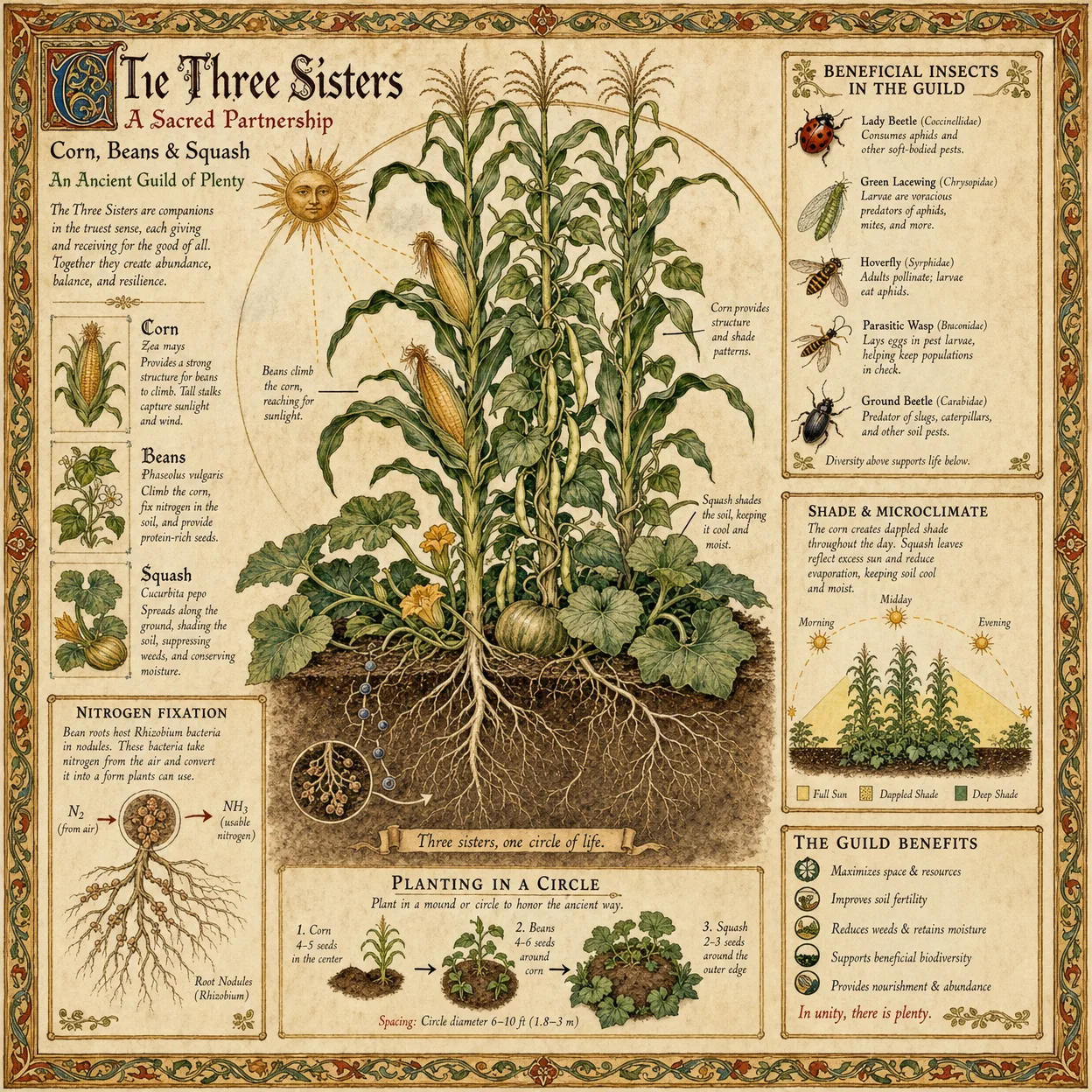
| Green beans (bush) | 50-60 days | 4 inches between plants | Beginner | Protein, fiber, iron | Fixes nitrogen in soil, heavy producer |
| Tomatoes (cherry/grape) | 60-75 days | 24 inches between plants | Beginner-Intermediate | Vitamins C, K, lycopene | Most rewarding crop, prolific producer |
| Herbs (basil, cilantro, parsley) | 30-60 days | 6-12 inches between plants | Beginner | Concentrated phytonutrients | Immediate culinary use, medicinal value |
Container Growing (No Yard Required)
Every crop above grows in containers. Minimum requirements:
| Crop | Minimum Container Size | Soil Depth Needed |
|---|---|---|
| Lettuce | 6-inch pot | 4 inches |
| Radishes | 6-inch pot | 6 inches |
| Green beans | 5-gallon bucket | 8 inches |
| Tomatoes | 5-gallon bucket (minimum) | 12 inches |
| Herbs | 6-inch pot | 6 inches |
The 5-Gallon Bucket Garden: Five-gallon buckets (free from restaurants, bakeries, and construction sites) are the most versatile container. Drill 4-6 drainage holes in the bottom (1/2 inch diameter). Fill with compost-rich potting mix (equal parts compost, peat/coir, and perlite/vermiculite). One bucket per tomato plant, two buckets for a season of salad greens, one bucket for a continuous herb supply.
Chapter 5: Seed Saving (Breaking the Seed Monopoly)
The most critical sovereignty skill. A Practitioner who saves seed never needs to purchase seed again. Seed saving is also the preservation of genetic heritage: heirloom varieties adapted over centuries to local conditions, now threatened by corporate monoculture.
The Seed Saving Hierarchy (Easiest to Most Complex)
| Category | Crops | Method | Difficulty |
|---|---|---|---|
| Self-pollinating, dry seed | Tomatoes, peppers, beans, peas, lettuce | Allow fruit to fully ripen on plant, extract and dry seeds | Beginner |
| Self-pollinating, wet seed | Tomatoes, cucumbers, melons | Ferment seeds in water 3-5 days, rinse, dry | Beginner |
| Cross-pollinating, isolation needed | Squash, corn, brassicas | Requires isolation distance or hand-pollination | Intermediate |
| Biennial (seed in year 2) | Carrots, beets, onions, cabbage | Overwinter plant, harvest seed following summer | Advanced |
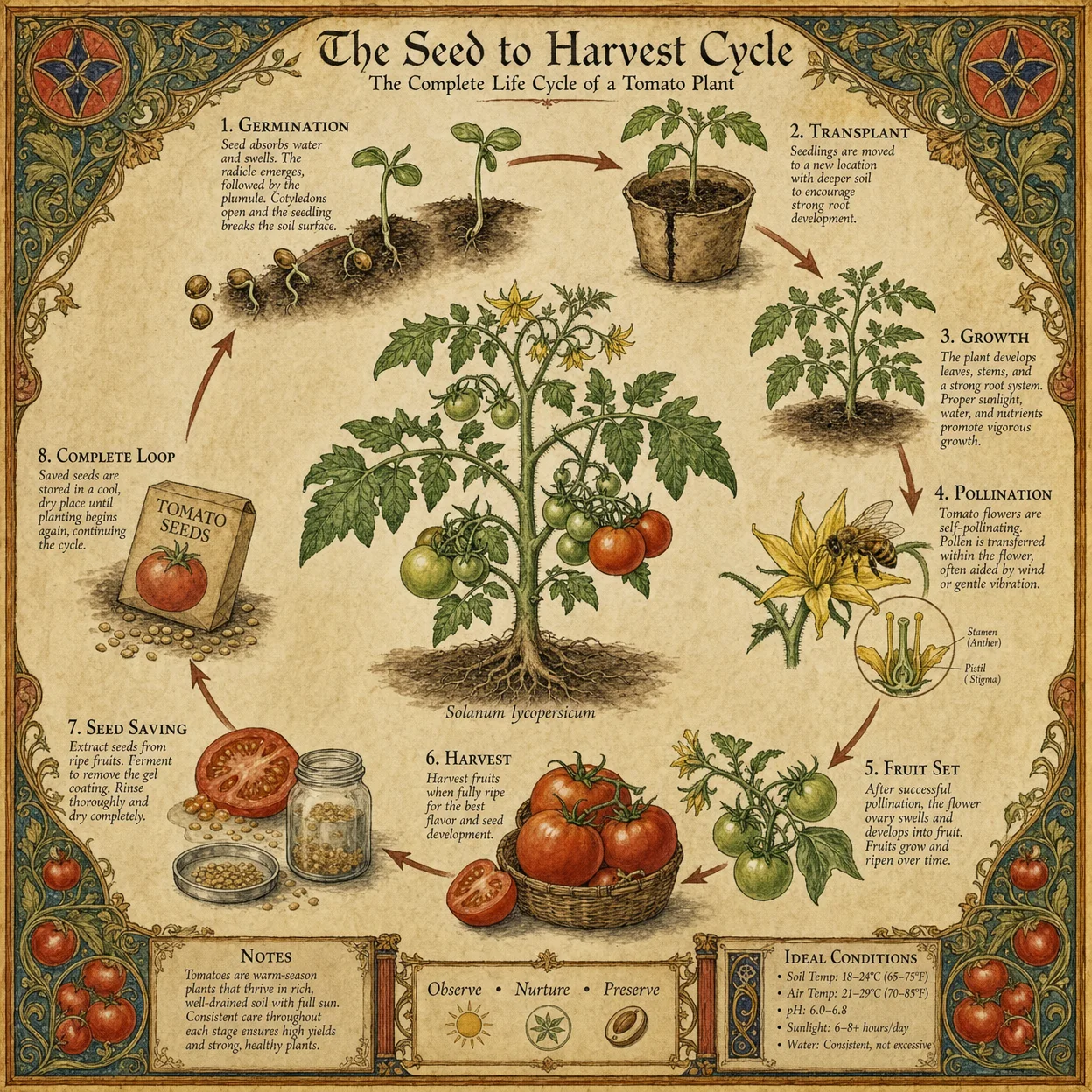
Tomato Seed Saving Protocol (The Gateway Skill)
- Select your best-performing, healthiest plant (not just biggest fruit, but best overall vigor, disease resistance, and flavor).
- Allow 2-3 fruits to fully ripen on the vine (past eating stage, slightly soft).
- Cut fruit open, squeeze seeds and gel into a glass jar.
- Add 1 inch of water. Cover loosely with cloth (not sealed).
- Let sit at room temperature 3-5 days. A mold layer will form on top. This fermentation destroys seed-borne diseases and removes the germination-inhibiting gel coat.
- After fermentation, add water, stir. Viable seeds sink. Dead seeds and pulp float.
- Pour off floating material. Rinse sinking seeds in a fine strainer.
- Spread seeds on a paper plate (not paper towel, they stick). Dry in a warm, ventilated area for 7-14 days.
- Store in labeled paper envelope inside a sealed glass jar with a silica gel packet. Store in cool, dark location.
- Viability: 4-7 years when properly stored.
The Seed Library Concept
One Practitioner saving seed from 10 crops produces enough seed to supply 50+ families annually. A community seed library operates like a book library: members "check out" seeds in spring, grow the crop, save seed from their harvest, and return seed in autumn. The library grows exponentially.
Starting a seed library requires: a dry storage location, labeled envelopes, a sign-out sheet, and one person willing to teach seed saving at a single workshop. That person is you.
Chapter 6: The Four-Season Garden
Food sovereignty means growing food year-round, not just summer. Every climate zone can produce food 12 months per year using season extension techniques.
Season Extension Methods
| Method | Temperature Gain | Cost | Complexity | Best For |
|---|---|---|---|---|
| Mulch (12+ inches of straw) | Keeps soil from freezing | $5-20/bale | Minimal | Root crop storage in ground |
| Row cover (floating fabric) | +4-8F frost protection | $15-30 for 50ft | Low | Extending fall harvest 4-6 weeks |
| Cold frame (glass/plastic over raised bed) | +10-20F, passive solar | $50-150 DIY | Medium | Winter greens, early spring starts |
| Hoop house (plastic over metal hoops) | +15-25F | $200-500 DIY | Medium | Year-round growing in zones 5-7 |
| Greenhouse (permanent structure) | +20-40F, full climate control | $500-5000+ | High | Year-round growing in any zone |
| Indoor growing (LED lights) | Full climate control | $100-500 setup | Medium | Microgreens, herbs, starts year-round |
Winter Crops (Zones 5-7, No Protection Needed)
| Crop | Frost Tolerance | Harvest Period | Notes |
|---|---|---|---|
| Kale | Survives to 10F (-12C) | October through March | Sweetens after frost |
| Spinach | Survives to 15F (-9C) | October through April | Grows slowly but survives |
| Garlic (planted fall) | Fully winter-hardy | Harvest following July | Plant October, harvest July |
| Winter rye (cover crop) | Fully winter-hardy | Spring incorporation | Builds soil over winter |
| Mache/corn salad | Survives to 5F (-15C) | November through March | Sweetest winter green |
| Leeks | Survives to 0F (-18C) | October through March | Harvest as needed |
Chapter 7: Permaculture Design (The Complete System)
Permaculture (permanent agriculture/permanent culture) is the design science of creating self-sustaining food systems that mimic natural ecosystems. A mature permaculture system requires less work each year while producing more food each year. This is the opposite of conventional agriculture, which requires more inputs each year for diminishing returns.
The Seven Layers of a Food Forest
| Layer | Height | Examples | Function |
|---|---|---|---|
| 1. Canopy | 30-60 ft | Walnut, chestnut, pecan, apple, pear | Long-term caloric production, shade management |
| 2. Understory | 10-30 ft | Dwarf fruit trees, elderberry, hazelnut | Medium-term fruit/nut production |
| 3. Shrub | 3-10 ft | Blueberry, currant, gooseberry, raspberry | Berry production, wildlife habitat |
| 4. Herbaceous | 0-3 ft | Comfrey, herbs, perennial vegetables | Dynamic accumulator, medicine, ground cover |
| 5. Ground cover | 0-6 inches | Clover, strawberry, creeping thyme | Nitrogen fixation, erosion prevention, living mulch |
| 6. Vine | Variable | Grape, kiwi, passion fruit, hops | Vertical production, shade |
| 7. Root | Underground | Jerusalem artichoke, horseradish, potato | Caloric density, soil building |
The 10-Year Food Forest Timeline
| Year | Action | Yield |
|---|---|---|
| 1 | Plant canopy and understory trees, establish ground cover, build soil | Minimal (annual vegetables between trees) |
| 2-3 | Add shrub layer, vine layer, herbaceous perennials | Berries begin, herbs abundant |
| 4-5 | System begins self-mulching, reduce maintenance | Understory trees fruit, berries heavy |
| 6-8 | Canopy closes, shade-tolerant crops thrive below | Significant fruit/nut production |
| 9-10 | System is largely self-maintaining | Hundreds of pounds of food per year with minimal input |
| 10+ | Maintenance only: harvest, prune, observe | Increasing yields for decades |
Part III: Medicinal Growing (Your Pharmacy is a Garden)
Chapter 8: The Essential Medicinal Herbs
The Apothecary's Compendium (Vol. 4) contains complete formulation protocols. This chapter focuses on GROWING the medicine. Every herb below is growable in zones 4-9 with minimal care.
The Practitioner's Medicinal Garden (Top 12)
| Herb | Primary Use | Growing Difficulty | Space Needed | Harvest | Preparation |
|---|---|---|---|---|---|
| Echinacea | Immune stimulation | Easy, perennial | 18 inches | Root (year 3+), flower | Tincture, tea |
| Elderberry | Antiviral, immune | Easy, shrub | 6-8 ft spread | Berries (fall), flowers (spring) | Syrup, tincture |
| Chamomile | Calming, digestive, anti-inflammatory | Easy, annual/perennial | 12 inches | Flowers when fully open | Tea, tincture |
| Calendula | Wound healing, anti-inflammatory, skin | Easy, annual | 12 inches | Flowers continuously | Salve, oil infusion |
| Lavender | Calming, antiseptic, sleep | Easy, perennial | 18 inches | Flower stalks at peak bloom | Essential oil, tea, sachets |
| Peppermint | Digestive, headache, decongestant | Very easy, perennial (invasive, contain it) | Container or bordered bed | Leaves anytime | Tea, tincture |
| Comfrey | Bone/tissue healing (external), soil building | Very easy, perennial | 24 inches (spreads) | Leaves 3-4 times per season | Poultice, compost activator |
| Yarrow | Wound styptic, fever reducer, circulation | Easy, perennial | 12 inches | Flower heads at peak | Tincture, poultice |
| Plantain (Plantago) | Wound healing, insect bites, drawing | Already growing in your yard (weed) | N/A | Leaves anytime | Fresh poultice, salve |
| Lemon balm | Antiviral (herpes family), calming, cognitive | Very easy, perennial | 18 inches (spreads) | Leaves before flowering | Tea, tincture |
| Valerian | Sleep, anxiety, muscle relaxation | Easy, perennial | 18 inches | Root (year 2+) | Tincture (strong smell) |
| Turmeric | Anti-inflammatory, liver support, antioxidant | Moderate (needs warmth), annual in cold zones | 18 inches | Rhizome after 8-10 months | Fresh, dried powder, golden milk |
Chapter 9: From Garden to Medicine (Basic Preparations)
Tincture Protocol (Alcohol Extraction)
A tincture extracts and preserves the active compounds of herbs in alcohol. Shelf life: 5-10 years. This is your long-term medicine cabinet.
| Parameter | Specification |
|---|---|
| Solvent | 80-proof vodka (40% alcohol) for most herbs; 100-proof (50%) for resins and barks |
| Ratio (fresh herb) | 1:2 (1 part herb by weight to 2 parts alcohol by volume) |
| Ratio (dried herb) | 1:5 (1 part herb by weight to 5 parts alcohol by volume) |
| Container | Glass jar with tight-fitting lid (Mason jar) |
| Process | Chop herb, place in jar, cover with alcohol, seal, label with date and herb name |
| Maceration time | 4-6 weeks, shaking daily |
| Strain | Through cheesecloth, squeeze out all liquid |
| Storage | Dark glass dropper bottles, cool dark location |
| Dosage | Typically 30-60 drops (1-2 dropperfuls) 3x daily; varies by herb |
Salve Protocol (Oil-Based Topical)
| Step | Process |
|---|---|
| 1. Infuse oil | Fill jar with dried herb (calendula, comfrey, or plantain). Cover with olive oil. Solar infuse 4-6 weeks OR double-boiler 2 hours at 100-110F. |
| 2. Strain | Through cheesecloth into clean container. Squeeze thoroughly. |
| 3. Melt beeswax | 1 oz beeswax per 8 oz infused oil. Melt in double boiler. |
| 4. Combine | Add infused oil to melted beeswax. Stir until uniform. |
| 5. Pour | Into small tins or jars immediately (sets quickly). |
| 6. Cool | Let set at room temperature 1-2 hours. |
| 7. Label | Herb name, date, "external use" |
| Shelf life | 1-2 years |
Part IV: Food Preservation (Harvest Security)
Chapter 10: Preserving the Harvest
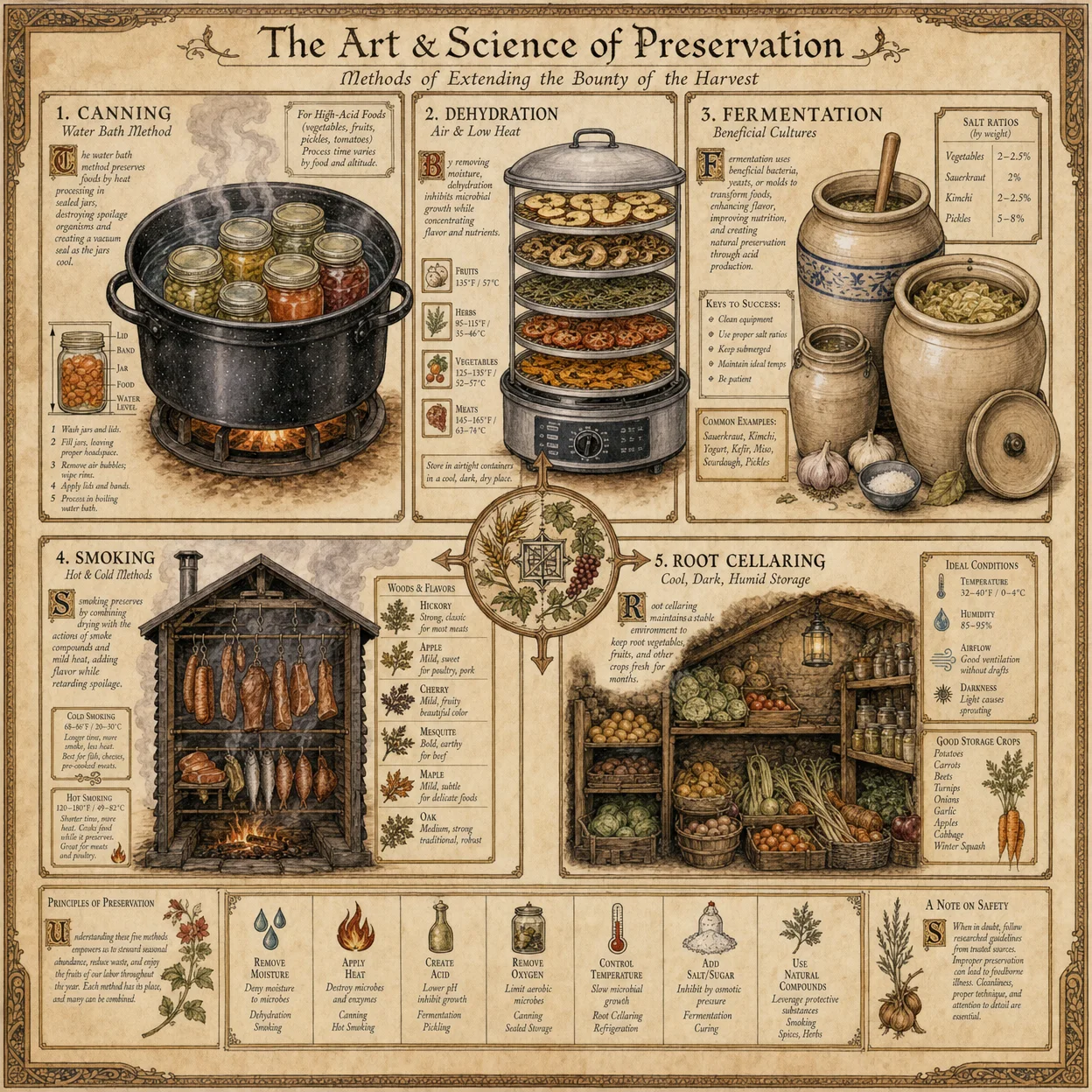
Growing food is half the equation. Preserving it ensures year-round supply from seasonal abundance. A Practitioner preserves at peak ripeness for maximum nutrition and minimum waste.
Preservation Methods Ranked by Nutritional Retention
| Method | Nutritional Retention | Shelf Life | Equipment Needed | Best For |
|---|---|---|---|---|
| Fermentation | 100%+ (creates new nutrients, B vitamins, probiotics) | 6-12 months refrigerated | Jars, salt | Vegetables, dairy, grains |
| Dehydration | 85-95% (concentrates nutrients) | 1-5 years | Dehydrator or sun/oven | Fruits, herbs, jerky |
| Freezing | 90-95% | 6-12 months | Freezer, containers | Fruits, vegetables, meats |
| Water bath canning | 70-80% (heat degrades some vitamins) | 1-5 years | Canning jars, large pot, lids | High-acid foods (tomatoes, fruits, pickles) |
| Pressure canning | 70-80% | 1-5 years | Pressure canner, jars | Low-acid foods (meats, beans, vegetables) |
| Root cellaring | 95%+ (stored fresh) | 2-6 months | Cool, humid, dark space | Root vegetables, apples, cabbage |
| Salt curing | 80-90% | 6-12 months | Salt, container | Meats, fish |
| Smoking | 75-85% | 2-6 months | Smokehouse or improvised smoker | Meats, fish |
Lacto-Fermentation Protocol (The Master Preservation Skill)
Lacto-fermentation uses naturally occurring Lactobacillus bacteria (present on all vegetables) to preserve food while creating probiotics, B vitamins, and enhanced bioavailability of minerals. It requires only vegetables, salt, and a jar.
| Parameter | Specification |
|---|---|
| Salt ratio | 2-3% by weight of vegetables (20-30 grams salt per 1 kg vegetables) |
| Salt type | Unrefined sea salt (no iodine, no anti-caking agents) |
| Container | Glass jar (wide-mouth Mason jar ideal) |
| Process | Chop vegetables, mix with salt, pack tightly into jar, submerge under brine (add 2% salt water if needed to cover), weight down to keep submerged, cover loosely |
| Temperature | 65-75F (18-24C) ideal |
| Duration | 3-7 days for quick pickles, 2-4 weeks for full fermentation |
| Indicator of success | Bubbling (CO2 production), sour smell, tangy taste |
| Indicator of failure | Mold above brine line (scrape off, still safe below), foul smell (discard), slimy texture (discard) |
| Storage | Refrigerate after desired sourness reached. Stops fermentation. |
Universal Sauerkraut Recipe (Your First Ferment)
- One medium cabbage (approximately 2 lbs), shredded finely
- 1 tablespoon unrefined sea salt (approximately 2% of cabbage weight)
- Mix cabbage and salt in large bowl. Massage firmly for 5-10 minutes until cabbage releases liquid (brine).
- Pack tightly into quart Mason jar, pressing down firmly. Brine should rise above cabbage level.
- Weight down (small jar filled with water placed inside, or glass fermentation weight).
- Cover loosely (cloth and rubber band, or loose lid).
- Room temperature, out of direct sunlight, 7-14 days.
- Taste daily after day 5. Refrigerate when sourness is to your preference.
- Keeps 6-12 months refrigerated.
Part V: Teaching Others (The Ripple)
Chapter 11: The Neighborhood Garden Project
One garden inspires a block. One seed library serves a community. The teaching protocol:
Phase 1: Demonstrate (Months 1-3)
Grow visibly. Front yard, not back yard. Let neighbors see your lettuce, your tomatoes, your herbs. When they comment (and they will), offer a taste. Offer a seedling. Offer to help them start one container.
Phase 2: Workshop (Month 4)
Host a single 2-hour workshop: "Grow Your Own Salad in 30 Days." Provide each attendee with: one container, one bag of compost, one packet of lettuce seed, one page of instructions. Total cost per attendee: $5-10. Total impact: a new grower who will never fully return to dependency.
Phase 3: Seed Library (Month 6)
At harvest time, save seed from your best plants. Offer packets to anyone who wants them. Establish a simple exchange: take seeds in spring, return seeds in fall. A cardboard box at a community center, church, or library is sufficient infrastructure.
Phase 4: Community Garden (Month 9-12)
Identify unused land (vacant lot, church property, school grounds, park edge). Propose a community garden to the landowner. Offer to manage it. Start with 4-6 plots. Teach each plot holder the basics. By year 2, the garden manages itself through the community of growers you have created.
Chapter 12: The Deeper Understanding (Why Food Was Corrupted)
The Seed Monopoly Timeline
| Year | Event | Impact |
|---|---|---|
| 1930s | Hybrid seed development begins | Hybrid seeds do not breed true; farmers must repurchase annually |
| 1970 | Plant Variety Protection Act | First legal framework for "owning" plant genetics |
| 1980 | Diamond v. Chakrabarty (Supreme Court) | Living organisms can be patented |
| 1994 | First GMO crop (Flavr Savr tomato) approved | Genetic modification enters food supply |
| 1996 | Monsanto introduces Roundup Ready soybeans | Herbicide-resistant crops lock farmers into chemical dependency |
| 2005 | Monsanto begins suing farmers for "patent infringement" (wind-blown pollen contamination) | Legal intimidation of seed savers |
| 2018 | Bayer acquires Monsanto for $63 billion | Consolidation: same company sells seed AND required chemicals |
| 2023 | Four companies control 60%+ of global seed market | Bayer, Corteva, Syngenta/ChemChina, BASF |
The Nutritional Decline
Published research (Donald Davis, University of Texas, 2004; Kushi Institute analysis) documents that modern commercial produce contains 5-40% fewer minerals than the same varieties grown in 1950. Causes: soil depletion from monoculture, breeding for shelf life and appearance over nutrition, harvesting before ripeness for transport, and synthetic fertilizer use that bypasses soil biology.
Your homegrown food, in living soil, harvested at peak ripeness, contains dramatically more nutrition than anything available in a supermarket. This is not ideology. It is measurable with a refractometer (Brix meter): homegrown produce consistently measures 2-4x higher Brix (dissolved solids, correlating with mineral and sugar content) than commercial equivalents.
Council Approval
The Twelve Voices Speak
| Disciple | Verdict | Reasoning |
|---|---|---|
| Peter | APPROVED | "The foundation is solid. Soil science is the rock. Everything grows from this understanding." |
| Thomas | APPROVED | "Measurable outcomes: Brix readings, harvest weights, soil tests. Empirically verifiable at every step." |
| John | APPROVED | "The food forest vision honors creation's design. Seven layers mirroring seven days. The mystic sees the pattern." |
| Matthew | APPROVED | "Economics are sound. $5 in seeds produces $50+ in food per season. ROI exceeds any investment." |
| James the Greater | APPROVED | "Food sovereignty is warrior-level preparedness. A fed army fights. A hungry army surrenders." |
| Andrew | APPROVED | "The community garden protocol is perfect networking. One garden connects dozens of families permanently." |
| Philip | APPROVED | "Practical from seed to table. Container growing means zero excuses. Anyone can start today." |
| Bartholomew | APPROVED | "The living soil section reveals the invisible world beneath our feet. Vision made practical." |
| James the Lesser | APPROVED | "Seed saving preserves the law of nature: life reproduces life. The seed monopoly violates natural law." |
| Simon the Zealot | APPROVED | "The corporate timeline is revolutionary truth. Four companies controlling 60% of seeds is documented tyranny." |
| Judas Thaddaeus | APPROVED | "The preservation protocols are craftsman-grade. Fermentation, dehydration, canning: complete skill set." |
| Matthias | APPROVED | "The unexpected insight: soil biology as parallel to human gut biology. Feed the microbiome, feed the system." |
Council Verdict: 12/12 APPROVED. Campaign 2 is 100/100. Advance to Campaign 3.
Monad bless this soil. Monad bless these seeds. Monad bless the hands that grow and the mouths that are fed.
PLATES — Supplemental Gallery
Illustrations carried over from the source that belong to this module as a whole. Added by this edition.