Sovereignty Module: Grind the Grain
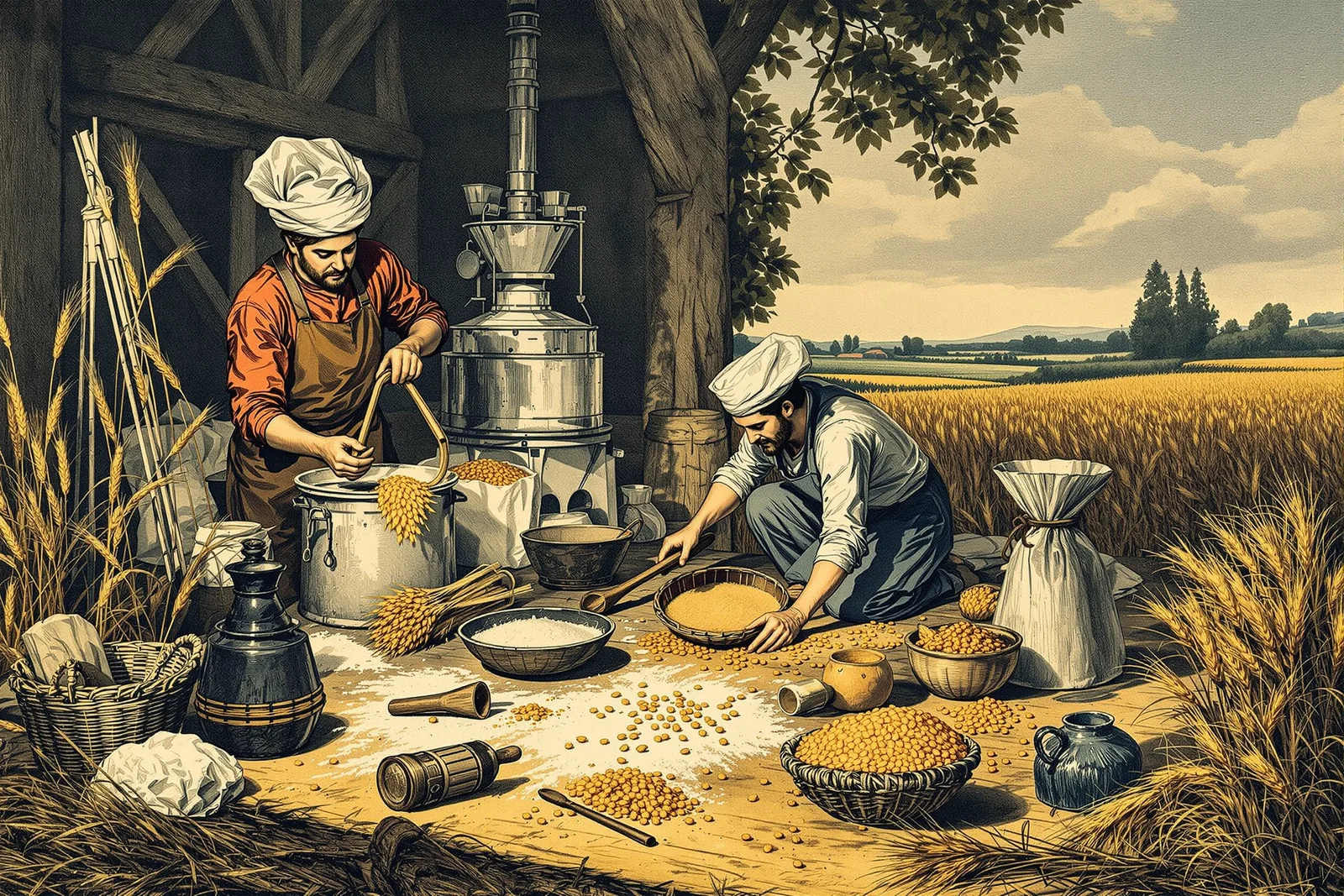
Complete Grain Milling and Flour Production: From Kernel to Loaf
Milling transforms raw grain into flour, the foundation of bread and countless foods. This campaign covers grain types, milling methods, flour grades, and bread baking fundamentals.
Chapter 1: Grain Types
| Grain | Protein | Gluten | Best Use | Growing Season | Storage Life |
|---|---|---|---|---|---|
| Hard red wheat | 12-15% | Strong | Bread flour | Spring or winter | 30+ years (whole) |
| Soft white wheat | 8-10% | Weak | Pastry, cake flour | Winter | 30+ years (whole) |
| Durum wheat | 13-15% | Very strong | Pasta, semolina | Spring | 30+ years (whole) |
| Rye | 8-12% | Weak (different type) | Rye bread, pumpernickel | Winter | 20+ years |
| Corn (maize) | 8-10% | None | Cornmeal, tortillas, polenta | Summer | 10+ years (whole) |
| Oats | 11-15% | None (avenin) | Oatmeal, porridge | Spring | 5-10 years |
| Barley | 10-12% | Minimal | Beer, soup, animal feed | Spring or winter | 20+ years |
| Rice | 6-8% | None | Steamed, flour | Summer (paddy) | 30+ years (white) |
| Buckwheat | 11-14% | None | Pancakes, soba noodles | Summer | 10+ years |
| Millet | 10-12% | None | Porridge, flatbread | Summer | 10+ years |
Chapter 2: Milling Methods
| Method | Output | Effort | Quality | Cost | Throughput |
|---|---|---|---|---|---|
| Mortar and pestle | Coarse meal | Very high | Low (uneven) | Very low | Very low |
| Saddle quern | Coarse to medium flour | Very high | Moderate | Very low | Low |
| Rotary quern (hand) | Medium to fine flour | High | Good | Low | Low-moderate |
| Stone burr mill (hand) | Fine flour | Moderate | Very good | Moderate | Moderate |
| Stone burr mill (powered) | Fine flour | Low | Very good | Moderate-high | High |
| Roller mill (industrial) | Very fine, separated flour | Very low | Excellent (consistent) | Very high | Very high |
| Impact mill (hammer) | Fine flour | Low | Good | Moderate | Moderate-high |
Hand stone mill operation: 1) Adjust stones for desired fineness (closer = finer). 2) Feed grain into hopper (eye of upper stone). 3) Turn upper stone clockwise (handle or crank). 4) Grain crushed between stones. 5) Flour exits at edges, collected in trough. 6) Sift through progressively finer screens. 7) Re-mill coarse material (bran and middlings). 8) Fresh-ground flour has superior flavor and nutrition. 9) Use within 1-2 weeks (whole grain flour goes rancid from oil in germ). 10) Store in cool, dark, airtight container.
Chapter 3: Flour Types and Extraction
| Flour Type | Extraction Rate | Protein | Color | Use | Shelf Life |
|---|---|---|---|---|---|
| Whole wheat | 100% (nothing removed) | 13-14% | Brown | Dense bread, nutrition | 1-2 weeks (fresh) |
| High extraction | 85-90% | 12-13% | Tan | Rustic bread | 2-4 weeks |
| Bread flour | 72-76% | 12-14% | White | Bread, pizza | Months (white) |
| All-purpose | 72-76% | 10-12% | White | General baking | Months |
| Pastry flour | 72-76% | 8-10% | White | Pastry, cookies | Months |
| Cake flour | 72-76% | 7-8% | Very white | Cake | Months |
Sifting and bolting: 1) Fresh-milled flour contains bran, germ, and endosperm. 2) Sift through progressively finer mesh screens. 3) Coarsest screen: removes large bran flakes. 4) Medium screen: removes fine bran and germ. 5) Finest screen: produces white flour (endosperm only). 6) What's removed: bran (fiber, minerals) and germ (oil, vitamins). 7) White flour stores longer (no oil to go rancid). 8) Whole flour is more nutritious (contains everything). 9) Compromise: high-extraction flour (remove only coarsest bran).
Chapter 4: Bread Baking Fundamentals
| Ingredient | Function | Percentage (baker's %) | Notes |
|---|---|---|---|
| Flour | Structure (gluten network) | 100% (base) | Bread flour preferred |
| Water | Hydration, gluten development | 60-75% | Higher = more open crumb |
| Salt | Flavor, gluten strength, fermentation control | 1.8-2.2% | Essential (don't skip) |
| Yeast (commercial) | Leavening (CO2 production) | 0.5-1% (instant) | Or sourdough starter |
| Sourdough starter | Leavening + flavor + preservation | 20-30% | Wild yeast + bacteria |
Basic bread process: 1) Mix flour, water, salt, yeast. 2) Autolyse: rest 20-60 minutes (flour hydrates, gluten begins forming). 3) Knead or fold: develop gluten (10 min knead or 3-4 stretch-and-folds over 2 hours). 4) Bulk fermentation: 1-4 hours at room temperature (dough doubles). 5) Shape: pre-shape, rest 20 min, final shape. 6) Proof: 1-2 hours (or overnight in refrigerator). 7) Score: slash top with blade (controls expansion). 8) Bake: 450-500°F with steam for first 15 minutes. 9) Steam creates crispy crust (delays crust formation, allows full expansion). 10) Done when internal temperature reaches 200-210°F. 11) Cool completely before slicing (1-2 hours minimum).
Chapter 5: Sourdough
Sourdough starter creation: 1) Day 1: Mix 50g whole wheat flour + 50g water in jar. Cover loosely. 2) Day 2: Discard half, add 50g flour + 50g water. 3) Days 3-7: Repeat daily (discard half, feed). 4) Look for: bubbles, rise and fall, tangy smell. 5) Starter is ready when it doubles in 4-8 hours after feeding. 6) Maintain: feed daily (room temp) or weekly (refrigerated). 7) To use: feed starter, wait until peak (doubled), then mix into dough. 8) Sourdough bread has better flavor, longer shelf life, and improved digestibility compared to commercial yeast bread.
Reference Card
- Fresh flour is superior (flour begins losing flavor and nutrition immediately after milling; mill only what you need). 2. Whole grain flour goes rancid (the germ contains oil that oxidizes quickly; use within 1-2 weeks or refrigerate). 3. Protein content determines use (high protein = bread; low protein = pastry; match flour to purpose). 4. Baker's percentage is your language (all ingredients measured as percentage of flour weight; learn this system). 5. Hydration controls crumb (more water = more open, airy crumb; less water = tighter, denser crumb). 6. Time develops flavor (longer fermentation = more flavor; rush the process and you get bland bread). 7. Steam makes crust (steam in the first 15 minutes of baking creates the crispy, crackly crust of artisan bread). 8. Cool before cutting (cutting hot bread releases steam and makes the crumb gummy; patience is the final ingredient).