Sovereignty Module: Light the Dark
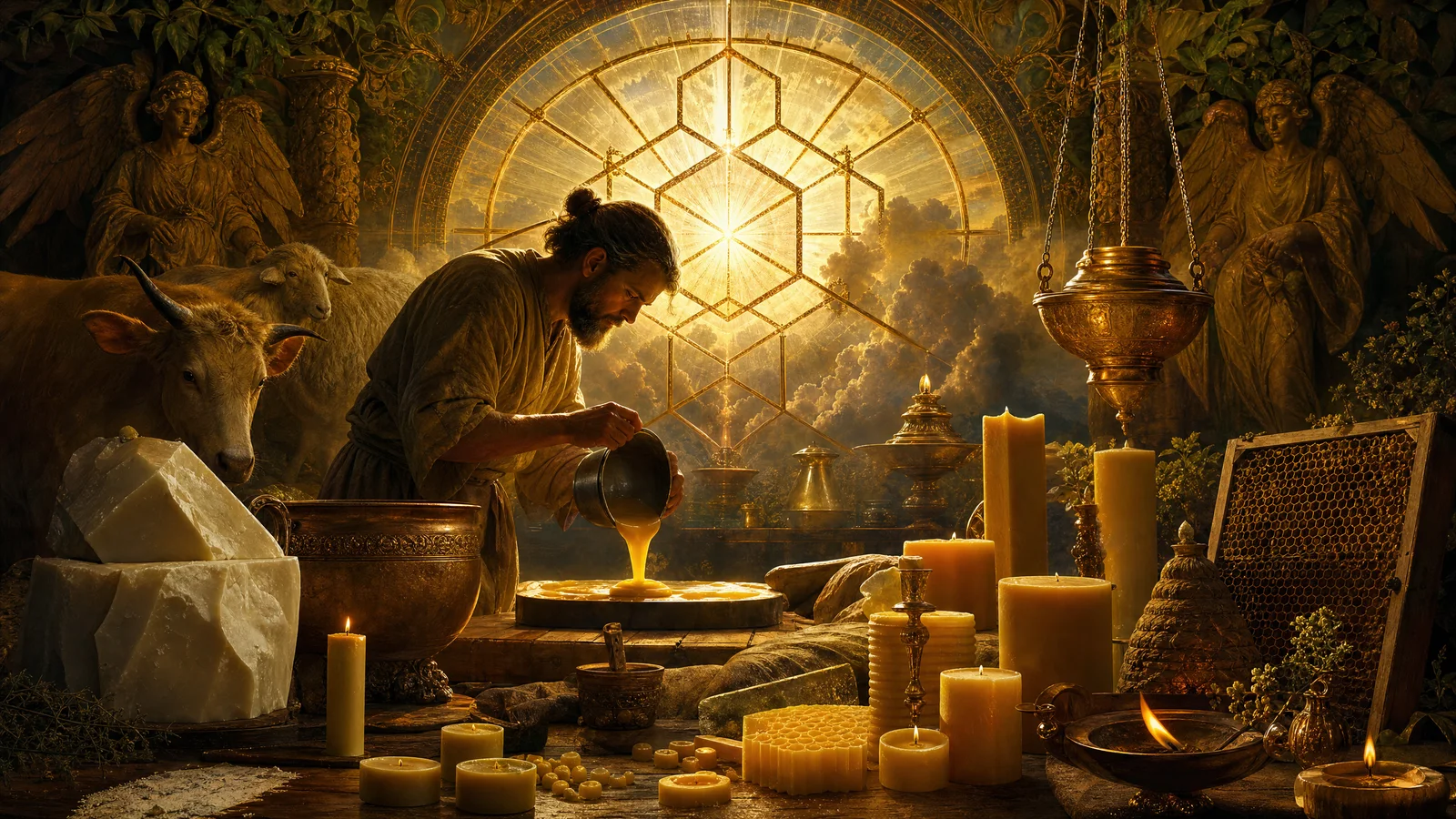
Complete Candle and Lamp Making: From Tallow to Beeswax
Light extends the productive day and provides safety and comfort. This campaign covers candle making, oil lamps, wicks, fuels, and lantern construction.
Chapter 1: Candle Fuels
| Fuel | Melting Point | Burn Quality | Smoke | Scent | Cost | Availability |
|---|---|---|---|---|---|---|
| Tallow (beef/mutton) | 115-120°F | Moderate (soft, drips) | Moderate | Meaty (unpleasant) | Very low | Butchering byproduct |
| Beeswax | 144-147°F | Excellent (hard, clean) | Very low | Sweet, honey | High | Beekeeping |
| Bayberry wax | 118°F | Good | Low | Pleasant, spicy | High | Wild harvest (labor intensive) |
| Spermaceti (whale) | 113°F | Excellent | Very low | Mild | Very high | Historical (not available) |
| Paraffin | 115-150°F | Good | Low | None | Moderate | Petroleum product |
| Soy wax | 113-127°F | Good (soft) | Low | None | Moderate | Soybean processing |
| Palm wax | 140°F | Good | Low | None | Moderate | Palm oil processing |
Chapter 2: Tallow Rendering
| Step | Process | Time | Temperature | Equipment |
|---|---|---|---|---|
| Collect fat | Save beef/mutton fat trimmings | Ongoing | N/A | Container |
| Chop/grind | Cut fat into small pieces | 30 min | N/A | Knife, grinder |
| Render | Melt fat slowly in water | 2-4 hours | 200-250°F (low simmer) | Large pot, stove |
| Strain | Pour through cheesecloth | 15 min | While liquid | Cheesecloth, container |
| Cool | Let solidify | 4-12 hours | Room temp | Mold or container |
| Separate | Remove solid tallow from water | 5 min | After solidified | Knife |
| Re-render | Melt and strain again (purer) | 1-2 hours | Low heat | Pot, fine cloth |
Tallow rendering: 1) Collect beef or mutton fat (kidney fat/suet is best quality). 2) Chop into small pieces (1/2 inch or smaller). 3) Place in large pot with equal volume of water. 4) Heat slowly (never boil; gentle simmer). 5) Stir occasionally (2-4 hours until fat is completely melted). 6) Strain through cheesecloth into container. 7) Let cool and solidify (tallow rises to top, water and impurities below). 8) Remove solid tallow cake, scrape bottom clean. 9) For cleaner tallow: re-melt and strain again (repeat 2-3 times). 10) Pure tallow is white/cream colored, firm, and nearly odorless.
Chapter 3: Candle Making Methods
| Method | Difficulty | Speed | Quality | Equipment | Best For |
|---|---|---|---|---|---|
| Dipping | Very low | Slow | Good (many layers) | Pot, rack, wicks | Traditional, any quantity |
| Molding | Low | Moderate | Very good (even) | Molds, wicks | Uniform candles |
| Rolling (sheets) | Very low | Fast | Good | Wax sheets, wicks | Beeswax, quick |
| Pouring (container) | Very low | Fast | Good | Containers, wicks | Container candles |
Dipped candles: 1) Melt tallow or wax in tall, narrow pot (deep enough for candle length). 2) Cut wicks: cotton string, 2 inches longer than desired candle. 3) Tie wicks to dipping rack (stick or dowel, spaced 2 inches apart). 4) Dip wicks into melted wax (submerge and remove smoothly). 5) Let cool 1-2 minutes (wax hardens). 6) Dip again (each dip adds a thin layer). 7) Repeat 20-40 times (more dips = thicker candle). 8) Straighten while warm (roll on flat surface if needed). 9) Trim bottom flat (stands upright). 10) Cure 24 hours before burning. 11) Tallow candles: 25-30 dips for standard candle. 12) Beeswax: 15-20 dips (harder wax, thicker layers).
Chapter 4: Wick Making
| Material | Burn Quality | Smoke | Availability | Preparation |
|---|---|---|---|---|
| Cotton string (braided) | Excellent | Low | Common | Use as-is or treat |
| Cotton string (twisted) | Good | Moderate | Common | Twist tight |
| Linen thread | Good | Low | Moderate | Braid or twist |
| Milkweed fiber | Moderate | Moderate | Wild | Twist into cord |
| Rush pith | Moderate | Moderate | Wetland | Peel, dry |
Wick preparation: 1) Choose braided cotton (best) or twisted cotton cord. 2) Soak in salt solution (1 tablespoon salt + 2 tablespoons borax per cup of water). 3) Dry completely. 4) Treatment reduces smoke and makes wick curl (self-trimming). 5) Wick size must match candle diameter: thin wick for thin candle, thick for thick. 6) Too thin = drowns in wax pool; too thick = smokes and drips. 7) Test: burn a short candle; flame should be steady, 1-2 inches tall, minimal smoke.
Chapter 5: Oil Lamps
| Lamp Type | Fuel | Burn Time | Light Output | Smoke | Difficulty |
|---|---|---|---|---|---|
| Simple dish lamp | Any oil | 2-4 hours | Low | Moderate | Very low |
| Betty lamp (covered) | Any oil | 4-8 hours | Moderate | Low-moderate | Low |
| Argand lamp (chimney) | Refined oil | 8-12 hours | High | Very low | Moderate |
| Rush light | Tallow-soaked rush | 15-30 min | Low | Moderate | Very low |
| Crusie lamp | Fish oil, any oil | 4-8 hours | Moderate | Moderate | Low |
Oil lamp fuels:
| Oil | Smoke | Brightness | Odor | Cost | Availability |
|---|---|---|---|---|---|
| Olive oil | Very low | Good | Mild | Moderate-high | Mediterranean |
| Rendered lard | Moderate | Moderate | Meaty | Low | Butchering |
| Fish oil | High | Moderate | Strong | Low | Coastal |
| Nut oils (walnut, etc.) | Low | Good | Mild | Moderate | Nut-bearing trees |
| Kerosene | Low | Very high | Petroleum | Moderate | Petroleum product |
| Vegetable oil (any) | Low | Good | Mild | Moderate | Agriculture |
Simple oil lamp: 1) Any shallow dish or bowl (clay, stone, metal). 2) Fill with oil (olive, vegetable, rendered fat). 3) Lay cotton wick across edge (one end in oil, other end hanging over edge). 4) Light exposed end. 5) Capillary action draws oil up wick to flame. 6) Improvement: pinch clay around wick channel (holds wick steady). 7) Improvement: add lid with wick hole (reduces evaporation, directs light). 8) Improvement: add glass chimney (increases draft, brighter flame, less smoke).
Reference Card
- Tallow is free (every butchered animal provides candle fuel; render fat carefully for clean-burning candles). 2. Beeswax is superior (harder, cleaner burning, pleasant scent; worth the effort of beekeeping). 3. Dipping builds layers (each dip adds a thin coat; 20-40 dips makes a standard candle; patience required). 4. Wick size matters (too thin = drowns; too thick = smokes; match wick diameter to candle diameter). 5. Treat your wicks (salt and borax solution reduces smoke and makes wicks self-trimming). 6. Oil lamps are simpler (a dish of oil with a wick is the simplest light source; no candle making needed). 7. Glass chimney transforms a lamp (chimney creates draft, increases brightness, reduces smoke dramatically). 8. Store candles cool and flat (heat softens and bends candles; store horizontal in cool, dark place).