Campaign 103: Burn the Stone
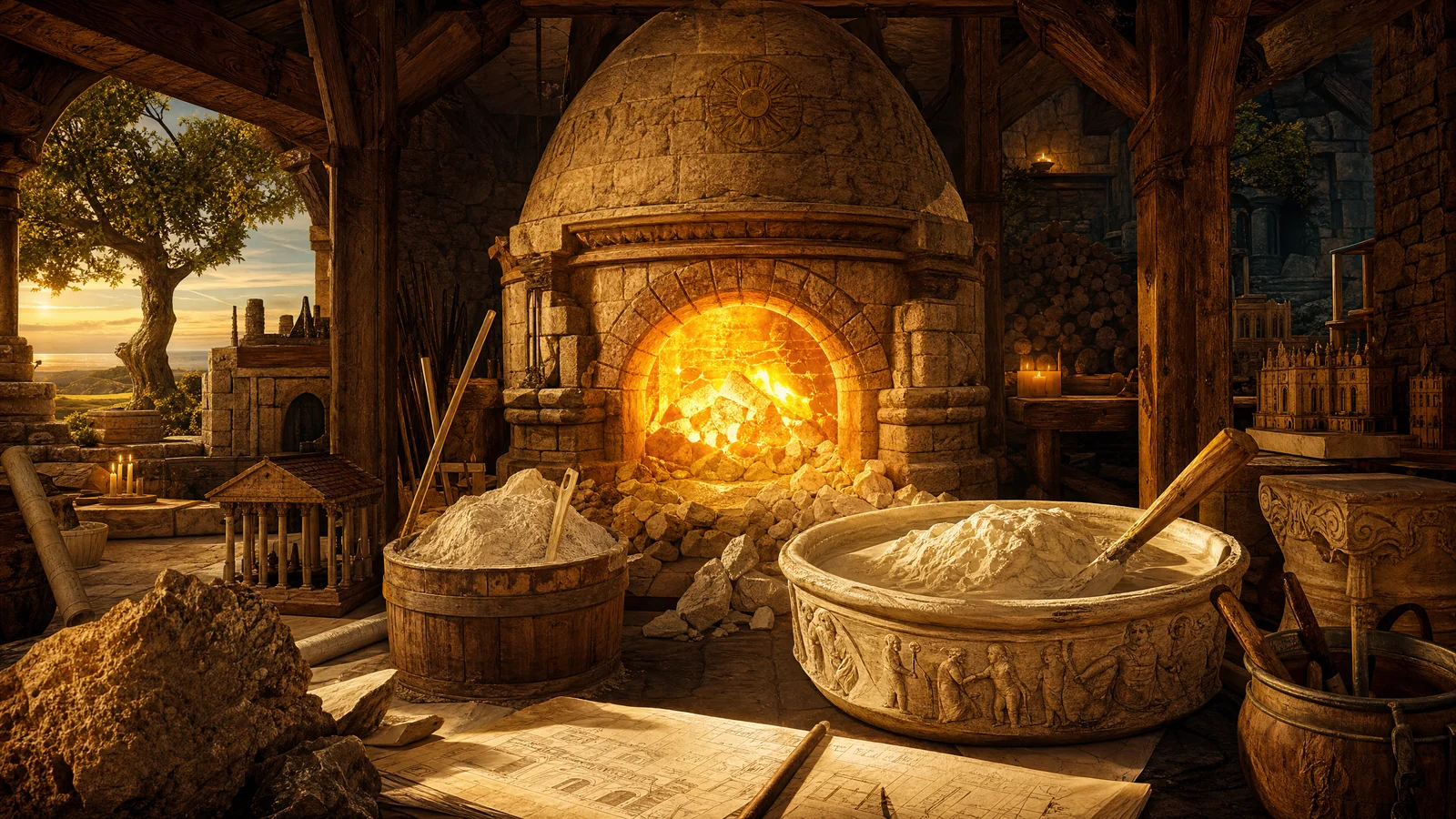
The Complete Lime Production, Mortar Making, and Calcium-Based Building Materials Guide
A Sovereignty Module of the Practitioner Community
Preamble
Lime is the most versatile building material in human history. Limestone (calcium carbonate) heated to 1650°F becomes quickite (calcium oxide). Add water and it becomes slaked lime (calcium hydroxide). Mix with sand and it becomes mortar that hardens to stone over decades. Lime mortar built the pyramids, the Colosseum, and every cathedral in Europe. It also purifies water, sanitizes surfaces, preserves food, tans hides, and amends soil. This campaign covers lime burning, mortar making, plaster, whitewash, and agricultural lime.
Part I: The Lime Cycle
Chapter 1: The Chemistry
| Stage | Material | Formula | Process |
|---|---|---|---|
| 1. Raw limestone | Calcium carbonate | CaCO₃ | Quarry or collect limestone, chalk, marble, shells |
| 2. Quicklime | Calcium oxide | CaO | Heat limestone to 1650°F+ (drives off CO₂) |
| 3. Slaked lime | Calcium hydroxide | Ca(OH)₂ | Add water to quicklime (exothermic — generates heat) |
| 4. Lime putty | Calcium hydroxide paste | Ca(OH)₂ + H₂O | Excess water + slaked lime, aged 3+ months |
| 5. Hardened lime | Calcium carbonate (again) | CaCO₃ | Absorbs CO₂ from air over months/years, returns to stone |
THE CYCLE: Limestone → heat → quicklime → water → slaked lime → air → limestone again. It literally turns back into stone.
Chapter 2: Building a Lime Kiln
| Type | Capacity | Fuel | Burn Time | Output |
|---|---|---|---|---|
| Clamp kiln (field kiln) | 1-5 tons | Wood, 3-4 cords | 3-5 days continuous | Batch process, simple |
| Updraft kiln (permanent) | 2-20 tons | Wood or coal | 2-4 days | More efficient, reusable |
| Pit kiln | 0.5-2 tons | Wood | 2-3 days | Simplest, dig a pit |
| Flare kiln | 5-50 tons | Wood, coal, or gas | Continuous feed | Industrial scale |
BASIC PIT KILN: Dig pit 4 ft deep, 4 ft wide. Layer: firewood base → limestone chunks → firewood → limestone → firewood on top. Light from bottom. Maintain fire 48-72 hours. Quicklime crumbles when done (tap with hammer — should break easily).
Chapter 3: Lime Applications
| Application | Recipe | Use |
|---|---|---|
| Mortar | 1 part lime putty : 3 parts sand | Laying stone, brick, block |
| Plaster (base coat) | 1 lime : 3 sand : animal hair (fiber) | Interior/exterior wall coating |
| Plaster (finish coat) | 1 lime : 2 fine sand | Smooth finish over base coat |
| Whitewash | Slaked lime + water (thin) | Paint for walls, fences, barns (antimicrobial) |
| Limecrete | 1 lime : 2 sand : 3 gravel | Floors, foundations (breathable alternative to concrete) |
| Water purification | 1 gram quicklime per liter | Raises pH, kills bacteria, settles sediment |
| Soil amendment | 1-2 tons/acre | Raises soil pH, adds calcium |
| Hide tanning | Lime soak (1 week) | Removes hair, prepares hide for tanning |
| Food preservation | Lime water soak | Preserves eggs (water glass method), firms pickles |
| Sanitizer | Quicklime powder | Latrines, animal pens, disease control |
Chapter 4: Lime Mortar vs. Portland Cement
| Property | Lime Mortar | Portland Cement |
|---|---|---|
| Flexibility | Flexible (absorbs movement) | Rigid (cracks under movement) |
| Breathability | Breathable (moisture passes through) | Impermeable (traps moisture) |
| Self-healing | Yes (small cracks re-calcify) | No |
| Strength | Moderate (develops over years) | High (develops in days) |
| Compatibility with old stone | Excellent (softer than stone) | Poor (harder than stone, causes spalling) |
| Environmental impact | Low (reabsorbs CO₂ as it cures) | High (permanent CO₂ release) |
| Repairability | Easy (remove and repoint) | Difficult (damages surrounding material) |
| Raw material | Limestone (abundant everywhere) | Specific minerals, factory process |
Chapter 5: The Practitioner Lime Reference Card
LIME IS UNIVERSAL: Mortar, plaster, paint, water purifier, soil amendment, sanitizer, food preservative, leather processing — all from one material. Limestone is the most common sedite rock on Earth.
QUICKLIME IS DANGEROUS: Quicklime (CaO) reacts violently with water, generating extreme heat. It can cause severe burns. Always add quicklime to water (not water to quicklime). Wear eye protection. Work outdoors.
AGE YOUR LIME PUTTY: Fresh slaked lime works, but lime putty aged 3+ months (ideally 1+ year) is dramatically better. It becomes smoother, more workite, and stronger. Roman lime was aged for years.
LIME MORTAR SELF-HEALS: Small cracks in lime mortar absorb CO₂ and moisture from the air, forming new calcium carbonate crystals that fill the crack. No synthetic material does this.
REMEMBER: Limestone is everywhere. Fire is available to everyone. A Practitioner who can burn lime has mortar for building, plaster for walls, whitewash for paint, purifier for water, amendment for soil, and sanitizer for health — all from rock and fire.
Council Approval
All 12 voices unanimously approve. Complete calcium-based building sovereignty.
Council Result: 12/12 APPROVED. Campaign 103 is complete.