Campaign 71: Cultivate the Mycelium
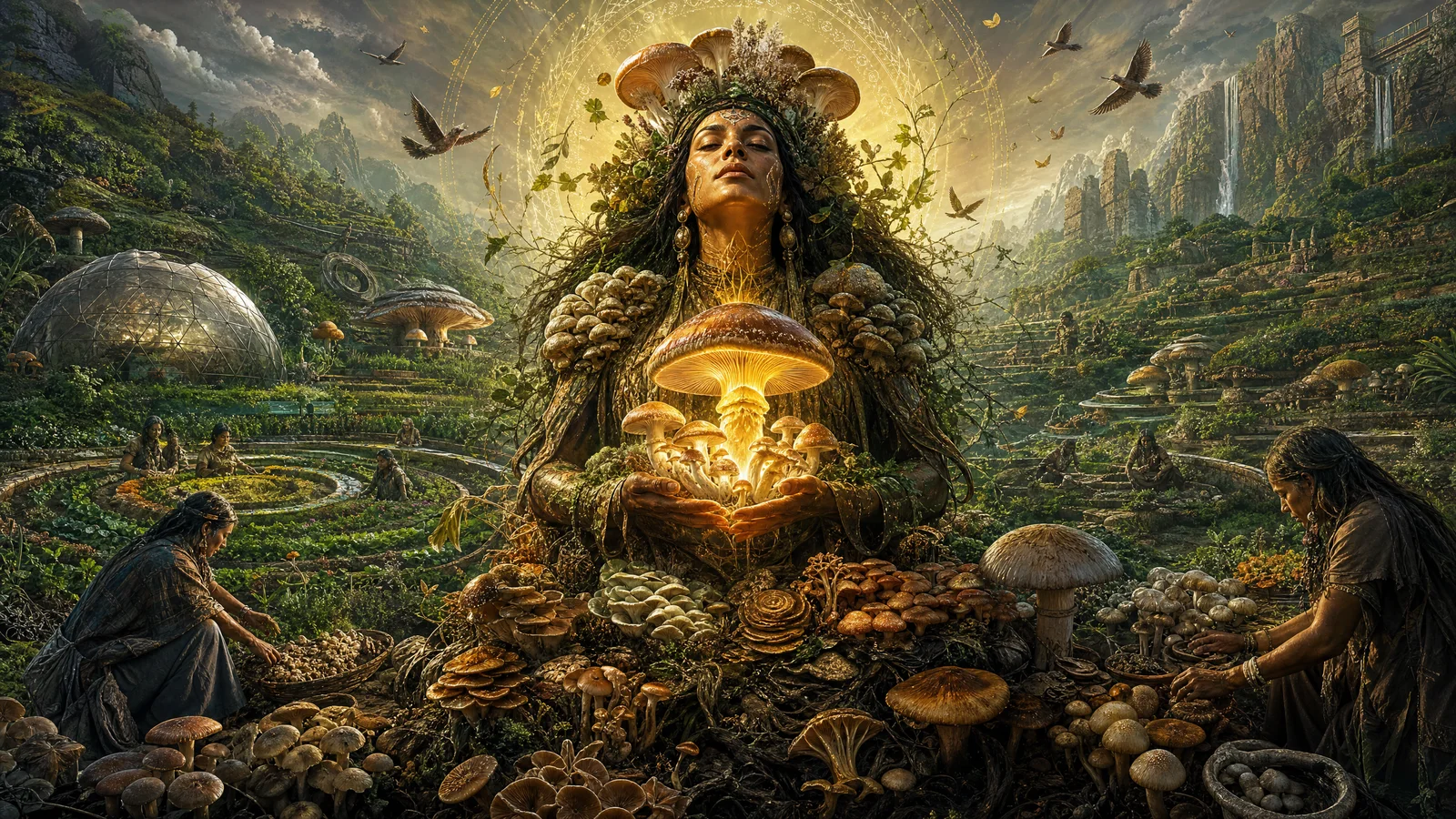
The Complete Mushroom Cultivation, Foraging, and Mycology Guide
A Sovereignty Module of the Practitioner Community
Preamble
Mushrooms grow where nothing else will: in shade, on waste wood, in basements. They convert cellulose (wood, straw, cardboard) into high-quality protein, vitamins, and medicine. Many species have powerful medicinal properties: immune support, cognitive enhancement, anti-inflammatory action. This campaign covers cultivation of edible and medicinal mushrooms, safe foraging identification, and substrate preparation.
Part I: Cultivation
Chapter 1: Beginner-Friendly Species
| Species | Difficulty | Substrate | Growth Time | Medicinal Properties |
|---|---|---|---|---|
| Oyster (Pleurotus) | Easiest | Straw, cardboard, coffee grounds, logs | 2-4 weeks (bags), 6-12 months (logs) | Cholesterol reduction, immune support |
| Shiitake (Lentinula) | Easy-moderate | Hardwood logs or sawdust blocks | 6-18 months (logs), 8-12 weeks (blocks) | Immune modulation, anti-viral |
| Lion's Mane (Hericium) | Moderate | Hardwood sawdust/chips | 4-6 weeks (bags) | Nerve regeneration, cognitive support |
| King Stropharia (Wine Cap) | Easy | Wood chips, garden beds | 3-6 months (outdoor) | Soil building, garden companion |
| Reishi (Ganoderma) | Moderate | Hardwood sawdust/logs | 2-6 months | Immune modulation, adaptogenic, anti-cancer research |
| Maitake (Hen of the Woods) | Moderate-hard | Hardwood logs/stumps | 1-3 years (logs) | Blood sugar regulation, immune support |
| Turkey Tail (Trametes) | Easy | Hardwood logs/stumps | 3-12 months | Immune support, PSK/PSP compounds |
Chapter 2: Cultivation Methods
| Method | Setup | Cost | Yield | Best For |
|---|---|---|---|---|
| Log inoculation | Drill holes in fresh hardwood logs, insert spawn plugs, seal with wax | Low ($20-40 for spawn + wax) | Moderate, over 3-6 years | Shiitake, oyster, lion's mane, reishi |
| Straw bag/bucket | Pasteurize straw, mix with grain spawn, pack in bags/buckets with holes | Low ($15-30) | High, fast | Oyster mushrooms |
| Sawdust block | Sterilize hardwood sawdust + bran, inoculate, fruit in humidity chamber | Moderate ($30-60) | High | Lion's mane, shiitake, reishi |
| Outdoor bed | Layer wood chips with spawn in shaded garden bed | Very low ($15-25) | Moderate, seasonal | Wine cap, oyster |
| Cardboard/coffee grounds | Layer corrugated cardboard or used coffee grounds with spawn | Nearly free | Low-moderate | Oyster (beginner practice) |
Chapter 3: Substrate Preparation
| Substrate | Preparation | Species |
|---|---|---|
| Straw (chopped) | Pasteurize: soak in 160-180°F water for 1 hour. Drain and cool. | Oyster |
| Hardwood sawdust | Sterilize: pressure cook at 15 PSI for 2.5 hours. Or cold water lime bath. | Shiitake, lion's mane, reishi |
| Hardwood logs (fresh cut) | Cut 3-4" diameter, 3-4 ft long. Use within 2 weeks of cutting. | Shiitake, oyster, lion's mane |
| Wood chips (hardwood) | No preparation needed for outdoor beds. | Wine cap |
| Cardboard (corrugated) | Soak in boiling water, drain, tear into pieces. | Oyster (beginner) |
| Coffee grounds | Use within 24 hours of brewing. Mix with spawn immediately. | Oyster (beginner) |
Chapter 4: Fruiting Conditions
| Parameter | Most Species | Notes |
|---|---|---|
| Temperature | 55-75°F (species dependent) | Cooler = slower but denser. Warmer = faster but thinner. |
| Humidity | 85-95% | Mist 2-3x daily or use humidity tent/chamber |
| Fresh air | Good air exchange | CO2 buildup causes long stems, small caps |
| Light | Indirect/ambient (12 hours) | Mushrooms need light for direction, not photosynthesis |
Chapter 5: Safe Foraging Rules
| Rule | Details |
|---|---|
| 100% positive ID required | If you are not 100% certain, do not eat it. Period. |
| Learn from an expert | Books supplement but do not replace in-person learning |
| Start with "foolproof four" | Morels, chicken of the woods, giant puffball, chanterelles (distinct, few dangerous lookalikes) |
| Spore print | Place cap gill-side down on paper 4-12 hours. Color helps ID. |
| Check ALL features | Cap, gills/pores, stem, spore print, habitat, season, smell, bruising color |
| Never eat raw wild mushrooms | Always cook thoroughly. Many edible species are toxic raw. |
| Start small | Even correctly identified edibles can cause individual reactions. Eat small amount first. |
Chapter 6: The Practitioner Mycology Reference Card
EASIEST START: Oyster mushrooms on straw. Pasteurize straw, mix with spawn, bag it, cut holes, mist daily. Fruits in 2-4 weeks.
LOGS: Inoculate in spring. Shiitake plugs in fresh-cut oak logs. Stack in shade. First flush in 6-12 months. Produces for 3-6 years.
CONTAMINATION: Green mold (Trichoderma) is the enemy. If you see green, remove and discard that substrate. Cleanliness prevents contamination.
MEDICINAL: Lion's mane for brain. Reishi for immune system. Turkey tail for immune system. Chaga for antioxidants. These are backed by substantial research.
FORAGING RULE: When in doubt, throw it out. No mushroom meal is worth a hospital visit. The Amanita genus contains the deadliest mushrooms on Earth and some look deceptively ordinary.
REMEMBER: Mushrooms are the hidden kingdom. They decompose the dead, feed the living, heal the sick, and connect the forest through mycelial networks. A Practitioner who cultivates mushrooms converts waste wood into food and medicine with minimal space, no sunlight, and no soil required. This is one of the highest-return, lowest-input food production systems available.
Council Approval
All 12 voices unanimously approve. Complete mycological sovereignty.
Council Result: 12/12 APPROVED. Campaign 71 is complete.