Sovereignty Module: Pass the Craft
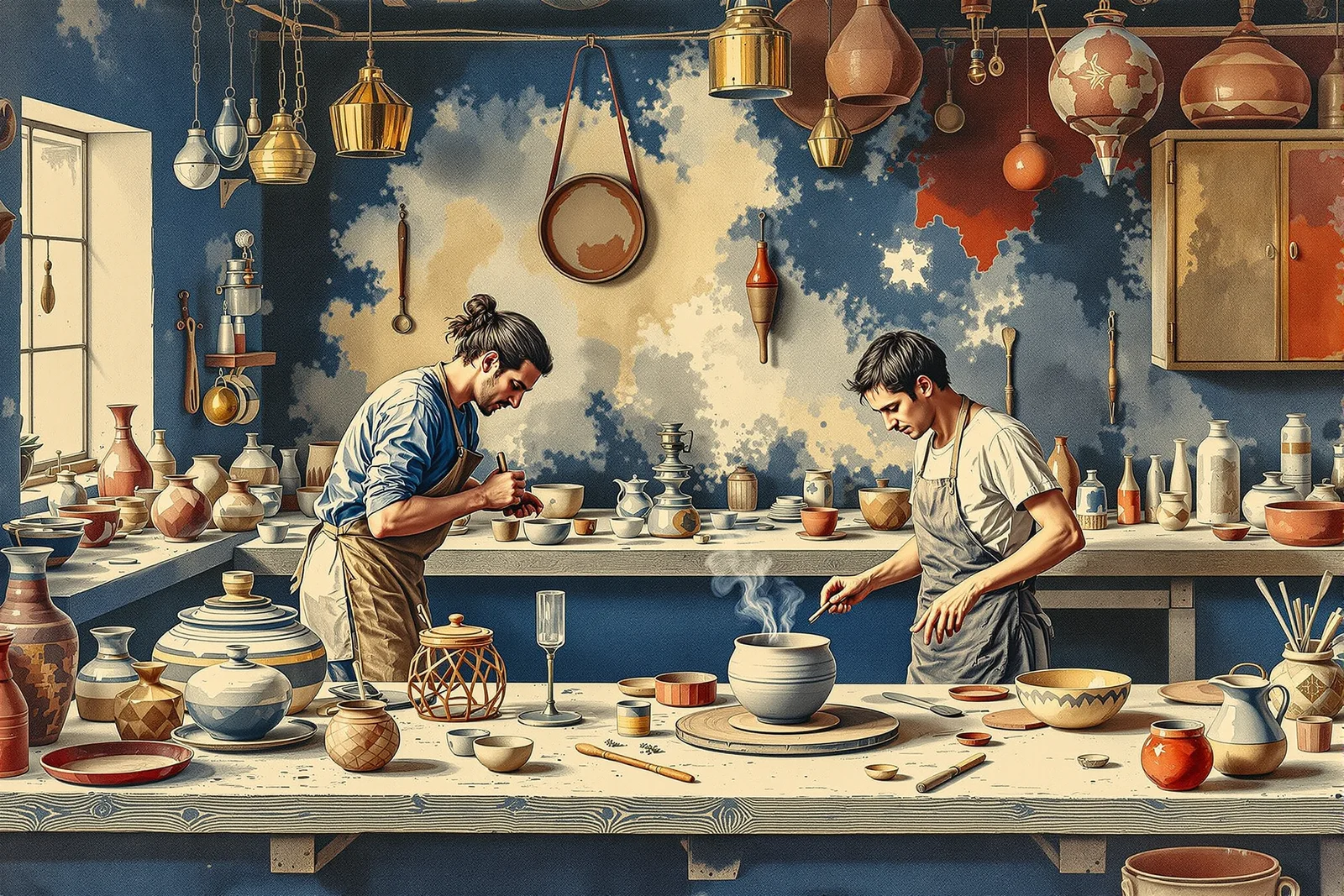
Pass the Craft
Complete Pottery Community and Teaching: From Solo Practice to Shared Knowledge
Complete Pottery Community and Teaching: From Solo Practice to Shared Knowledge
Teaching pottery ensures the craft survives and thrives. This campaign covers curriculum design, studio management for classes, safety protocols, and building a pottery community.
Chapter 1: Teaching Levels
| Level | Duration | Skills Covered | Class Size |
|---|---|---|---|
| Introduction | 1-2 sessions | Pinch pots, coil building | 8-12 students |
| Beginner | 6-8 weeks | Centering, basic throwing | 6-8 students |
| Intermediate | 8-12 weeks | Trimming, handles, lids | 6-8 students |
| Advanced | 12-16 weeks | Large forms, sets, glazing | 4-6 students |
| Master class | Ongoing | Kiln building, glaze chemistry | 2-4 students |
| Workshop | 1-3 days | Specific technique focus | 8-15 students |
Chapter 2: Beginner Curriculum
| Week | Topic | Skills | Project |
|---|---|---|---|
| 1 | Clay basics | Wedging, centering | Center 2 lbs clay |
| 2 | Opening and pulling | Open center, pull walls | Cylinder |
| 3 | Shaping | Belly out, collar in | Bowl |
| 4 | Trimming | Foot ring, finishing | Trim bowls |
| 5 | Handles | Pull, attach | Mug with handle |
| 6 | Lids | Gallery, fitting | Lidded jar |
| 7 | Glazing | Dipping, pouring | Glaze all pieces |
| 8 | Kiln and review | Loading, firing, critique | Final review |
Chapter 3: Safety Protocols
| Hazard | Risk | Prevention |
|---|---|---|
| Silica dust | Silicosis (lung disease) | Wet cleanup, no sweeping, masks when mixing |
| Kiln fumes | Respiratory irritation | Kiln ventilation, no exposure during firing |
| Glaze materials | Toxicity (some materials) | Gloves, wash hands, food-safe glazes only |
| Burns | Kiln, hot ware | Kiln gloves, warning signs, cool-down time |
| Repetitive strain | Wrist, shoulder injury | Proper technique, breaks, stretching |
| Slippery floors | Falls | Mop regularly, non-slip mats |
Chapter 4: Building Community
| Activity | Purpose | Frequency |
|---|---|---|
| Open studio | Practice time for students | Weekly |
| Kiln loading party | Learn kiln loading, community | Each firing |
| Glaze mixing day | Learn glaze chemistry, share work | Monthly |
| Critique session | Improve skills, share feedback | Monthly |
| Pottery sale | Sell work, fund studio | 2-4 per year |
| Guest artist workshop | Learn new techniques | 2-4 per year |
| Studio tour | Public engagement | Annually |
Chapter 5: Apprenticeship Model
| Stage | Duration | Focus | Responsibility |
|---|---|---|---|
| Observer | 1-2 months | Watch, assist, learn studio | Cleanup, clay prep |
| Beginner | 3-6 months | Basic throwing, trimming | Own work, studio maintenance |
| Intermediate | 6-12 months | Production, glazing | Assist with classes |
| Advanced | 1-2 years | All techniques, kiln management | Teach beginners |
| Journeyman | 2-3 years | Independent production | Run studio sessions |
| Master | 3-5+ years | Innovation, teaching mastery | Mentor apprentices |
Reference Card
- Teaching is the highest form of mastery (to teach a skill, you must understand it deeply enough to explain it simply; teaching forces the master to examine and articulate knowledge that has become intuitive). 2. Start with success (beginners must succeed early; start with pinch pots and coil building before the wheel; early success builds confidence that sustains students through the frustration of learning to center). 3. Safety is not negotiable (silica dust causes permanent lung damage; kiln fumes are toxic; glaze materials can be hazardous; every student must understand and follow safety protocols from day one). 4. The apprenticeship model works (for thousands of years, potters learned by working alongside masters; this model of gradual skill building through observation, practice, and increasing responsibility remains the most effective). 5. Community sustains the craft (a solo potter eventually burns out; a community of potters shares knowledge, encouragement, equipment, and kiln firings; community makes the craft sustainable). 6. Critique improves everyone (honest, constructive feedback helps potters see their work with fresh eyes; a regular critique session accelerates growth for beginners and masters alike). 7. Pottery sales fund the studio (regular pottery sales generate revenue that pays for materials, equipment, and studio space; they also connect potters with the community that uses their work). 8. Every potter was once a beginner (remembering the frustration of learning to center, the joy of the first successful bowl, and the patience of a good teacher helps the master potter become a better teacher).
TransmissionCOMPLETE — unaltered & unabridged
Words797 — every one of them
SHA-256 of source text7f43f6b75164708f7ce22663b1b359ff9fc72124f1ba7e9e408f6ecb7df0e937
Canonical textdownload campaign-pass-craft.md — byte-identical to what this page renders