Sovereignty Module: Color the World
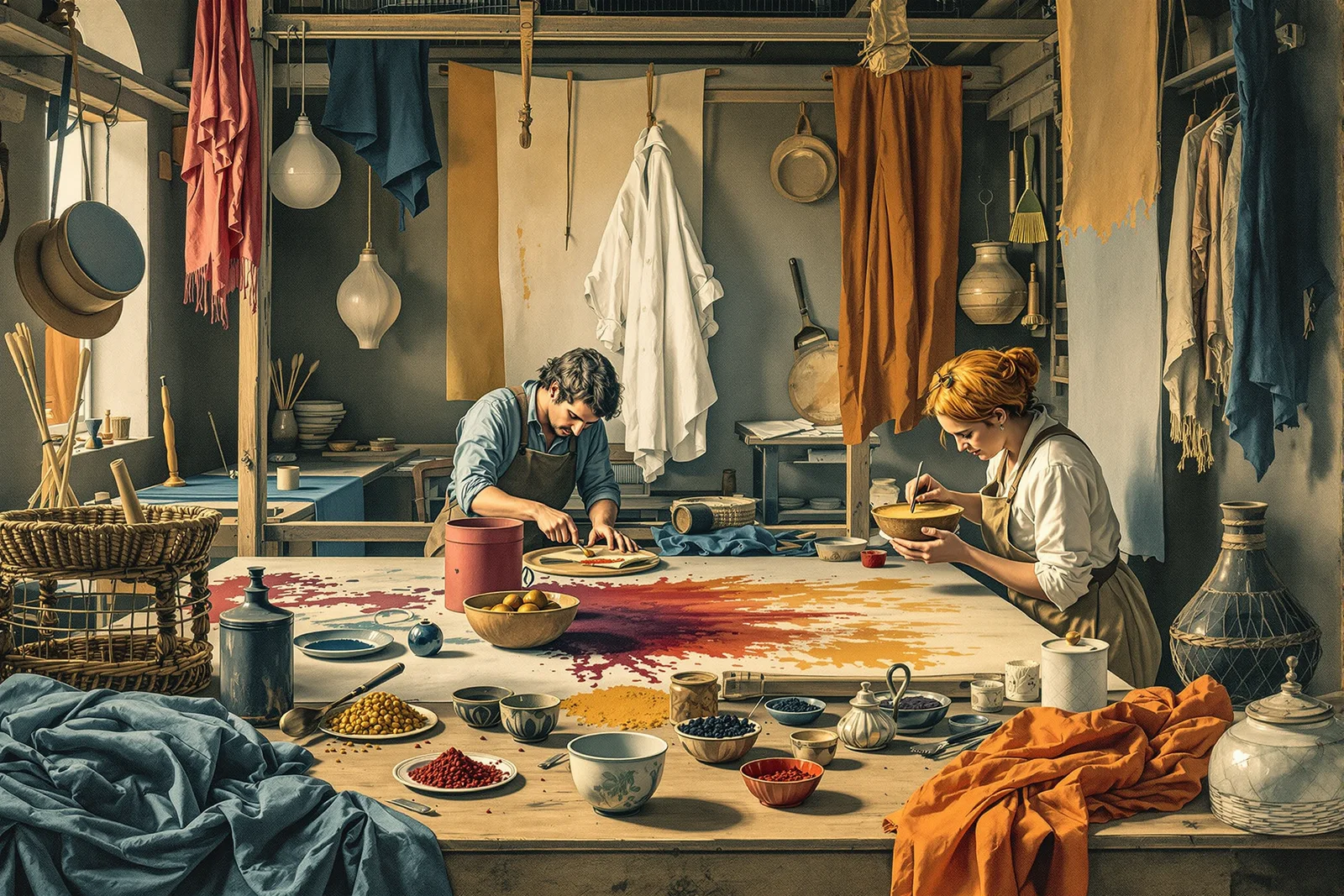
Complete Natural Dye, Pigment, and Ink Production Guide
Color transforms raw materials into art, identity, and communication. Every color in the rainbow is extractable from plants, minerals, and insects. This campaign covers dye production for textiles, pigments for paint, and inks for writing.
Chapter 1: Natural Dye Color Sources
| Color | Plant Source | Mineral Source | Animal Source | Lightfastness |
|---|---|---|---|---|
| Red | Madder root, brazilwood, safflower | Red ochre, cinnabar (toxic) | Cochineal insect, kermes | Good (madder), Excellent (ochre) |
| Blue | Indigo (woad, indigofera), elderberry | Azurite, lapis lazuli | None | Excellent (indigo) |
| Yellow | Onion skins, turmeric, weld, goldenrod | Yellow ochre, orpiment (toxic) | None | Poor (turmeric), Good (weld) |
| Green | Overdye blue+yellow, nettles | Green earth (terre verte), malachite | None | Variable |
| Purple | Logwood, elderberry, grapes | None common | Tyrian purple (murex snail) | Good (logwood) |
| Orange | Annatto seeds, onion skins, madder (modified) | Orange ochre | None | Moderate-good |
| Brown | Walnut hulls, oak bark, tea, coffee | Umber, sienna (iron earth) | None | Excellent (walnut) |
| Black | Oak galls + iron, logwood + iron | Carbon (soot), magnetite | None | Excellent |
| White | None (bleaching) | Chalk, gypsum, kaolin, lead white (toxic) | None | Excellent |
Chapter 2: Textile Dyeing Process
| Step | Action | Time | Details |
|---|---|---|---|
| 1 | Scour fabric (remove oils, dirt, sizing) | 1-2 hours | Simmer in water + washing soda (1 tbsp/gallon) |
| 2 | Mordant (fix dye permanently) | 1-2 hours | Simmer fabric in mordant solution |
| 3 | Prepare dye bath (extract color from source) | 1-4 hours | Simmer dye material in water, strain |
| 4 | Dye fabric (immerse in dye bath) | 1-4 hours | Simmer at 180F, stir regularly |
| 5 | Rinse (cool water until runs clear) | 15-30 minutes | Removes excess unfixed dye |
| 6 | Dry (shade, not direct sun) | Hours-day | Sun can fade some dyes |
Chapter 3: Mordants (Dye Fixatives)
| Mordant | Source | Color Effect | Safety | Best For |
|---|---|---|---|---|
| Alum (potassium aluminum sulfate) | Mineral deposits, pharmacy | Brightens colors | Safe | Most dyes (universal mordant) |
| Iron (ferrous sulfate) | Rusty nails in vinegar (2 weeks) | Darkens/saddens colors | Safe | Greens, blacks, grays |
| Copper (copper sulfate) | Hardware stores | Shifts toward green/blue | Moderate toxicity | Greens, blue-greens |
| Tannin (tannic acid) | Oak bark, tea, oak galls | Helps protein fibers take dye | Safe | Cotton, linen (cellulose fibers) |
| Tin (stannous chloride) | Chemical supply | Brightens dramatically | Moderate toxicity | Reds, oranges (use sparingly) |
| Chrome (potassium dichromate) | Chemical supply | Deepens colors | TOXIC (avoid) | Not recommended |
Iron mordant from scratch: Fill jar with rusty nails/steel wool + vinegar. Wait 2 weeks. Strain. Use liquid as iron mordant. Free, effective, and available everywhere.
Chapter 4: Key Dye Recipes
| Color | Recipe | Mordant | Result |
|---|---|---|---|
| Deep red | 1 lb madder root per 1 lb fiber. Soak root overnight. Heat to 160F (NEVER boil). Dye 1-2 hours. | Alum | Rich turkey red |
| Indigo blue | Fermentation vat: indigo + wood ash lye + wheat bran. Ferment 1 week. Dip fabric, oxidize in air. Repeat. | None needed | Deep blue (darker with more dips) |
| Bright yellow | 1 lb onion skins per 1 lb fiber. Simmer 1 hour. Strain. Dye fabric 1 hour. | Alum | Golden yellow |
| Forest green | Dye yellow first (weld or onion). Then overdye in indigo vat. | Alum (for yellow step) | True green |
| Black | Oak gall extract + iron mordant. Or: logwood + iron. | Iron | Deep black |
| Walnut brown | Green walnut hulls (1:1 ratio to fiber). Simmer 2-4 hours. | None needed (tannin self-mordants) | Rich brown |
| Purple | Logwood chips (1 lb per 1 lb fiber). Simmer 2 hours. | Alum | Deep purple |
Chapter 5: Paint Pigments and Binders
| Pigment | Source | Preparation | Binder Options |
|---|---|---|---|
| Red ochre | Iron-rich clay/earth | Grind fine, wash (levigation), dry | Egg yolk, linseed oil, gum arabic |
| Yellow ochre | Iron-rich clay/earth | Same as red ochre | Same |
| Carbon black | Soot from burning oil/resin/bone | Collect soot, grind with binder | Same |
| White (chalk) | Limestone, chalk deposits | Grind fine, wash, dry | Same |
| Blue (azurite) | Copper carbonate mineral | Grind carefully (coarser = deeper blue) | Same |
| Green (malachite) | Copper carbonate mineral | Grind fine | Same |
| Burnt sienna | Yellow ochre heated in kiln | Heat yellow ochre to red heat | Same |
| Burnt umber | Raw umber heated in kiln | Heat raw umber to red heat | Same |
Paint binders: Egg tempera (egg yolk + water) — dries fast, permanent. Linseed oil (from flax seeds) — slow drying, flexible, glossy. Gum arabic (acacia tree sap) — watercolor. Casein (milk protein) — wall paint.
Chapter 6: Ink Production
| Ink Type | Ingredients | Process | Color | Permanence |
|---|---|---|---|---|
| Iron gall ink | Oak galls + iron sulfate + gum arabic | Crush galls, soak in water 3 days. Add iron. Add gum. | Black (darkens over time) | Excellent (1000+ years) |
| Carbon ink (India ink) | Soot + gum arabic + water | Collect lamp soot. Mix with gum arabic solution. | Deep black | Excellent (waterproof when dry) |
| Walnut ink | Green walnut hulls + water | Boil hulls 4-8 hours. Strain. Reduce. | Warm brown | Good |
| Berry ink (temporary) | Elderberry, pokeweed, blackberry | Crush berries, strain, add vinegar (preservative) | Purple-red | Poor (fades) |
| Sepia | Cuttlefish/squid ink sac | Extract ink sac, dilute with water + gum | Warm brown-black | Good |
Iron gall ink: The most important ink in Western history. Used for 1,500 years (all medieval manuscripts, US Constitution, Da Vinci's notebooks). Recipe: crush oak galls, soak in rainwater 3 days, add ferrous sulfate (green vitriol), add gum arabic for flow. Starts gray, darkens to permanent black over hours.
Reference Card
- Mordant BEFORE dyeing: alum is safest and most versatile (1 oz per gallon water, simmer fabric 1 hour).
- Iron mordant free: rusty nails in vinegar for 2 weeks. Darkens any dye toward gray/black.
- Madder root for red: NEVER boil (turns brown). Keep at 160F maximum. Alum mordant.
- Indigo (blue) needs NO mordant: fermentation vat method. Multiple dips = deeper blue.
- Green = yellow first, then blue overdye. No single-step green dye exists in nature.
- Walnut hulls: self-mordanting (no mordant needed). Permanent brown. Available everywhere in fall.
- Iron gall ink: oak galls + iron + gum arabic. Lasts 1,000+ years. The ink of civilization.
- Paint pigment: grind mineral fine + mix with binder (egg yolk, linseed oil, or gum arabic).