Sovereignty Module: Catch the Sky
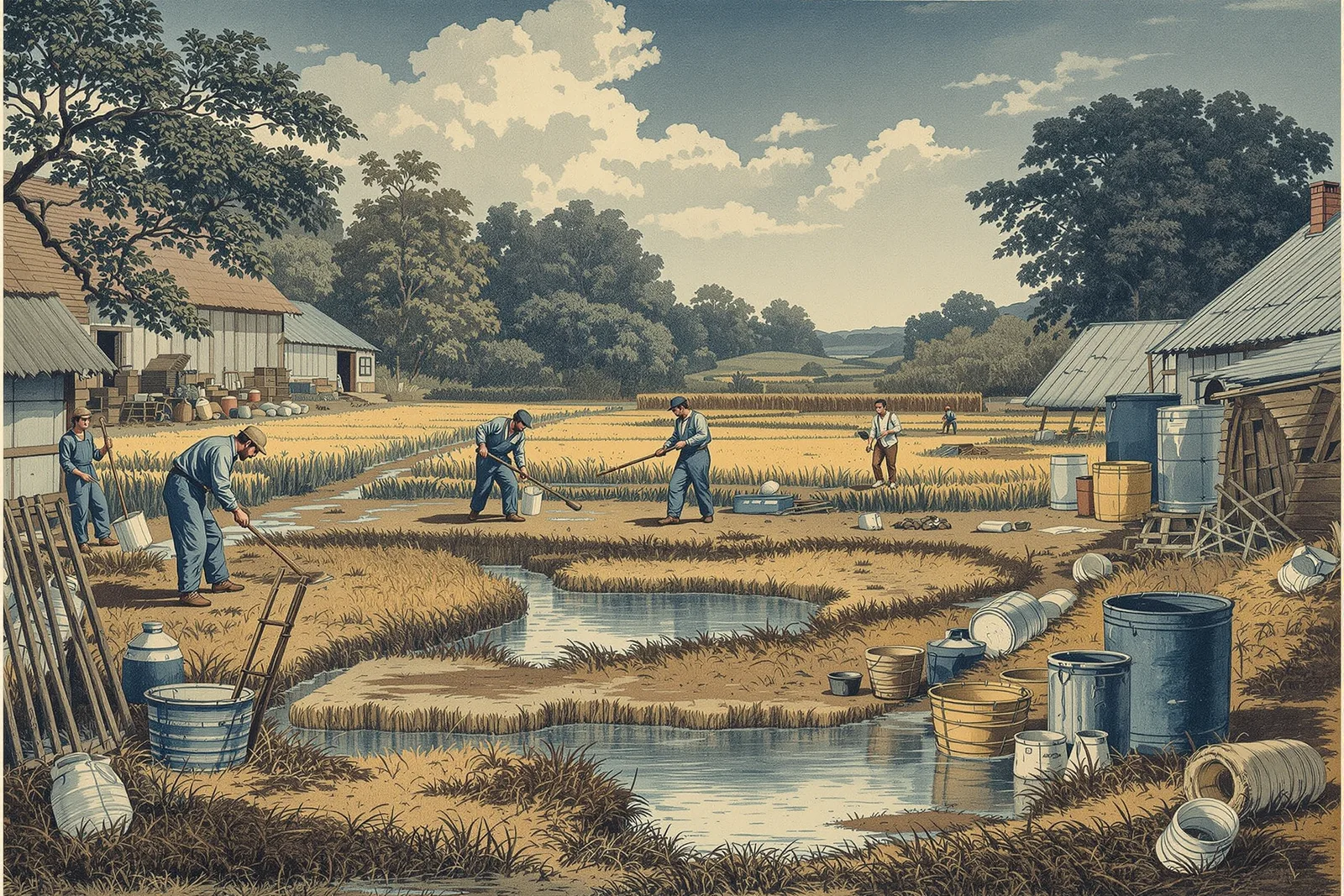
Complete Rainwater Harvesting, Water Collection, and Storage Guide
Clean water is the first requirement of survival. Rainwater is the purest natural water source — free of ground contaminants, available everywhere it rains. This campaign covers collection, storage, filtration, and distribution of harvested rainwater.
Chapter 1: Rainwater Yield Calculations
| Roof Area | Annual Rainfall (inches) | Annual Yield (gallons) | Daily Average (gallons) |
|---|---|---|---|
| 500 sq ft | 20 | 6,230 | 17 |
| 500 sq ft | 40 | 12,460 | 34 |
| 1,000 sq ft | 20 | 12,460 | 34 |
| 1,000 sq ft | 40 | 24,920 | 68 |
| 1,500 sq ft | 30 | 28,050 | 77 |
| 2,000 sq ft | 30 | 37,400 | 102 |
Formula: Gallons = Roof area (sq ft) × Rainfall (inches) × 0.623. A modest 1,000 sq ft roof in a 30-inch rainfall area captures 18,690 gallons per year — enough for a family of 4 (at 12 gallons/person/day for drinking, cooking, basic hygiene).
Chapter 2: Collection System Components
| Component | Function | Material Options | Key Specification |
|---|---|---|---|
| Catchment surface (roof) | Collects rain | Metal (best), tile, slate, thatch | Smooth, non-toxic, no lead/asbestos |
| Gutters | Channel water to downspout | Half-round metal, wood, bamboo | Slope 1/16 inch per foot toward downspout |
| Downspout | Vertical pipe to storage | Metal pipe, PVC, bamboo | Sized for maximum flow rate |
| First-flush diverter | Discards first dirty water | PVC pipe (1 gallon per 100 sq ft roof) | Automatically diverts, then allows flow |
| Screen/filter | Removes leaves, debris | Wire mesh (1mm), screen cloth | At gutter entry AND before tank |
| Storage tank (cistern) | Holds water | Ferrocement, plastic, stone, wood | Opaque (prevents algae), covered, vented |
| Overflow | Handles excess water | Pipe at top of tank | Direct away from foundation |
| Tap/spigot | Draws water | Valve at bottom of tank | Slightly above tank floor (sediment settles) |
Chapter 3: Storage Tank Options
| Type | Capacity | Cost | Durability | Build Difficulty | Best For |
|---|---|---|---|---|---|
| Ferrocement (wire mesh + cement) | 500-10,000 gal | Low | 50+ years | Moderate | Permanent, large capacity |
| Plastic (IBC totes) | 275 gal each | Low-moderate | 10-20 years | Very low | Quick, modular |
| Stone/brick cistern | 500-5,000 gal | Moderate | 100+ years | High | Underground, permanent |
| Wooden barrel | 50-100 gal | Low | 5-15 years | Low | Small systems, rain barrels |
| Concrete (poured) | 1,000-50,000 gal | Moderate-high | 50+ years | High | Large permanent systems |
| Earthen (lined pit) | 500-10,000 gal | Very low | 5-20 years | Low | Irrigation, livestock |
Ferrocement tank: Wire mesh (chicken wire + rebar) formed into cylinder. Plaster with cement mortar (3-4 coats, 1-2 inches total). Waterproof interior with cement + waterproofing additive. Cheapest permanent large-capacity option.
Chapter 4: Water Purification Methods
| Method | Removes | Effectiveness | Speed | Cost | Best For |
|---|---|---|---|---|---|
| Boiling (1 minute rolling boil) | Bacteria, viruses, parasites | 99.99% pathogens | 10-20 minutes | Fuel only | Emergency, cooking water |
| Solar disinfection (SODIS) | Bacteria, viruses | 99.9% (6 hours full sun) | 6-48 hours | Free | Clear water, sunny climate |
| Slow sand filter | Bacteria, parasites, turbidity | 99% bacteria, 99.9% parasites | Continuous flow | Low (sand + gravel) | Community systems |
| Biosand filter | Same as slow sand | Same | 1-2 liters/hour | Low | Household systems |
| Ceramic filter | Bacteria, parasites, turbidity | 99.99% bacteria | 1-3 liters/hour | Low-moderate | Household drinking |
| Chlorination (bleach) | Bacteria, viruses | 99.99% | 30 minutes | Very low | Large volumes, emergency |
| Activated charcoal | Chemicals, taste, odor, some bacteria | Variable | Moderate flow | Moderate | Post-filtration polishing |
| UV light (sunlight or lamp) | Bacteria, viruses | 99.99% | Seconds-minutes | Moderate | Clear water only |
Chapter 5: Biosand Filter Construction
| Layer (bottom to top) | Material | Depth | Function |
|---|---|---|---|
| 1. Drainage (bottom) | Coarse gravel (12-18mm) | 2 inches | Supports sand, allows outflow |
| 2. Separator | Fine gravel (6-12mm) | 2 inches | Prevents sand entering drainage |
| 3. Filter sand | Clean sand (0.15-0.35mm) | 18-24 inches | Primary filtration (physical + biological) |
| 4. Standing water | Water above sand | 2-4 inches | Maintains biological layer (schmutzdecke) |
| 5. Diffuser plate | Perforated plate/cloth | At pour point | Prevents disturbing sand surface |
The biological layer (schmutzdecke) forms on top of the sand after 2-3 weeks of use. This living layer of beneficial bacteria is what actually kills pathogens. NEVER disturb it. If flow slows too much, scrape only top 1 inch of sand, wash, and replace.
Chapter 6: Daily Water Requirements
| Use | Gallons per Person per Day | Priority | Minimum Survival |
|---|---|---|---|
| Drinking | 0.5-1 gallon | Critical | 0.5 gallon |
| Cooking | 0.5-1 gallon | Critical | 0.25 gallon |
| Basic hygiene (hands, face) | 1-2 gallons | High | 0.5 gallon |
| Bathing | 2-5 gallons | Moderate | 1 gallon (sponge bath) |
| Laundry | 5-10 gallons | Moderate | 2 gallons (hand wash) |
| Dishes | 2-4 gallons | Moderate | 1 gallon |
| Garden (per 100 sq ft) | 5-10 gallons | Variable | Depends on climate |
| Livestock (per animal) | 5-20 gallons | High | Species dependent |
| Total comfortable | 12-30 gallons | - | 3-5 gallons (survival minimum) |
Reference Card
- Formula: Gallons = Roof area (sq ft) × Rainfall (inches) × 0.623. A 1,000 sq ft roof captures ~620 gallons per inch of rain.
- First-flush diverter: discard first 1 gallon per 100 sq ft of roof (washes off bird droppings, dust, pollen).
- Metal roofs are best for collection: smooth, non-toxic, no organic growth. Avoid lead, asbestos, treated wood.
- Storage must be opaque (no light = no algae), covered (no mosquitoes), and vented (pressure relief).
- Biosand filter: 18-24 inches of fine sand. Takes 2-3 weeks to develop biological layer. Then 99%+ pathogen removal.
- Boiling: 1 minute at rolling boil kills all pathogens. At altitude: 3 minutes (lower boiling point).
- Chlorination: 2 drops unscented bleach per quart. Wait 30 minutes. Should smell slightly of chlorine.
- Survival minimum: 3 gallons/person/day (drinking + cooking + minimal hygiene). Comfortable: 12+ gallons.